Bali Visa for US Citizens: Your 2026 Step-by-Step Arrival Checklist
Here’s the short answer on the Bali visa for US citizens: you need one, it takes about fifteen minutes to arrange online, and doing it before you fly is the single kindest thing you can do for your future, jet-lagged self. Picture it. Twenty-odd hours of travel behind you, the warm, heavy air of Denpasar finally on your skin, and you walk straight past the payment queue because the paperwork is already done.
Most guides to Bali entry are written for everyone at once, which makes them long, vague and a little stressful. This one is written for one traveler: you, holding a US passport. It puts every step in the order you’ll actually do it, from thirty days out to the moment the car turns off the main road toward the rice fields of Ubud. Three things to sort: a visa, a free arrival card and a small Bali tourist levy. Here’s how to do each one calmly.
A quick, honest note before we start: Indonesian entry rules change, and fees in particular have been under review in 2026. Everything below was checked against official sources in late October 2026. Always confirm on the official Indonesian eVisa portal and the US State Department’s Indonesia page before you travel. This is friendly guidance from people who welcome American guests every season, not legal advice.
Bali Visa for US Citizens: The Short Answer
Yes, Americans need a visa to enter Bali. The United States isn’t on Indonesia’s visa-free list, which mostly covers Southeast Asian neighbors. What the US is on is the list of countries eligible for the Visa on Arrival, officially the B1 visit visa. For almost every American vacation, that’s the one you want.
Here’s the whole picture at a glance, as of late October 2026:
| What | Details for US passport holders | Cost |
|---|---|---|
| Visa (B1 Visa on Arrival) | Apply online before you fly (e-VoA) or buy it at the airport. 30-day stay, single entry | IDR 500,000 (roughly US$30, plus any card fees) |
| Optional extension | Once, for 30 more days, up to 60 days in total | IDR 500,000 |
| All Indonesia arrival card | Online, within 3 days before you land. Covers immigration, customs and health | Free |
| Bali tourist levy | Paid once per trip to Bali, separate from the visa | IDR 150,000 (roughly US$9-10) |
| Passport | At least 6 months of validity beyond your arrival date, plus blank pages | — |
| Onward ticket | Proof you’re leaving Indonesia | — |
The B1 visa covers tourism, visiting friends and family, business meetings and transit. It doesn’t allow you to work for an Indonesian employer or sell anything locally. It also doesn’t guarantee entry. The immigration officer at the counter always has the final word, which is one more reason to arrive with everything tidy.
A note on the 2026 fee proposal
In August 2026, Indonesia’s Director General of Immigration proposed raising the fee: around IDR 750,000 for the online e-VoA and IDR 1,000,000 for a visa bought at the airport. As of late October 2026, no effective date has been announced, and the official portal still charges IDR 500,000. If the change does arrive, it makes applying online even more worthwhile. Check the portal in the week before you book.
For the broader picture of Indonesian visa types, our full Bali tourist visa guide covers every option. If you’d like the general rules for all nationalities, see our Bali travel advisory and entry requirements overview. The rest of this post stays focused on the American passport in your hand.
e-VoA Online vs Visa on Arrival: Which Is Better for Americans?

Both routes give you exactly the same visa. The only differences are when you pay and how much of your arrival you spend standing in line.
The e-VoA: sorted at home
You apply on the official evisa.imigrasi.go.id portal, pay by card, and the visa arrives in your account and by email. It’s valid for entry within 90 days of being issued, and your 30 days start the day you land, not the day you apply. On arrival you skip the payment counter and the separate visa desk and go straight to immigration. If you hold an e-VoA and a biometric passport (all current US passports are), you may also be directed to the automated e-gates when they’re operating.
The Visa on Arrival: sorted at the airport
Without an e-VoA, you’ll find the visa-on-arrival area before the immigration counters at Ngurah Rai. You pay first, then join the immigration queue. It works, and plenty of travelers still do it, but the US State Department itself notes you may face long lines. After a flight from Los Angeles or New York with a connection in Asia or the Gulf, that queue can feel very long indeed.
Our honest recommendation
Apply online. The fee is the same today, and under the 2026 proposal the online version would be cheaper. Your visa is confirmed before you leave, so there are no surprises. And you get to spend your first Bali hour moving toward the car instead of toward a counter. When we greet guests at the villa, we can usually tell who did their e-VoA at home. They’re the ones who still have the energy to notice the frangipani.
One caution: many websites sell the e-VoA with a service charge on top, and some look very official. The government portal is evisa.imigrasi.go.id. Agencies aren’t illegal and some offer genuine help, but you never need one for a simple 30-day trip.

Get a free 3-day sample itinerary
Paperwork done, now the good part. Rice terraces at dawn, a temple morning and slow afternoons by the pool. We will send you a 3-day sample itinerary built around Ubud’s own rhythm.
Your Bali Visa Checklist for US Citizens: 30 Days, 3 Days and 24 Hours Out
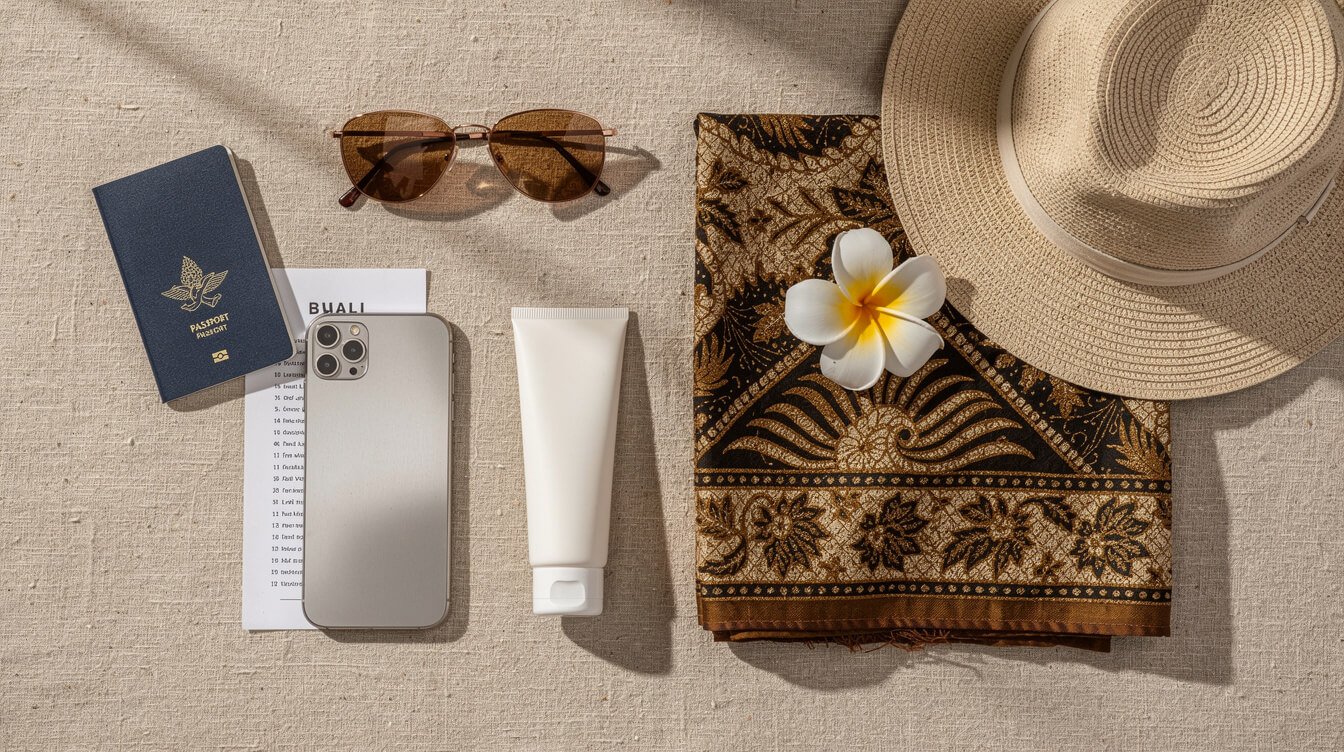
This is the part nobody else lays out in order. Print it, screenshot it or stick it on the fridge.
30 days (or more) before you fly
- Check your passport. It needs at least six months of validity beyond your arrival date, and the State Department lists two blank pages for entry. If it’s close, renew now. US passport renewals can take weeks.
- Book your onward or return flight. You’ll need it for the e-VoA application, and immigration can ask to see it.
- Check your medications. Some common US prescriptions are restricted in Indonesia (more on this below). Sort it now, not at the gate.
- Consider travel insurance that covers medical care and evacuation. Bali’s private hospitals are good, but they aren’t cheap without coverage.
- Enroll in STEP, the State Department’s free Smart Traveler Enrollment Program, so the US Embassy in Jakarta can reach you with alerts.
About 1-2 weeks before you fly: apply for the e-VoA
- Have ready: a clear scan of your passport photo page, a recent passport-style photo, your email, a Visa, Mastercard or JCB card, your flight details and your first address in Bali (the villa or hotel name works).
- The portal advises applying at least 48 hours before departure. Approvals often come within a day, but leave yourself a buffer.
- Every traveler needs their own e-VoA, including children and infants.
- Check every letter against your passport before you pay. A processed e-VoA can’t be edited, and a mistake means paying again.
- Save the PDF to your phone and print a copy. Airport Wi-Fi has a sense of humor.
Within 3 days of landing: the All Indonesia arrival card
- Fill it in at allindonesia.imigrasi.go.id or in the official All Indonesia app. It’s free.
- The system only opens 72 hours before your arrival time in Bali, which runs 12 to 16 hours ahead of the continental US depending on your time zone and daylight saving. Set a phone reminder in Bali time so you don’t try too early.
- It combines the immigration, customs and health declarations into one form and gives you a QR code. Screenshot it.
Also before you land: the Bali tourist levy
- Pay the IDR 150,000 levy through the official Love Bali portal. You’ll need your name, passport number and arrival date.
- It’s separate from the visa and paid once per trip to Bali. Keep the confirmation on your phone.
24 hours before: pack your entry folder
- Passport, printed e-VoA, onward flight confirmation, arrival card QR, levy receipt and your villa address. Keep them all in one place in your carry-on.
- Bring a little cash in small US bills as backup, plus a card that works abroad. Our guide to Balinese currency explains rupiah, ATMs and tipping.
- For everything else in the bag, see our what to pack for Bali list.
At Ngurah Rai Airport: Immigration, Customs, the Levy and Your QR Code

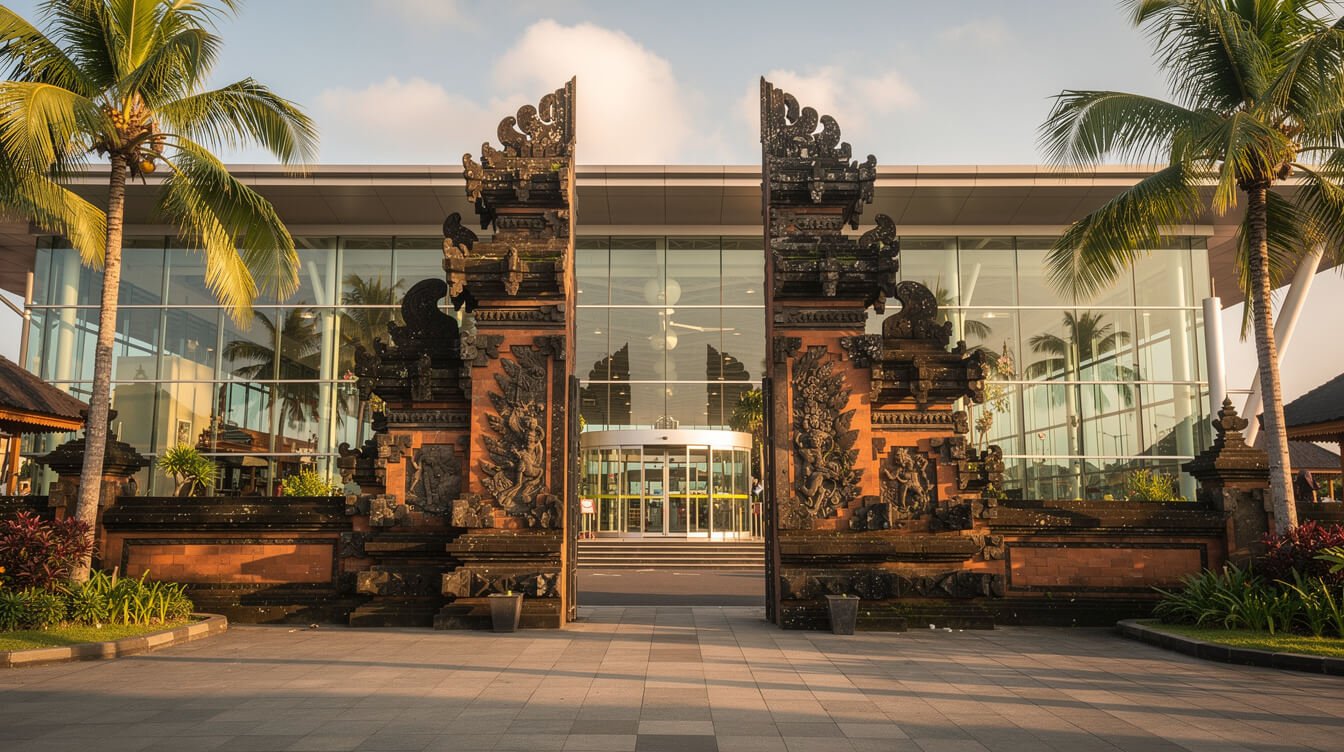
Bali’s international airport, Ngurah Rai (DPS), sits on the narrow neck of land just south of Denpasar. The arrival walk is long, with carved stone, tropical plants and that first breath of humid air. Here’s what happens, in order.
1. Visa on Arrival (only if you didn’t apply online)
The visa-on-arrival area is before immigration. Pay the fee, collect your visa, then continue. With an e-VoA, walk past.
2. Immigration
Present your passport and e-VoA. If e-gates are open to you, follow the signs and the staff. Otherwise join the counter queue. The officer may ask about your accommodation and onward flight. Answer simply and keep your folder in hand.
3. Baggage and customs
Collect your bags and show your All Indonesia QR code at customs. Indonesian customs allows personal goods up to US$500 duty-free. Adults can bring up to 1 liter of alcohol and 200 cigarettes. Anything over those limits may be confiscated, so this isn’t the trip for a case of California wine. Cash over IDR 100,000,000 (about US$5,900) must be declared.
4. The tourist levy check
If you’ve already paid online, have the confirmation ready in case it’s checked. If you haven’t, payment counters at the airport take cards. Some travelers report that the Love Bali site can be slow at peak times, so paying a few days before you fly saves a moment of frustration on arrival.
5. Out into the warm air
Past the final doors, drivers wait with name boards. If you’ve arranged a transfer, yours will be among them. Skip the SIM card hawkers if you’ve bought an eSIM at home. Breathe. You’ve arrived.
Staying Longer Than 30 Days: Extensions and Other Visa Options

Thirty days goes quickly in Ubud. Many of our longer-staying American guests find themselves wondering how to stay just a little longer, and there are a few honest options.
Extending your e-VoA (up to 60 days total)
The B1 visa can be extended once, for another 30 days. You start the application in your evisa.imigrasi.go.id account during the window before your stay ends (the system opens about two weeks before expiry). The official fee is IDR 500,000 as of October 2026. Since mid-2025, extensions also require an in-person visit to an immigration office for a photo and fingerprints, so budget half a day and keep your schedule flexible. Pay before your permit expires, and you won’t be counted as overstaying while it processes. Many travelers use a reputable local agent to handle the paperwork, but you’ll still need to appear in person.
Planning 60 days or more from the start
If you already know you’ll stay longer, a C1 tourist visa arranged before travel usually fits better. It allows an initial stay of up to 60 days and can be extended up to about 180 days in total. It needs more documents than the e-VoA, including recent bank statements showing roughly US$2,000 in funds. Fees on official pages have varied, so check the current figure on the eVisa portal. Repeat visitors might also look at the multiple-entry D1 visa. Working remotely for a US employer? There’s a separate remote-worker category, and our digital nomad Bali guide explains the basics.
Don’t count on switching visas once you’re in Bali. The e-VoA can’t be converted to another visa type from inside the country. Choose the right visa before you leave home.
What overstaying really costs
Overstays are fined IDR 1,000,000 (around US$60) per day, paid before you can leave. Long overstays can mean detention, deportation and a ban on returning. The day you arrive and the day you leave both count as full days, so count carefully. If your flight is cancelled or you fall ill, contact immigration or the US Embassy before your permit runs out, not after.

Book the Villa
Three bedrooms, a private pool and a team who will be waiting when you arrive from the airport. Land, breathe, and let Ubud take it from there. Check availability for your dates.
Traveling With Kids, Medications and Other Edge Cases
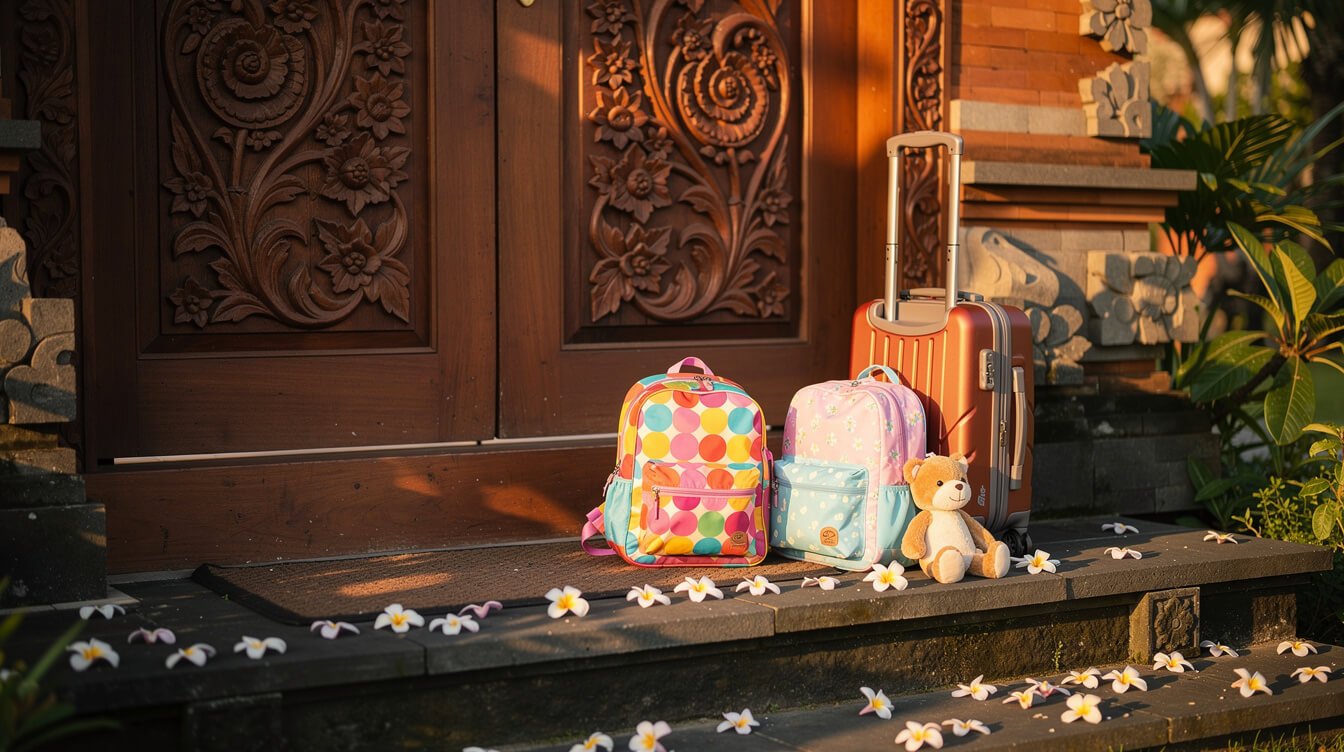
This is where most guides go quiet, and where real trips get complicated. Here are the situations we hear about most from American families and travelers.
Children and babies
Every child needs their own visa, from teenagers to newborns. Each also needs their own passport with six months of validity. Apply for the whole family in one sitting so you can compare details side by side. The State Department advises carrying a copy of each child’s birth certificate or other proof of your relationship. A child may enter Indonesia with just one parent, but a signed consent letter from the other parent is a sensible extra if you’re traveling solo with kids. For the joyful side of a family trip, our guide to a family villa in Ubud covers space, pools and slow days.
Prescription medications
This one matters. The State Department warns that marijuana, CBD products and some prescription medications, including common ADHD medications, are illegal in Indonesia, and Indonesian customs doesn’t publish a full list. Penalties for drug offenses are severe. If you or your child take a stimulant or other controlled medication, talk to your doctor well before the trip, contact the Embassy of Indonesia in Washington, and carry prescriptions in their original labeled packaging with a doctor’s letter. Don’t bring CBD in any form.
Dual nationals and passport changes
Enter and leave Indonesia on the same passport. If your passport is lost or replaced during your trip, you’ll need a special pass from immigration before you can depart. The US Embassy in Jakarta and the Consulate General in Surabaya, which covers Bali, can help with emergency passports.
Arriving by sea or via Jakarta
If you connect through Jakarta on a domestic flight, you clear immigration and customs at your first Indonesian airport, not in Bali. The tourist levy still applies when you arrive in Bali. The e-VoA is also accepted at a list of seaports, including Benoa in Bali. Check the portal’s list of entry points if you’re arriving by cruise ship or yacht.
A safety note
The State Department’s advisory for Indonesia sits at Level 2, “exercise increased caution,” mainly for natural disasters, unrest and terrorism in some regions, with specific provinces far from Bali at higher levels. For a calm, practical read on what that means on the ground, see is Bali safe to travel.
From the Airport to Ubud: The Last, Gentle Leg

Here’s the part we love. Ubud is about 35-40 kilometers north of the airport, which on Bali roads usually means a drive of roughly 1 to 2 hours depending on time of day and traffic around Denpasar. Our guides on how to get to Ubud from the airport and how far Ubud is from Bali airport walk through every option, from pre-booked drivers to ride-hailing apps.
For a first arrival after a long-haul flight, a pre-arranged driver is hard to beat. No negotiating, no searching for a ride, just a cold bottle of water, your name on a board and air-conditioning. The city thins out somewhere past Batubulan’s stone-carving workshops. Then the roadside shrines start appearing, each with its small morning offering, and the rice paddies open up on both sides of the road.
When you arrive at the villa, the team will be waiting. Ketut will show you around, and Wayan will ask what you’d like for breakfast. The pool will be still and blue under the garden. All that paperwork will feel very far away. Many of our American guests tell us the first night’s sleep in Ubud, with frogs in the rice fields and maybe a distant gamelan rehearsal, is the best jet-lag cure they’ve found.
If you’re still choosing your dates, our best time to travel to Bali guide helps you weigh dry-season sunshine against quieter, greener months. For realistic daily costs, see Bali travel prices.
Frequently Asked Questions About the Bali Visa for US Citizens
Do US citizens need a visa for Bali in 2026?
Yes. Americans need a visa to enter Bali. Most travelers use the B1 Visa on Arrival, either applied for online as an e-VoA before departure or bought at the airport. It allows a 30-day stay, extendable once for another 30 days.
How much is a Bali visa in US dollars?
The official fee is IDR 500,000, which is roughly US$30 depending on the exchange rate, plus any foreign transaction fees from your card. Add the IDR 150,000 Bali tourist levy (around US$9-10). A fee increase was proposed in August 2026 but hadn’t taken effect as of late October 2026.
Can I get the visa on arrival online?
Yes. That’s the e-VoA, available on the official evisa.imigrasi.go.id portal. Apply at least 48 hours before departure. It’s valid for entry within 90 days of issue.
Is the e-VoA or the visa on arrival at the airport better?
For most Americans, the e-VoA. It’s the same visa at the same price (for now), but you skip the payment queue on arrival and know your visa is approved before you leave home.
Is the All Indonesia arrival card the same as a visa?
No. The All Indonesia card is a free arrival declaration covering immigration, customs and health. You need it and a visa. Complete it within 72 hours before landing.
Is the Bali tourist levy the same as the visa fee?
No. It’s a separate IDR 150,000 provincial levy, paid once per trip to Bali through the official Love Bali portal or at counters on arrival.
How long can an American stay in Bali?
Up to 30 days on the B1 visa, extendable once to a total of 60 days. For longer stays, apply for a C1 tourist visa before you travel, which can be extended up to about 180 days.
Do I need a return ticket to enter Bali?
Yes. You need proof of onward or return travel out of Indonesia. You’ll need it for the e-VoA application, and immigration may ask to see it.
Final Thoughts: Arrive Light
The Bali visa for US citizens comes down to three small tasks, done in the right order: the e-VoA a week or two out, the All Indonesia card in the last three days and the tourist levy whenever suits you. Check your passport dates, take your medications seriously and keep one tidy folder in your carry-on. That’s genuinely all there is.
Do those things, and your arrival changes. Instead of queues and forms, your first hour in Bali becomes the drive north as the light softens over the rice fields. Then a welcome drink, a swim, and a team who will take care of the rest. If you’re also comparing entry rules for friends traveling on other passports, our Bali travel guidelines cover the wider picture.
Rules last verified against the Indonesian eVisa portal, the All Indonesia system, the Love Bali portal and the US State Department in late October 2026. Always check official sources before you travel, as fees and procedures can change at short notice.

Join our newsletter — fun, new, exciting Bali news
Entry rule changes worth knowing, ceremony days worth planning around, and small stories from the garden and kitchen. Delivered now and then, always worth opening.