The Old Songs That Drift Over the Temple Wall at Dawn
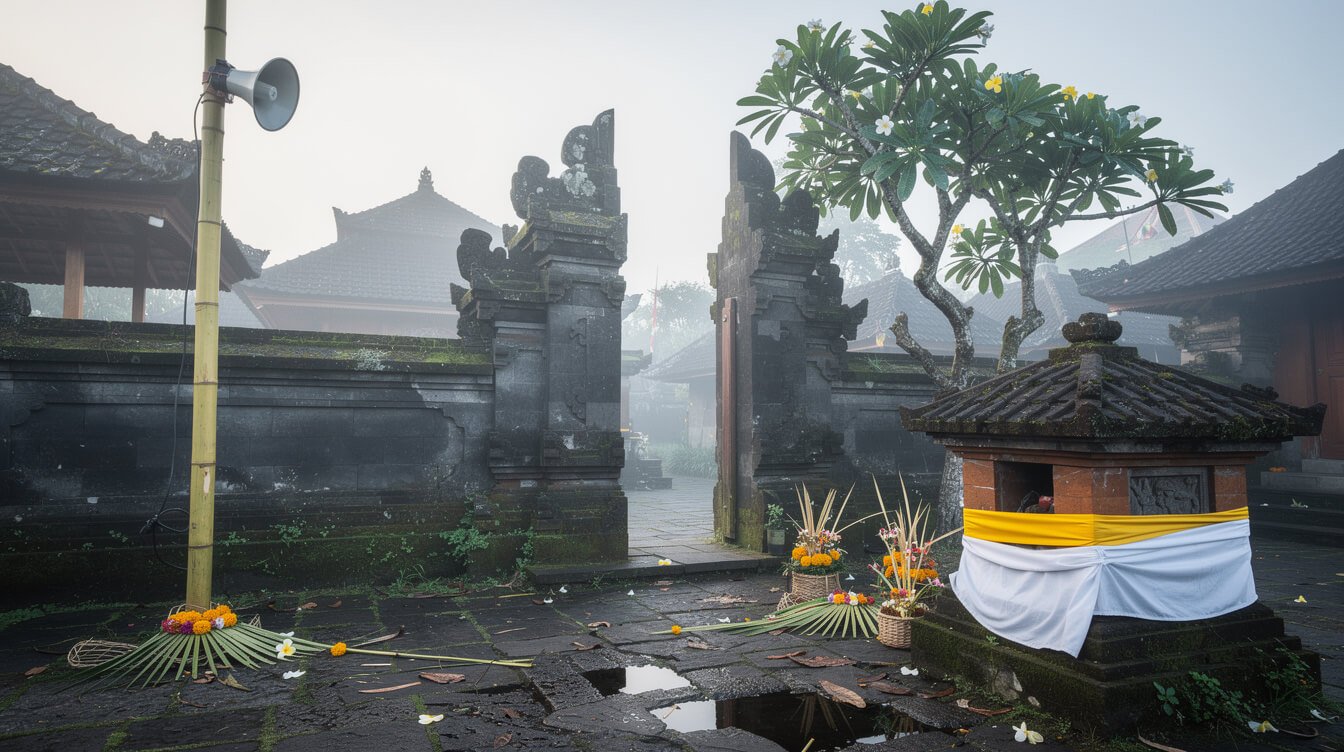
It comes in before the light does. You’re half awake, the room still blue, and somewhere beyond the garden wall a woman’s voice begins to rise. It’s a slow, wavering line that climbs, holds and bends, and then others join it. There’s no drum and no gong yet, only voices, carried over the rice fields by a single grey loudspeaker tied to a bamboo pole at the village temple.
What you’re hearing is kidung, the sung poetry of Balinese Hinduism. The verses are old, many of them in Kawi, the literary language of Java and Bali, and they’re sung slowly enough that a single line can stretch out for most of a minute. Kidung belongs to ceremony. It’s there at temple anniversaries, at weddings and cremations, and on the full-moon days when the whole village dresses in white and heads up the lane with offerings balanced on their heads.
Get a Free 3-Day Sample Itinerary
A walk down the lane, a long lunch, the rice fields in the last light of the day. We will send you a three-day Ubud rhythm built around the moments most visitors walk straight past.
The singers are usually a pesantian, a group from the village who meet in the evenings to practice reading and singing the old texts together. Many of the groups are women, though men sing too, and the voices you hear at dawn may belong to the same neighbors you passed at the market yesterday. Unlike the gamelan practice that drifts in before dinner, kidung isn’t performed for anyone watching. It’s sung toward the shrines while the offerings are laid out and the incense goes up. To the people singing, it’s part of the offering itself.
Ketut is usually the one who can tell you whose temple it’s coming from, and why. Some mornings it’s a neighbor’s family shrine, some mornings the big village temple at the top of the road. With the full moon falling this Tuesday, you’re likely to hear it more than once this week. If it’s a temple anniversary, the singing can come back every morning for several days running, with gamelan joining later in the day. For more on what the ceremonies mean, our guide to religion in Bali is a gentle place to start.

Book the Villa
Three bedrooms, a full in-villa team, and a pool of your own, and mornings quiet enough to hear the old songs carry across the rice fields. Check availability for your dates.
You don’t need to understand the words. Hardly anyone in the village could translate every line either. Just lie still for a few minutes and let the voices come and go with the breeze. If you’d like to see where it’s coming from, ask the team. A sarong and sash, a respectful distance, and a quiet spot near the temple wall are all you need. Like the kulkul drum that calls the banjar to work, it’s a sound the village makes for itself. In a staffed villa in Ubud, the team can tell you what each one means as it reaches you. And somehow it still feels like a gift.

Join Our Newsletter
Fun, new, exciting Bali news — straight from the villa, every so often.