Ubud Water Palace: Your Complete Guide to Bali’s Most Enchanting Temple Garden
The Ubud Water Palace appears without warning. You’re walking down Jalan Raya Ubud — the main street, busy with motorbikes and art galleries — and suddenly there it is: a garden of pink lotus flowers floating on still water, ancient stone carvings rising from the surface, and behind it all, a Balinese Hindu temple that has stood here for over a century. The official name is Pura Taman Saraswati, and it’s one of those places that makes you understand why people fall in love with Ubud.
We recommend the Ubud Water Palace to every guest who stays with us. Not because it’s a major time commitment — you can see it in thirty minutes — but because it captures something essential about this town. The sacred and the everyday exist side by side here. A lotus pond shares a wall with a busy café. A working temple sits at the heart of a commercial street. That’s Ubud.
This guide shares everything we’ve learned from sending hundreds of guests to the water palace — the best times to visit, what most people miss, how to time it for the evening dance performances, and where to go afterward to extend the experience into something you’ll carry home with you.
What Makes the Ubud Water Palace Unforgettable
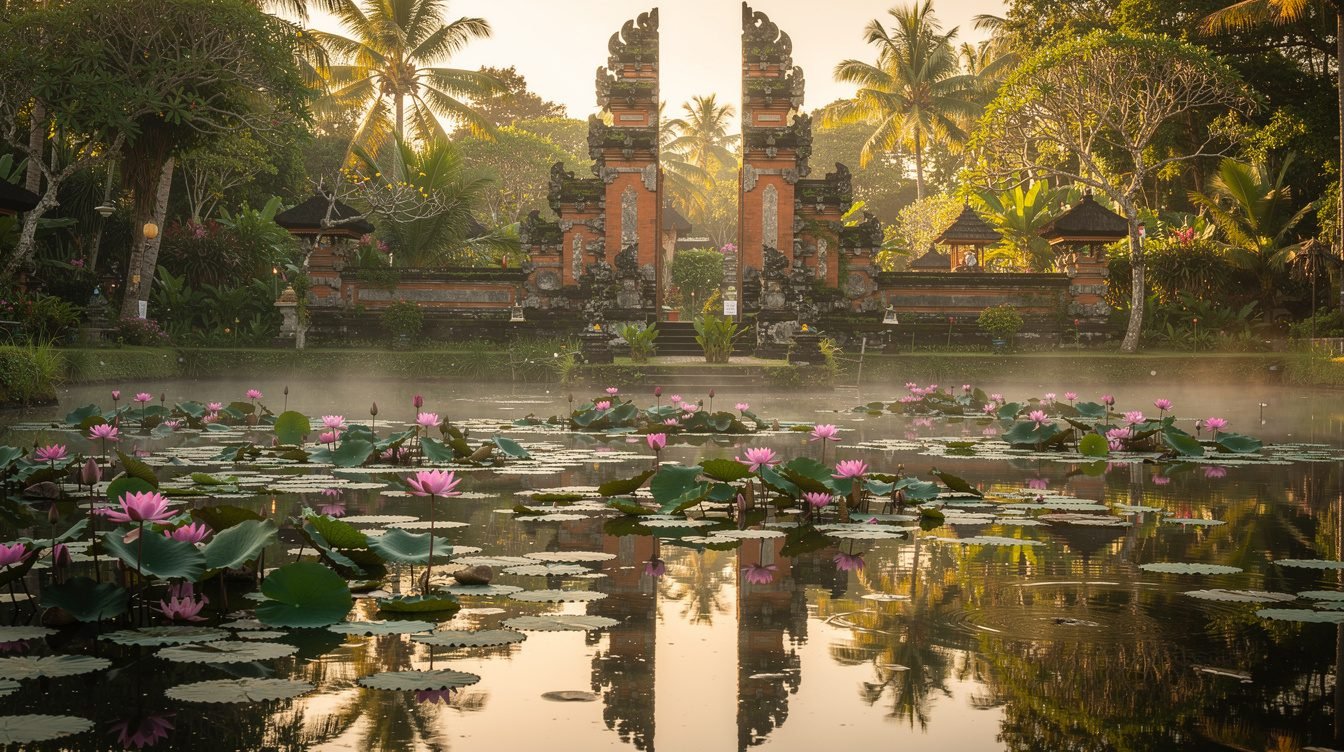
Most temples in Bali sit on hillsides or inside village compounds, separated from daily life by walls and ceremonial gates. The Ubud Water Palace does something different. It places the sacred directly in the center of town, open and visible, surrounded by lotus ponds that anyone can walk beside. The effect is both intimate and profound.
What sets this place apart from other Ubud attractions is the combination of three elements working together. First, the lotus ponds themselves — two large rectangular pools filled with pink and white lotus flowers that bloom most abundantly from May through October. Second, the stone carvings and architectural details created by one of Bali’s most celebrated artists, I Gusti Nyoman Lempad, in the 1950s. Third, the active temple behind the ponds, where Balinese people still come to pray and make offerings every single day.
The whole complex is free to enter during the day (though the temple itself is accessible only to worshippers during ceremonies). That generosity of access is part of what makes it special — you don’t need a ticket or a tour. Just walk in, find a quiet spot beside the water, and let the place work on you.
The Sacred History Behind Pura Taman Saraswati
Pura Taman Saraswati is dedicated to Dewi Saraswati, the Hindu goddess of knowledge, arts, wisdom, and learning. In Balinese Hinduism, Saraswati holds particular significance — the island’s artistic traditions, from painting to dance to gamelan music, are all considered gifts from this goddess. Placing her temple at the center of Ubud, Bali’s acknowledged cultural capital, makes profound spiritual sense.
The temple was commissioned in the 1950s by the Ubud royal family, specifically Tjokorda Gde Agung Sukawati, who led the puri (palace) during a period of extraordinary cultural flourishing. The artistic direction was given to I Gusti Nyoman Lempad, an architect, sculptor, and painter who lived to the legendary age of 116 and whose work defines much of what visitors see in central Ubud today.
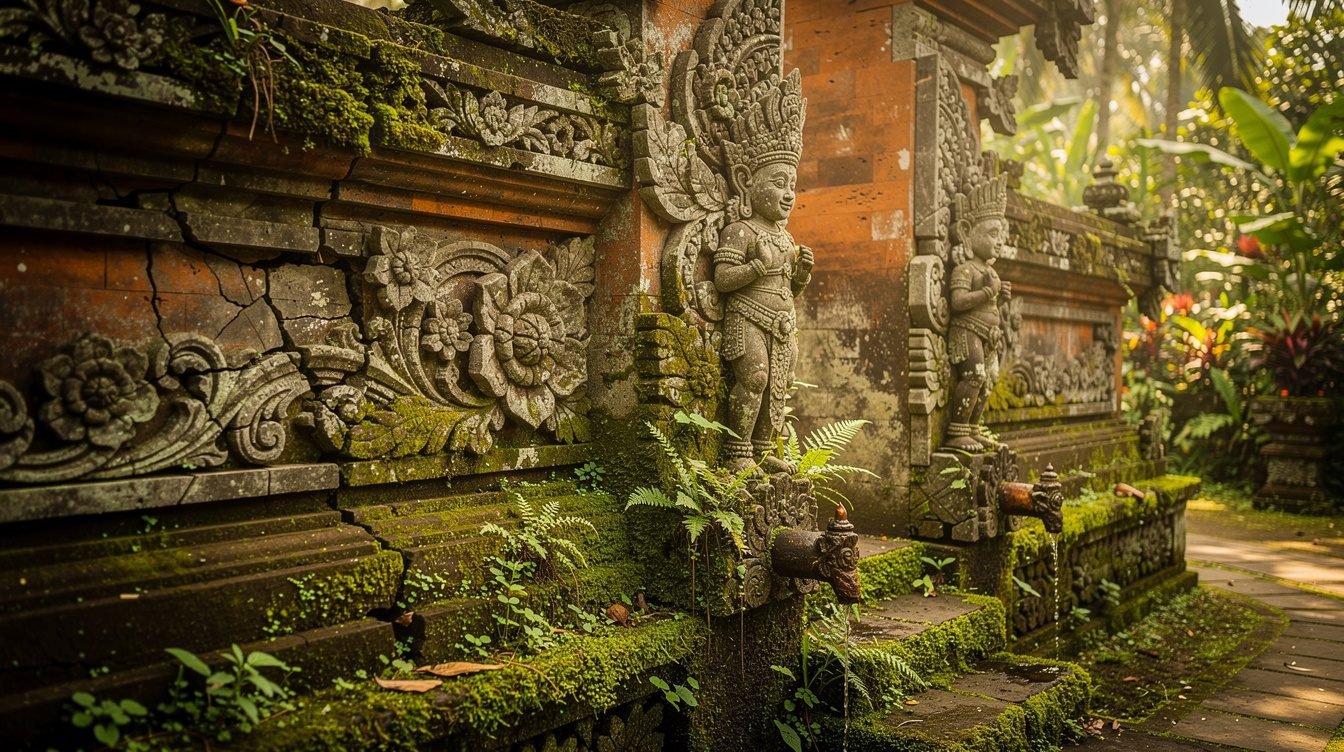
Lempad’s carvings at the water palace tell stories from Hindu mythology — particularly episodes from the Ramayana and Mahabharata epics that also form the basis of Balinese dance drama. You can see Barong figures, mythical creatures, floral motifs, and geometrical patterns carved with extraordinary precision into the soft paras stone that weathers so beautifully in Bali’s tropical climate.
The lotus ponds are not merely decorative. In Hindu-Buddhist symbolism, the lotus represents spiritual purity — the capacity to rise from muddy waters into beauty, unstained by the darkness below. Walking alongside these ponds toward the temple is itself a metaphorical journey: moving from the ordinary world into the sacred, step by step.
When to Visit the Ubud Water Palace
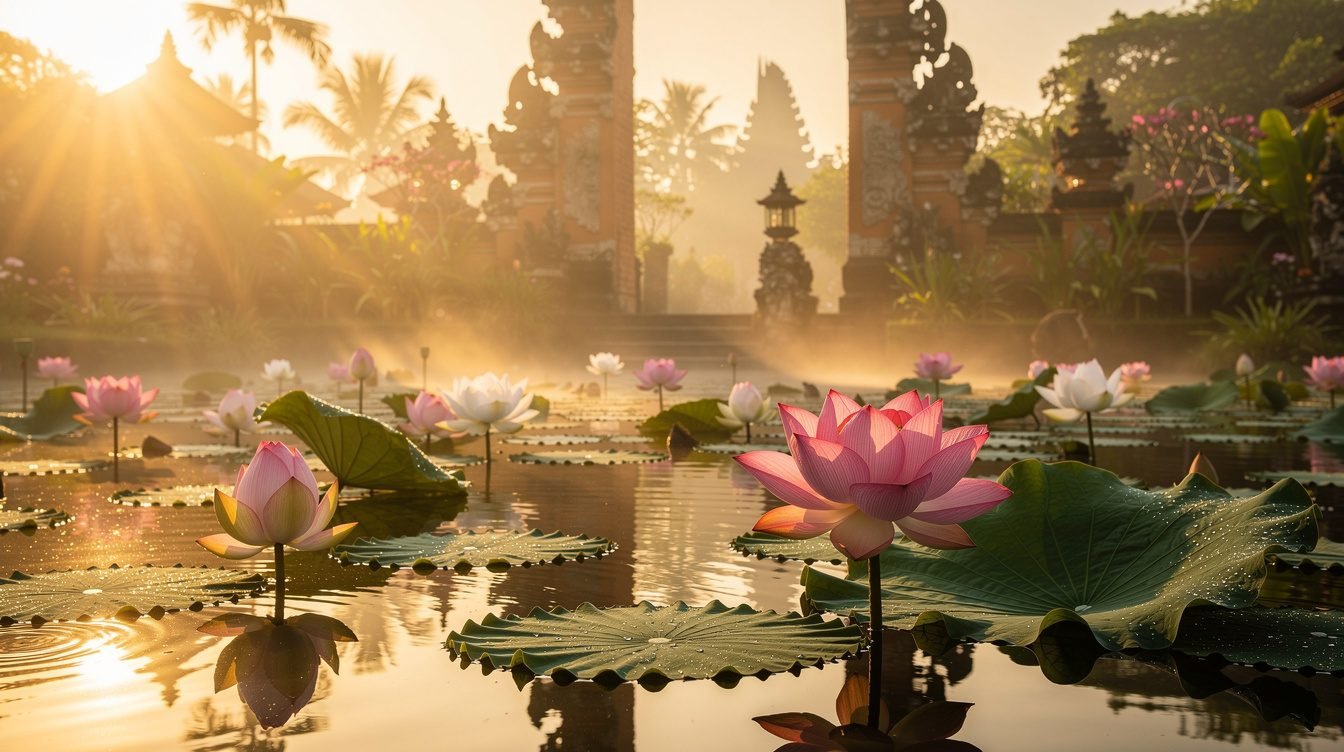
Timing matters more than most guides let on. The Ubud Water Palace is open daily from around 7:00 AM to 5:00 PM for general visits, and until approximately 9:00 PM on evenings when dance performances are scheduled.
Early morning (7:00–8:30 AM) is when we most often send guests. The light is extraordinary — warm and golden, hitting the temple carvings at a low angle that deepens every shadow and makes the stone glow. The lotus flowers are freshly open. Tourist buses haven’t arrived yet. You’ll likely share the space with just a few early risers and perhaps a Balinese woman placing her morning offerings.
Late afternoon (4:00–5:00 PM) is the second-best window. The harsh midday light has softened, the lotus flowers are still open (they close at night), and the setting sun creates gentle reflections across the water. This timing also works if you want to segue directly into dinner at one of the excellent restaurants nearby in Ubud.
Midday (11:00 AM–2:00 PM) is the least ideal. The sun is directly overhead, flattening the visual depth of the carvings and making the ponds look less magical. It’s also the hottest part of the day. If this is your only option, bring water and shade yourself under the large trees along the pond’s edges.
Evening (7:00–9:00 PM, performance nights) transforms the space entirely. Stage lighting illuminates the temple facade, the lotus ponds become dark mirrors reflecting golden light, and the gamelan orchestra fills the air with interlocking bronze tones. Performance evenings happen regularly — typically Tuesday, Thursday, and Saturday, though schedules shift seasonally.
Lotus bloom season: The flowers are most abundant from May through October (Bali’s dry season). They thin out during the wet season (November–March) but rarely disappear entirely. For the most photogenic visit, come during the dry months when the ponds are thick with pink and white blooms.
Get a Free 3-Day Sample Itinerary
See exactly how we’d plan your first three days in Ubud — from morning temple visits to evening dance performances, with our team’s favorite local spots included.
What You’ll See at the Ubud Water Palace
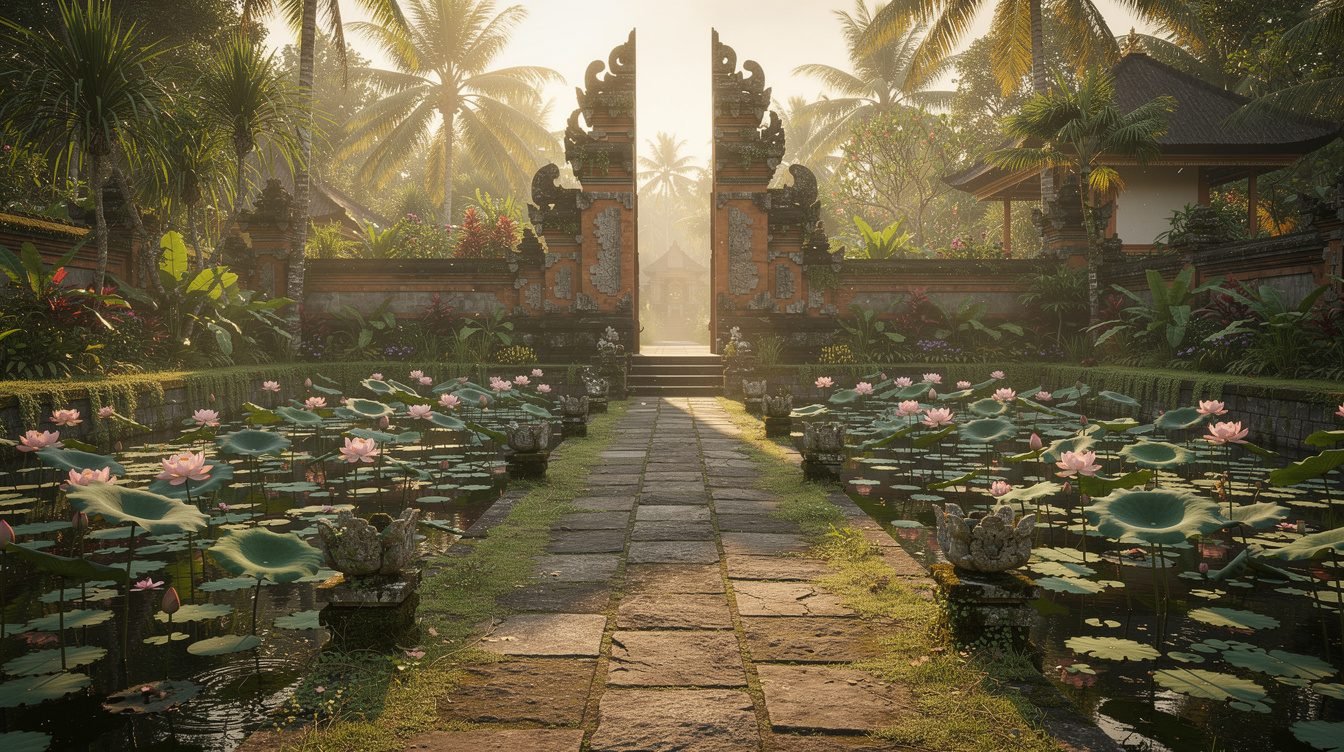
The complex is compact but layered with detail that rewards slow attention. Here’s what to look for as you explore.
The Front Lotus Ponds
Two rectangular ponds flank the main entrance walkway. The larger pond faces Jalan Raya Ubud and is visible from the street — this is where most people take their first photograph. The lotus flowers grow in clusters, and on good mornings, dragonflies hover above the blooms while small fish move beneath the surface. Stone sculptures of mythical figures emerge from the water at intervals.
The Stone Walkway
A narrow stone path crosses between the two ponds, leading from the main road toward the temple entrance. The carved stone railings on either side feature Lempad’s signature style — organic forms that seem to grow from the stone rather than being imposed upon it. Walk slowly here. Every few meters reveals a new detail: a carved face, a coiled serpent, a flower emerging from stone.
The Temple Courtyard
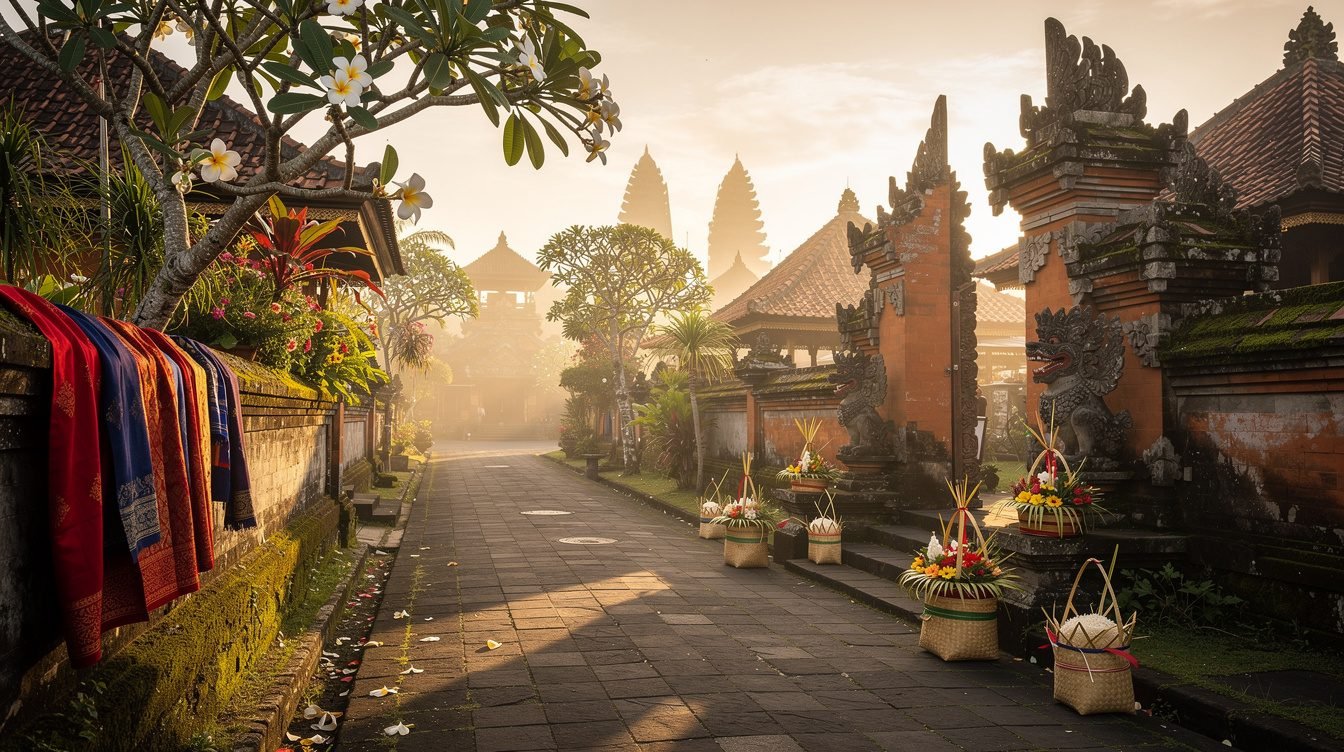
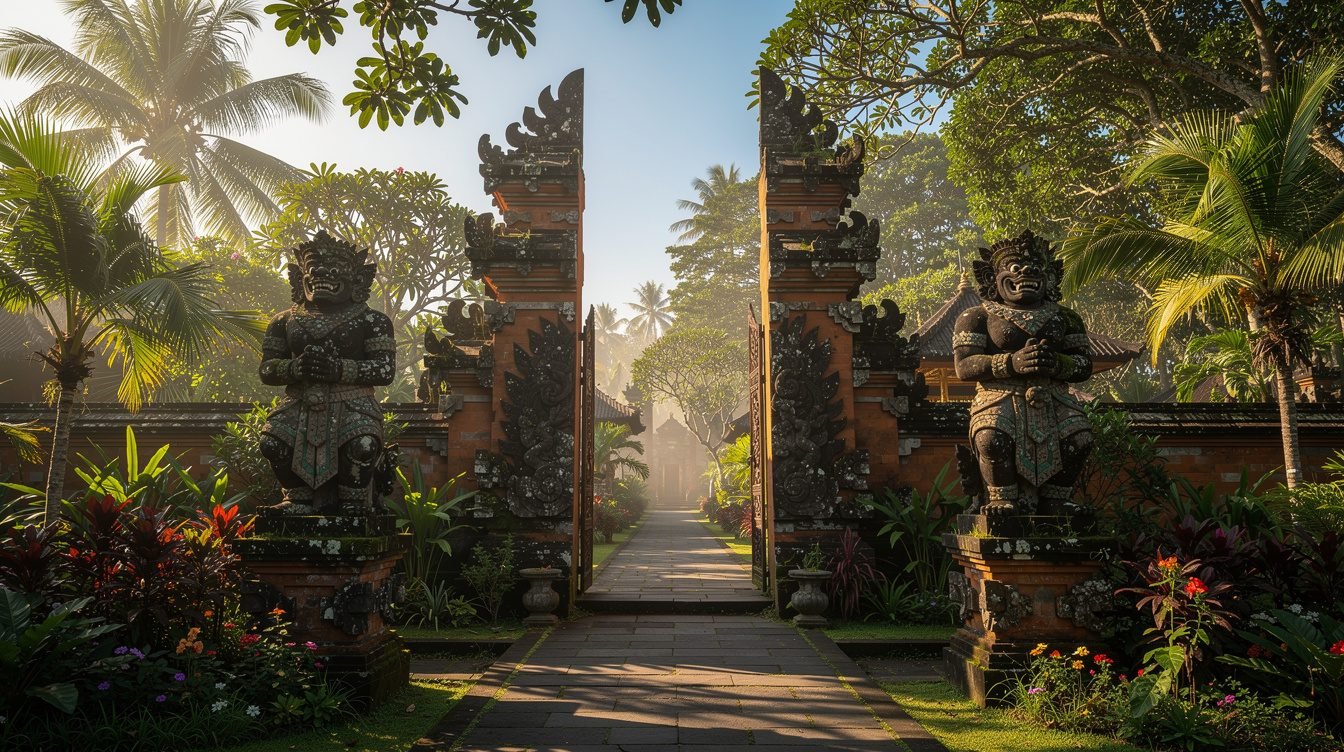
Beyond the ponds, the temple proper sits behind a traditional split gate (candi bentar). During non-ceremony times, you can often see into the courtyard from the pathway. The inner structures include shrines, meru towers (multi-tiered pagodas), and beautifully maintained grounds where daily offerings are placed each morning. If a ceremony is in progress, the courtyard fills with women carrying towering offerings on their heads and men in white prayer clothes — a living tradition, not a performance.
The Cafe Lotus Terrace
The western side of the lotus pond borders Cafe Lotus, one of Ubud’s longest-running restaurants. From their terrace, you get an elevated view across the water toward the temple — an angle that’s different from the walkway view and particularly beautiful at sunset. The food is decent (not exceptional), but the view makes it a worthwhile stop for a cold drink or afternoon tea while watching the lotus flowers catch the light.
The Evening Dance Performances
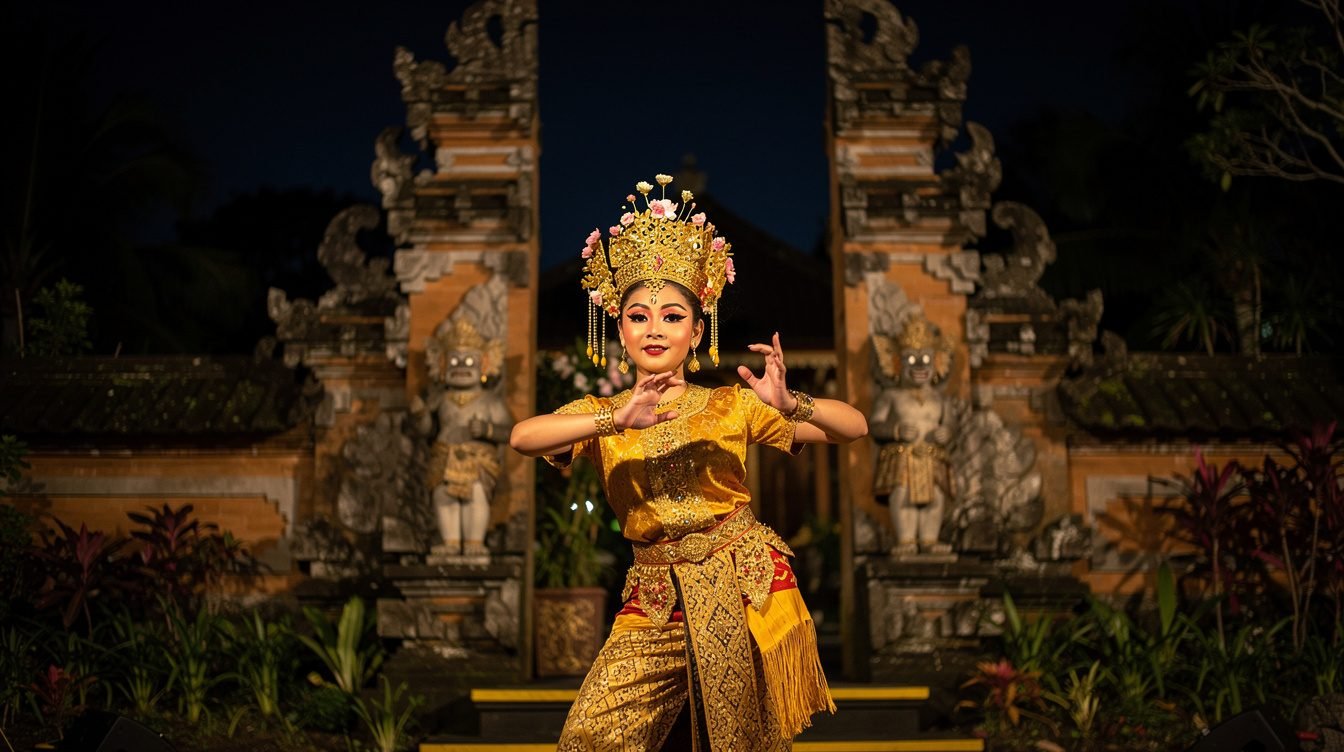
This is what elevates the Ubud Water Palace from a pleasant morning visit to something genuinely moving. On performance evenings, the temple’s front facade becomes a stage, lit by warm spotlights that pick out the stone carvings in dramatic relief. A full gamelan orchestra sets up to one side. And then the dancers appear.
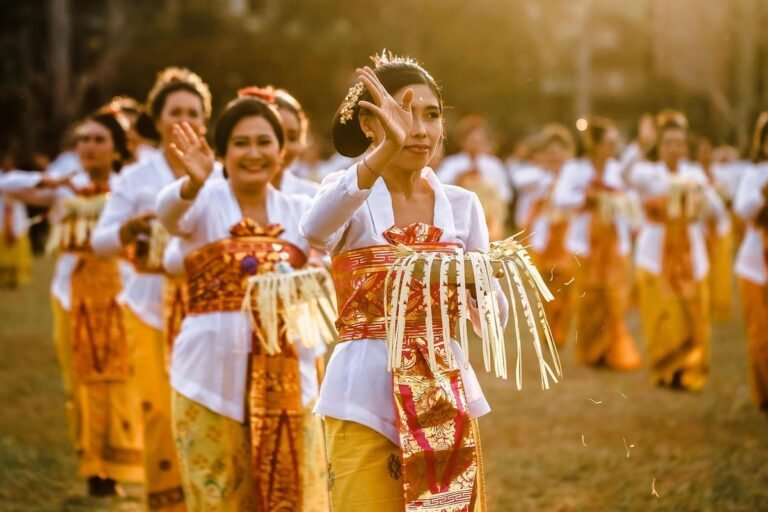
The most common performance is the Legong dance — a refined classical form performed by young women in elaborate gold costumes, telling stories from the Ramayana epic through precise eye movements, finger articulations, and flowing body positions that take years to master. The Ramayana Ballet is also frequently staged here, telling the full arc of Rama’s quest to rescue Sita through a combination of dance, music, and drama.
Performances typically start at 7:30 PM and last about 90 minutes. Tickets cost approximately IDR 100,000 (about $6-7 USD) and can be purchased at the venue from around 6:30 PM, though we recommend arriving by 7:00 PM for the best seating. Chairs are arranged in rows facing the temple, and the front rows fill quickly.
What makes this venue special compared to other dance performance locations in Ubud is the backdrop. At most venues, the stage is generic. Here, the performers dance in front of a living temple, with lotus ponds reflecting the lights on either side. The combination of ancient stone, gamelan music, moving dancers, and the warm tropical night air creates an atmosphere that photographs can’t capture.
Our villa manager checks the current performance schedule each week and can arrange transport and timing so you arrive relaxed and unhurried. Many guests combine the evening performance with dinner afterward at one of the nearby restaurants — the whole experience makes for an extraordinary evening out.
Book the Villa
A staffed villa ten minutes from the Water Palace. Private pool, personal chef, and a team that knows exactly how to plan your perfect Ubud days.
How to Get There and What to Wear
Getting There
The Ubud Water Palace sits on Jalan Raya Ubud, the main east-west street running through central Ubud. It’s directly across from Ubud Royal Palace (Puri Saren Agung) and next to Cafe Lotus. If you’re staying at a private villa in the Ubud area, it’s typically a 5-15 minute drive depending on your location.
From our villa: About ten minutes by car. Your villa manager can arrange a driver, or you can take a short motorbike ride if you’re comfortable on two wheels. Walking is also possible from central Ubud — it’s a five-minute stroll from the Ubud Market.
Parking: The temple doesn’t have its own parking lot, but there are several options along Jalan Raya Ubud and in the side streets. Your driver will know where to wait.
Google Maps pin: Search for “Pura Taman Saraswati” or “Ubud Water Palace” — both will bring you to the correct location at the intersection of Jalan Raya Ubud and Jalan Kajeng.
What to Wear (Temple Etiquette)
While the lotus ponds and walkway area don’t enforce a strict dress code, the complex is a working temple, and respectful dress is appreciated. If you want to enter the temple courtyard during non-ceremony times (when permitted), a sarong and sash are required.
Our recommendation: Cover your knees and shoulders. A sarong over shorts works perfectly — many guests carry a light sarong in their bag for exactly these moments. If you forget, there are usually sarongs available for rent near the entrance for a small donation.
Menstruating women: Per Balinese custom, women who are menstruating should not enter the temple courtyard. This applies only to the inner temple area, not to the lotus ponds and walkways that most visitors explore.
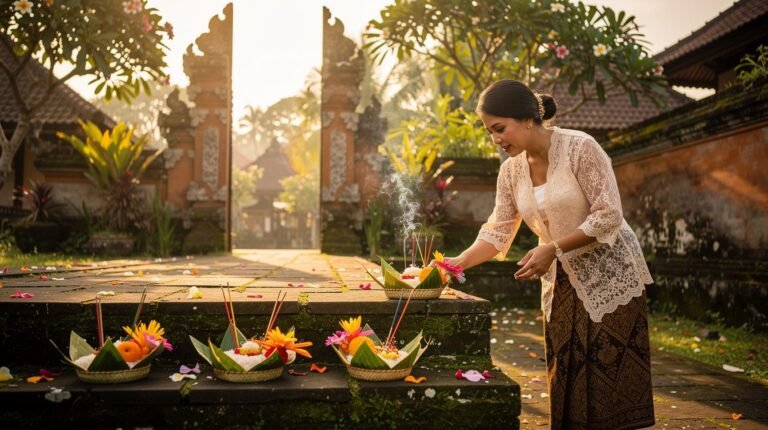
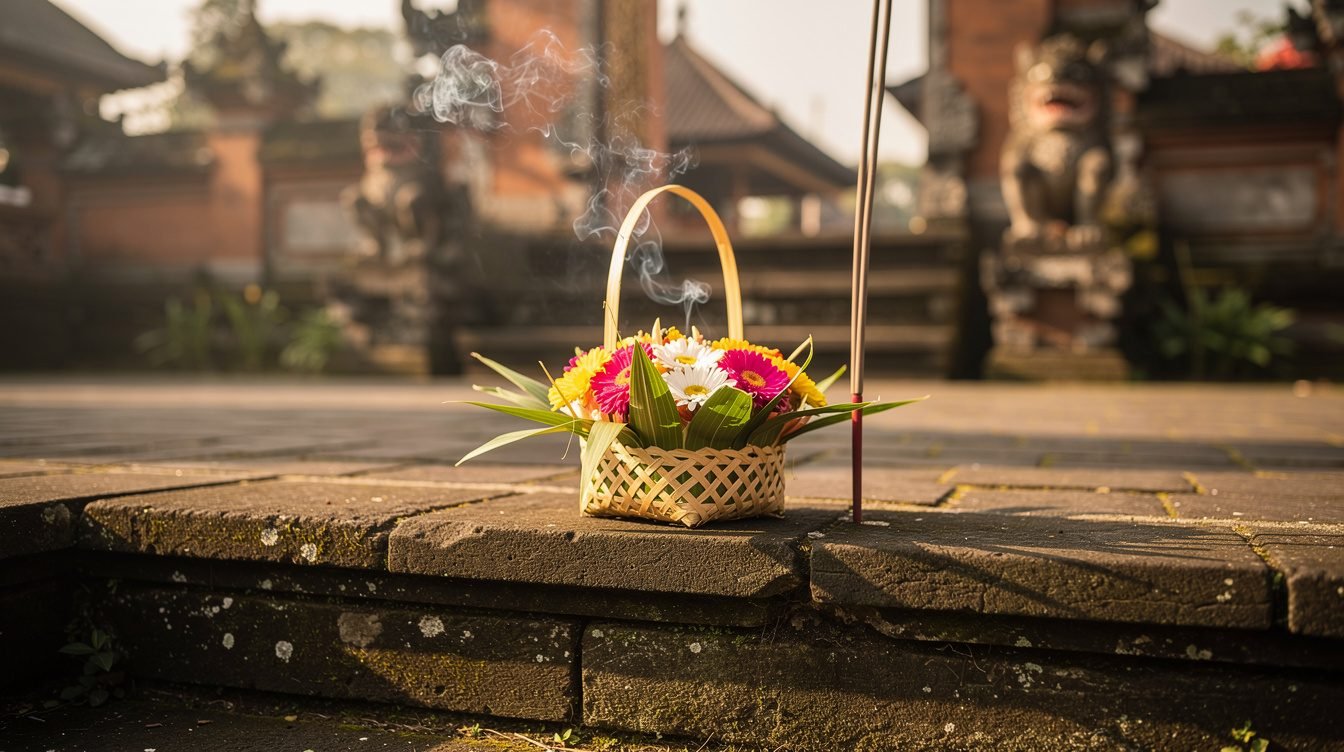
General courtesies: Don’t climb on the stone carvings. Don’t step on offerings (the small woven baskets with flowers and incense that appear throughout the grounds). Keep voices moderate near the temple entrance. These are basics, but they matter to the Balinese community who worship here daily.
Where to Go After the Ubud Water Palace
The water palace sits at the heart of Ubud’s walkable center, so extending your visit into a half-day of exploration is effortless. Here’s how we’d suggest building out the experience.
Walk Across the Street: Ubud Royal Palace (Puri Saren Agung)
Literally across Jalan Raya Ubud, the Royal Palace opens its front courtyard to visitors for free during the day. The architecture is more ornate than the water palace — towering gates, gold-painted carvings, and elaborate guardian statues. The Royal Palace also hosts evening dance performances (usually Barong dance or Kecak), making it possible to choose between two performance venues on any given night.
Walk East: Ubud Art Market
Five minutes on foot east along Jalan Raya Ubud brings you to the Ubud Art Market, where local artisans sell paintings, woven goods, wood carvings, silver jewelry, and ceremonial items. The market is best in the early morning (before 9 AM) when the local artisan section is active, or throughout the day for the tourist-facing stalls. Bargaining is expected — start at about 40% of the asking price.
Walk North: Jalan Kajeng and the Rice Fields
The small lane (Jalan Kajeng) running north from beside the water palace leads into quieter streets and eventually to the edge of the Ubud rice terraces. It’s a lovely 15-minute walk that takes you from the busy center into green stillness. For a longer nature walk, head to the Campuhan Ridge Walk — about 20 minutes on foot from the water palace.
Eat Nearby
The central Ubud dining scene is dense and excellent. From the water palace, you’re within a five-minute walk of Cafe Lotus (adjacent), Bridges Bali (upscale, river valley views), Bebek Bengil (crispy duck, garden setting), and dozens of warungs. For our full recommendations on Balinese food and dining culture, including what to order and how our chef can recreate your favorites, see our dedicated guide.
Explore Further
If you have a full day, combine the water palace morning visit with one of the beautiful waterfalls near Ubud in the afternoon. Tegenungan (25 minutes south) is closest, while Tibumana (30 minutes northeast) offers a more secluded experience. Your villa manager can map out the perfect route so you don’t waste time backtracking.
Frequently Asked Questions About the Ubud Water Palace
Is the Ubud Water Palace free to visit?
Yes. There is no entrance fee for visiting the lotus ponds and walkway areas. The evening dance performances have a separate ticket (approximately IDR 100,000). Donations to the temple are always appreciated.
How long should I spend at the Ubud Water Palace?
Most visitors spend 20-40 minutes exploring the ponds and carvings. If you add a drink at Cafe Lotus, allow 60-90 minutes. For evening performances, plan 2-3 hours total (including arrival time and the 90-minute show).
What is the Ubud Water Palace’s real name?
The official name is Pura Taman Saraswati. “Pura” means temple, “Taman” means garden, and “Saraswati” references the Hindu goddess of knowledge and the arts. “Ubud Water Palace” is the common tourist name.
Can I swim in the lotus ponds?
No. The ponds are sacred temple grounds, not swimming pools. They are home to the lotus flowers and fish that are part of the temple’s spiritual ecosystem.
Is the Ubud Water Palace the same as Tirta Empul?
No. Tirta Empul is a different temple located about 30 minutes northeast of Ubud, famous for its holy spring water purification ritual (melukat). The Ubud Water Palace (Pura Taman Saraswati) is a garden temple in central Ubud dedicated to the goddess Saraswati. Both are worth visiting but offer very different experiences.
What’s the best way to get to the Ubud Water Palace from my accommodation?
If you’re staying at a staffed villa in the Ubud area, ask your villa manager to arrange transport. From central Ubud, it’s walkable. From outer areas (Tegallalang, Campuhan, Lodtunduh), a 10-20 minute drive covers it. Ride-hailing apps (Grab, Gojek) also work well.
Are there dance performances every night?
Not every night. Performances at the water palace venue typically happen 3-4 times per week (commonly Tuesday, Thursday, and Saturday). Schedules change seasonally and for Balinese holidays. Your accommodation can check the current week’s schedule — our team updates this information weekly for guests.
Is the Ubud Water Palace suitable for children?
Yes. Children enjoy the fish in the ponds and the stone carvings (which often depict animals and mythical creatures). The evening dance performances can captivate older children (ages 6+), though younger ones may find 90 minutes long. The space is flat and stroller-accessible along the main walkway.

Join Our Newsletter — Fun, New, Exciting Bali News
Real stories from Ubud — ceremonies, hidden spots, what’s happening this week. From our team to your inbox, with genuine warmth.