The Morning Offerings You’ll Step Around in Ubud
Before the coffee. Before the traffic on Jalan Raya. Before anyone at the villa has pulled back their curtains — the offerings are already out.
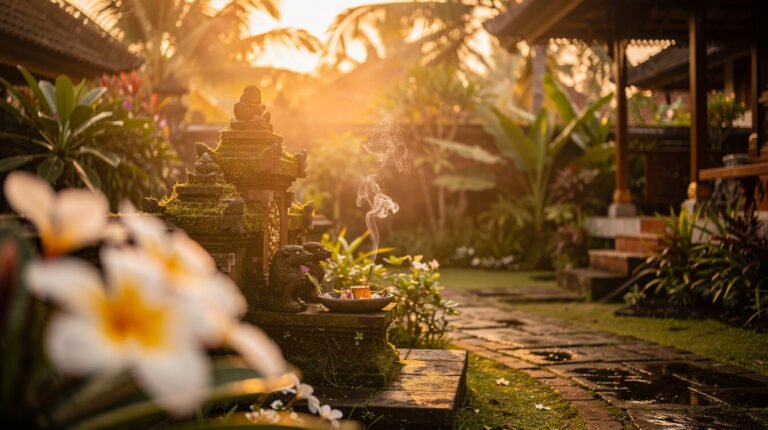
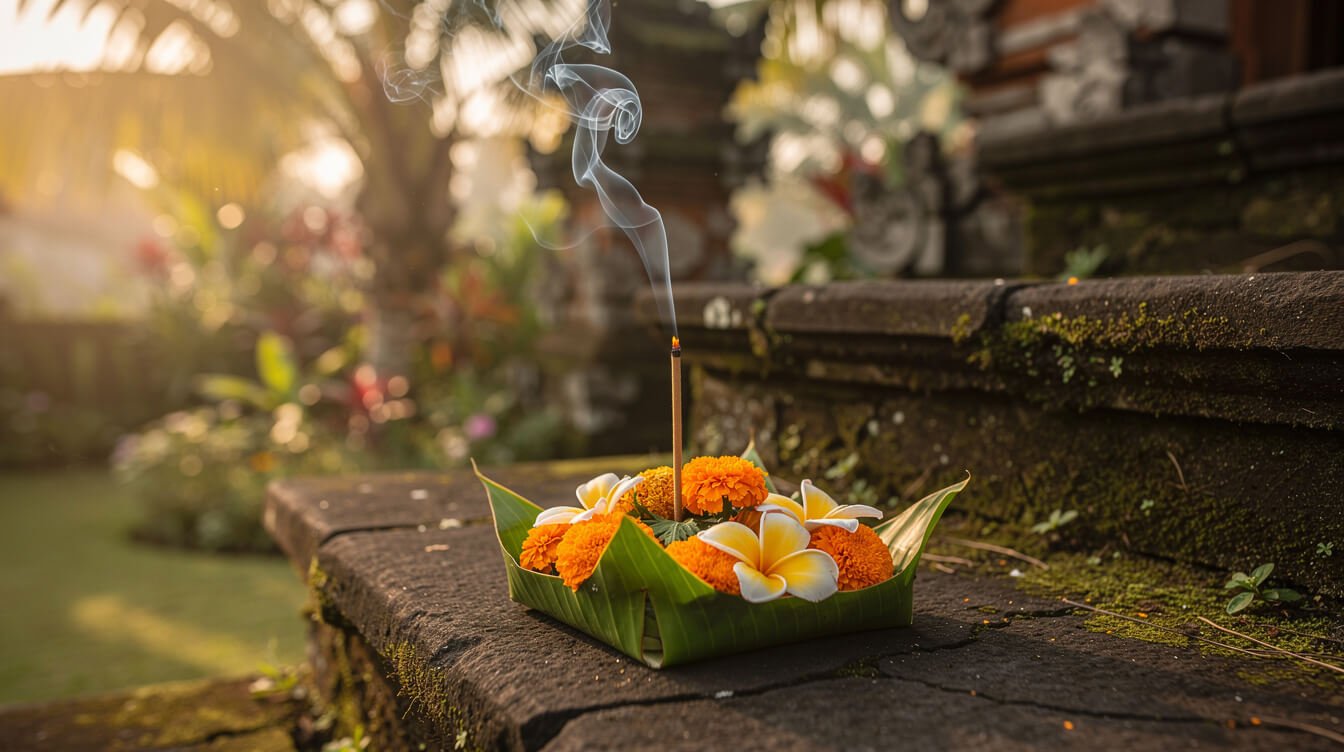
Small squares of banana leaf, folded and pinned. Each one holds a few grains of rice, a petal or two, a stick of incense trailing thin smoke into the morning air. They appear on stone steps, at the base of doorways, on the dashboard of a parked motorbike. By the time you walk to breakfast, you’ve already passed six of them.
What Canang Sari Looks Like Up Close
This is canang sari — the daily offering that marks morning in Ubud. And once you notice them, you see them everywhere.
Our housekeeper places them before she starts anything else. She works quickly, with hands that know the folds without looking. A marigold here. A piece of white frangipani there. The colors have meaning — each direction gets its own. Red for Brahma, south. White for Iswara, east. Yellow for Mahadeva, west. Blue or green for Vishnu, north. She doesn’t explain this while she works. She just does it.
The Incense Is What You Notice First
It catches you before the visual does — that thin, sweet smoke drifting sideways across the stone path, mixing with morning humidity and the green smell of the garden after the sprinklers. It’s the scent of Ubud waking up. Every house, every shop, every warung on Jalan Kajeng does the same thing at roughly the same hour.
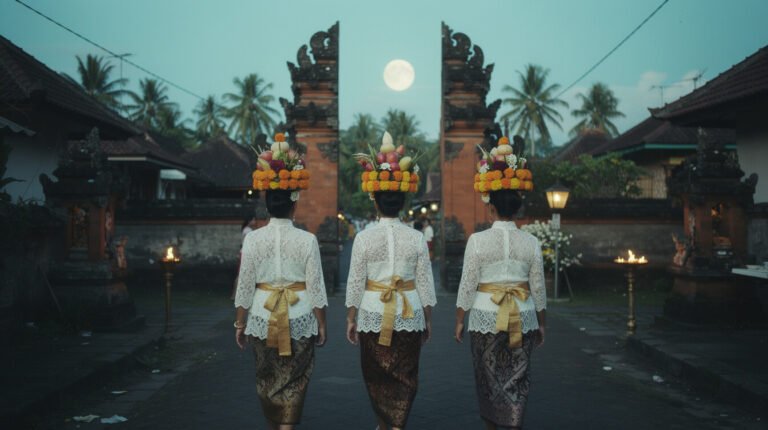
Walk through the Ubud Royal Palace grounds any morning before nine and you’ll see dozens of them, freshly placed. At the temple gate. At the base of the banyan tree. Along the carved stone walls where moss has softened every edge. Some are simple — rice and a single flower. Others are elaborate, stacked with fruit and wrapped in white cloth for a ceremony day.
Stepping Around, Not Over
You’ll learn to step around them. Not over them — around. That small courtesy is the first thing Ubud teaches you without a single word. The offering sits at the threshold, and you adjust your path. After a few days, you do it without thinking. It’s one of the quiet rhythms that sets Ubud apart from anywhere else on the island.
By afternoon, some will be scattered by the wind or nudged aside by a stray dog. That’s expected. The offering is in the making and the placing — not in the preservation. Tomorrow morning, the whole cycle begins again.
When the Ceremonies Come
If you’re planning your stay during a ceremony week, you’ll see the scale shift entirely. Made and the team prepare for days. The kitchen fills with cut flowers and folded palm leaves. The offerings grow taller, more layered, more intricate. The air thickens with incense. Those mornings are something you carry with you long after you leave.
It’s not a performance. It’s not for guests. You just happen to be inside a rhythm that’s been running for centuries.