What the Rain in Ubud Sounds Like on Warm Stone
There’s a moment — right before the rain in Ubud arrives — when everything goes quiet.
The cicadas stop. The roosters hold their notes. Even the breeze through the palms seems to pause, as if the garden is drawing one slow breath before something shifts.
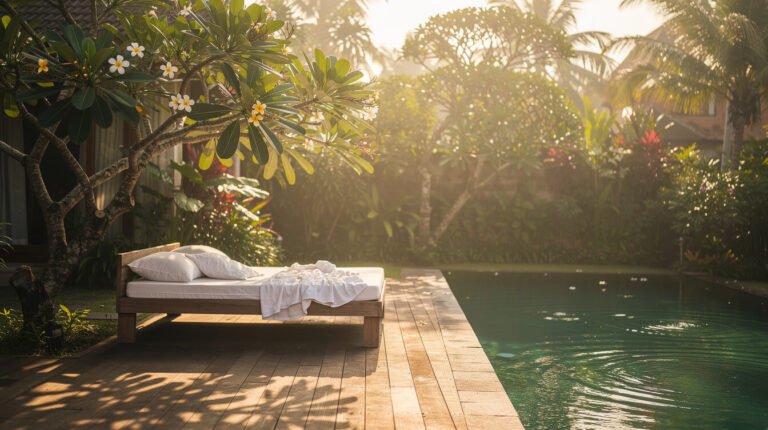
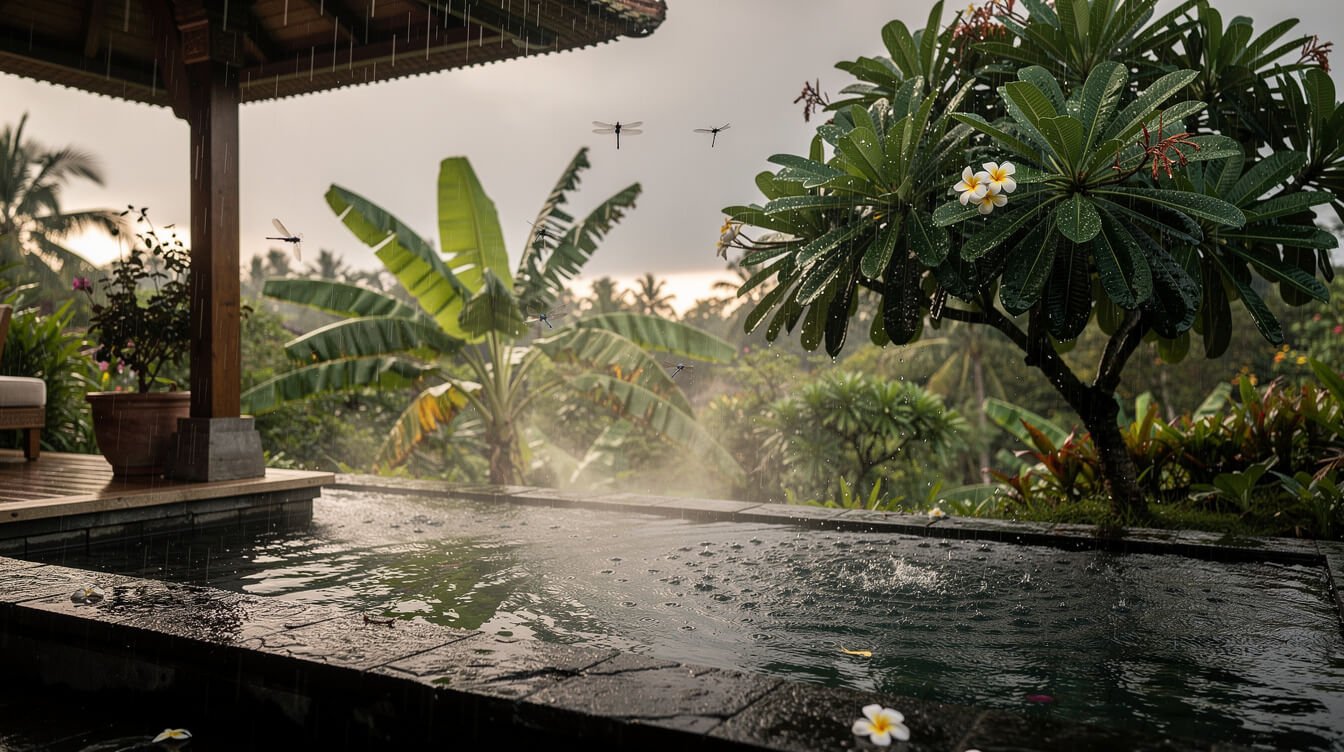
You notice it from the pool deck first — a drop in air pressure you feel on your skin before you hear anything at all. The sky thickens from white-blue to a deep, moving grey. And then the first drops land on the warm stone, each one leaving a dark circle that disappears almost as quickly as it appeared.
Then the sound begins.
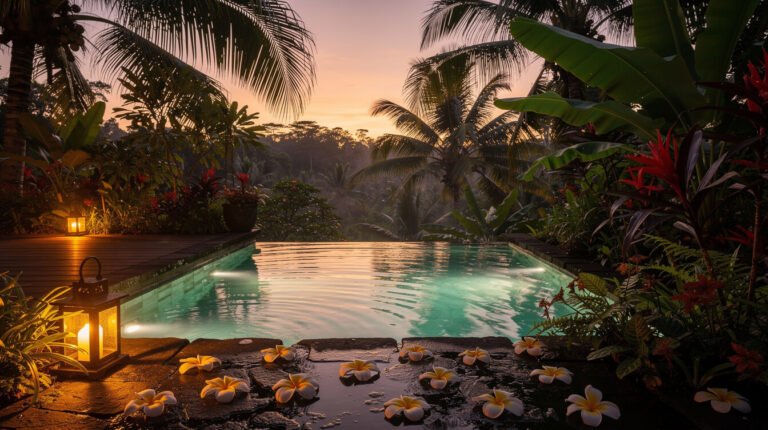
Rain here doesn’t arrive gently. It builds — a rhythm on broad banana leaves that sounds like soft applause, then the deeper percussion of water hitting the pool surface, then the steady curtain on the clay roof tiles overhead. Each surface in the garden has its own note. The frangipani tree collects drops on its waxy leaves and releases them in heavy, irregular plops. The moss-covered stone path makes a sound like someone pressing their palms together, slow and wet.
The smell is immediate. Petrichor mixes with damp earth, and somewhere in that blend there’s the green sweetness of wet tropical leaves — something you can’t separate from the warmth underneath. The rain is cool but the stone gives its heat back, and that meeting of cool water on sun-warmed volcanic rock creates a kind of steam that smells like the earth remembering what it’s for.
This is when the villa becomes its most intimate. From the covered terrace, you watch the garden transform. Colors deepen. Everything looks richer — the moss, the ferns, the red ginger flowers lining the path. The pool surface becomes a moving sheet of silver. And you’re dry, holding something warm, listening to the whole garden receive what it was waiting for.
Ubud’s rain is rarely an inconvenience. It’s a rhythm — as much a part of the day as morning birdsong or the evening gamelan drifting from the village temple. Many guests tell us the rain was one of their favorite parts of staying here. Not because it changed their plans, but because it gave them permission to stop. To sit. To watch something happen that didn’t need them at all.
The rain passes in twenty minutes, sometimes thirty. The garden exhales. Dragonflies arrive. And the afternoon resumes — quieter, cooler, washed clean.
If you’re wondering about the best time to visit Ubud, consider this: every season has its version of this moment. Even in the drier months, afternoon showers arrive to remind you that Bali’s beauty isn’t static — it’s alive, always shifting.
There’s a reason staying in a private villa makes the rain feel different from a hotel. No lobby to retreat to, no crowds reshuffling under awnings. Just you, the covered terrace, the garden, and a sound that makes Ubud worth every hour you spend here.