Bali Meditation Retreat: Your Complete Guide to Finding Deep Stillness in Ubud
A bali meditation retreat changes the shape of your days. Not because someone hands you a schedule or rings a bell at dawn — but because Ubud itself slows you down. The rice fields breathe. The morning offerings appear on every doorstep before the sun clears the palm line. The gamelan drifts from the village temple at dusk, and you find yourself sitting still without deciding to.
Most travelers arrive in Bali looking for beaches and sunsets. The ones who find Ubud discover something quieter — a place where meditation isn’t something you schedule between tours, but something the landscape invites you into. Whether you’re drawn to Vipassana silence, mindfulness practice, sound healing, or simply the act of being still in a garden while someone else handles everything, Ubud offers a depth of contemplative experience that’s difficult to find anywhere else in Southeast Asia.
This guide walks you through every kind of bali meditation retreat available in Ubud — from structured group programs to the private, self-designed alternative that most guides never mention. We’ll cover what to expect, what it costs, how to choose the right format for you, and how to bring the practice home with you when you leave.
Why Ubud Is the Ideal Setting for a Bali Meditation Retreat
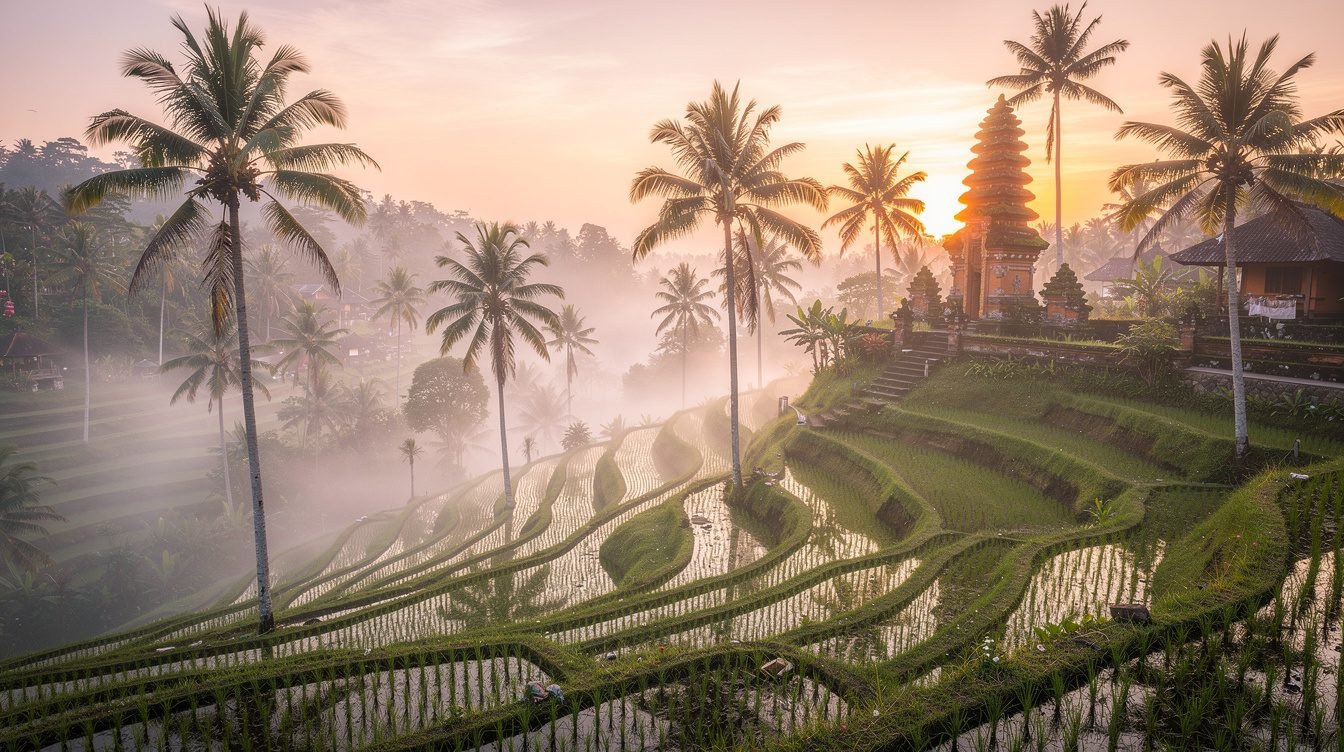
Ubud sits in the cultural heart of Bali, surrounded by terraced rice fields, river gorges, and ancient temples. Unlike the coastal party towns of Kuta or Seminyak, Ubud moves at the pace of village life — morning ceremonies, market rhythms, and the sound of flowing water from the Ayung and Campuhan rivers.
This isn’t accidental. Ubud has been a center of Balinese spiritual practice for centuries. The Tirta Empul water purification temple, the meditation caves of Goa Gajah, and the hilltop temples along the Campuhan Ridge all predate tourism by hundreds of years. When you meditate here, you’re sitting in a place that was shaped for contemplation long before retreat centers existed.
The climate supports stillness, too. At 300 meters above sea level, Ubud is cooler than the coast — warm enough to sit outdoors at sunrise, temperate enough that midday heat doesn’t break your focus. The morning mist that rolls through the rice terraces creates a natural container for early practice. The dry season from April through October offers weeks of unbroken calm mornings, while the wet season brings afternoon rains that become their own meditation — the sound of water on broad tropical leaves, the scent of wet earth rising from the garden.
The Balinese concept of Tri Hita Karana — harmony with the divine, with other people, and with nature — isn’t a tourist attraction. It’s the operating system of village life. When you wake to the sound of the gardener placing offerings, when you see the temple processions winding through the rice fields, when the evening gamelan starts without announcement — you’re witnessing a culture that practices mindfulness as a way of being, not as an event on a schedule.
Types of Meditation Retreats You Can Experience in Bali
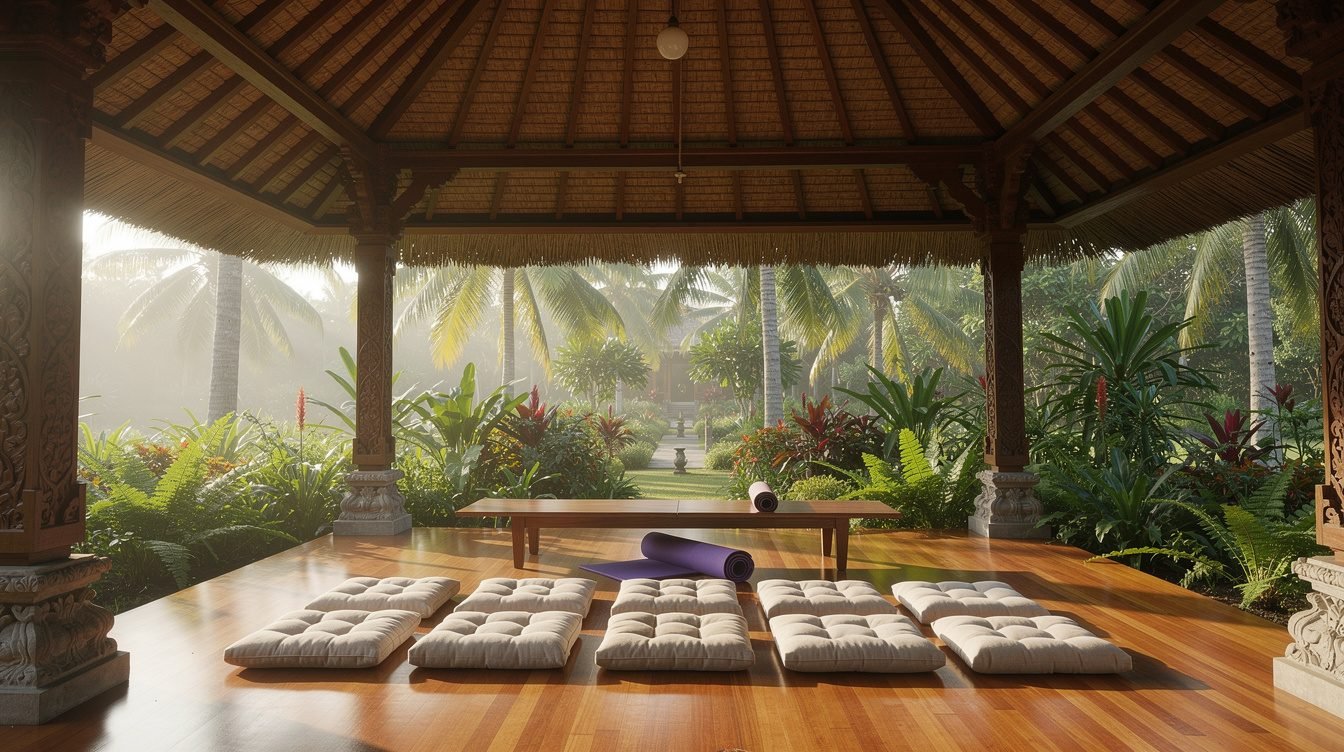
Bali offers a wider range of meditation formats than almost anywhere in the world. Understanding the options helps you choose the experience that fits your intention — whether that’s deep silence, gentle introduction, or something entirely your own.
Vipassana and Silent Retreats
The traditional Vipassana format — ten days of noble silence, no devices, no eye contact, no reading — is available at centers like Dhamma Geha near Denpasar and the Bali Silent Retreat in Tabanan. These are intensive, structured programs with fixed schedules (typically starting at 4:30 AM) and teacher-led instruction. Most operate on a donation basis. They’re powerful, but they’re not gentle — and they’re not for everyone.
Mindfulness and Wellness Retreats
Centers like Blooming Lotus in Ubud and Fivelements on the Ayung River offer softer entry points — three to seven-day programs combining mindfulness meditation with yoga, breathwork, and sometimes Balinese healing traditions. These typically include group classes, shared meals, and scheduled free time. They’re a strong fit for first-time practitioners or anyone who wants structure without severity.
Sound Healing and Ceremonial Retreats
Ubud’s sound healing scene runs deep. Crystal singing bowls, Tibetan bells, gongs, and traditional Balinese gamelan are all used in ceremonial settings. Some retreats combine sound healing with Balinese spiritual traditions — melukat water purification ceremonies, visits to balian healers, or meditation in active temples. These work especially well for people who struggle with silent sitting but respond to vibration and rhythm.
Yoga-Integrated Retreats
Many yoga retreats in Bali include substantial meditation components — morning pranayama, guided meditation after asana practice, yoga nidra (conscious sleep) sessions. If you already have a yoga practice, these offer a natural extension into stillness without abandoning movement entirely.
The Private Villa Alternative
This is the format most guides don’t cover — and the one that often produces the deepest experience. Instead of joining someone else’s program, you design your own retreat from a private staffed villa. You set the rhythm. Your chef cooks for your practice. Your villa manager arranges the teacher, the ceremony, the silence. More on this below.
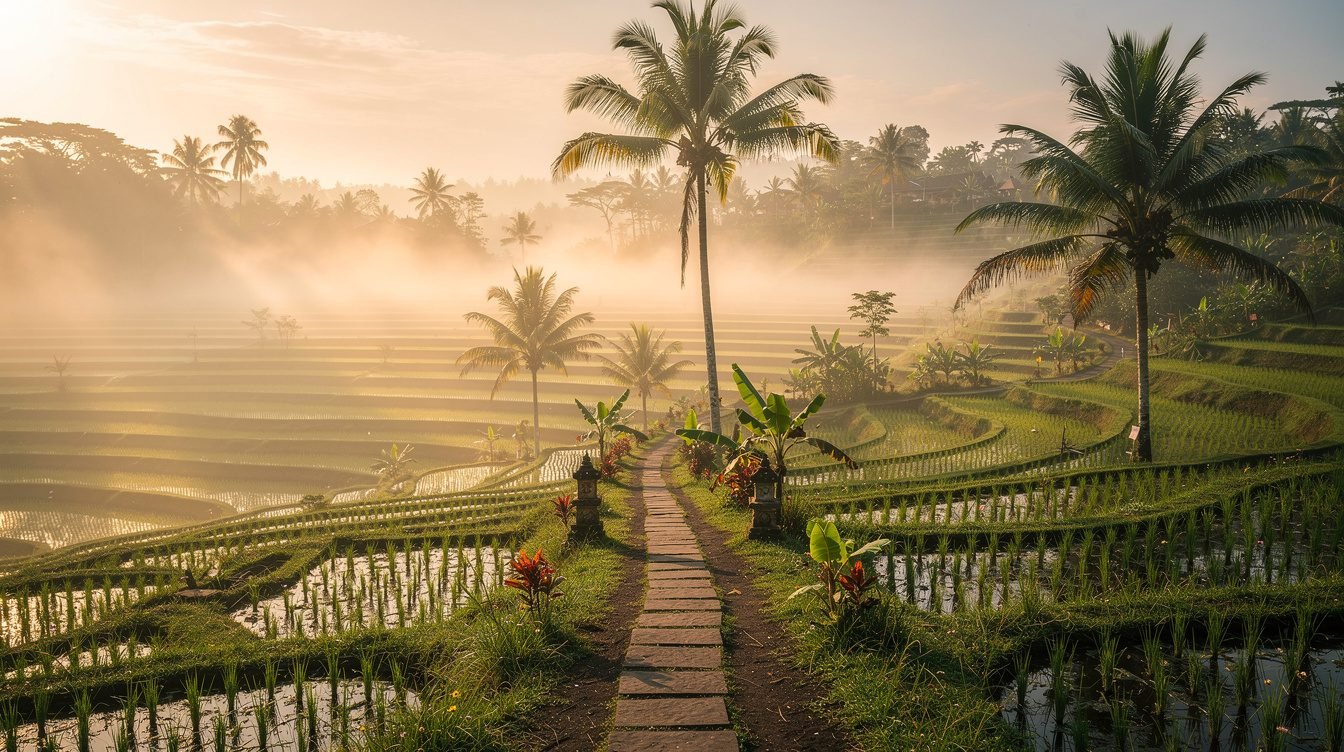
Get a Free 3-Day Sample Itinerary
See what a self-designed meditation retreat at Villa Amrita actually looks like — morning to evening, meal by meal, sit by sit.
What to Expect on Your First Bali Meditation Retreat
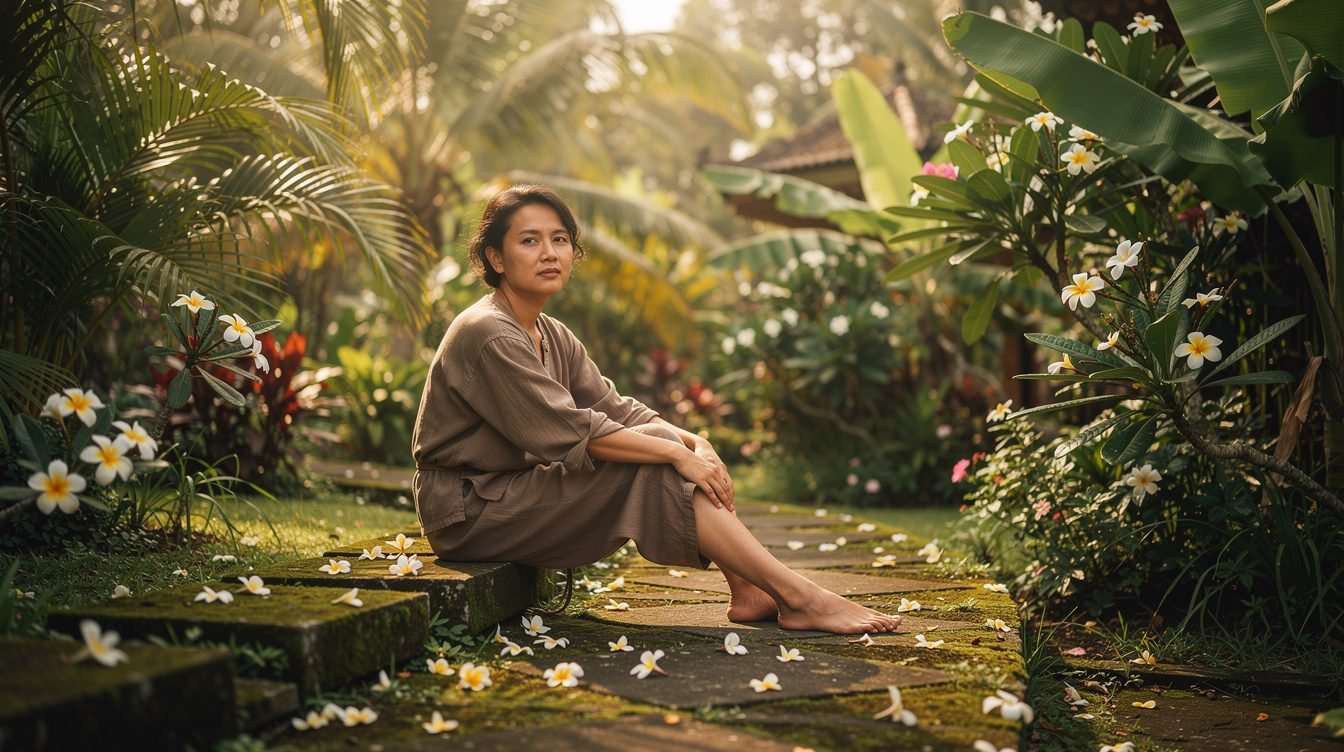
If you’ve never done a meditation retreat, the idea can feel both magnetic and intimidating. Here’s what actually happens — stripped of the marketing language.
The first day is the hardest. Your mind isn’t used to silence. Your body isn’t used to stillness. You’ll notice every sound, every itch, every thought that loops back on itself. This is normal. It’s not failure — it’s the beginning of attention.
Your body will talk to you. Sitting for extended periods reveals tension you didn’t know you carried. Knees, hips, shoulders, jaw. Good retreat settings offer cushion adjustments, walking meditation breaks, and gentle stretching between sits. If you’re at a villa with a pool, a slow swim between sessions changes everything.
Meals become an event. When you eat in silence — or even just in slow awareness — food tastes different. You notice texture, temperature, the work that went into preparation. At a healing retreat in Bali, meals are often designed to support practice: lighter in the morning, nourishing at midday, gentle in the evening.
Insights arrive sideways. The big realizations rarely come during formal sitting. They come while you’re walking through the rice fields, or watching rain fall on the pool surface, or lying in bed at night. Meditation creates the conditions; life delivers the content.
You’ll want to quit at least once. Every retreatant has a moment — usually around day two or three — where leaving sounds like the only reasonable option. This is so common that experienced teachers call it “the resistance peak.” What’s on the other side of that resistance is usually the reason you came.
The Private Villa Alternative — Design Your Own Bali Meditation Retreat
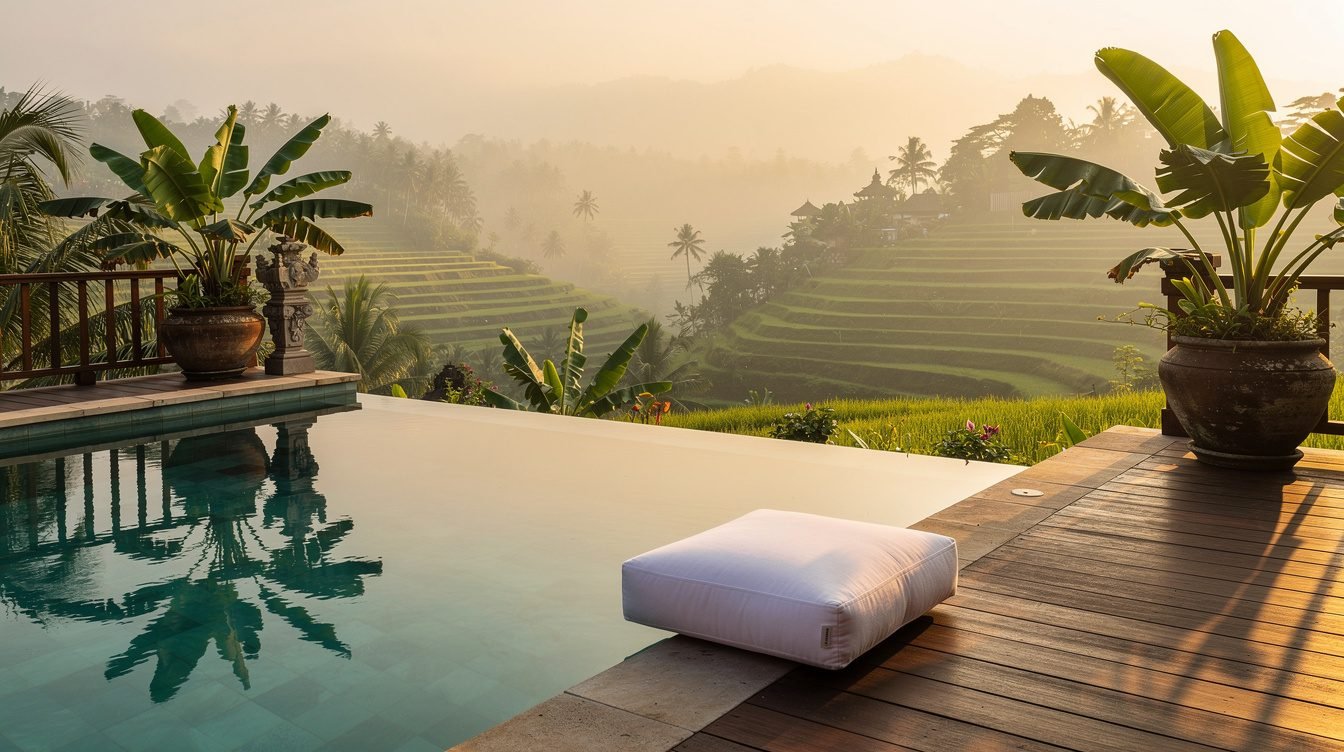
Every guide on bali meditation retreats lists the same ten centers. And those centers are genuinely good. But they all share the same model: you join someone else’s program, on someone else’s schedule, eating someone else’s menu, sleeping in someone else’s room, meditating with someone else’s group.
There’s another way. And for many practitioners — especially experienced ones, couples, small groups, or anyone who values privacy — it produces a deeper, more honest experience.
Rent a private staffed villa. Design the retreat yourself.
Here’s what that means in practice:
- You set the rhythm. Wake when your body wakes. Sit when the morning light tells you to. There’s no gong at 4:30 AM unless you ask for one. No group yoga session you feel obligated to attend. Your practice unfolds at the pace your nervous system actually needs — not at the pace of a schedule designed for twenty strangers.
- Your chef cooks for your practice. Light breakfast before morning meditation — maybe fresh fruit and warm ginger water. A nourishing lunch after a long sit. Dinner designed around your energy level, not a buffet line. At a staffed villa, you can tell the chef what you need and it appears, quietly, when you need it.
- Your space is truly yours. No shared bathrooms. No communal dining table. No roommate’s alarm clock. When you want silence, the entire villa is silent. When you want company, your travel partner is right there. The pool is empty at 6 AM because it’s your pool.
- Bring the teacher to you. Ubud has exceptional independent meditation teachers, sound healers, yoga instructors, and breathwork guides who do private sessions. Your villa manager can arrange a guide to come to you — one-on-one instruction in your own garden, tailored entirely to your level and intention.
This isn’t a more expensive way to meditate. For couples or small groups, a private pool villa in Ubud with full staff often costs less per person per night than a structured retreat center — and the experience is incomparably more personal.
How a Staffed Villa Transforms Your Meditation Practice
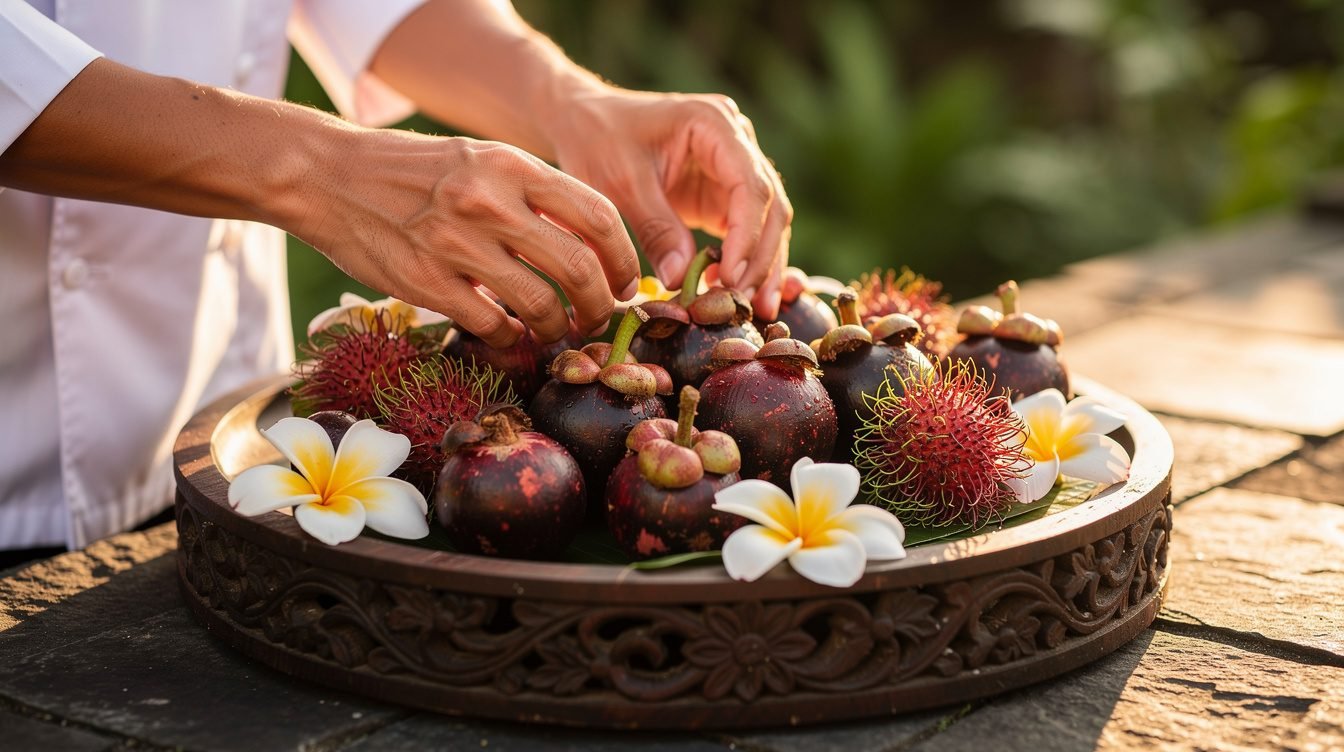
The difference between a staffed villa and an empty rental is the difference between being held and being left alone. And in meditation practice, being held matters.
The chef becomes your silent partner. Tell her you’re practicing intermittent fasting during the retreat. Tell her you want Ayurvedic meals. Tell her you need strong coffee at 5:30 AM and nothing else until noon. She doesn’t need a menu plan — she needs a conversation. The next morning, it’s there. No app to order from. No buffet to navigate. Just food that supports your practice, prepared by someone who genuinely wants your stay to feel right.
The villa manager holds the container. He books the melukat ceremony at Tirta Empul. He arranges the sound healer for Tuesday afternoon. He makes sure the gardener doesn’t run the lawnmower during your morning sit. He handles the logistics so your only job is to show up — on your cushion, in your garden, at your own pace.
The gardener sets the tone. Before you wake, the offerings are placed. The frangipani is clipped for your room. The garden path is swept. You don’t notice the maintenance — you notice the beauty. That’s the point. The staff’s work is invisible in the best possible way: you feel cared for without knowing exactly how.
At Villa Amrita, the staff aren’t service contractors. They’re people who’ve been with the villa for years, paid well, and genuinely invested in your experience. That energy — of being held by people who care — is something no retreat program can manufacture. It’s either real or it isn’t. And when it’s real, your nervous system knows. It relaxes. And relaxation is where meditation begins.
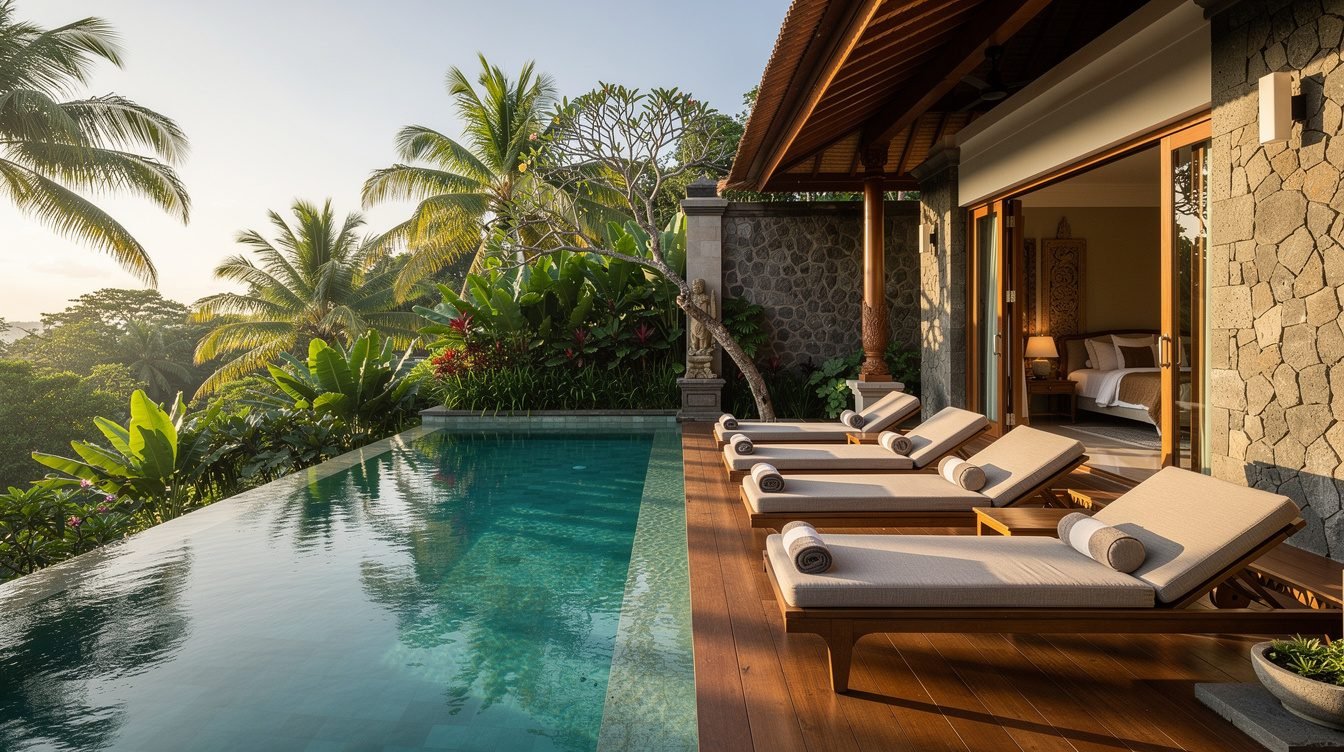
Design Your Own Meditation Retreat
Three bedrooms. Full staff. Private pool. Your rhythm, your practice, your pace — held by a team that genuinely cares.
A Day in Your Private Meditation Retreat — Morning to Evening
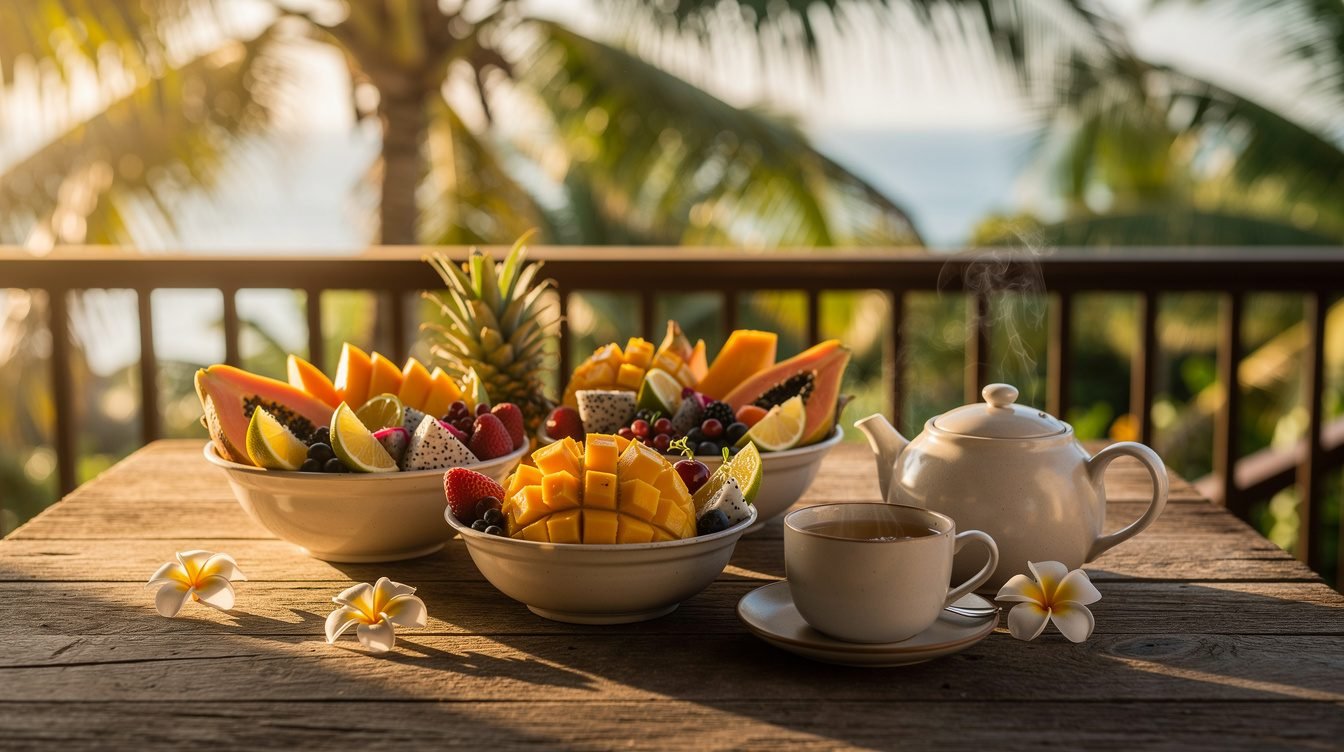
Here’s what a self-designed meditation day looks like from a private villa in Ubud. Not a prescriptive schedule — a rhythm that you can bend to fit your own practice.
Early Morning (5:30 – 7:00 AM)
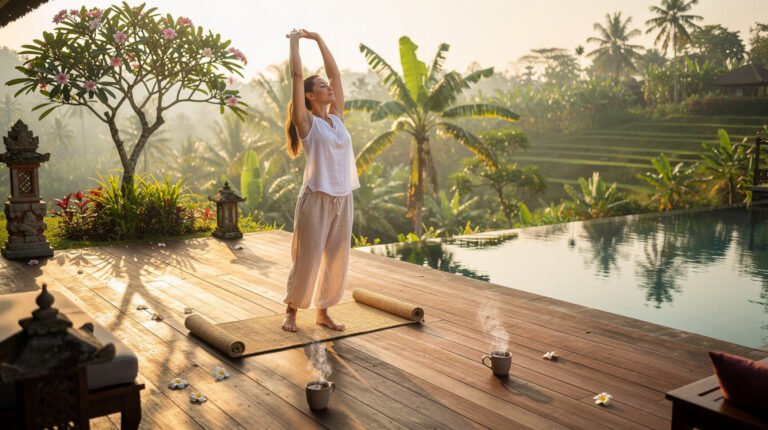
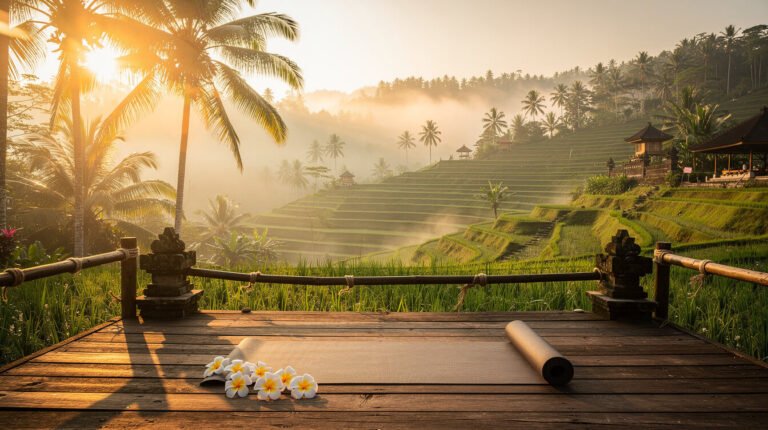
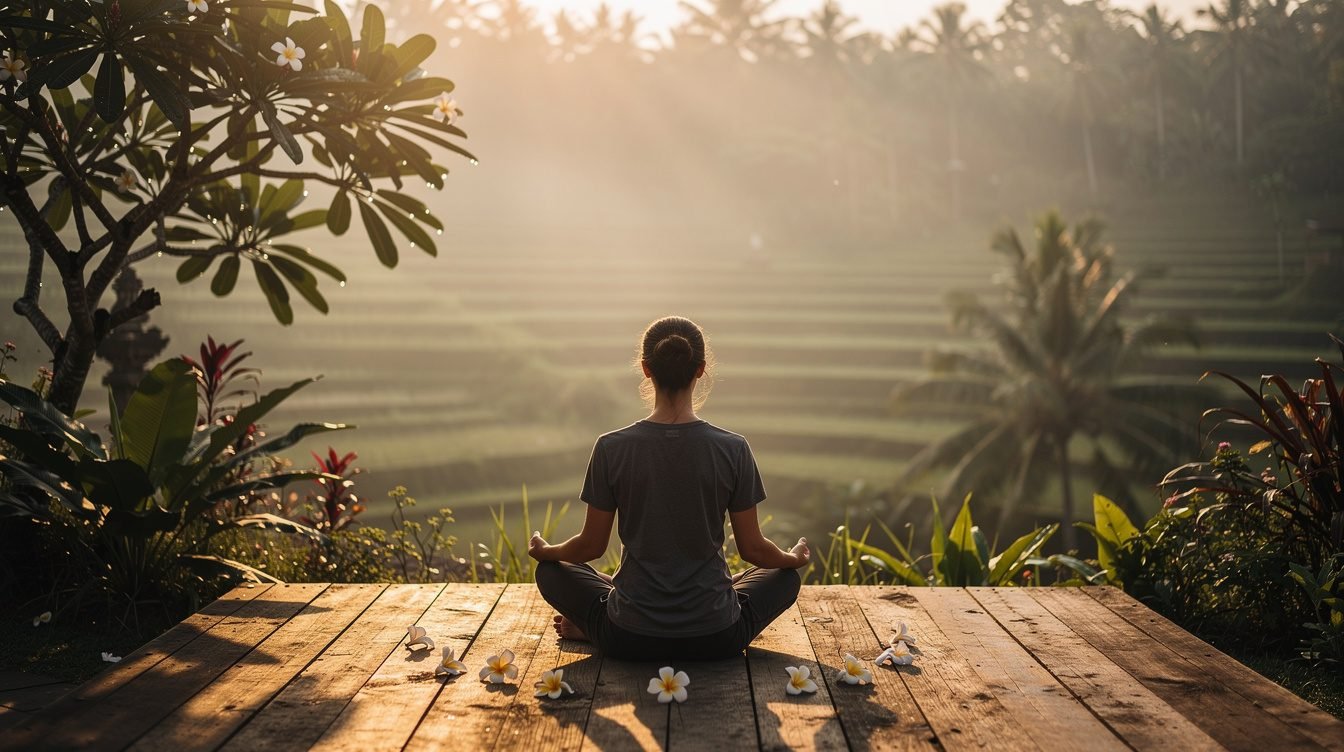
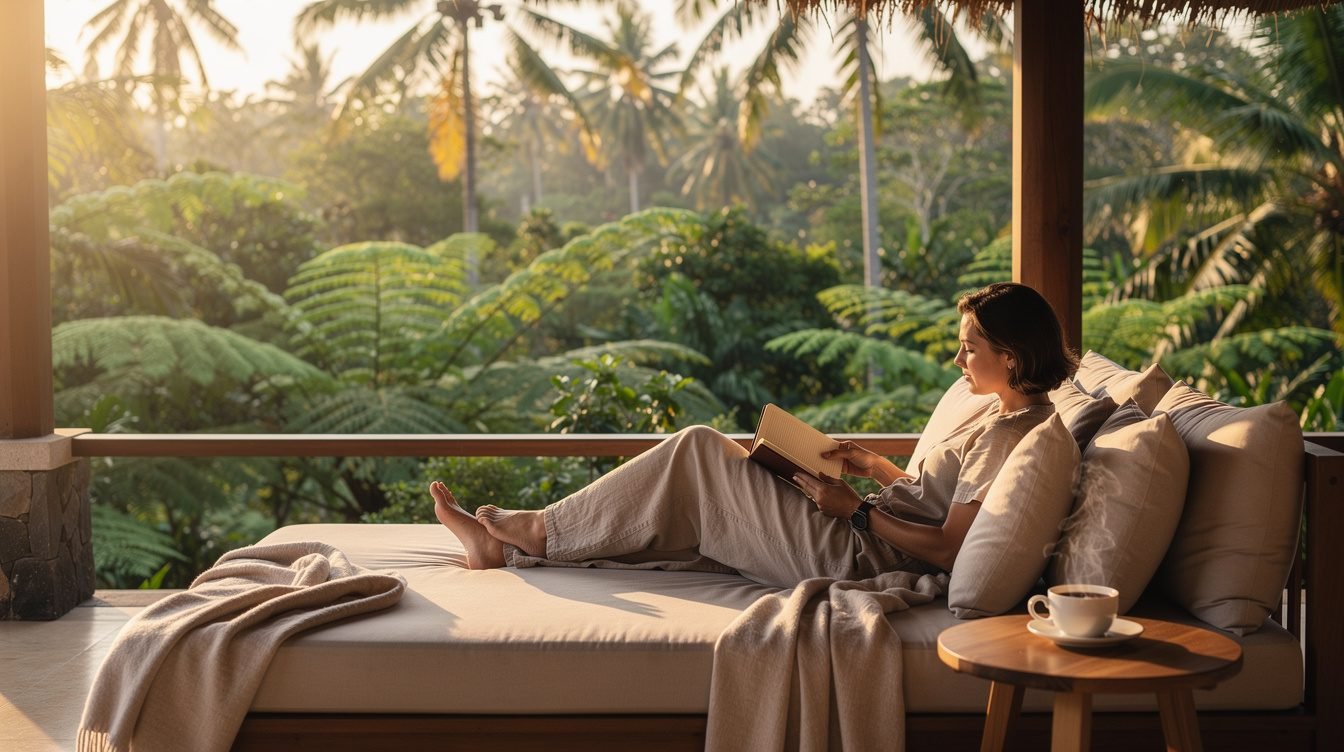
The birds wake first. Then the roosters, somewhere in the village. The air at this hour is cool enough to sit outside in just a light layer. Your cushion is on the pool deck, or in the garden pavilion, or on the bedroom balcony that looks over the rice fields. The mist is still in the valley. You sit. No instruction. No app. Just breath and attention and the slow brightening of the equatorial sky.
If you want guidance, your villa manager has arranged a local meditation teacher to arrive at 6:00 AM. She sits with you. She offers a technique — perhaps breath counting, perhaps body scan, perhaps something from the Balinese tradition that doesn’t have a name in English. After thirty minutes, she bows and leaves. You stay.
Morning (7:00 – 9:00 AM)
The chef has set breakfast on the terrace. Fresh papaya with lime. A small bowl of warm congee with turmeric. Ginger tea. She knows you’re practicing, so the portions are light and the flavors are clean. You eat slowly, watching the gardener place offerings at the garden shrine.
After breakfast, a walking meditation through the rice fields. The path behind the villa leads through terraces that have been worked for generations. The sound is water and wind and distant temple bells. You walk for forty minutes. No destination. No pace requirement. Just feet on warm earth.
Midday (10:00 AM – 1:00 PM)
A second sit, this time longer. Forty-five minutes to an hour. The morning heat builds slowly. Afterward, the pool. Not a workout swim — a slow, deliberate movement through water. Floating face-up, watching clouds cross the Ubud sky. This is practice too.
Lunch appears at the outdoor table. The chef has made something nourishing — perhaps nasi campur with tempeh, fresh vegetables, and sambal on the side. You eat in the garden, under the shade of the frangipani tree.
Afternoon (2:00 – 5:00 PM)
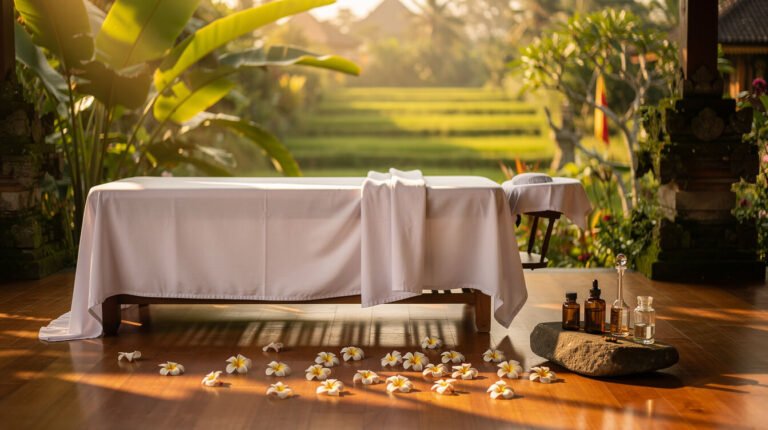
The afternoon is yours. Some days, this is when the in-villa massage therapist arrives — an hour of Balinese traditional massage, working the tension that sitting practice surfaces. Some days, this is reading time. Some days, this is when the rain comes, and you sit on the covered terrace and listen to it fall on the garden for an hour.
Evening (5:00 – 9:00 PM)
A final sit at dusk. The light changes quickly near the equator — the sky goes gold, then pink, then a deep blue that lasts only minutes. The gamelan starts in the village temple. You don’t need to go there. You can hear it from the garden, mixing with the sound of the pool filter and the evening insects. This is the sit that tends to go deeper than the morning ones. Something about the day’s accumulated stillness.
Dinner is served. Something warm and simple. The chef knows. By 8:30, the garden is dark except for the path lights and the candles she’s placed around the pool. You journal. You read. You sleep the kind of sleep that only comes after a day lived slowly.
Ubud as a Living Meditation — Practice Beyond the Cushion
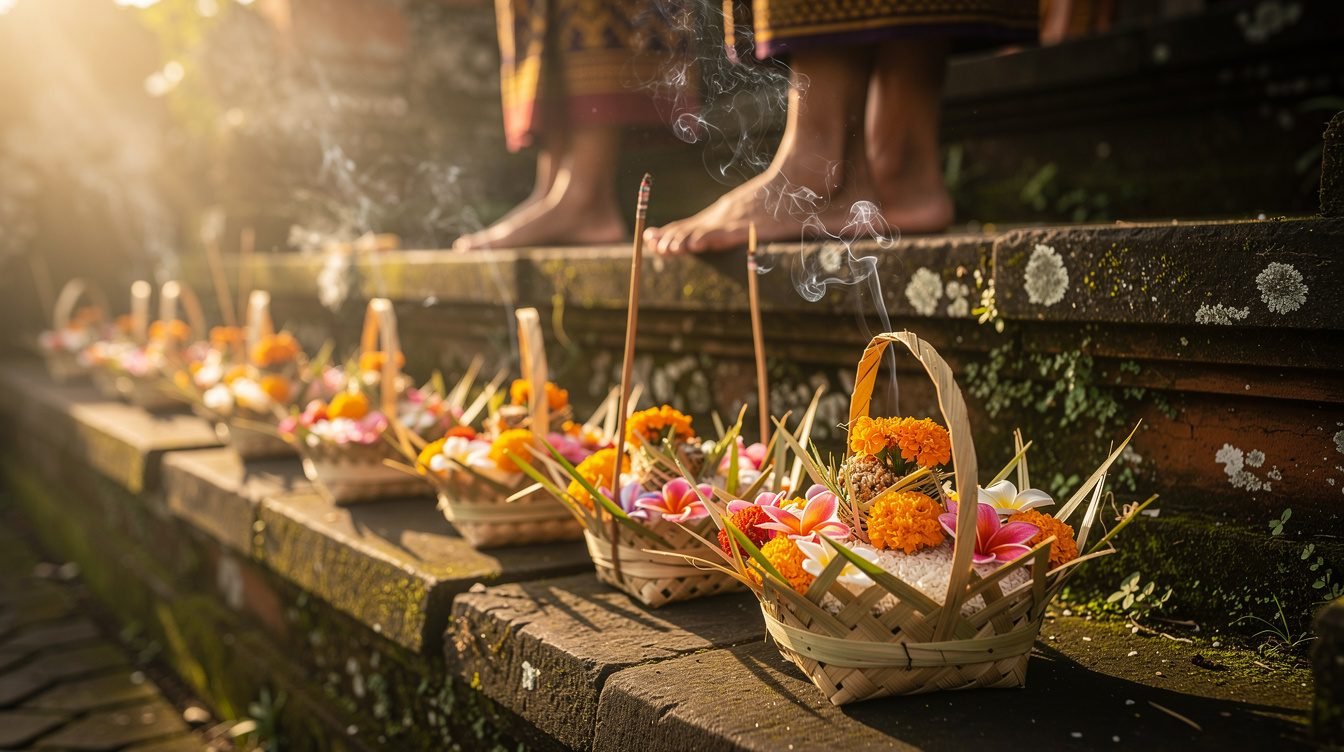
The most powerful meditation in Ubud doesn’t happen on a cushion. It happens when you stop separating “practice” from “life” and let the village teach you.
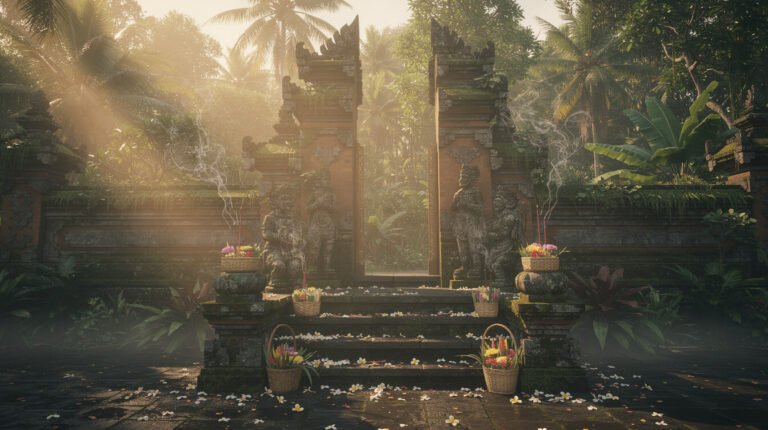
The morning offerings. Three times a day, Balinese Hindus place canang sari — small woven baskets of flowers, rice, and incense — at doorways, shrines, and intersections. Watching this practice, day after day, is a masterclass in presence. Each offering is assembled fresh. Each one is placed with attention. Each one dissolves by nightfall. The teaching is obvious and bottomless: the impermanence of beauty, the value of daily devotion, the quiet discipline of showing up.
The rice fields. A morning walk through the Tegallalang terraces or the fields behind Penestanan isn’t a hike — it’s a moving meditation through a living system. The irrigation channels — subak, a UNESCO-recognized cooperative water management system — demonstrate collective harmony without any individual trying to control the flow. You walk. You watch water move. You understand something about effort and surrender that no teacher could explain as well.
The temple ceremonies. Ubud’s temples are active, not museified. On any given day, you might encounter a procession — women in white carrying offerings on their heads, men with gamelan instruments, the sweet smoke of incense, the sound of the kulkul drum calling the village. You can stand at the edge and watch. You don’t need to understand the theology. The devotion is the teaching.
The market. Ubud’s traditional morning market opens before dawn. The energy is focused, efficient, alive. Vendors arrange their produce with care — pyramids of tangerines, rows of fresh turmeric root, bundles of morning glory. Watching this level of attention applied to everyday commerce is itself a practice of noticing. You can meditate anywhere. Ubud makes it unavoidable.
Planning Your Bali Meditation Retreat — Everything You Need to Know
How Long Should You Go?
Three nights is enough to taste stillness. Five to seven nights is where most practitioners find their stride — long enough for the nervous system to genuinely shift, short enough to be practical. Ten days or more is for serious practitioners who want deep transformation. If this is your first meditation retreat, five nights is the sweet spot.
When Is the Best Time to Visit?
April through October is Ubud’s dry season — clear mornings, warm afternoons, reliable sunsets. June through August is peak tourist season, so if you want quieter energy, April-May or September-October is ideal. The wet season (November through March) brings afternoon rains that can enhance your practice — the sound of tropical rain on a tiled roof is its own form of meditation — but morning sits outdoors are less reliable.
How Much Does a Bali Meditation Retreat Cost?
Structured retreat centers range from $50-100/night for basic programs to $300-500+/night for premium centers like Fivelements or COMO Shambhala. Traditional Vipassana retreats operate on donation. A private staffed villa in Ubud runs $150-350/night for the entire property — split between two to six guests, the per-person cost often drops below structured retreat centers, with incomparably more privacy and personalization.
What Should You Bring?
Comfortable loose clothing for sitting. A meditation cushion or zafu if you have a preferred one (though most settings provide them). A journal. Minimal electronics — or none. Sunscreen for the garden sits. A light rain jacket for wet season visits. And an open schedule. The most important thing you bring to a meditation retreat is willingness to let go of the plan you arrived with.
Solo, Couple, or Group?
Solo retreats at centers offer structure and built-in support from teachers. Couples benefit enormously from the private villa model — shared silence is a different intimacy than shared conversation. Small groups of friends (three to six people) make the villa rental approach the most cost-effective and the most socially flexible. You can practice together, eat together, and still have separate spaces for solitude.
Do You Need Prior Meditation Experience?
No. Many of the most profound retreat experiences come from beginners who arrive without expectations. The only requirement is the willingness to sit still, pay attention, and be honest about what you notice. If you want instruction, local teachers in Ubud work with complete beginners every day. If you want independence, a quiet room and a garden are enough.
Your Meditation Journey Starts Here
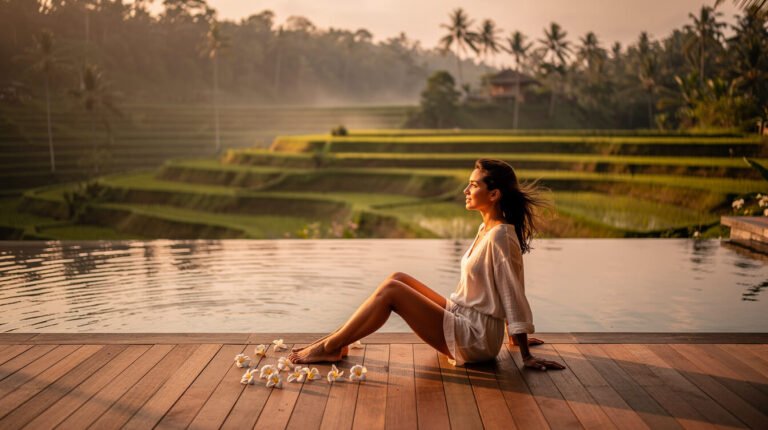
A bali meditation retreat doesn’t have to look like what the brochures show — a row of people in white, sitting in perfect posture, eyes closed in unison. It can look like you, alone on a pool deck at dawn, watching the mist lift off the rice fields while the chef sets out breakfast. It can look like three friends sharing a villa, each practicing in their own corner of the garden, coming together over lunch to talk about what they noticed. It can look like a couple in silence for three days, rediscovering something they’d forgotten about each other.
The format matters less than the intention. And Ubud, with its living traditions, its generous landscape, and its extraordinary stillness, will meet whatever intention you bring.
Whether you choose a structured center, a guided group program, or a self-designed retreat at a staffed villa, the practice begins the moment you decide to stop filling the silence with noise. Ubud has been helping people do that for a very long time.
Join Our Newsletter — Fun, New, Exciting Bali News
Weekly dispatches from Ubud — what’s blooming, what’s in season, what the village is celebrating. Real stories from the team, not marketing copy.