Bali Spa and Wellness Retreat: Your Complete Guide to Rejuvenation in Ubud
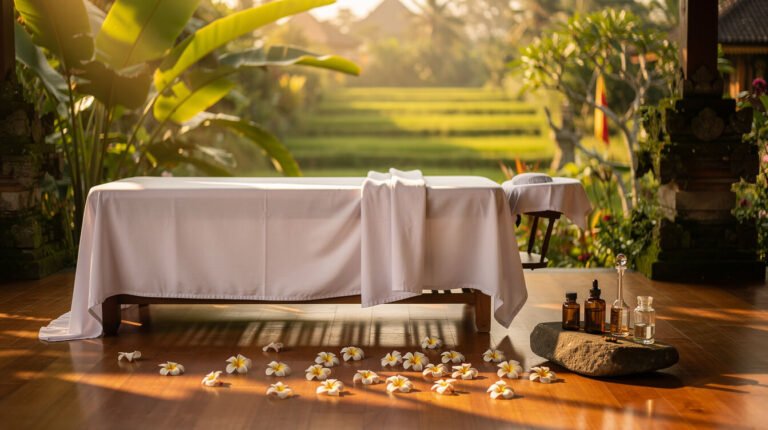
A bali spa and wellness retreat is one of those experiences that changes the way you think about rest. Not rest as collapsing at the end of a long week — but rest as something deliberate, sensory, and deeply Balinese. The warm breeze carries the scent of lemongrass and frangipani. Stone paths lead to open-air pavilions where the sound of water never stops. And somewhere between the herbal body wraps and the morning yoga sessions, you realize the island has been doing this kind of healing for centuries. You just showed up.
This guide walks you through everything you need to know about planning a bali spa and wellness retreat — from the traditional treatments worth trying to the daily rhythms of a wellness-focused stay in Ubud. Whether you’re here for a full detox program, a few days of deep rest, or simply want to weave spa experiences into a broader Bali trip, you’ll find your footing here.
Why Bali Is the World’s Destination for Spa and Wellness Retreats
Bali didn’t become the global capital of wellness by accident. The island sits at the intersection of ancient healing traditions, a tropical climate that practically forces you to slow down, and a culture built around balance — what the Balinese call Tri Hita Karana, the harmony between people, nature, and the spiritual world.
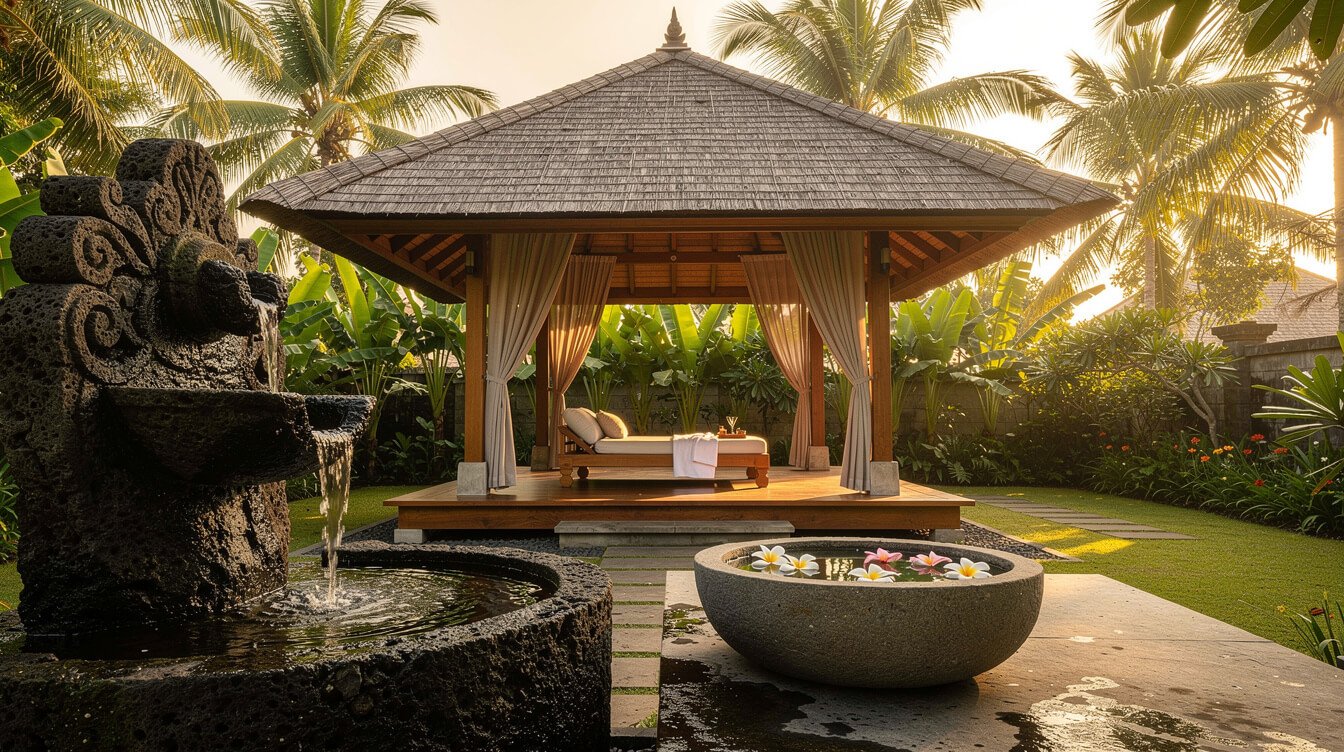
That philosophy doesn’t just decorate the entrance to a spa. It shapes the entire experience. Treatments use ingredients grown in the garden that morning. Therapists train in techniques passed down through families. The architecture opens to the elements so the jungle, the river, or the rice fields become part of the treatment room.
Ubud: the heartbeat of Bali wellness
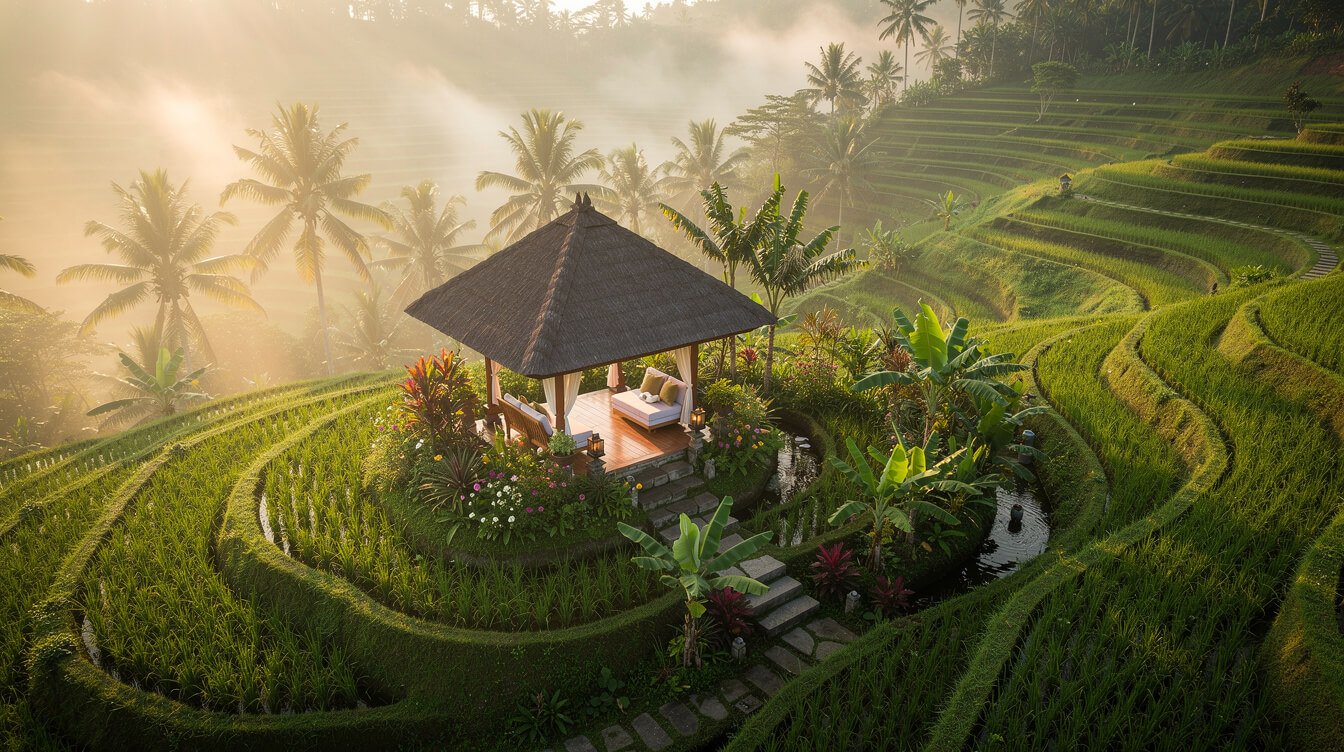
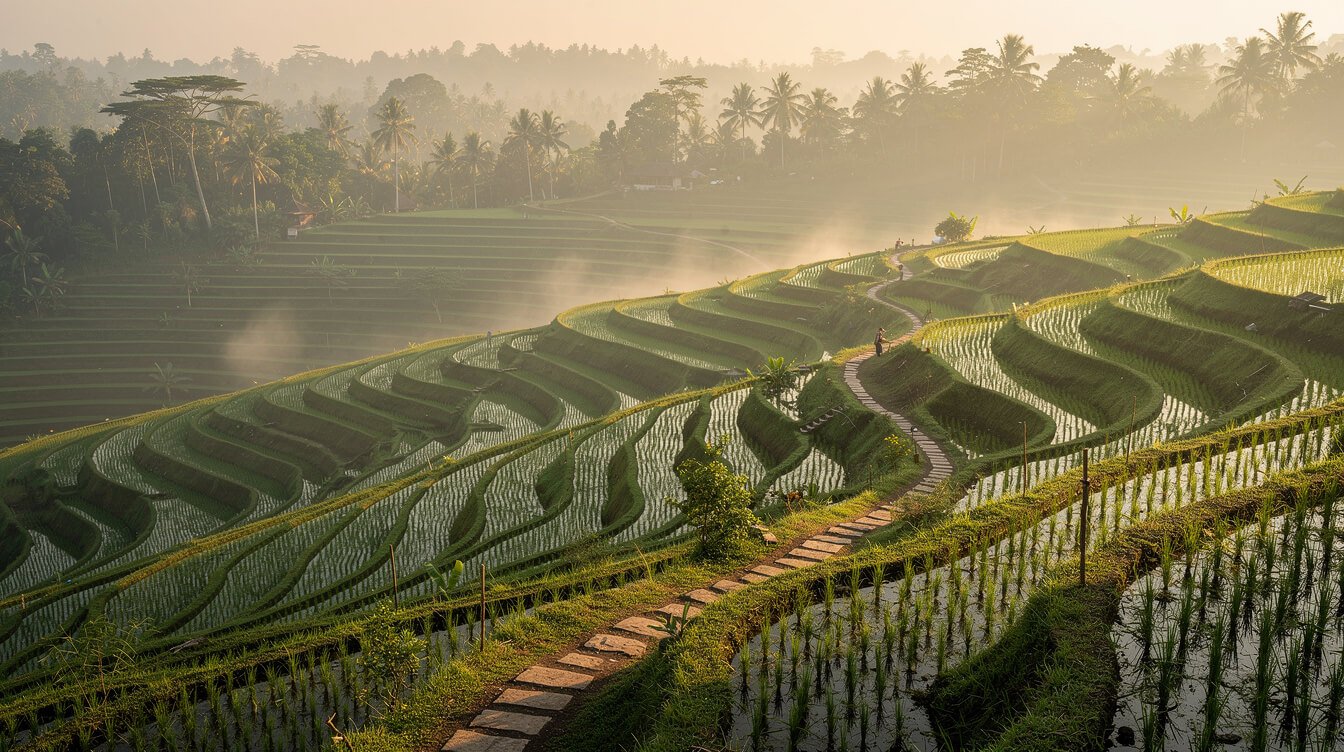
While beach towns like Seminyak and Canggu have their own spa scenes, Ubud remains the undisputed center for immersive wellness in Bali. The reasons are layered: cooler highland air, proximity to sacred water temples, a thriving yoga community, and an atmosphere that favors quiet over nightlife. The rice terraces, the morning mist, the sound of the Ayung River — these aren’t backdrop. They’re the infrastructure of healing.
Many of the world’s most respected wellness retreats chose Ubud for exactly this reason: COMO Shambhala Estate, Fivelements, and countless smaller operations that blend traditional Balinese healing with modern wellness science. The village itself has more yoga studios per capita than almost anywhere on earth — something we explored in depth in our complete guide to yoga studios in Ubud.
What sets Bali apart from other wellness destinations
Thailand has incredible massage traditions. India has Ayurveda. The Maldives has oceanside luxury. But Bali combines all of these into a single ecosystem — Balinese massage techniques, Hindu purification rituals, plant-based healing, yoga, meditation, sound healing — at a price point that makes week-long retreats genuinely accessible. Add in the volcanic soil that produces some of the world’s most potent botanicals, and you have an island purpose-built for renewal.
The Best Bali Spa and Wellness Retreat Experiences in Ubud
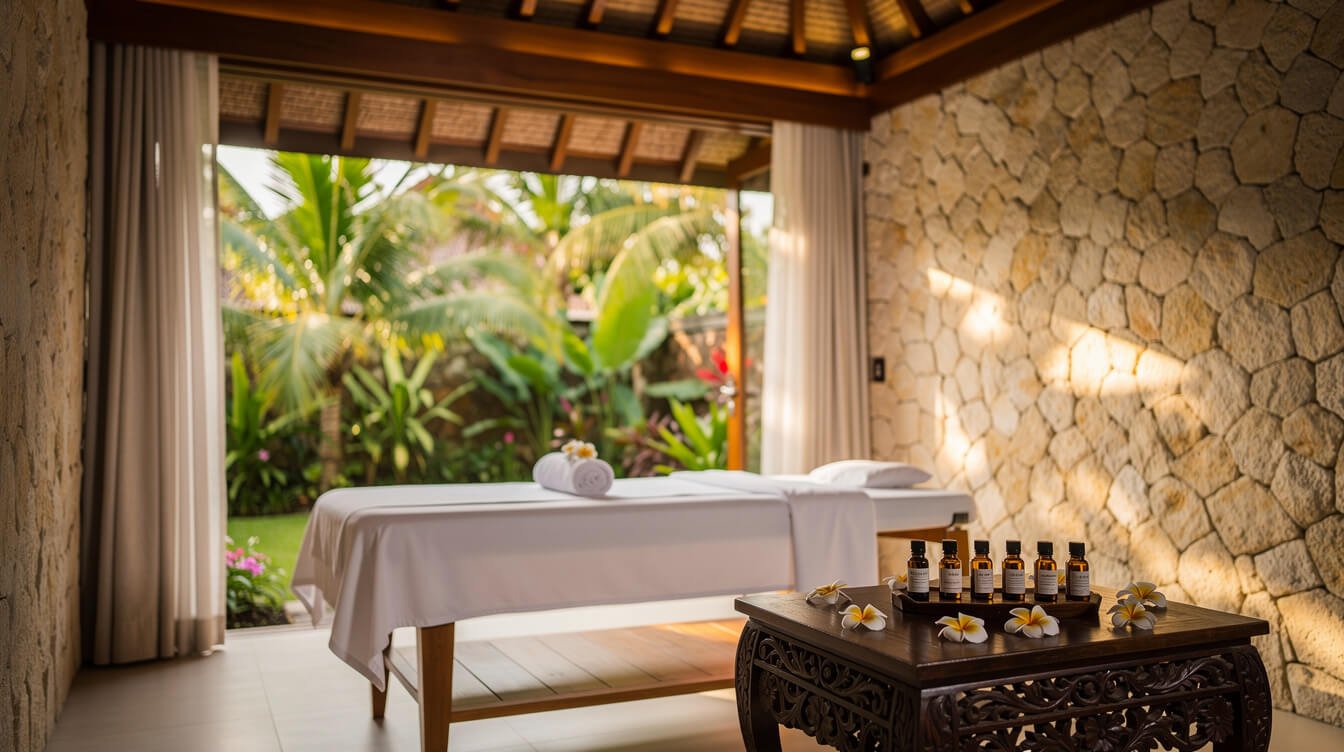
Not all bali spa and wellness retreat experiences are created equal. Some focus on day spa treatments — a two-hour visit that sends you back to your villa glowing. Others are structured multi-day programs with personalized consultations, dietary protocols, and daily therapies. Here’s how to navigate the spectrum.
Full immersion retreat programs
For those seeking a genuine transformation, Ubud’s top retreat centers offer multi-day programs that go well beyond a menu of massage options. These typically include an initial wellness consultation, a personalized treatment schedule, plant-based cuisine, daily yoga or meditation classes, and follow-up protocols you can take home. Programs run anywhere from three to fourteen days.
What makes these programs remarkable is the integration. You’re not just booking a massage and a yoga class separately. The therapists, yoga teachers, and nutritionists work together. Your morning breathwork session informs the afternoon treatment. The food is calibrated to support whatever healing process you’re moving through.
Day spa experiences
Not everyone has a week to dedicate to wellness, and Ubud’s day spas are extraordinary in their own right. A thoughtful day spa visit in Ubud typically costs a fraction of what you’d pay in a Western city — with better ingredients, more skilled therapists, and an open-air setting that no urban spa can replicate. Budget IDR 400,000–800,000 (roughly $25–$50 USD) for a two-hour treatment that would cost five times as much in New York or London.
Private villa wellness
There’s a third option that many visitors overlook: building your own bali spa and wellness retreat experience from a private villa base. A staffed villa in Ubud gives you the space, the privacy, and the support to design your own daily rhythm. Your villa chef prepares meals around your dietary needs. You book therapists to come to you. You practice yoga on a private deck overlooking the garden. The healing happens on your terms, not on an institution’s schedule.
Traditional Balinese Spa Treatments You Should Try
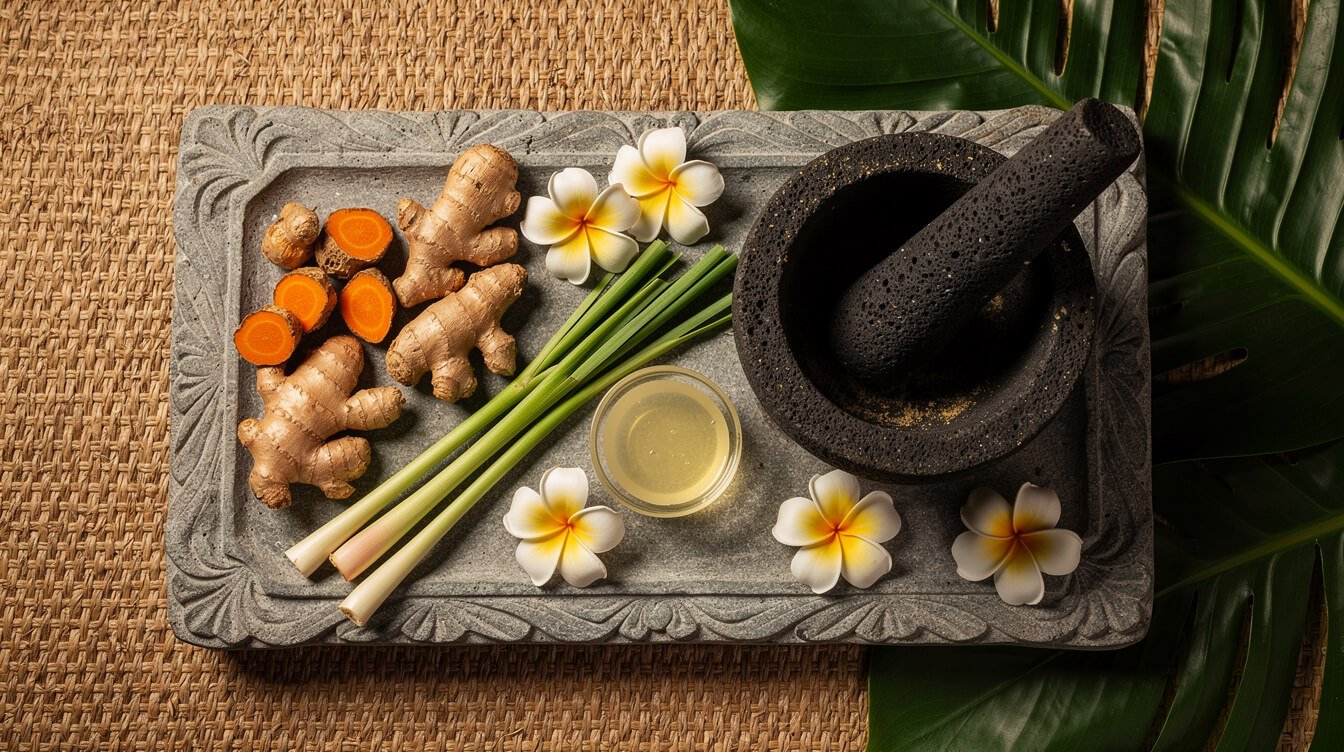
Balinese healing traditions are alive, practiced daily, and available to visitors willing to go beyond the standard menu. These aren’t museum pieces — they’re functional therapies refined over centuries in a tropical climate where the body’s relationship with heat, humidity, and botanical medicine is deeply understood.
Balinese massage (pijat Bali)
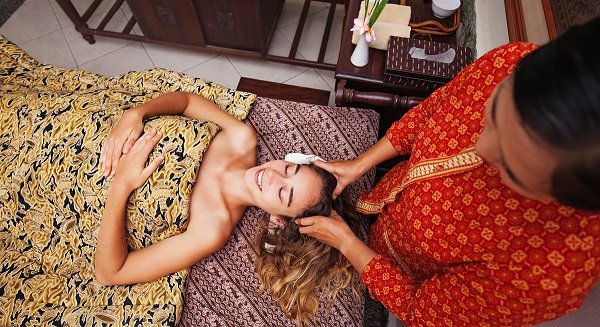
The foundational treatment. Balinese massage combines gentle stretches, long strokes, acupressure, and aromatherapy in a flowing sequence designed to improve blood circulation and bring deep calm to the nervous system. Unlike Thai massage (which works more with pressure and positioning), Balinese massage is oil-based, warm, and rhythmic. Most therapists use coconut oil blended with essential oils — frangipani, lemongrass, or ylang-ylang — depending on what your body needs.
Boreh (traditional herbal body wrap)
Boreh is a warming body scrub made from a paste of ground spices — typically ginger, clove, cinnamon, turmeric, and rice powder. Traditionally used by Balinese rice farmers to relieve muscle fatigue after long days in the paddies, boreh generates a gentle heat that penetrates deep into sore muscles. The turmeric and ginger reduce inflammation naturally, while the cinnamon and clove improve circulation. You’ll feel it working within minutes.
Lulur (Javanese royal body scrub)
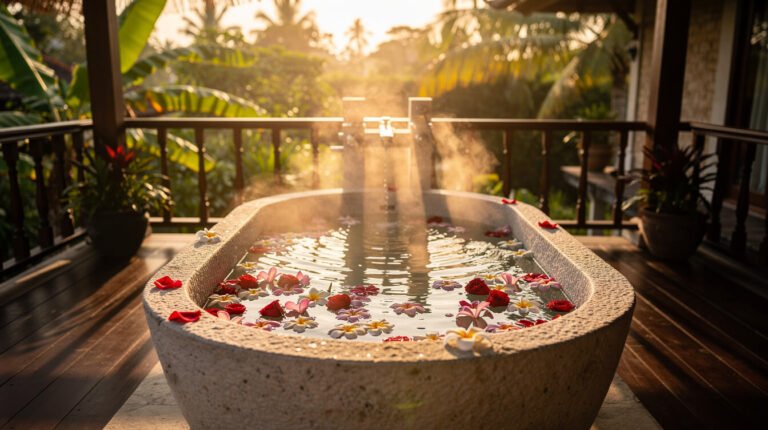
Originally developed for Javanese palace brides in the days before their wedding, lulur is a full-body exfoliation using a paste of turmeric, jasmine, sandalwood, and finely ground rice. After the scrub, you’re wrapped and then bathed in a floral soak — frangipani petals, rose petals, and jasmine floating in warm water. The result is skin that feels genuinely different: softer, brighter, and almost luminous.
Melukat (spiritual water purification)
Not technically a spa treatment, but an essential Balinese wellness experience. Melukat is a purification ceremony conducted at one of Bali’s sacred water temples — most famously Tirta Empul near Ubud. You enter the spring pools and pass through a series of water spouts, each carrying a different intention: releasing negativity, inviting clarity, asking for blessing. For many visitors, this is the most profound wellness experience on the island.
Get a Free 3-Day Sample Itinerary
Wondering how to fill your days in Ubud? We’ve mapped out a complimentary 3-day wellness itinerary — spa mornings, cultural afternoons, and quiet evenings by the pool.
How to Plan Your Bali Spa and Wellness Retreat
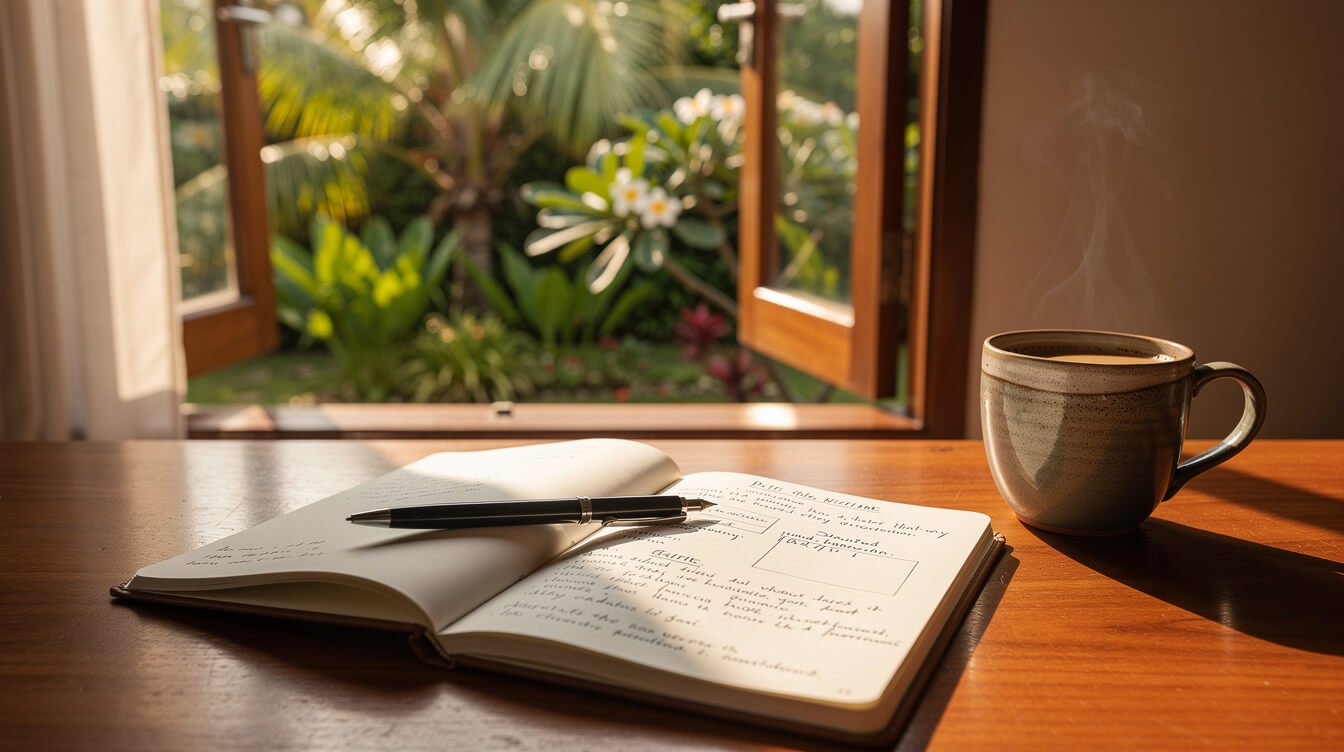
A genuinely restorative bali spa and wellness retreat doesn’t happen by accident. A little planning — not over-planning, just the right scaffolding — makes the difference between a trip where you come home renewed and one where you come home exhausted from trying to relax.
When to go
Bali’s dry season (April through October) is the most popular window. Clear skies, comfortable humidity, and cooler evenings make outdoor treatments and morning yoga sessions particularly enjoyable. But the wet season (November through March) has its own magic for wellness travelers: lower prices, fewer crowds, the dramatic sound of rain on tropical foliage during a massage, and the lush green that only the rains produce. For a full breakdown of what to expect month by month, see our complete Bali holiday planning guide.
How long to stay
For a meaningful spa and wellness experience, plan a minimum of five nights. Three nights is enough for a taste — a couple of treatments, a yoga class, a temple visit — but the real benefits of a wellness retreat kick in around day four, once your nervous system has genuinely downshifted. Seven to ten days allows for a structured program with visible results: better sleep, clearer skin, a calmer mind, and often a noticeable reduction in chronic tension.
Where to base yourself
Ubud is the clear choice for a wellness-focused trip. The town’s cultural depth, its concentration of spas and yoga studios, and its highland climate (cooler than the coast) create the ideal conditions for rest and renewal. Within Ubud, look for accommodations in Penestanan, Sayan, or Kedewatan — quieter neighborhoods just outside the town center where the rice fields and river ravines provide a natural sound bath around the clock.
What to budget
Bali wellness runs a wide range. You could do a week of daily spa treatments, yoga classes, and healthy meals for $500–$800 total if you’re strategic. At the high end, structured retreat programs at places like COMO Shambhala or Fivelements run $3,000–$8,000+ per week. The sweet spot for most travelers is a private villa stay with spa treatments and yoga booked independently — all the personalization, none of the institutional schedule, at roughly half the cost of a branded retreat.
What a Day at a Bali Spa and Wellness Retreat Actually Looks Like
People ask us this all the time — what does a typical day actually look like? The truth is there’s no single answer, because the best bali spa and wellness retreat experiences are the ones shaped by you. But here’s a rhythm that many of our guests settle into naturally.
Morning (6:00–9:00)
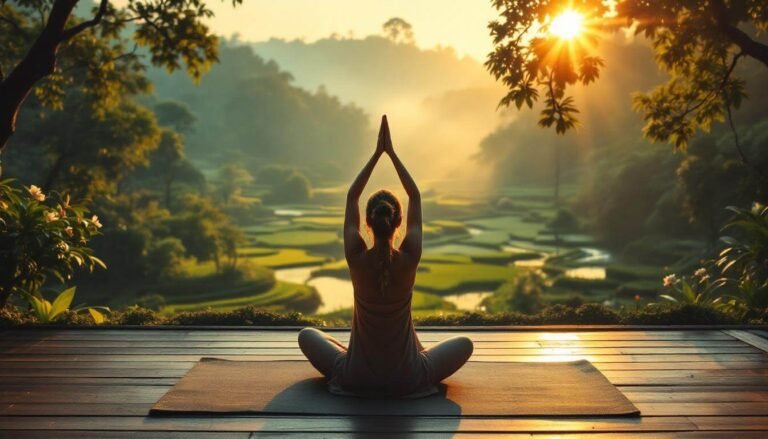
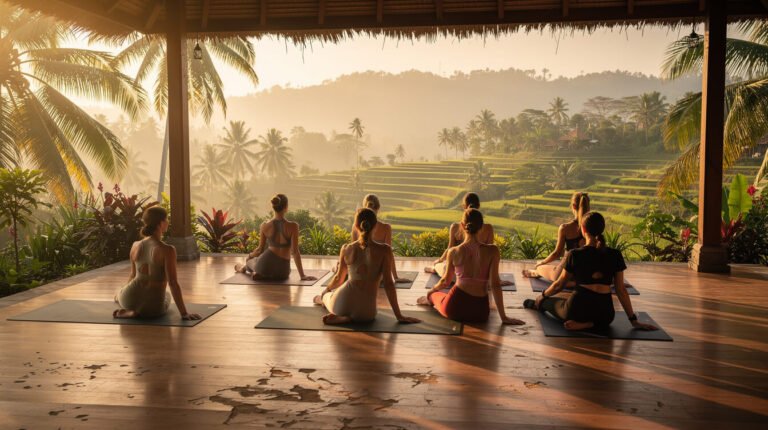
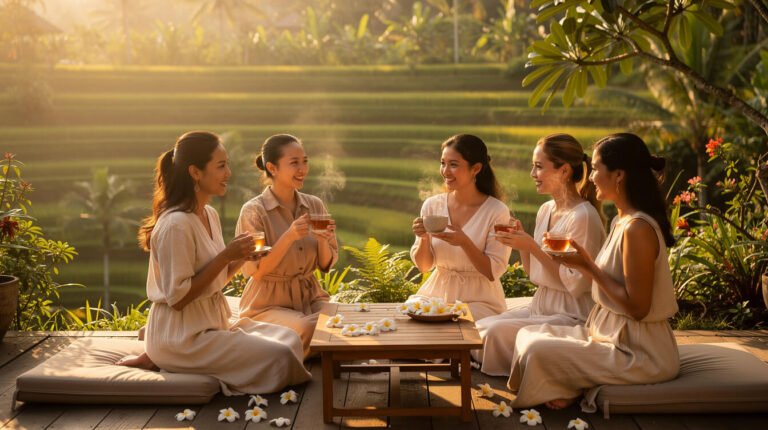
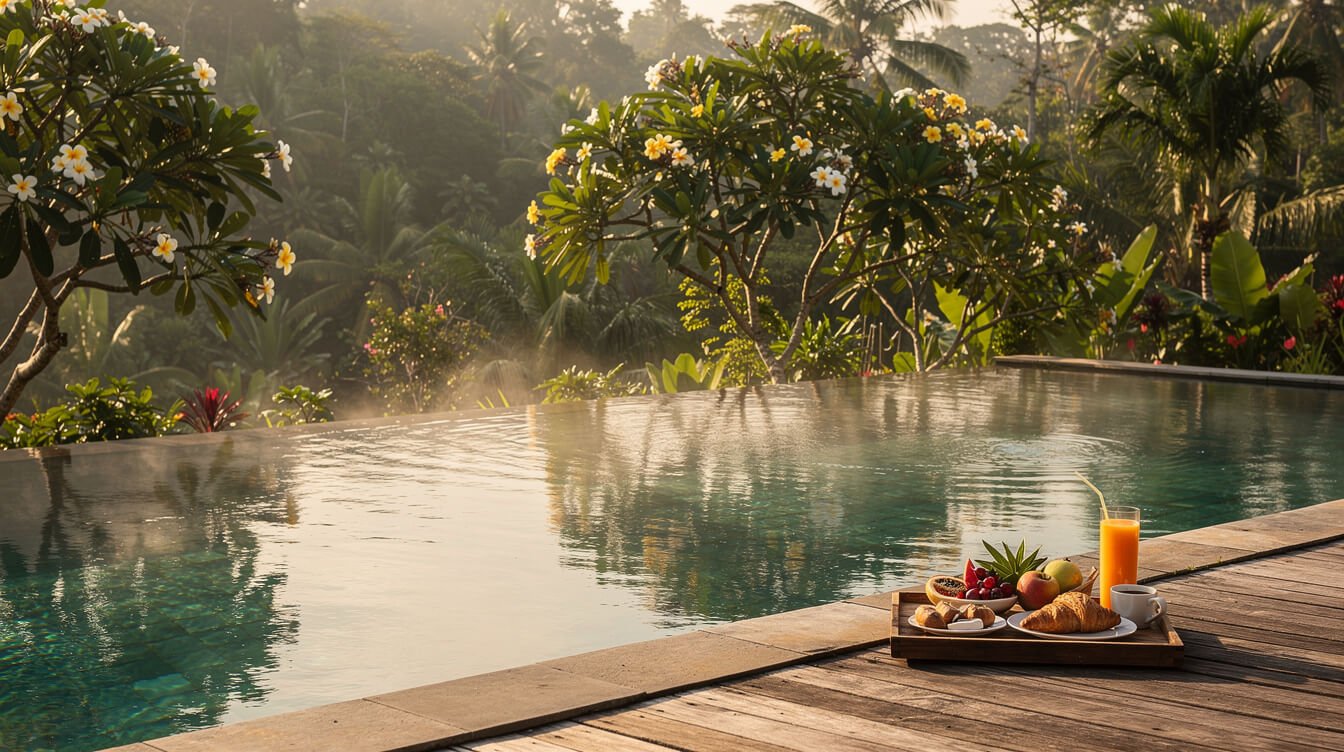
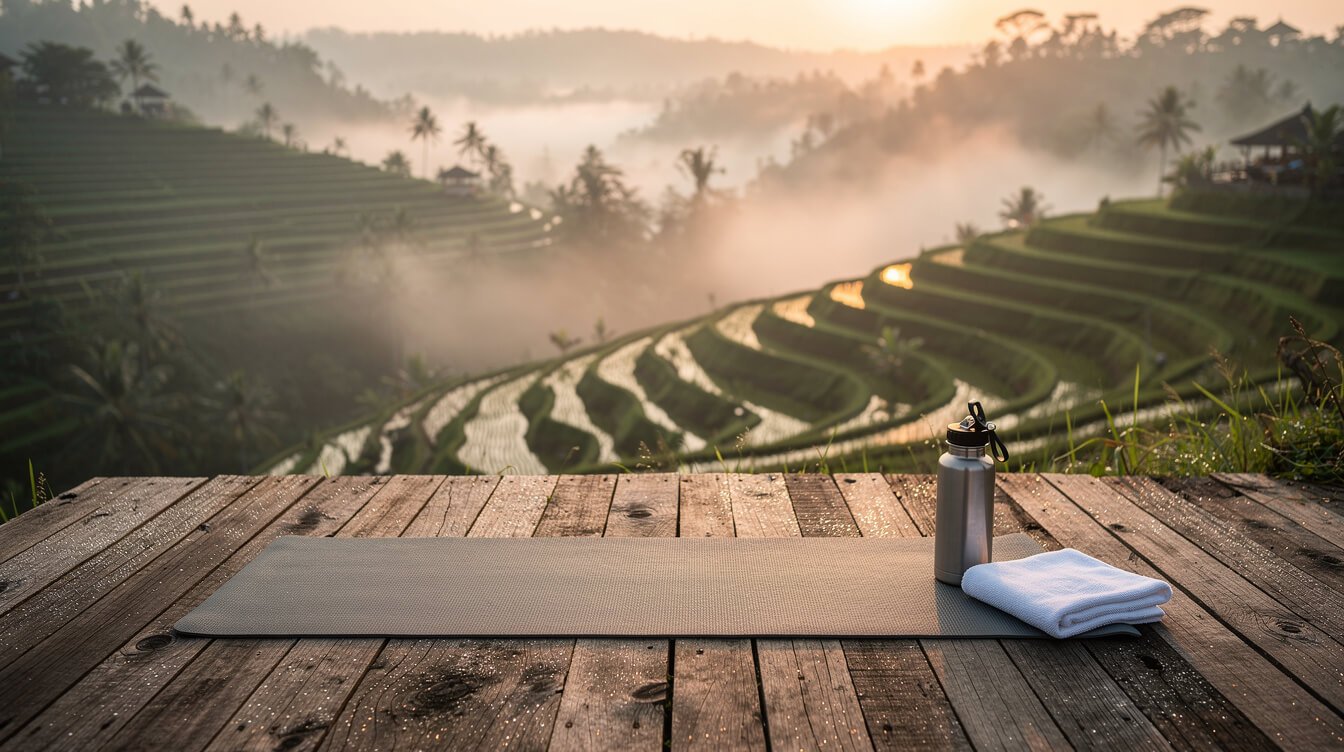
The day begins before the heat. Coffee or herbal tea on the terrace, watching the mist lift off the rice fields. A yoga session — either at a studio in town or on a private deck if your accommodation offers one. After practice, a long, slow breakfast: tropical fruit, perhaps a turmeric smoothie, eggs any way you like them. If you’re staying in a villa with a pool, this might mean a floating breakfast that drifts through the first golden hour.
Midday (10:00–13:00)
This is prime spa time. Your body is warm, your muscles are open from the morning stretch, and the midday heat makes the contrast of a cool treatment room feel extraordinary. Book your deepest treatments here — a 90-minute Balinese massage, a boreh wrap, a facial using volcanic clay. Afterward, a light lunch: a grain bowl with fresh vegetables, or the Balinese classic nasi campur, assembled with intention.
Afternoon (14:00–17:00)
The warmest hours are for rest and exploration. Some days you’ll want to do nothing — swim, read, nap in a daybed. Other days, you’ll venture out: a visit to Tirta Empul for a melukat ceremony, a walk through the Campuhan Ridge, or a wander through Ubud’s art galleries and craft shops. The key is not scheduling this time. Let it be open.
Evening (17:30–21:00)
Sunset is an event in Ubud. Watch it from a rice field path, a rooftop bar, or your own terrace. Dinner at one of Ubud’s extraordinary restaurants — or, better yet, a private dinner prepared by your villa’s chef. Wind down with a sound healing session, a guided meditation, or simply sitting in the garden as the frogs and crickets tune up their evening orchestra.
Ready to Book Your Wellness Retreat?
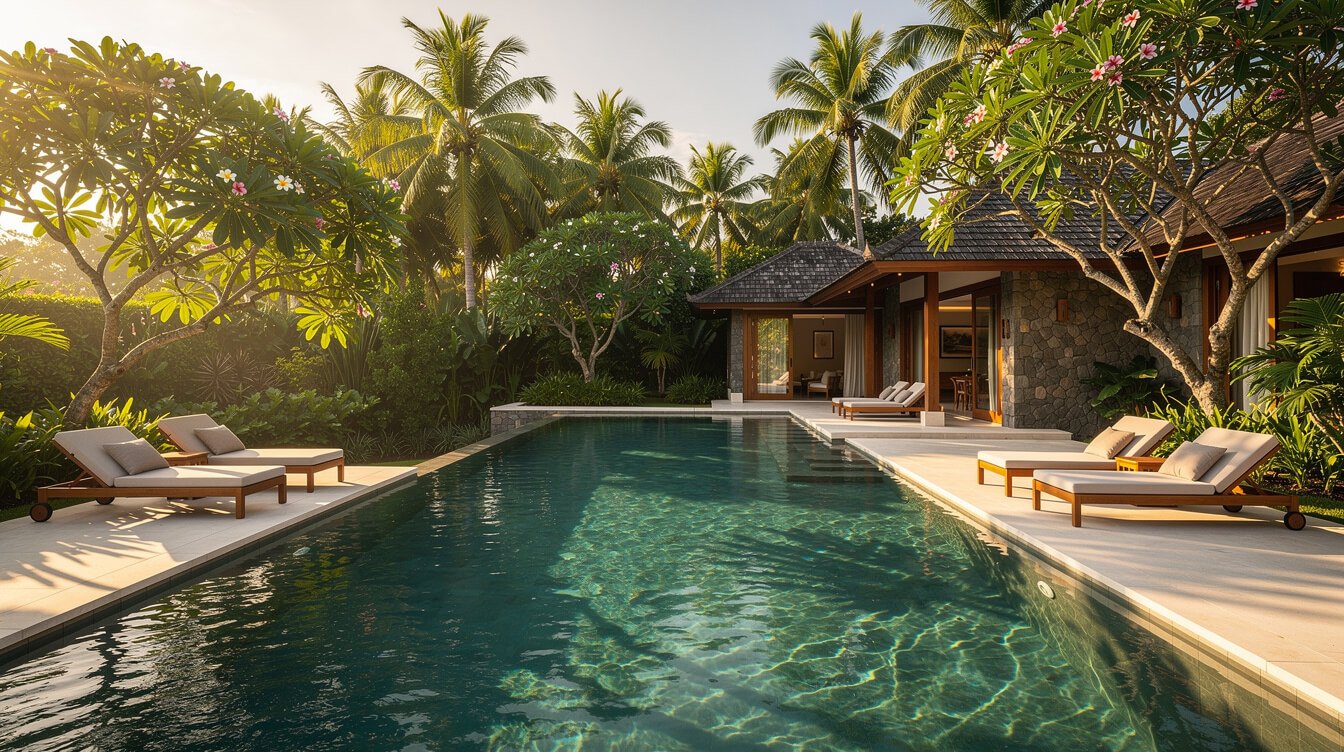
Villa Amrita is a 3-bedroom staffed pool villa in the heart of Ubud — your private base for the ultimate Bali spa and wellness retreat. Chef, gardener, manager, and full hospitality, all held for you.
Frequently Asked Questions About Bali Spa and Wellness Retreats
How much does a spa treatment cost in Bali?
Prices vary widely depending on setting and quality. A one-hour Balinese massage at a local spa runs IDR 150,000–300,000 ($10–$20 USD). Mid-range resort spas charge IDR 500,000–1,200,000 ($30–$80 USD) for signature treatments. High-end retreat spas like COMO Shambhala or Fivelements charge $100–$300+ per session. Even at the top end, you’ll pay significantly less than comparable treatments in Europe, Australia, or the US.
Is Bali safe for solo wellness travelers?
Yes. Ubud in particular has a long history of welcoming solo travelers — especially those coming for yoga, meditation, and spa experiences. The town is walkable, the locals are warm, and there’s a well-established community of international wellness practitioners. Many retreats cater specifically to solo travelers with communal meals and group activities that make connection easy without being forced.
Do I need to book spa treatments in advance?
For day spas, walk-ins are usually fine. For specific therapists at popular spas, booking 1–2 days ahead is wise, especially during peak season (July–August, December–January). For structured retreat programs, book at least 2–4 weeks in advance — the best programs fill up, especially during high season.
Can I create my own wellness retreat without joining a formal program?
Absolutely — and many travelers prefer this approach. Rent a private villa in Ubud, book spa treatments independently, attend drop-in yoga classes at studios around town, and arrange a private chef for your meals. You get all the benefits of a wellness retreat — personalized, unhurried, deeply restorative — without the fixed schedule or the premium price tag. It’s how many repeat Bali visitors design their trips.
What should I wear to a Balinese spa?
Comfort is everything. Most spas provide disposable undergarments, sarongs, and robes. Wear loose, easy clothing to arrive in. For water purification ceremonies like melukat, bring a sarong and sash (temples provide these if you don’t have your own). Swim attire works for many outdoor treatments.
Is tipping expected at Bali spas?
Tipping is appreciated but not mandatory. At local spas, a tip of IDR 20,000–50,000 ($1–$3 USD) per therapist is generous. At resort spas, 10–15% of the treatment cost is customary if service charge isn’t already included. At retreat centers, tipping norms vary — ask at reception.
Your Bali Spa and Wellness Retreat Starts Here
Bali doesn’t ask you to arrive already knowing what you need. The island has a way of showing you — through a therapist’s hands reading the tension in your shoulders, through the mineral water of a holy spring, through the quiet of a morning when you realize you haven’t checked your phone in hours.
A bali spa and wellness retreat is as much about the spaces between treatments as the treatments themselves. The walk through the rice fields back to your villa. The afternoon rain on the garden roof. The evening when your chef asks what you’d like for dinner and you say, “Whatever feels right.”
If you’re ready to design a wellness retreat that’s genuinely yours — not a program, not a schedule, but an experience built around how you want to feel — Ubud is waiting. And if you’d like a home base where the staff already knows how to hold that kind of space, we’d love to help you imagine what your stay might look like. For more on combining yoga and wellness in Ubud, start there. For everything else, we’re a message away.

Join Our Newsletter — Fun, New, Exciting Bali News
Ubud stories, seasonal travel tips, and the occasional villa secret — delivered to your inbox. No spam, just warmth from Bali.