Agung Rai Museum Ubud: Your Complete Guide to ARMA and Bali’s Art Heritage
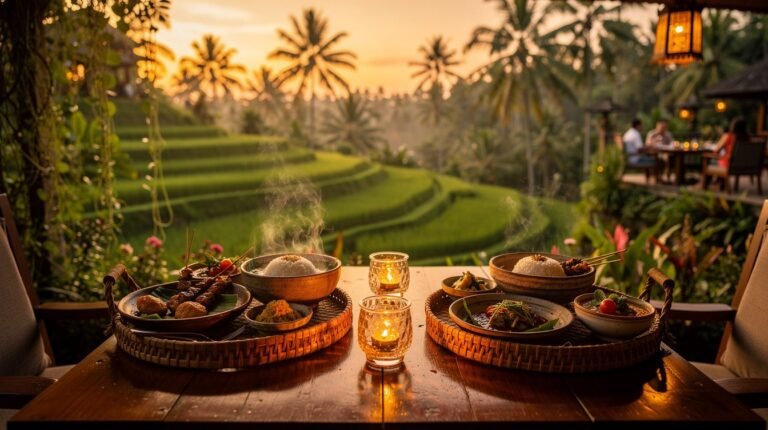
The Agung Rai Museum Ubud sits on Jalan Raya Pengosekan like a quiet declaration — that Balinese art is not decoration, not souvenir fodder, but something worth a building with gardens and a story behind it. If you’ve walked Ubud’s main streets and wondered where the real artistic pulse lives, away from the mass-produced canvases lining shop fronts, ARMA is the answer you didn’t know you were looking for.
This is a complete guide to everything you need to know about visiting the Agung Rai Museum of Art — from the founder’s personal journey to the practical details that make your visit smooth. Whether you’re staying in Ubud for a week or passing through for a day, ARMA earns a spot on your itinerary.
What Makes the Agung Rai Museum Ubud More Than a Gallery
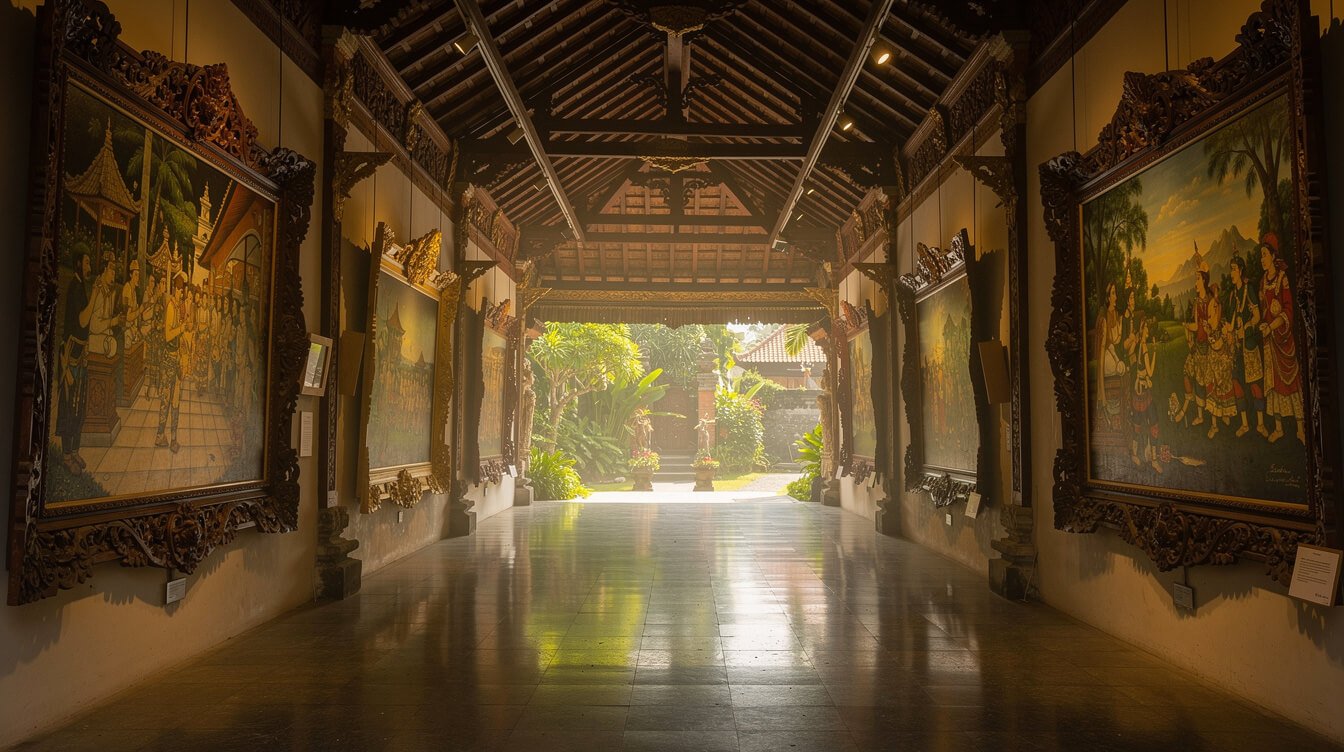
Most visitors come expecting paintings on walls. What they find is an entire cultural compound — galleries, tropical gardens, a performing arts stage, a library, workshop spaces, and a restaurant that overlooks rice fields. ARMA is a museum in the broadest sense: a place that collects, preserves, teaches, and performs.
The museum houses hundreds of works spanning four centuries of Balinese, Indonesian, and international art. Classical Kamasan-style paintings on bark sit alongside twentieth-century Batuan school masterworks and contemporary pieces by living artists. You’ll see the influence of European painters who settled in Bali during the 1930s right next to the deeply indigenous work they helped transform — without one diminishing the other.
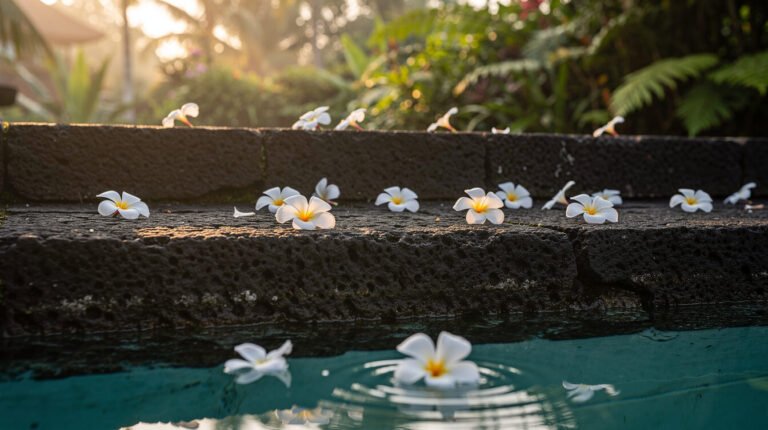
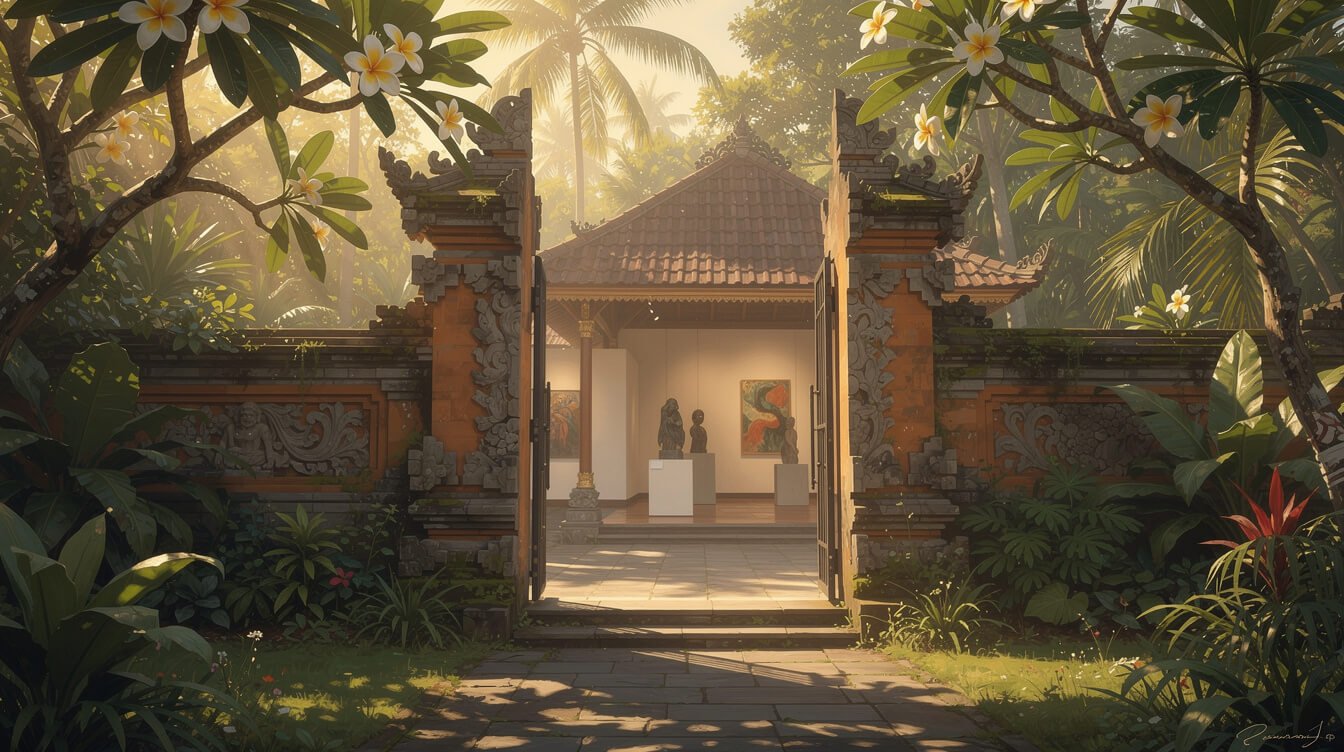
What sets ARMA apart from Ubud’s other cultural landmarks is the integration. Art doesn’t sit behind glass in climate-controlled rooms. It lives inside open-air pavilions surrounded by frangipani, with the sound of gamelan rehearsal drifting in from the performance stage. The gardens aren’t an afterthought — they’re part of the exhibition. Stone carvings and traditional architecture frame every pathway, turning a walk between galleries into its own kind of artistic experience.
If you’re exploring where to stay in Ubud, Pengosekan — ARMA’s neighborhood — is one of the most authentically artistic corners of the village, away from the tourist-heavy center but still walkable to everything that matters.
The Story of Agung Rai and How the Museum Began
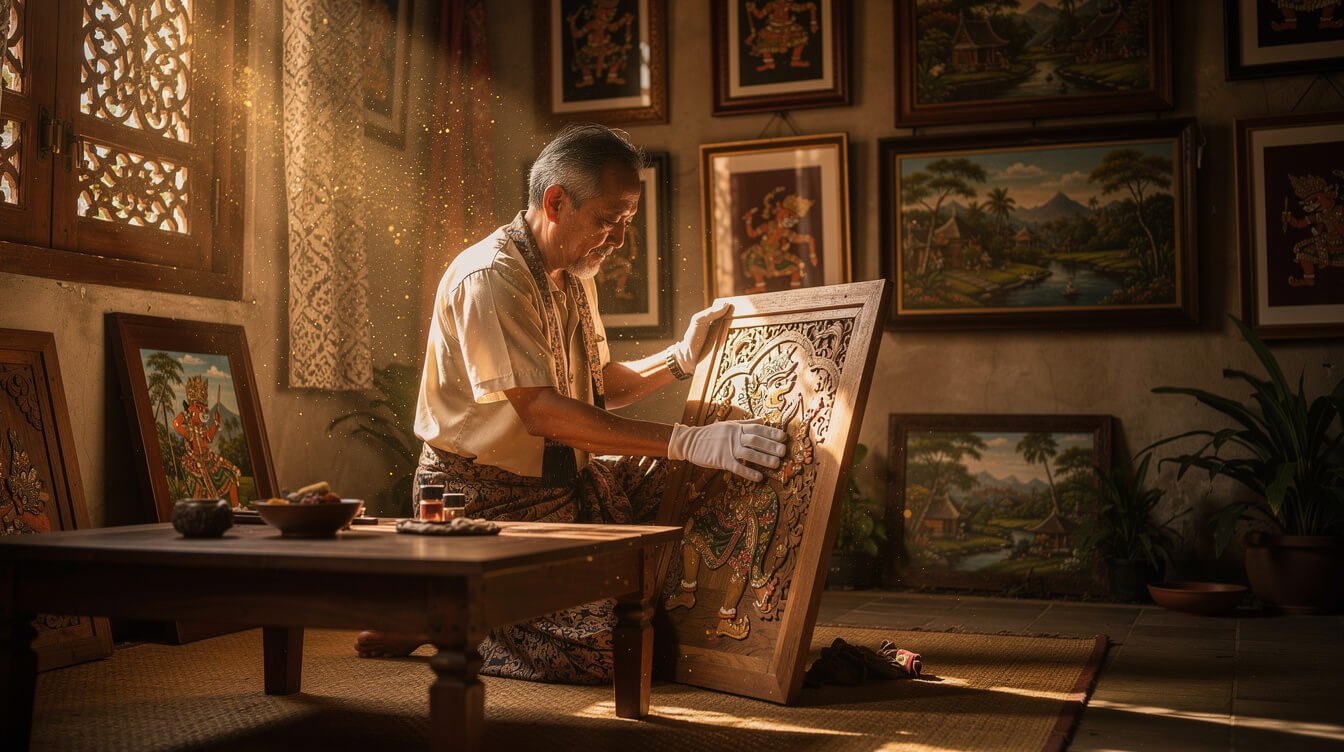
Before ARMA was a museum, it was a passion that consumed one person entirely. Agung Rai started as a bookseller and tour guide in the early 1980s — not an art dealer, not an academic. His encounter with Balinese paintings happened almost by accident, but when it did, something locked into place. He began buying works that moved him emotionally, long before he had any plan for what to do with them.
Through the 1980s and 1990s, his collection grew beyond what a private home could hold. Agung Rai wasn’t just accumulating — he was rescuing. Many of the works he acquired were at risk of leaving Bali permanently, bought up by foreign collectors and galleries. His impulse was preservationist at its core: keep Balinese art in Bali, where it belongs, where the context and the land and the spiritual weight of the work remain intact.
On June 9, 1996, ARMA opened officially, inaugurated by Indonesia’s Minister of Education and Culture. The three pillars Agung Rai established from the beginning still guide the museum today: collecting and preserving artwork, developing artistic disciplines including painting and dance, and educating the local community in traditional arts. That last mission matters most — ARMA isn’t a tourist attraction that happens to have art. It’s a teaching institution that happens to welcome visitors.
Children from surrounding villages learn traditional dance and painting here. Visiting artists study under Balinese masters. The museum functions as a cultural engine for Pengosekan and wider Ubud, which is exactly what Agung Rai intended when he decided his growing collection needed a proper home.
What You’ll See Inside the Galleries at ARMA
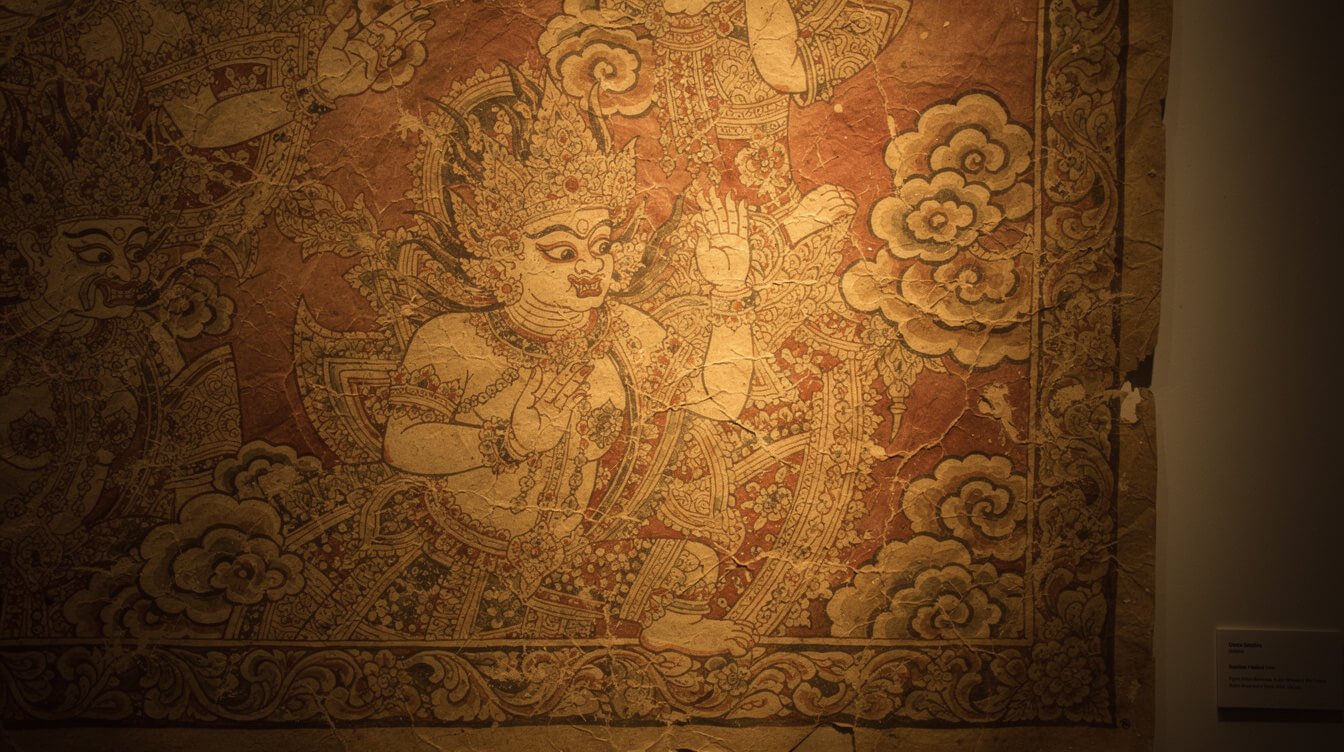
The permanent collection at ARMA spans an extraordinary range — from classical Kamasan paintings on tree bark to nineteenth-century Javanese court art to mid-century European-Balinese collaborations. Walking through the galleries is like walking through a timeline of how Bali’s artistic identity formed, was challenged by outside influence, and ultimately emerged stronger for it.
Classical and Pre-Modern Works
The oldest pieces in the collection are Kamasan-style wayang paintings — flat, richly detailed depictions of Hindu epics rendered on bark or cloth. This was Balinese painting for centuries: narrative, devotional, and deeply tied to temple ceremonies. You’ll also find rare works by Raden Saleh and Syarif Bustaman, two pioneering Indonesian painters from the nineteenth century whose pieces seldom appear outside Jakarta.
The Batuan School and Ubud Style
ARMA’s strength lies in its Batuan-era holdings from the 1930s and 1940s — the period when Balinese art underwent its most radical transformation. Artists like I Gusti Nyoman Lempad, Ida Bagus Made, Anak Agung Gede Sobrat, and I Gusti Made Deblog are all represented. Their work marks the moment Balinese painting shifted from collective temple commissions to individual artistic expression, and it’s extraordinary to see that shift documented on these walls.
Walter Spies, Rudolf Bonnet, and the European Influence
Two European artists changed the trajectory of Balinese painting in the early twentieth century. Walter Spies, a German painter who arrived in Bali in the 1920s, and Rudolf Bonnet, a Dutch artist, co-founded the Pita Maha cooperative — an artists’ guild that introduced Balinese painters to perspective, realism, and individual composition. Their influence didn’t replace traditional Balinese aesthetics; it expanded them. ARMA holds works by both Spies and Bonnet, alongside paintings by Willem Gerard Hofker and other foreign artists who lived and worked in Bali during that transformative era.
The juxtaposition is the point. Seeing a Kamasan bark painting alongside a Bonnet portrait alongside a contemporary Balinese abstract — all in the same compound — tells you something about Ubud that guidebooks struggle to articulate: this village has always been a place where traditions absorb outside influence without losing themselves.

Get a Free 3-Day Sample Itinerary
ARMA, rice terraces, morning markets, evening dance — we’ve mapped three days in Ubud that feel like a week. Download the sample itinerary and start planning.
The Gardens and Grounds — Where Art Meets the Landscape
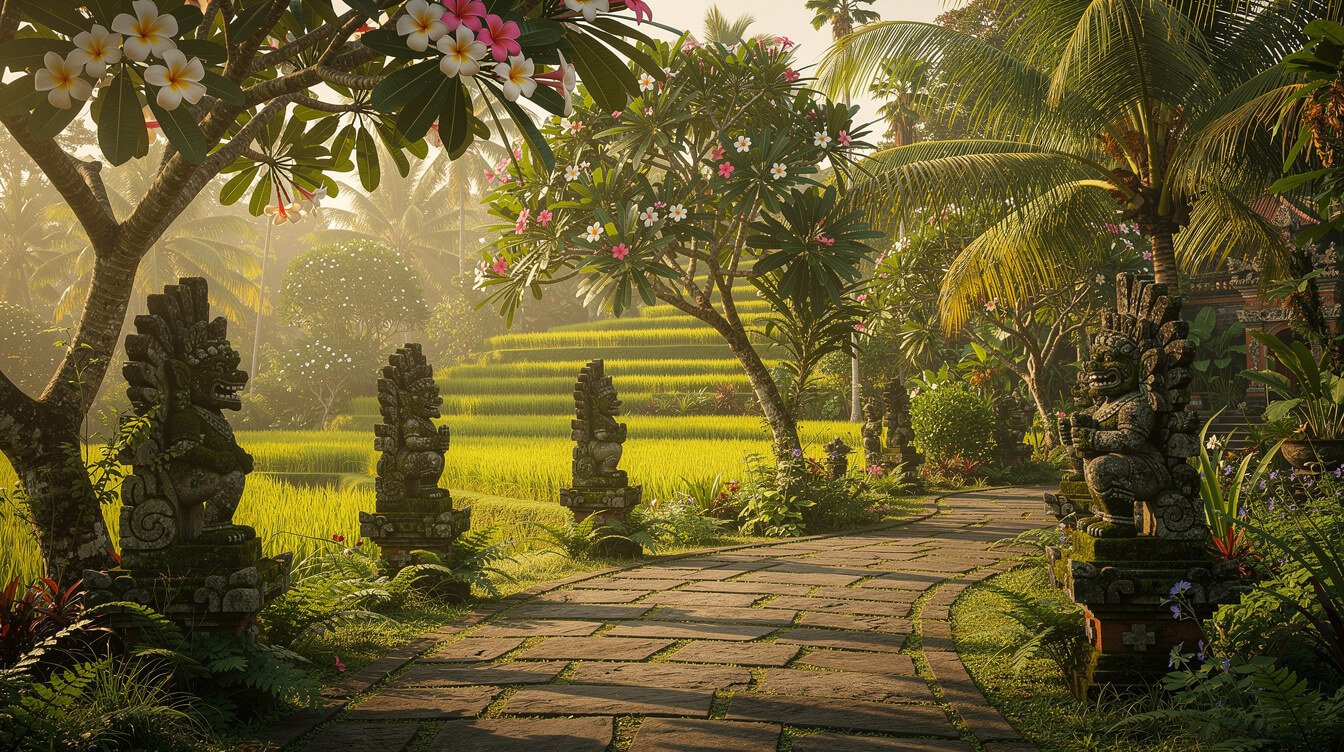
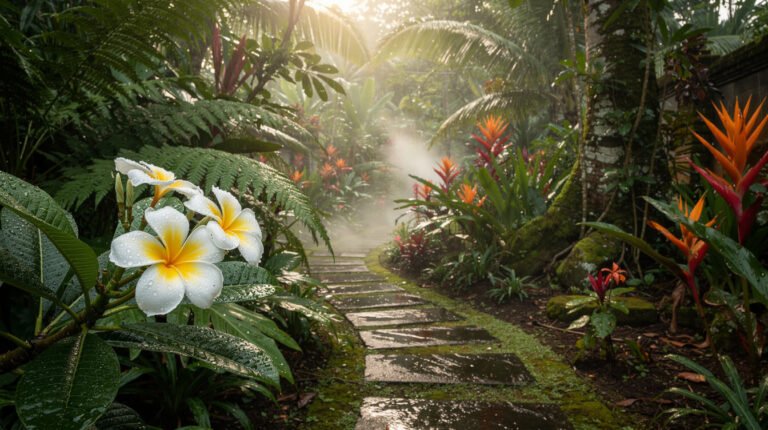
ARMA sits on several hectares of landscaped tropical gardens, and calling them gardens feels like underselling what they actually are. Stone pathways wind between ancient banyan trees and flowering frangipani. Moss-covered statues of Hindu deities stand among dense tropical plantings. The boundary between museum and garden disappears — you’re looking at art inside pavilions while standing in a garden that is itself a work of careful design.
The grounds include views of surrounding rice fields, which frame the compound with that particular shade of green that Ubud is famous for. Mornings here are quiet — the kind of quiet where you can hear birds and the distant sound of water and not much else. If you’ve been navigating Ubud’s busy markets or the crowded main streets, ARMA’s gardens feel like stepping into a different tempo entirely.
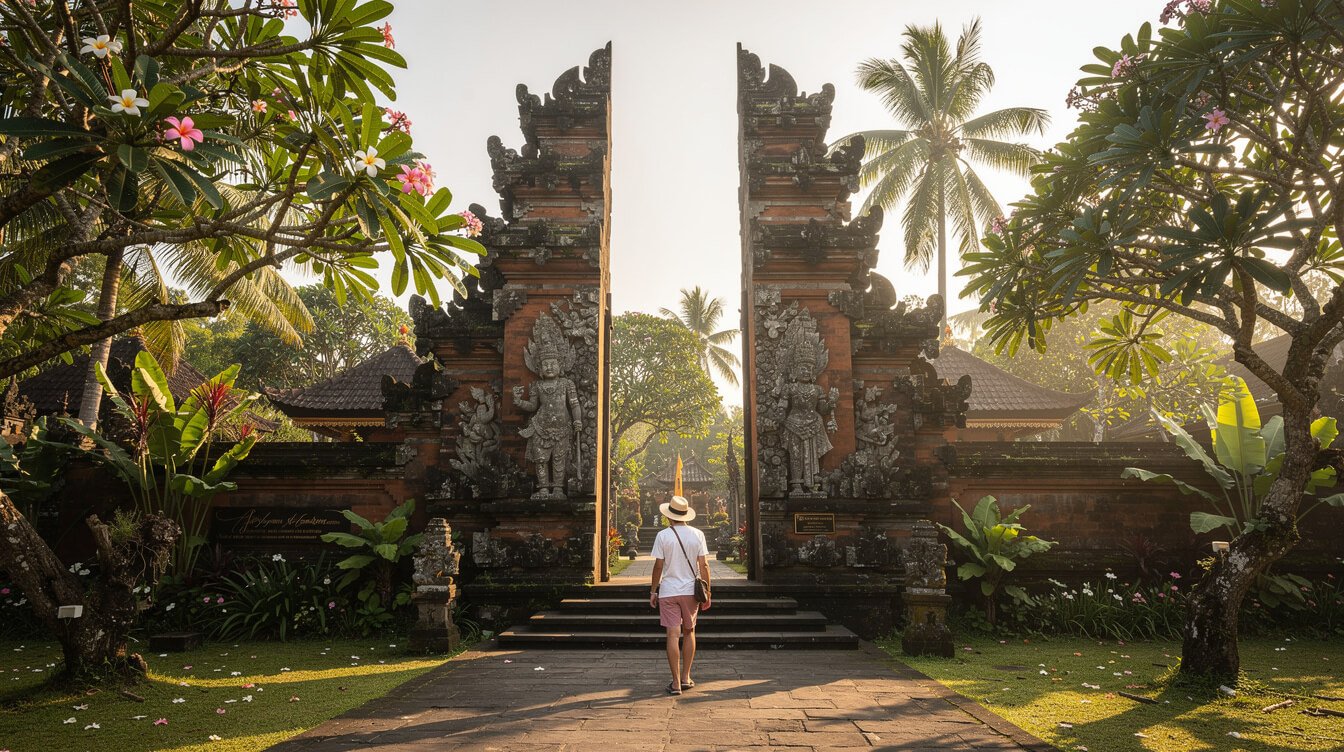
The architecture itself is traditional Balinese — open-air pavilions (bale) with carved wooden details and thatched alang-alang roofing. The buildings aren’t reproductions or theme-park versions of traditional design. They’re the real thing, built by local craftsmen using techniques that have been handed down for generations. The stone carvings at the entrance gate are worth stopping for on their own — intricate, weather-worn, and quietly powerful.
For anyone visiting the rice terraces around Ubud, ARMA offers a complementary perspective. The terraces show you the landscape; the museum shows you what that landscape has inspired in Balinese artists for centuries.
Performances, Workshops, and Cultural Programs at ARMA
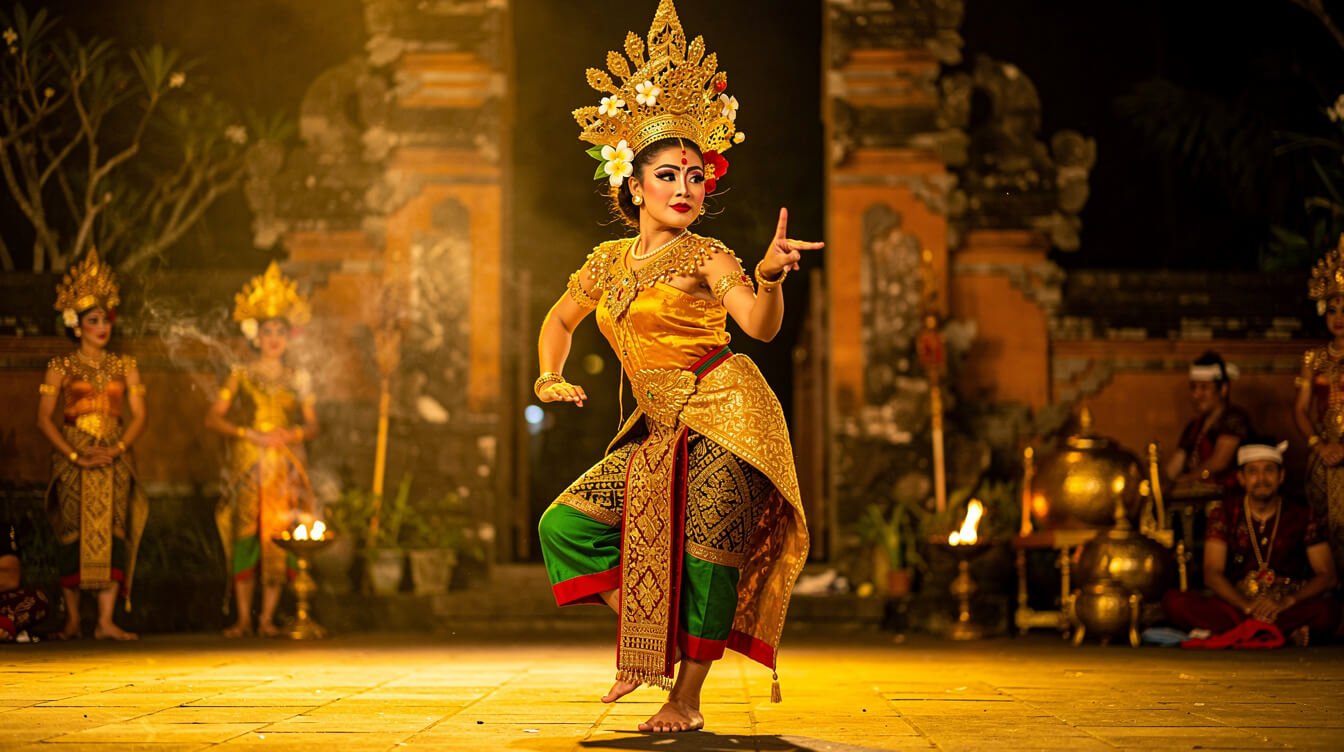
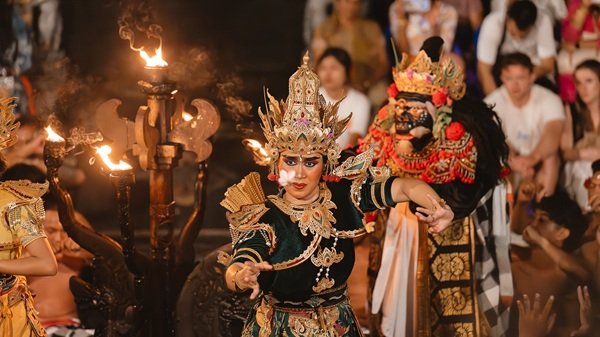
ARMA’s performing arts program is one of the best reasons to visit — and one of the most overlooked. The museum hosts traditional Balinese dance performances four evenings per week, each one a distinct form with its own history and meaning.
Weekly Dance Schedule
- Sunday, 7:30 PM — Legong Dance, the classical court dance of Bali, performed by young dancers in elaborate golden costumes
- Tuesday, 7:30 PM — Legong Telek, a variation of the Legong with masked elements and dramatic storytelling
- Wednesday, 7:00 PM — Topeng Jimat, a masked dance-drama drawn from historical chronicles
- Friday, 6:00 PM — Barong and Kris Dance, the dramatic battle between good and evil spirits — Bali’s most iconic ceremonial performance
These aren’t tourist-packaged shows. ARMA functions as a teaching center for traditional dance, and the performers include both professional dancers and students learning the forms. The setting — an open-air stage surrounded by the museum’s gardens — makes the experience feel intimate and grounded in a way that larger venues can’t replicate.
Workshops and Classes
ARMA offers hands-on cultural workshops that go deeper than watching. Options include traditional Balinese painting, woodcarving, batik-making, Balinese cooking classes, dance lessons, and offerings-making workshops. Sessions typically run between $25 and $55 USD per person, and most can be arranged on short notice.
The painting workshops are particularly worthwhile — you work alongside practicing Balinese artists, learning the techniques that produced the works hanging in the galleries just meters away. It’s one thing to admire a Batuan-style painting from behind a rope; it’s another to sit with ink and paper and understand how those impossibly detailed compositions are actually built, stroke by stroke.
If you’re planning a longer stay and want to weave cultural experiences into your seven-day Bali itinerary, ARMA’s workshop calendar gives you a reason to return more than once.

Stay in Ubud, Walk to Art
Villa Amrita is a staffed 3-bedroom pool villa in the heart of Ubud — your own private base for mornings at ARMA, afternoons by the pool, and evenings watching the Legong under the stars.
Planning Your Visit to the Agung Rai Museum Ubud
Opening Hours and Admission
ARMA is open daily from 8:00 AM to 6:00 PM, every day of the year except Nyepi (Bali’s Day of Silence). Admission is approximately Rp 100,000 for international visitors and Rp 50,000 for students. Children under three enter free. Your ticket includes access to all galleries and the gardens, a museum booklet, and a complimentary coffee or tea at the on-site restaurant — a welcome touch after an hour or two of walking the grounds in Ubud’s tropical warmth.
How to Get There
ARMA is located on Jalan Raya Pengosekan, about a ten-minute walk south of Ubud’s central market and the Royal Palace. If you’re staying in the Pengosekan or Nyuh Kuning neighborhoods, it’s likely within walking distance. A short ride by scooter or car from anywhere in central Ubud takes five minutes or less. The museum has its own parking area for cars and motorbikes.
If you’re planning to include ARMA in a bigger day around Ubud, it pairs naturally with a morning at the Ubud Art Market, lunch at one of Ubud’s best restaurants, and an evening dance performance back at ARMA itself.
What to Wear and Bring
Comfortable shoes are essential — you’ll walk on stone pathways and through garden terrain. The compound is open-air, so bring sunblock, a hat, and water for midday visits. Mornings before 10:00 AM are the most comfortable temperature-wise and the least crowded. A light rain layer is smart during wet season (October through March), though the covered pavilions provide shelter when showers pass through.
How Long to Spend
Budget at least two hours to see the galleries and walk the gardens. If you’re attending a dance performance or workshop, plan for a half-day. The restaurant serves throughout the day, so you can easily build a meal into your visit without rushing. For first-time visitors to Bali, ARMA is one of the most rewarding cultural stops you can make — it gives you a framework for understanding what you’ll see in temples, ceremonies, and village life throughout the rest of your trip.
Frequently Asked Questions About ARMA Ubud
Is the Agung Rai Museum Ubud worth visiting?
Absolutely. ARMA offers something no other museum in Ubud does — a complete cultural experience that includes world-class art collections, tropical gardens, live dance performances, and hands-on workshops, all in one compound. It’s one of the most meaningful ways to understand Balinese art and culture beyond the surface.
How much does it cost to visit ARMA?
Admission is approximately Rp 100,000 (around $7–10 USD) for international visitors and Rp 50,000 for students. This includes gallery access, the gardens, a museum booklet, and a complimentary drink at the on-site cafe. Dance performance tickets are separate.
What are the ARMA dance performance times?
Traditional Balinese dance performances take place four evenings per week: Legong on Sundays at 7:30 PM, Legong Telek on Tuesdays at 7:30 PM, Topeng Jimat on Wednesdays at 7:00 PM, and Barong and Kris on Fridays at 6:00 PM. Schedules can shift, so confirm with the museum directly when you arrive in Ubud.
Can I take a workshop at ARMA?
Yes. ARMA offers workshops in traditional Balinese painting, woodcarving, batik, cooking, dance, and offerings-making. Prices range from $25 to $55 USD per session, and most can be arranged on short notice by contacting the museum.
What is the best time of day to visit?
Early morning (8:00–10:00 AM) is ideal — cooler temperatures, softer light in the gardens, and fewer visitors. If you want to attend an evening dance performance, plan a late afternoon arrival so you can explore the galleries first and stay for the show.
Where is ARMA located?
ARMA is on Jalan Raya Pengosekan, in the Pengosekan neighborhood of Ubud. It’s about a ten-minute walk south of Ubud’s central market and Royal Palace, or a five-minute drive from anywhere in central Ubud.
Can I combine ARMA with other Ubud attractions?
Easily. ARMA pairs well with a morning at the Ubud Art Market, a walk through the Monkey Forest (fifteen minutes north), lunch in central Ubud, and a visit to the Tegallalang Rice Terraces in the afternoon. If you’re building a longer trip, our ten-day Bali itinerary includes ARMA alongside the island’s other essential experiences.
Why ARMA Belongs on Your Ubud Itinerary
The Agung Rai Museum Ubud is the kind of place that changes how you see the rest of your trip. After spending time with the Kamasan paintings and the Batuan school works, you’ll notice the same artistic traditions in every temple carving, every ceremonial offering, every shadow puppet performance you encounter across Bali. That’s the gift of a museum built not for tourists but for preservation — it gives you a lens, not just a memory.
Agung Rai’s vision was never about creating an attraction. It was about creating a home for art that might otherwise have disappeared — sold off, shipped overseas, forgotten. The fact that visitors get to walk through that home, sit in its gardens, watch its dancers, and learn from its artists is a generous side effect of something deeper.
If you’re visiting Ubud and you have two hours to spare — and you do, because Ubud is a place designed for slow mornings and unhurried afternoons — give those hours to ARMA. The gardens alone are worth the walk from town. The art will stay with you longer than you expect.

Join Our Newsletter
Fun, new, exciting Bali news — delivered to your inbox. Ubud tips, villa updates, and travel inspiration from the team that lives here.