Bali Surfing: A Season-by-Season Guide for Every Level, from an Ubud Base
Before dawn, Ubud is still dark and the roosters have only just begun. Forty minutes later you are standing on black volcanic sand, board under your arm, watching the first light catch the spray off a reef. Behind you, Mount Agung is a blue shadow above the mist. That is Bali surfing from an Ubud base: rice fields at breakfast, a reef at sunrise, and the whole day still ahead of you.
Most surf guides to Bali assume you’re sleeping in Canggu or on the Bukit, a short walk from the waves. This one is written for you if you’d rather stay in the green, quiet middle of the island and drive to the water. It covers why Bali works for every level, which coast is best in which months, where beginners should learn, the famous reef breaks of the south, the east-coast waves that are closest to Ubud, how to plan a surf day from the villa, and how to stay safe and respectful in the lineup.
Bali Surfing at a Glance: Why One Island Works for Every Level
Bali sits on the edge of the Indian Ocean with almost nothing between its southern coast and the storms of the Southern Ocean. Those storms send long, organized groundswells north for thousands of kilometers. A deep ocean trench just offshore lets that swell reach the reefs with very little energy lost along the way. The result is Bali surfing that works on most days of the year, in warm water, at a huge range of spots.
What makes Bali surfing special is the variety packed into a small area. Within two hours of Ubud you have:
- Soft beach breaks on the southwest coast, from Kuta to Canggu, where most people take their first lesson.
- Famous reef breaks on the Bukit Peninsula in the far south, including Uluwatu, Padang Padang and Bingin.
- Powerful east-coast reefs such as Keramas, which come alive in the wet season and sit closest to Ubud.
- Island waves off Nusa Lembongan, reached by boat from Sanur.
The water stays around 27°C (81°F) in the middle of the year and closer to 29°C (84°F) from November to May, so most surfers wear a rash guard for sun and reef protection, not a wetsuit. Bali surfing is possible every month. The trick is simply knowing which coast to drive to.
A note on lefts and rights
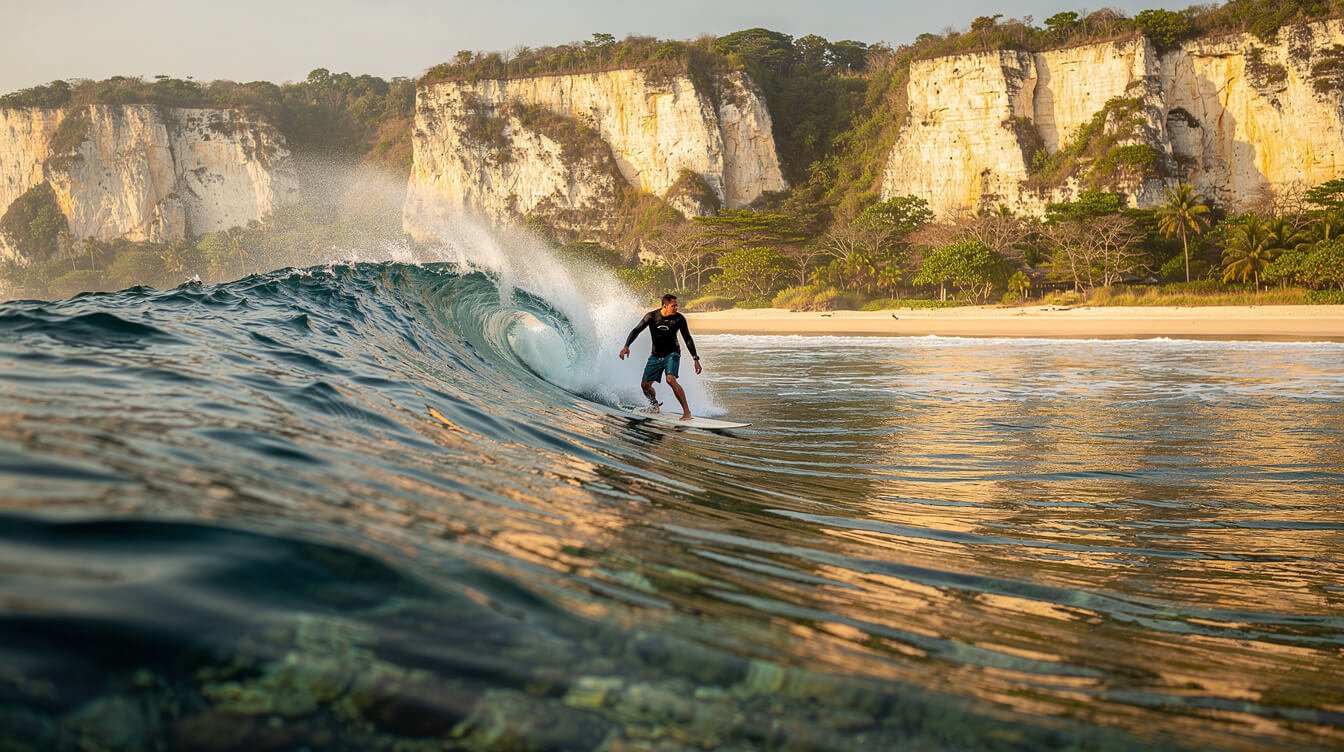
Bali is often called the land of the lefts, because so many of its best reef breaks peel to the left as you look at the beach. That suits regular-footed surfers going backhand, and goofy-footed surfers going frontside. The east coast flips the pattern: Keramas is a fast right-hander, which is one reason surfers who know Bali well split their trips between the two sides of the island.
Bali Surfing Seasons: Which Coast Works in Which Months
The single most useful thing to understand about Bali surfing is the wind. Swell arrives all year. What changes with the seasons is the direction of the wind, and wind decides which coast is clean.
Dry season (roughly April to October): the west coast and the Bukit
From around April, steady southeast trade winds settle in. They blow offshore across the west-facing beaches and the reefs of the Bukit, which holds up the face of each wave and grooms it into clean lines. This is the season most people picture when they think of Bali surfing, and the season most surf camps are busiest. June, July and August bring the biggest swells of the year and the biggest crowds. They’re also the windiest months, and by late morning many exposed spots turn choppy, while the cliff-sheltered breaks around Uluwatu hold their shape longer.
Wet season (roughly November to March): the east coast
From November, the monsoon brings winds from the southwest and west. These blow onshore on the west coast but offshore on the east, so the surf rotates to Keramas, the reefs off Sanur, Serangan and the outer reefs of Nusa Dua. Rain tends to arrive in short, heavy bursts, often overnight or in the afternoon. After a rainy night, the next morning can be glassy and almost windless on both coasts. If you’re curious what the rest of the wet season feels like on land, our guide to Bali’s rainy season covers it.
The shoulder months
April, May, September and October are the sweet spots. The winds are lighter and more variable, so several areas can be good in the same week, and the lineups are quieter than in peak season. Many experienced surfers also call November the island’s most underrated month: the first monsoon winds wake up the east coast, the Bukit can still be glassy at dawn, and the crowds have thinned. If you are reading this in November, you’ve arrived at a good time. Our month guides for Bali weather in November and December help with the rest of your plans.
| Months | Wind | Where to surf |
|---|---|---|
| April–May | Light, trades building | Almost everywhere; quiet lineups |
| June–August | Strong southeast trades | Bukit reefs early; beginners on sheltered bays |
| September–October | Trades easing | Bukit and the first east-coast days |
| November–March | Southwest to west monsoon | Keramas, Sanur, Serangan, Nusa Dua; Bukit at dawn on calm days |

Get a free 3-day sample itinerary
Three good days in Ubud: rice field walks at first light, a morning market, a temple, and an easy morning drive to the east-coast surf. We will send you a free 3-day sample itinerary.
Where to Learn: Bali Surfing for Beginners
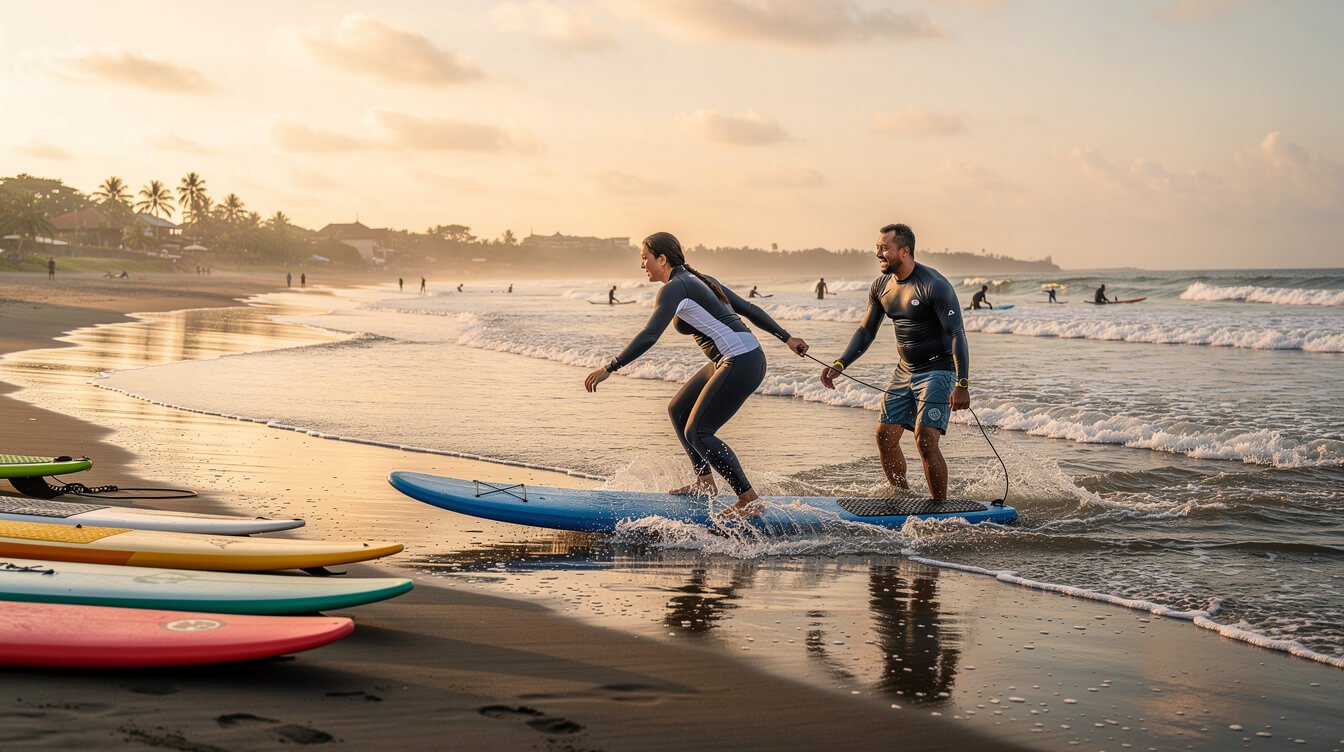
If you’ve never stood on a board, Bali surfing is a kind place to start. The water is warm, surf schools are everywhere, and the southwest beaches have sandy bottoms and long stretches of gentle whitewater. The key is choosing a sand-bottom beach or a sheltered bay, not a reef.
Kuta, Legian and Seminyak
This long strip of sand from the airport northward is where Bali surfing tourism began. Kuta Beach has lifeguard towers, flags to swim and surf between, and rows of board rentals. The waves are mostly forgiving beach breaks, and you can practice standing up in the whitewater without worrying about rock below you. Seminyak is the same stretch of coast with a little more size and fewer people.
Batu Bolong in Canggu
Many of the island’s surf schools now work out of Canggu, and Batu Bolong is its main learning wave: a slow, rolling peak that suits soft-top foam boards and longboards. The beach is lively, with cafés and music, so it feels very different from the hush of Ubud. Our comparison of Ubud and Canggu explains why many travelers sleep in one and visit the other.
Baby Padang and Jimbaran
On the Bukit, a small sheltered wave at the inside of Padang Padang, often called Baby Padang, is a popular spot for beginner lessons, and the bay at Jimbaran can be gentle when the open coast is too big for learners. A local instructor will know which one is working on your day.
How to learn well
- Take a lesson. A two- or three-hour session with a qualified instructor teaches you to read the water, paddle out and stand up safely. Private or small-group lessons move faster.
- Use a big foam board. It floats better, catches waves earlier and is far kinder if it hits you.
- Go early. Mornings bring lighter wind, softer sun and fewer people.
- Warm up. Paddling uses shoulder and back muscles you’ll feel the next day. A few minutes of stretching on the sand helps.
- Book two or three sessions. The first day is mostly falling. The second is when it clicks.
Beginners are welcome in every season. In the wet season the west coast is often onshore and messy by midday, so learners do best with an early start, when the wind is still light.
The Bukit Peninsula: Uluwatu, Bingin and Padang Padang
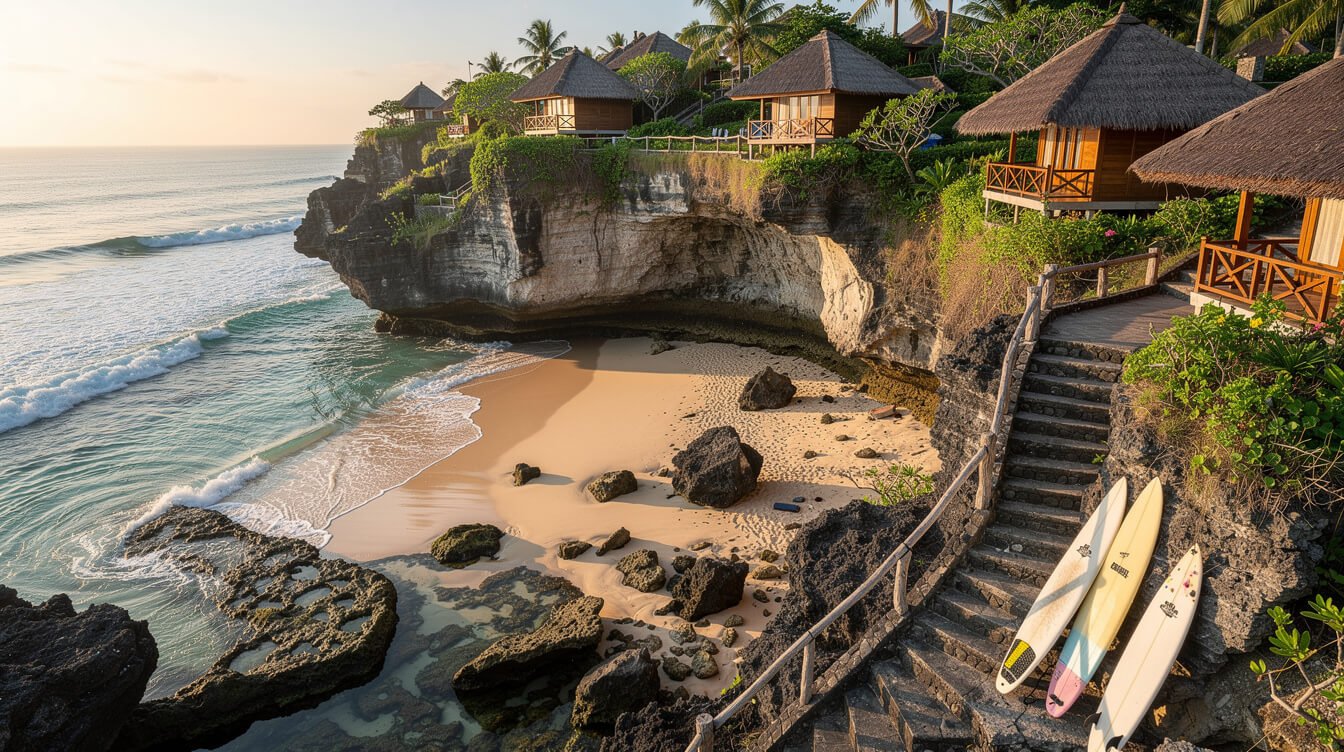
The limestone headland at Bali’s southern tip, the Bukit, holds the waves that made Bali surfing famous. Here the reefs sit below tall cliffs, and the paddle-out often starts from a cave, a cove or a long staircase cut into the rock. These are intermediate and advanced waves. Watch from the cliff even if you never paddle out; it’s one of the great sights of Bali.
Uluwatu
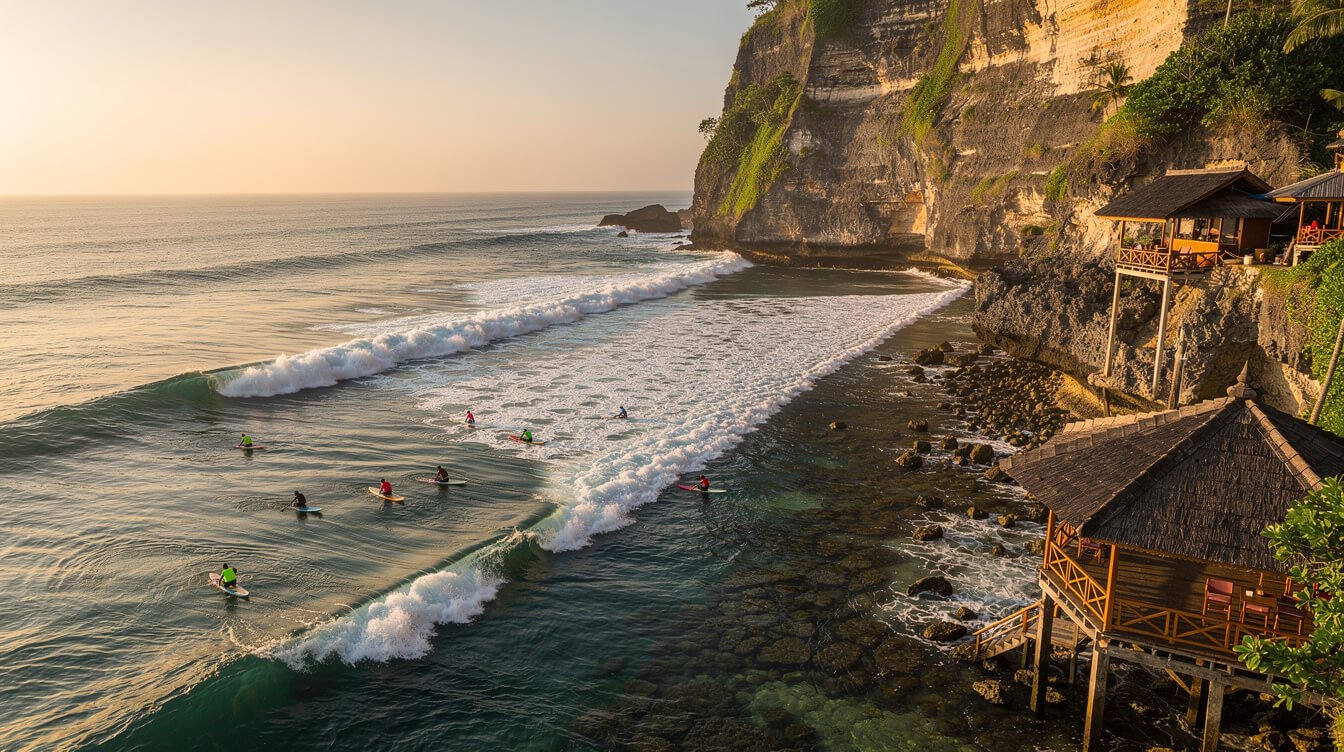
Uluwatu is a long left-hand reef with several sections that work at different tides and swell sizes, so something is usually breaking. Surfers paddle out through a cave below the cliff, and wooden warungs on stilts look straight down at the lineup. On big dry-season days the outside sections become serious, heavy waves for experts. If you’d like to combine the cliffs with the famous sunset Kecak dance, our guide to Pura Luhur Uluwatu Temple has a full day plan from Ubud.
Padang Padang
Padang Padang is a fast, shallow, hollow left that only shows its full shape on strong dry-season swells. It’s among the most photographed waves on the island and strictly for experienced surfers. Its small, sheltered inside break is where many beginners take lessons.
Bingin, Impossibles, Balangan and Dreamland
Bingin is a short, mechanical left often called one of the easiest barrels in Bali, though it breaks over shallow reef. Impossibles, between Bingin and Padang Padang, has long, fast walls that link up on good days. Balangan offers long lefts for confident intermediates, and Dreamland has softer peaks that suit improving surfers. For a calmer beach day nearby, our Uluwatu beach guide helps you choose the right cove by tide.
From Ubud, the Bukit is usually a 90-minute to two-hour drive, depending on traffic through Denpasar. That makes it a full-day outing, not a quick session. Leave before dawn, surf the morning, rest through the hot middle of the day, and stay for sunset on the cliffs.
East Coast Surfing Near Ubud: Keramas and the Wet-Season Reefs
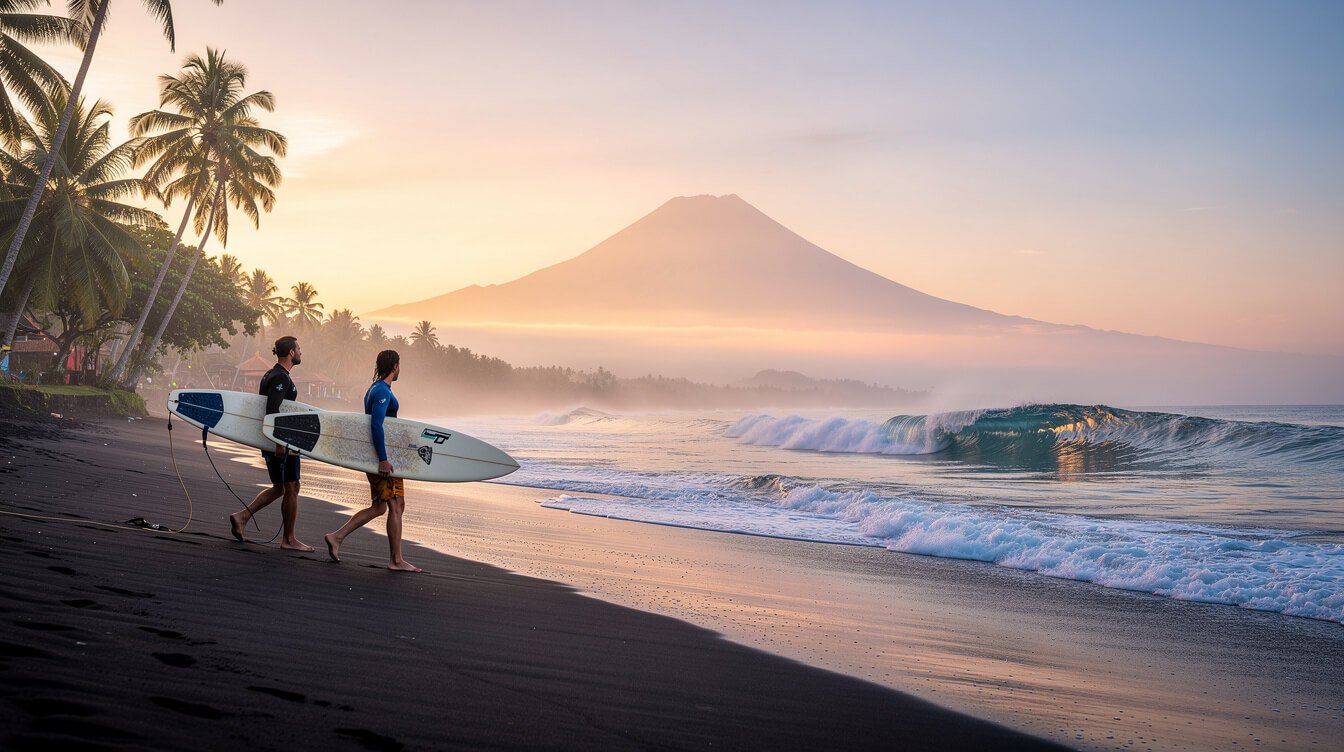
For anyone staying in Ubud, the east coast is the closest surf. It runs south from the Gianyar coast toward Sanur, facing the Badung Strait and Nusa Penida. In the wet season, when the monsoon winds blow offshore here, it becomes the heart of Bali surfing.
Keramas
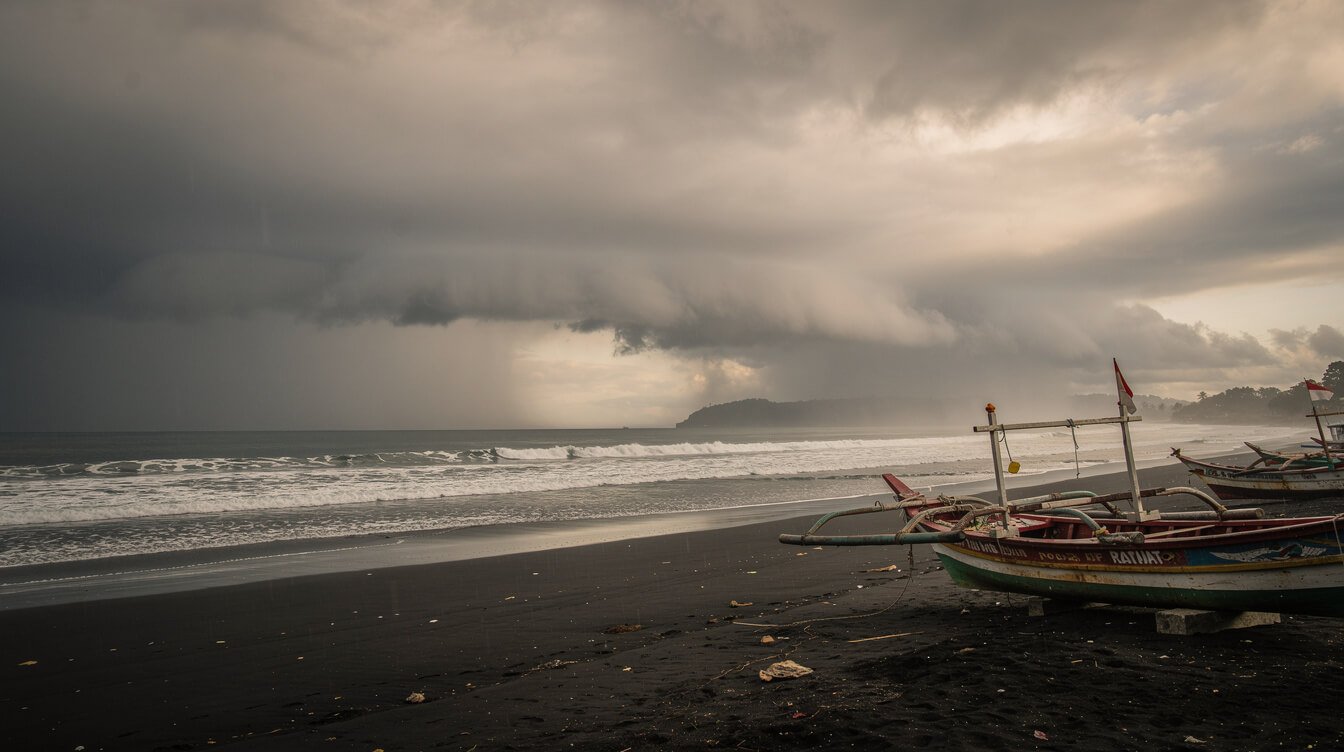
Keramas is a fast, hollow right-hand reef break over shallow volcanic rock, roughly 30 to 45 minutes from Ubud by car, depending on traffic. It has hosted World Surf League Championship Tour events and draws strong local surfers and visiting pros. The wave works best around mid-tide; low tide makes the reef dangerously shallow. Keramas is not a beginner wave in any conditions, and on small days it suits only confident intermediates. The beach itself is black sand with Mount Agung on the horizon, and it’s worth the drive just to watch.
The name has a playful story. Surfers say it sounds like kera mas, “golden monkey” in Indonesian, and the wave carries that nickname. A beachfront resort at Keramas runs floodlit night-surfing sessions for small booked groups, so you can watch, or join if your level allows, after dark.
Other east-coast breaks
- KFC and Carparks: two other waves on the same black-sand beach at Keramas. KFC takes its name from the sprint across scorching black sand to reach it. Both suit intermediates on the right day.
- Sanur: a chain of outer reefs, reached by boat, that produce good right-handers in the wet season. Sanur’s calm inside lagoon is better for a swim; our Sanur day trip guide covers the beach side.
- Serangan: a small island linked to the mainland by a causeway, with peaky reef waves for intermediate and advanced surfers in the wet season.
- Nusa Dua: powerful outer reefs off the resort beaches, for advanced surfers, often reached by boat.
Nusa Lembongan
Across the strait, Nusa Lembongan has three well-known reef breaks: Shipwrecks, Lacerations and Playgrounds. Playgrounds is the friendliest of the three. Most surfers go for two or three nights, but a long day trip from Ubud by fast boat from Sanur is possible. Our Nusa Lembongan day trip guide explains the logistics.

Book the Villa
Come back from a dawn surf to three bedrooms, a private pool and a quiet tropical garden in Ubud, with a team on hand so your days stay yours. Check availability for your dates.
Planning a Bali Surfing Day from Ubud
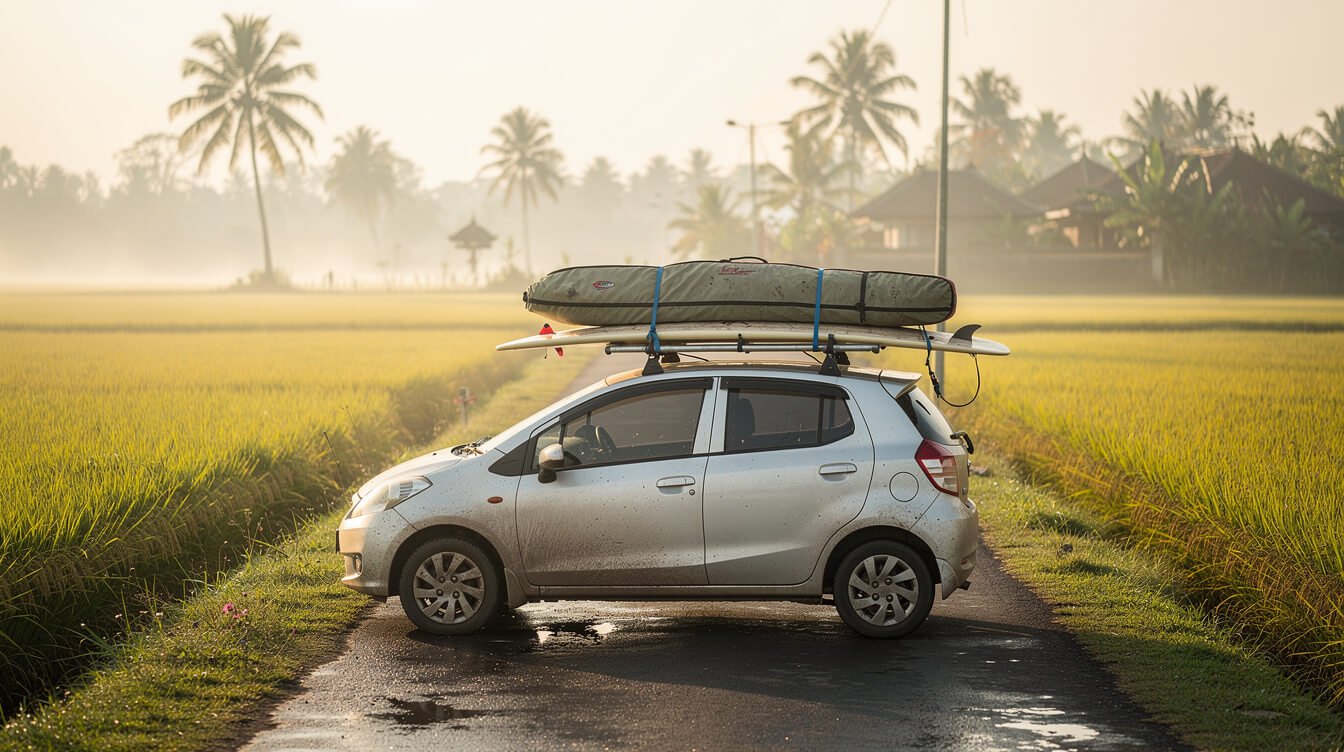
Bali surfing from an inland base takes a little planning, but the rhythm is a lovely one. You get the cool, green mornings and quiet nights of Ubud, and the ocean whenever you want it. Here is how to make it smooth.
Check the forecast the night before
Look at swell size, swell period, wind direction and the tide times for your chosen spot. Free surf forecast sites and apps cover every major Bali surfing break. A simple rule: pick the coast where the wind is blowing offshore, then pick a spot that suits your level at that tide. If you’re unsure, a local surf guide or school will tell you where to go that day.
Leave early
Dawn is the best time for Bali surfing almost everywhere on the island. The wind is lightest, the water is uncrowded and the sun is soft. From Ubud that means leaving in the dark: around 5:00 a.m. for Keramas, earlier for the Bukit. You’ll be back by lunch, when the heat and traffic peak. Let the team know your plan the evening before so the morning is easy.
Getting there
A private driver is the simplest way to surf from Ubud. Drivers in Bali are used to carrying boards and waiting while you surf, and you can sleep on the way home. Ride-hailing apps work for some routes, though boards can be awkward. Scooters with side surf racks are common, but Bali’s roads are busy and many visitors aren’t licensed or insured to ride, so we don’t recommend it for long trips.
Boards and rentals
You don’t need to bring a board. Rentals are easy to find at Kuta, Canggu, the Bukit and Keramas, from soft-tops to performance shortboards. If you’re bringing your own, check your airline’s board fees, use a padded bag and remember that reef booties and a spare leash are hard to find away from the surf towns.
Pair the surf with something else
A Bali surfing day doesn’t have to be only surf. From Keramas, Tegenungan Waterfall is a short drive on the way home. After a Bukit morning, stay for the Uluwatu sunset. After a session at Sanur, have a slow seafood lunch by the water. Then come back to Ubud for a swim in your own pool and a long, quiet evening. A Balinese massage is a very good idea the day after your first lesson.
Bali Surfing Safety, Reef Etiquette and Respect
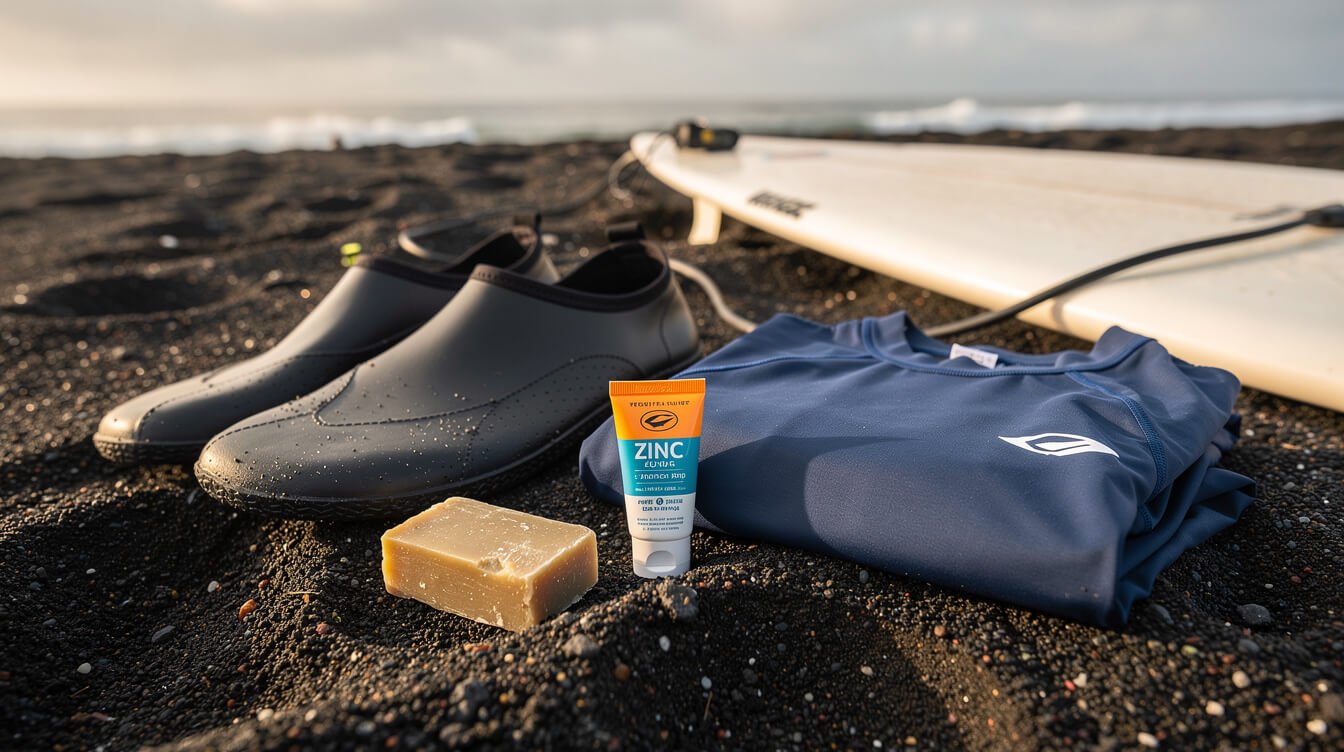
Bali surfing is generous, but the ocean is always stronger than you. A little preparation keeps a surf trip happy.
Reef and water safety
- Know the bottom. Most of Bali’s best waves break over coral or volcanic rock. Ask about the tide; many reefs become dangerously shallow at low tide.
- Treat reef cuts quickly. Clean them thoroughly with fresh water and antiseptic the same day. In the tropics small cuts can become infected fast.
- Watch for currents. Rip currents run on the beach breaks, and channels beside reefs can pull hard as the tide moves. At lifeguarded beaches like Kuta, surf between the flags.
- Cover up. A long-sleeve rash guard, reef-safe sunscreen and zinc on your face do more than any hat. The equatorial sun is strong even on cloudy days.
- Mind the water after heavy rain. In the wet season, rivers carry runoff and plastic onto some west-coast beaches. Avoid surfing near river mouths after a big storm, and read our guide to avoiding Bali belly.
Lineup etiquette
The surfer closest to the breaking part of the wave has priority, so never drop in on someone already riding. Paddle out through the channel, not through the middle of the lineup. Hold on to your board, especially a big foam one; a loose board can hurt people near you. At busy reefs, wait your turn, smile and talk to the people around you. Bali’s lineups are international and mostly friendly, and good manners go a long way.
Respect the island
Beaches in Bali are sacred as well as beautiful. You may see offerings on the sand or a ceremony at the water’s edge, especially during Melasti, the purification processions before Nyepi, the Balinese Day of Silence. Step around offerings and give ceremonies space. On Nyepi itself, the whole island stops: no one goes to the beach, no one drives and no one surfs. Check the date if your trip falls in March. Dress modestly when you walk through a village on your way to the water, and take your rubbish home with you.
Bali Surfing FAQ
Is Bali surfing good for beginners?
Yes. Sandy beach breaks at Kuta, Legian, Seminyak and Batu Bolong in Canggu, plus sheltered spots on the Bukit, make Bali one of the easiest places in Asia to learn. Take a lesson and start on a big foam board.
What is the best month for Bali surfing?
There’s surf all year. June to August brings the biggest swells to the Bukit. April, May, September and October offer good waves with fewer crowds. November to March is the season for the east coast, including Keramas.
Can you surf in Bali during the rainy season?
Yes. The monsoon winds that spoil the west coast blow offshore on the east coast, so Keramas, Sanur, Serangan and Nusa Dua come into season. Early mornings on the Bukit can also be excellent after a rainy night.
How far is Ubud from the surf?
Keramas, on the east coast, is roughly 30 to 45 minutes away. Canggu and Kuta usually take about an hour to 90 minutes, and Uluwatu on the Bukit about 90 minutes to two hours, depending on traffic. Our article on how far Ubud is from the beach has more detail.
Do I need a wetsuit for Bali surfing?
No. The water stays between about 27°C and 29°C. A rash guard or thin long-sleeve top protects you from sun and reef. Reef booties are useful at the shallower breaks.
Is Keramas good for beginners?
No. Keramas is a fast, hollow wave over shallow rock and suits advanced surfers. Beginners staying in Ubud can watch from the beach at Keramas, then take lessons on the sandy beaches of the southwest coast.
Is Ubud a good base for a Bali surfing trip?
It can be, especially if surfing is one part of a wider trip. You trade a walk to the waves for quiet nights, cooler air and easy access to temples, rice fields and the east coast. Families and groups often find it works well: the surfers leave at dawn and everyone else wakes slowly. See our guide to Ubud with family for ideas for the non-surfers.
Bali surfing gives you something few islands can: a different wave for every season, every level and every mood, all within a morning’s drive. Stay where the mornings are quiet, follow the wind to the right coast, and come home salty and tired to a green garden and a still pool. That’s a very good way to spend a week.

Join our newsletter — fun, new, exciting Bali news
Ceremony days, swell seasons, new trails and small stories from Ubud. Delivered now and then, always worth opening.