What the Rice Fields Sound Like at Five
You hear the water first.
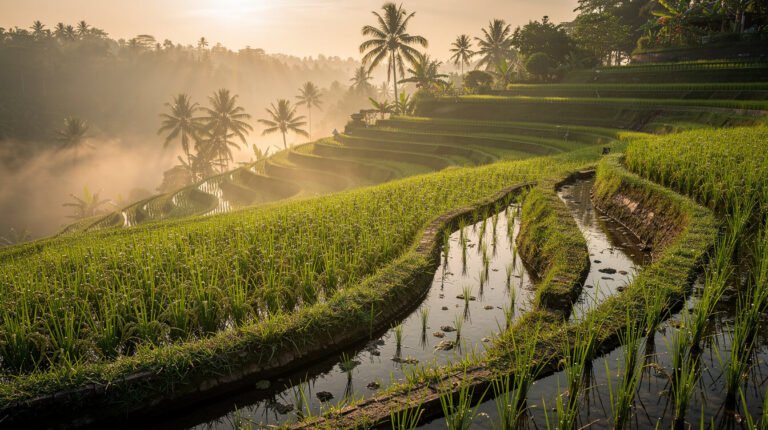
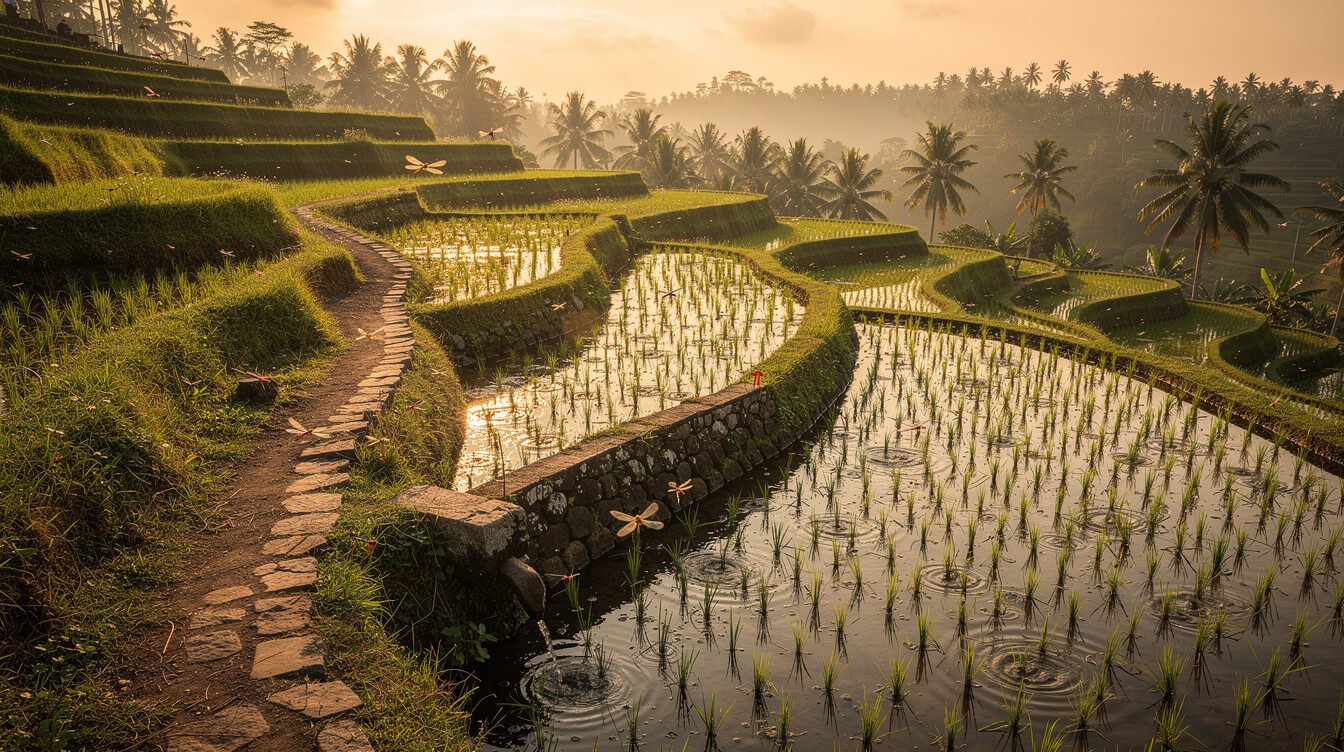
Not the kind of water that announces itself — no crashing waves, no gushing rapids. This is quieter. A thread of water slipping from one terrace to the next, through narrow channels carved from volcanic stone centuries ago. The Balinese call this irrigation system subak, and it still works the way it did a thousand years before anyone thought to call it a UNESCO heritage.
At five o’clock, the paddies catch the light differently. The sun drops behind Agung’s shoulder and everything turns — green to gold, shadow to amber. The water in each terrace becomes a mirror. You can stand on the narrow bund between two fields and see the sky beneath your feet.
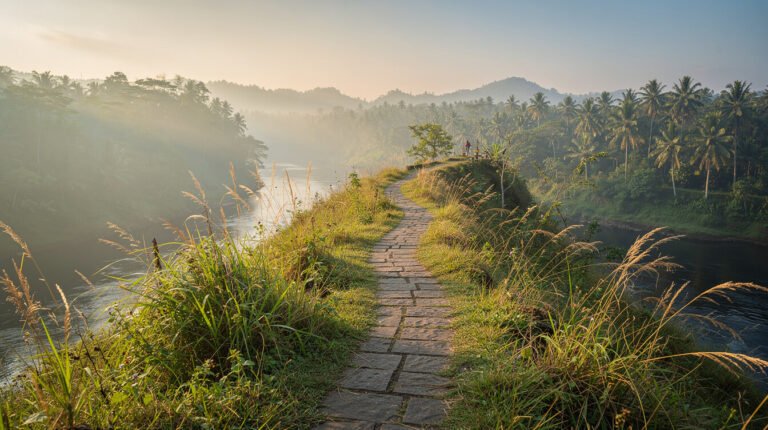
The path from our villa takes about ten minutes on foot. No map needed — just follow the lane past the village temple, past the woman selling young coconuts from a wooden cart, past the last family compound where a rooster struts along the wall. Then the road dissolves into a footpath and the fields open.
This is when Ubud sounds different from the rest of your day.
The motorbikes are behind you. What fills the space instead: a dragonfly hum close to the water, a kingfisher’s sharp call from the irrigation ditch, the soft creak of a bamboo bridge under someone’s sandals. A farmer walks the other direction carrying a bundle of cut grass balanced on her head, and she nods without stopping. There is no rush. There never was.
The air at this hour carries a particular smell — warm earth releasing the heat it stored all afternoon, mixed with something green and alive. If you’ve spent your day exploring Ubud’s temples and terraces, this is where the day slows itself down without asking permission.
Your feet know things your phone doesn’t. The packed-dirt path is warm under your soles. The grass at the terrace edge is cool. The stone step where the path dips — slick with a thin film of algae. You learn the walk through texture.
Most evenings, by the time you loop back to the lane, the light has shifted from gold to rose. The village kitchens have started their evening fires. You can smell garlic and coconut oil and something sweet and dark — kecap manis maybe — on someone’s breeze.
You don’t need a plan for this walk. You don’t need a guide. You just need to leave the villa at five and let the fields pull you in.
Some visitors tell us later it was the best hour of their whole Bali trip. Not the waterfall, not the temple, not the ceremony they happened to catch. The rice fields at five. The sound of water going somewhere slowly.