Bali Swing: Your Complete Guide to the Best Swing Experiences Near Ubud
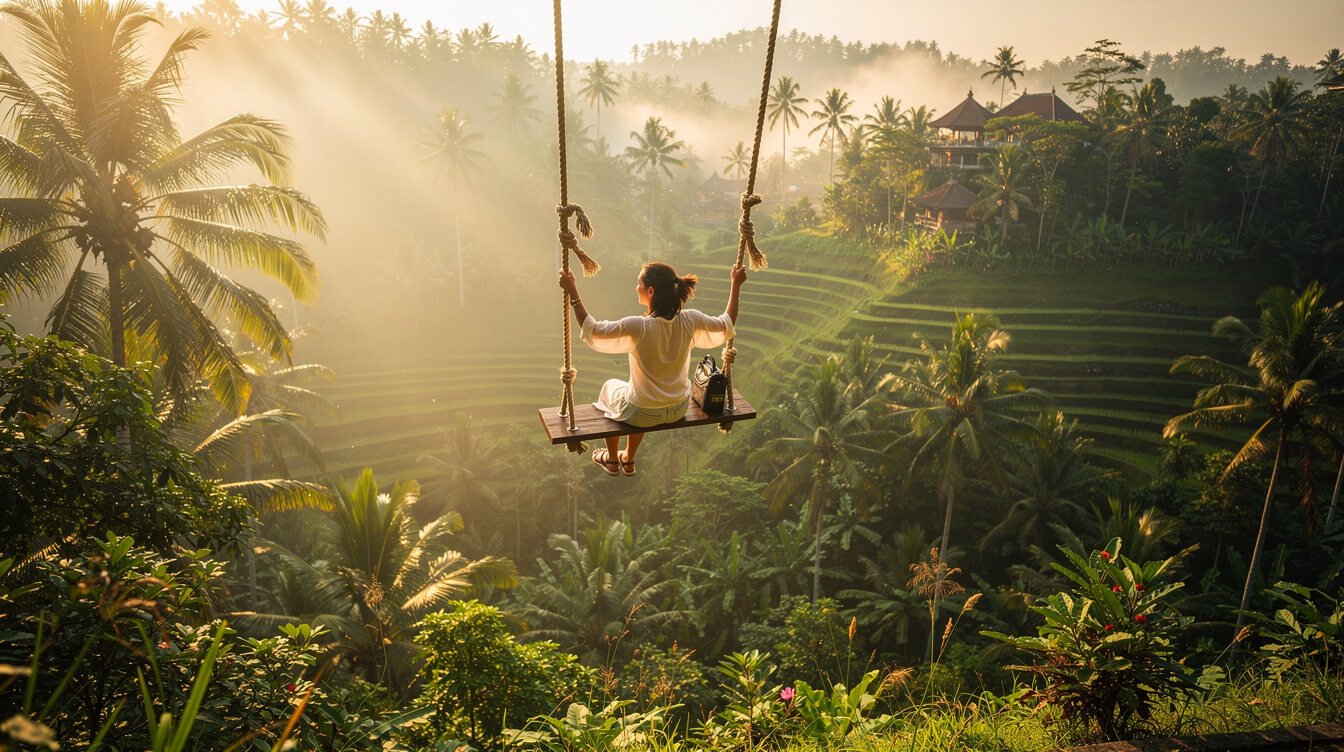
The bali swing has become one of the most iconic experiences on the island — that photograph of someone soaring above a jungle valley, arms wide open, green canopy stretching to the horizon. You have probably seen it a hundred times on Instagram. But here is what those photographs never tell you: there are dozens of swing parks across Bali now, and the difference between an extraordinary morning and a crowded, overpriced photo queue comes down to knowing which one to visit, when to arrive, and what to actually expect once you get there.
Our villa team arranges bali swing visits for guests every week. We have seen the full spectrum — from the thrill of the original 78-meter swing to quiet village swings where you are the only visitor that morning. This is everything we have learned, shared the way a friend would share it: honestly, practically, and with your actual experience in mind.
Why the Bali Swing Has Captured Every Traveler’s Imagination
What makes the bali swing so magnetic is not really about the swing itself. It is about that feeling — the one you get when the ground drops away and suddenly you are suspended above a world of green, with warm tropical air rushing past and nothing between you and the valley below but open sky.
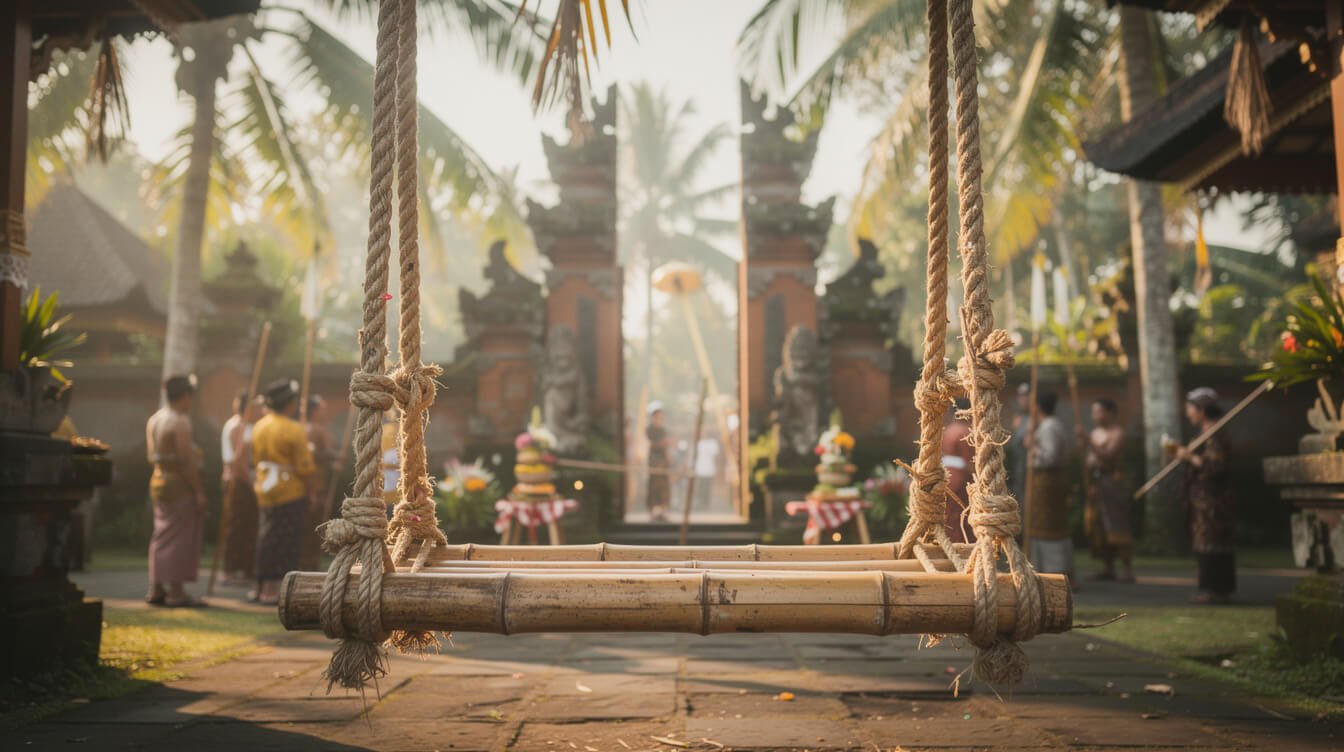
But here is the part most guides skip: swinging in Bali has roots that go deeper than Instagram. Traditional bamboo swings, called ayunan, have been part of Balinese village life for generations. During temple ceremonies, priests would swing as they chanted prayers, believing the rhythmic motion helped spread purification across the temple grounds. Children played on bamboo swings strung between coconut palms in every village. The modern bali swing parks are tourism inventions, yes — but they tap into something genuinely Balinese: the joy of moving through open air, above the earth, surrounded by the natural world.
The first commercial bali swing opened near Ubud around 2017, and within two years, dozens of competitors appeared across the island. Today, you can find swing experiences in nearly every tourist area — from the jungle valleys around Ubud to the lakeside cliffs of northern Bali. The quality varies enormously, and that is exactly why you need a guide like this one.
What Makes a Great Bali Swing Experience
Not all swings are created equal. The variables that matter most:
- Height and trajectory — swings range from gentle 5-meter arcs to full 78-meter drops above the jungle canopy
- Setting and views — the best swings overlook rice terraces, jungle valleys, or river gorges; the worst face parking lots
- Crowd levels — some parks process hundreds of visitors per hour; others see a handful per day
- Photo quality — professional photographers at some parks capture genuinely stunning shots; others hand you a phone
- Additional activities — many parks include bird nests, photo spots, nature walks, and cafes as part of the package
The Official Bali Swing in Bongkasa Pertiwi: The Original Experience
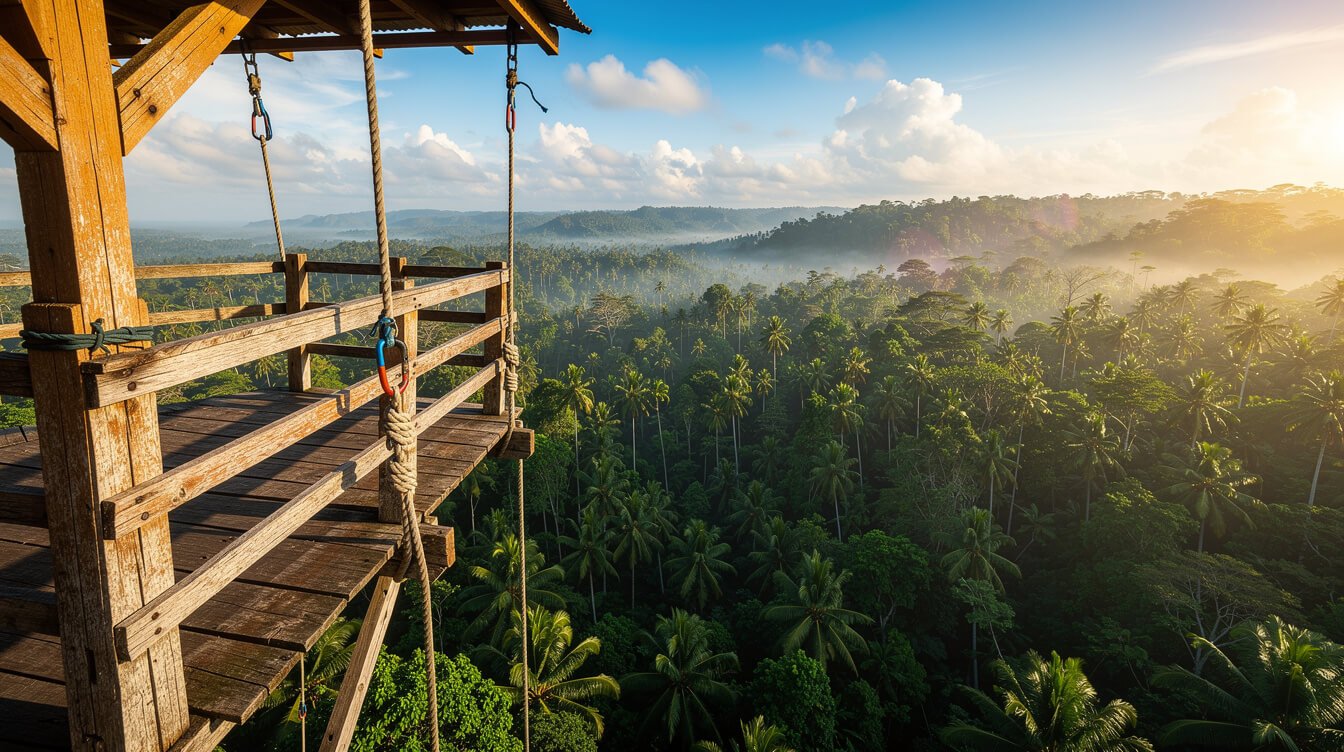
The original Bali Swing® sits in Bongkasa Pertiwi village, about 20 minutes southwest of central Ubud. This is the park that started everything — the one you have seen in thousands of photographs, with its dramatic swings arcing out over a deep jungle ravine.
What You Get
The all-inclusive ticket (around IDR 500,000 / ~$35 USD as of 2026) covers unlimited rides on all 12 single swings, ranging from beginner-friendly 10-meter swings to the signature 78-meter monster that takes your breath away. The park also includes 9 photo nests (those famous bird nest platforms), a heart-shaped rock, a helicopter photo prop, and various Instagram-ready installations scattered through the jungle setting.
The Honest Assessment
The views are genuinely spectacular — the ravine drops away dramatically, and the jungle canopy stretching below you is breathtaking. The 78-meter swing delivers a genuine adrenaline rush. Safety standards are solid, with harnesses, double-checked equipment, and attentive staff. The included photographer captures professional-quality shots that are worth having.
The trade-off is crowds. During peak hours (10:00 AM to 2:00 PM), you can wait 30-45 minutes for the most popular swings. The experience can feel more like a production line than an adventure. Our best advice: arrive when the gates open at 8:00 AM or visit during the last two hours before closing. You will have the swings practically to yourself, and the morning light is incomparably better for photographs.
Getting There from Ubud
The drive takes about 20 minutes through quiet village roads. If you are staying in or near Ubud, your villa manager or driver can drop you at the entrance. The road is well-signed — look for the large “BALI SWING” gates on the main road through Bongkasa Pertiwi. Plenty of parking available.
Get a Free 3-Day Sample Itinerary
See exactly how a Bali swing morning fits into a full day of Ubud exploration — crafted by our villa team.
The Best Alternative Bali Swings Near Ubud
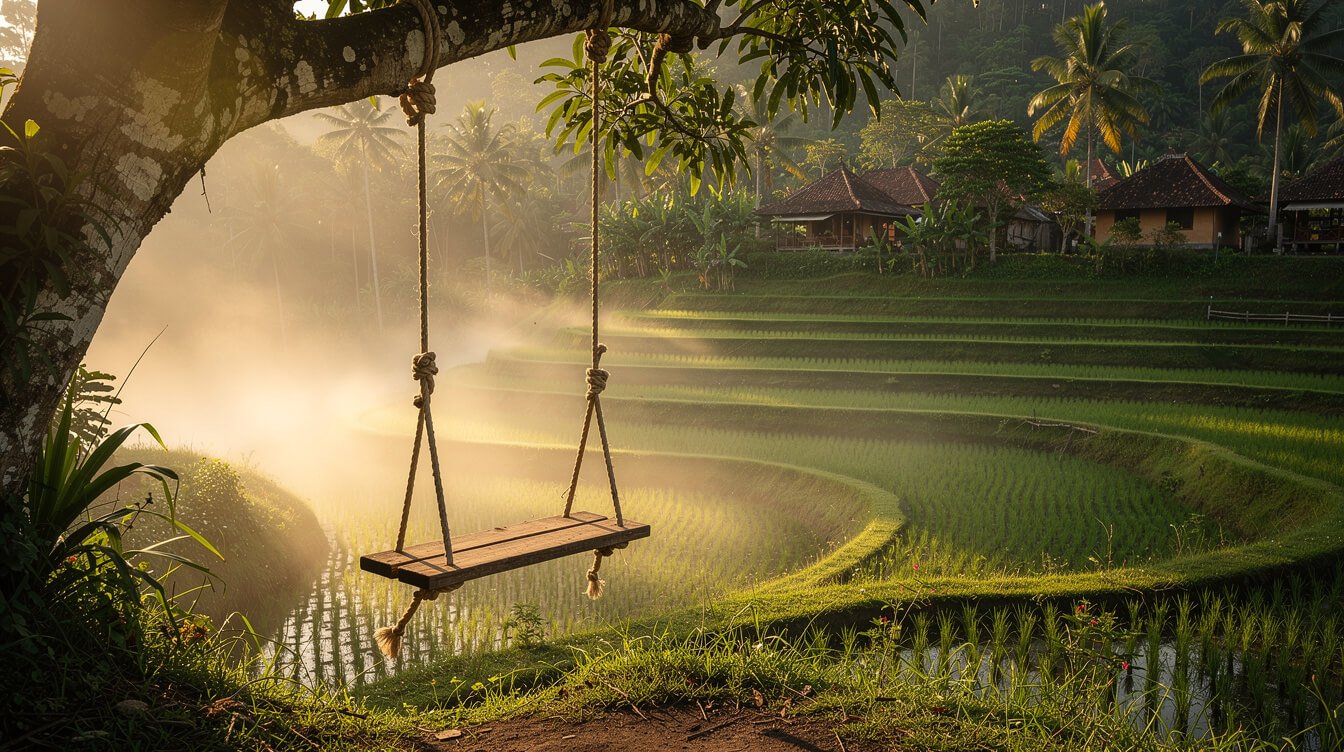
The original is iconic, but it is far from your only option. Several alternatives offer quieter experiences, lower prices, or equally stunning views — sometimes all three. Here are the ones our team recommends after years of sending guests to each.
Uma Pakel Swing at Tegallalang
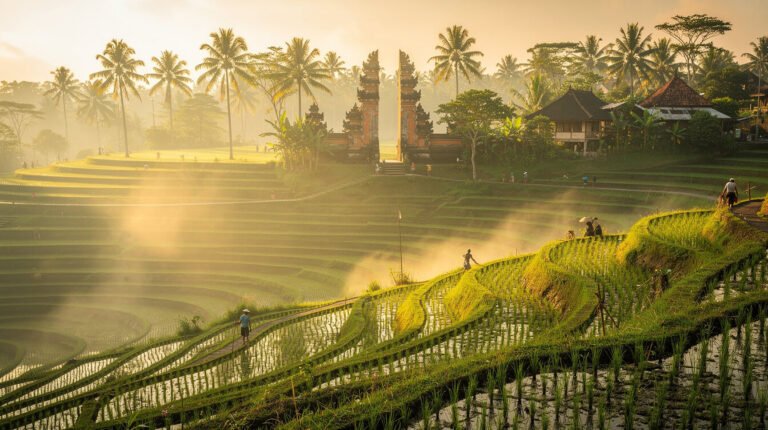
Perched alongside the famous Tegallalang rice terraces, Uma Pakel offers swings that arc directly over the sculpted green paddies. The setting is extraordinary — you swing above one of Bali’s most beautiful landscapes, with the rhythmic geometry of the terraces stretching out below. Tickets are around IDR 150,000 (~$10 USD), making it far more affordable than the official park. The experience is less polished but more intimate, and you can combine it with a walk through the rice terraces themselves.
Zen Hideaway
This boutique property near Ubud offers swing access exclusively to its guests — which means zero crowds. The setting is a private jungle valley, the swings are well-maintained, and the entire experience feels personal rather than commercial. If you value serenity over spectacle, this is the one.
Wanagiri Hidden Hills (Lake Tamblingan)
Located about 90 minutes north of Ubud, this swing park overlooks the twin volcanic lakes of Tamblingan and Buyan. The views are unlike anything near Ubud — misty volcanic landscapes, cool mountain air, and a completely different atmosphere. Tickets are remarkably cheap (around IDR 50,000 / ~$3.50 USD). The downside is the distance, but it combines beautifully with a day trip to northern Bali’s temples and waterfalls.
Terrace River Pool Swing at Tegallalang
Another Tegallalang option, this one swings you out over the palm-lined river gorge below the rice terraces. Less famous than Uma Pakel, which means shorter queues and a more relaxed pace. The price point is similar (around IDR 150,000), and the staff are genuinely welcoming. Great for families.
Nung Nung Waterfall Swing
Some of the most beautiful swings in Bali are not at dedicated swing parks at all — they are at waterfalls and cafes. The swing near Nung Nung Waterfall is free with a coffee purchase, and the setting is utterly magical. These smaller, informal swings often deliver the most authentic moments.
How to Choose the Right Bali Swing for Your Trip
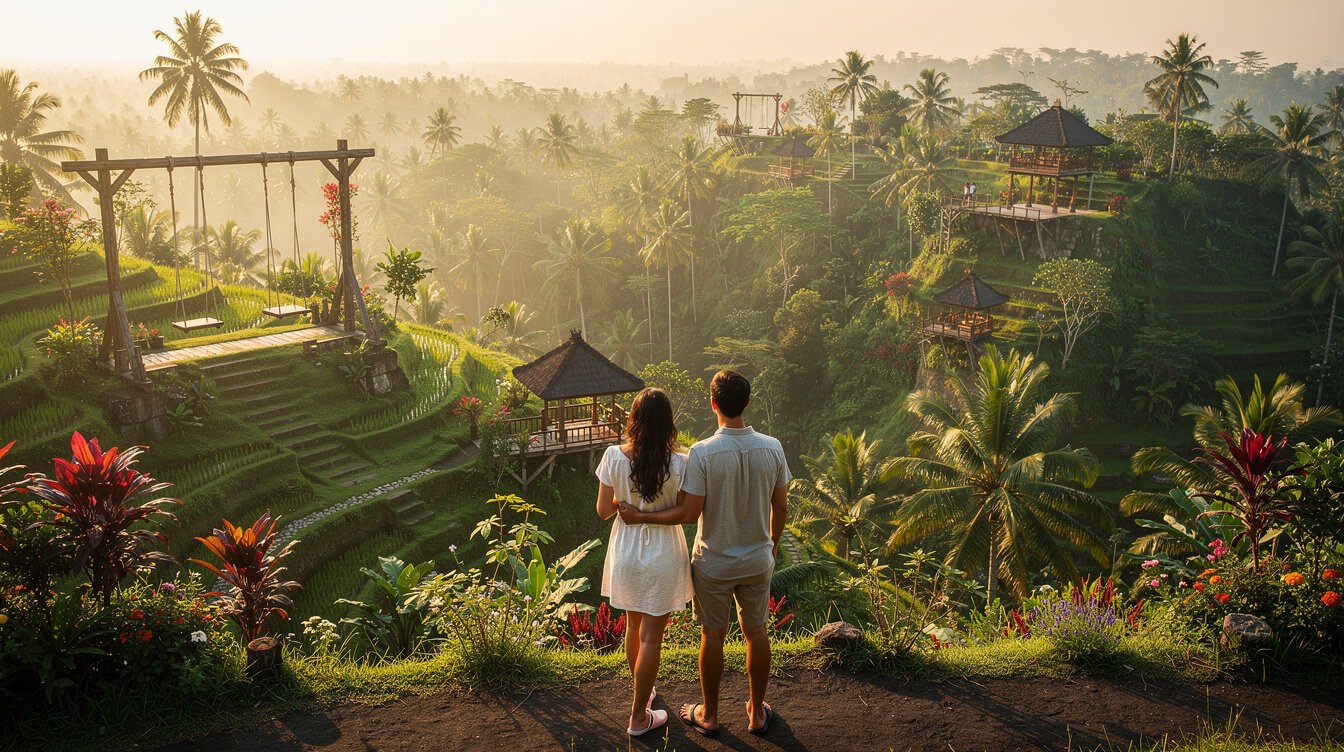
With so many options, the right bali swing depends entirely on what you are looking for. Here is how we help guests decide:
For the Full Instagram Experience
Go to the Official Bali Swing® in Bongkasa Pertiwi. Arrive at 8:00 AM. The professional photographer, the towering 78-meter swing, and the variety of photo spots mean you will leave with spectacular content. Budget the full morning — you will want at least 2-3 hours to try everything without rushing.
For Couples
The Zen Hideaway swing (if staying there) or Uma Pakel early in the morning. The quieter atmosphere, the natural setting, and the absence of queue-shuffling make for genuinely romantic moments. If you are spending several days in Ubud, save the swing for a morning when you want something playful and adventurous.
For Families with Children
The Official Bali Swing® offers the most size options and best safety standards for children. The smaller swings (10-15 meters) are perfect for kids, and the bird nests make for adorable family photos. Alternatively, the Tegallalang swings combine well with a family walk through the rice terraces — an educational experience wrapped in adventure.
For Thrill Seekers
Nothing beats the 78-meter swing at the Official Bali Swing®. It is the highest commercial swing in Bali, and the initial drop is genuinely stomach-dropping. If you have already done that, the Wanagiri Hidden Hills swings over the volcanic lake offer a completely different kind of thrill — the altitude, the mist, and the vast open landscape create a sensation of flying.
For Budget Travelers
The informal swings at cafes and waterfalls around Ubud cost nothing or next to nothing. The Wanagiri Hidden Hills at ~$3.50 is the best value for a dedicated swing park. Even Uma Pakel at ~$10 delivers a memorable experience at a fraction of the official park’s price.
What to Expect at a Bali Swing: Your Complete Visit Guide
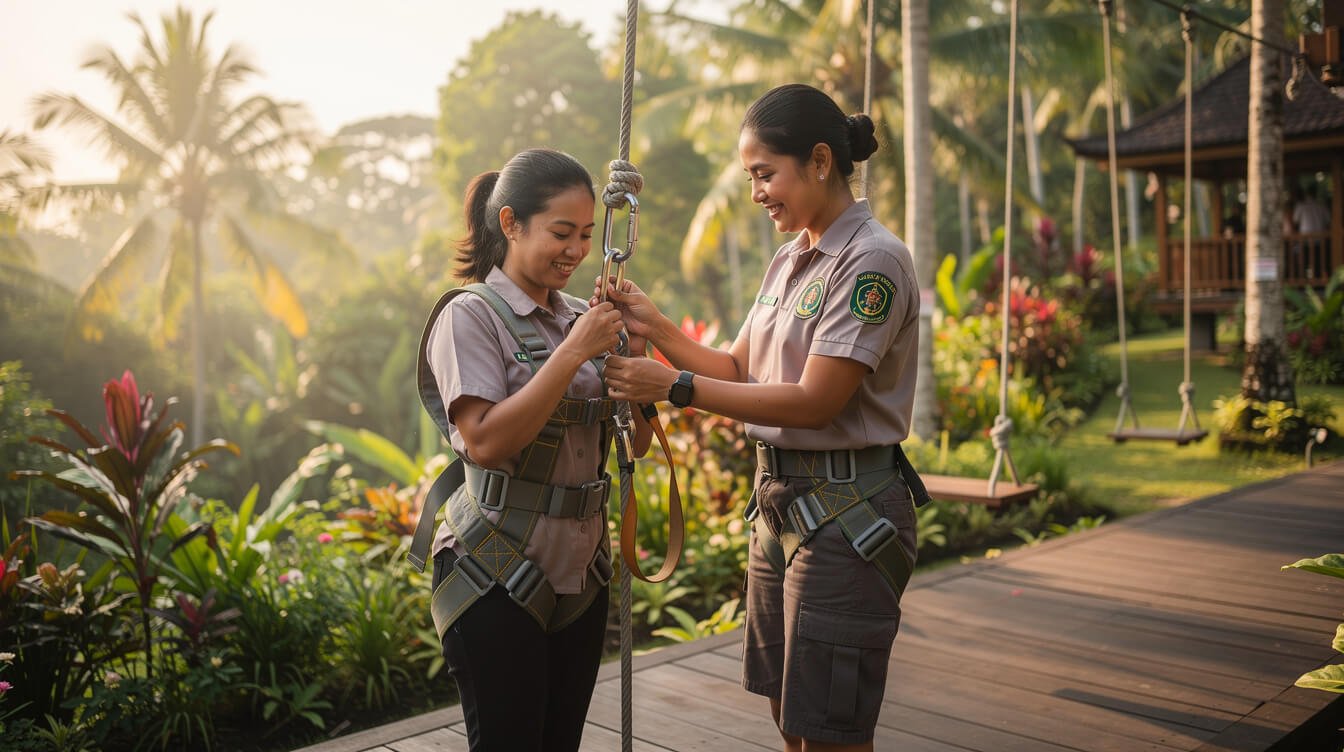
Knowing what a bali swing visit actually looks like, step by step, takes the uncertainty out of the experience and helps you plan your day better.
Arrival and Check-In
At the larger parks (Official Bali Swing®, Uma Pakel), you purchase tickets at a front counter, receive a wristband, and are given a brief safety overview. Some parks offer add-on packages with professional photography, drone footage, or special costume rentals. The basic all-inclusive ticket is almost always the best value.
Safety Briefing and Equipment
Before your first swing, staff help you into a safety harness — a full-body harness at the bigger parks, a lap belt at the smaller ones. The official park has the most comprehensive safety protocols: double harnesses, weight-tested ropes, and staff who check every buckle before each ride. If safety is a concern, prioritize the larger, more established parks.
The Swing Itself
Staff members pull the swing back and release you on a countdown. The initial drop is the most thrilling part — after that, you swing in wide, graceful arcs above the landscape. Most rides last 2-3 minutes per turn. At quieter parks, you can swing as long as you like. At busier ones, the informal rule is 2-3 swings before letting the next person on.
Photography Tips from Experience
- Wear something that flows — a dress, a loose shirt, or a sarong catches the wind beautifully in photos
- Morning light (8:00-10:00 AM) gives the warmest, most flattering photographs
- Arms wide open on the forward swing is the classic shot — but the most natural-looking photos come from candid mid-laugh moments
- Hat and sunglasses often fly off on the bigger swings — leave them in the car or secure them
- Videos capture the experience better than stills — the movement, the sound of the wind, the scale of the landscape below
What to Wear
Comfortable clothing you can move freely in. Closed-toe sandals or sneakers grip the wooden seat better than flip-flops. If you are visiting the temples near Ubud on the same day, bring a sarong for temple visits separately — you will not need it at the swing parks. Sunscreen is essential, especially for the 2+ hours you might spend at a larger park.
Planning Your Bali Swing Day from a Private Villa in Ubud
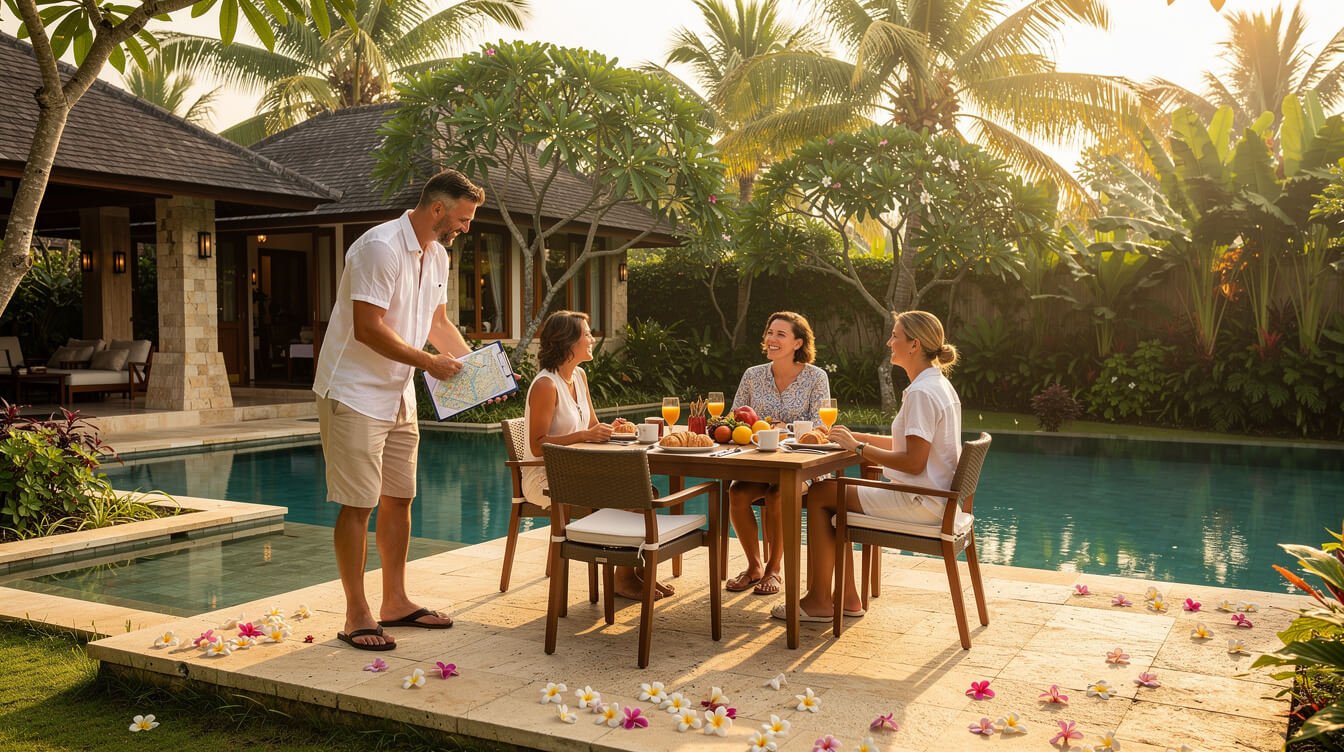
One of the genuine advantages of staying at a private staffed villa in Ubud is that your villa manager can transform a simple swing visit into a complete half-day experience. Here is how we typically plan it for our guests.
The Ideal Morning
Wake up to a breakfast prepared by your private chef — something light and energizing, because you will be moving. Your villa manager has already arranged a driver and confirmed the timing. You leave the villa by 7:30 AM and arrive at the swing park as it opens, ahead of the tour bus crowds.
After 2-3 hours at the swings, your driver takes you to a nearby attraction — the Tegallalang rice terraces if you visited Uma Pakel, or the artisan village of Mas for wood carving workshops if you visited the Official Bali Swing®. Lunch at a warung your manager recommended — the kind of place no guidebook covers, where the nasi campur is handmade and costs IDR 30,000.
You are back at the villa by early afternoon. The pool is waiting. Your chef asks what you would like for dinner. The day feels complete, unhurried, and distinctly yours.
Combining with Other Ubud Experiences
A bali swing visit pairs naturally with several other Ubud activities. The best combinations our guests enjoy:
- Swing + Tegallalang rice terraces — the most natural pairing if you visit Uma Pakel or the Terrace River Pool Swing
- Swing + Tirta Empul temple — combine adventure with a genuine Balinese spiritual experience (the purification ritual)
- Swing + Ubud Monkey Forest — both are bucket-list Ubud activities; tackle the swing early, then walk through the forest in the cooler late morning
- Swing + waterfall — the Ayung River gorge area has several waterfalls within 30 minutes of the main swing parks
- Swing + cooking class — morning adventure, afternoon cultural immersion with your villa chef or a local cooking school
Practical Tips Our Team Always Shares
- Book nothing in advance — walk-in tickets are the same price (sometimes cheaper) and give you flexibility
- Bring IDR cash for smaller swing parks and roadside experiences; the official park accepts cards
- Wear sunscreen before you leave the villa — the equatorial sun at the open swing parks is fierce
- Carry a refillable water bottle — the heat and the adrenaline are surprisingly dehydrating
- Tell your driver which swing park before leaving — GPS sometimes routes to the wrong one because of how many “Bali Swing” locations exist now
Your Ubud Adventure Awaits
A staffed private villa, a personal chef, and a team that knows every swing park, waterfall, and hidden warung in Ubud. This is how Bali was meant to feel.
Frequently Asked Questions About the Bali Swing
How much does the bali swing cost?
Prices range from free (casual swings at cafes and waterfalls) to around IDR 500,000 (~$35 USD) for the all-inclusive ticket at the Official Bali Swing®. Most alternative swing parks charge IDR 50,000-200,000 (~$3.50-$14 USD). The official park’s ticket includes all swings, photo spots, and a professional photographer — making the per-activity cost reasonable despite the higher entry fee.
Is the bali swing safe?
The established parks maintain strong safety records. The Official Bali Swing® uses full-body harnesses, double-rope systems, and trained staff. However, informal swings at smaller venues may have less rigorous safety protocols. If safety is your primary concern, choose the larger parks with professional equipment and visible safety certifications. Always check that harness buckles are secure before the staff releases you.
What is the best time of day to visit?
Early morning, without question. Arrive when the park opens (typically 8:00 AM). You avoid the crowds, the light is beautiful for photos, and the temperature is comfortable rather than blazing. The worst time is 10:30 AM to 1:00 PM — this is when tour buses from southern Bali arrive and queues peak.
Can children ride the bali swing?
Yes, at most parks. The Official Bali Swing® has smaller swings (10-15 meters) suitable for children, and staff are experienced at helping young visitors feel comfortable. Minimum age and weight requirements vary — the official park requires children to be at least 4 years old and accompanied by an adult for the larger swings. The smaller village swings are gentler and often more enjoyable for younger children.
Is the bali swing worth visiting?
Yes, but with the right expectations. If you arrive expecting a serene, private moment above the jungle, and you show up at noon on a Saturday, you will be disappointed. If you arrive early, choose the right park for your personality, and treat it as one part of a bigger Ubud day — it is genuinely thrilling and produces photographs you will treasure. The key is choosing wisely and planning around crowd patterns.
How long should I plan for a bali swing visit?
Budget 2-3 hours at the Official Bali Swing® if you want to try multiple swings and photo spots without rushing. For smaller parks like Uma Pakel or Wanagiri Hidden Hills, 1-1.5 hours is plenty. Factor in 20-40 minutes of travel time from central Ubud depending on which park you choose.
Do I need to book in advance?
For most parks, no. Walk-in tickets are widely available and sometimes cheaper than online pre-bookings. The exception is peak season (July-August and December-January), when the Official Bali Swing® can reach capacity by mid-morning. During these months, an early arrival or a quick online booking the night before gives you peace of mind.
What should I bring?
Sunscreen, a water bottle, comfortable clothing, secure shoes, and cash (IDR) for smaller parks. Leave your hat, sunglasses, and anything loose in the car — the bigger swings generate real wind. If you are planning a full day, check our Ubud area guide for what else to carry for different parts of the region.
Your Bali Swing Adventure Starts Here
The bali swing is one of those rare travel experiences that is exactly as thrilling as it looks in photographs — maybe more, because photos cannot capture the warm Bali wind on your face or the way your stomach drops on that first release. Whether you choose the dramatic heights of the Official Bali Swing® or the quiet charm of a village swing above the rice terraces, the experience is worth building a morning around.
The secret our team shares with every guest is simple: go early, choose the right swing for your personality, and let your villa day unfold naturally from there. A morning of adventure followed by an afternoon at the pool, a meal prepared by your private chef, and the feeling of a day well spent — that is the rhythm Ubud is built for.
Ready to plan your Ubud adventure? Our team is here to help you build the perfect day — from swing park logistics to the restaurant reservations and temple visits that make a trip feel complete.
Join Our Newsletter
Fun, new, exciting Bali news — the kind of insider tips our villa team shares with guests, delivered straight to your inbox.