Uluwatu Beach Guide: How to Choose the Right Cove by Tide, Swell and Mood
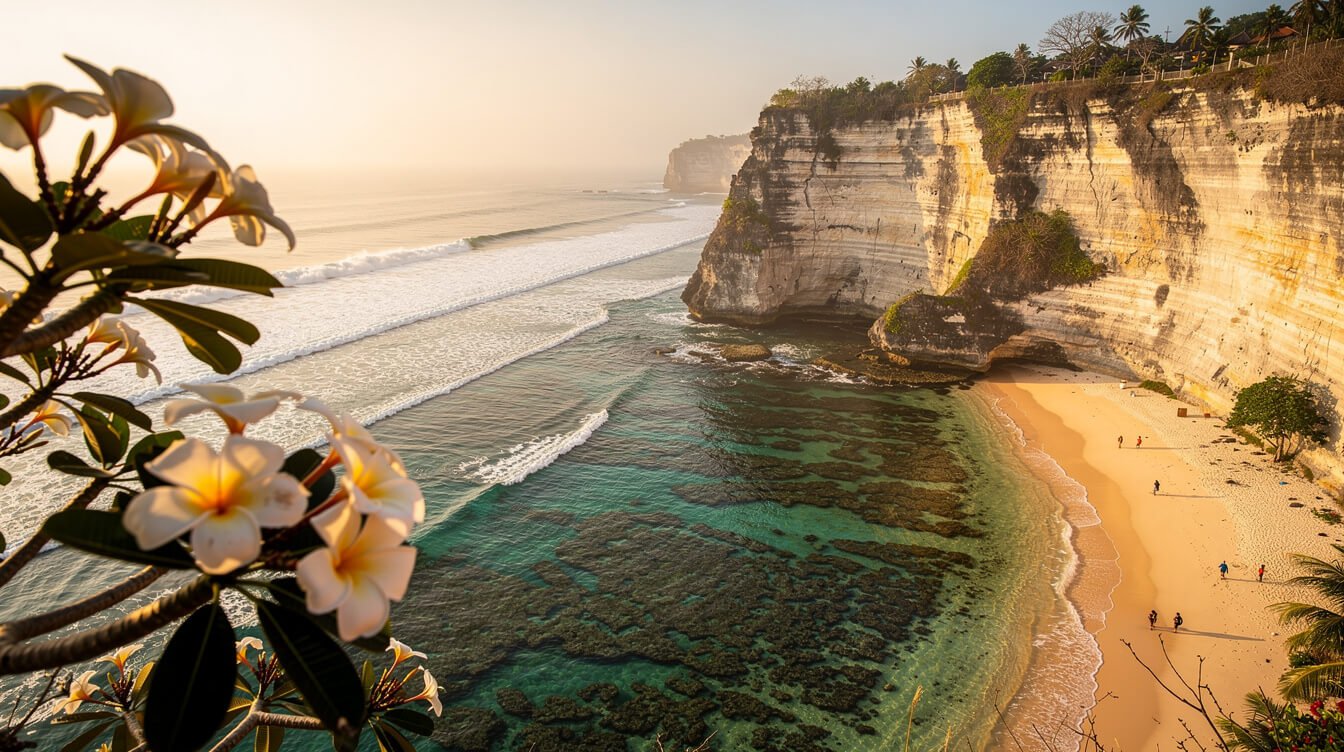
The road narrows, the air changes, and suddenly the island runs out. You’re standing at the top of a pale limestone cliff with the Indian Ocean throwing itself at the reef seventy meters below. Somewhere down there, between two folds of rock, a small crescent of sand is either glowing in the afternoon light or has vanished under the swell. Which one you get depends on the tide, and that’s what most guides to Uluwatu beach forget to mention.
Ask ten travelers about Uluwatu beach and you’ll hear about ten different places. That’s because “Uluwatu beach” isn’t really one beach. It’s a dozen coves strung along the cliffs of Bali’s Bukit Peninsula, each with its own stairs, its own surf break and its own mood. Some are made for a slow swim. Some are surf-only. A few disappear completely at high water. This guide won’t give you another numbered list. Instead it helps you choose: by tide, by swell, by who’s coming with you and by how many steps your knees are willing to take. Then we’ll put it all into one easy south-coast day from Ubud, ending with sunset at the cliff temple.
Uluwatu Beach: Why It Means a Dozen Coves, Not One
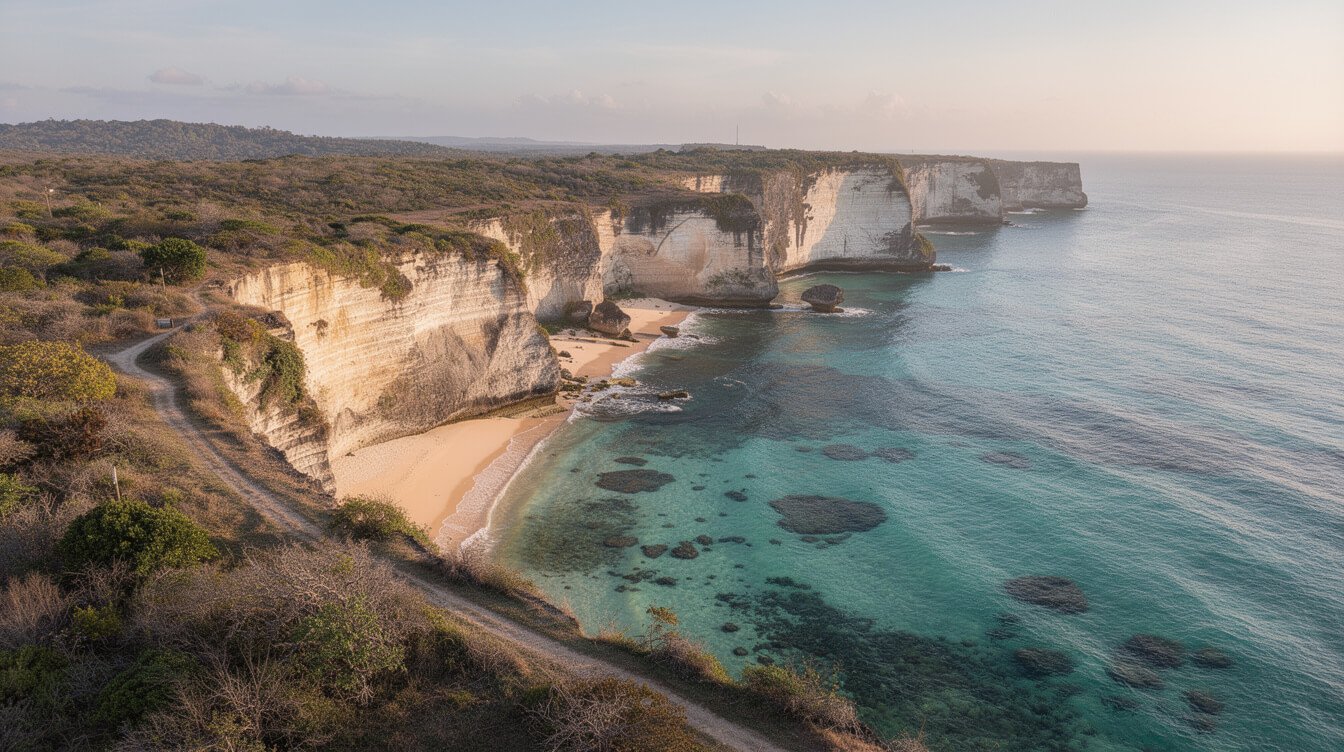
Uluwatu sits at the southwestern tip of the Bukit, the dry limestone tableland that hangs off the bottom of Bali like a pendant. Strictly speaking, Uluwatu is the name of the famous cliff temple, Pura Luhur Uluwatu, and of the surf break below it. Over the years the name spread across the whole peninsula, so when people say “Uluwatu beach” they could mean almost any of the coves between Balangan in the west and Pandawa in the east.
The land up here is very different from Ubud. There are no rice terraces, because the soil is thin and water is scarce. Before the 1970s, the Bukit was mostly scrub, cattle and small farming villages. Then surfers found the long, perfect waves peeling across the reefs, and the coast changed. Today the clifftops hold cafés, surf camps and villas, while the beaches themselves are still reached the old way, mostly by stairs cut into the rock.
Here are the coves you’ll hear about most, from west to east:
- Balangan: a long ribbon of golden sand under a high cliff, with warungs along the beach and a well-known left-hand reef break.
- Dreamland: wide, soft sand inside the Pecatu development, with road access and no big staircase.
- Bingin: a tiny strip of sand below a cliff stacked with homestays and cafés, reached by steep steps that pass right through them.
- Impossibles: rocky and surf-focused, only walkable at low tide.
- Padang Padang and Thomas: the famous rock-cleft entrance, the busy cove and its quieter neighbor.
- Suluban (Blue Point): the cave beach directly below the cliff-edge bars, gateway to the Uluwatu surf break.
- Nyang Nyang: a long, wild beach below a steep descent, still one of the quietest on the peninsula.
- Green Bowl: a small cove at the bottom of 300-plus steps, with shady caves.
- Melasti: a broad white beach with a road cut down the cliff and calm, clear water.
- Pandawa: the “cliff road” beach, lined with statues of the five Pandawa brothers, with flat access and gentle water.
If you’ve read our broader guides to beaches in Bali and the best beaches near Ubud, think of this post as the close-up on the Bukit alone. The question isn’t “which is best?” It’s “which is best for you, on the day you go?”
Read the Tide First: Which Uluwatu Beaches Disappear at High Water
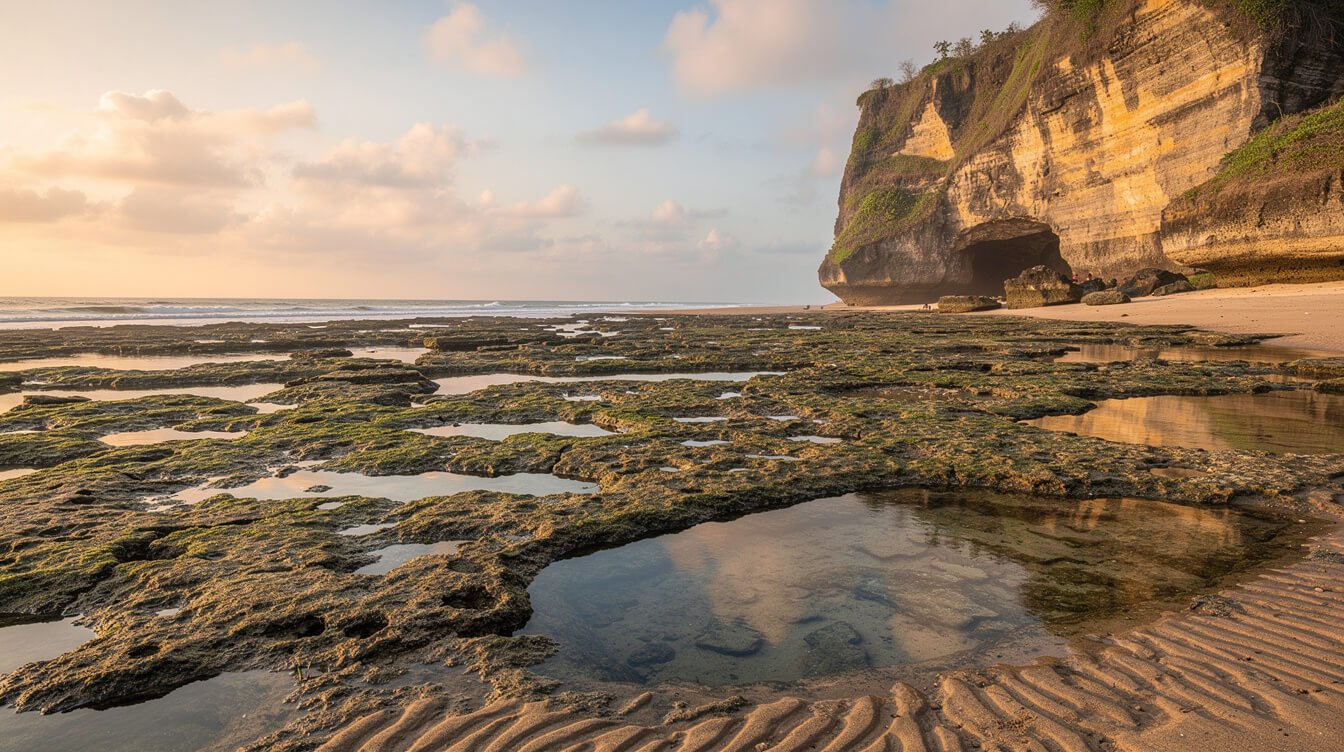
This is the single most useful thing to know before you drive south. Bali’s tides rise and fall twice a day, and the gap between high and low water can be roughly two meters or more around the full and new moons. On a wide, flat beach that only moves the waterline. On the Bukit, where the sand is tucked into narrow coves under vertical cliffs, it can decide whether there’s a beach at all.
The coves that shrink or vanish at high tide
- Suluban: at high tide the sand inside the cave and along the rocks can disappear completely, leaving waves washing the bottom of the stairs.
- Bingin: the strip of sand is narrow even at its best. At high tide it can shrink to a few towel-widths, and the reef shelf goes underwater.
- Impossibles: really a low-tide-only walk. At high water there’s little more than rocks and surf.
- Padang Padang and Thomas: they keep some sand, but the crowded end near the stairs fills up fast when the water comes in.
- Green Bowl: the small crescent gives you far more room, and better access to the caves, at low tide.
The beaches that stay generous
Melasti, Pandawa, Dreamland and Balangan are longer, more open beaches, so they keep plenty of sand through most tides. In fact, Melasti and Pandawa are often nicer for swimming around mid to high tide, when water covers the reef and rock and you can float over sand instead.
How to plan around it
Check a tide chart for Benoa or Uluwatu the day before you go. Free tide apps and surf forecast sites both work. Then follow a simple rule: go to the cliff coves at low or falling tide, and to the open beaches when the water’s high. Low tide also reveals the Bukit’s quiet magic: rock pools full of small fish and crabs, glassy reef flats and caves you can walk into. Just watch your footing on the reef, which is sharp, and keep an eye on the water as it turns. If you’re staying with us, the team is happy to look up the tide for your day and suggest which way to point the car.

Get a free 3-day sample itinerary
Rice terraces at dawn, a temple morning, a day on the south coast and slow afternoons by the pool in between. We will send you a 3-day sample itinerary built around Ubud’s own rhythm.
Swimmers, Surfers and Families: An Honest Beach-by-Need Guide
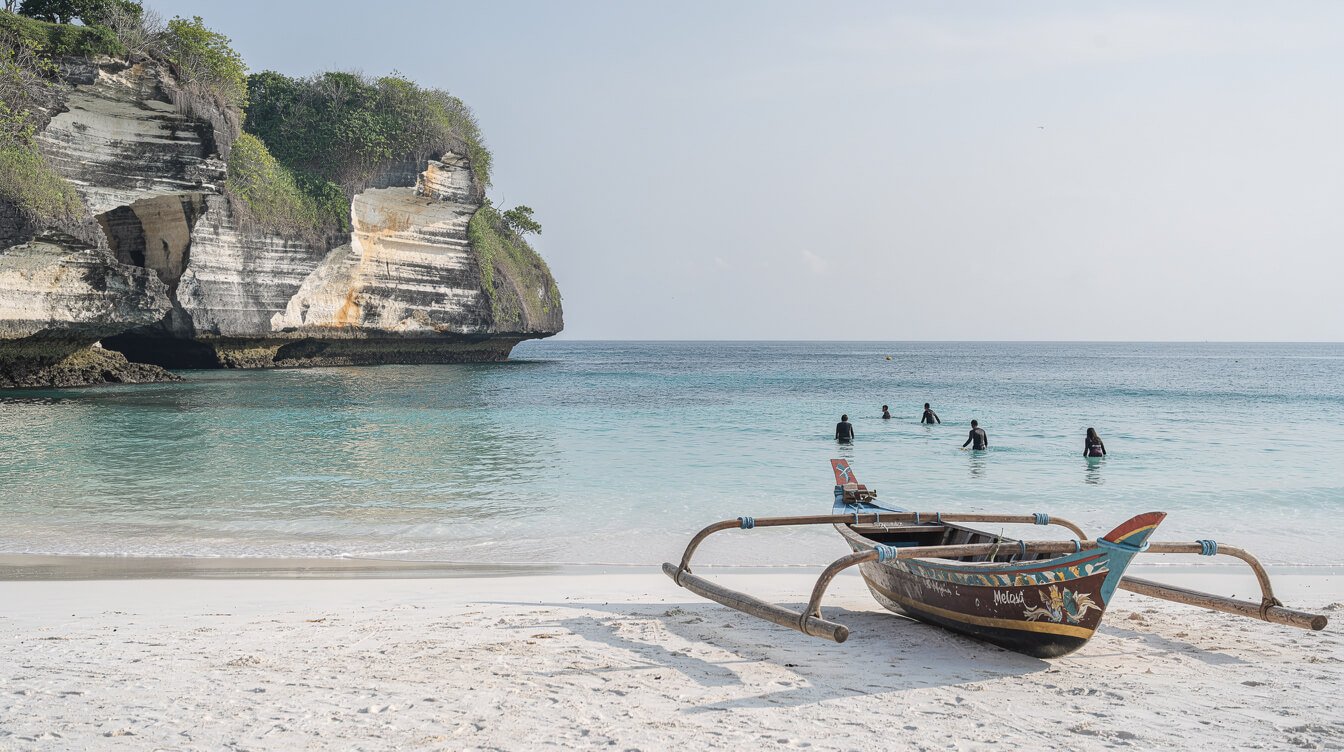
The Bukit is famous for surf, and that tells you something important. Many of these beaches face powerful swell breaking over shallow reef. That’s wonderful if you’re on a board and experienced, and not so wonderful if you want to swim with a six-year-old. Here’s an honest match of beach to need. Conditions change with swell, season and tide, so treat this as a starting point rather than a promise.
| If you want… | Try first | Why |
|---|---|---|
| An easy swim | Melasti, Pandawa | Calmer, clearer water over sand, especially around mid to high tide |
| Swimming plus a little adventure | Thomas, Padang Padang | Sheltered sections on calm days, cliffs and caves to explore |
| To watch serious surfing | Suluban (from the clifftop), Padang Padang, Bingin | World-famous reef breaks, best seen from the cliff cafés |
| To learn or surf intermediate waves | Dreamland, Balangan | Sandier, more forgiving sections on smaller days. Ask a local surf school first |
| Little kids or older relatives | Melasti, Pandawa, Dreamland | Road or near-road access, few or no steep stairs, food and toilets nearby |
| Quiet and space | Nyang Nyang, Green Bowl | The effort to get down keeps the crowds thin |
| Sunset with a drink | Balangan, Bingin, Suluban clifftop | West-facing views and warungs or bars right on the edge |
The season matters too
Roughly speaking, the dry season (about April to October) brings the big southwest swells and the steady southeast trade winds that make the Bukit’s west-facing reefs, like Uluwatu, Padang Padang and Bingin, so good for surfing. That same energy can make swimming rough on that side. In the wet season (about November to March) the wind often swings around, the west side can turn messy and the east-facing coast becomes the cleaner choice. Visiting around December? Melasti and Pandawa on the southern and eastern side are often your most comfortable swimming beaches, and our Bali rainy season guide covers what else to expect that time of year.
A word on safety
Most Bukit beaches have no lifeguards. Currents can be strong, especially where waves break over reef. Swim only where you can see other people swimming, stay inside your depth, and if a local tells you not to go in today, believe them. Reef shoes are a small investment that saves a lot of grief.
The Stairs Question: Easy-Access vs Worth-the-Climb Uluwatu Beaches
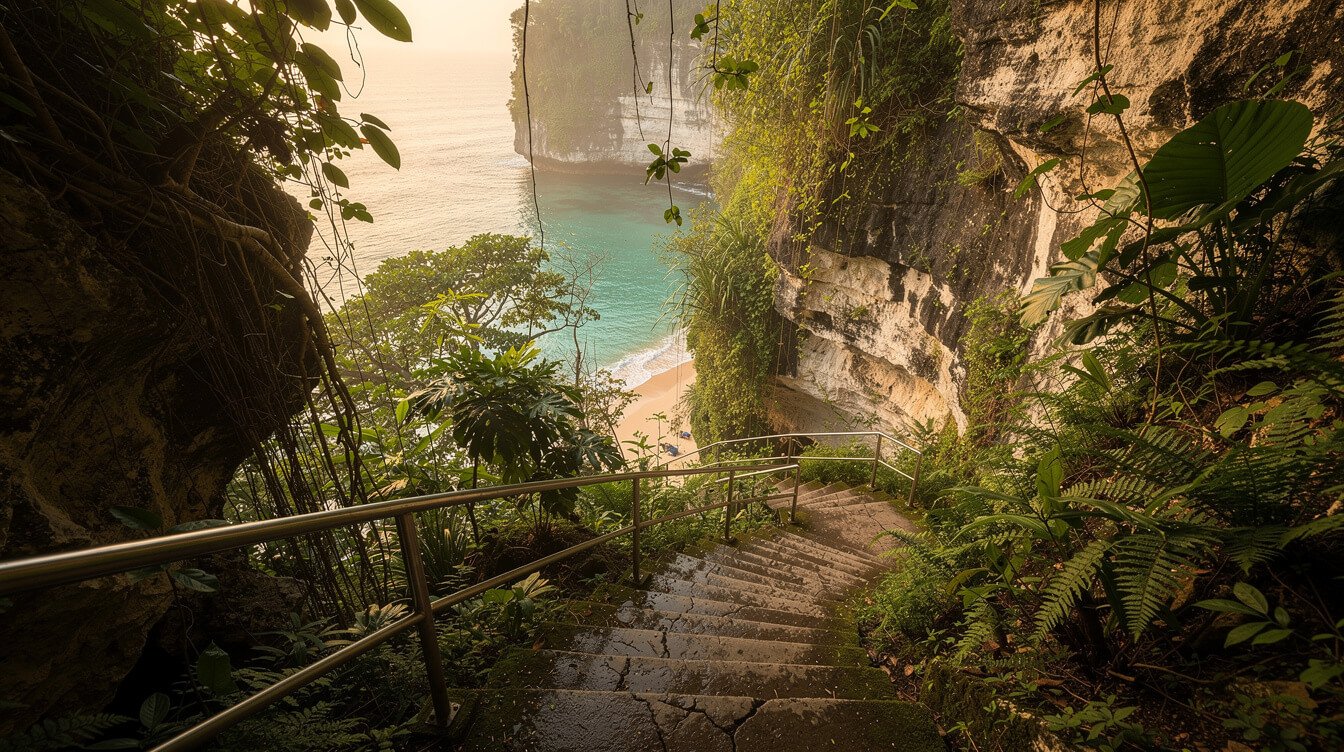
Here’s something the photos never show: almost every beach on the Bukit sits at the bottom of a cliff, and you’ll be climbing back up it in the afternoon heat. For a fit traveler that’s part of the fun. For a grandparent, a toddler in arms or anyone with a sore knee, it can make or break the day. Step counts vary from source to source, and new paths keep appearing, so take these as rough guides.
Easy access (few or no stairs)
- Pandawa: a road runs down through the cliffs almost to the sand, with a mostly flat boardwalk. One of the most accessible beaches on the peninsula.
- Melasti: a road switchbacks down the cliff and you can usually park near the beach, with only a few steps to the sand.
- Dreamland: road access through the Pecatu development, with no long cliff staircase.
Moderate climbs
- Padang Padang: a short but steep staircase that squeezes through a narrow gap in the rock. Duck your head, mind the slippery steps after rain and keep an eye on the monkeys.
- Balangan: a manageable walk down from the clifftop parking.
- Suluban: stairs lead down from the clifftop bars toward the cave. How far you go is up to you, and much of the view is from the top anyway.
Worth the climb (if your legs are willing)
- Green Bowl: about 300 or more steep concrete steps. The view from halfway down is one of the best on the Bukit, even if you turn back.
- Bingin: a maze of steep steps winding past homestays and cafés. Follow the signs rather than your map app.
- Nyang Nyang: a long, steep descent to a wide, quiet beach. Recent reports mention a new paved road partway down, which may make it easier to reach than it used to be.
Our advice is simple. Plan only one big climb per day, do it early while the cliff still shades the stairs, and bring more water than you think you need. If you’re traveling as a multi-generation group, build the day around Melasti or Pandawa and let the climbers peel off to Green Bowl while everyone else stays on the sand. Our guide to Bali villas for families has more ideas for keeping everyone happy on a shared holiday.
Can You Swim at Suluban Beach? The Famous Cave Beach, Honestly
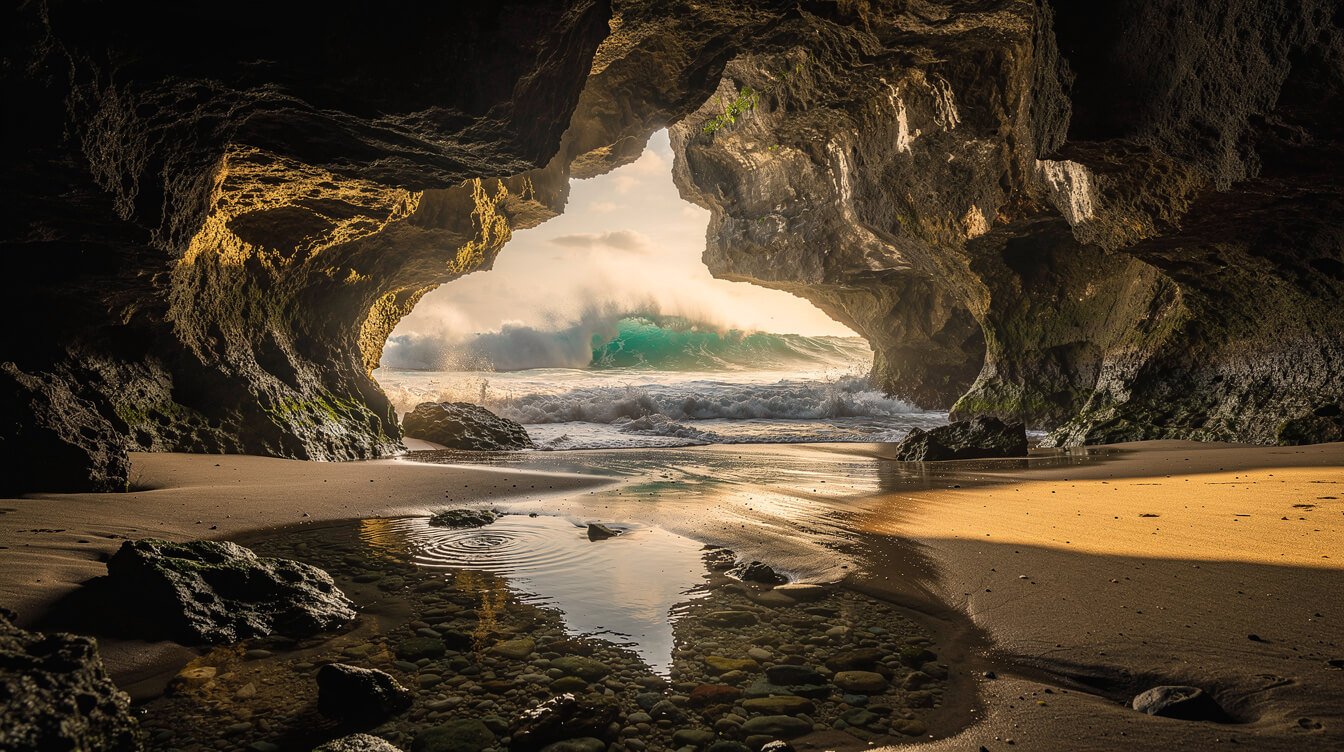
Suluban is the beach most people picture when they search for Uluwatu beach. You walk down from the clifftop, past surf shops and warungs, and the stairs drop you into a huge limestone cave. On the other side, the ocean. It feels like stepping into a secret, and on the right day it’s genuinely one of the most extraordinary places on the island.
So, can you swim there? The honest answer is: not really, not in the way most people mean. Suluban is the gateway to the Uluwatu surf break, one of the most powerful and famous waves in Bali. Surfers paddle out through the cave and over the reef to reach it. The sea floor is rock and coral, the currents are strong, and at high tide the sand can disappear entirely. It’s a beach for experienced surfers, not for swimmers.
What you can do, on a calm day at low tide, is wade and explore. The receding water reveals sand inside the cave, tide pools in the reef and small grottos in the cliff. Bring reef shoes, keep your phone in a dry bag and stay close to the cliff, well away from where the waves break. When the tide starts to turn, head back up. The stairs are the only way out.
The best way to enjoy Suluban
Many visitors find that the real Suluban experience is from above. The bars and cafés built along the cliff edge, Single Fin being the best known, look straight down onto the break. From there you can watch surfers drop into long blue walls of water as the sun sinks toward the horizon. Arrive by mid-afternoon if you want a rail-side table, since the sunset crowd builds quickly.
If you want an actual swim on the same day, pair Suluban with a calmer beach. Thomas and Padang Padang are only a few minutes’ drive away, and on smaller days they’re often gentler. For a deeper look at Padang Padang, see our Padang Padang beach excursion from Ubud.
Book the Villa
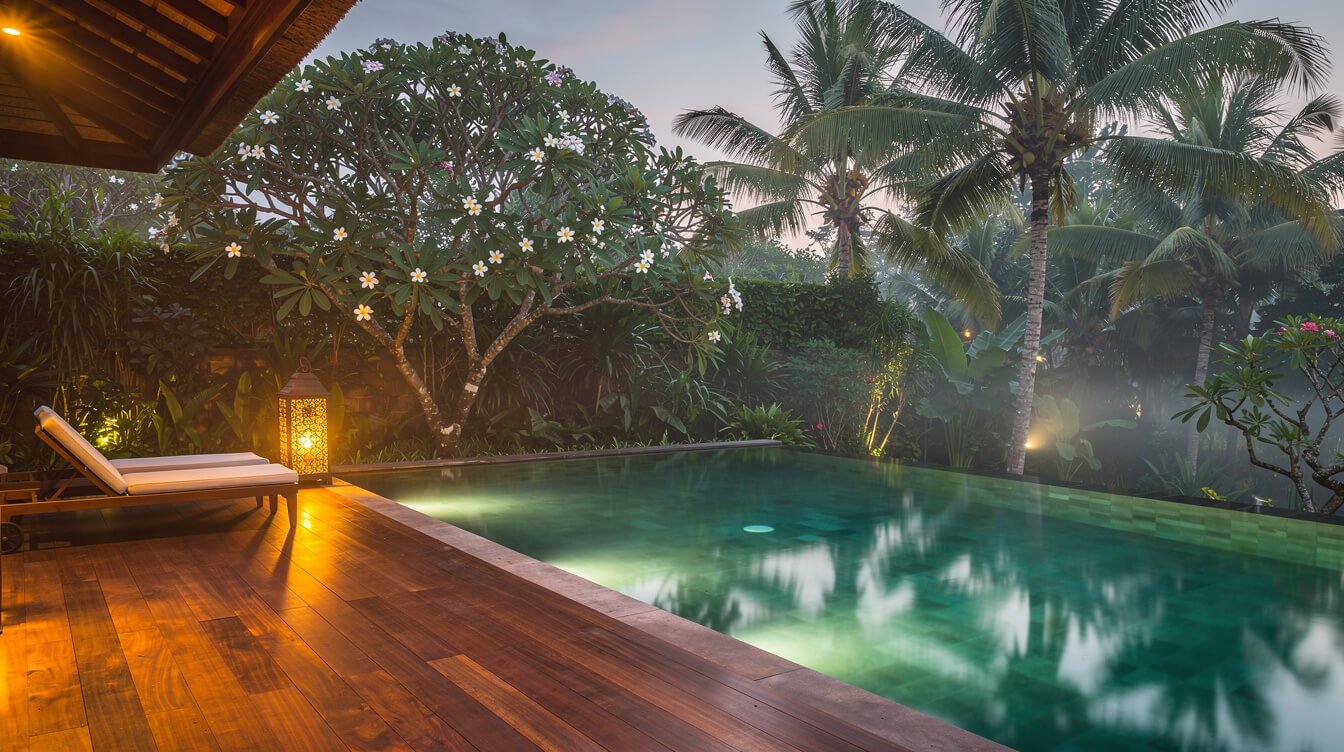
Three bedrooms, a private pool and a team who can look up the tide and help arrange a driver for your day on the Bukit. Come home to the quiet of the rice fields. Check availability for your dates.
One Perfect South Day from Ubud: Uluwatu Beach, Late Lunch and Temple Sunset
Uluwatu is about 50 kilometers from Ubud, which on Bali roads usually means a drive of roughly 1.5 to 2.5 hours depending on traffic. That’s too far to rush, and just right for one full, unhurried day. If you’re curious about distances to the coast more generally, our post on how far Ubud is from the beach breaks it down. Here’s the shape of a day that works, timed around a typical low tide in the early afternoon. Shift it to match the tide on your date.
A sample timeline
- 10:00 AM: slow breakfast by the pool, then leave Ubud with a driver. Pack water, a hat, swimwear and cash.
- 12:00 PM: arrive on the Bukit. Lunch at a warung near your chosen beach. Fresh grilled fish, nasi campur and a cold coconut are never far away.
- 1:00 PM: beach time. If the tide is low, pick a cliff cove like Padang Padang, Thomas or Green Bowl. If it’s high, head to Melasti or Pandawa for a proper swim.
- 3:30 PM: rinse off, change into something that covers your shoulders and knees, and drive to the temple.
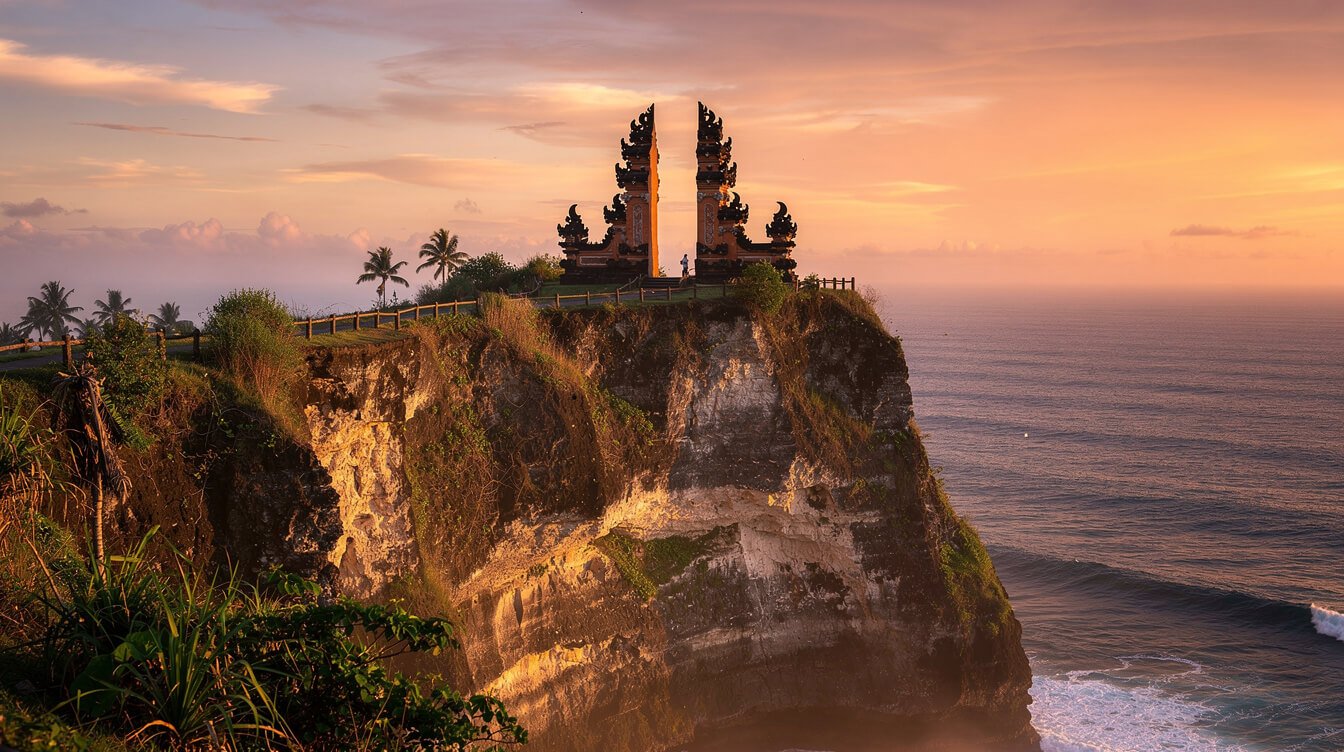
- 4:30 PM: arrive at Pura Luhur Uluwatu. Put on your sarong and walk the cliff paths as the light softens. Our full guide to Pura Luhur Uluwatu Temple covers tickets, dress and the monkeys.
- 6:00 PM: the sunset Kecak and fire dance in the clifftop amphitheater, with the sky going orange behind the dancers.
- 7:30 PM: drive home to Ubud, or stop for a seafood dinner on the sand at Jimbaran on the way.
Make the drive easier
The road to the Bukit gets busiest in the late afternoon, when half the island heads south for sunset. Leaving Ubud by mid-morning means you miss the worst of it on the way down. Hiring a driver for the day is the calmest choice. Parking at the beaches is basic, and ride-hailing pickups are restricted at several Bukit beaches, so getting a car back can be harder than getting one there. A driver also means you can sleep on the way home, salt still on your skin. Our guide to hiring a tour guide in Bali explains how this usually works.
If you already know the Kecak from Ubud, or you’d rather skip the crowds, our Kecak dance in Ubud guide compares the village version with the clifftop show. Either way, you’ll come home to the quiet of the rice fields, which is part of the pleasure. The ocean in the afternoon, the frogs and the gamelan at night.
Uluwatu Beach Fees, Cash and What to Pack
Beach fees on the Bukit are small, but they’re almost always cash, and they change often. The figures below are approximate, drawn from recent 2026 traveler reports, and are per person unless noted.
- Padang Padang: around IDR 15,000 for adults, a little less for children.
- Melasti: around IDR 10,000 to 20,000, plus parking.
- Pandawa: around IDR 15,000.
- Green Bowl and Balangan: roughly IDR 5,000 to 15,000.
- Suluban, Bingin and Dreamland: usually no official entry fee, just parking.
- Nyang Nyang: often a small donation at the top.
- Parking: typically IDR 2,000 to 5,000 for a scooter and IDR 5,000 to 15,000 for a car.
Occasionally someone on the sand may ask for an extra unofficial “entrance fee.” It’s fine to politely decline if you’ve already paid at the gate. Carry small notes, since change can be scarce, and keep a little extra for a coconut, a sunbed or a tip.
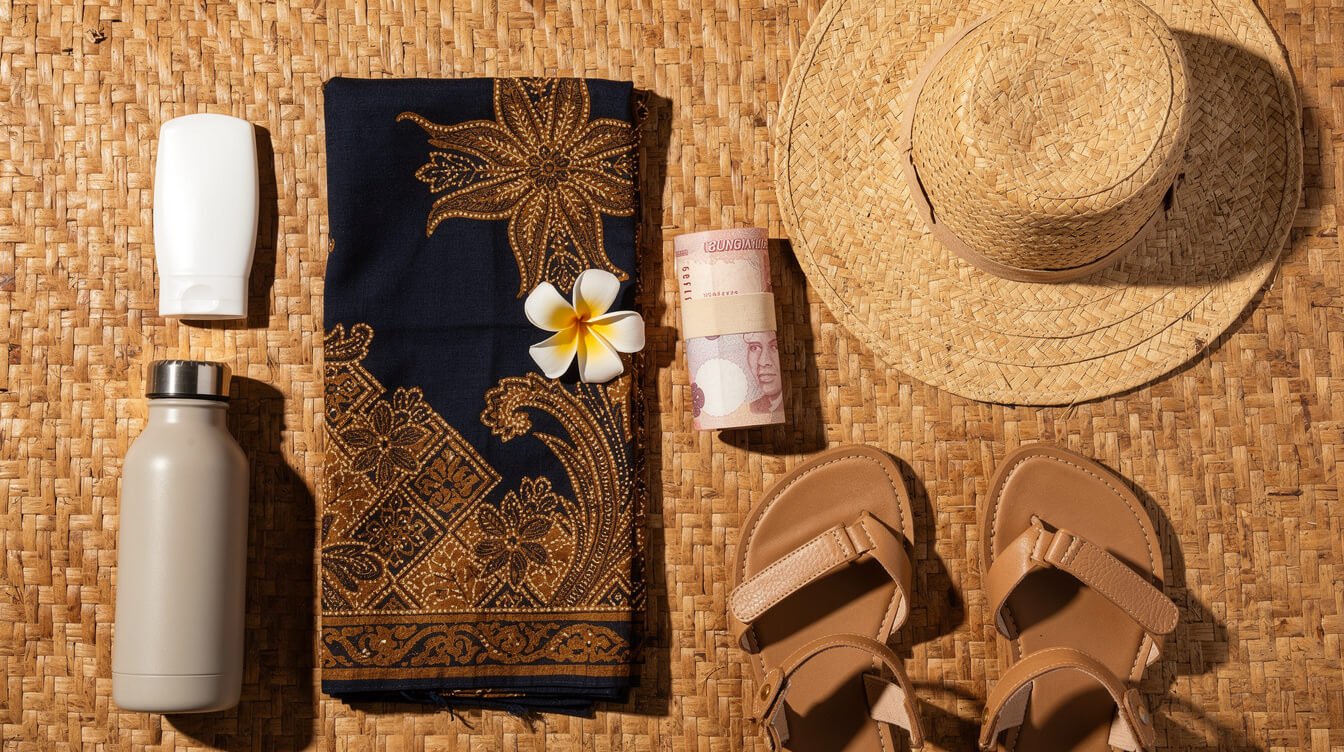
What to pack for an Uluwatu beach day
- Cash in small notes for fees, parking and warungs.
- Reef shoes or sturdy sandals for rock, reef and slippery stairs.
- Reef-safe sunscreen, a hat and sunglasses (and a strap for the sunglasses, because of the monkeys).
- Plenty of water. The climbs back up are hot work.
- A sarong and a top with sleeves for the temple at sunset.
- A dry bag for your phone if you plan to explore caves or rock pools.
- A light towel and a change of clothes for the drive home.
For a full list of what to bring to Bali, see our what to pack for Bali guide.
Respect the shoreline
Beaches in Bali aren’t only for recreation. Families bring offerings to the sea, and before Nyepi, the Day of Silence, villages carry their temple treasures to the shore for the Melasti purification ceremony, which is where Melasti beach takes its name. If you come across a ceremony on the sand, give it space, stay quiet, and step around any offerings. Take your rubbish back up the stairs with you. It’s a small thing that matters on a coast this beautiful.
Uluwatu Beach FAQs
Why is Uluwatu famous?
Uluwatu is famous for two things: Pura Luhur Uluwatu, one of Bali’s most important sea temples, set on a cliff about 70 meters above the ocean, and its legendary reef breaks, which have drawn surfers from around the world since the 1970s. The sunset Kecak dance at the temple and the clifftop bars above the waves have made it one of the island’s favorite places to watch the day end.
Which Uluwatu beach is best for swimming?
Melasti and Pandawa are usually the best choices for swimming, with calmer water over sand and easy access. Thomas Beach can also be good on calm days. Always check the conditions on the day, since swell and tide change everything.
Can you swim at Suluban Beach?
Not really. Suluban is a surf beach with reef, rock and strong currents. On calm days at low tide you can wade in the shallows and explore the cave and rock pools, but it isn’t a swimming beach.
How far is Uluwatu beach from Ubud?
About 50 kilometers, usually 1.5 to 2.5 hours by car depending on traffic. Leave by mid-morning to avoid the afternoon rush toward the Bukit.
Is there an Uluwatu beach without stairs?
Pandawa, Melasti and Dreamland have road access with few or no stairs, which makes them the best options for young children, older travelers and anyone with limited mobility.
What’s the best time of day to visit?
It depends on the tide. Cliff coves like Suluban, Bingin and Green Bowl are best at low or falling tide. Open beaches like Melasti and Pandawa are lovely at mid to high tide. Late afternoon is ideal if you want to finish with sunset at the temple.
Final Thoughts: Choose the Tide, Then the Beach
The secret to an unforgettable Uluwatu beach day isn’t finding the “best” beach. It’s matching the right cove to the tide, the season and the people you’re with. Check the tide chart. Pick one climb, not three. Bring cash, water and something to cover your shoulders. Then let the day run long, from a swim in clear water to the slow walk along the temple cliffs as the sky turns gold.
And when the drive home is done, there’s something lovely about trading the roar of the reef for the hush of Ubud at night. Rinse off the salt, sit by the pool and listen to the frogs in the rice fields. The ocean was extraordinary. Coming home to the quiet is the other half of the day. For more ways to reach the coast from the hills, our guide to day trips to Bali beaches from Ubud is a good next read.

Join our newsletter — fun, new, exciting Bali news
Ceremony days worth planning around, beach days worth the drive, and small stories from the garden and kitchen. Delivered now and then, always worth opening.