The Roofs That Go On Before the Rains Do
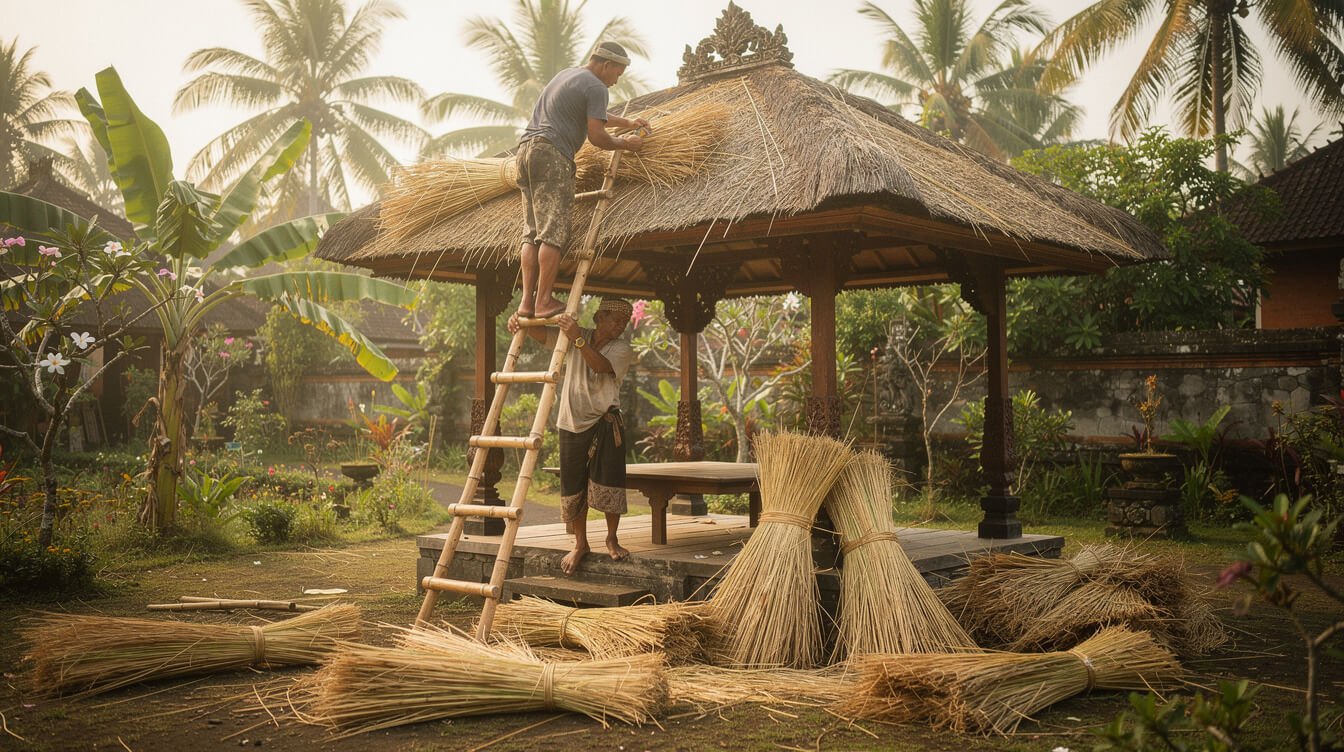
You hear it before you see it. A soft, dry rustle from somewhere past the next wall, like someone shuffling an enormous deck of cards. Walk a little further down the lane on your morning stroll and there it is: a family pavilion in a village compound with its old roof stripped back to the bamboo bones, and two men up on a ladder, laying new grass.
The grass is alang-alang, a tall, tough field grass that grows wild on the island’s slopes and road edges. Cut, sun-dried, and bundled, it turns the color of raw honey. Stacks of it lean against the compound wall, tied at the waist with strips of bamboo, waiting their turn. The whole yard smells like hay left out in the sun, warm and faintly sweet.
There’s a reason you see this now. October in Ubud is the tail of the dry season, and everyone who lives here knows what comes next. A roof that has sagged or thinned over the past few years gets its attention before the rains do. So the work happens in these last bright weeks, when the bundles stay dry and the ladder stays steady.

Get a Free 3-Day Sample Itinerary
Want mornings slow enough to stop and watch a roof go on? We will send you a three-day Ubud itinerary built around village lanes, rice-field walks and unhurried sunrises.
Watch for a while. Nobody minds. The man on the ladder takes a bundle passed up from below, fans it out across the battens, and ties it down with a twist of bamboo cord. Then the next one goes on, overlapping the last, the way feathers lie on a bird. Row by row, from the eaves upward. It’s slow, careful, almost silent work, and the roof thickens in front of you like a coat being buttoned.
An older neighbor wanders over to supervise without being asked. A child sits on the low wall with a bag of crackers, watching, the same way you are. This is how much of village life in Ubud runs: the banjar turns up and the work gets shared. It’s the same rhythm you’ll find in the fields this month, where families gather for the rice harvest by hand.
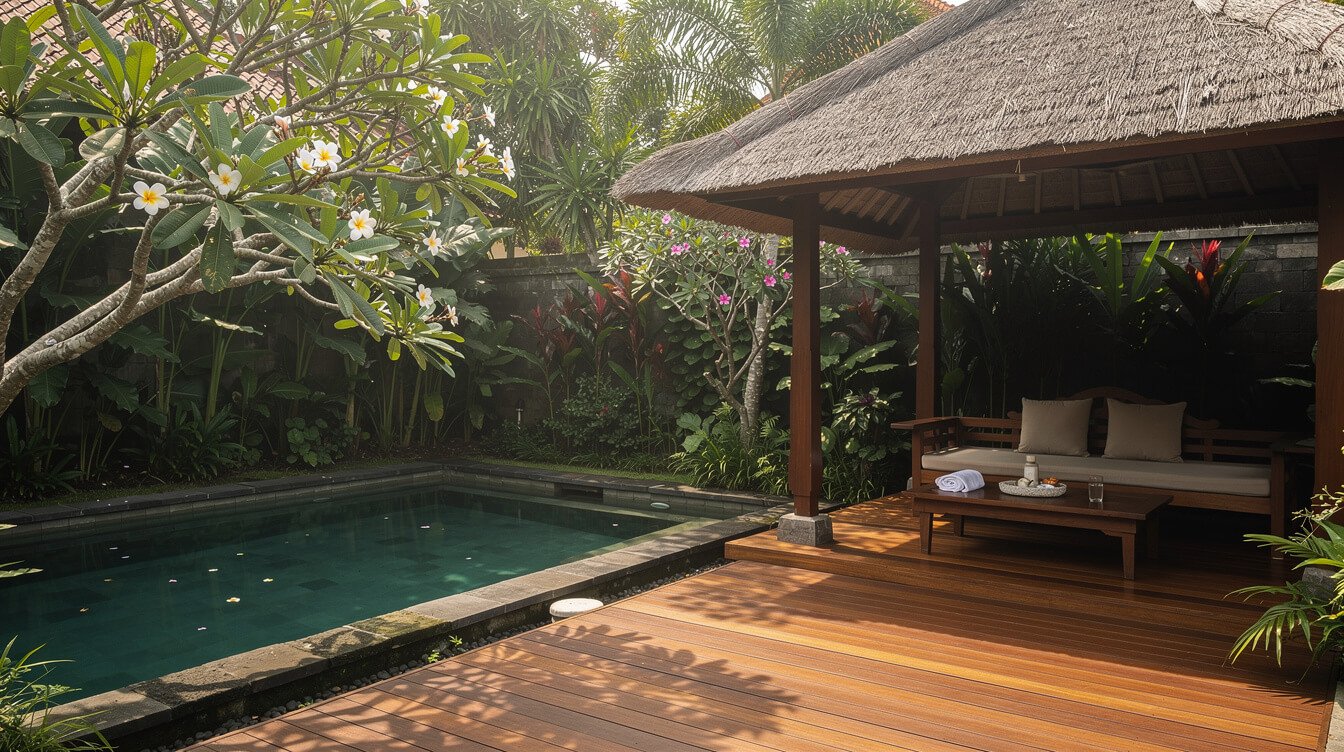
Later, back on the terrace, you might find yourself telling the team what you saw. That’s one of the small pleasures of a staffed villa Ubud stay: the people looking after you grew up under roofs like that one. Ask them. Most will have a story about a grandfather on a ladder, or the first rain on a fresh roof, or which cousin is best with the cord.
Book the Villa
Three bedrooms, a full in-villa team, and a garden terrace to come home to after your morning walk through the village. Check availability for your dates.
Thatch isn’t just old-fashioned charm. It’s cool. A thick grass roof holds the heat off in the middle of the day, so the air underneath feels several shades softer than the air outside. And when the rain does arrive, it doesn’t clatter. It hushes. If you’ve ever sat under the three o’clock rain beneath a grass roof, you already know the sound.
So take the long way on tomorrow’s walk. Go early, before the heat, when the lanes are still quiet and the kites are just going up over the fields. Keep your ears open for that dry rustle. If you’re lucky, you’ll catch a roof halfway done: pale gold on top, weathered gray below. It’s a whole season changing, one bundle at a time.

Join Our Newsletter
Fun, new, exciting Bali news — straight from the villa, every so often.