The Egrets That Walk Behind the Plow
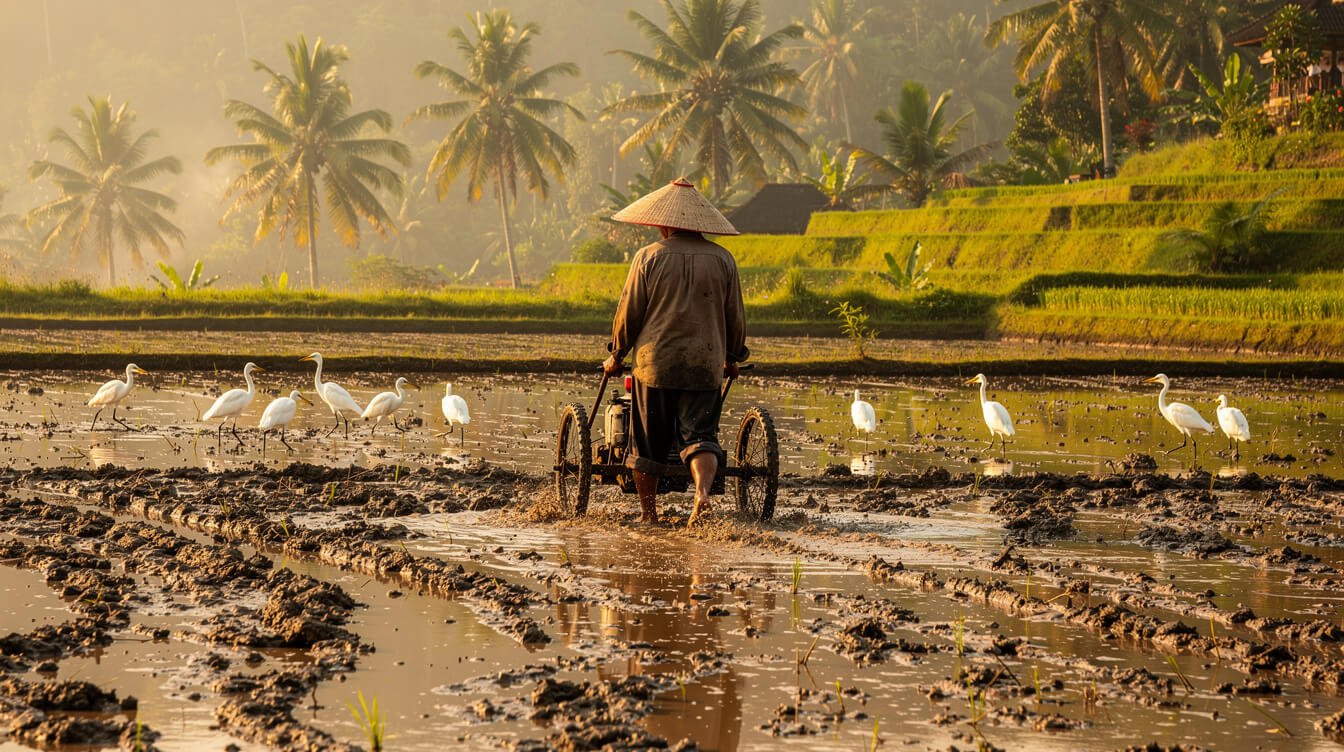
You hear it before you see it: a flat, stubborn putt-putt-putt somewhere below the lane, rising and falling as if the engine keeps changing its mind. Follow the sound to the edge of the paddies and there he is, a farmer walking behind a small two-wheeled hand tractor, knee-deep in water the color of milky tea.
A few weeks ago this field was gold, and then it was cut, threshed and carried away in sacks. Now the water has come back down the channels and the stubble is being turned under. The blades churn the mud into thick, glossy ridges. The smell reaches you a moment later: wet earth, old straw and something faintly sweet, like a riverbank after rain.
Then you notice the egrets.
Get a Free 3-Day Sample Itinerary
Early walks through the paddies, a slow lunch, a long evening at home. We will send you a three-day Ubud rhythm built around the moments most visitors miss.
There are ten, maybe fifteen of them, bright white against the brown, and they are not frightened of the machine at all. They follow it. Each time the tractor passes, the mud gives up whatever was living in it, such as small fish, frogs, crickets and fat worms, and the birds step in behind with long, careful strides, heads cocked, waiting. A sudden stab, a swallow, and then back to the slow walk. When the farmer turns at the end of a row, the whole flock lifts, circles once over the water and settles again in the fresh furrow, as if they had been called.
Nobody minds them. The farmer barely glances up. In a few days he will smooth this field flat and the water will become a mirror, and soon after, the first pale seedlings will go in by hand. The egrets will drift away to the next field being turned, following the plow around the valley the way people here follow the temple calendar.
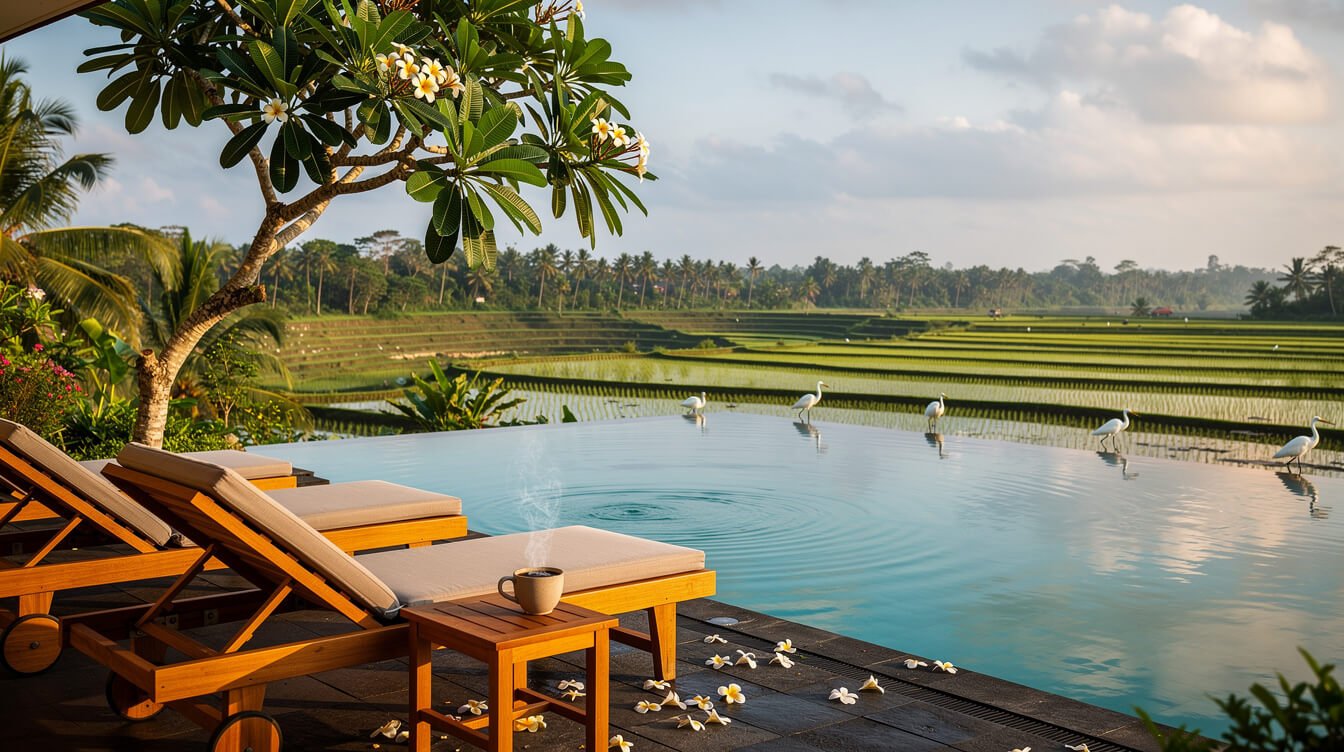
Book the Villa
Three bedrooms, a full in-villa team who know which fields are being turned this week, and a quiet deck for slow mornings. Check availability for your dates.
It is one of the quiet chapters in the rice year, easy to miss between the strings that guard the ripening grain and the week-by-week color changes everyone photographs. On a staffed villa Ubud stay, ask the team which fields are being turned this week. They usually know, because their own families farm nearby, and they can point you down the right path before breakfast. Go early, when the light is low and the birds are busiest.
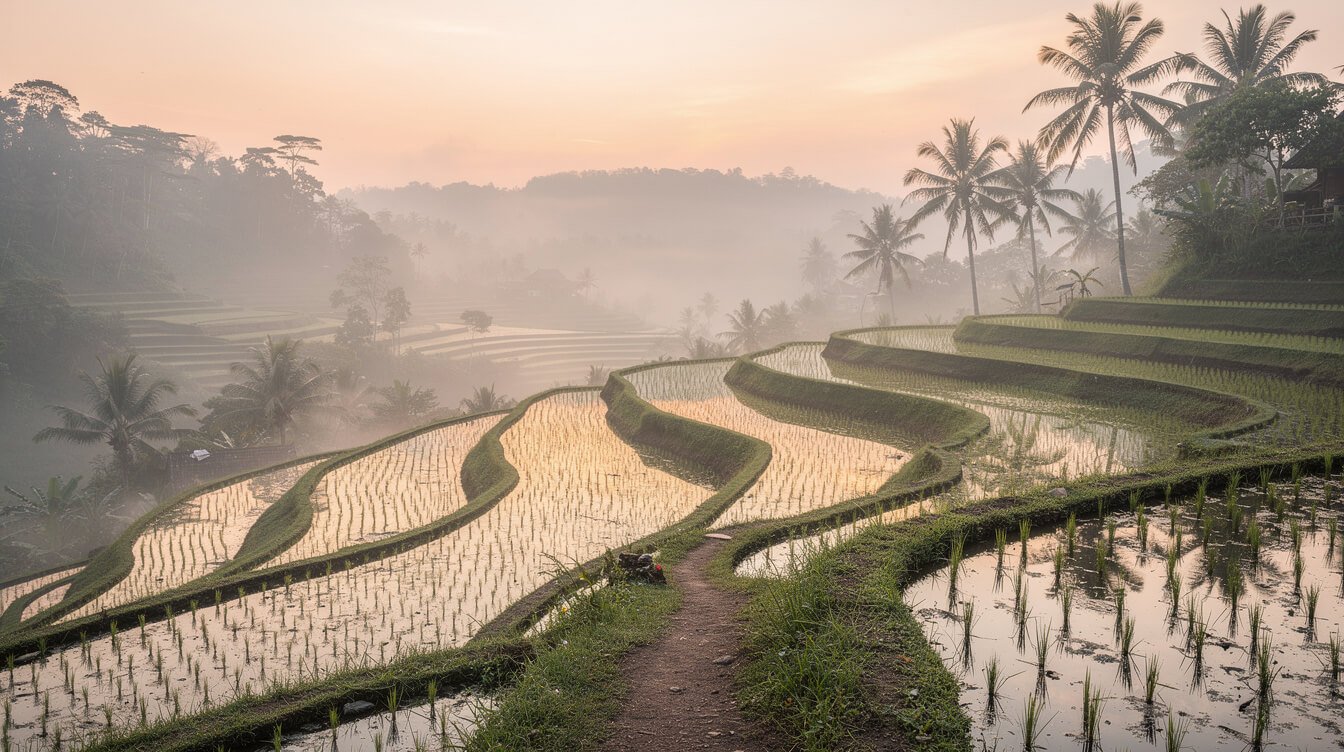
If you are walking further, the harvest that came just before explains why the fields look so bare. At dusk, the dragonflies take over the same flooded rows, and for longer routes our guide to Tegallalang Rice Terrace has you covered.
Stand there long enough and the putt-putt fades into the background. What stays with you is the white of the birds against the dark mud. A field is being made ready again, and the egrets came because they know it.

Join Our Newsletter
Fun, new, exciting Bali news — straight from the villa, every so often.