Bali Weather in July: Dry Days, Cool Ubud Nights and How to Enjoy Peak Season
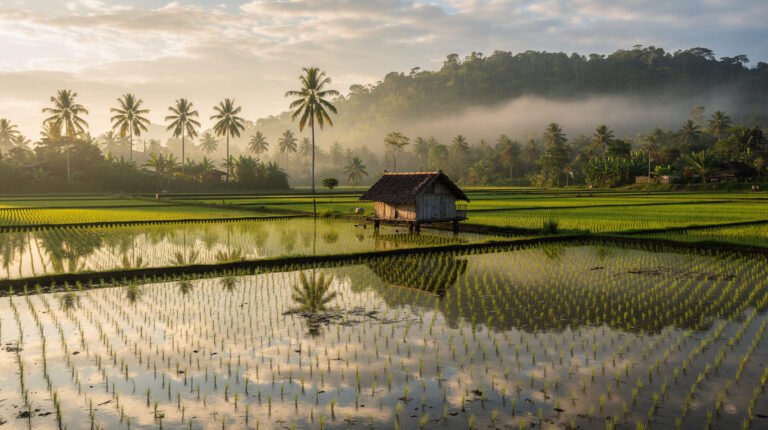
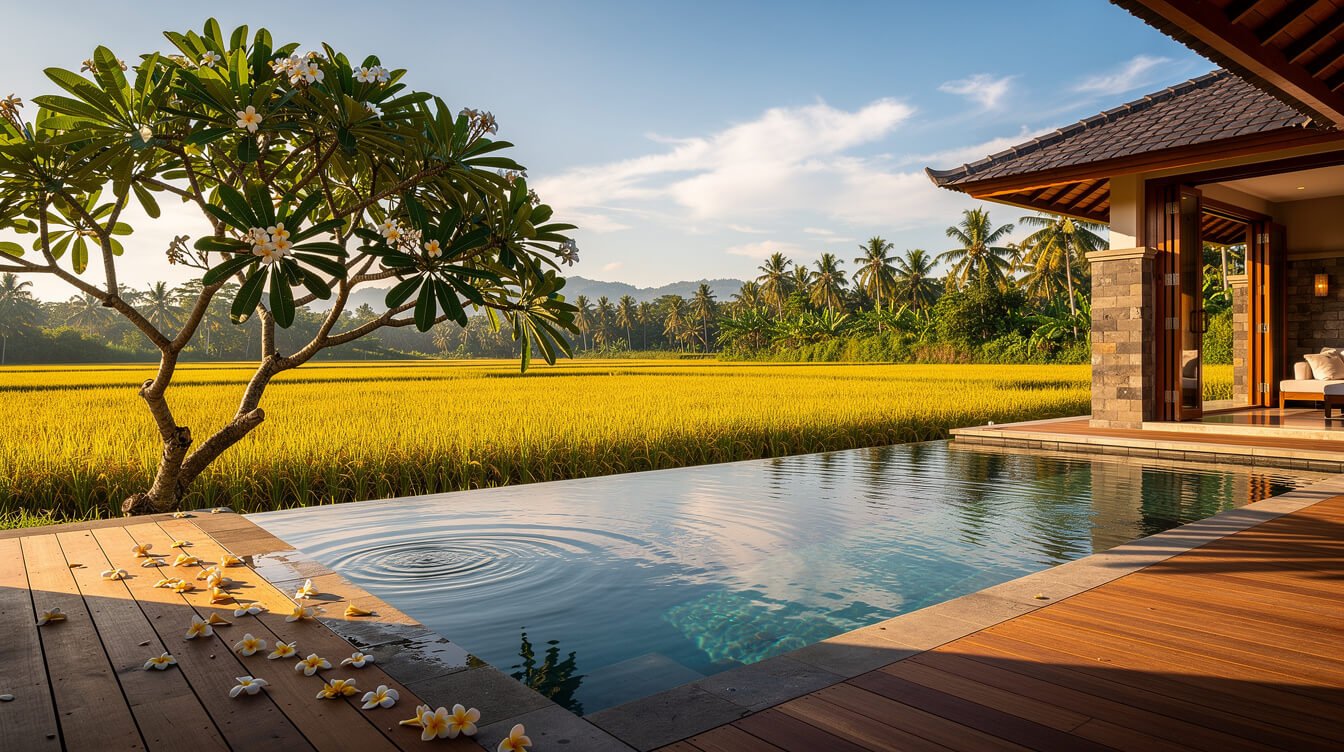
It’s half past six in the morning in Ubud, and the air has a cool edge you don’t expect in the tropics. Mist hangs low over the river valley, the sky above it is already a clean, pale blue, and the rice field below the villa is turning from green to gold. A neighbor is walking the paddy edge with a sickle. By nine the mist has burned off and the sun is warm on the pool deck. By evening you’ll want a light sweater for dinner on the terrace. That is Bali weather in July: the heart of the dry season, with the clearest skies of the year and the island at its busiest.
Most July guides are written from a beach club in Seminyak. This one comes from the team at a staffed villa in the rice fields outside Ubud, where July means cool nights, harvest season and volcano views that actually show up. Below you’ll find honest weather numbers, who July suits (and who it doesn’t), what the highlands feel like, the best dry-season days out, the festival calendar, how to plan around peak-season crowds, and exactly what to pack.
Bali Weather in July at a Glance
July sits in the middle of Bali’s dry season, which broadly runs from April or May through September or October. Southeast trade winds blow in from Australia, bringing drier air, lower humidity and long runs of sunshine. One honest caveat first: weather services measure at different stations and over different years, so published July numbers vary. Treat these as ranges, not promises.
- Daytime temperatures: roughly 27–31°C (81–88°F) on the coast. Ubud usually runs a degree or two cooler.
- Nights: around 22–24°C (72–75°F) by the sea. In Ubud, nights often dip to around 20°C (68°F), and higher up in Kintamani or Munduk they can feel properly chilly.
- Rainfall: July is one of the driest months of the year. Published monthly averages range from under 20 mm to around 60 mm, depending on the source and the station.
- Rainy days: typically only a handful, and most are a short passing shower rather than a lost day.
- Humidity: noticeably lower than in the wet season, often in the 70s rather than the high 80s. The air feels lighter.
- Sunshine: long, bright days, often eight hours or more of sun. Sunrise is around 6:30 AM and sunset a little after 6:15 PM.
- Sea temperature: pleasant at around 26–27°C, a little cooler than in the wet season. Around Nusa Penida, deeper water can be surprisingly cold.
Ubud vs the coast in July
Ubud sits inland, in the foothills that rise toward Bali’s volcanoes. That small climb makes a big difference in July. Days are warm but rarely sticky, and evenings are the coolest you’ll find all year in the town. The coast is hotter and brighter, with a steady breeze. Inland also holds onto a little more moisture: you might see a light afternoon shower in Ubud on a day when Uluwatu stays bone dry. It rarely lasts long enough to change your plans.
The “wet dry season” caveat
Bali’s seasons have become a little less predictable. Indonesia’s weather agency, BMKG, has flagged some recent dry seasons as wetter than normal, with more showers than the averages suggest. A July trip is still about as safe a bet as Bali weather gets, but it’s worth checking the forecast in the week before you fly and keeping one flexible day in your plans. For the full-year picture, see our month-by-month guide to Ubud.
Is July a Good Time to Visit Bali? An Honest Answer
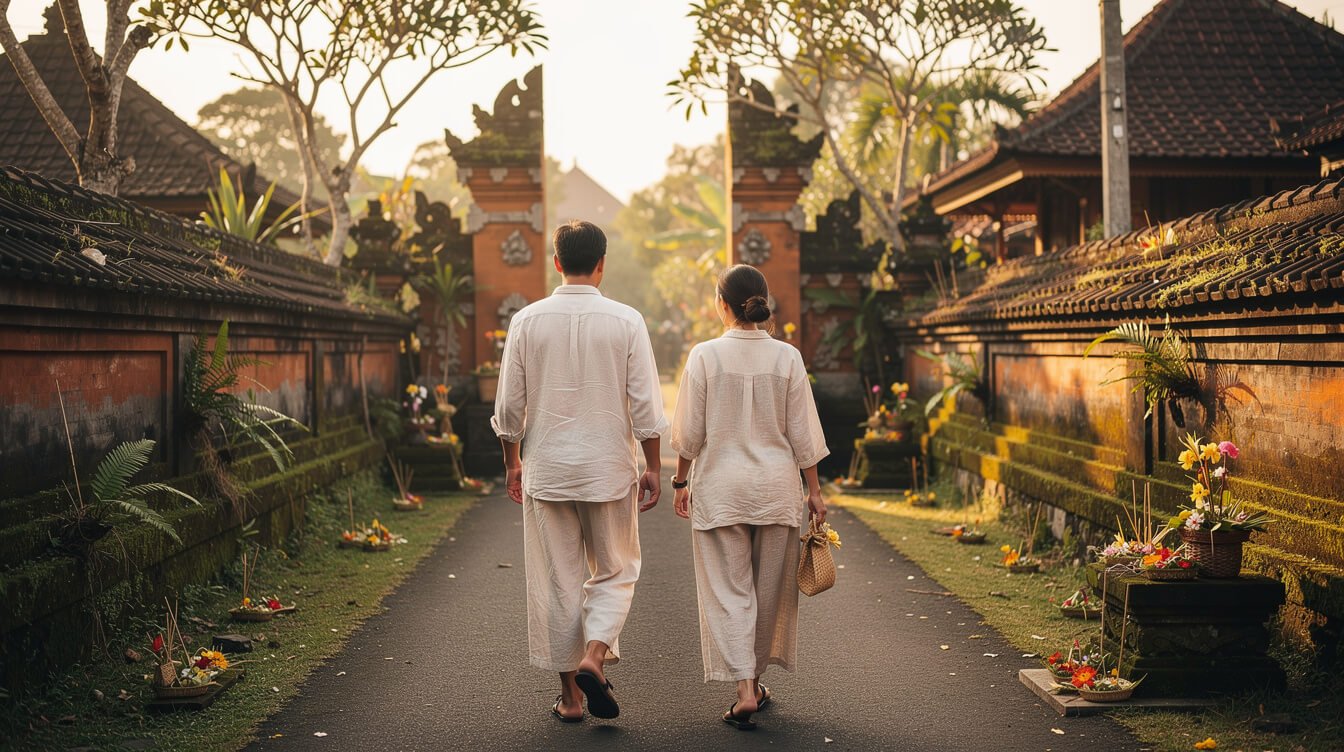
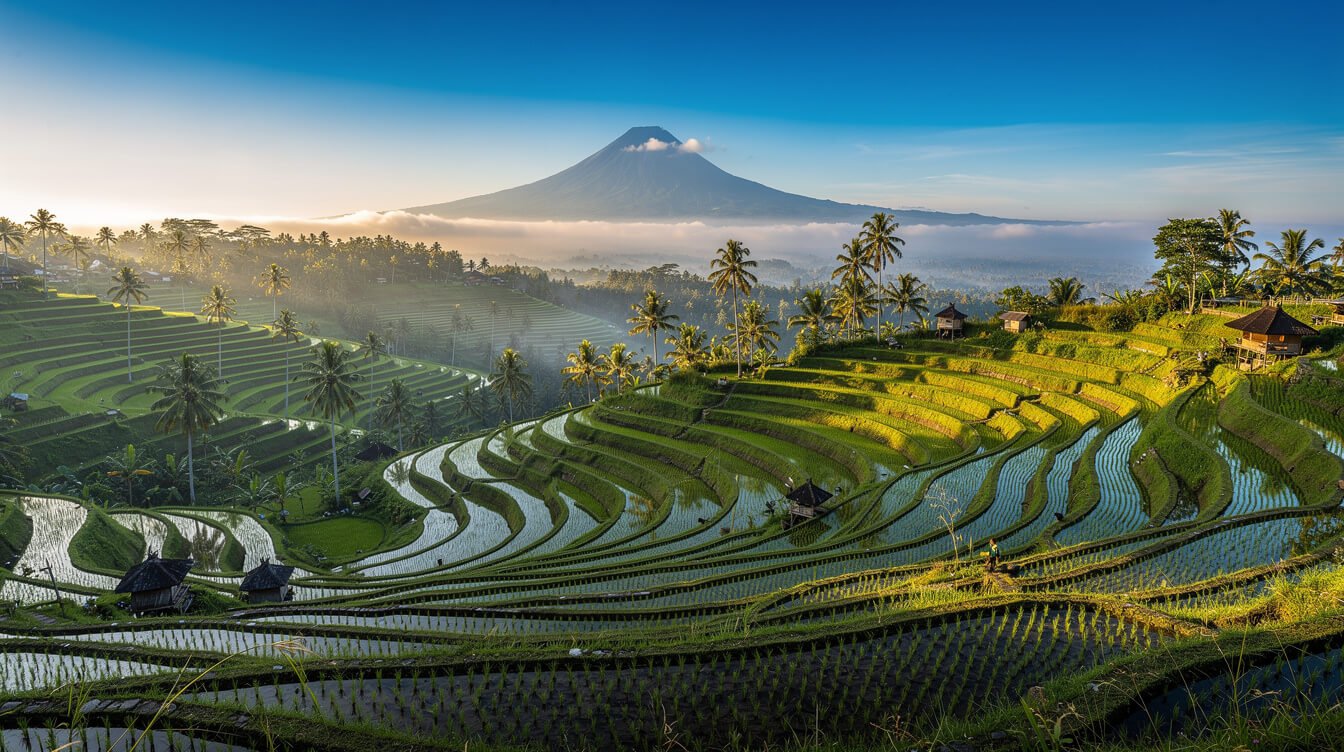
For weather, yes. July is one of the most reliable months of the year to be in Bali. The skies are clear, the roads are dry, the trails are firm underfoot, and the views of Mount Agung and Mount Batur are at their best. If you have one chance to visit and you want sunshine, July delivers.
The trade-off is people. July is peak season. Summer holidays in North America and Europe overlap with Australia’s mid-year school break, and the island fills up. Flights cost more, the most popular places to stay book out early, and rates across the island are at their highest. Traffic between the airport, the south coast and Ubud can be slow, especially on weekends.
Who July suits
- Families on school holidays who need dry days for pools, waterfalls and long outings. Our guide to Bali villas for families has more on planning with children.
- First-time visitors who want the classic Bali of clear skies and long days.
- Hikers and early risers chasing sunrise from a volcano.
- Divers and snorkelers, who get calm east-coast water and good visibility.
- Groups celebrating something, from milestone birthdays to family reunions, who want reliable weather for outdoor dinners.
Who might prefer another month
If you’re traveling on a tight budget, need last-minute flexibility, or simply want Bali quieter, look at the shoulder months instead. April, May, June and September often bring similar weather with more breathing room. Our guide to the best time to travel to Bali compares the seasons side by side, and our notes on Bali travel prices explain how costs shift through the year.
The local secret: start early
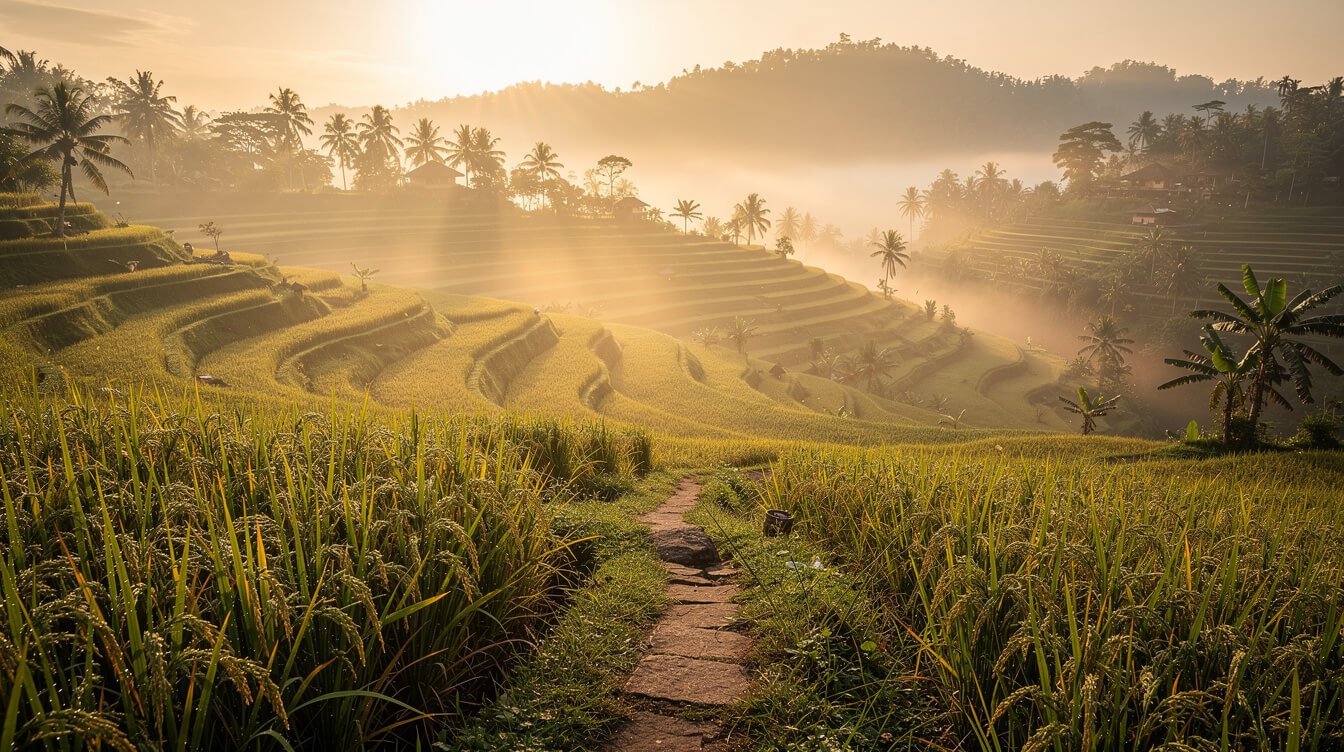
Here’s what the busy-July guides rarely tell you. The crowds keep tourist hours. Be at a temple, a rice terrace or a waterfall by 7:30 AM and you’ll often share it with a handful of people and the morning light. By late morning, the tour buses arrive. Spend the hot middle of the day by the pool, then head out again for the golden hour. It’s the single best way to enjoy peak season.
Get a free 3-day sample itinerary
Sunrise walks before the crowds, slow afternoons by the pool, and dance under a clear night sky. We will send you a 3-day sample itinerary for Ubud that already works with the July rhythm.
Ubud in July: Cool Mornings, Golden Fields
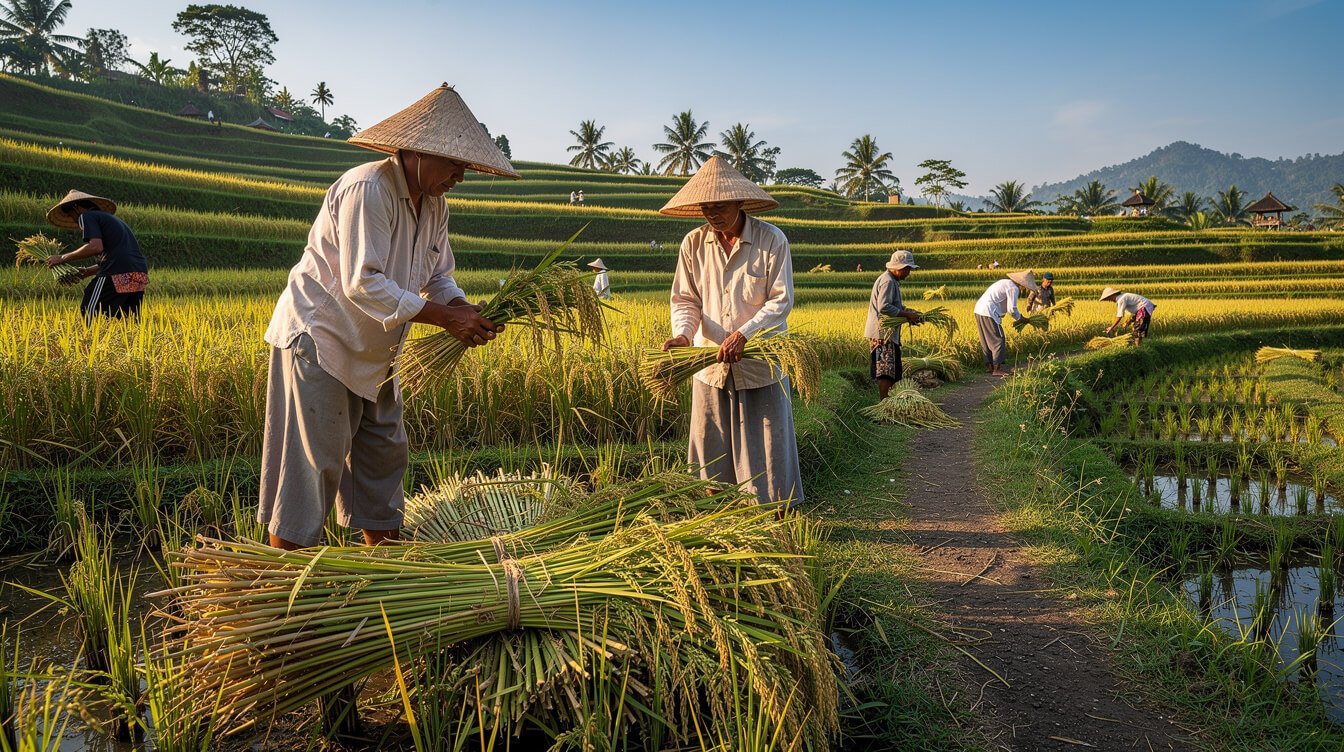
If you visit Ubud in January, you see the rice terraces at their deepest green. In July, you see them at work.
Harvest season in the rice fields
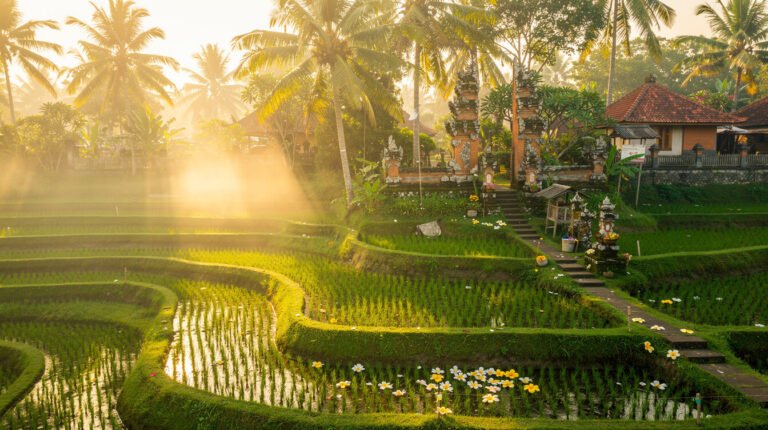
Balinese farming runs on subak, a centuries-old cooperative system that shares water between farms through channels, tunnels and small water temples. Each subak sets its own planting schedule, so in July you might see one terrace heavy and golden, ready for the sickle, while the next is freshly flooded and planted with bright green seedlings. Walk out early and you’ll see farmers threshing rice by hand, ducks being herded across stubble, and the scarecrow strings that keep the sparrows off the ripening grain. Our visitor guide to Tegallalang rice terrace covers the best-known fields, but the paths through smaller villages are often just as lovely and much quieter.
The coolest evenings of the year
July nights in Ubud are a quiet pleasure. After sunset the air drops to a cool, soft temperature that makes you want a long dinner outside. You’ll sleep with the windows open to the sound of frogs and the river, and wake early to a sky that’s already clear. Don’t be surprised if you reach for a light blanket by 3 AM.
Busy town, quiet edges
Central Ubud is busy in July. Monkey Forest Road, the market and the main restaurants are full from mid-morning on. The answer isn’t to avoid Ubud but to step a few minutes outside it. The ridges and villages around town keep a slower rhythm: a walk along the Campuhan Ridge at sunrise, coffee at a warung on a back lane, an afternoon at the villa while the town buzzes without you. Come in for the evening dance at the Ubud Palace, then retreat to the quiet again.
Slow afternoons, held for you
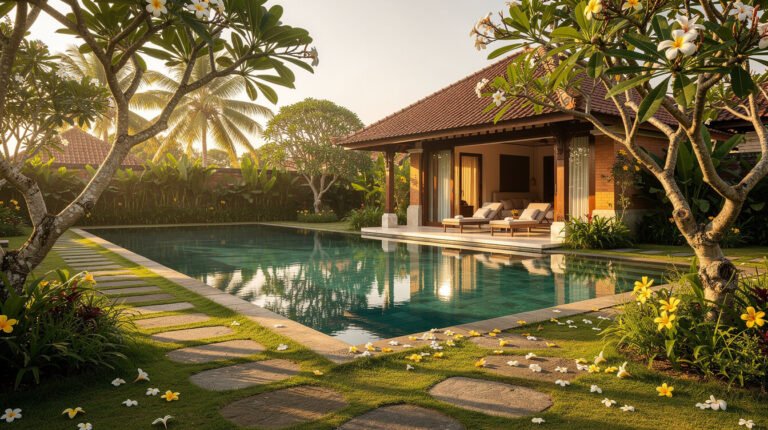
This is where a staffed villa earns its keep in peak season. When the midday heat peaks and the roads are at their busiest, you don’t need to be anywhere. The chef is cooking lunch from the morning market, the pool is a few steps away, and the team can help you arrange a massage at the villa instead of a queue at a spa in town. If you’d love to try in-villa dining, our guide to a private chef villa in Ubud explains how it works.
Best Dry-Season Days Out from Ubud in July
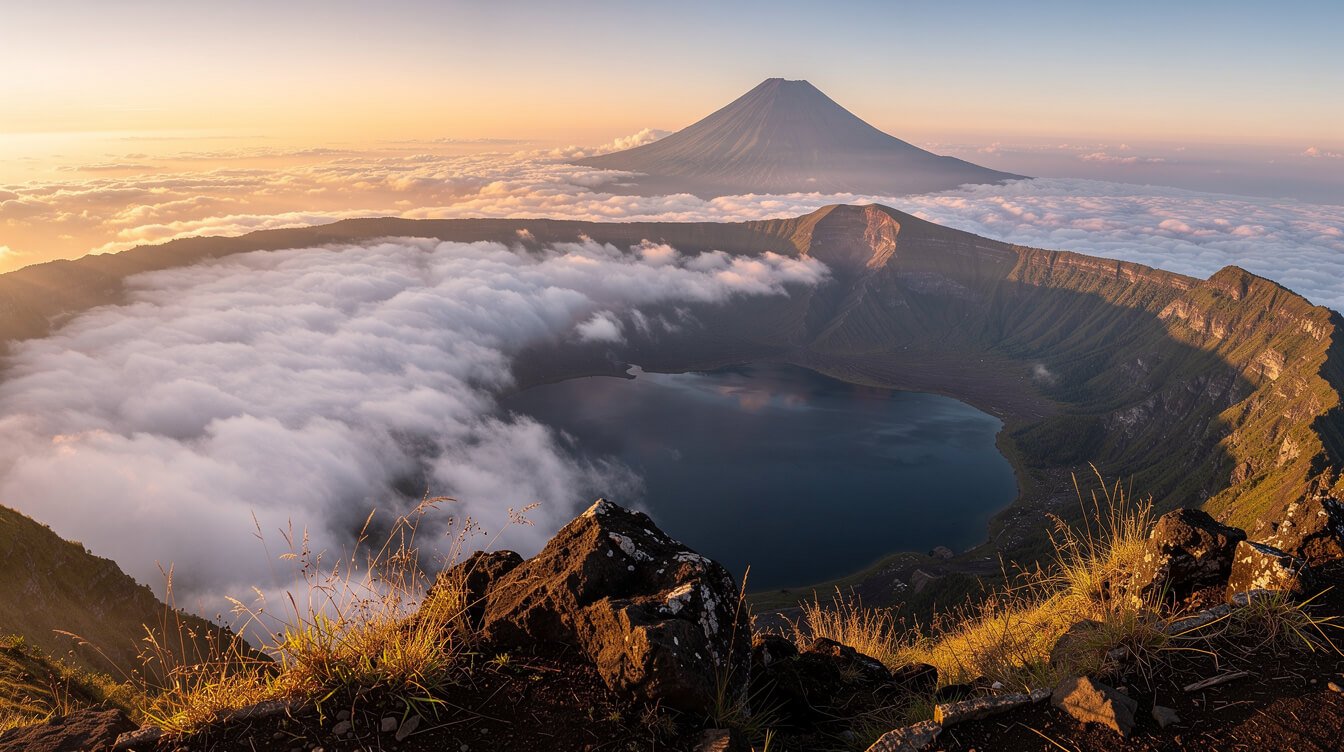
Clear skies and dry roads make July the best month of the year for the big days out. A few favorites, all reachable from Ubud:
Mount Batur at sunrise
The pre-dawn trek up Mount Batur is at its most rewarding in the dry season, when the chance of a clear summit is highest. Expect a 2 AM pick-up, a steep two-hour climb by headlamp, and a sunrise over the caldera with Mount Agung on the horizon. It’s cold at the top in July, so bring a warm layer. Our Mount Batur sunrise guide has the full plan.
Waterfalls with clear pools
Waterfalls run gentler in July than in the wet season, but the water is clearer and the paths are firmer and safer. It’s a good month for the longer hikes, such as Sekumpul in the north. Our Bali waterfall guide covers the best options, from easy swims near Ubud to all-day adventures.
Nusa Penida and the open ocean
July brings calmer crossings on most days, and it’s also the start of the season when divers hope to spot the giant mola mola (ocean sunfish) around Nusa Penida, usually from around July to October. Sightings are never guaranteed. Our Nusa Penida day trip from Ubud guide explains how to do it without losing your whole day.
The south coast and the Bukit
The dry season brings the big, clean swells that surfers travel across the world for, especially on the west-facing breaks of the Bukit Peninsula. That same swell means strong currents. Swim only at patrolled beaches and between the flags, and choose calmer east-side water at Sanur or Nusa Dua for children. Our Uluwatu beach guide helps you pick the right beach for the tide and the swell, and you can pair it with sunset at Pura Luhur Uluwatu.
Water temples in the morning light
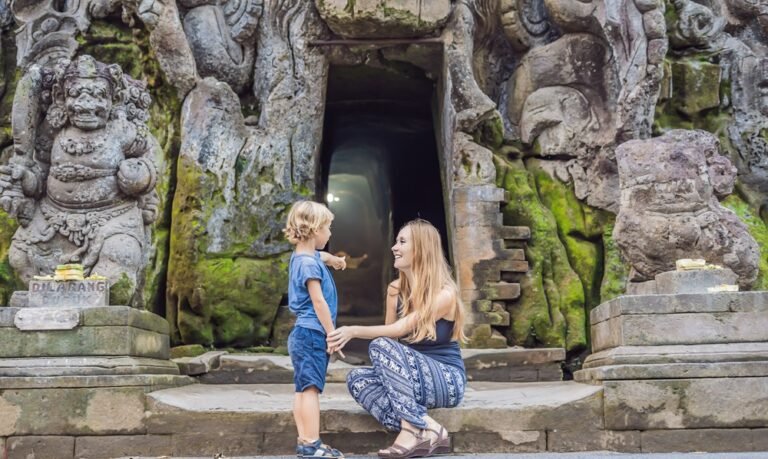
The purification springs at Tirta Empul are one of the most moving places in Bali, and one of the busiest in July. Arrive at opening, wear a sarong and sash, and follow the guidance of the temple staff.
Festivals and Ceremonies in Bali in July
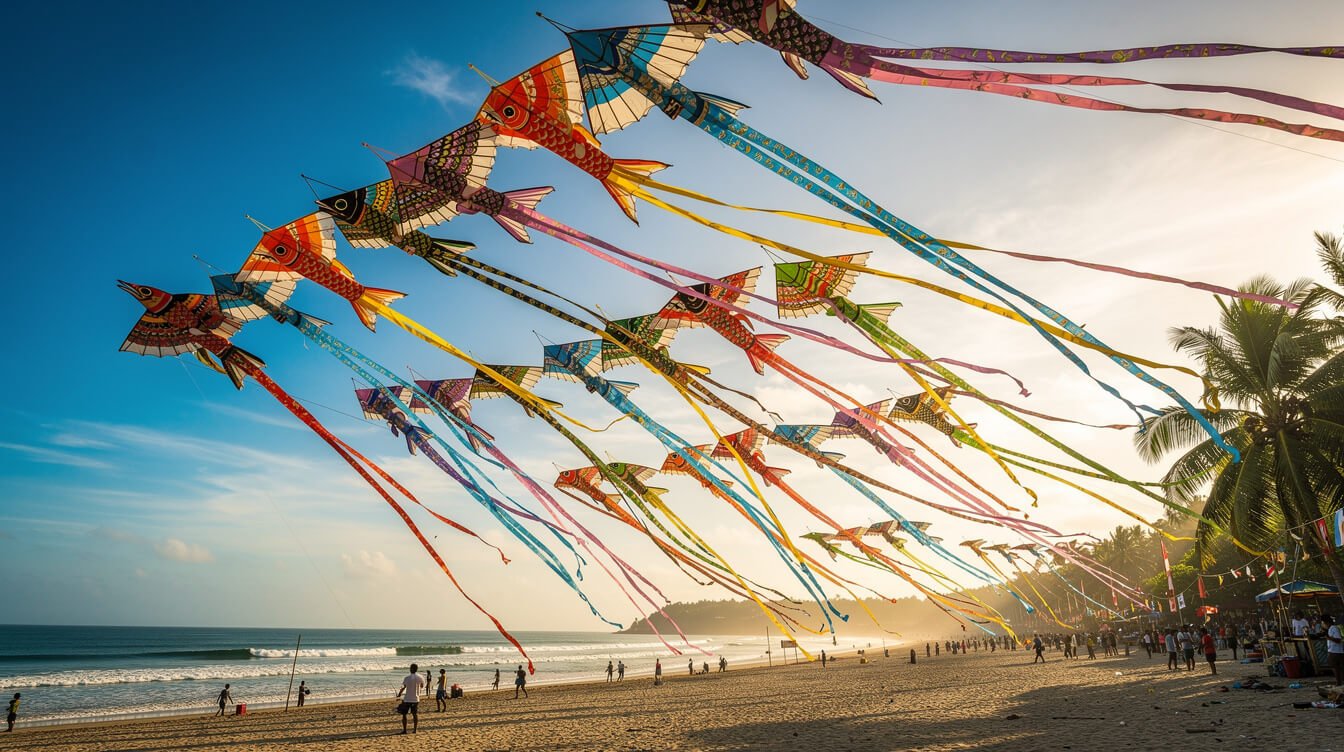
July is a lively month on the Balinese calendar, and the dry, windy weather is part of why.
Kite season
The southeast trade winds that keep July dry also fill the sky with kites. Across the island, village teams build huge traditional kites called layang-layang, some shaped like birds, fish or the long-tailed janggan, and fly them as an offering of thanks for the harvest. The competitive Bali Kite Festival is usually held near Sanur in the windy months, with dates that depend on the wind and are announced locally. Even without the festival, you’ll see kites over the rice fields around Ubud most afternoons.
The Bali Arts Festival
The Bali Arts Festival (Pesta Kesenian Bali) usually runs from mid-June into mid-July at the Taman Werdhi Budaya Art Centre in Denpasar. It’s a month of traditional dance, gamelan, shadow puppetry and village performance groups, mostly for a Balinese audience, which is exactly what makes it special. Exact dates and programs are announced each year, so check close to your trip.
Temple anniversaries
Every temple in Bali celebrates its own anniversary, or odalan, every 210 days on the Balinese calendar, so wherever you stay you may hear gamelan and see processions of offerings on the road. Visitors are welcome to watch respectfully. Wear a sarong and sash if you enter a temple, and never walk in front of someone who is praying.
Looking ahead to Galungan
If your trip runs into August, you may catch the start of Galungan, one of Bali’s most important holy days, when tall bamboo penjor arch over every village road. By our count of the Balinese calendar, the next Galungan after January falls around 11 August 2027, with Kuningan ten days later. Confirm the dates locally before you plan around them.
Evenings of dance
Dry evenings mean Ubud’s outdoor performances run almost every night. The fire-lit Kecak dance is unforgettable, and the open-air shows at the palace are a lovely way to end a day.
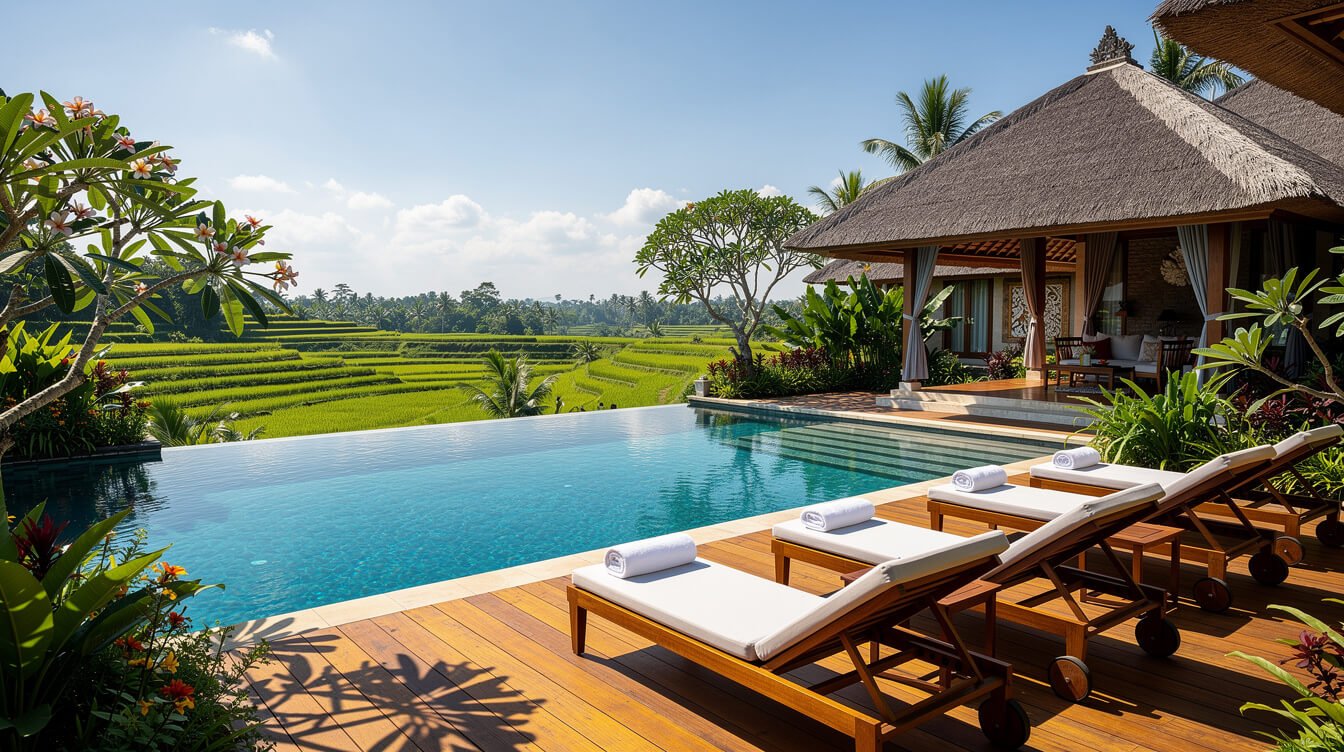
Book the Villa
Three bedrooms, a private pool for the warm middle of the day, and a team who keeps lunch on the table while the island rushes past. July books early, so check availability for your dates at Villa Amrita.
Planning a Peak-Season Trip: Booking, Crowds and Getting Around
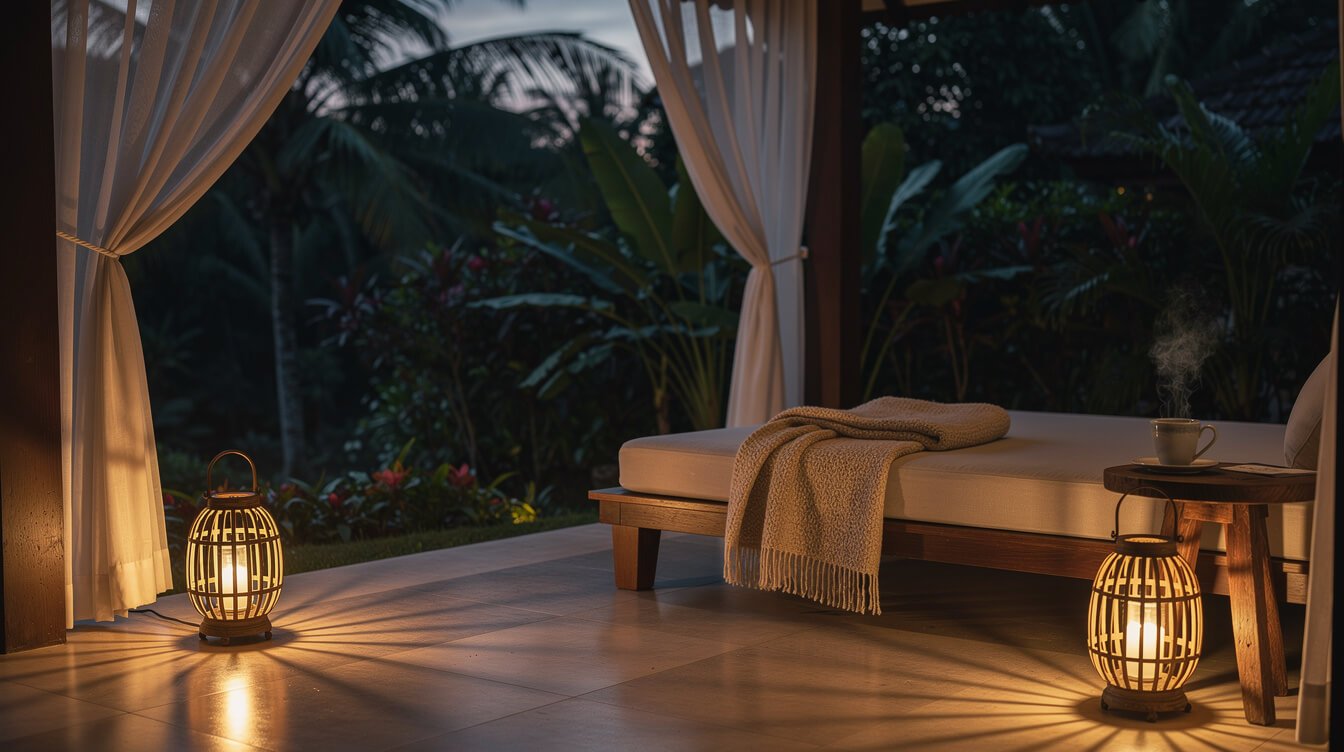
Good July trips are planned early. Here’s how to make peak season feel easy.
Book early, especially for groups
Whole-villa stays for families and groups are the first to go in July, because there are only so many homes that sleep a big party under one roof. If you’re traveling during school holidays or over a celebration, start looking several months ahead. The same applies to flights, which climb as July approaches.
Arrive gently
The drive from the airport to Ubud usually takes around an hour and a half, but peak-season traffic can stretch it. A private driver is the calm option, and an early-morning or late-evening landing often means shorter queues. Before you fly, check the latest entry rules and pay Bali’s tourist levy online. Our step-by-step guide to the Bali visa for US citizens walks you through it.
Plan your days around the traffic
The roads are busiest from late morning to early evening. Do your big outings early, rest in the heat of the day, and save short trips for late afternoon. For longer days out, hire a driver for the full day rather than relying on ride-hailing apps, which can be hard to find in some areas.
Stay healthy in the dry heat
Lower humidity can fool you into drinking less. Carry water, use reef-safe sunscreen, and wear a hat in the middle of the day. Mosquitoes are fewer than in the wet season but still around near rice fields at dusk, so pack repellent.
Let the house do the work
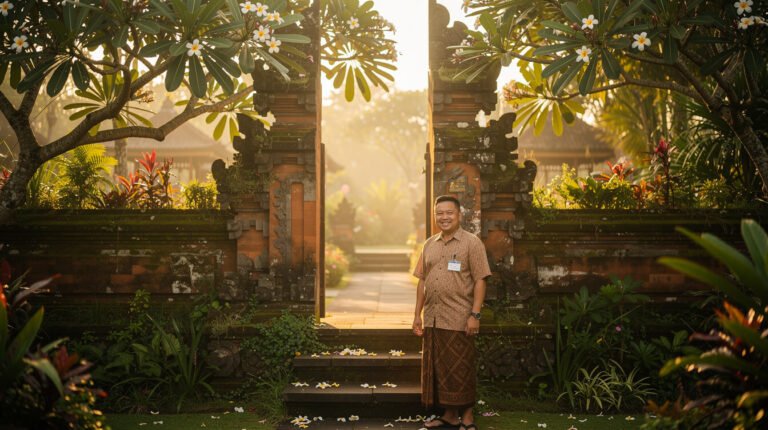
Peak season is when being looked after matters most. Instead of fighting for a dinner reservation in town, you can have your chef cook for the whole family at home. Instead of booking every driver yourself, the villa manager can help arrange them. It turns a busy month into a slow one, which is the whole point of coming.
What to Pack for Bali in July

July packing is mostly about sun by day and a layer for the evenings. A simple list:
- Light, breathable clothing: linen and cotton for the warm days.
- A light sweater or cardigan: for cool Ubud evenings and early starts.
- A warm jacket: only if you’re climbing Mount Batur or staying in the mountains.
- Sun protection: a wide-brim hat, sunglasses and reef-safe sunscreen.
- Temple wear: a sarong and sash, or clothes that cover your shoulders and knees.
- Good walking shoes: for rice-field paths, waterfalls and the volcano trail.
- Swimwear and a rash guard: the sun is strong on the water.
- Insect repellent and a reusable water bottle.
For a complete checklist, see our guide on what to pack for Bali.
Bali Weather in July: Frequently Asked Questions
Does it rain in Bali in July?
Very little. July is one of the driest months of the year, and most days are sunny. You may see a short shower, especially inland around Ubud, but it rarely lasts long. Some recent years have been wetter than average, so check the forecast before you go.
How hot is Bali in July?
Warm but comfortable. Expect around 27–31°C (81–88°F) during the day on the coast, a little cooler in Ubud. Nights drop to about 22–24°C by the sea and around 20°C in Ubud, cooler again in the mountains.
Is July high season in Bali?
Yes. July is one of the busiest months of the year, as northern-hemisphere summer holidays overlap with Australia’s mid-year school break. Plan and book early.
Is the sea good for swimming in July?
Often, yes, but choose your beach. The east coast around Sanur and Nusa Dua is usually calmer. The west coast and the Bukit get big dry-season swells and strong currents, so swim only where it’s patrolled.
Is Ubud too crowded in July?
The center of town is busy, but the villages and rice fields around it stay peaceful. Start your days early, rest in the middle of the day, and stay just outside town for the best of both.
July or August: which is better?
The weather is very similar. July is often a touch busier in the first half of the month, while late August can feel a little softer as holidays end. If you can travel in June or September, you’ll get similar weather with fewer people. Compare with our wet-season guides to Bali weather in January and Bali weather in December if you’re weighing up a different time of year.
Final Thoughts: July in Ubud Is Bright, Busy and Worth Planning For
Bali weather in July is about as good as it gets: clear mornings, dry trails, golden rice fields and cool nights that make you want to linger over dinner. The trade-off is that everyone else knows it too. The way to enjoy it is simple. Rise early, rest through the heat, and come home to somewhere quiet.
July in Ubud is kites over the rice fields, a volcano that actually shows its face at sunrise, farmers threshing rice in the paddies and a light blanket at the foot of the bed. With a team at the villa who keeps lunch on the table and helps with the logistics, peak season can feel surprisingly unhurried. If that sounds like your summer, we’d love to help you plan it.

Join our newsletter — fun, new, exciting Bali news
Seasonal notes from Ubud, ceremony days worth knowing about, and small stories from the garden and kitchen. Delivered now and then, always worth opening.