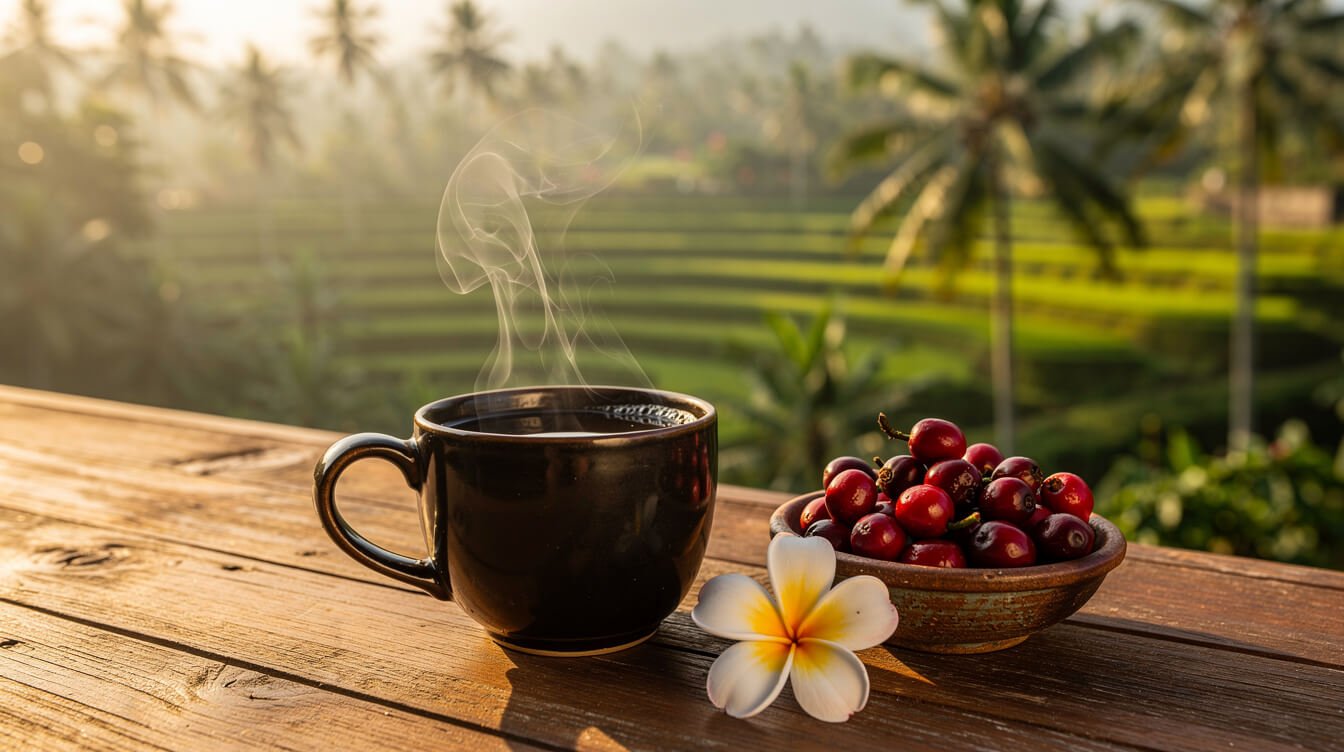
Luwak Coffee in Bali: An Honest Guide to Tasting It (and Kinder Alternatives) from Ubud
Somewhere on the road between Ubud and the Tegallalang rice terraces, your driver will slow down beside a hand-painted sign, a bamboo gate and a garden full of coffee shrubs. Inside, someone will hand you a tray of tiny glass cups and tell you about luwak coffee, the famous Indonesian brew made from beans that have passed through a small wild animal called a civet. It’s one of the most talked-about cups on the island, and one of the most misunderstood. Before you sit down and order one, it helps to know what you’re actually tasting, and what might be happening just out of sight.
We’re the in-villa team at Villa Amrita, a staffed three-bedroom pool villa in the rice fields outside Ubud. Our guests ask us about kopi luwak almost every week, usually the night before a day trip north. So this is the honest version we share with them: what luwak coffee is, where the story began, what a plantation tasting really looks like, the animal welfare problem researchers keep finding, how to choose kindly if you’re curious, and where to find a genuinely better cup of Balinese coffee around Ubud. No lectures. Just the full picture, so you can decide for yourself.
What Luwak Coffee Actually Is
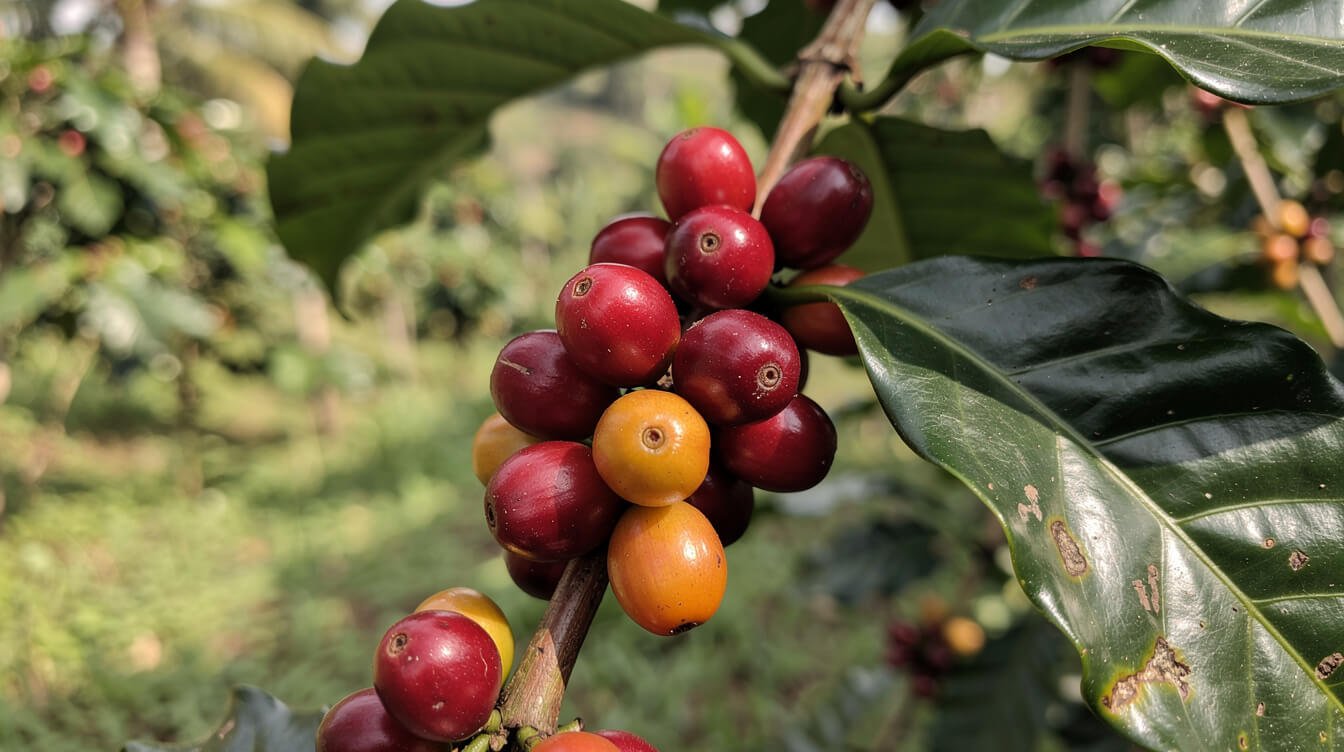
In Indonesian, kopi means coffee and luwak is the local name for the Asian palm civet, a small, nocturnal, cat-sized mammal with a long tail, a masked face and a fondness for ripe fruit. It isn’t actually a cat. Civets are their own family of animals, closer in temperament to a curious, solitary raccoon. In the wild they roam at night through forests, plantations and village gardens, eating insects, small animals and plenty of fruit.
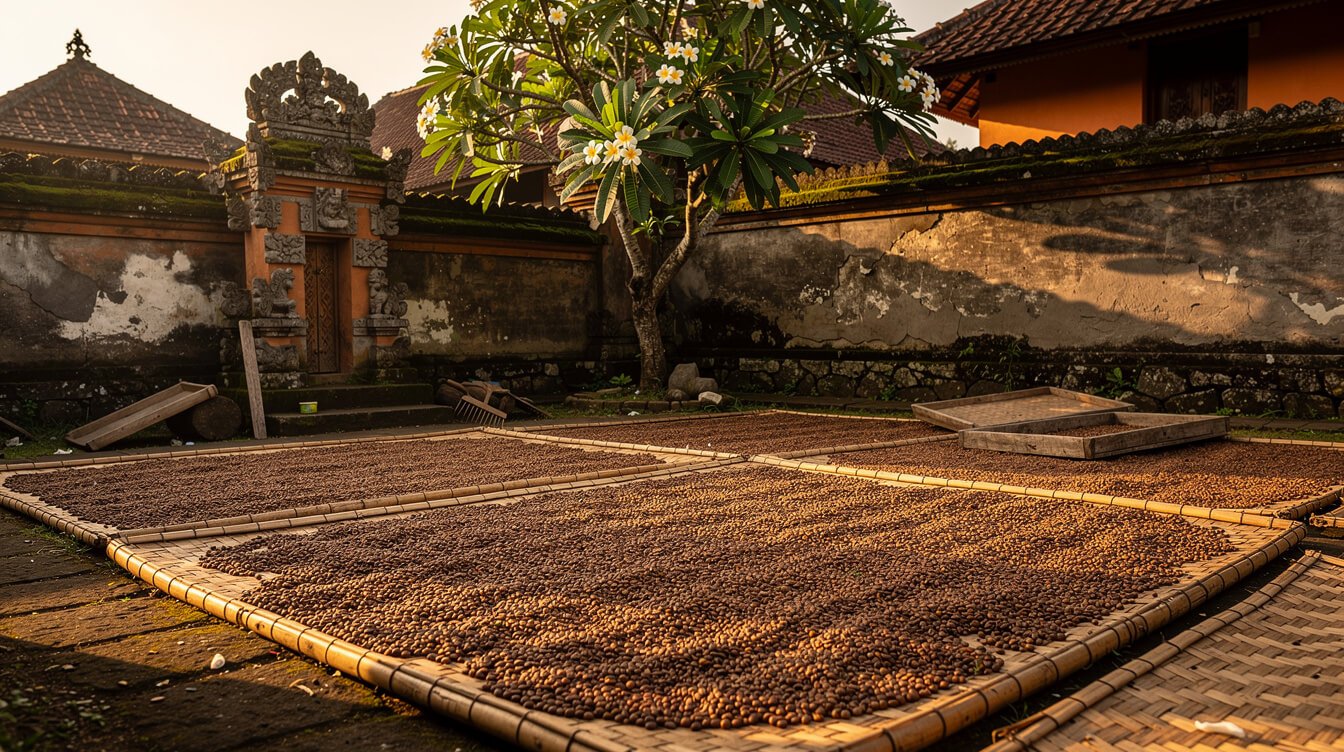
Coffee cherries are part of that menu. A civet picks out ripe cherries, digests the soft fruit and passes the hard inner bean. On the way through, enzymes and fermentation in its gut change some of the proteins in the bean. Farmers then collect the droppings, wash the beans thoroughly, dry them, remove the parchment layer and roast them like any other coffee.
Fans describe the resulting cup as smooth, low in bitterness and lightly earthy, sometimes with hints of chocolate or caramel. Many professional coffee tasters are less convinced. They often find it flat and thin compared with a carefully processed specialty arabica, and they point out that much of the price comes from the story rather than the flavor. Both views can be true at once. Luwak coffee is mostly a novelty, and how much you enjoy it depends a great deal on what you expect.
What matters most for the rest of this guide is the original idea: a wild civet, roaming freely, choosing the ripest cherries on its own. Keep that picture in mind, because it’s very different from what many visitors end up seeing.
A Short History: Dutch Plantations and the Workers’ Secret Cup
The usual origin story of luwak coffee goes back to the Dutch colonial era, when coffee was planted across Java and Sumatra for export to Europe. Under the colonial plantation system, the local farmers and workers who grew the coffee were often forbidden from picking the beans for themselves. According to the story that every plantation guide will tell you, people noticed that civets ate the ripe cherries at night and left the beans behind. Workers gathered those beans from the forest floor, cleaned and roasted them, and brewed a cup of coffee they were otherwise denied.
Like many good stories, it’s hard to verify every detail, but the outline is widely repeated and rings true to the history of colonial cash crops in Indonesia. For a long time kopi luwak stayed a small, local curiosity. That changed in the late twentieth century, when foreign buyers and media started calling it “the world’s most expensive coffee.” Demand rose quickly, and so did prices.
Here in Bali, coffee has its own older rhythm. Most Balinese families drink kopi Bali the traditional way, as kopi tubruk: finely ground coffee stirred straight into hot water with sugar, left to settle so the grounds sink to the bottom of the glass. You’ll find it in every warung near Ubud, it costs very little, and it tastes of morning in the village. Luwak coffee arrived on top of that culture as a tourist product, not as something your Balinese neighbors drink every day.
Get a free 3-day sample itinerary
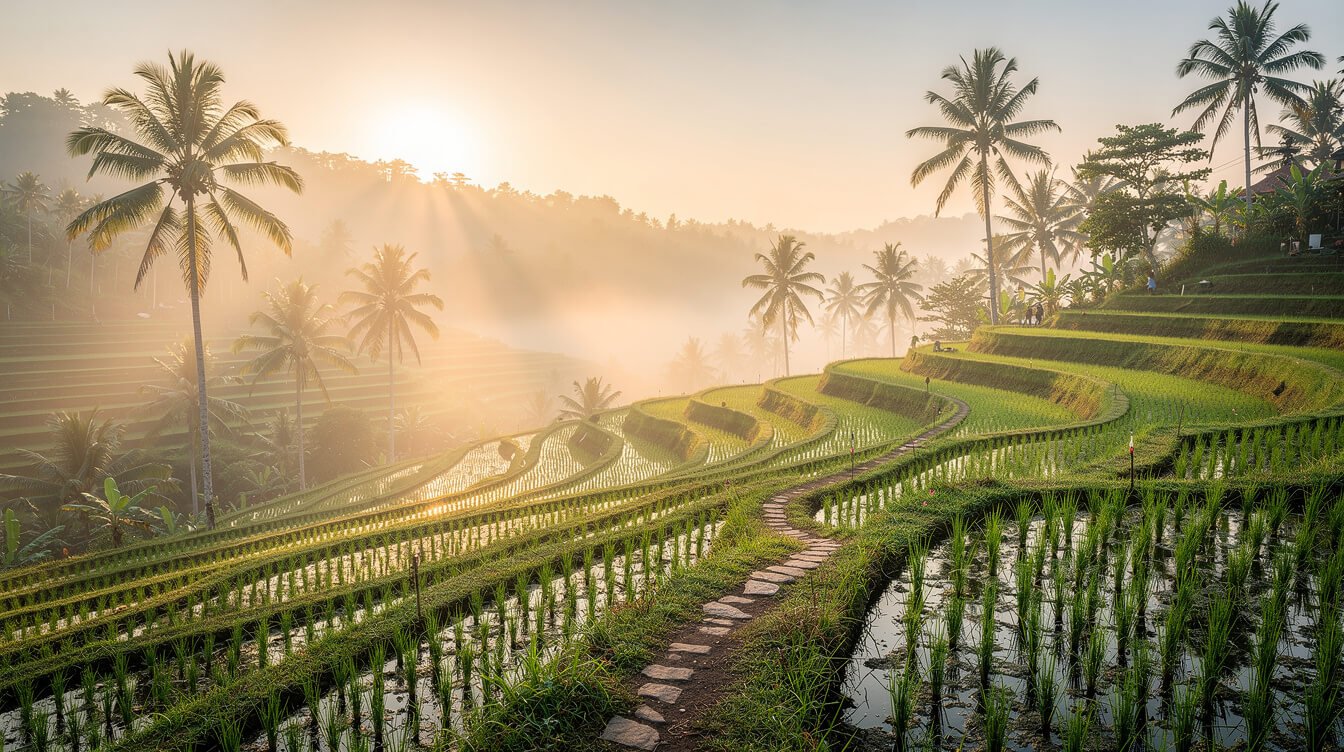
Rice-field walks, a highland coffee morning, warungs our own team loves and plenty of slow time by the pool. We’ll send you a free 3-day sample itinerary for Ubud, paced gently for your first days on the island.
What a Luwak Coffee Tasting Near Ubud Really Looks Like
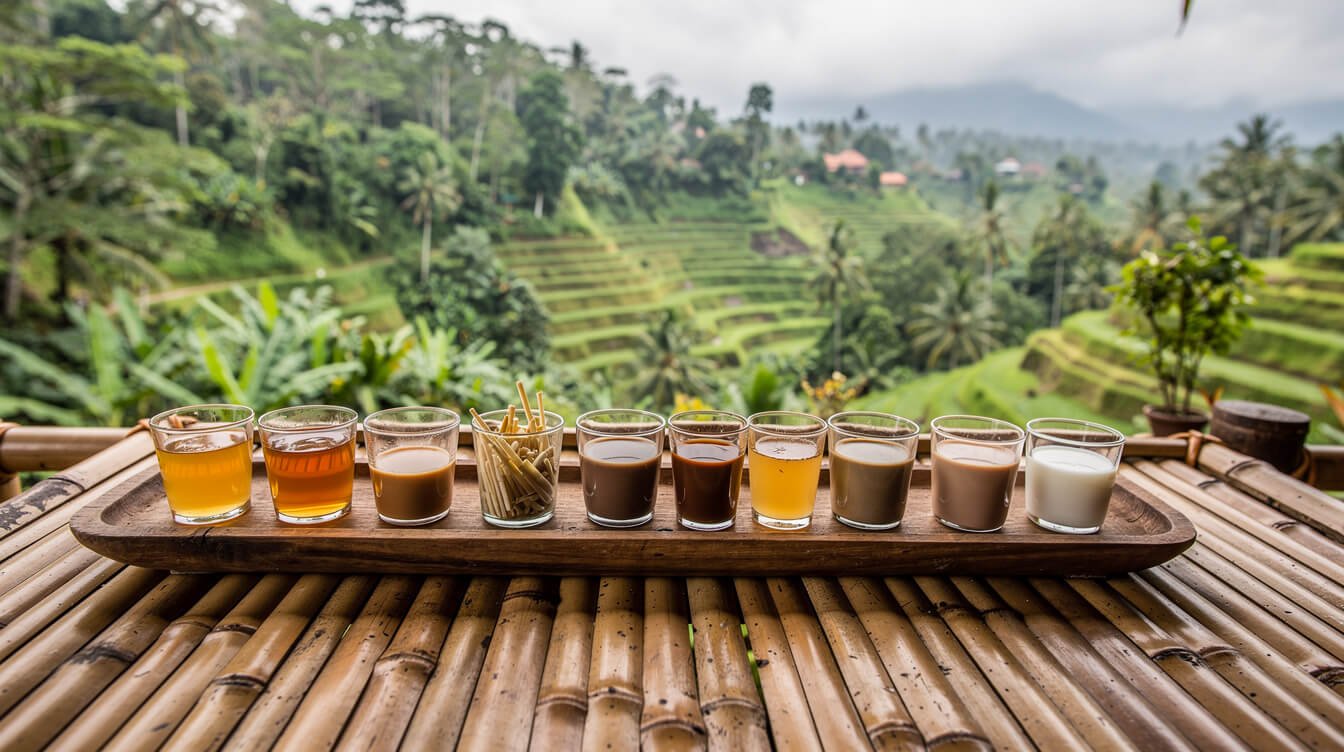
Most luwak coffee tastings around Ubud happen at what are called agrotourism plantations, or “coffee gardens.” Many sit along the busy roads that run north from Ubud toward Tegallalang, Kintamani and the Tampaksiring temples, so they fit neatly into a day trip that might include the Tegallalang rice terraces or a Mount Batur sunrise. Many tour drivers stop at one automatically, so it’s worth deciding in advance whether you want to.
A typical visit follows a familiar script:
- A short garden walk. A guide shows you coffee shrubs, cacao pods, vanilla vines, lemongrass, ginger and turmeric. This part can be lovely, especially for kids and first-time visitors to the tropics.
- The civet stop. At many plantations this is where you’ll be shown one or more civets, often in cages, as a demonstration of “how luwak coffee is made.”
- Roasting by hand. Someone stirs beans in a clay or iron pan over a wood fire, and the smell fills the hut.
- The tasting flight. You sit at a table with a view and receive a tray of around eight to twelve small cups: ginger tea, lemongrass tea, coconut coffee, vanilla coffee, cocoa, mangosteen tea, Bali coffee and so on. At many plantations the sampler is free or included in a small entrance fee.
- The luwak cup, on request. A single cup of luwak coffee usually costs extra, roughly IDR 50,000 to 100,000 (about US$3 to US$7) at tourist plantations around Tegallalang and Ubud, based on recent visitor reports. Prices change, so take that as a guide.
- The shop. The visit ends at a shop selling coffee, tea and luwak beans in gift boxes.
That price is a useful clue. In cafes abroad, a cup of luwak coffee has sold for up to around US$100, and the beans for hundreds of dollars a kilo. Genuinely wild-collected beans are scarce and labor-intensive to gather. A cup that costs a few dollars, served in large volumes to busloads of visitors every day, raises an obvious question about where all those beans come from.
The Caged-Civet Problem: What Researchers Found

This is the part most plantation guides skip, and the part we think you deserve to know.
In 2016, researchers working with World Animal Protection and Oxford University’s Wildlife Conservation Research Unit published a study of civet coffee plantations in Bali. They visited 16 plantations that had opened along one popular tourist route through Gianyar and Bangli in the previous five years. Fourteen of the 16 were producing coffee on site from caged civets. The other two kept civets in cages simply as a display for visitors. The researchers described small, barren cages, often with wire floors and little shelter for a nocturnal animal. They concluded that welfare standards were poor across the plantations they assessed.
A larger follow-up study, published in 2023 in the Journal of Applied Animal Welfare Science, assessed civets at 29 civet coffee tourism plantations and again found poor welfare and husbandry overall. National Geographic, the BBC and others have reported on the same problem over the years.
Then there’s the label. Packaging and plantation signs often say “100% wild” or “wild-sourced.” The difficulty is that, as the researchers themselves have said, there is no reliable way for a buyer to tell beans from a caged civet apart from beans from a wild one. A wild label may be honest. It may not be. In most cases you simply can’t check.
None of this makes you a bad person for being curious, or for having tried a cup on a previous trip. Most visitors have no idea, because the experience is designed to feel charming. We’d just rather you walk in knowing what we know.
How to Choose Kindly: Questions to Ask, Signs to Walk Away
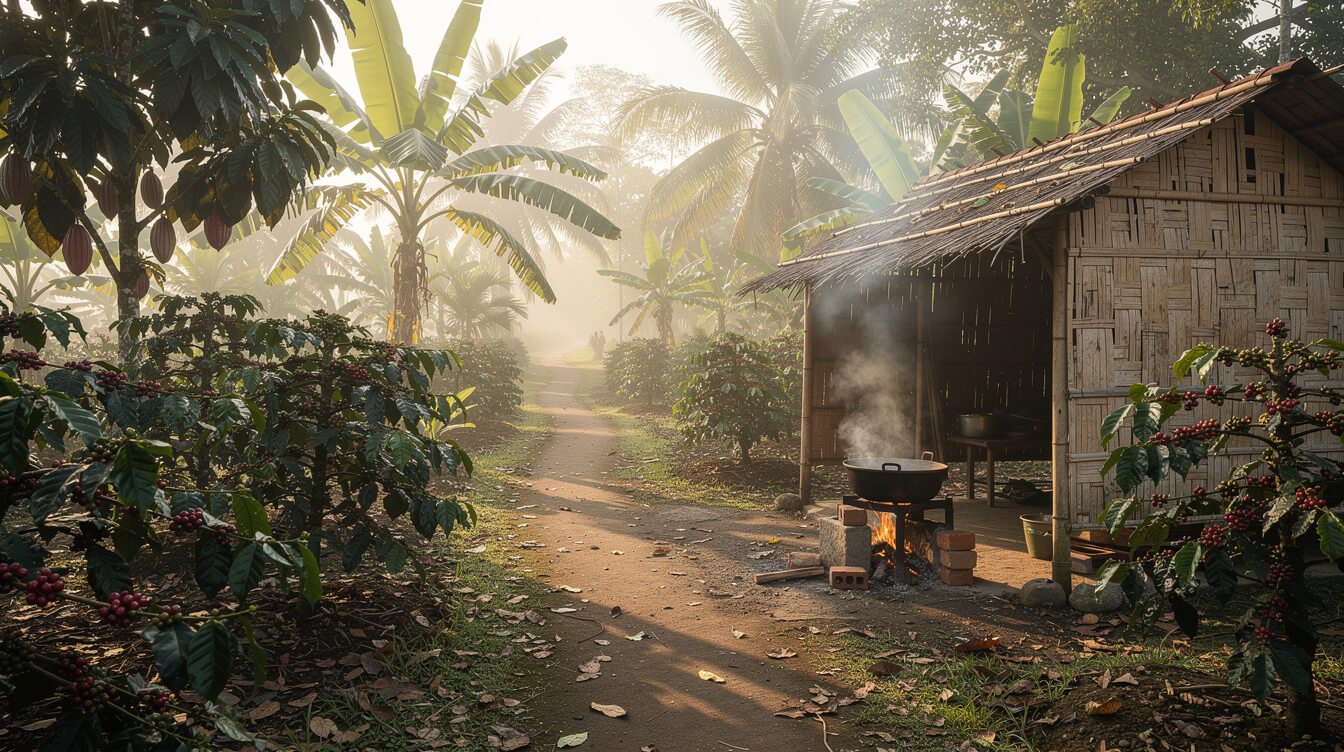
If you’d still like to visit a coffee garden, and many of them are genuinely beautiful places run by local families, here’s how to make a kinder choice.
Signs it’s time to walk away
- Civets in cages, anywhere on site. World Animal Protection’s advice is simple: if you see caged civets during a tour, that’s a clear sign animals are being kept for the coffee or for show.
- Civets awake and on display in daylight. These are nocturnal animals. A civet being handled, posed for photos or kept awake in the sun is not a happy civet.
- Unlimited luwak at a low price. If there’s plenty of cheap luwak coffee for every visitor, every day, it’s very unlikely to be from wild civets.
Questions worth asking
- Where do your luwak beans come from, and who collects them?
- Do you keep any civets here? If so, why?
- Can I just do the tasting flight and garden walk without the luwak cup?
Ask gently. The staff at the counter usually aren’t the owners, and they’ll be kinder to you if you’re kind to them. Vague or evasive answers tell you plenty on their own.
The simplest kind choice
Our honest suggestion is to enjoy the garden walk, the roasting demonstration and the free tasting flight, and skip the luwak cup itself. Buy a bag of ordinary Bali arabica or robusta from the shop if you’d like to support the family. You still get the view, the smell of roasting beans and the story, without paying into a system that keeps wild animals caged. And if you’d rather skip the plantation stop altogether, simply tell your driver in the morning. It’s completely normal, and no one will be offended.

Book the Villa
Three bedrooms, a private pool deck for slow morning coffee, and a team of manager, chef, housekeeper and gardener who look after the details. You enjoy Ubud. We’ll take care of the rest. Check availability for your dates.
The Better Cup: Kintamani Arabica and Bali Robusta
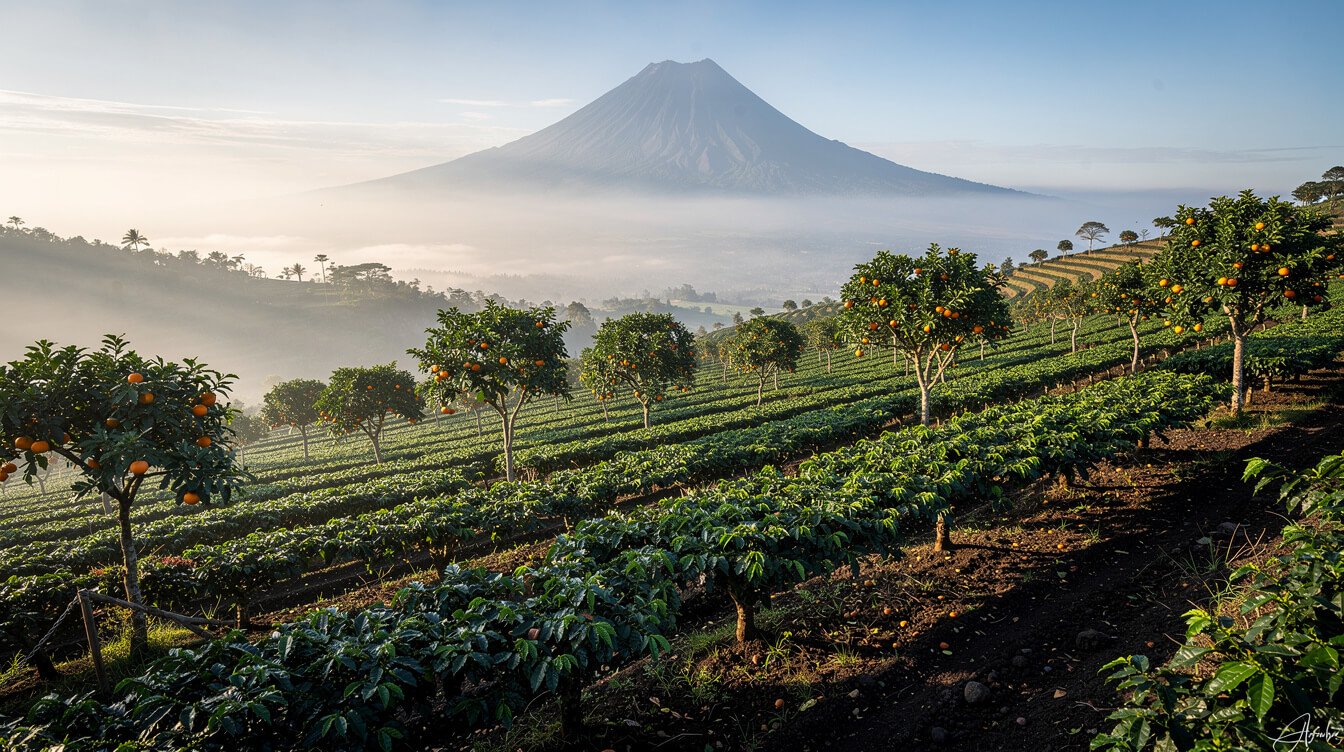
Here’s the good news. Bali grows some of the most interesting coffee in Indonesia, and the best of it has nothing to do with civets.
Kintamani arabica
Up in the cool volcanic highlands around Mount Batur, about an hour’s drive north of Ubud, small farms grow arabica coffee among citrus trees, often in shade alongside other crops. Farmers here work together through traditional dryland cooperatives known as subak abian, a cousin of the famous subak water-sharing system that shapes the rice fields around Ubud. In December 2008, Kintamani Bali Arabica became the first product in Indonesia to be registered as a protected Geographical Indication, much like Champagne or Darjeeling. Tasters often describe it as clean and bright, with medium body and a gentle citrus note.
If you’re heading north for a sunrise hike or a downhill cycling tour from Kintamani, ask your guide or driver about a stop at a small arabica farm or cooperative rather than a roadside luwak garden. The coffee is better, and the experience feels far more genuine.
Bali robusta
In western Bali, around Pupuan in the Tabanan highlands, farmers grow robusta. It’s bolder, earthier and more bitter than arabica, and it’s the backbone of the strong, sweet kopi Bali you’ll be served in warungs. A good, carefully roasted Pupuan robusta can be a real surprise, rich and chocolatey with very little harshness.
Why it’s the better choice
A cup of Kintamani or Pupuan coffee supports Balinese farming families directly, involves no captive animals and, to most coffee lovers, simply tastes better than luwak. It also makes a far nicer gift to take home. Look for single-origin bags that name the region, the farm or cooperative, and the roast date.
Where to Drink Great Coffee Around Ubud
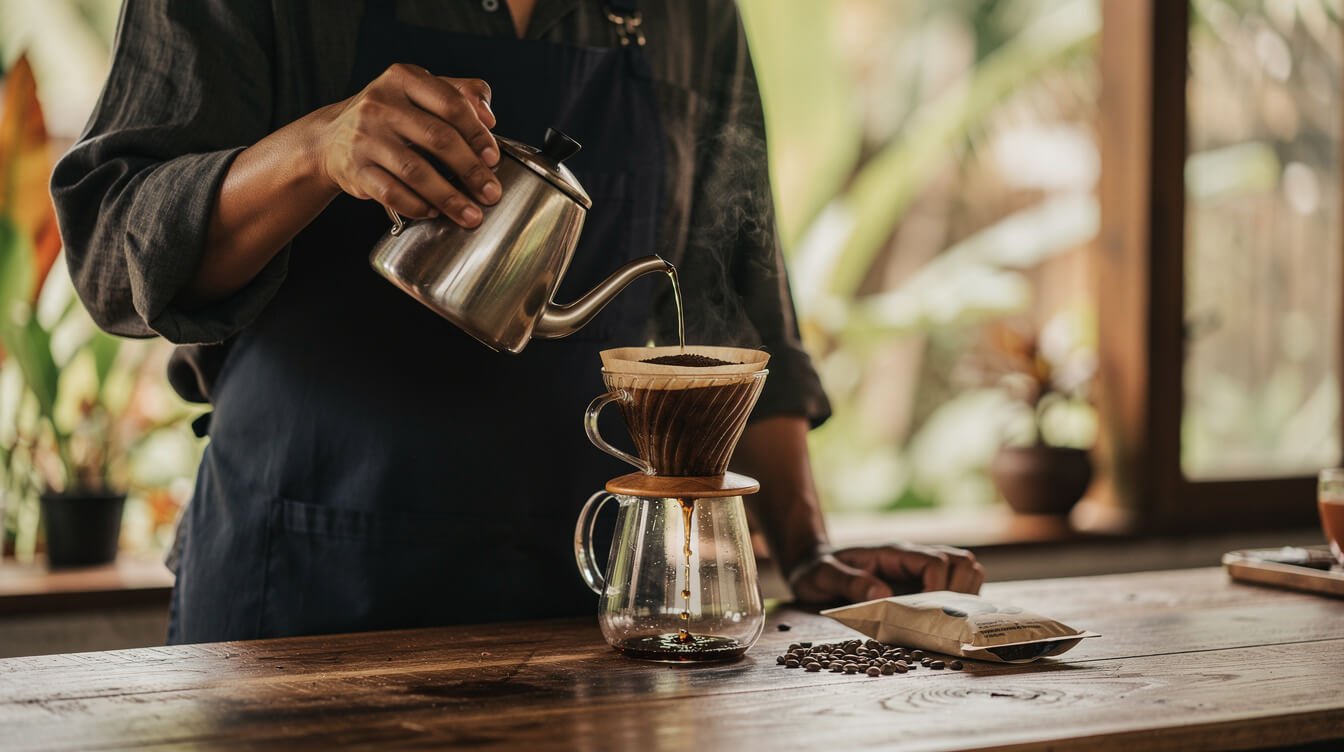
Ubud has a small but excellent specialty coffee scene, and many cafes here roast Balinese beans themselves. A few places that current coffee guides, including FLTR Magazine‘s October 2026 roundup, keep coming back to:
- Seniman Coffee Studio (Jalan Sri Wedari, central Ubud). One of Bali’s longest-running specialty roasters, with an in-house roastery and a menu of single-origin Indonesian coffees, including Kintamani. They also run coffee workshops on set days of the week, so check their current schedule if you’d like to learn to brew.
- Neuf Day (near Monkey Forest Road). A tiny, independent coffee bar with only a few seats. Lovely for one quiet cup before the street gets busy.
- Harmonize Coffee Roasters (Mas, just south of Ubud). Works with Kintamani coffee and with farmers in Munduk and Pupuan. Easy to pair with a browse of Mas village’s woodcarving workshops.
- Anomali Coffee (central Ubud). A lively Indonesian chain focused on beans from across the archipelago, good for comparing Bali with Java, Sumatra, Flores and beyond.
Opening hours and menus change often in Ubud, so check before you go. If you’d like a souvenir, most specialty cafes sell their own roasted beans, which travel well and make a more meaningful gift than a luwak gift box. For more ideas on what to bring home, see our Ubud shopping guide.
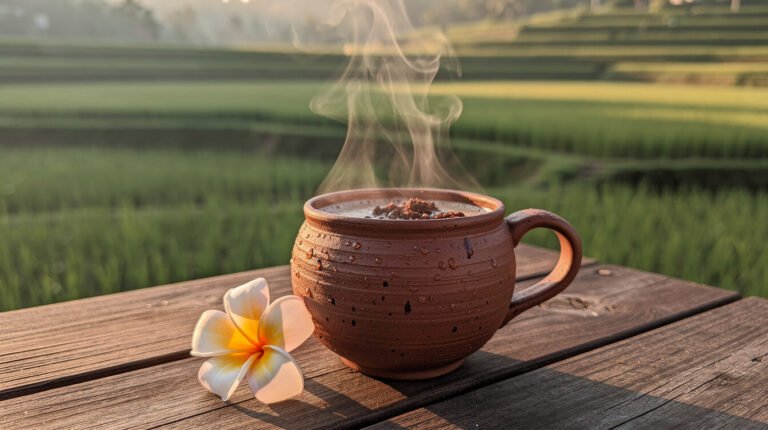
And don’t overlook the humble glass of kopi Bali. Order one at a family warung after a morning walk, let the grounds settle for a minute, and sip it slowly while the village goes about its day. It’s sweet, strong and unpretentious, and it might become the coffee memory you love most. We’ve written about that slow first cup before, in The First Cup of Balinese Coffee.
Your coffee morning at the villa
Some of the best coffee moments in Ubud happen without leaving home: a cup on your terrace as the mist lifts off the rice fields, the pool still glassy, the garden just waking up. If you’re staying with us, tell our team how you like your coffee and whether you’d like to try local beans, and our in-villa chef can work it into your breakfasts. Our manager is also happy to help you plan a coffee-focused day north, with a driver who knows you’d rather skip the caged-civet stops.
Luwak Coffee FAQ
How much does a cup of luwak coffee cost in Bali?
At tourist plantations around Tegallalang and Ubud, a single cup of luwak coffee typically costs roughly IDR 50,000 to 100,000 (about US$3 to US$7), according to recent visitor reports. The tasting flight of other teas and coffees is often free or included in a small entrance fee. Abroad, a cup has been sold for up to around US$100.
Is luwak coffee halal?
Yes, according to Indonesia’s Ulema Council (MUI). In 2010 it issued a fatwa (No. 07 of 2010) declaring luwak coffee halal on the condition that the beans pass through the animal intact and are thoroughly washed before processing. If this matters to you, the animal welfare questions above may still shape your choice.
Where did luwak coffee originate?
In Indonesia, most often traced to the Dutch colonial plantations of Java and Sumatra, where workers are said to have collected beans from civet droppings because they weren’t allowed to pick coffee for themselves. It later spread to Bali, where it became a tourist product rather than an everyday local drink.
Is luwak coffee the most expensive coffee in the world?
It’s often marketed that way, and genuinely wild-collected beans can be very expensive. Today it has rivals, such as Thailand’s Black Ivory Coffee, made from beans that pass through elephants, and rare auction-lot specialty coffees that can sell for even more per kilo. Price, though, isn’t the same as quality.
Is there such a thing as ethical luwak coffee?
Truly wild-collected, cage-free kopi luwak does exist, and welfare groups say it’s the only humane version. The challenge is proving it. Because beans from caged and wild civets look the same, “wild” labels can’t easily be verified. If you’re not sure, the kindest choice is to skip it and enjoy Kintamani arabica instead.
Can I visit a coffee plantation without supporting caged civets?
Yes. Choose a highland arabica farm or cooperative in Kintamani, or a specialty roastery tour, rather than a roadside luwak garden. If you do visit an agrotourism plantation, enjoy the garden walk and free tasting, skip the luwak cup and walk away if you see caged animals.
Final Thoughts: Taste Bali’s Coffee Story, Gently
Luwak coffee is a fascinating story about wild animals, colonial history and the human urge to make something special out of whatever we’re given. The modern reality behind many tourist cups is far less charming, and you deserve to know that before you order one. The good news is that you don’t have to choose between curiosity and kindness. Walk through a coffee garden, smell the beans roasting over a wood fire, sip a bright Kintamani arabica in an Ubud cafe and a sweet kopi Bali at a village warung. That’s the real taste of coffee on this island.
For more ways to fill your days here, browse our guide to things to do in Ubud and our introduction to Balinese food. And if you’re new to the island’s kitchens, our Bali belly guide covers how to eat and drink adventurously without worry. Then come home to the villa, where the next cup is already on its way.

Join our newsletter — fun, new, exciting Bali news
Seasonal notes from Ubud, warungs worth the detour, ceremony days to plan around, and small stories from our garden and kitchen. Delivered now and then, always worth opening.