The Planters Who Walk Backward Through the Water
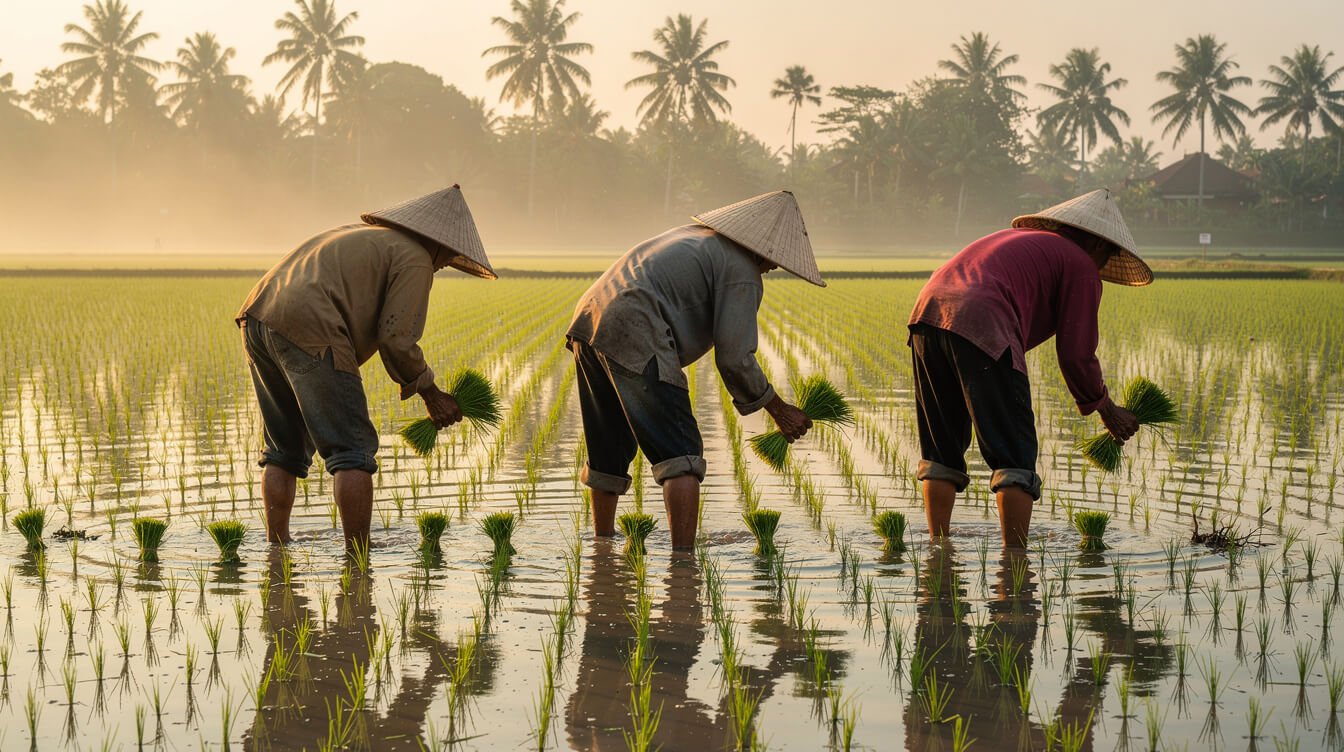
Walk out along the paddies early, while the water still holds the sky like a sheet of glass. In one field the soil has been plowed and flooded and left to settle. In the next, a line of planters is already at work, bent low at the waist, conical hats tipped toward the water.
Watch them for a minute and something looks slightly wrong, until you see it. They are walking backward.
Each one holds a loose bundle of seedlings in one hand, pale green and a few weeks old, pulled that morning from a crowded nursery bed at the corner of the field. With the other hand they pinch off a few stems and press them into the mud. There is a soft sucking sound, then the next one, then the next, a hand’s width apart. Then a small step back.
Get a Free 3-Day Sample Itinerary
Early walks along the paddies, a long slow lunch, the valley at dusk. We will send you a three-day Ubud rhythm built around the moments most visitors miss.
The reason is simple once you think about it. If they walked forward, they would trample everything they had just planted. Walking backward keeps the new rows in front of them, where they can see them, and lets their own footprints fill with water behind the work rather than over it. The whole field gets planted by people who never once look where they are going.
It is quiet work, steady and unhurried. Someone hums. Someone calls a joke two rows over and the laughter carries flat across the water. The mirror slowly fills with tiny green stitches, in lines so straight they look ruled.
Book the Villa
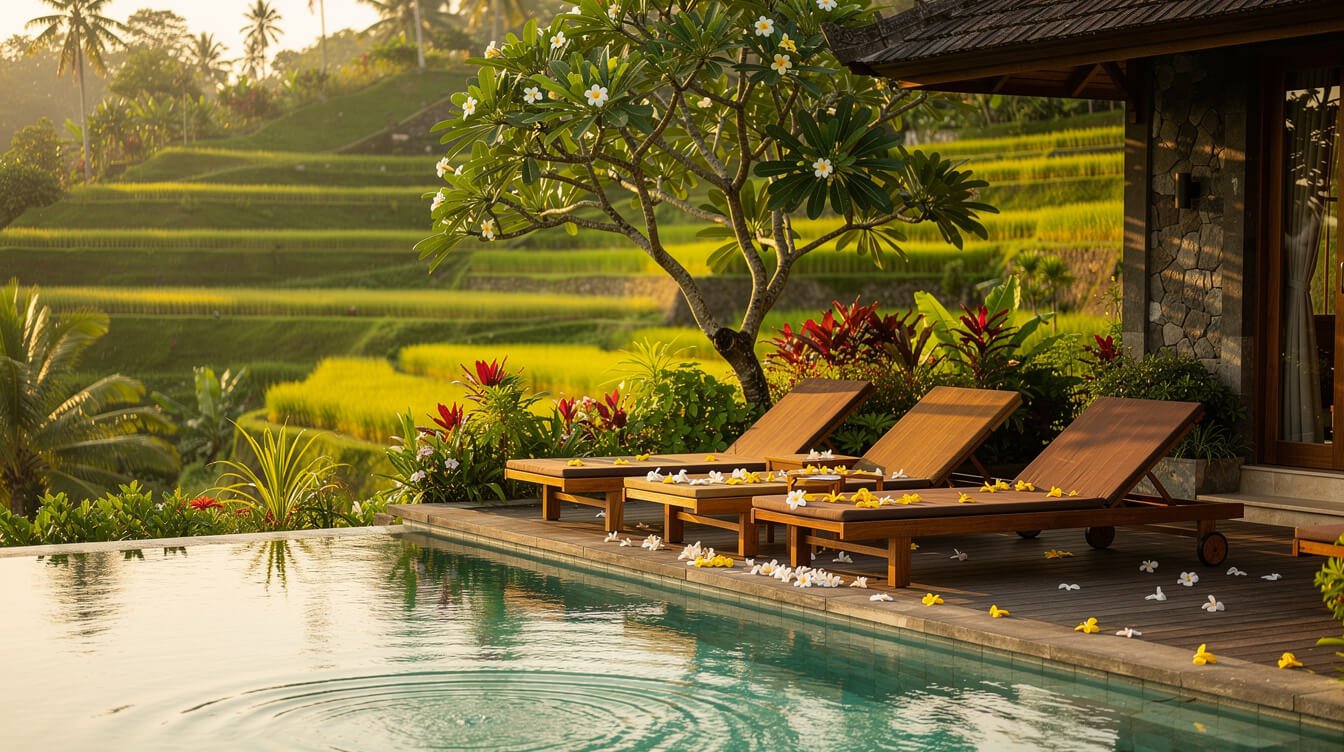
Three bedrooms, a full in-villa team who know which fields are being planted this week, and a cool pool waiting when you walk back in. Check availability for your dates.
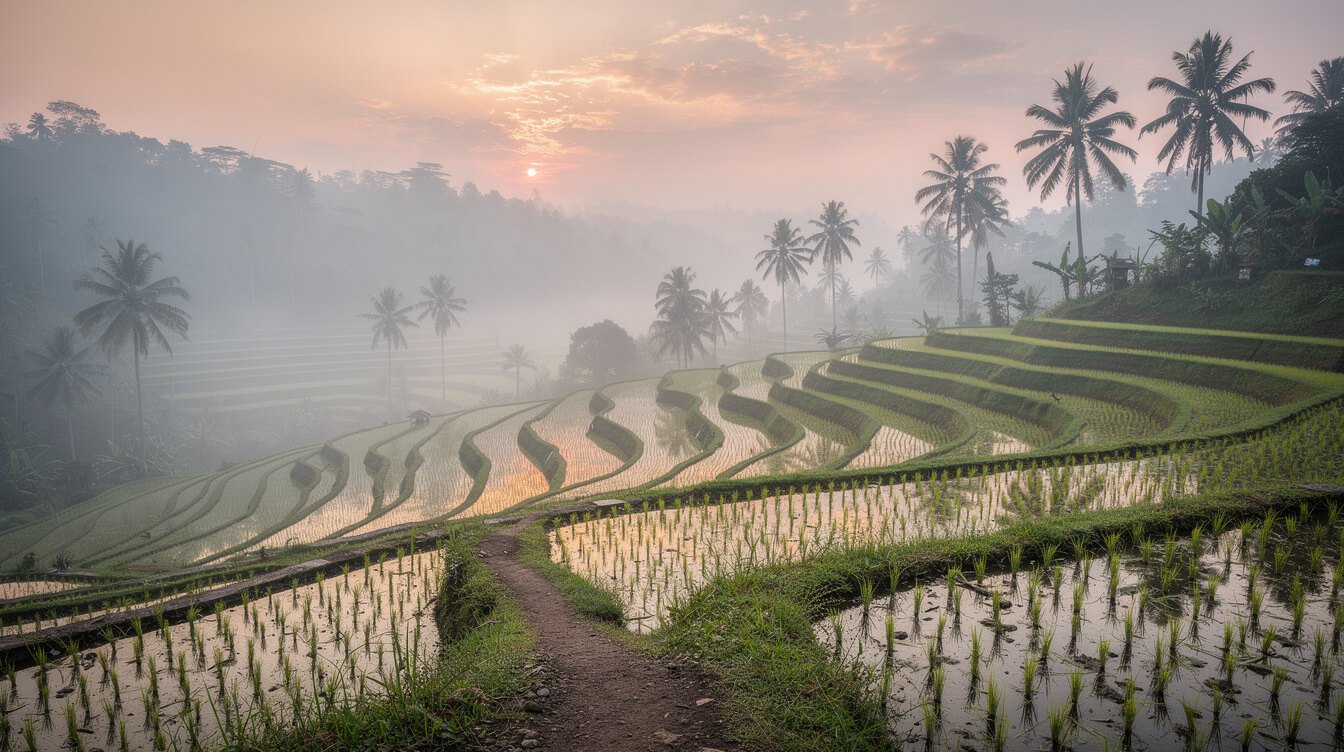
This is the stage that comes right after the egrets follow the plow. In a few weeks the stitches will thicken into the deep green you see on postcards, and months from now these same plants will need strings of tin to keep the birds away before the threshing. Because each farmer works to the timing of the subak water, fields side by side can be at completely different stages, which is why the rice changes color every week.
On a staffed villa Ubud stay, ask the team over breakfast which fields nearby are being planted. Planting moves fast, and a field is often finished in a morning or two, so local knowledge is what gets you there in time. Stay on the path, keep a respectful distance, and smile. You may be waved over.
What stays with you is the trust in it. A whole row of people stepping backward into the morning, sure of the ground they cannot see, leaving green behind them.

Join Our Newsletter
Fun, new, exciting Bali news — straight from the villa, every so often.