The Rasp From the Kitchen That Turns a Coconut Into Milk
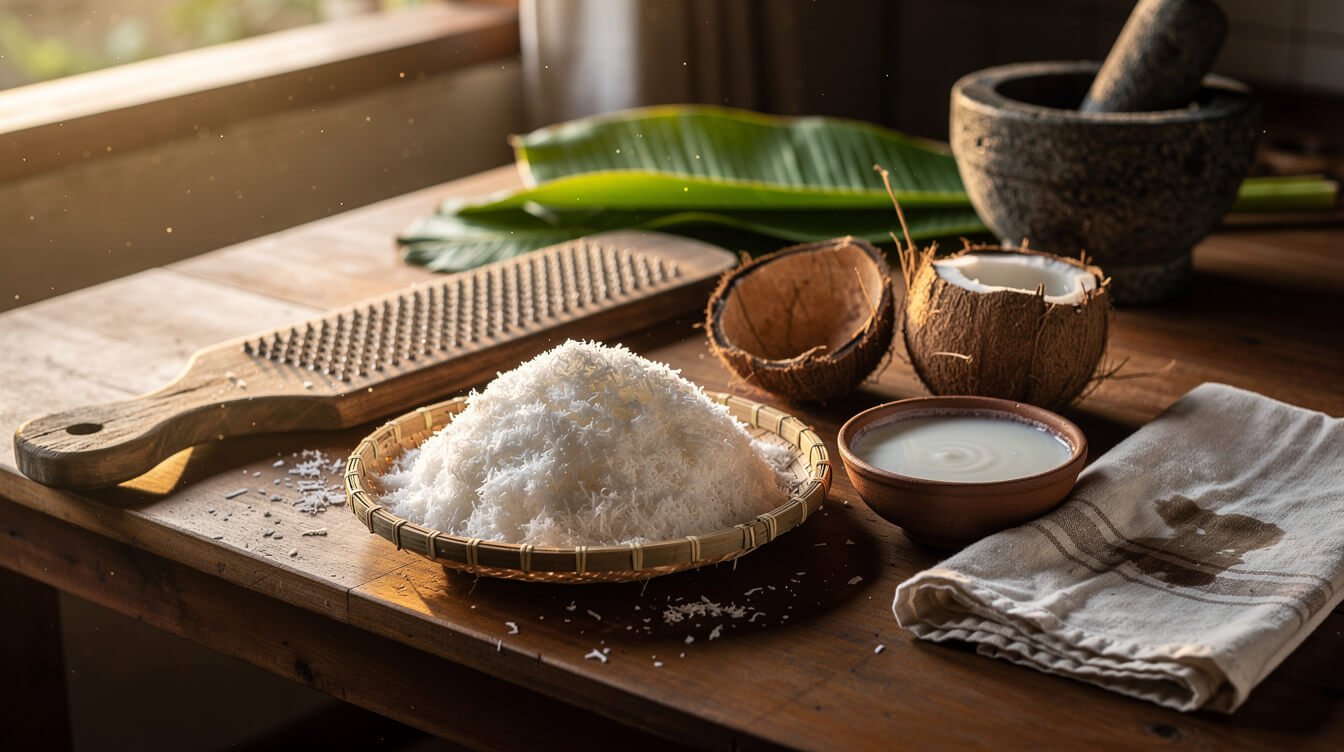
Late in the morning, a new sound joins the kitchen. It’s a soft, even rasp, like rain on a tin roof that never quite gets going. Wayan sits on a low stool with a long wooden board across his knees, its face studded with rows of small metal teeth, and draws half a coconut down it again and again. The coconut came from a neighbor’s palm, brought down the way we described in the man who walks up the coconut palm. Now it falls as snow into a woven bamboo tray.
In Bali, coconut milk doesn’t come from a can, at least not in a kitchen that has time. It comes from this. Wayan pours a little warm water over the grated flesh and works it with his hands, squeezing fistfuls until the water turns white and thick. He strains it through a cloth into a clay bowl. That first press is santan kental, the rich one. Then more water goes over the same gratings, and a second, thinner milk follows for the soups and curries that need a lighter touch.

Get a Free 3-Day Sample Itinerary
A walk down the lane, a long lunch, the rice fields in the last light of the day. We will send you a three-day Ubud rhythm built around the moments most visitors walk straight past.
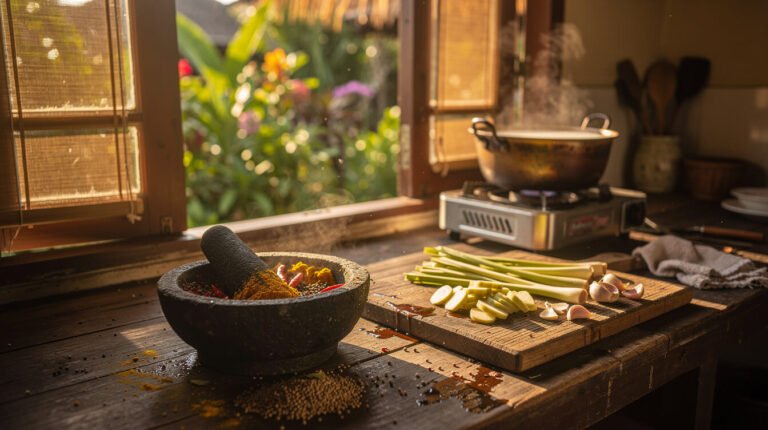
Fresh santan doesn’t keep. In the warm air it turns within hours, so it’s made the same day it’s cooked, which is why you hear the grater most mornings rather than once a week. Some of it goes into a yellow curry, simmered slow with turmeric and lemongrass. Some is saved for dessert. Spooned over black rice pudding, it turns the dark grains a soft violet. Not every coconut becomes milk, though. Some of the grated flesh is toasted in a dry pan until it smells of caramel, then tossed with greens and spice paste for urab. You’ll find that on almost any plate of nasi campur.
Nothing goes to waste. The squeezed-out gratings go to the chickens next door. The shell halves become ladles, fuel or little cups for offerings. It’s the same thrift we saw in the banana leaf that softens over the flame: Balinese cooking starts with a plant and treats every part of it with respect.

Book the Villa
Three bedrooms, a full in-villa team, and a pool of your own, and a kitchen where lunch still begins with a coconut and a grater. Check availability for your dates.
Here’s a small thing to try while you’re here. Taste a spoonful of the first press on its own, still warm from the squeeze. It’s sweet in a way canned coconut milk never is, faintly nutty and almost grassy. Then notice how often coconut milk turns up through your day, in the curry at lunch and the sweet in the afternoon. If you’d like to see it go further, a Balinese cooking class in Ubud usually starts at the same grater. One coconut, one board, one patient pair of hands, and it’s in almost everything Bali cooks.

Join Our Newsletter
Fun, new, exciting Bali news — straight from the villa, every so often.