Nasi Campur: How to Read Bali’s Mixed Rice Plate and Where to Eat It in Ubud
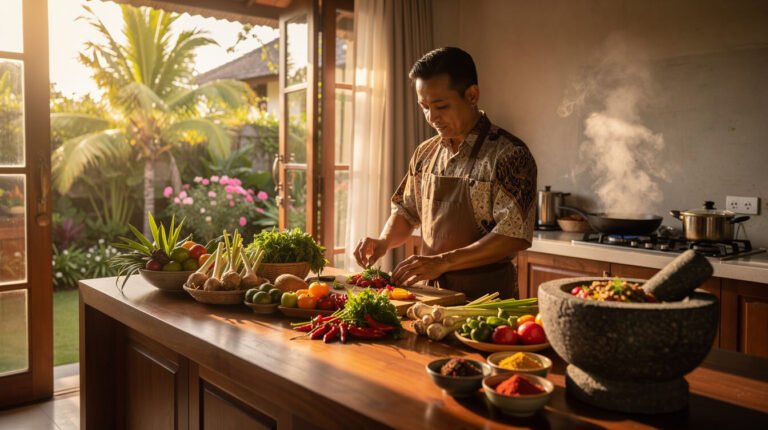
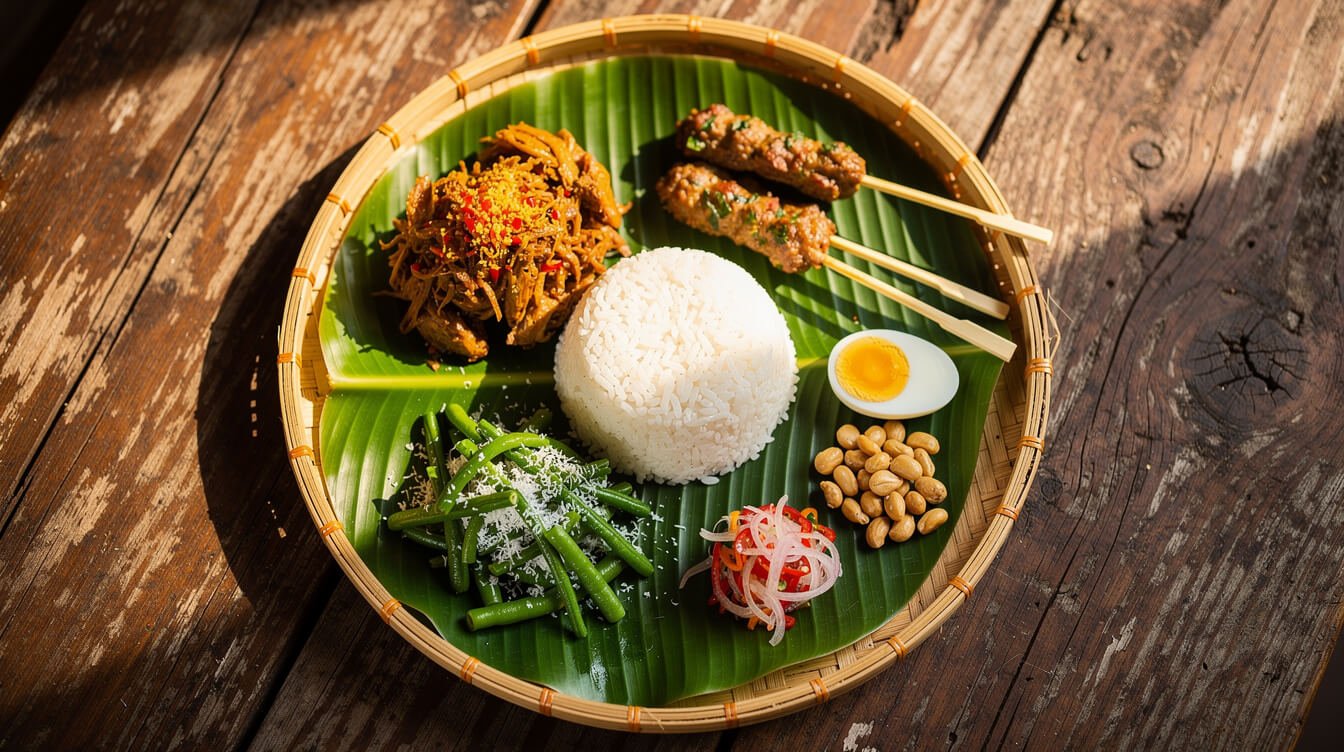
The first time you order nasi campur in Bali, it can feel like a small mystery set down in front of you. There is a warm mound of rice in the middle, and around it six or seven little portions, each a different color. Something shredded and red with spice. A coil of minced meat wrapped around a lemongrass stick. Green beans tossed with coconut. A spoonful of glistening raw chili relish that smells of lime leaf. Nobody explains it. You just eat, and somewhere around the third bite you understand why this is the plate people on the island eat every single day.
This guide is the explanation we wish every guest had before their first warung lunch. You will learn what nasi campur actually means, how to read a Balinese plate item by item, how it differs from nasi padang and nasi kandar, how ordering works at the glass case, and where to eat a genuinely good plate in and around Ubud. We will also cover vegetarian and halal versions, and what it is like when the plate comes to you at the villa table instead.
What Is Nasi Campur? Bali’s Mixed Rice Plate in One Sentence
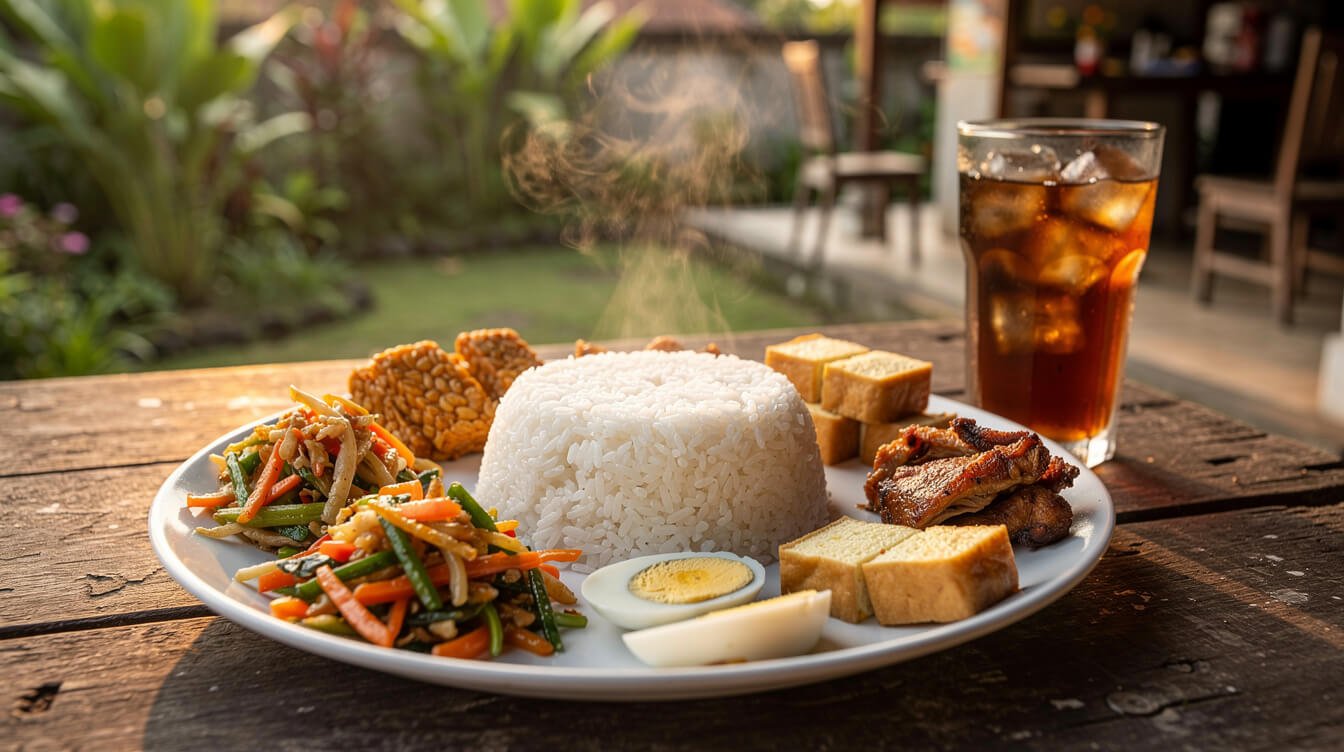
In Indonesian and Malay, nasi means cooked rice and campur means mixed. So nasi campur is simply “mixed rice”: a portion of steamed white rice served with small helpings of several side dishes on the same plate. That is the whole definition, and it is also why the dish changes so much from island to island, town to town and even kitchen to kitchen.
Across Indonesia you will meet the same idea under different names. In Java it is often called nasi rames. In Malaysia and Singapore, “nasi campur” usually means a self-service counter where you choose your own dishes, a style English speakers there sometimes call “economy rice.” In Bali it is often shortened to nasi Bali, and it carries a distinctly Balinese flavor thanks to the island’s own spice paste and its Hindu food traditions.
Why the Balinese version tastes different
Most of what makes a Balinese nasi campur taste of Bali comes from base genep, the “complete” spice paste that sits underneath curries, braises and vegetable dishes all over the island. Because Bali is a Hindu-majority island, pork also appears far more often than elsewhere in Indonesia, in roast suckling pig, in pork satay and in some versions of lawar. You will still find plenty of chicken, fish, tofu and tempeh plates, though. Some warungs serve nothing but chicken.
When people eat it
Nasi campur is everyday food, not a special-occasion dish. Many warungs cook everything early in the morning, lay it out in a glass case and sell until the trays are empty, often by mid-afternoon. Locals pick up a wrapped portion on the way to work, eat at a bench at lunch, or grab a plate between ceremonies. If you want the best choice of dishes, go between late morning and early afternoon, when the food is fresh and the case is full.
How to Read a Balinese Nasi Campur Plate
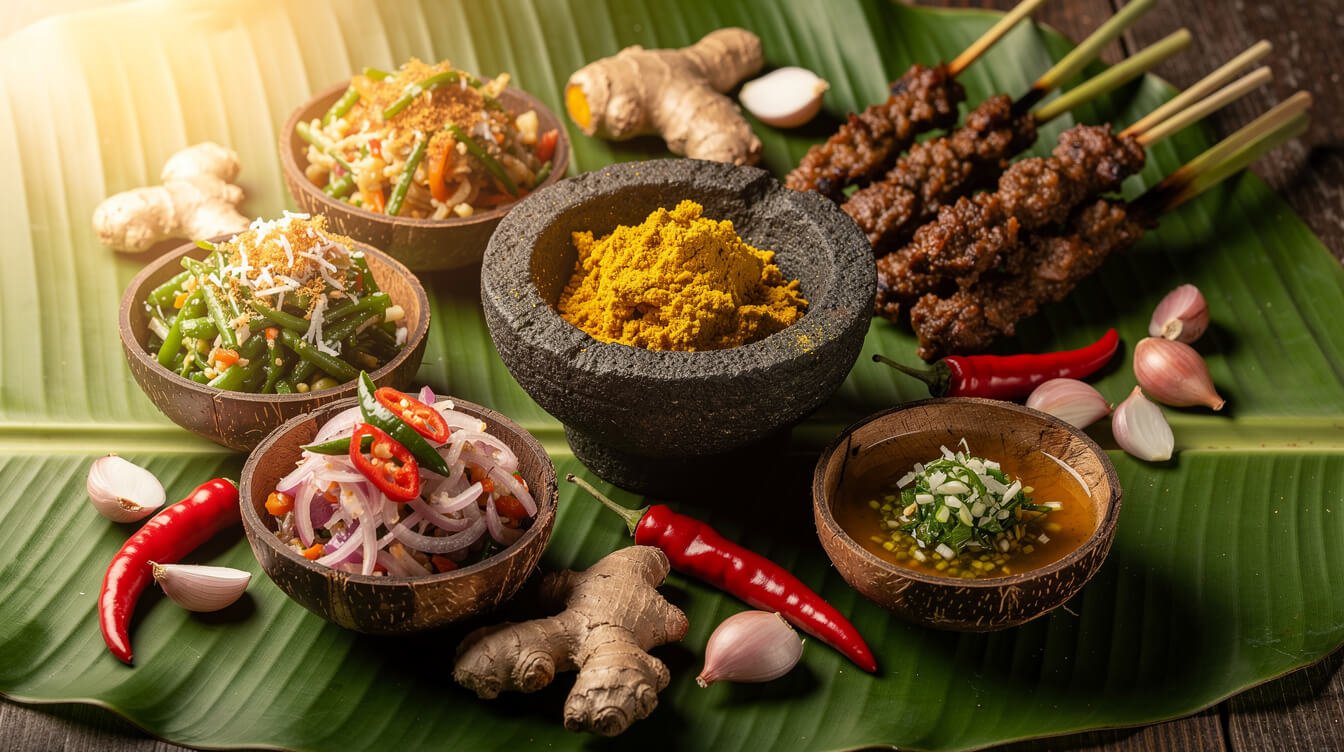
Every warung builds its plate a little differently, but the same components turn up again and again. Once you can name them, a nasi campur stops being a guessing game and becomes a menu you can read at a glance.
Sate lilit
The coil of minced meat on a lemongrass stalk or flat bamboo stick is sate lilit. Lilit means to wrap. Instead of threading cubes of meat onto a skewer, the cook mixes minced fish, chicken or pork with grated coconut and spice paste, then presses it around the stick and grills it. It is softer and more fragrant than the peanut-sauce satay you may know, and the lemongrass perfumes it from the inside.
Lawar
Lawar is a finely chopped mix of vegetables (often long beans or young jackfruit), grated coconut, spices and, in many versions, minced meat. It is one of the most important dishes in Balinese ceremonial cooking. Some traditional versions, sometimes called red lawar, are mixed with fresh blood. If that is not for you, you can simply ask, and white lawar or a vegetable-only version is common in tourist-friendly warungs.
Urab (or urap)
The bright green tangle of blanched vegetables tossed with toasted, spiced grated coconut is urab. It is cooling, slightly sweet and nutty, and it balances the heavier spiced meats on the plate.
Ayam betutu and ayam sisit
Ayam betutu is chicken rubbed and stuffed with base genep, then slow-cooked until it falls apart. On a nasi campur plate it often appears shredded, either as betutu or as ayam sisit (also called ayam suwir), chicken pulled into threads and fried with chili and spices. This is the red, deeply savory pile that most plates are built around.
Sambal matah
Matah means raw in Balinese. This sambal is a fresh relish of thinly sliced shallots, bird’s eye chilies, lemongrass and lime leaf, dressed with hot coconut oil and lime and often a little shrimp paste. It is bright, sharp and very hot. Taste it on its own first, then use it the way you would use a squeeze of lemon: a little goes a long way.
Base genep, the paste behind everything
You will not see base genep on the plate, but you will taste it in almost everything. A typical version pounds together shallots, garlic, chilies, galangal, ginger, turmeric, lesser galangal (kencur), candlenuts, coriander seed, pepper and shrimp paste. Every family guards its own balance. When people say Balinese food tastes “deep” or “warm,” this paste is usually what they mean.
The supporting cast
Round out the plate with a handful of fried peanuts, half a boiled egg (sometimes simmered in spiced sauce), fried tempeh or tofu, a few slices of cucumber and a shard of krupuk cracker. Some plates in the Ubud area replace part of the white rice with rice cooked with sweet potato or cassava, an older village habit that stretched the rice harvest.
If you want to go deeper into individual dishes, our guide to Balinese dishes to try covers the wider menu, and our explainer on babi guling, Bali’s spit-roast pork explains the famous pork plate that many nasi campur warungs borrow from.

Get a free 3-day sample itinerary
Warung lunches, rice terraces at dawn and slow afternoons by the pool. We will send you a free 3-day sample itinerary built around Ubud’s own rhythm, with our favorite places to eat along the way.
Nasi Campur vs Nasi Padang, Nasi Kandar and Nasi Ayam
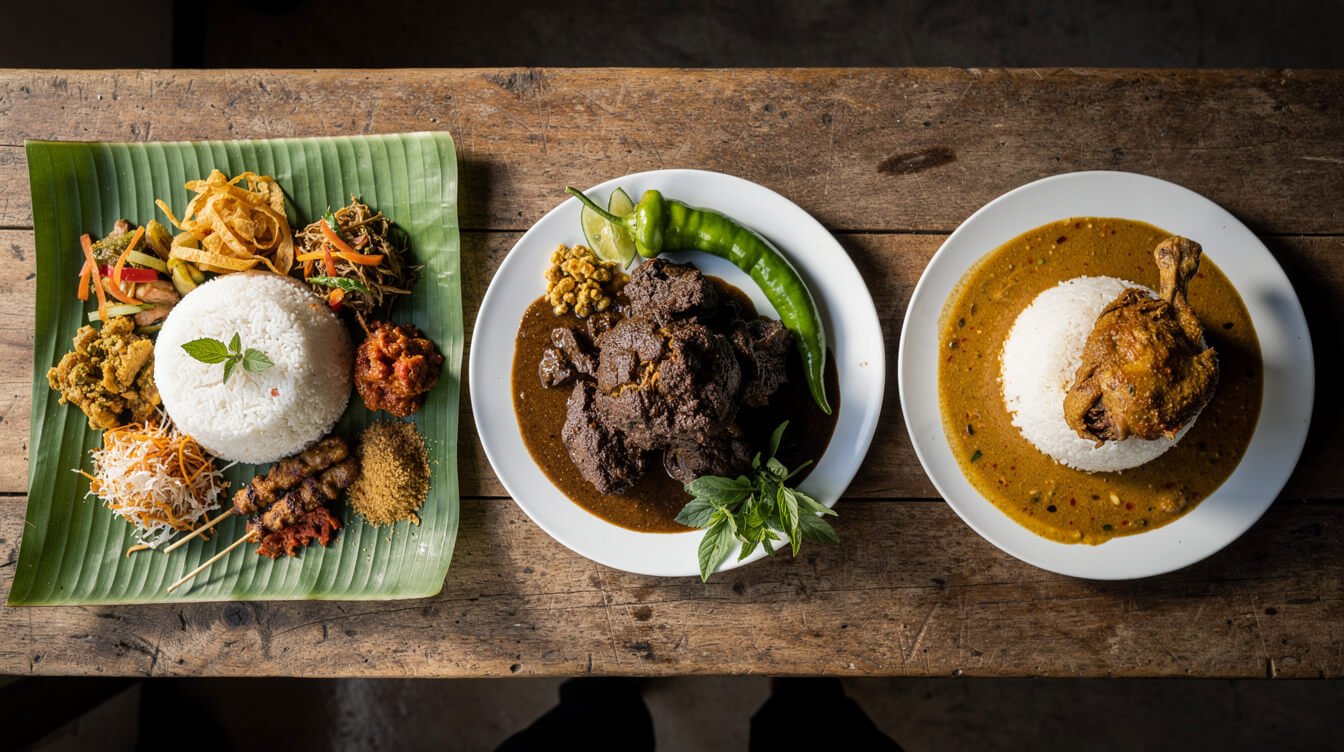
These names come up in the same conversations, and the questions people search most often are about how they compare. All of them are “rice plus several dishes,” but the origins, flavors and ordering rituals are quite different.
Nasi campur vs nasi padang
Nasi padang comes from the Minangkabau people of West Sumatra, and Padang restaurants are found all over Indonesia, including Bali. The food is rich with coconut milk and chili: beef rendang, curries called gulai, green chili sambal and fried chicken. Dishes are often stacked in pyramids of plates in the front window. In the traditional hidang style, the server sets many small plates on your table and you pay only for what you touch. A Balinese nasi campur is lighter, more herbal and built around base genep, lemongrass and sambal matah rather than coconut-milk curries.
Nasi campur vs nasi kandar
Nasi kandar is a Malaysian dish from Penang, created by Tamil Muslim traders. The name comes from the kandar, the shoulder pole vendors once used to carry their rice and curry pots through the streets. Its signature is curry gravy poured generously over the rice, often several gravies mixed together. Nasi campur in Bali is drier on the plate, with each component kept separate so you can taste them one by one.
Nasi campur vs nasi ayam
In Bali, nasi ayam literally means “chicken rice.” In practice it is a nasi campur in which every side is chicken-based: shredded betutu, chicken sate lilit, and crispy chicken skin, plus the usual urab, egg and peanuts. Some of the most famous plates around Ubud are actually nasi ayam, and they are a great choice if you want to avoid pork.
And nasi jinggo?
Nasi jinggo is the street-snack cousin: a small cone of rice with a few bites of spiced chicken, noodles and sambal, wrapped in banana leaf and sold from roadside stalls and scooters, often late at night. Think of it as nasi campur in miniature. We wrote about banana-leaf nasi jinggo here if you are curious.
How to Order Nasi Campur at a Warung
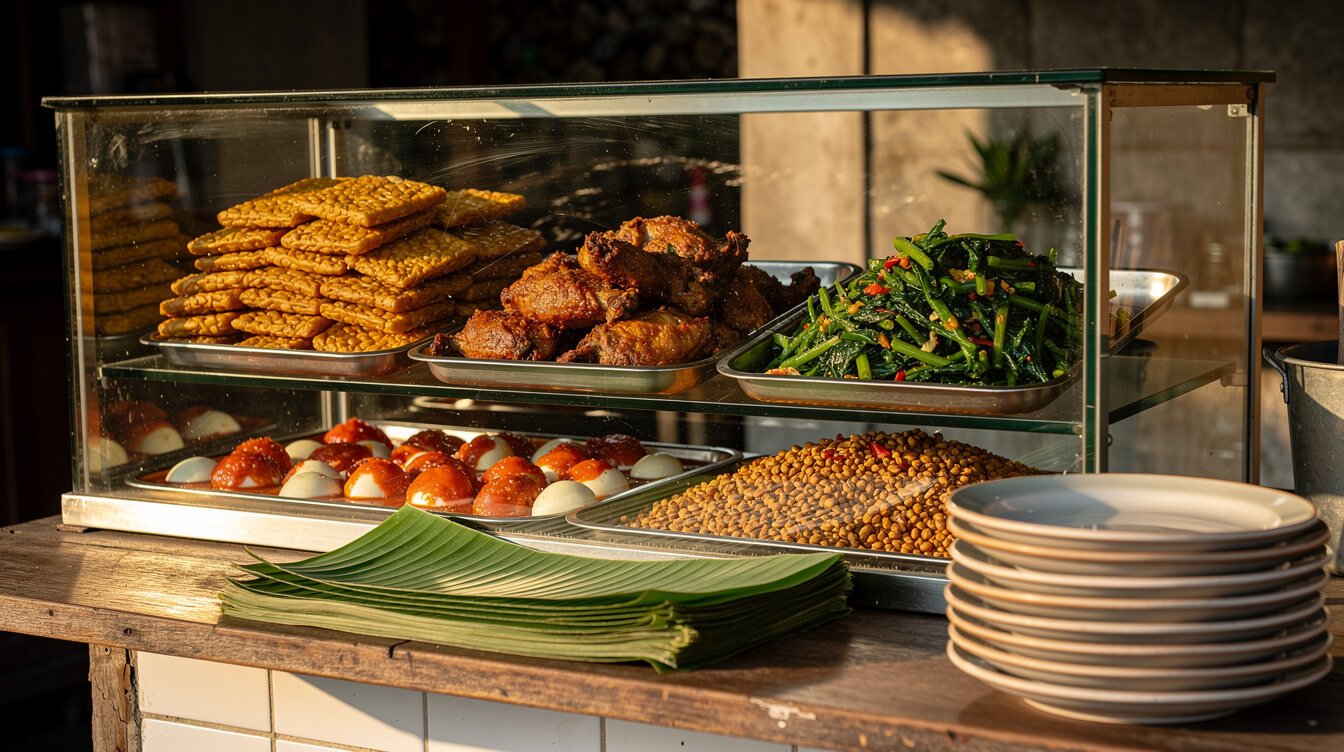
Ordering is easier than it looks, and a few words of Indonesian make it warmer. There are two main styles you will meet.
The one-dish warung
Many of the best-loved spots serve only one plate, perhaps with a chicken or vegetarian choice. You sit down, the plate arrives, and the price is fixed. Drinks are the only real decision: iced tea (es teh), fresh juice or young coconut.
The glass case
At a pick-your-own warung, the food is displayed in a glass cabinet at the front. The server scoops rice onto a plate or a square of banana leaf, then looks at you and waits. Point at what you want, one item at a time. The price depends on what you choose, and meat costs more than vegetables, so if no prices are posted, it is fine to ask “berapa?” (how much?) before you sit down. Keep small notes handy; our guide to Balinese currency explains which bills to carry.
Useful words at the counter
- Makan di sini – to eat here
- Bungkus – to take away, wrapped
- Tidak pedas – not spicy (helpful, though “not spicy” in Bali can still be lively)
- Ada babi? – is there pork?
- Tanpa daging – without meat
- Enak (or jaen in Balinese) – delicious
Our Bali language guide has the rest of the phrases that open doors at a warung, including how to say thank you in Balinese.
Pork vs halal
In Bali, assume pork may be present unless the warung tells you otherwise. Sate lilit, lawar and the spiced meat on a mixed plate can all be pork. If you do not eat pork, ask “ada babi?” or look for a nasi ayam specialist, or for one of the many Muslim-run warungs with a halal sign, which are often run by families from Java or Lombok.
How to eat it
There is no wrong way, but here is a gentle approach. Taste each component on its own first so you meet its flavor. Then start combining small bits with the rice. Add the sambal last, a little at a time. Locals often eat with their right hand, but every warung will hand you a spoon and fork without a second glance.
Where to Eat Nasi Campur in Ubud
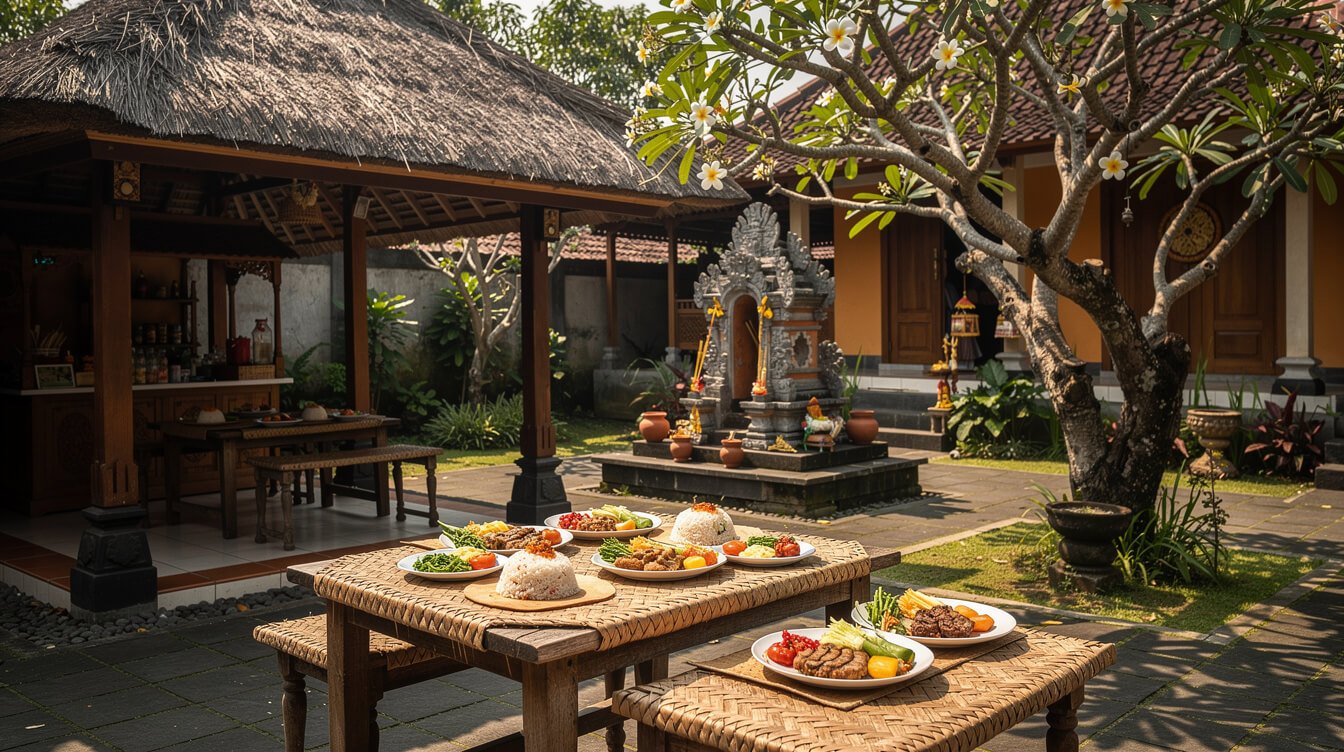
Most nasi campur roundups online focus on south Bali: Jimbaran, Sanur, Seminyak and Denpasar. Ubud has its own quietly famous plates, several of them in family compounds just outside the center. We checked each of these at the end of October 2026, but small warungs can change hours or close for village ceremonies, so check recent reviews or their social pages before you set out.
Nasi Ayam Kedewatan Ibu Mangku (Kedewatan)
A long-running Ubud institution on Jalan Raya Kedewatan, a short drive west of central Ubud. It serves essentially one thing: Balinese nasi ayam, with sate lilit, shredded spiced chicken, crisp chicken skin, urab, egg, peanuts and a fiery sambal matah. You eat in open pavilions in a traditional compound, and it is popular with Indonesian families, which is always a good sign.
Warung Bu Ade (Peliatan)
On Jalan Sukma Kesuma in Peliatan, southeast of the center, Bu Ade has been cooking since 2002. The menu is nasi campur Bali, with or without chicken, and the vegetarian plate is a genuine choice rather than an afterthought. Everything is prepared before dawn, and the warung closes when the food runs out, often in the afternoon. Come early.
Warung Mek Juwel (Sayan)
Down a back road in Sayan, just west of Ubud near the Ayung River valley, this small family warung serves a generous nasi campur ayam with views over the fields. It is a breakfast-and-lunch place that closes in the late afternoon. It takes a little effort to find, which is part of the charm.
Sun Sun Warung (central Ubud)
Tucked into a family compound on Jalan Jembawan, opposite the Ubud post office, Sun Sun is the easiest of these to reach on foot from the center. It serves a broader Balinese menu, and its nasi campur is a frequent favorite in reviews. You sit at low tables in a calm courtyard, and it gets busy at lunch.
Warung Biah Biah (central Ubud)
On Jalan Goutama, a lane full of small eateries, Biah Biah serves home-style Balinese food in small tapas-sized portions. You can build your own version of a mixed plate one little dish at a time. It is a good choice for a relaxed dinner, since it opens at 11:00 and stays open into the evening, when the morning warungs have closed.
For more places to eat beyond nasi campur, see our guides to the best warungs near Ubud, where to eat authentic Balinese food in Ubud and what to eat at Ubud’s street food market. If you are planning a longer food-focused trip, our wider Ubud restaurant guide covers sit-down dinners too.

Book the Villa
Three bedrooms, a private pool, and a team who know the warungs worth the drive. Come home from lunch in Kedewatan to a quiet garden and a cool swim. Check availability for your dates.
Vegetarian, Halal and Gentle-Stomach Nasi Campur
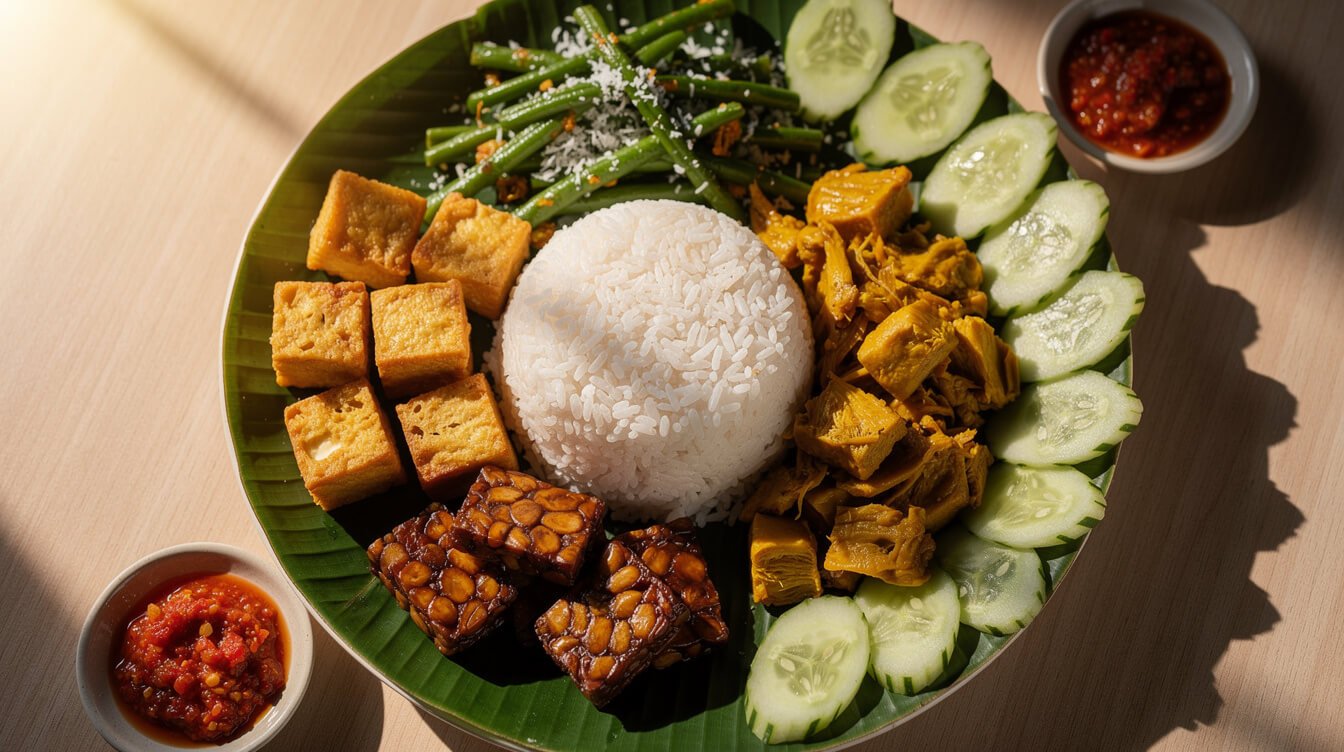
A Balinese mixed plate is one of the easiest meals on the island to adapt. Rice, tofu, tempeh, egg, urab and vegetable curries are standard, so a meat-free plate never feels like a compromise.
Vegetarian and vegan plates
Ask for nasi campur sayur (vegetable mixed rice) or say “tanpa daging.” Good meat-free components include fried tofu, sweet soy tempeh (tempe manis), young jackfruit curry (gori or nangka), urab and corn fritters. One thing to know: shrimp paste (terasi) is a common ingredient in sambal and in base genep, so strict vegans should ask, and should lean on dedicated vegetarian warungs. Ubud is one of the best places in Asia to eat plant-based; our list of vegan restaurants in Ubud includes several that serve a full plant-based nasi campur.
Halal plates
Choose a chicken-focused nasi ayam warung or a Muslim-run warung, and ask “ada babi?” if you are unsure. Beef appears less often in Balinese cooking, while chicken, duck and fish are everywhere.
Keeping your stomach happy
Because warung food is usually cooked in the morning and served at room temperature, timing matters more than location. Eat where it is busy, so trays turn over quickly. Go for lunch rather than late afternoon. Start with a little sambal until you know your limits. Our honest guide to Bali belly covers the rest, including what to do if your stomach complains. And if you want to linger after lunch, pair your plate with a cup of Bali coffee; our piece on luwak coffee explains why the everyday kopi Bali is often the better choice.
Nasi Campur at the Villa: A Family-Style Table
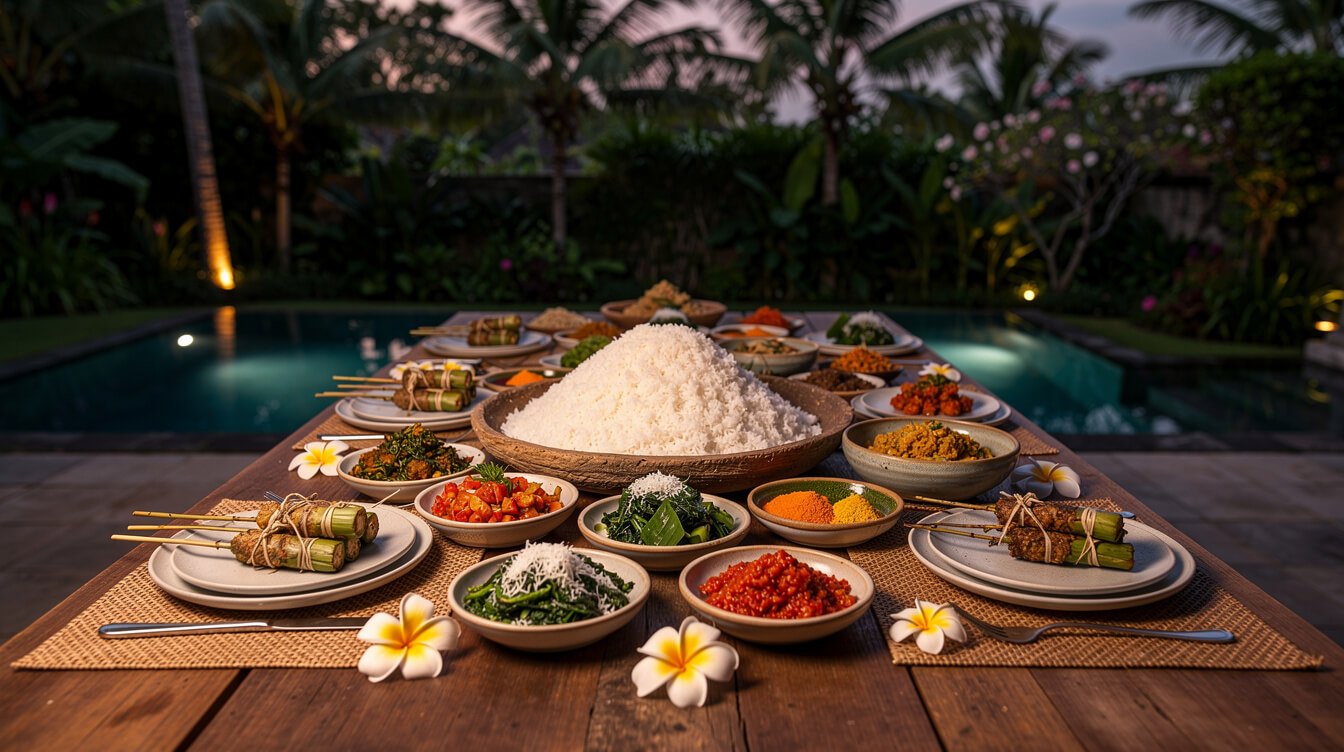
There is a lovely moment when nasi campur stops being a plate and becomes a table. At home, Balinese families rarely serve a fixed plate. The rice comes in one big basket, the dishes come in bowls, and everyone helps themselves, taking a little of this and a little of that until the meal has its own rhythm.
That is the spirit we love bringing to the table at Villa Amrita. If you would like to try a Balinese spread during your stay, tell the team when you plan your trip, and we will talk through what is possible for your group: dishes, spice levels, vegetarian or pork-free versions, and timing around your days out. It is a gentle way to meet the flavors you saw in the warung glass case, and to ask all the questions you were too shy to ask at the counter. You can read more about how in-villa dining works in our guide to a private chef villa in Ubud.
A simple nasi campur day around Ubud
- Late morning: drive to Kedewatan or Sayan for a nasi ayam lunch while the trays are full.
- Afternoon: walk the rice field paths, then rest by the pool through the hottest hours.
- Evening: a relaxed tapas-style Balinese dinner in town, or a family-style table at home on the terrace.
Food is also one of the easiest ways into Balinese culture. The same spice pastes that flavor your lunch are cooked in vast quantities for temple festivals, and lawar is made communally for ceremonies. Our introduction to Bali’s religion explains the ceremonial calendar you will see unfolding around you.
Nasi Campur FAQ
What is nasi campur made of?
Steamed white rice with small portions of several side dishes. In Bali that usually means shredded spiced chicken or pork, sate lilit, lawar or urab, an egg, fried peanuts, tempeh or tofu, a cracker and sambal matah.
What does nasi campur mean in English?
“Mixed rice.” Nasi means cooked rice and campur means mixed.
Is nasi campur spicy?
Some components are, especially the sambal and the shredded chicken. You can ask for “tidak pedas” (not spicy) and keep the sambal on the side.
Does nasi campur in Bali contain pork?
It often can. Bali is mostly Hindu, and pork is common. Ask “ada babi?” or choose a nasi ayam or halal warung.
What is the difference between nasi campur and nasi goreng?
Nasi goreng is fried rice, cooked together in one wok. Nasi campur is plain steamed rice with separate side dishes around it.
When is the best time to eat nasi campur?
Late morning to early afternoon, when warungs have just finished cooking and the full range of dishes is still available.
Final Thoughts: Let the Plate Teach You Bali
Nasi campur is the island in miniature. In one plate you taste the spice paste a grandmother pounded at dawn, the coconut grated in a family compound, the chilies from a field you passed on the road. You also taste the rhythm of a place where food is cooked early, shared generously and eaten without fuss.
So next time a plate of nasi campur lands in front of you, slow down. Taste each little portion on its own. Ask what it is called. Point, smile, say “jaen.” By the end of your stay you will be reading the glass case like a local, and you may find that the simplest plate in Ubud is the one you miss most when you fly home.

Join our newsletter — fun, new, exciting Bali news
New warung finds, ceremony days worth planning around, and small stories from the garden and kitchen. Delivered now and then, always worth opening.