Indonesian Desserts: 15 Sweets to Taste in Bali (and Where Ubud Hides Them)
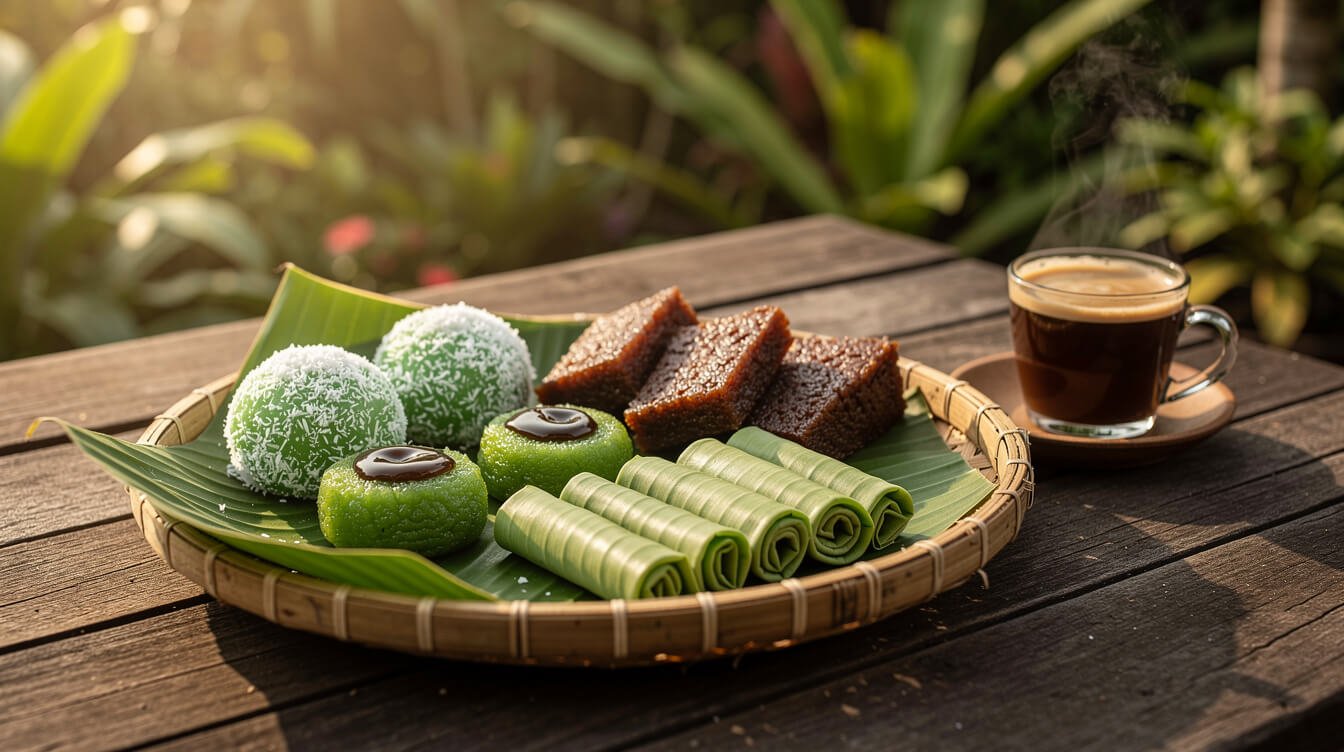
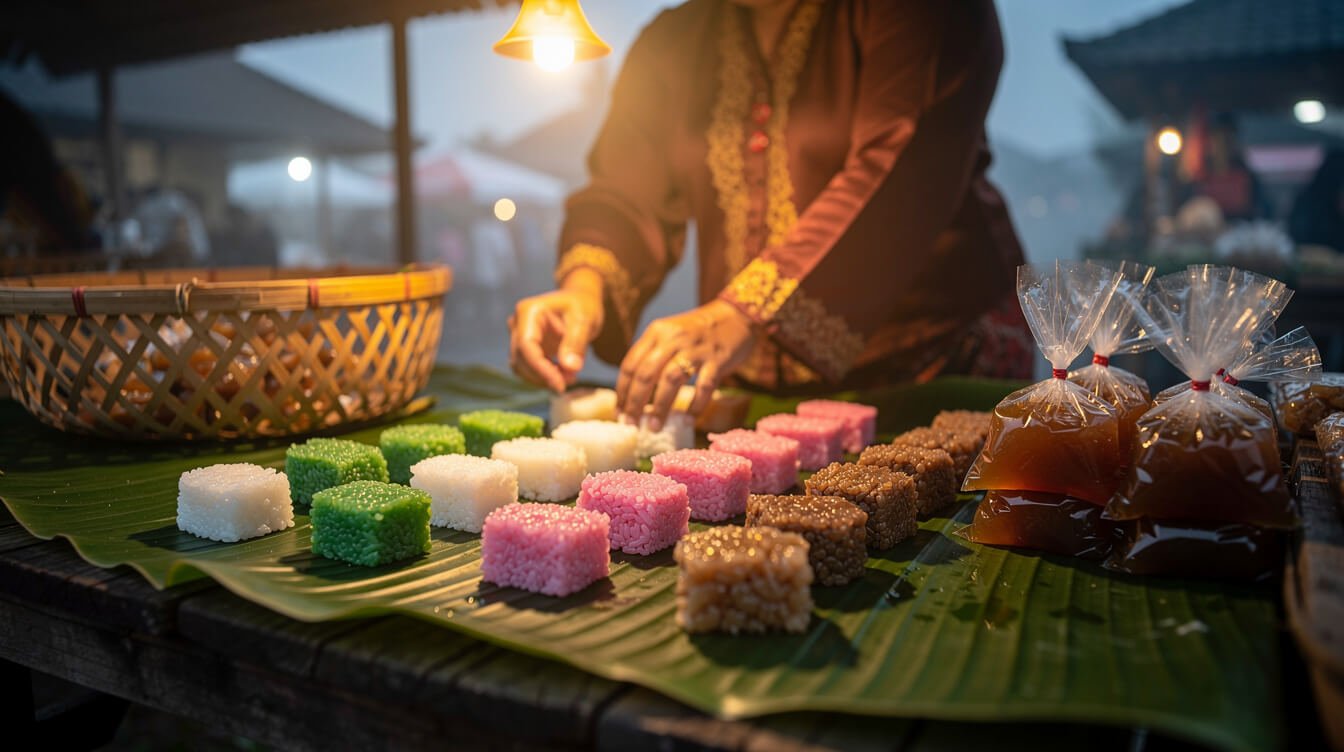
It is a quarter to seven and the market is already half sold out. A woman behind a low table lifts a square of banana leaf and there they are: little green rounds sticky with palm-sugar syrup, rice cakes in pink and white, a stack of rolled pandan crepes still warm enough to fog the plastic beside them. You point, she wraps, and for the price of a coffee you are holding your first Indonesian dessert of the trip. Only here, in Bali, nobody would quite call it dessert. It is jaja, and it belongs to the morning.
Most lists of Indonesian desserts are written from Java or from a recipe blog, and they rarely tell you where a traveler actually finds these sweets. This guide is written from Ubud. You’ll learn what “dessert” means in Indonesian, the Balinese sweets to taste first, the national classics you’ll also find on the island, how sweets live inside temple offerings, where to find them around Ubud, the pantry that makes them taste the way they do, and a short top-five cheat sheet with vegan and allergy notes. We finish with a quick FAQ.
What “Dessert” Means in Indonesia: Jajan, Kue and Balinese Jaja
If you ask how to say dessert in Indonesian, you’ll hear two answers. Pencuci mulut means, quite literally, “mouth washer”: the sweet thing that clears the palate after a meal. Hidangan penutup, the “closing dish,” is the more formal phrase you’ll see on hotel and restaurant menus. Both are real, and both are a little beside the point, because most Indonesian sweets are not eaten after dinner at all.
The words people actually use every day are kue (cakes, from steamed rice cakes to Dutch-style baked ones) and jajan or jajanan (snacks, the things you buy from a cart or a basket between meals). In Bali the word is jaja, sometimes written jaje. It covers everything from a crisp fried rice cracker to a soft steamed parcel of sticky rice, and it covers two very different jobs. Jaja is breakfast and afternoon snack. Jaja is also offering, arranged on palm-leaf trays and placed before the gods.
That double life shapes how you experience sweets here. Most jaja are made early, sold early and eaten fresh. They are built from a short list of ingredients: rice flour and glutinous (sticky) rice, coconut, palm sugar and pandan. With those four or five things, Balinese cooks produce an astonishing range of textures: chewy, bouncy, crumbly, silky, crisp. Once you know that, a market table stops looking like a jumble of colors and starts to read like a menu.
For the wider picture of the island’s food, from lawar to babi guling, our guide to Bali food is a good companion. Here, we stay on the sweet side.
The Balinese Sweets to Taste First
Start with these. They are the jaja you’re most likely to meet at a morning market or a village warung around Ubud, and together they show you the whole Balinese sweet vocabulary.
1. Jaja laklak
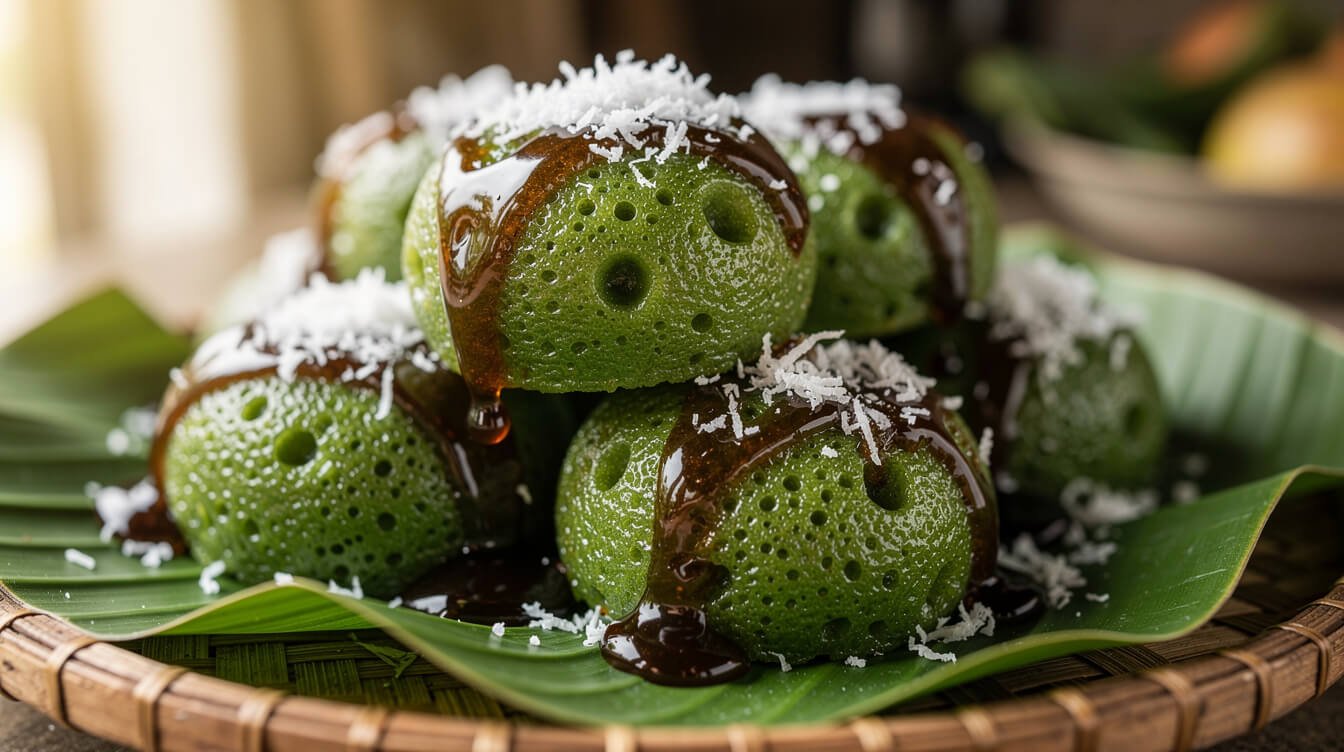
Small, round, soft rice-flour cakes cooked in a mold of shallow hollows, traditionally over a wood or charcoal fire. Many are tinted green with pandan or suji leaf. They’re served with a snowfall of fresh grated coconut and a pour of dark palm-sugar syrup. Warm laklak are one of the great small pleasures of a Bali morning: slightly crisp at the base, spongy on top, smoky and sweet.
2. Klepon
Green balls of glutinous rice dough wrapped around a nugget of palm sugar, boiled until they float, then rolled in grated coconut. The sugar melts as they cook, so the first bite releases a small rush of hot syrup. Take that first bite slowly, and keep your mouth closed. Klepon are found all over Indonesia and are one of the country’s most loved sweets. (Future: link to dedicated post.)
3. Pisang rai
A whole piece of banana wrapped in rice-flour batter, boiled until the coating turns soft and translucent, then rolled in coconut. It is simple and gentle, and it is often eaten with coffee. If you like bananas but find fried banana fritters heavy, pisang rai is your sweet.
4. Dadar gulung
A thin green pandan crepe rolled around unti, a filling of grated coconut cooked down with palm sugar. It’s fragrant, a little chewy and very easy to love. Note that the crepe batter usually contains egg.
5. Jaja batun bedil
The name roughly means “bullet seeds,” after the small rounded shape. Chewy little dumplings of glutinous rice flour are boiled, then served in a thick palm-sugar sauce, often with coconut milk or grated coconut on top. It comes in a small bowl or a banana-leaf cone and is filling enough to carry you to lunch.
6. Jaja wajik
Sticky rice cooked slowly with coconut milk and palm sugar until it turns glossy and brown, then pressed and cut, often into diamonds. Dense, chewy and rich, wajik appears at markets and on ceremony tables alike.
7. Bubur injin (Balinese black rice pudding)
Black glutinous rice (injin in Balinese) simmered with a pandan leaf and palm sugar into a deep purple porridge, then finished with a spoonful of salted coconut cream. Across Indonesia it’s called bubur ketan hitam. Many warungs in Ubud serve it as a dessert, and it makes a lovely breakfast too. It’s naturally dairy-free and usually vegan. (Future: link to dedicated post.)
8. Jaja uli
Steamed sticky rice pounded with grated coconut while still warm, then shaped into a firm slab and sliced. Uli can be eaten soft or fried until golden at the edges. It sits at the heart of many ceremonial offerings, often paired with begina, a crisp cracker of sun-dried, fried sticky rice.
9. Es daluman
Strictly a drink, but nobody will stop you calling it dessert. Daluman is a soft green jelly made from the leaves of a local vine, served in a glass with coconut milk and palm-sugar syrup and sometimes ice. On a hot Ubud afternoon it is as cooling as anything on the island.
You can read more about the soul of everyday Balinese eating in our post on Balinese cultural foods to try in Ubud, and about the woman with the sweet basket who stops at village gates each morning in The Basket of Sweets That Stops at the Gate by Seven.
Indonesian Dessert Classics You’ll Also Find in Bali
Bali is part of a big, diverse country, and plenty of the sweets you’ll meet here came from Java, Sumatra or the colonial kitchens of the Dutch. These six are the national classics that turn up most often on Bali menus and street carts.
10. Es campur
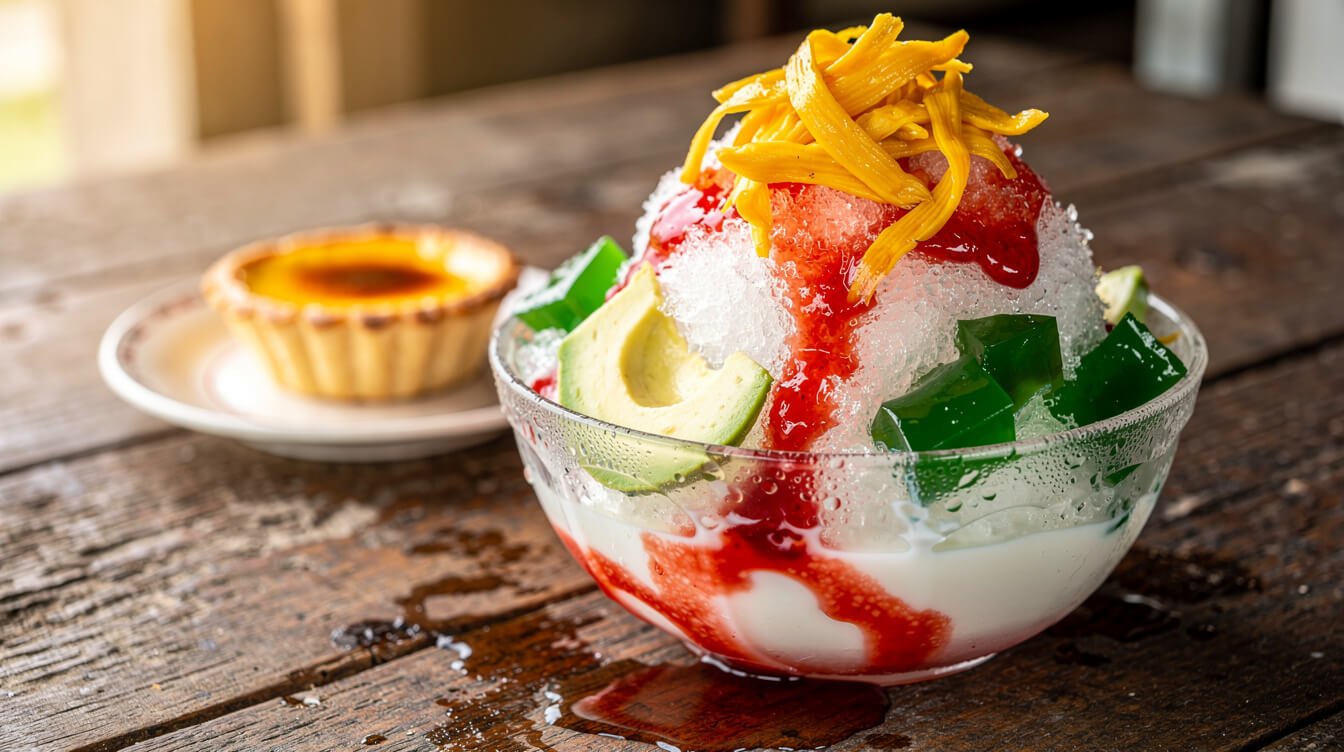
“Mixed ice”: a bowl of shaved ice heaped with fruit (jackfruit, avocado, young coconut), jellies, sometimes tapioca pearls or sweet beans, then flooded with syrup and coconut milk or sweetened condensed milk. Every warung makes its own version. It is the obvious answer when the afternoon heat sets in.
11. Cendol (dawet)
Short green noodles of rice or mung-bean flour, colored with pandan, served in coconut milk with palm-sugar syrup and ice. In Java it’s often called dawet. It’s cool, a little salty, deeply fragrant, and usually vegan.
12. Kolak
Chunks of banana, sweet potato or pumpkin simmered in palm-sugar coconut milk with pandan. It’s famous across Indonesia as a sweet for breaking the fast in Ramadan, and in Bali you’ll find it at warungs and markets through the year.
13. Martabak manis
The night-market hero. A thick, spongy griddle pancake cooked in a heavy pan, brushed generously with butter, filled with chocolate sprinkles, cheese, crushed peanuts or condensed milk, then folded and cut. It’s rich, it’s not traditional to Bali, and you’ll be glad you tried it. Look for the carts that set up at dusk.
14. Pie susu
Bali’s favorite edible souvenir: a small, crisp tart filled with a smooth milk-and-egg custard. You’ll see boxes of them stacked in souvenir shops and at the airport, often in flavors like chocolate or cheese. They travel well and make an easy gift to bring home.
15. Lapis legit
A layered spice cake with roots in the colonial-era Dutch kitchen, baked one thin layer at a time under a top heat until it shows a dozen or more fine stripes. It’s heavy with butter and egg yolks, perfumed with cinnamon, nutmeg and clove, and it’s traditionally a celebration cake. Bakeries and some supermarkets in Bali sell it by the slice or whole.
Want to see these sweets in a fuller street-food picture? Our guide to what to eat in Ubud’s street food market walks you through the savory side, too.

Get a free 3-day sample itinerary
Want to fit a dawn market, a cooking class and a warung afternoon into your trip? See how three easy days from Ubud can unfold, with the best hours for jaja built in. We will send you a free 3-day sample itinerary.
Sweets in Offerings and Ceremony: Jaja on the Temple Tray
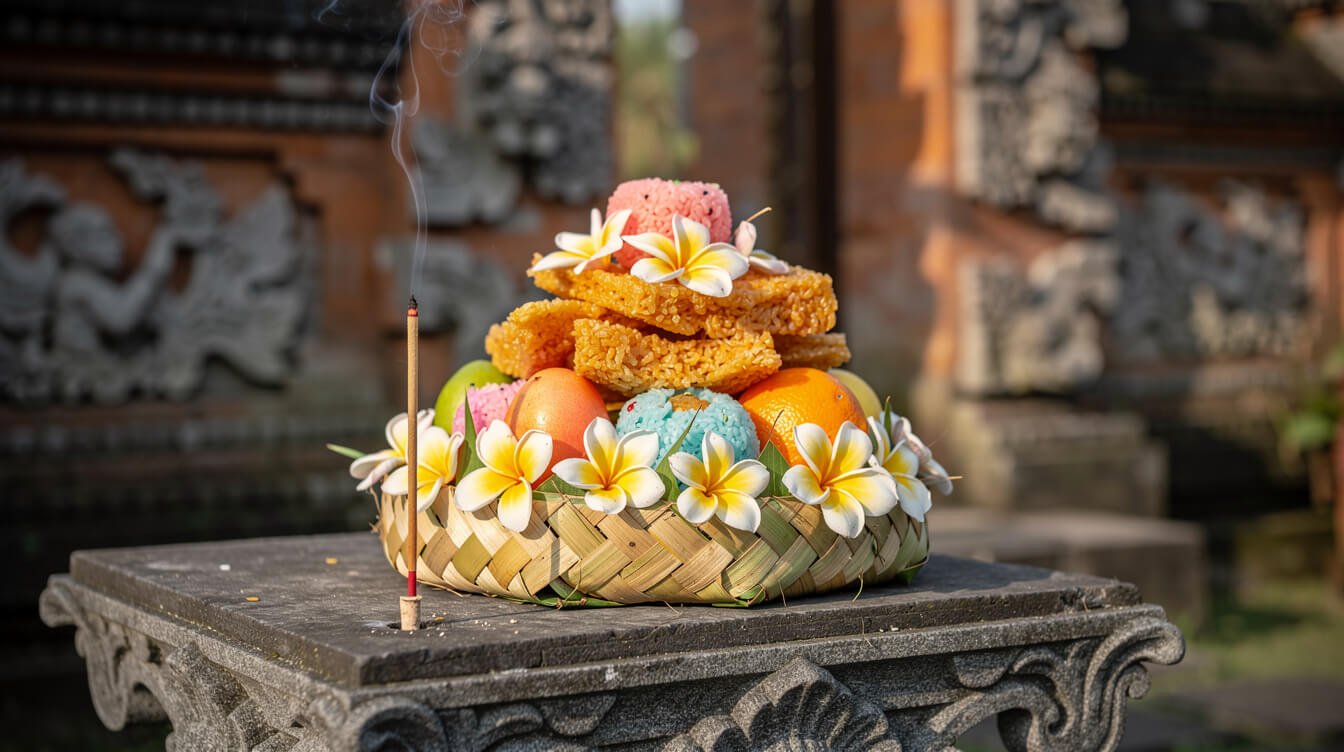
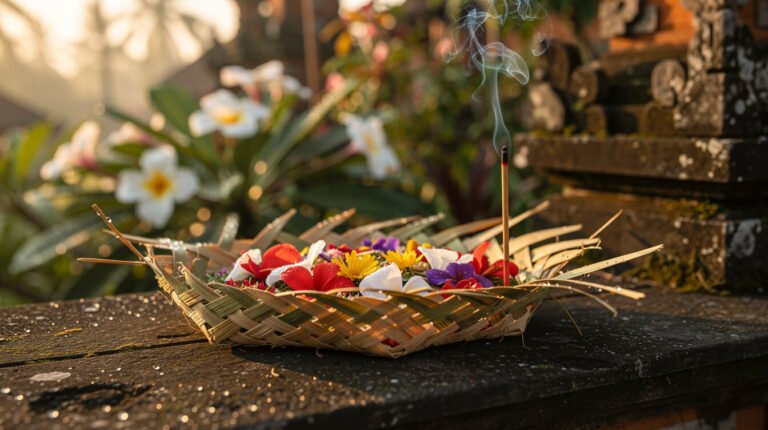
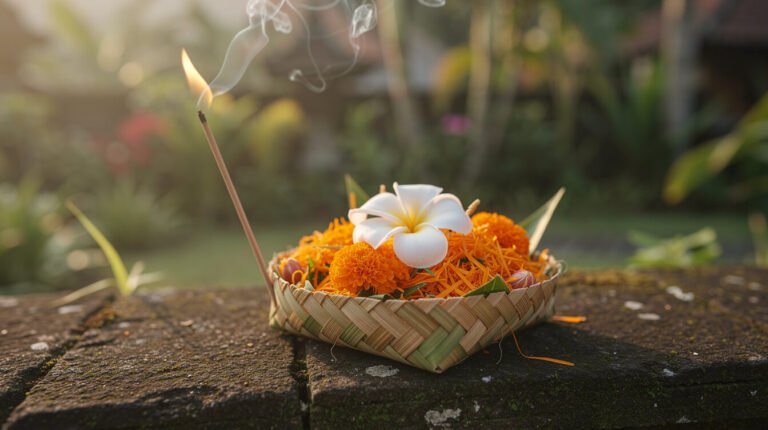
Walk past any temple in Ubud on a festival day and look closely at the offerings women carry on their heads. Between the fruit and the flowers you’ll see jaja: fried rice crackers, colored rice cakes, little packets in banana leaf. In Bali, sweets are not only something to eat. They are something to give.
The everyday canang sari, the small palm-leaf tray of flowers you’ll see on doorsteps, sometimes carries a biscuit or a sweet. The larger offerings called banten are often built around rice cakes. Jaja uli and begina in particular appear in many ceremonial offerings, and Balinese sources describe them as symbols of balance, fertility and the continuation of life.
The calendar tells you when to look. In the run-up to Galungan, the festival when ancestral spirits are welcomed home, one day is named for jaja itself: Penyajaan, two days before Galungan, is traditionally when families make the rice cakes that will go into their offerings and onto their tables for guests. Kitchens fill with people shaping, coloring and frying dough. The next Galungan falls on 13 January 2027, so Penyajaan lands on 11 January. If you’re in Ubud then, you may smell it before you see it. Our guide to Galungan in Bali explains the whole festival.
One rule of etiquette matters here. A sweet that’s handed to you is food: accept it with your right hand and a smile, or decline gently. A sweet that’s arranged on an offering is part of a sacred object. Leave it where it is, don’t step over it, and don’t photograph people as they pray. Once an offering has been presented and the ceremony is over, families often eat the food themselves. That’s their call, never yours.
Where to Find Indonesian Desserts in Ubud
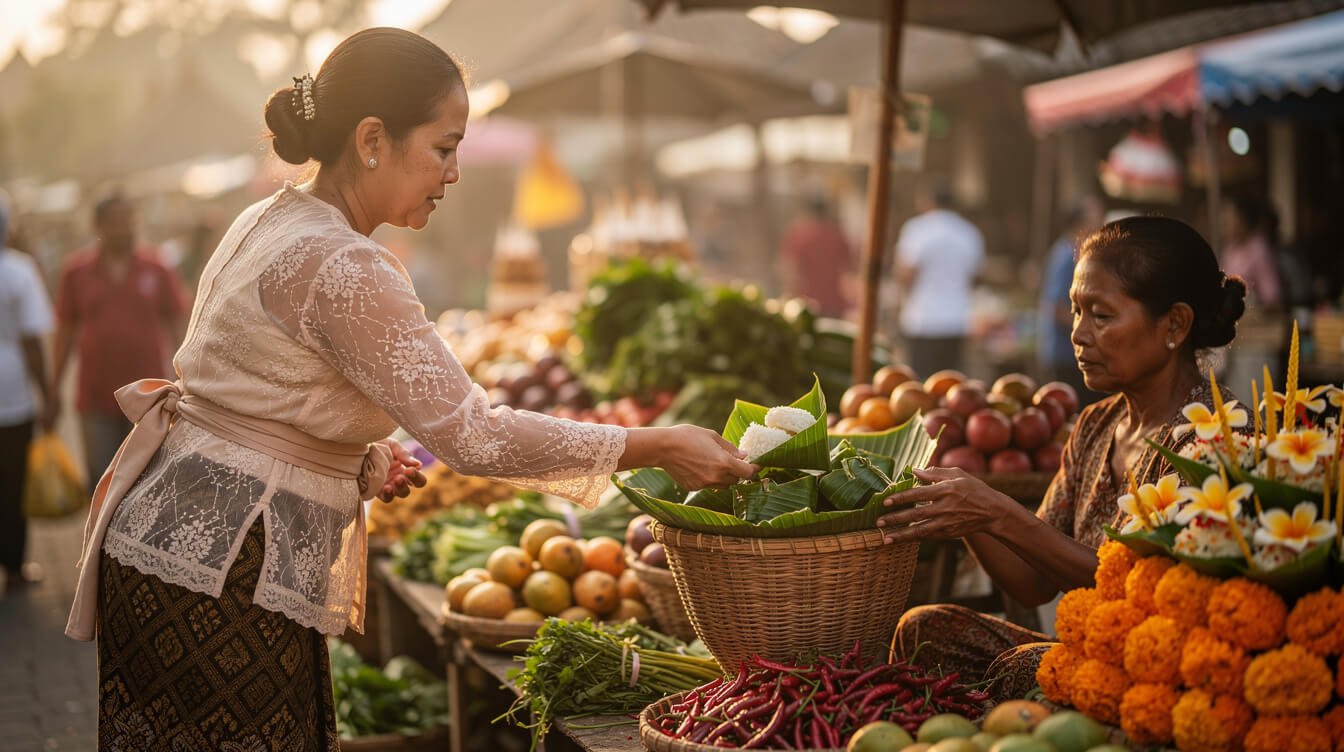
Bali’s sweets live at dawn. Most jaja are made in the small hours, sold in the morning and gone before noon, because coconut and rice cakes are at their best fresh. Plan around that and you’ll eat very well.
The Ubud morning market
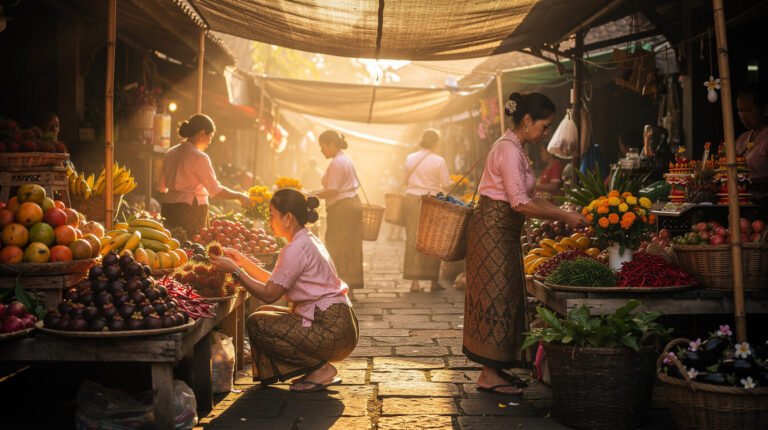
The traditional market in central Ubud, on the same block as the Art Market and across from the palace, starts trading long before the souvenir stalls open. From around dawn, vendors sell produce, flowers for offerings and prepared Balinese food, including baskets and tables of jaja. Come between roughly 6 and 8 am. By 8 or 9 the best of it is gone. Bring small notes, point at what looks good, and expect to pay very little. Our Ubud market guide covers both the morning market and the art market in detail.
Village markets and the sweet basket
Smaller villages around Ubud have their own morning markets, usually smaller and quieter, and many have a jaja seller who walks or rides a scooter from gate to gate with a basket on the back. If you see one, wave. A mixed bag is the easiest way to taste five sweets in five minutes.
Warungs
Local warungs, the small family-run eateries, are where you’ll find bubur injin, kolak, es campur and es daluman later in the day. Some keep a glass cabinet of jaja by the till. If you’re eating a nasi campur lunch, it’s worth asking whether there’s anything sweet in the kitchen.
Night carts and bakeries
Martabak manis carts set up in the evening along the bigger roads. Pie susu and lapis legit are sold at bakeries, supermarkets and souvenir shops, with the biggest choice on the road south toward Denpasar.
Cooking classes
To understand jaja, make them. Many Ubud cooking classes include a sweet, often klepon, dadar gulung or bubur injin, and watching palm sugar disappear inside a ball of green dough is a small revelation. See our Balinese cooking class guide for how to choose a class.
Closer to home
Staying at Villa Amrita? Ask the team whether a Balinese sweet can join your breakfast one morning, or which market they’d send you to for the best laklak. Local knowledge is the shortest route to the freshest jaja.
Book the Villa
Come back from the morning market to your own quiet pool and garden. Three bedrooms and a private pool in Ubud, with a team on hand to help plan your days and point you to the best sweet stalls nearby. Check availability for your dates.
The Pantry Behind the Sweetness: A Short Glossary
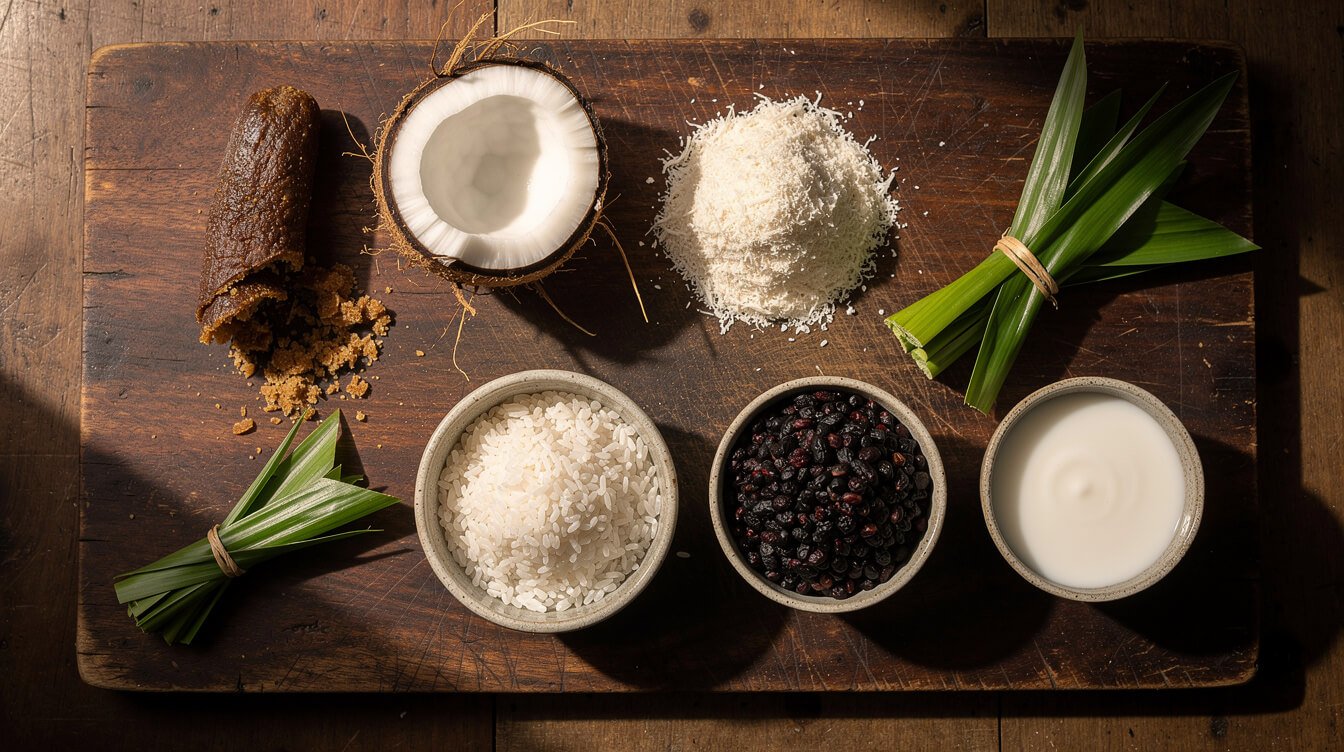
Learn these few words and you’ll be able to guess what’s inside almost any Indonesian dessert.
- Gula Bali / gula merah (palm sugar). Made by boiling down the sap of palm flowers until it sets into dark, fudgy cakes or cylinders. It tastes of caramel and smoke and is less sharply sweet than white sugar. On the island, Balinese palm sugar is often called gula Bali; the Javanese version is gula Jawa.
- Kelapa (coconut). Used twice: freshly grated as a topping or filling, and pressed into santan, coconut milk. The first, thicker press makes cream; the second, thinner one makes milk for cooking. We wrote about the grating, in sound and scent, in The Rasp From the Kitchen That Turns a Coconut Into Milk.
- Pandan. Long, glossy leaves with a vanilla-like, grassy fragrance. Knotted into a pot of rice or crushed for juice, pandan is the green perfume of Indonesian sweets.
- Daun suji. A leaf used mostly for its strong green color, often alongside pandan for scent.
- Ketan (glutinous rice). Sticky rice, white or black (ketan hitam, or injin in Bali). It gives chew and body to wajik, uli and bubur injin.
- Tepung beras / tepung ketan. Rice flour and glutinous rice flour. The first makes tender cakes like laklak; the second makes bouncy dough like klepon.
- Daun pisang (banana leaf). The wrapper, the plate and the steaming tray. It adds a faint green aroma to anything cooked inside it. See The Leaf That Softens Over the Flame Before Lunch.
- Tape. Fermented cassava or sticky rice, sweet and lightly boozy. It appears in some offerings and desserts, so skip it if you avoid alcohol.
Top 5 Indonesian Desserts to Try (Plus Vegan and Allergy Notes)
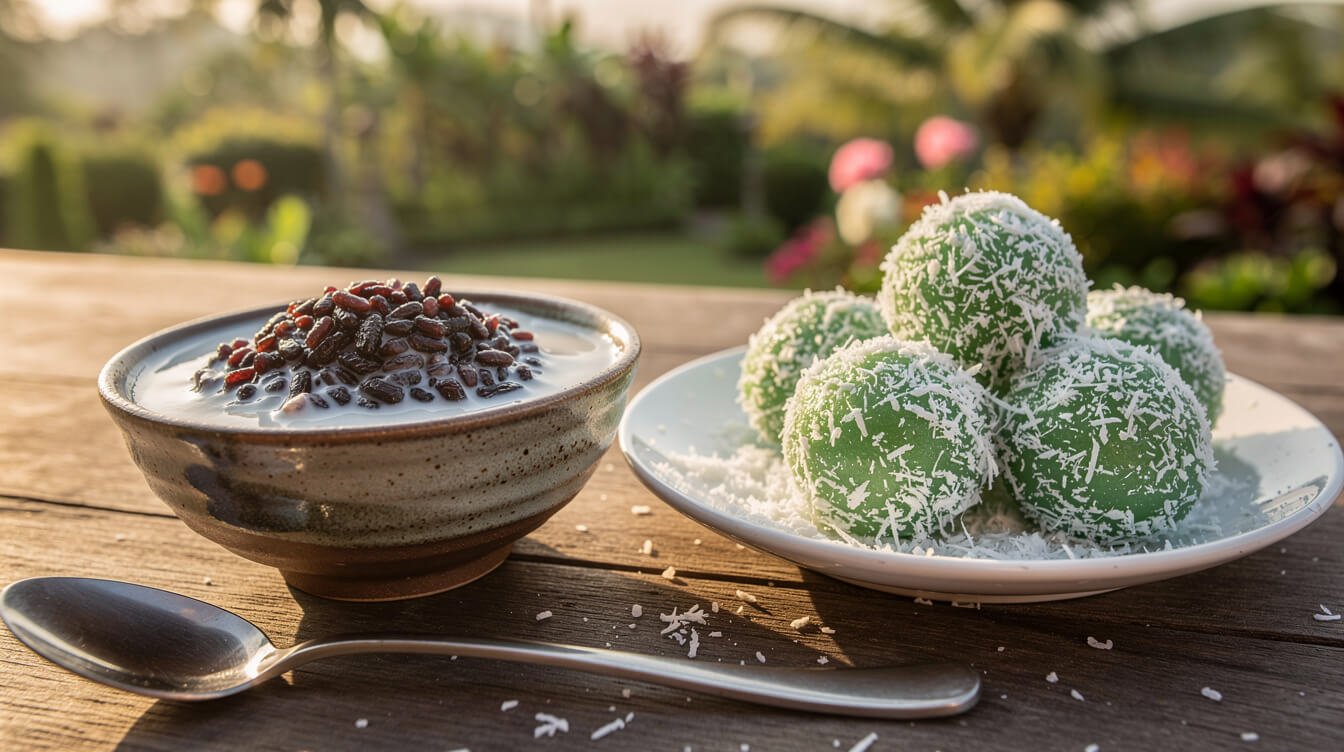
Short on time? If someone asks you for the five best Indonesian desserts, these are a very good answer, and you can taste all of them within a few days in Ubud.
- Klepon: the palm-sugar burst. Morning market.
- Jaja laklak: warm, smoky, with coconut and syrup. Morning market or village stall.
- Bubur injin: black rice and coconut cream. Warung, any time of day.
- Es campur: shaved ice for a hot afternoon. Warung.
- Martabak manis: the indulgent night-time pancake. Evening cart.
For vegans
Good news: many traditional jaja are built only from rice, coconut, palm sugar and leaves, so they are vegan by default. Klepon, laklak, pisang rai, wajik, uli, batun bedil, bubur injin, cendol and kolak usually contain no animal products. Watch for egg in dadar gulung crepes, egg and dairy in pie susu, martabak manis and lapis legit, and condensed milk on es campur. Recipes vary from stall to stall, so ask: “Pakai telur? Pakai susu?” (With egg? With milk?) For more plant-based eating, see our guide to vegan restaurants in Ubud.
For gluten, nut and coconut allergies
Most Balinese sweets are rice-based rather than wheat-based. That doesn’t make them safe for celiacs: market kitchens are shared, and martabak, pie susu and lapis legit are made with wheat flour. Peanuts are common on martabak and in some snacks. Coconut is in almost everything, so a coconut allergy rules out most jaja. If your allergy is serious, carry a written card in Indonesian and buy from places where you can ask questions.
For sensitive stomachs
Fresh coconut is wonderful and also spoils quickly in tropical heat. Buy jaja early, from busy stalls with a quick turnover, and eat them the same morning. Be a little more careful with shaved ice from street carts during your first few days. Our guide to avoiding Bali belly has the rest of the advice.
Indonesian Dessert FAQ
What is dessert in Indonesian?
The common words are pencuci mulut (“mouth washer”) and the more formal hidangan penutup (“closing dish”). In everyday speech people talk about kue (cakes) and jajan (snacks). In Bali, traditional sweets are called jaja.
What is the most famous Indonesian dessert?
Klepon is probably the most widely known traditional sweet, with es campur, cendol and martabak manis close behind. In Bali, jaja laklak and bubur injin are the local favorites to look for.
Are Indonesian desserts very sweet?
Some are, especially martabak and anything with condensed milk. But many traditional jaja are gentler than Western desserts: palm sugar is earthier than white sugar, and salted coconut balances the sweetness.
When is the best time to buy Balinese sweets?
Early morning. Most jaja are made overnight and sold from dawn until about 8 or 9 am. Warungs serve puddings and iced sweets through the day, and martabak carts open in the evening.
Can I bring Indonesian sweets home?
Fresh jaja don’t keep, so eat them in Bali. Boxed pie susu and well-wrapped lapis legit travel much better. Check your home country’s food import rules before you pack anything.
Final Thoughts: Follow the Sweet Basket
You could spend a week in Bali and never eat a single Indonesian dessert, if you only ever looked for them after dinner. Look in the morning instead. Follow the smell of laklak smoke to a village stall. Point at the green thing and the brown thing on a banana leaf. Sit on the step with a coffee and let the palm sugar run down your fingers. These sweets are small and cheap and made by hand, every day, by people who learned from their mothers, and they tell you more about Bali than many grand dinners will.
So set an early alarm, bring small change and an appetite, and taste the island while it’s still warm.

Join our newsletter — fun, new, exciting Bali news
Ceremony dates like Galungan and the full moons, food and culture stories, entry-rule changes and small moments from Ubud. Delivered now and then, always worth opening.