Sacred Monkey Forest Ubud Bali: Your Complete Visitor Guide
There is a place in Ubud where the jungle swallows you whole. Where ancient stone temples stand half-hidden beneath roots and vines, and a thousand wild eyes watch from the treetops. The monkey forest Ubud Bali — officially known as the Sacred Monkey Forest Sanctuary — is one of those rare places that stops you mid-step and reminds you that you are very much a visitor in someone else’s world.
This 12-hectare sanctuary in the heart of Ubud is home to more than 1,260 Balinese long-tailed macaques. But it is far more than a wildlife attraction. Within its dappled shade, three sacred temples dating back to the 14th century hold deep spiritual significance for the Balinese people who still worship here today. For travelers staying in Ubud, a morning at the monkey forest is one of those genuinely unforgettable experiences — the kind you find yourself telling stories about for years.
This guide covers everything you need to know: what to expect from the macaques, how to explore the temples, practical safety tips, entrance fees, the best time to visit, and how to build your monkey forest visit into the perfect Ubud stay.

What Is the Sacred Monkey Forest Ubud Bali?
The Sacred Monkey Forest Sanctuary — or Mandala Wisata Wanara Wana in Balinese — is a nature reserve and temple complex in the Padangtegal village district of Ubud. Established in the mid-20th century and managed by the local banjar (community association), it protects a dense patch of tropical lowland forest that would otherwise have been swallowed by Ubud’s expanding streets.
The sanctuary spans roughly 12 hectares (about 30 acres) of jungle, rivers, and sacred grounds. Walking its winding stone paths, you pass under towering trees so old their roots have claimed the pathways for their own. Carved stone dragons guard river crossings. Frangipani flowers drift down from branches. The air is cool, green, and alive.
What makes the monkey forest Ubud Bali extraordinary is this layering of the sacred and the wild. The sanctuary exists not as a tourist attraction first, but as a living spiritual site — the macaques are considered sacred by the local Balinese community, believed to guard the temples from evil spirits. Visitors are welcomed into this space, but the forest sets the terms.
The sanctuary is open daily from 08:30 to 18:00. Entrance fees as of 2026 are approximately IDR 100,000–120,000 for adult foreign visitors, with discounted rates for children.

The Resident Macaques: Life in the Treetops
You will hear them before you see them. A rustle in the canopy. The sharp chattering call of a macaque asserting itself over a rival. Then, as you round a corner in the path, there they are — dozens of Balinese long-tailed macaques going about their day with complete indifference to the humans threading between them.
The sanctuary is home to more than 1,260 macaques divided into several social groups, each with its own territory within the forest. These are wild animals with complex social hierarchies: dominant males, protective mothers carrying infants on their bellies, juveniles tumbling and wrestling on the stone steps. Watching them interact is extraordinary — the politics are unmistakably human.
The macaques are remarkably accustomed to visitors and will come extraordinarily close. Young ones will sit inches from the path. Mothers will nurse their babies at eye level. The occasional bold male will test a visitor’s bag strap or investigate a dangling camera lens. This proximity is part of what makes the experience so memorable — and also what makes understanding the rules so important before you enter.
Feeding schedules happen three times daily (around 08:00, 12:00, and 15:00) when sanctuary staff distribute sweet potato and corn. Visiting around these times means heightened activity — the entire forest seems to wake up as troops converge on the feeding areas, creating some of the most spectacular wildlife scenes you will witness anywhere in Bali.
🌴 Free Ubud Travel Guide
Get our insider guide to Ubud — best restaurants, hidden temples, rice terrace routes, and tips only locals know. Delivered straight to your inbox.

Three Ancient Temples at the Heart of the Forest
Many visitors arrive for the macaques and leave having barely noticed the temples. That would be a genuine loss. Three sacred temples stand within the monkey forest Ubud Bali, and together they tell a story of Balinese Hinduism, community ritual, and a relationship with the natural world that has persisted for seven centuries.
Pura Dalem Agung Padangtegal
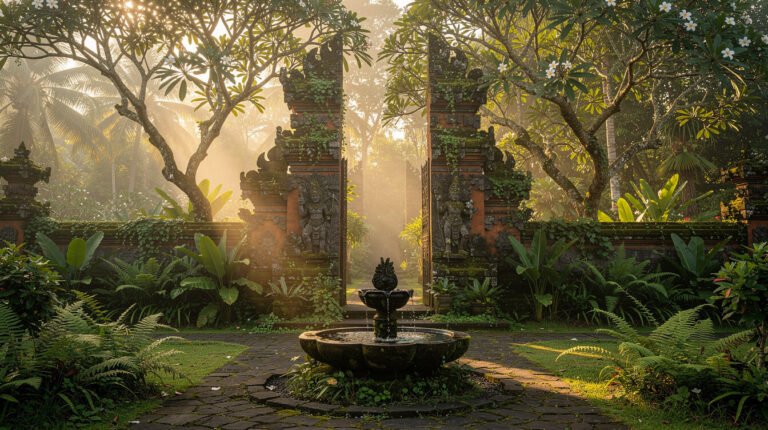
The main temple, Pura Dalem Agung Padangtegal, is dedicated to the deity Hyang Widhi in his manifestation as the God of Death — a pura dalem is associated with the cycle of death, purification, and rebirth in Balinese Hinduism. The temple is extraordinary to behold: vast carved gates draped with the black and white checked fabric of Balinese ritual, stone carvings worn smooth by centuries of incense smoke and monsoon rain, offerings of frangipani and woven palm left by devotees. The macaques move freely through the temple grounds, climbing the carved gateways, watching the world from gargoyle-like perches on ancient stone.
Pura Beji
The second temple, Pura Beji, sits at the river’s edge and is dedicated to purification. Pilgrims use its sacred spring waters for cleansing rituals. The path leading to it passes through some of the forest’s most dramatic landscape — tall trees, carved stone bridges over the rushing river, and macaques lounging on every available surface. If you are drawn to Balinese spiritual culture, also explore the hidden temples around Ubud — there are extraordinary sacred sites just minutes from the main tourist trail.
Pura Prajapati
The third temple, Pura Prajapati, serves as a cremation temple — the sacred space associated with preparation for the elaborate Ngaben cremation ceremonies central to Balinese Hindu belief. It is a sobering and profound space to encounter within the greenery of the forest, a reminder that for the Balinese, death is not the end of the story but simply the next transformation in an endless cycle. Dress modestly for all three temples — a sarong and sash are typically required and available to borrow at the entrance gate.

Essential Rules and Safety Tips for Your Monkey Forest Visit
The monkey forest Ubud Bali is a genuinely wild environment. The macaques are not tame, not domesticated, and not performing for your camera. Respecting a few essential rules keeps you safe, keeps the animals stress-free, and makes for a far better experience all around.
Do Not Bring Food
This is the single most important rule. Macaques can smell food through bags, pockets, and even sealed containers. A monkey that detects food will attempt to get it — and they are surprisingly fast and agile. Leave all snacks, fruit, and water bottles in your vehicle before entering. Vendors outside the sanctuary sell bananas specifically for tourists, but feeding the monkeys outside scheduled feeding times disrupts their natural behavior and can trigger aggression. Resist entirely.
Secure Your Belongings
Sunglasses, hair accessories, loose jewelry, and earphones are all items the macaques find fascinating and will attempt to remove. Backpacks with loose straps or unsecured pockets are another target. Keep bags zipped and held close, and remove any dangling accessories before entering. Leave valuables locked in your accommodation.
Never Make Direct Eye Contact
In macaque body language, sustained direct eye contact is an act of aggression. If a monkey approaches you and you stare back, you are essentially starting a confrontation. Look away, stay calm, and avoid sudden movements. If a monkey climbs on you, stay still — they usually move on within moments if they do not feel threatened.
Dress for the Forest and Temple
Comfortable, modest clothing works best. Lightweight long trousers or a sarong protect your legs on the uneven stone paths and are required for temple entry. Closed-toe shoes with good grip handle the paths far better than sandals. A hat protects against both the Ubud sun and any aerial surprises from the canopy above.
Health and Safety Context
You may have heard concerns about disease risk from the macaques. To be clear: no documented case of rabies transmission from the Ubud monkey forest macaques to a human visitor has been recorded, and long-running scientific studies have found risk to be extremely low for visitors who follow the guidelines above. If you are scratched or bitten, wash the wound thoroughly with soap and water and seek medical advice promptly — Ubud’s clinics can advise on any precautionary treatment needed.

Your Private Villa Awaits in Ubud
Three bedrooms, a private pool, full staff, and the warm heart of Bali at your doorstep. Villa Amrita is where unforgettable memories begin.
Check Availability →
Best Time to Visit the Monkey Forest Ubud Bali
Timing your visit to the monkey forest Ubud Bali makes a significant difference to the experience. Both weather and crowd levels vary considerably across the day and the year.
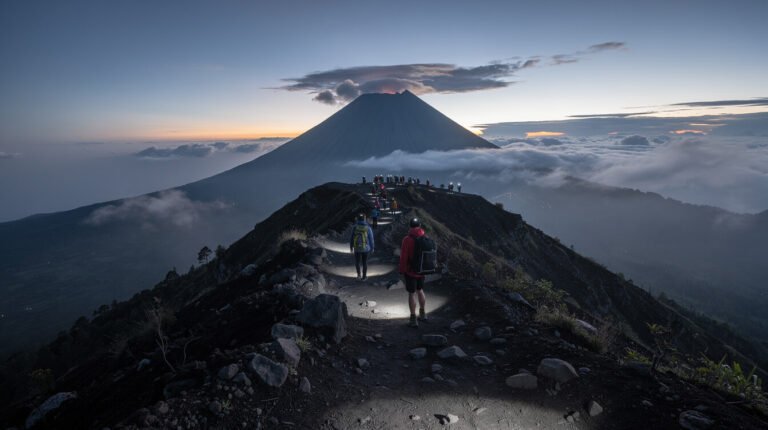
Early morning (08:30–10:00) is the single best window to visit. The forest is cool, the light filters soft and golden through the canopy, and the majority of tour groups have not yet arrived. The macaques are active and moving freely. This is when you get the forest to yourself — or close to it — and the atmosphere is genuinely magical. Consider pairing it with a sunrise trek near Ubud the day before for the ultimate Ubud morning experience.
Midday (11:00–14:00) brings the largest crowds and the strongest heat. The pathways can feel congested, the monkeys often retreat to shaded resting spots, and the serenity of the experience fades. Avoid if possible.
Late afternoon (15:00–17:00) offers a second window as the heat softens and many day-trip groups depart. The afternoon feeding at 15:00 creates a burst of energy throughout the forest.
Dry season (April–October) is generally the best time to visit Ubud overall. Paths are not slippery with rain, and the light through the forest canopy is particularly beautiful. That said, the monkey forest is extraordinary in any season — the misty, atmospheric quality during a soft morning rain in the wet season has its own genuine magic.
Plan to spend 1.5 to 2 hours exploring — enough time to find all three temples, watch the macaques at leisure, and discover the quieter corners of the forest that most visitors walk straight past.

How to Get to the Monkey Forest from Your Ubud Villa
The Sacred Monkey Forest Sanctuary sits at the southern end of Monkey Forest Road (Jalan Wenara Wana) in central Ubud — one of the town’s most atmospheric streets, lined with galleries, boutiques, and warung cafés.
From the heart of Ubud’s main intersection (Jalan Raya Ubud), the monkey forest is a flat 15–20 minute walk south along Monkey Forest Road. It is a pleasant stroll past local shops and you will have no trouble navigating — the road leads directly to the entrance gates.
If you prefer not to walk, Grab (Bali’s ride-hailing app) operates reliably in Ubud. A short ride from most villa areas costs IDR 15,000–35,000 depending on your starting point. Many private villas also offer complimentary bicycles — cycling to the monkey forest along Monkey Forest Road is a genuinely enjoyable way to begin the morning.
From Villa Amrita, the sanctuary is easily reachable in under 10 minutes. Our villa team can arrange transport, book a private driver for a longer Ubud day trip, or help plan your morning itinerary — simply ask when you arrive.
Combine Your Monkey Forest Visit with a Perfect Ubud Day
The monkey forest Ubud Bali sits at the heart of one of the world’s most rewarding day-trip epicentres. Within easy reach of the sanctuary, you can move seamlessly from wild jungle to sacred temple to rice-terrace vistas to extraordinary food.
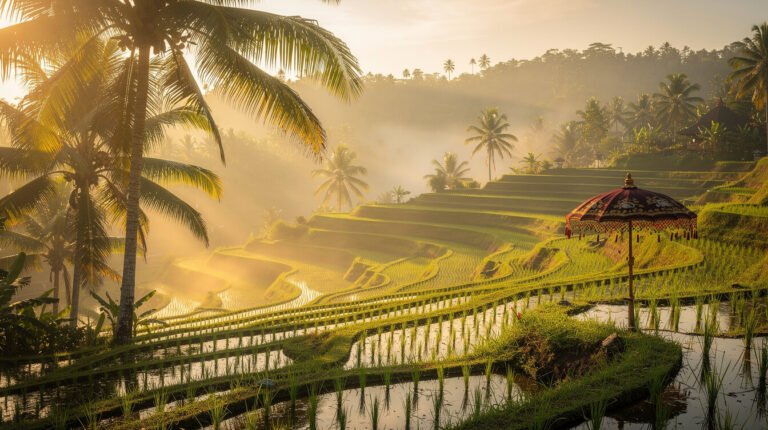
After your monkey forest visit, head north toward Ubud’s magnificent Tegallalang Rice Terraces — just 20 minutes from the centre of town. The terraces cascade down a valley in layers of vivid green, and the light in the morning hours is extraordinary.
Alternatively, spend the afternoon in restorative quiet. Ubud’s wellness culture is world-renowned, and the town’s spas are among the finest in Southeast Asia. After the sensory intensity of the monkey forest, an afternoon massage or traditional Balinese healing treatment feels like exactly the right counterpoint. Our guide to the best spas near Ubud covers the most exceptional options.
End the day with a proper Balinese meal. Ubud’s restaurant scene has evolved into something genuinely extraordinary — farm-to-table dining, authentic home-style cooking at local warungs, and everything in between. Our Balinese cuisine guide is the essential starting point for navigating what to eat and where.
The most immersive way to experience all of this is to base yourself in Ubud itself — not in a resort complex on the edge of town, but at a genuine villa in the heart of it. When you can walk to the monkey forest in the morning, return to your private pool at midday, and watch the sun set over your own tropical garden in the evening, Ubud becomes something else entirely. At Villa Amrita, that is exactly the experience waiting for you.
Your Complete Monkey Forest Ubud Bali Experience Awaits
The Sacred Monkey Forest Sanctuary is genuinely one of Bali’s most immersive and authentic experiences. It is not a zoo. It is not a theme park. It is a living, sacred forest where ancient temple ceremonies continue alongside the daily rhythms of wild macaque life — and where, if you arrive at the right moment, you might find yourself standing alone on a mossy stone bridge in the half-light of early morning, surrounded by jungle sounds, feeling very much like you have discovered something rare and real.
The monkey forest Ubud Bali rewards those who take their time — who arrive early, explore slowly, sit quietly with the macaques, and let the forest reveal itself. It is the kind of experience that stays with you long after you have left Bali behind.
When you are ready to plan your Ubud adventure, Villa Amrita is where it begins. Three bedrooms, a private pool, full staff including your own chef, and a location that puts everything — the monkey forest, the rice terraces, the temples, the markets — within easy reach. This is Ubud as it was meant to be experienced: slowly, genuinely, and extraordinarily well.
Stay Inspired — Join the Villa Amrita Community
Bali travel tips, seasonal guides, and exclusive offers. No spam, just warmth from Ubud.