How Light Tells Time in Ubud
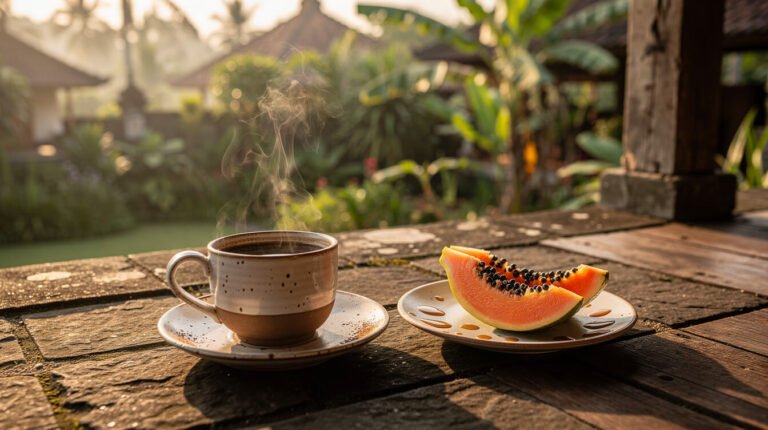
You don’t check the clock much in Ubud. You don’t need to. The light in Ubud tells you everything — what hour it is, what the air will feel like in twenty minutes, whether it’s time for coffee or for candles.
It’s something you notice on the first day and stop noticing by the third. Not because it fades, but because your body starts reading it the way the staff already do — instinctively, without thinking.
Before Dawn — The Blue Hour
The villa is still dark when the housekeeper arrives. She doesn’t switch on the overheads. She works by the thin blue glow that comes through the garden — that particular shade of Balinese pre-dawn that’s neither night nor morning. Cool tile underfoot. The soft click of latches as she opens shutters to let the day begin on its own terms.
If you’re awake for it, you’ll see the frangipani trees as silhouettes first. Dark branches against a sky that’s turning from indigo to silver. It lasts maybe thirty minutes. Most guests sleep through it. The ones who don’t always mention it later.
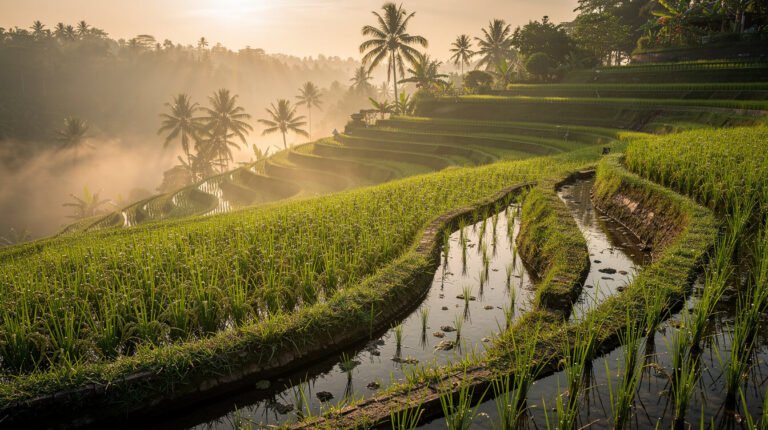
First Gold — Crossing the Rice Fields
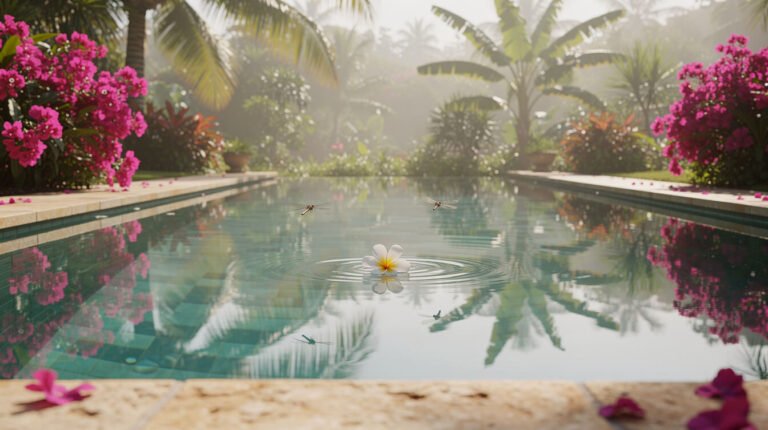
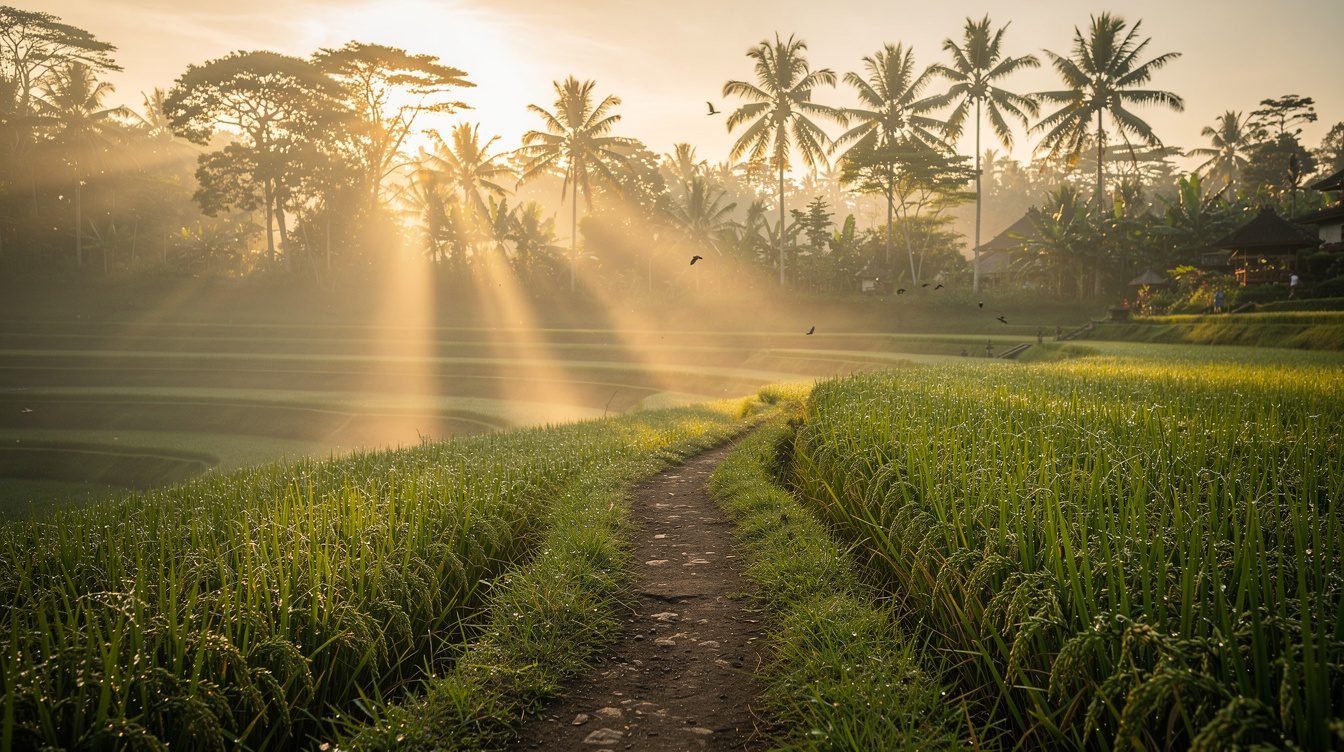
Then it arrives. Not gradually — abruptly. One moment the garden is grey-green and quiet, the next the sun breaks across the pool deck and everything turns warm. The teak loungers glow. The water catches it and throws it back in ripples across the ceiling of the open pavilion.
This is when the gardener is already trimming. He works in that first gold because he knows it won’t last — in an hour the equatorial sun will be overhead and direct, the shadows gone. But right now, at this angle, every leaf edge is outlined in light. He positions the day’s frangipani cuttings in the stone basin by the entrance while the light is still soft enough to see the petals’ translucence.
Midday — The Equatorial Pause
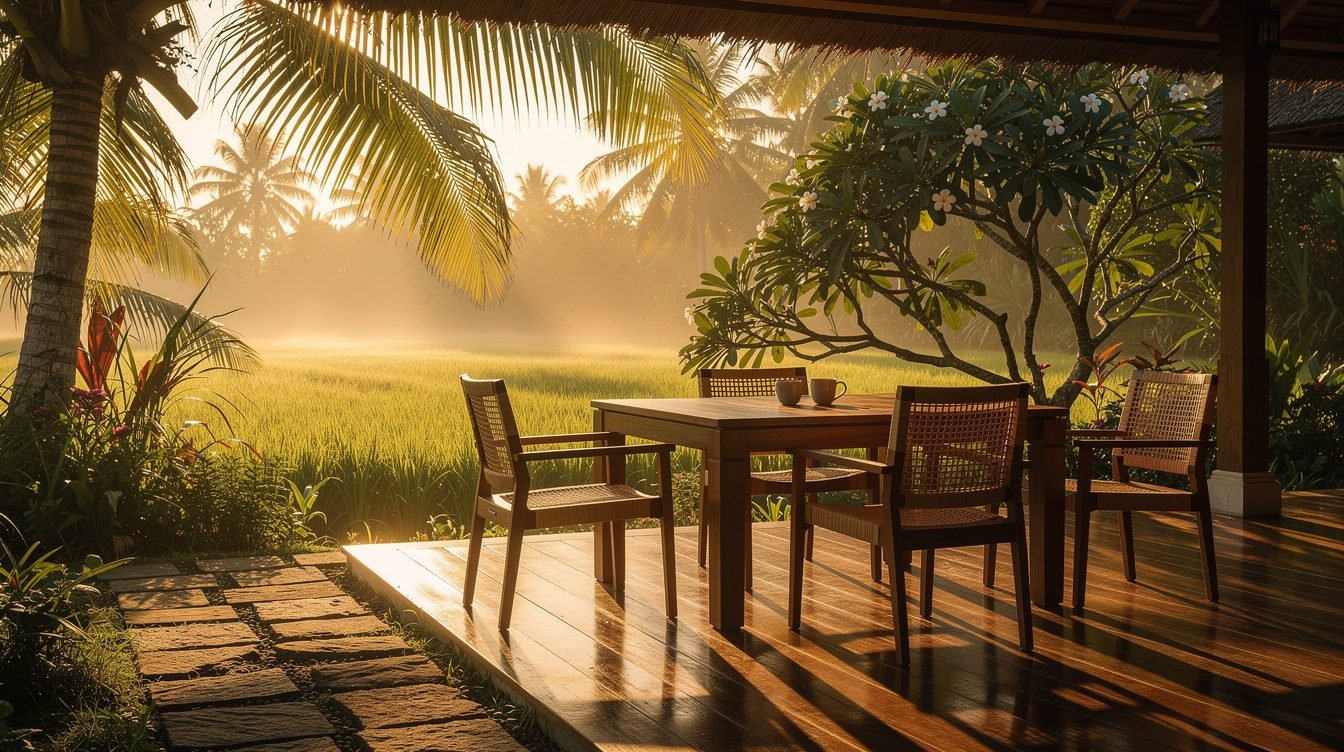
By noon the light is everywhere and nowhere. Flat, bright, honest. No shadows to hide behind. The pool becomes a mirror. The stone pathways radiate warmth upward. This is the hour when the villa draws inward — ceiling fans turning, the kitchen fragrant with lunch prep, the manager quietly checking whether you’d like a cold towel or a fresh coconut.
Ubud at midday is not the Ubud of postcards. It’s practical. Direct. The light says: rest now. Your body listens.
Get a free 3-day sample itinerary
Three days, planned by a team that knows every golden hour and quiet corner. Tell us your dates — we’ll show you what your mornings could look like.
The Green Filter — Afternoon Through the Canopy
Around two o’clock something shifts. The sun moves behind the canopy of banyan and coconut palm and the light becomes green-filtered, dappled, moving. Leaf shadows play across the bedroom walls in slow patterns that a meditation teacher would call a practice in itself.
This is the light that makes Ubud photographs look different from Seminyak or Canggu. It’s cooler. Layered. The kind of light that makes you want to read a book on the daybed or fall asleep without meaning to. The chef knows this hour — she starts preparing afternoon snacks quietly, knowing guests drift in when the light shifts them back to waking.
Golden Hour — When Ubud Softens
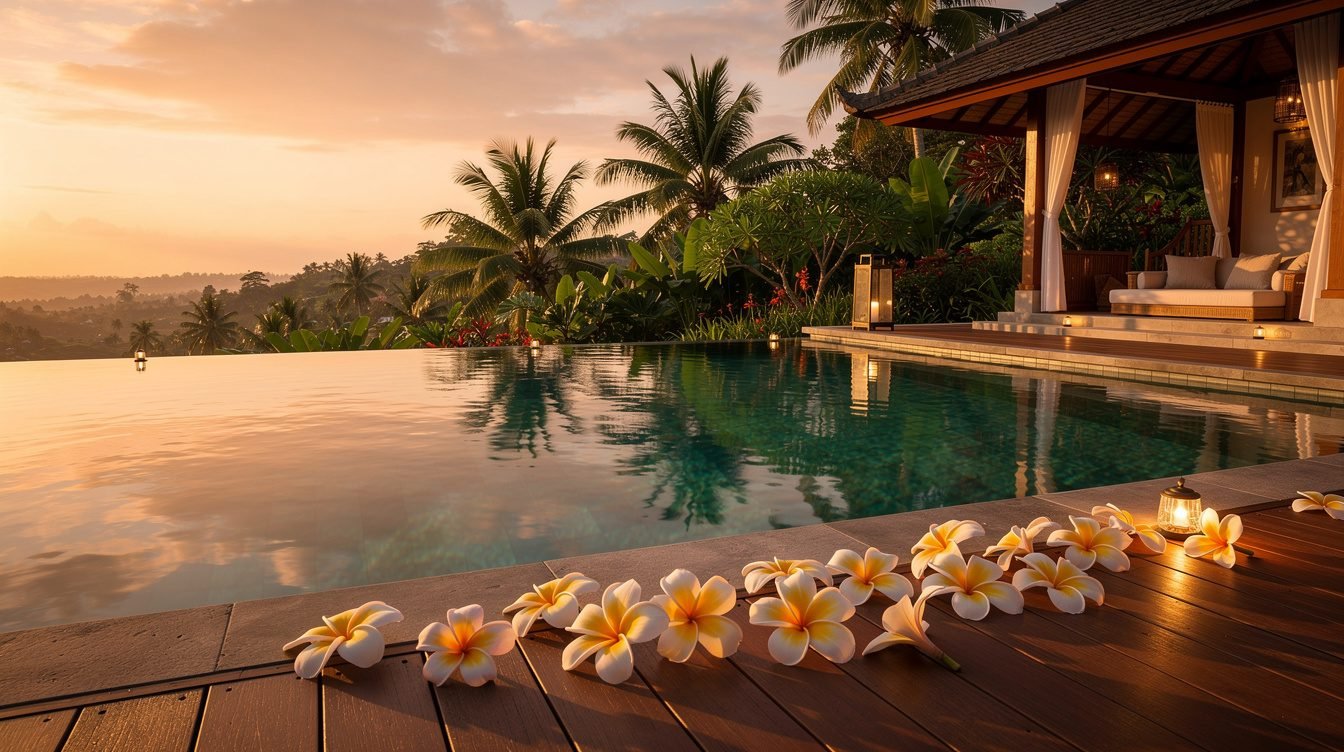
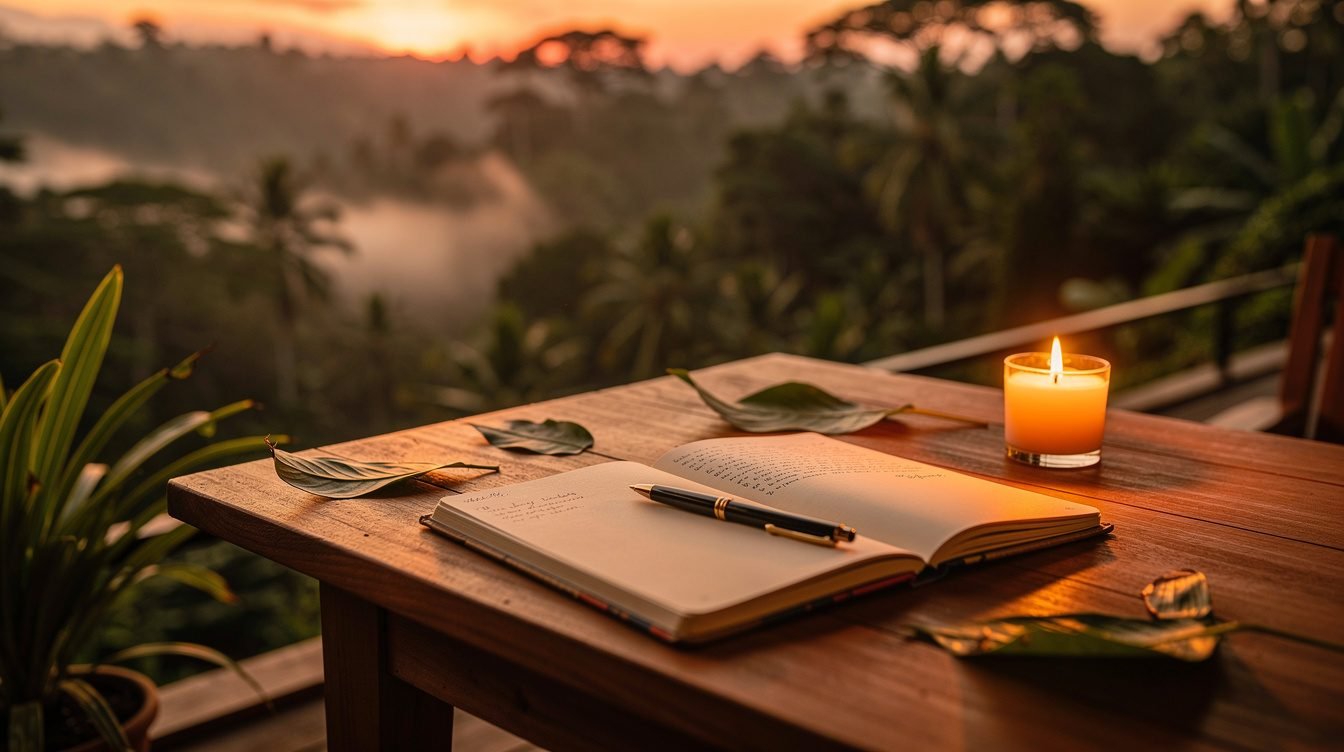
Then comes the hour that justifies everything. The sun drops toward the ridge and the entire valley turns amber. The pool catches it. The stone walls warm to honey. Evenings in Ubud begin like this — not with sunset, but with a slow gathering of gold that makes every ordinary surface extraordinary.
The manager lights the first candle at the outdoor dining table during golden hour, not after dark. She does this because candlelight and late sun together create something neither can alone — a doubled warmth that says: dinner is soon, the day was full, you are exactly where you should be.
See This Light for Yourself
Golden hour from the pool deck. First light through the garden shutters. Candlelit dinner under the stars. Your dates, your pace.
After Dark — Candlelight and the Space Between
Ubud doesn’t have much light pollution. When the sun sets, it actually gets dark — properly, deeply dark. The garden becomes a soundscape instead of a landscape. Frogs. Crickets. The distant pulse of gamelan from a temple ceremony somewhere in the village.
The villa answers this with candlelight. Not decorative — functional. Warm pools of flame along the stone pathway to the bedrooms. A hurricane lantern on the bathroom vanity. The garden lights are low and amber, placed not to illuminate but to suggest edges and pathways. Just enough light to walk by. Just little enough to see the stars.
This is the hour when guests say the thing they always say, some version of: I forgot how dark actual dark is.
The staff already knew this would happen. They’ve been watching the light all day — reading it, responding to it, shaping your experience around it — the way they’ve done for every guest who came before you and didn’t need a clock to know what time it was.
Join our newsletter — fun, new, exciting Bali news
A letter from Ubud, every week. What’s blooming, what’s cooking, what the light is doing. No spam, just warmth.