How Water Finds Its Way Through Ubud
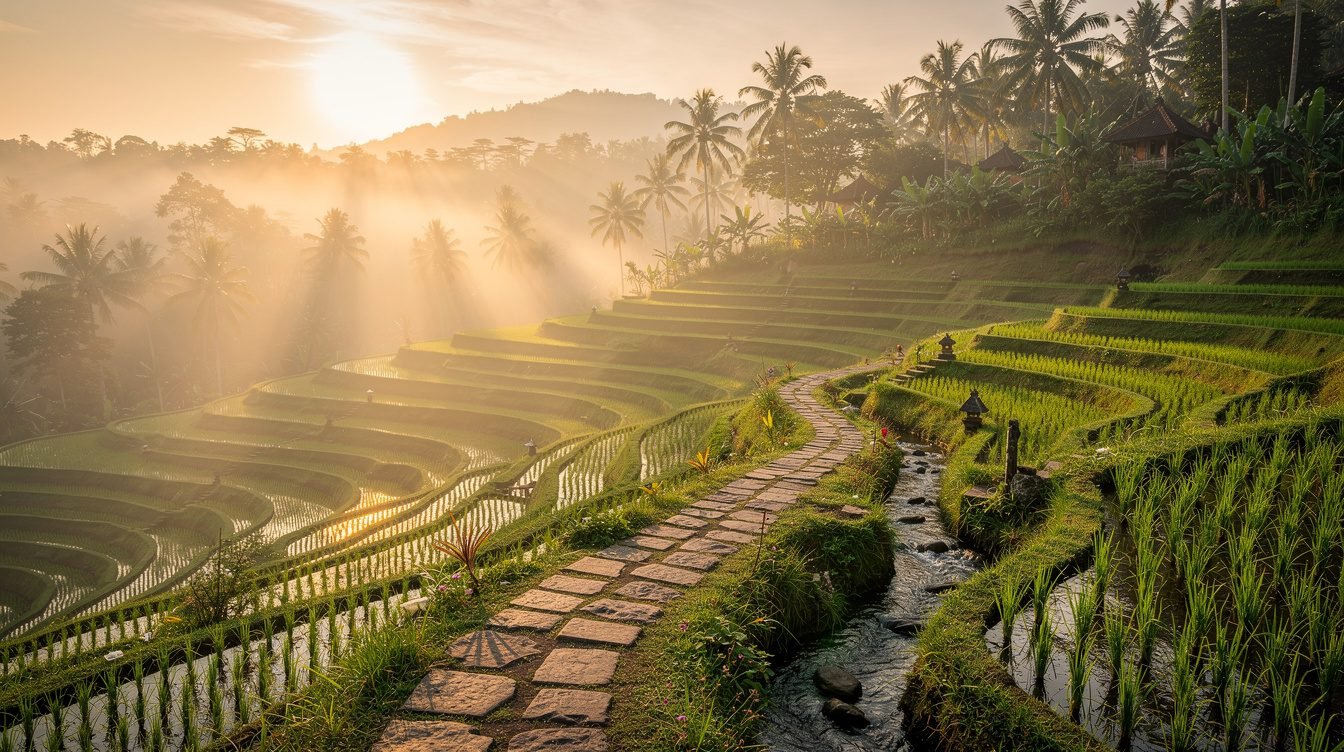
You hear water in Ubud before you understand where it comes from. A soft rushing beneath the footpath. A thin silver thread cutting across a rice terrace. The gurgle of a stone channel you didn’t notice until you stopped walking. Water in Ubud is never still, never silent, never far away — and once you start listening for it, the whole landscape opens up.
The Ancient System Beneath Everything
What you’re hearing is the subak — Bali’s thousand-year-old irrigation system, recognized by UNESCO as a cultural landscape. It’s not infrastructure in the way you might think of pipes and pumps. The subak is a community agreement. Every farmer in a watershed shares the water, and the sharing is governed not by a utility company but by a water temple and a collective conscience.
Our gardener grew up in a subak family. When he talks about water, he doesn’t talk about flow rates. He talks about Tri Hita Karana — the Balinese philosophy of harmony between people, nature, and spirit. The water belongs to all three. That’s why every irrigation weir has a small shrine beside it. That’s why the channels are cleaned together, on the same day, by everyone.
What the Rice Terraces Sound Like When You Listen
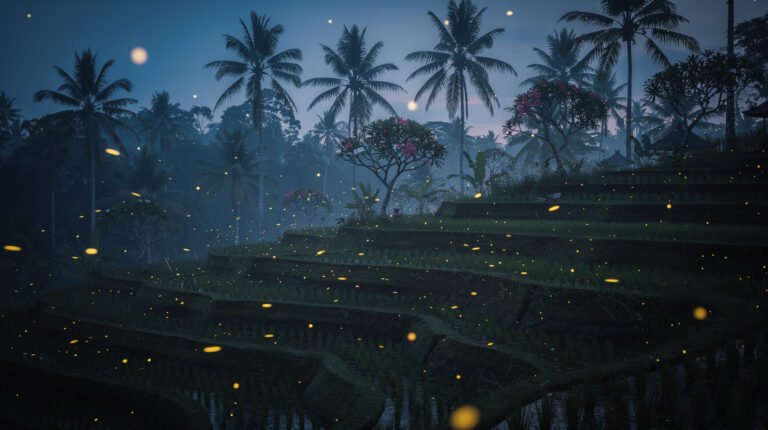
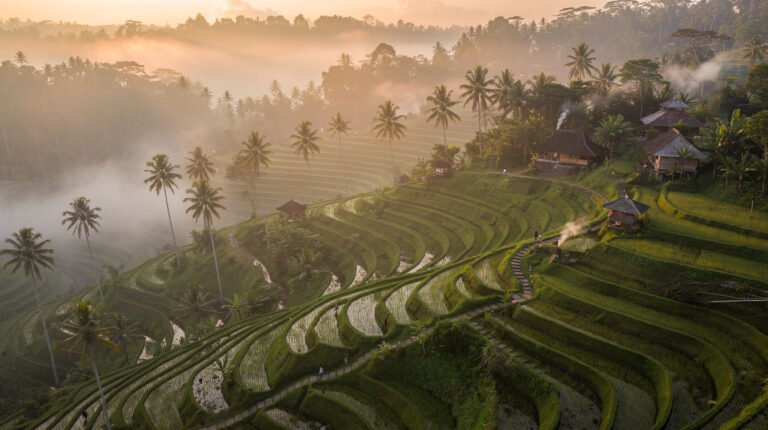
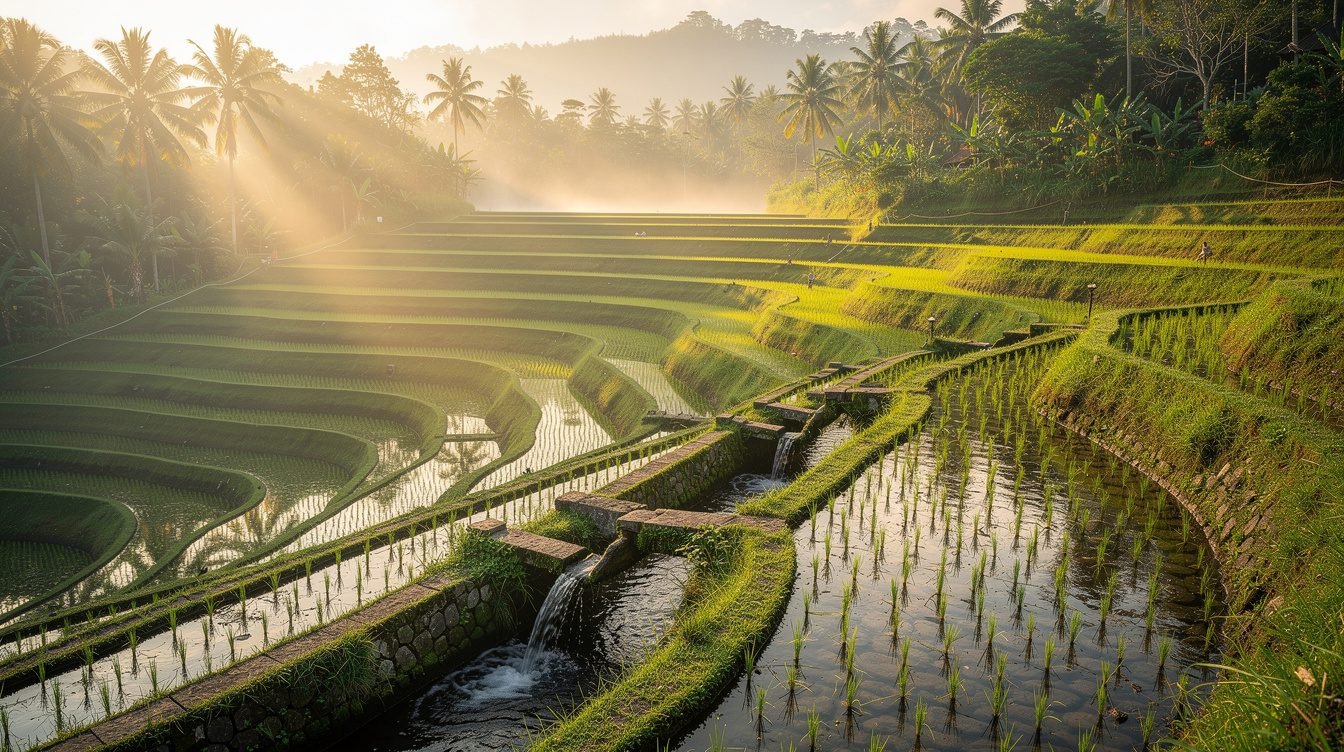
Walk through Ubud’s rice terraces and you’ll notice the sound changes every twenty steps. A wide channel runs fast and bright. A narrow one trickles into a flooded paddy with a sound like someone pouring tea. Overflow spills down carved stone lips into the next terrace below — a miniature waterfall the height of your hand.
The engineering is extraordinary. Volcanic stone carved centuries ago, moss-softened now, still directing water exactly where it needs to go. No motors, no electricity. Just gravity and the patient intelligence of people who understood that water doesn’t need to be forced — only guided.
Get a free 3-day sample itinerary
Let our team show you what three unhurried days in Ubud look like — from rice terrace walks to private chef dinners.
River Valleys and the Sound of Depth
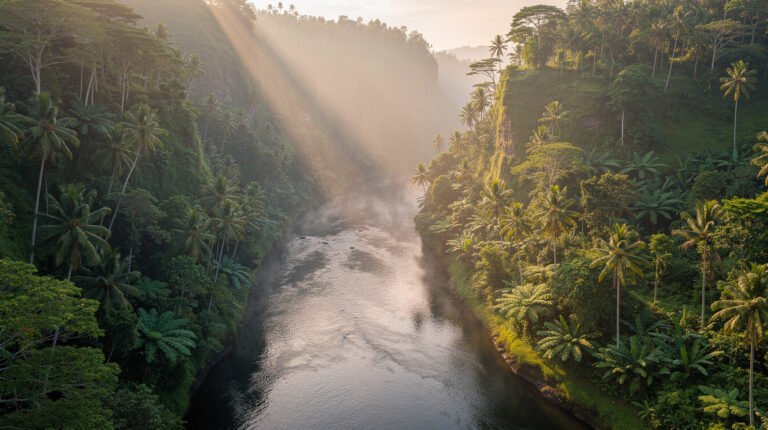
Ubud sits where two rivers meet — the Wos and the Cerik converge near Campuhan, and the name Campuhan itself means “where waters mix.” The Ayung River curves along the western ridge. Everywhere in town, you’re never more than a few hundred meters from a river gorge, even if you can’t see it.
You feel it, though. The air cools when you walk near one. The vegetation thickens. The sound drops an octave — from the high chatter of irrigation channels to the deeper, steadier voice of a river finding its way down from the volcanic highlands.
Water at the Villa
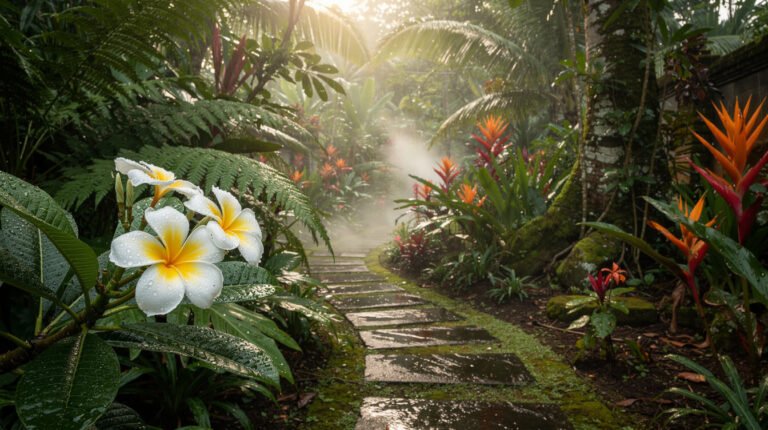
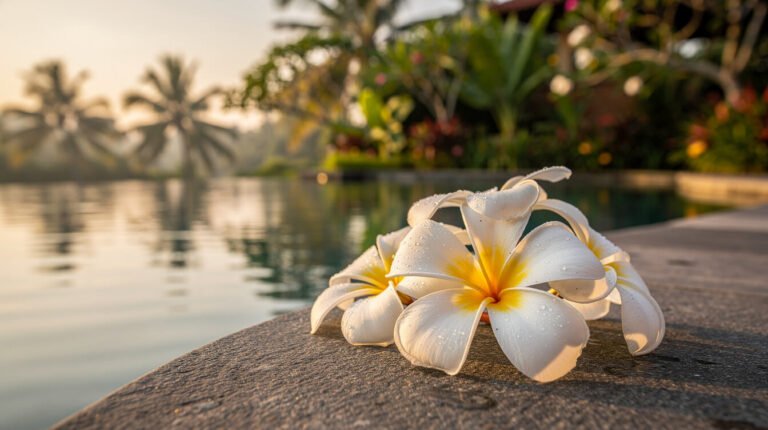
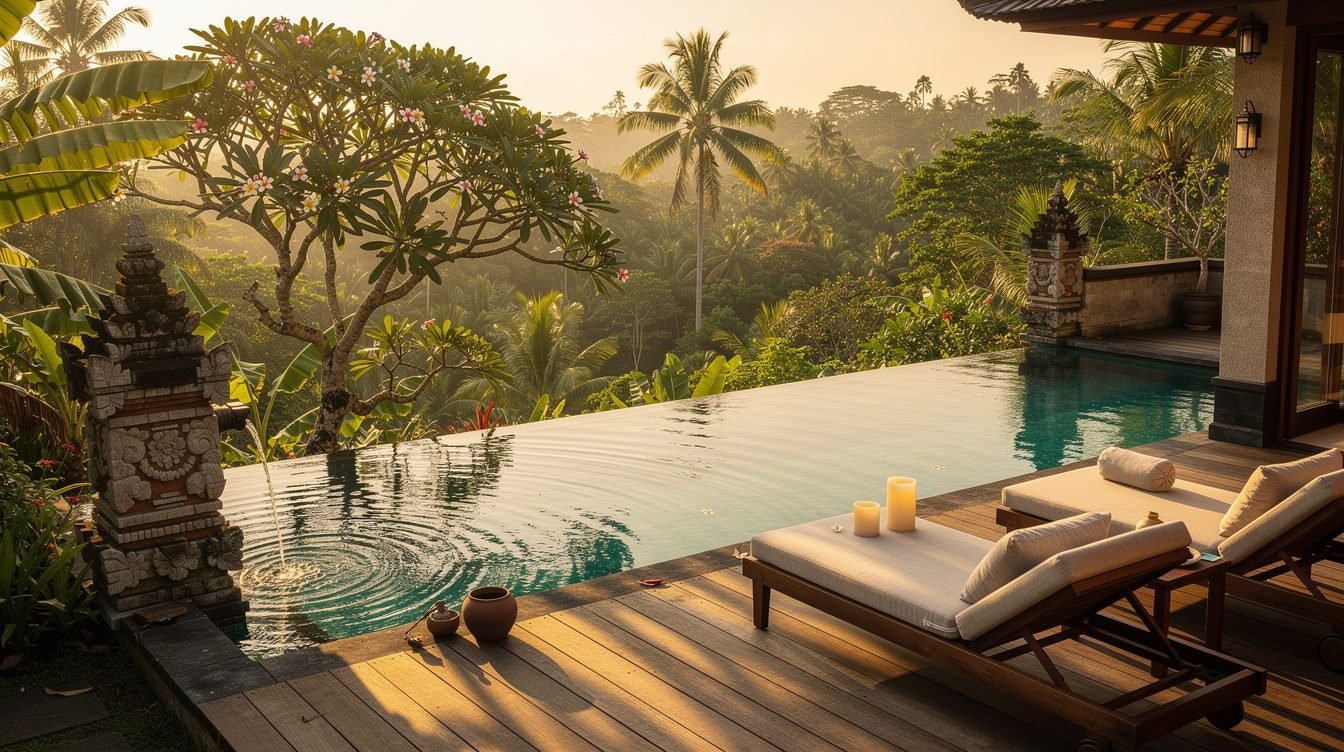
At the villa, water tells the day’s rhythm too. The pool at dawn holds the sky so still it looks like glass. By mid-morning, the gardener runs a slow hose along the stone path — not to clean it, but to keep the moss alive, to coax the green deeper into the crevices. A gentle splash means someone has finally slipped into the water after coffee. By evening, the overflow channel murmurs while the cook rinses herbs at the outdoor sink.
None of it is loud. All of it is continuous. When guests leave, they tell us they miss the sound of water more than anything.
What the Water Teaches
The Balinese relationship with water isn’t about controlling it. It’s about participating in its movement — knowing when to open a channel, when to close one, when to let it rest in a flooded paddy so the rice roots can drink. The subak farmers don’t own the water. They belong to it.
You can feel that philosophy at the villa, too. The team doesn’t impose order on the day. They read the flow of it — when you’re ready for breakfast, when you want to be alone, when the afternoon has shifted and a cold towel would arrive at exactly the right moment. It’s the same instinct: guide, don’t force. Listen for what wants to happen next.
Book the Villa
Three bedrooms, a full team, and the sound of water from every corner of the garden.
Book NowThe Sound That Stays
After a few days in Ubud, you stop noticing the water. It becomes the baseline — the ambient hum beneath everything else. You stop hearing it the way you stop hearing your own breathing.
Then you go home. And in the silence of your own apartment, you realize what’s missing. Not the view. Not the food. The sound of water, moving gently through a place where people have listened to it for a thousand years.

Join our newsletter
Fun, new, exciting Bali news — sensory stories from Ubud delivered to your inbox.