Ubud Rice Field Walk: 7 Beautiful Trails Through Bali’s Living Landscape
An Ubud rice field walk is one of those rare experiences that changes how you feel about a place before you even finish it. No ticket booth. No queue. Just a stone path, warm air, the sound of water moving through ancient channels, and green so vivid it barely looks real. If you are visiting Ubud and wondering what to do with a quiet morning or a slow afternoon, walking through the rice fields is the answer you did not know you were looking for.
This guide covers the best rice field walks in and around Ubud — from the quick loop you can do before breakfast to the longer trails that take you deep into the terraces where the only company is birdsong and the occasional farmer tending the paddies. Each walk has a different character, and which one suits you depends on how much time you have, how far you want to wander, and whether you want a cafe at the end.
Why an Ubud Rice Field Walk Feels Different from Anywhere Else
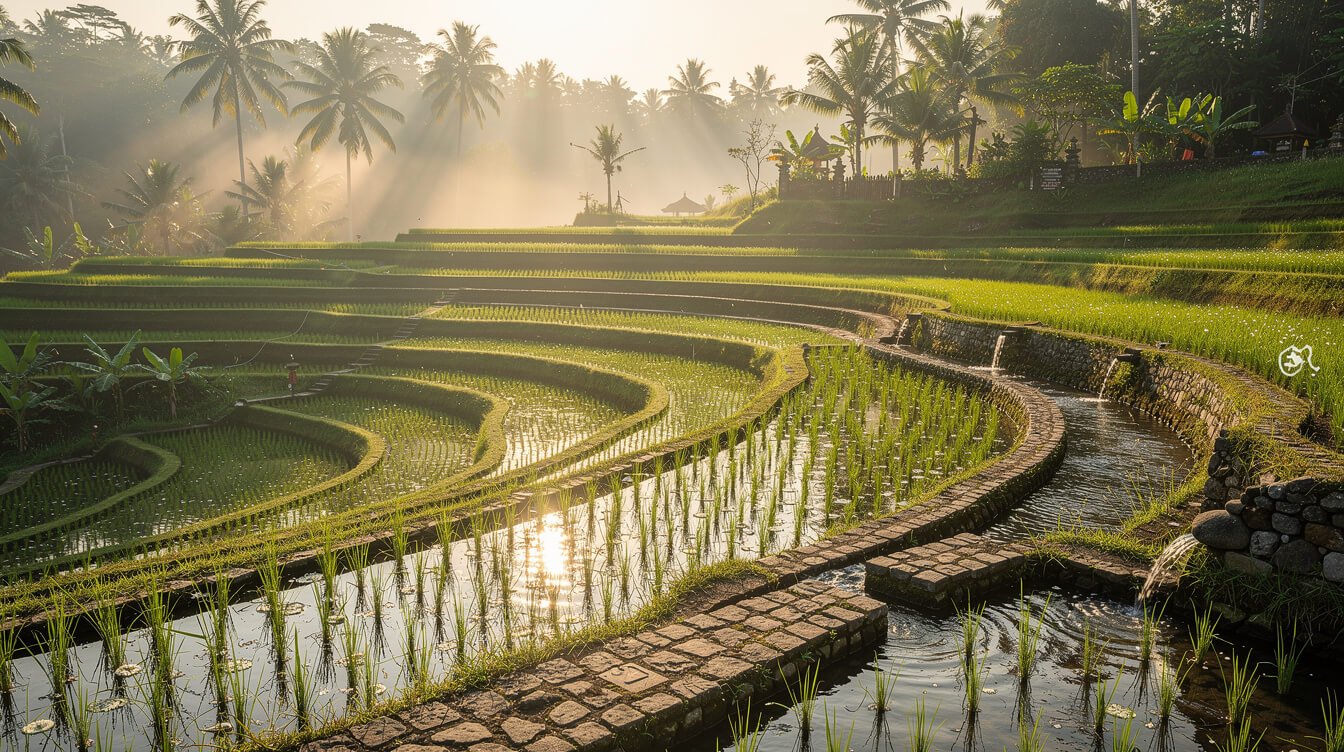
What makes Ubud’s rice fields extraordinary is not just the landscape — it is the living system beneath it. The subak, Bali’s traditional cooperative irrigation network, has been managing water flow through these terraces since the ninth century. UNESCO recognized it as a World Heritage cultural landscape, and for good reason: the subak is not just engineering. It is a philosophy of shared stewardship rooted in Tri Hita Karana — the Balinese principle of harmony between people, nature, and the spiritual world.
When you walk through Ubud’s rice fields, you are walking through a system that has been tended by generations of hands. The water channels you step over are not decorative. They are part of a network that connects temples, springs, and farming communities across the entire watershed. Each field you pass is managed collectively — farmers upstream and downstream cooperating to ensure that everyone has what they need.
This is why the rice terraces around Ubud feel different from rice paddies elsewhere in Southeast Asia. They are not just agricultural land. They are an expression of a way of living that prioritizes balance. You feel it in the quiet. You feel it in the way the paths are maintained — not by a tourism board, but by the farmers themselves. And you feel it most clearly early in the morning, when the mist lifts off the terraces and the only sound is water finding its way downhill.
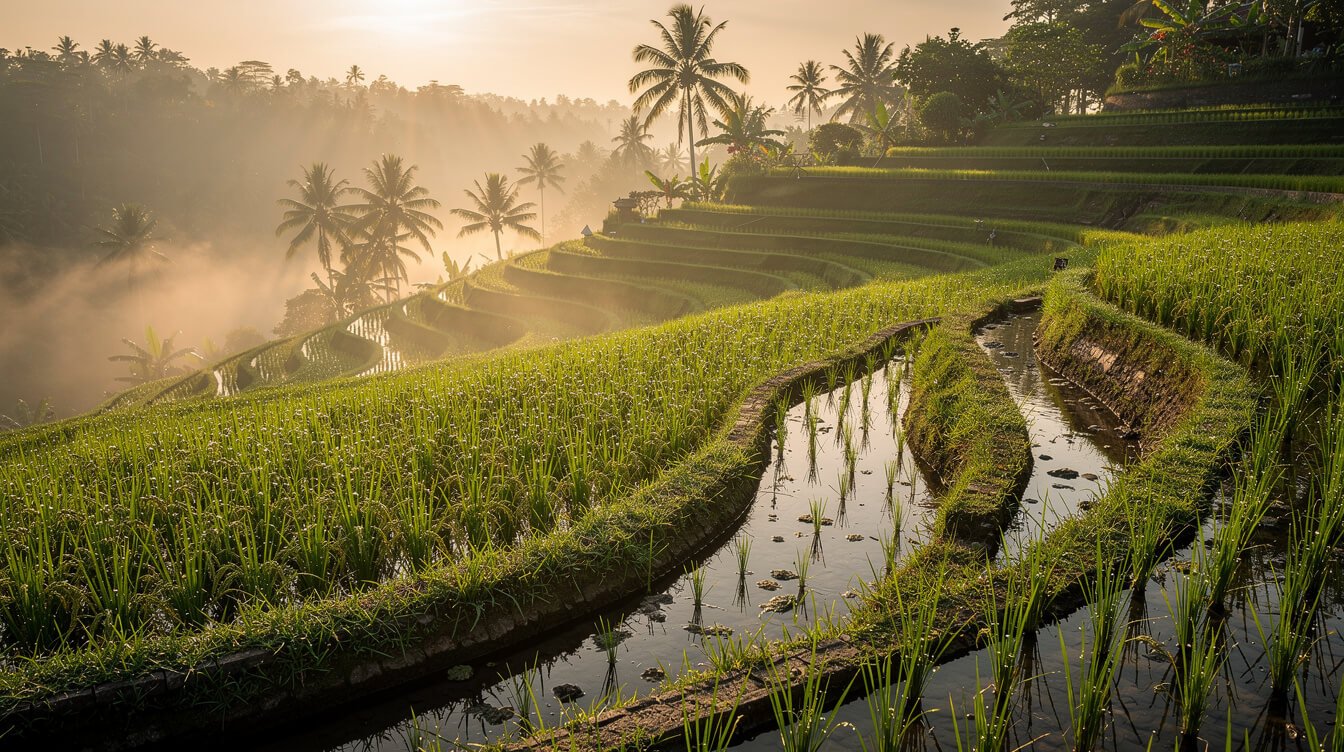
The rice cycle itself adds another dimension. Depending on when you visit, you might see flooded paddies reflecting the sky like mirrors, bright green shoots standing a few inches tall, golden stalks heavy with grain just before harvest, or bare fields being turned and replanted. Each stage has its own beauty, and timing your visit to catch the green phase (roughly four to eight weeks after planting) gives you the most vivid landscape.
Kajeng Rice Field Walk: The Classic Ubud Rice Field Walk That Starts from Town
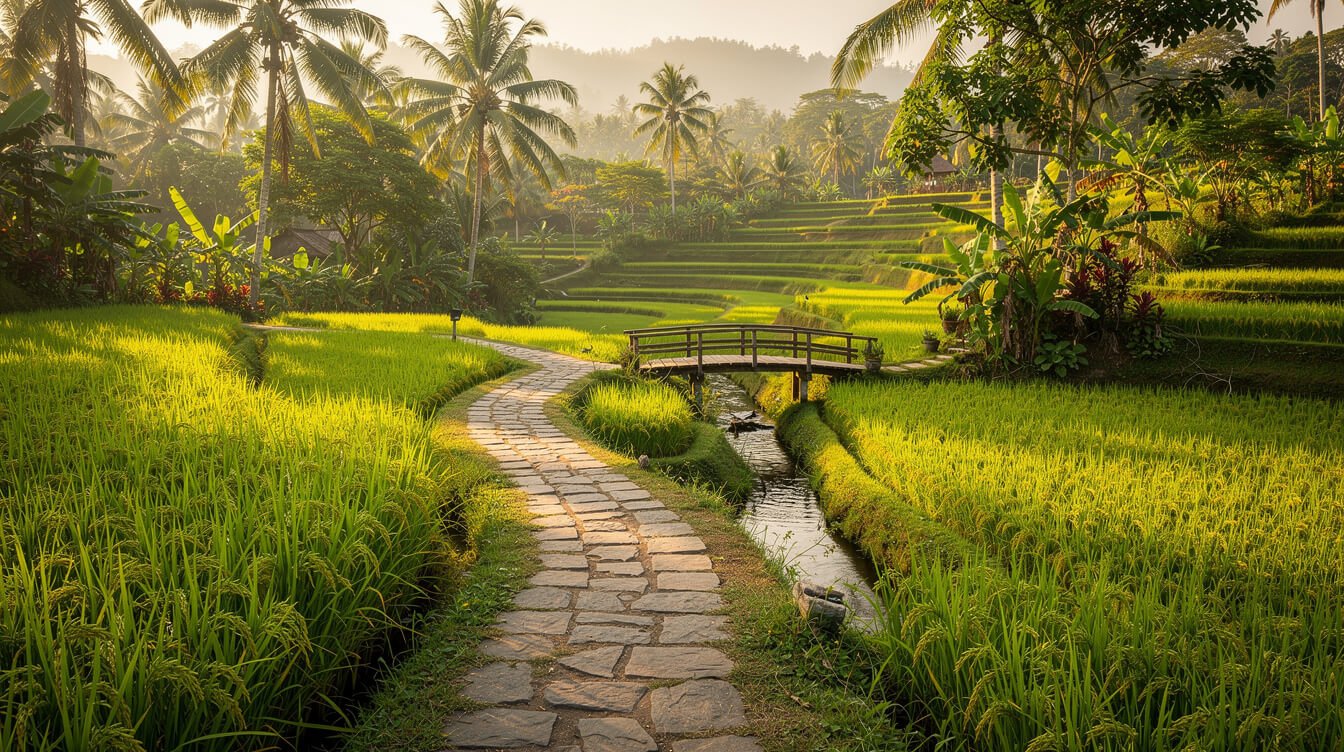
Also known as the Subak Juwuk Manis trail or the Sweet Orange trail, the Kajeng rice field walk is the most accessible ubud rice field walk you can find. It starts right from the center of Ubud — just west of Jalan Raya Ubud near the Ubud Palace — and loops through working rice paddies before bringing you back to town.
The walk covers roughly 2.5 kilometers and takes about an hour to an hour and a half at a comfortable pace, depending on how often you stop. And you will stop. The path is narrow in places, cutting between paddies with nothing but low stone walls and irrigation channels on either side. Small bridges cross the water at intervals, and the views open up as you move further from the road.
What to Expect Along the Way
The first ten minutes take you through a neighborhood — Kajeng village — where the houses give way gradually to open fields. You will pass a few cafes and small warungs that have set up along the trail in recent years, offering cold drinks and nasi goreng with panoramic views. These make excellent rest stops, especially if you are walking in the late morning heat.
The trail is generally flat with gentle undulations. It is suitable for most fitness levels, though some sections can be muddy or slippery during or just after rain. Wear shoes with grip — flip-flops are tempting but not recommended once you leave the paved sections.
Because this walk starts right in town, you do not need transport. If you are staying at a villa in Ubud, you can walk to the trailhead in minutes. This makes it ideal for an early morning ramble before breakfast or a late afternoon stroll when the light turns golden.
Get a Free 3-Day Sample Itinerary
Rice field walks, temple visits, cooking classes, and sunset spots — all mapped out for you. Enter your email and we will send it right over.
Penestanan Rice Field Walk: The Longer Immersive Trail
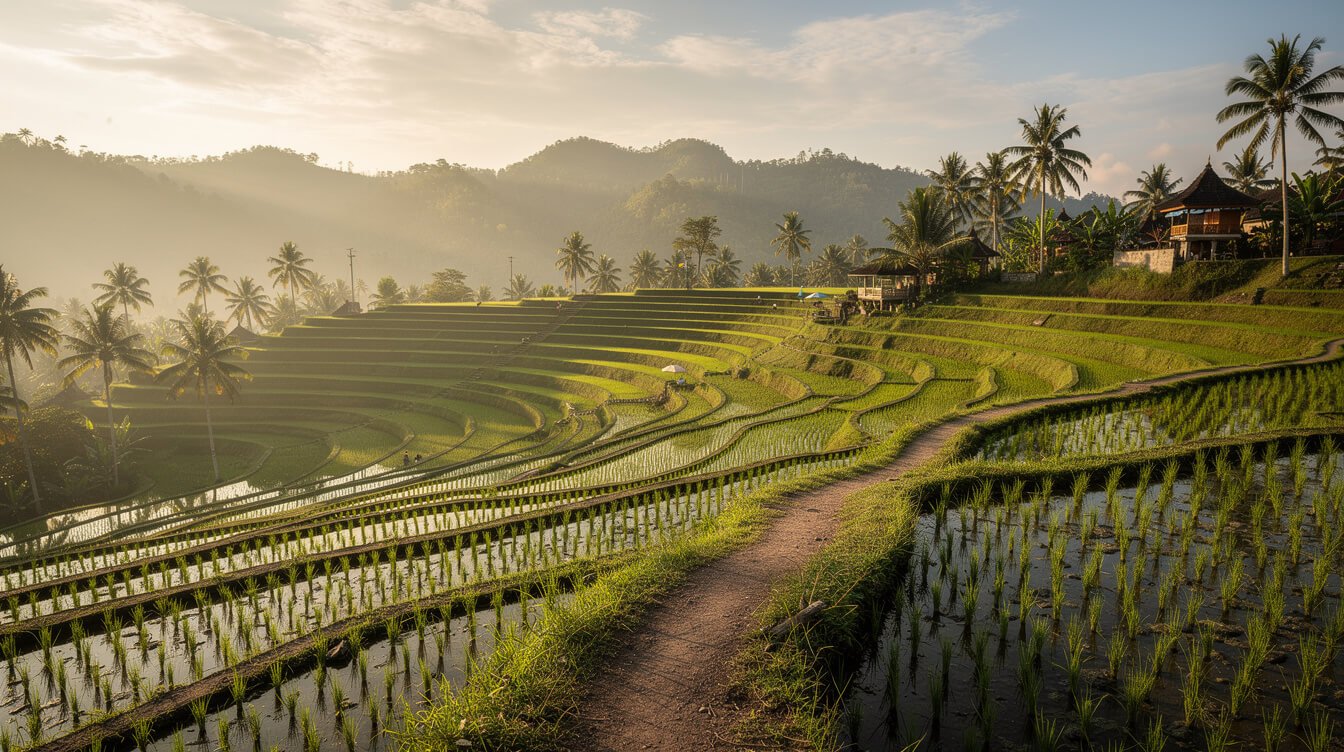
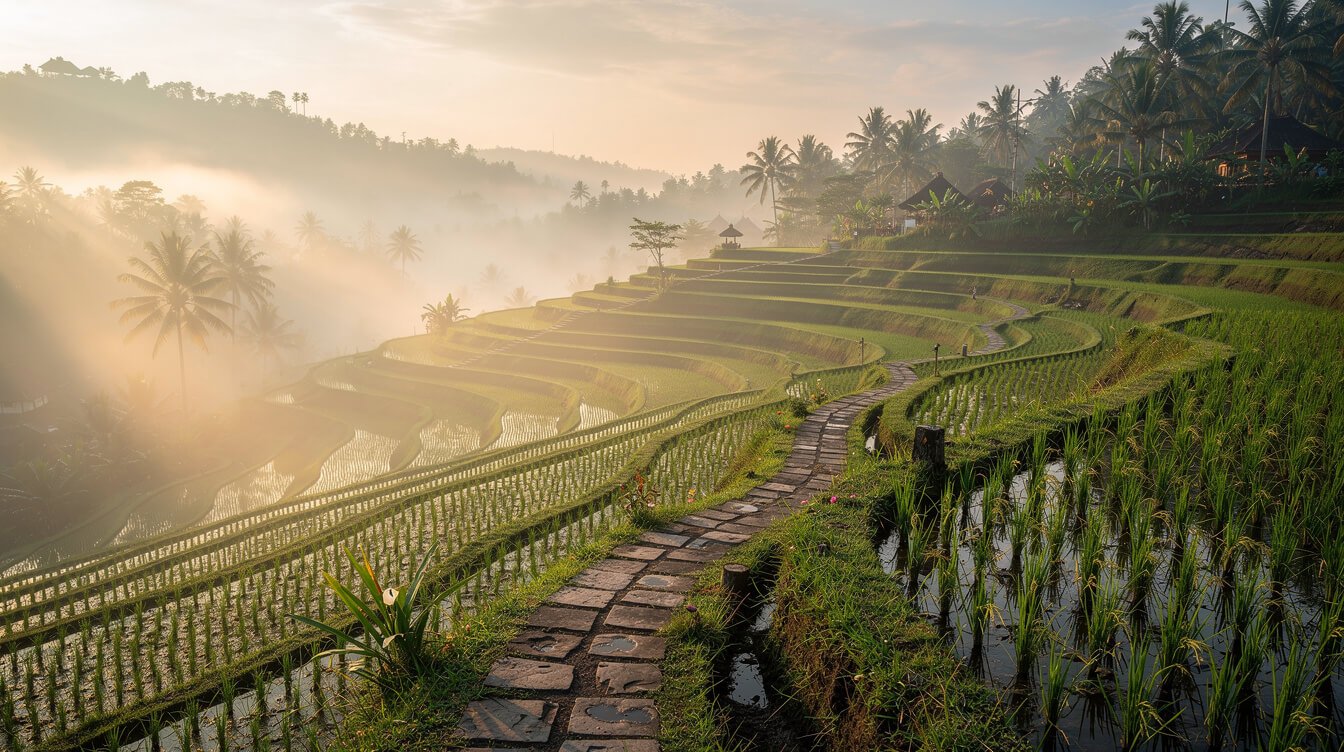
If the Kajeng walk is the appetizer, the Penestanan rice field walk is the full course. This trail is the longest of the Ubud rice walks, stretching through the Penestanan area northwest of town — a neighborhood known for its artist community and some of the widest, most uninterrupted rice field views in the region.
The walk begins near the Neka Art Museum, which is itself worth a visit. From there you head into the terraces, and the town fades quickly. Within minutes, the only structures you see are small farming shelters, the occasional villa perched above the fields, and the distant outline of the hills to the north.
Why Penestanan Stands Out
The scale of the views here is what makes this walk special. Whereas the Kajeng trail is intimate — narrow paths between close paddies — Penestanan opens up into wide, sweeping panoramas. On clear mornings, you can see all the way to the volcanic ridgeline.
The trail is longer (roughly 4 to 5 kilometers depending on your route), less clearly marked, and sees fewer visitors than the central Ubud walks. That is part of its appeal. You may walk for twenty minutes without passing another person. The path winds through working rice fields, past small family compounds, and along the edges of deep river gorges that cut through the volcanic rock.
After the walk, stop at Terracotta Restaurant at the edge of the Penestanan area. The breakfast there — you tick off what you want on a paper menu — is built from fresh local ingredients, and you eat it overlooking the rice fields you just walked through. It is the kind of reward that makes the early start worthwhile.
Sari Organic Walk: Where the Ubud Rice Field Walk Meets Good Food
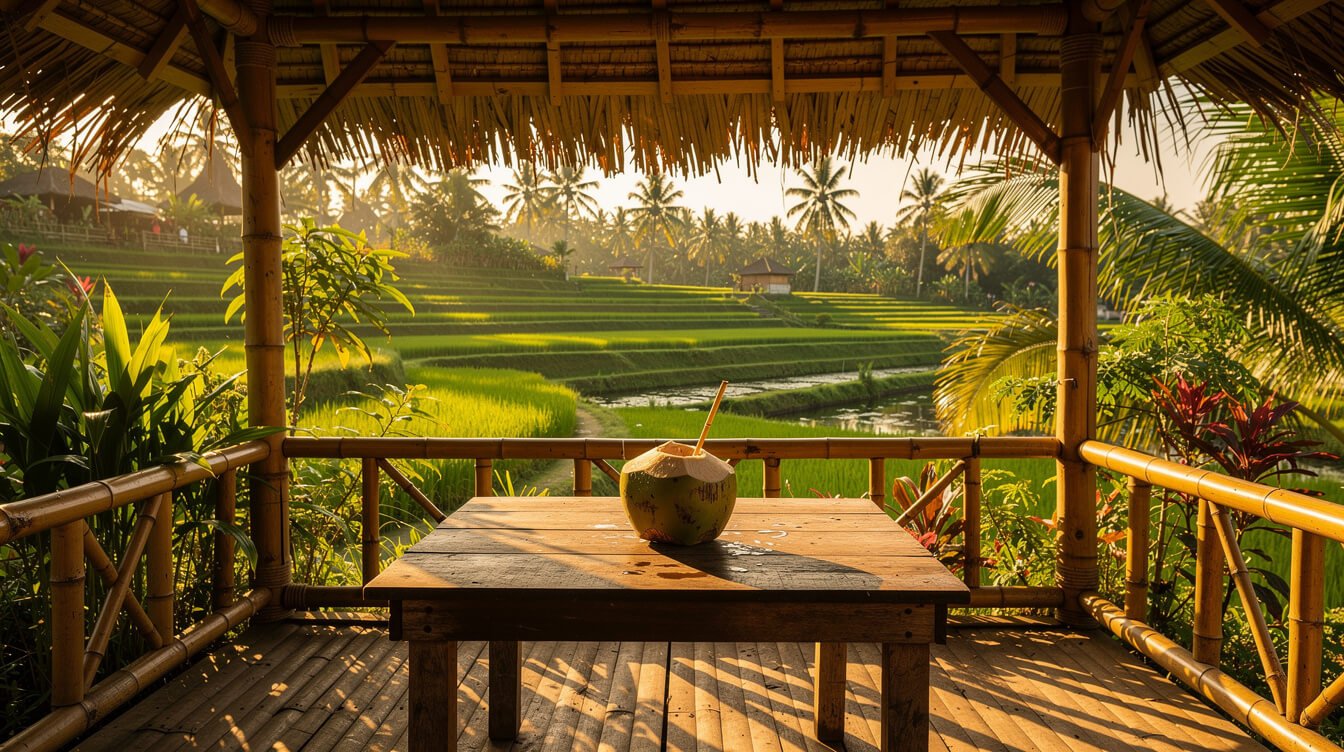
The Sari Organic walk is a favorite for visitors who want a rice field walk that ends with an exceptional meal. The trail runs through the fields north of central Ubud, passing organic farms, small warungs, and eventually arriving at Sari Organic restaurant — a place that has built its reputation on cooking with ingredients grown in the surrounding paddies.
The walk itself is moderate in length — about 2 to 3 kilometers — and the terrain is mostly flat with a few gentle slopes. What makes it distinctive is the agricultural character of the trail. You pass through fields where farmers are actively working, and depending on the season you may see planting, weeding, or harvesting up close. It is a reminder that these rice terraces are not scenery — they are someone’s livelihood.
The Cafe Trail Connection
Some locals call this the Cafe Trail, because several small restaurants have established themselves along the route. Each one offers a slightly different take on Balinese and Indonesian cuisine, most with open-air seating that overlooks the paddies. If you enjoy Balinese cooking, the food along this trail will give you a taste of what fresh, garden-to-table eating looks like when it is done with real care.
The one downside: motorbikes use parts of the path, especially in the sections closer to the road. If you want the quietest experience, walk early — before 8 AM — when the trail is mostly yours and the light is at its softest.
Campuhan Ridge Walk: Ubud’s Most Famous Trail and How It Compares
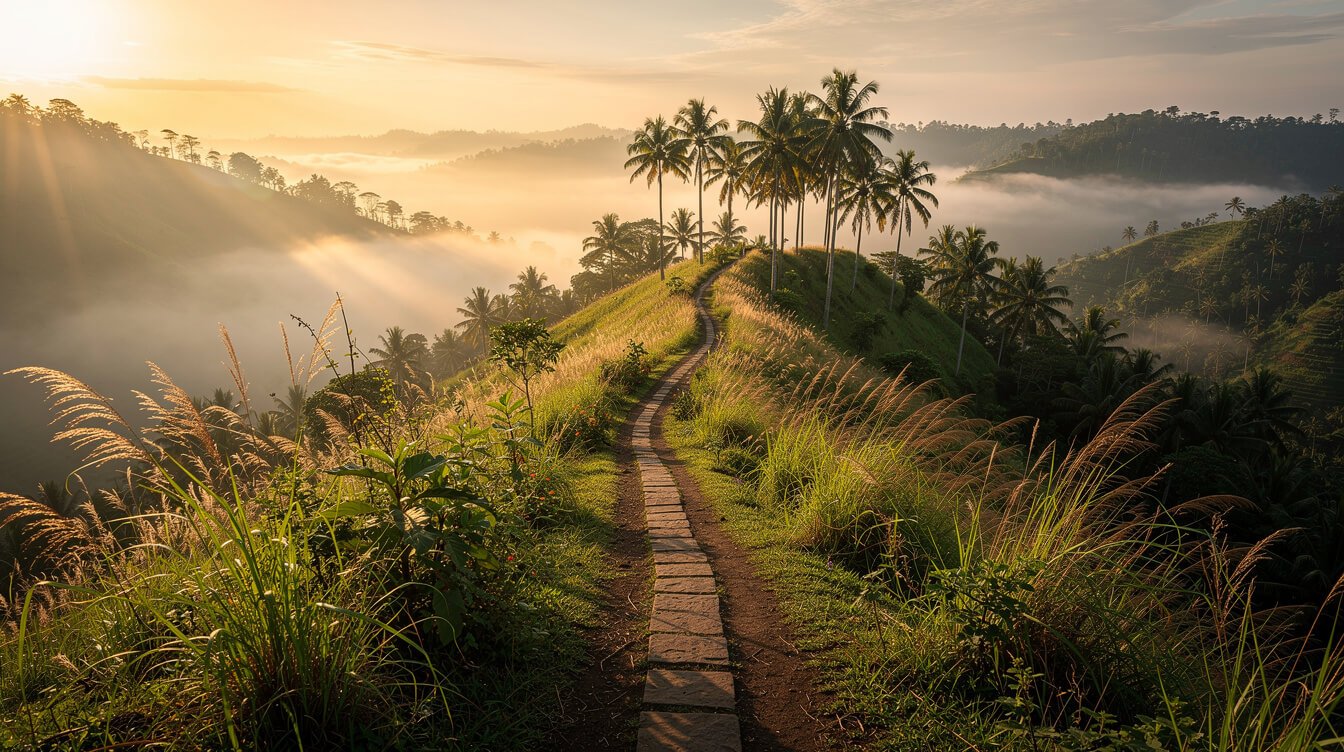
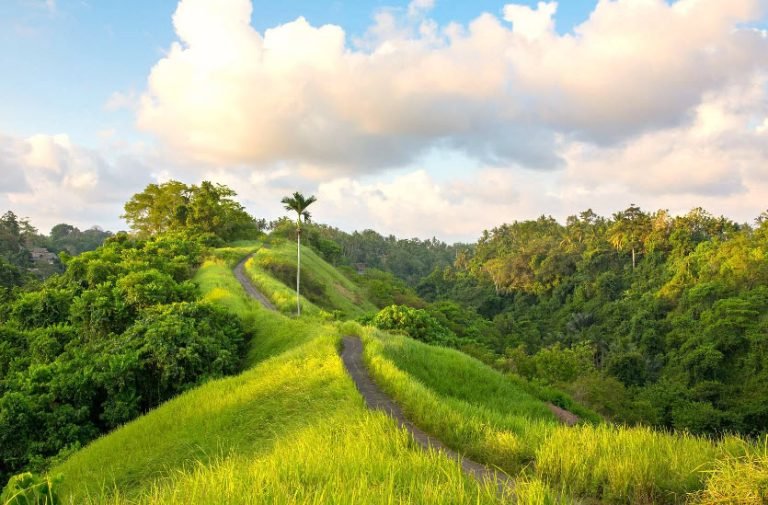
No guide to walking in Ubud would be complete without mentioning Campuhan Ridge Walk, even though it is technically not a rice field walk. The trail follows a narrow ridge between two river valleys, lined with tall wild grass and palm trees rather than paddies. It has become the most photographed walk in Ubud, and for good reason — the views from the ridge at sunrise are genuinely beautiful.
The walk is about 2 kilometers one way, starting near the Ibah Luxury Villas and ending near the Karsa Kafe area. It is easy terrain — mostly paved or well-maintained paths — and suitable for all fitness levels. Most people walk it early in the morning to catch the sunrise and avoid the heat.
Rice Fields vs. Ridge: Which to Choose?
If you only have time for one walk, here is the honest comparison. Campuhan Ridge Walk is dramatic, popular, and fast. You will get great photos and a sense of Ubud’s topography. But you will also share the path with dozens of other visitors, especially between 6 and 8 AM.
The rice field walks — Kajeng, Penestanan, Sari Organic — are quieter, more immersive, and give you direct contact with Balinese agricultural life. They are slower, longer, and less Instagram-ready, but they leave a deeper impression. If you have two mornings in Ubud, do Campuhan Ridge one day and a rice field walk the next. If you only have one, choose the rice fields. You came to Ubud for something you cannot find anywhere else, and the rice terraces deliver exactly that.
For a broader look at what makes Ubud worth the visit — beyond walking — see our honest guide to whether Ubud is worth visiting.
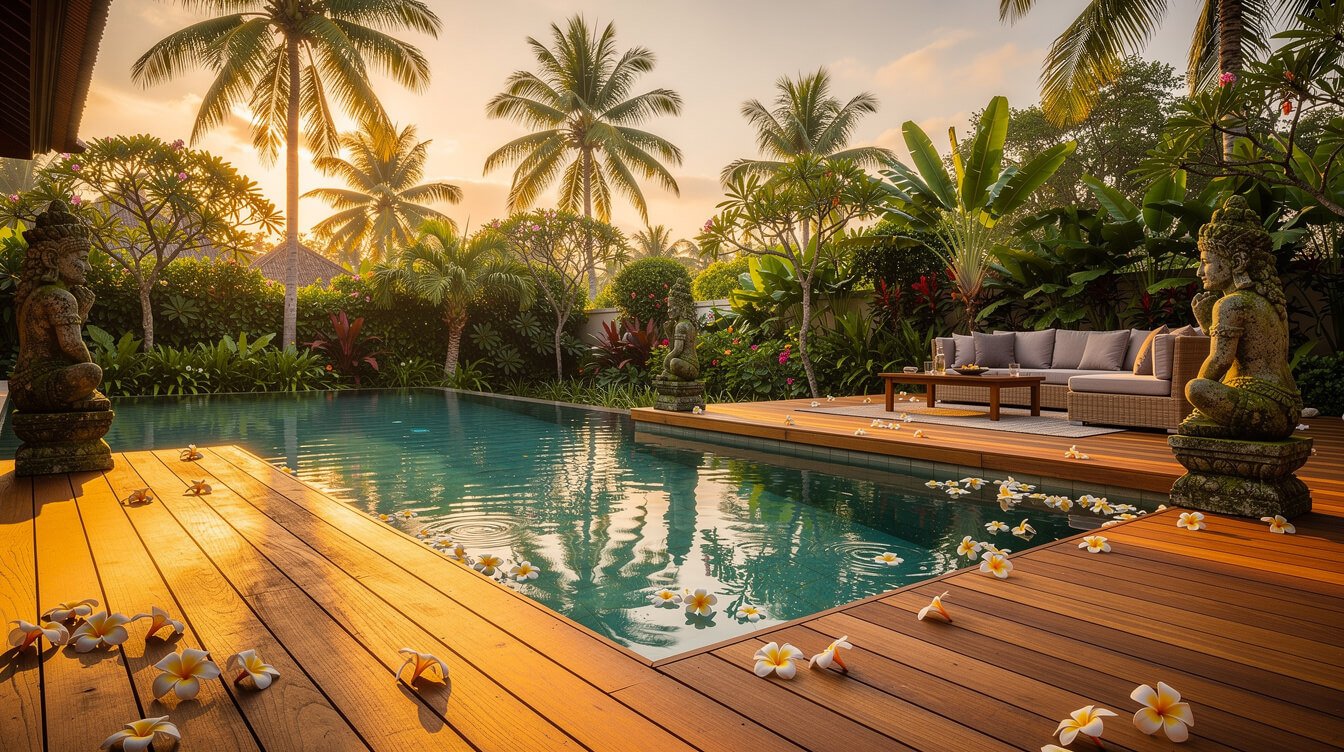
Walk the Rice Fields, Come Home to the Villa
Villa Amrita is a 3-bedroom staffed pool villa minutes from Ubud’s best rice field trails. Chef, housekeeper, garden — everything held for you.
Hidden Rice Field Trails Worth Finding Near Ubud
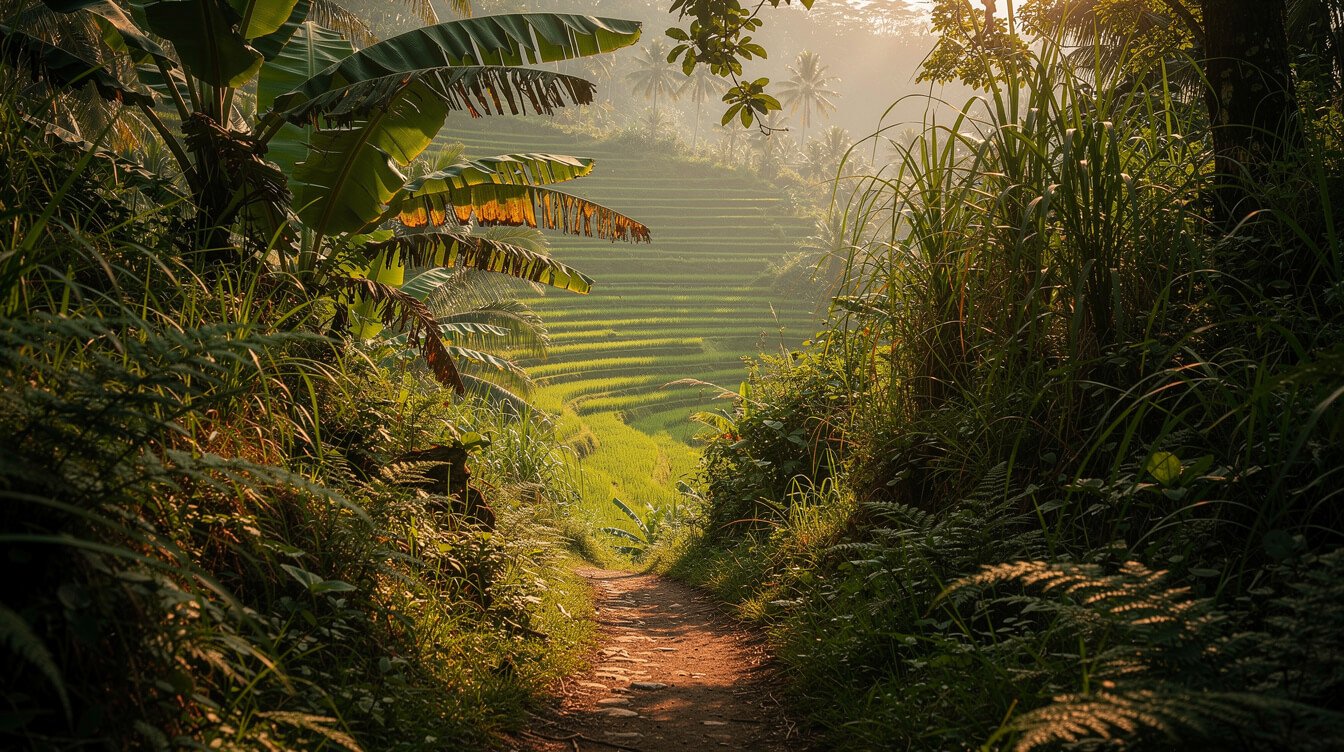
Beyond the four main walks, Ubud’s surrounding countryside is laced with trails that most visitors never find. These paths do not appear on tourist maps and are not marked with signposts. They exist because farmers and villagers have walked them for generations, and they are some of the most rewarding walks you can take in Bali.
Kelusa Rice Fields
About 25 minutes north of central Ubud by motorbike, the Kelusa rice fields are genuinely undiscovered. On a weekday morning you may be the only visitor in sight. The terraces here are wide and uninterrupted, with views toward Mount Agung on clear days. There is no cafe, no ticket booth, no souvenir stall — just rice, water, sky, and the sounds of the countryside. Park along the road and walk for an hour or so through the paddies. It is exactly the kind of Bali moment you came looking for.
Bungkuan Trail
The Bungkuan trail (sometimes called the Cafe Trail, confusingly overlapping with the Sari Organic area) follows a path through terraces east of the main Ubud cluster. It connects a series of small cafes and organic farms, and because it sits off the primary tourist routes, it maintains a quieter, more village-like atmosphere. The terrain is a bit more varied — some short climbs and descents — which adds interest if you are looking for something beyond flat paddy paths.
The beauty of these hidden walks is that you do not need a map. Pick a direction, follow a path that leads away from the road, and let the rice terraces guide you. If you reach a dead end, turn around. If you find a farmer, smile and say selamat pagi (good morning). They have been walking these paths long before you, and they are almost always happy to point you in a direction that leads somewhere good.
For another way to experience Ubud’s natural landscape, the Ayung River valley offers gorge walks, rafting, and cycling alongside the same watershed that feeds these rice terraces.
What to Know Before Your Ubud Rice Field Walk
A little preparation makes these walks significantly more enjoyable. None of them require special equipment, but the right timing and a few practical choices can be the difference between a magical morning and a sweaty slog.
Best Time to Walk
Early morning is the answer, every time. Between 6 and 8 AM the air is cool, the light is soft and warm, the trails are quiet, and the mist still clings to the lower terraces. If you cannot manage an early start, late afternoon (after 4 PM) is the second-best option — the heat has broken and the sunset light on the paddies is extraordinary.
Avoid midday walks from 11 AM to 3 PM. There is almost no shade on the rice field trails, and the equatorial sun is strong. Bring water regardless of when you go.
What to Wear and Bring
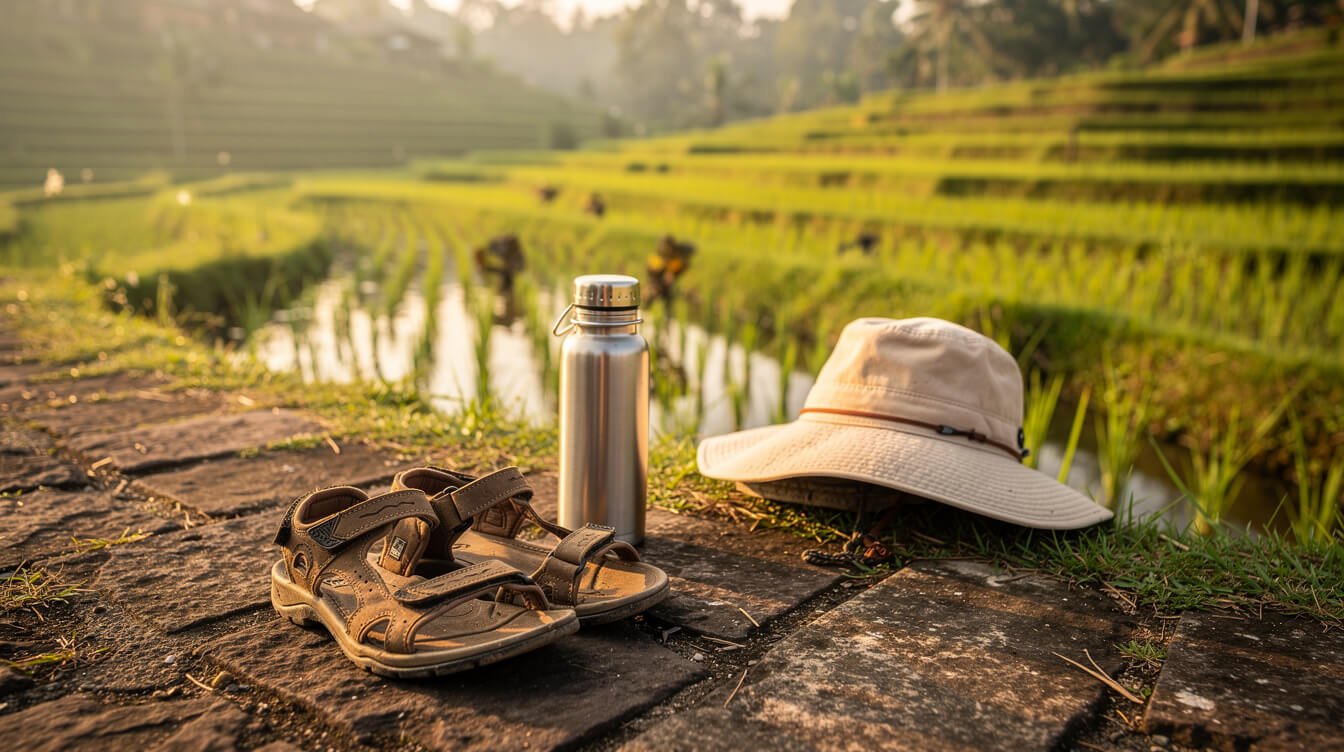
- Footwear: Closed-toe shoes or sport sandals with grip. Many paths are stone, earth, or narrow paddy walls that can be slippery when wet. Flip-flops are not safe on most trails.
- Sun protection: Hat, sunscreen, sunglasses. The fields are open with no tree cover.
- Water: Carry at least 500ml. Most walks have cafes along the way, but the hidden trails (Kelusa, Bungkuan) do not.
- Camera or phone: Obvious, but charged. The views are worth it.
- Small cash: Some trailside cafes and vendors only accept cash. 50,000-100,000 IDR is enough.
Etiquette on the Trails
These are working agricultural landscapes, not parks. A few guidelines:
- Stay on the paths. Do not step into the paddies or walk on the narrow earthen walls between fields — they are part of the irrigation system and easily damaged.
- If a farmer asks for a small donation at a trail entrance, it is reasonable to contribute 10,000-20,000 IDR. They maintain these paths voluntarily.
- Dress modestly when passing through village areas — shoulders covered, knees covered if possible. Not strictly required on the trails, but appreciated.
- Take your rubbish with you. These fields do not have bins.
Getting There from Your Accommodation
The Kajeng and Campuhan walks start right in central Ubud — no transport needed. For Penestanan and Sari Organic, a five-minute motorbike or car ride gets you to the trailhead. For Kelusa and the more remote trails, you will need a scooter or ask your villa’s driver.
If you are staying at a family villa in Ubud, most of these walks are within easy reach of your front door. Your villa manager can point you to the nearest trailhead and suggest routes based on how much time you have — including trails that only locals know.
Combining Walks with Other Ubud Experiences
A rice field walk pairs naturally with other morning activities. Walk the Kajeng trail at dawn, then visit Tirta Empul temple for a purification ritual. Or do the Penestanan walk, stop for breakfast at Terracotta, and spend the afternoon at a cooking class or spa. The walks set the tone for the day — slow, present, and grounded in the landscape.

Join Our Newsletter
Fun, new, exciting Bali news — from hidden trails to seasonal events to honest travel tips. Delivered when we have something worth sharing.