The Balinese Flower Bath Ritual: History, Meaning & How to Experience It in Ubud
The scent reaches you before you see it. Frangipani, rose, a trace of ginger flower, warm against the Ubud evening air. Somewhere past your villa terrace, someone has spent the last hour arranging petals by hand into a bath meant for exactly one purpose: to slow you down. This is the balinese flower bath, and it is one of the few genuinely authentic rituals left in Bali’s wellness scene — if you know what you’re actually asking for.
Search for it online and you’ll mostly find photos of floating petals arranged into hearts inside swimming pools, tagged for Instagram. That’s not wrong, exactly. But it’s only half the story, and it’s the less interesting half. The real tradition runs deeper than a photo op — into Balinese Hindu purification practice, into centuries of using flowers as offerings rather than decoration, into a ritual your villa staff can arrange for you with the same care they’d give a ceremony of their own.
What Is a Balinese Flower Bath?
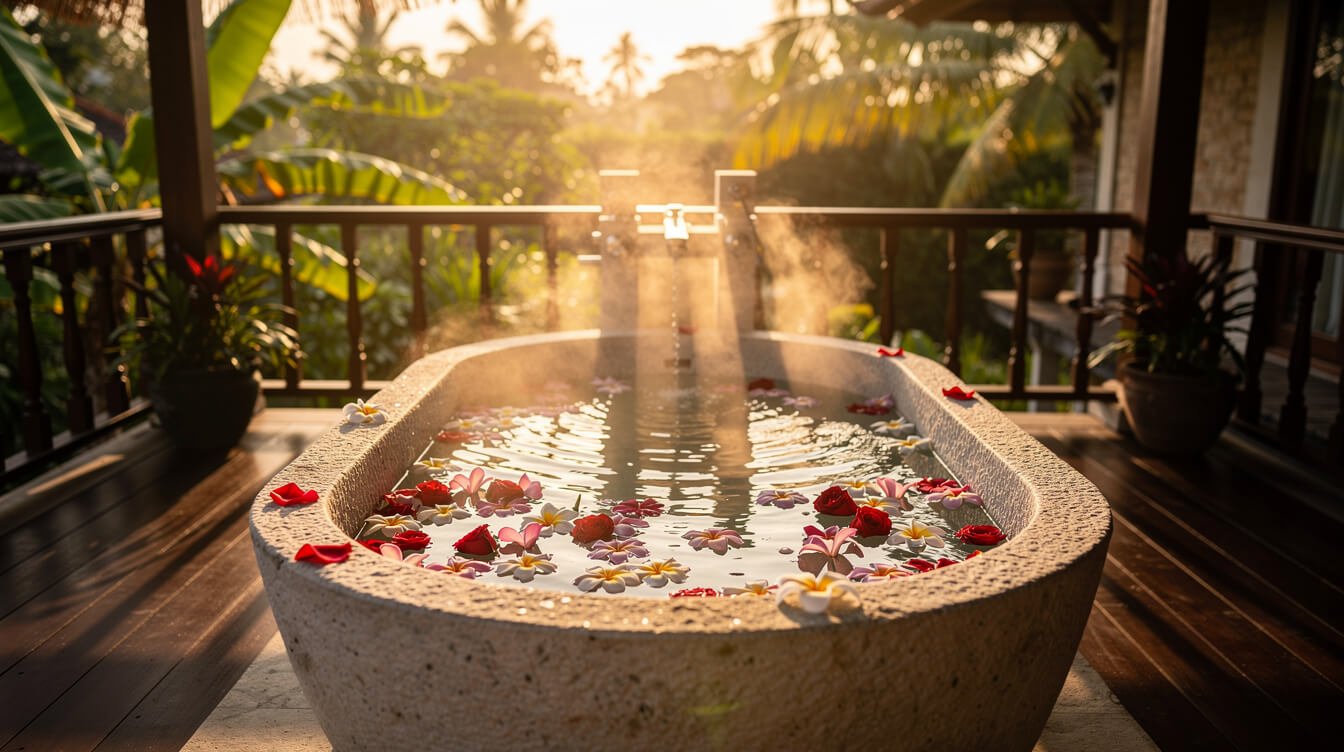
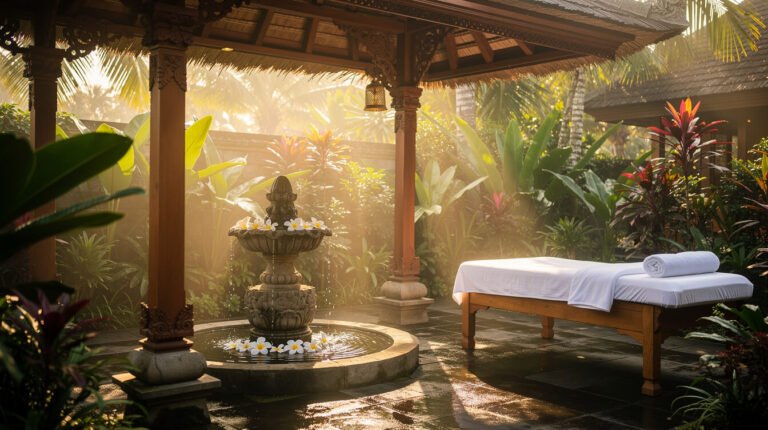
At its simplest, a flower bath is a warm soak layered with fresh flower petals, often combined with herbs, salt, or a few drops of essential oil drawn from the same plants. In Ubud, you’ll usually find it offered one of two ways: as a treatment inside a spa, where you’re led to a private tub already prepared, or as an in-villa ritual, set up on your own terrace or beside your own pool by someone who works there every day.
The in-villa version is the one worth seeking out. A spa treatment is lovely, but it’s built for turnover — twenty minutes, a photo, the next guest waiting. A flower bath arranged in your own space has no clock attached to it. The petals are chosen that morning. The water temperature is whatever you ask for. Nobody needs the room back.
It’s worth saying plainly: a flower bath is not the same thing as the floating-petal pool decorations you’ve likely seen on travel blogs and Pinterest boards. We’ll get to that distinction in a moment, because conflating the two is where most guests — and most articles — get it wrong.
Where you encounter a flower bath in Ubud tends to shape how memorable it ends up being. At a large resort spa, you’re one of several bookings that day — the tub is prepared on a schedule, and the petals, while real, are often the same handful of varieties used for every guest that week. At a smaller, staffed villa, the person preparing your bath is usually also the person who tends the garden it came from. They know which tree is flowering this week and which one has gone quiet. That difference sounds small until you’re the one lying in the water, and it isn’t.
The History and Spiritual Meaning Behind the Ritual
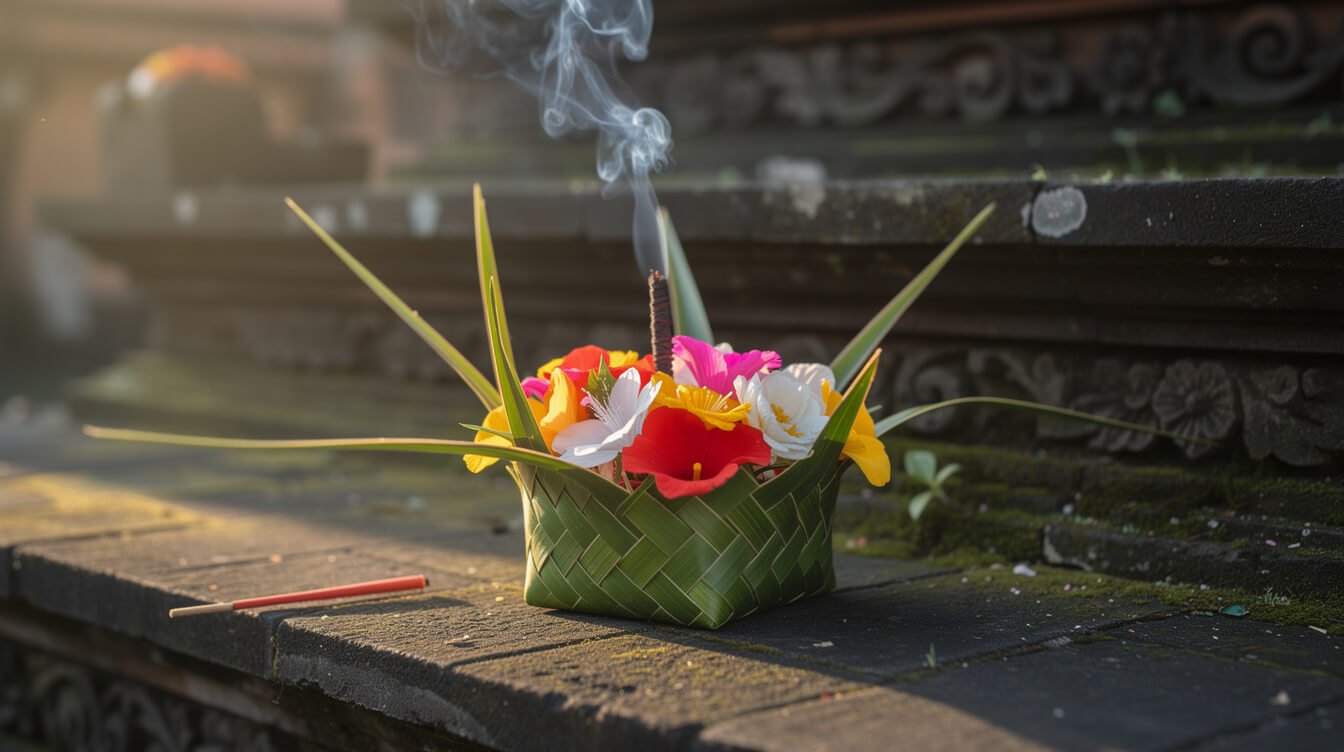
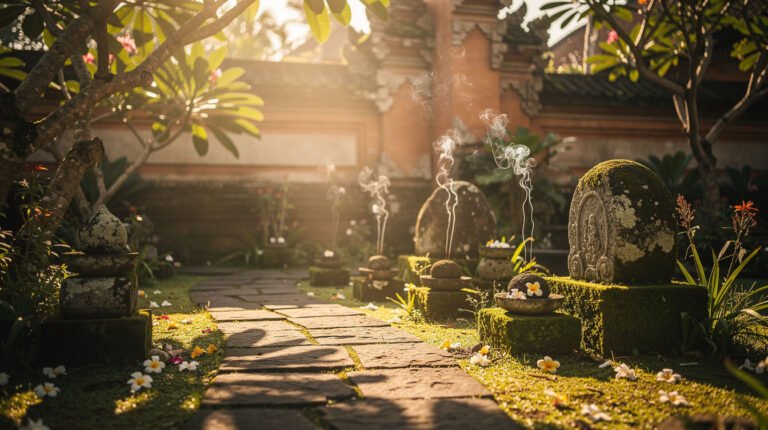
To understand why flowers end up in bathwater at all, you have to understand what flowers mean in daily Balinese life. Walk through any village at sunrise and you’ll see canang sari — small woven-palm trays of petals, rice, and incense — set outside doorways, on dashboards, at the base of trees. They’re offerings, placed fresh every single day, regardless of whether anyone is watching. Flowers here are never just pretty. They’re a form of communication with something larger.
The flower bath grows out of that same instinct, loosely related to melukat, the holy water purification ritual performed at sacred springs across the island — you can read more about how that tradition is still practiced today in our guide to the temples and ceremonies of Ubud. Melukat uses spring water and is performed by a priest; a flower bath is its gentler, domestic cousin — something a family might do at home, or a spa might adapt for guests, using warmth and fragrance rather than cold sacred water to achieve a similar sense of being cleared.
That lineage matters because it changes what you’re actually doing when you take one. You’re not just relaxing. You’re participating, in a small and respectful way, in a logic of renewal that shapes an enormous amount of life in Bali — the idea that the body and the day both benefit from being deliberately, physically cleared before you move forward.
You can see that same logic show up everywhere once you start noticing it: in the way a new business owner will have a priest bless the doorway before opening, in the way a family performs a small ceremony before a long journey, in the way almost nothing significant happens on this island without some gesture of offering first. A flower bath borrows that same shape and scales it down to something a traveler can take part in without needing to understand Balinese Hinduism in depth. You don’t need to know the names of the gods being honored at a water temple to feel the basic, human logic of wanting to set something down before you carry on — and that’s really what the ritual offers, whether or not you think about it in spiritual terms while you’re in the water.
It’s also worth noting what the ritual is not. It isn’t a religious ceremony performed by a priest, and respectful villas and spas don’t present it as one — that would misrepresent something that matters to Balinese Hindu practice. What’s being offered to guests is an adaptation: the same ingredients and the same underlying idea of purification, reshaped into something a visitor can experience with warmth rather than solemnity. Understanding that distinction is part of what separates a thoughtful flower bath from one that’s simply borrowing imagery without context.
A flower bath isn’t a spa gimmick layered onto the island for tourists. It’s a softened, hospitality-friendly version of a purification instinct that’s older than any resort here.
Which Flowers Are Traditionally Used (and Why)
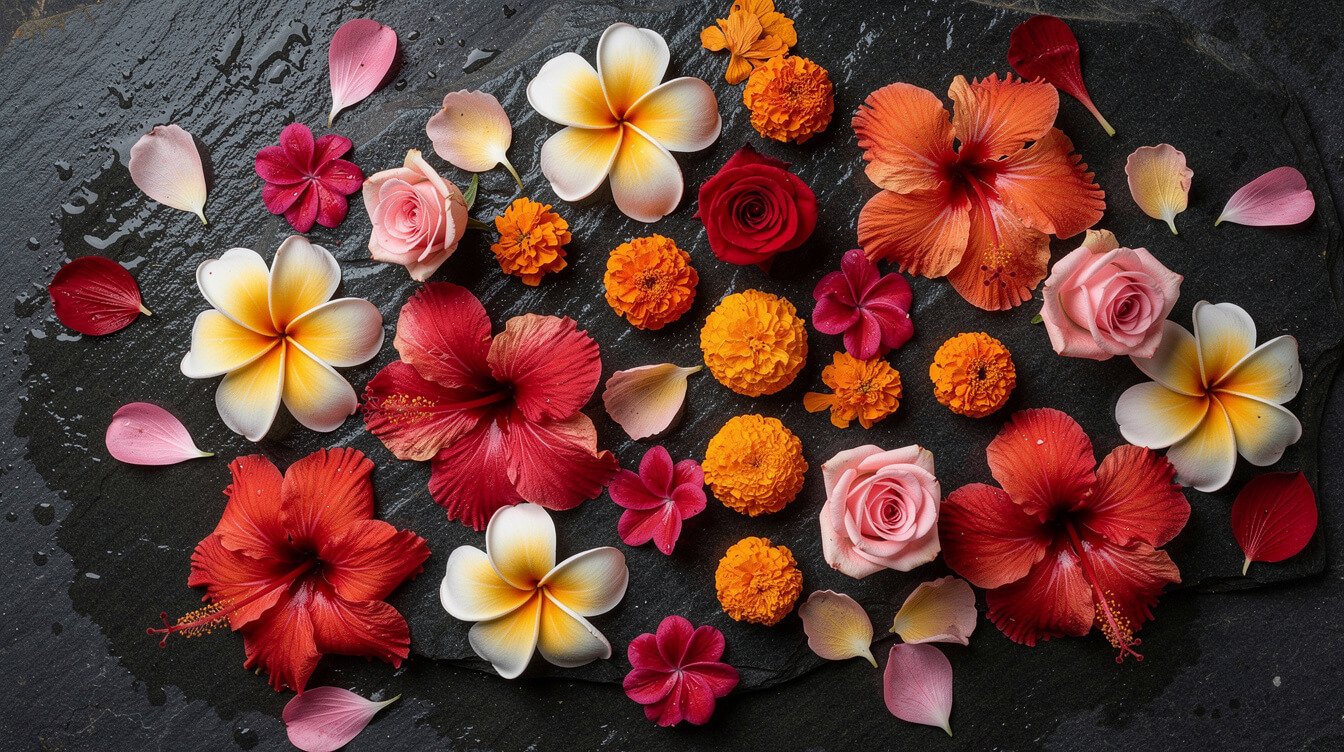
Not every petal makes the cut, and the choices aren’t random. If you ask your villa’s gardener or housekeeper which flowers they’d use, you’ll likely hear some combination of these:
- Frangipani (jepun) — the flower most associated with Bali itself. Soft, waxy, and intensely fragrant, it’s used in temple offerings as well as baths, often scattered across the surface last because it floats so well.
- Marigold — bright orange and gold, associated with the sun and used widely in ceremonial contexts across Southeast Asia, not just Bali. It adds color more than scent.
- Rose — not native to Bali but adopted widely for its fragrance, especially in treatments aimed at guests rather than strictly traditional household use.
- Hibiscus — a garden staple here, used for its vivid red and the way it holds its shape in water far longer than more delicate petals.
- Ylang-ylang and ginger flower — less common but used by some spas for their heavier, warmer scent, especially in evening baths.
A good flower bath usually layers two or three of these rather than one — color and fragrance working together. If you ever have your bath prepared by Villa Amrita’s own gardener, ask what’s blooming that week. Bali’s flowering plants shift with the season, and the freshest bath is always made from whatever’s actually in bloom that morning, not a fixed recipe.
There’s a practical reason seasonal sourcing matters beyond freshness, too. Frangipani trees in Ubud tend to flower most generously in the drier months, while hibiscus blooms fairly reliably year-round, which is part of why you’ll see it used so often even outside of ritual contexts — it’s dependable. A villa gardener working from their own trees will naturally lean on whatever’s abundant that week rather than forcing a fixed recipe, which is exactly why two flower baths a month apart, even at the same villa, rarely look or smell quite the same. That variation is a feature, not an inconsistency — it’s the clearest sign the petals weren’t sourced from a supplier’s standing order.
Flower Bath vs. Flower Pool: Knowing the Difference
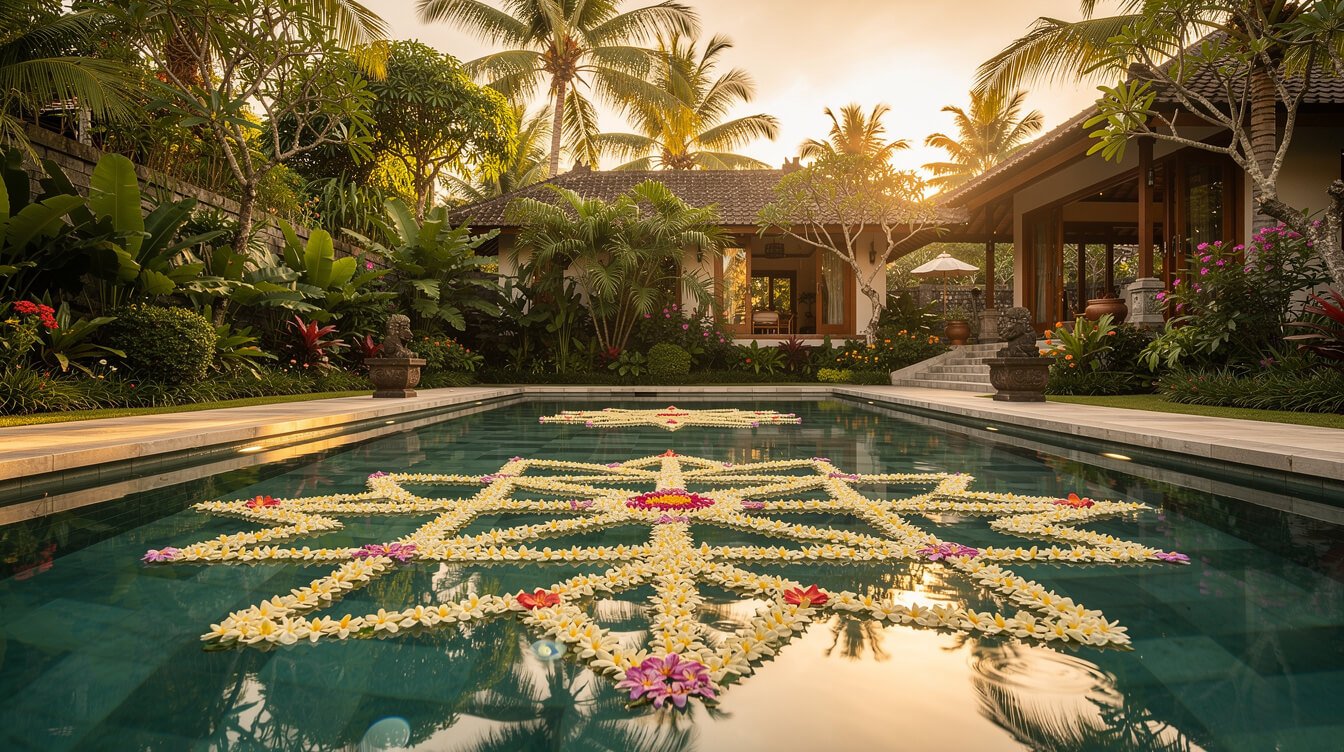
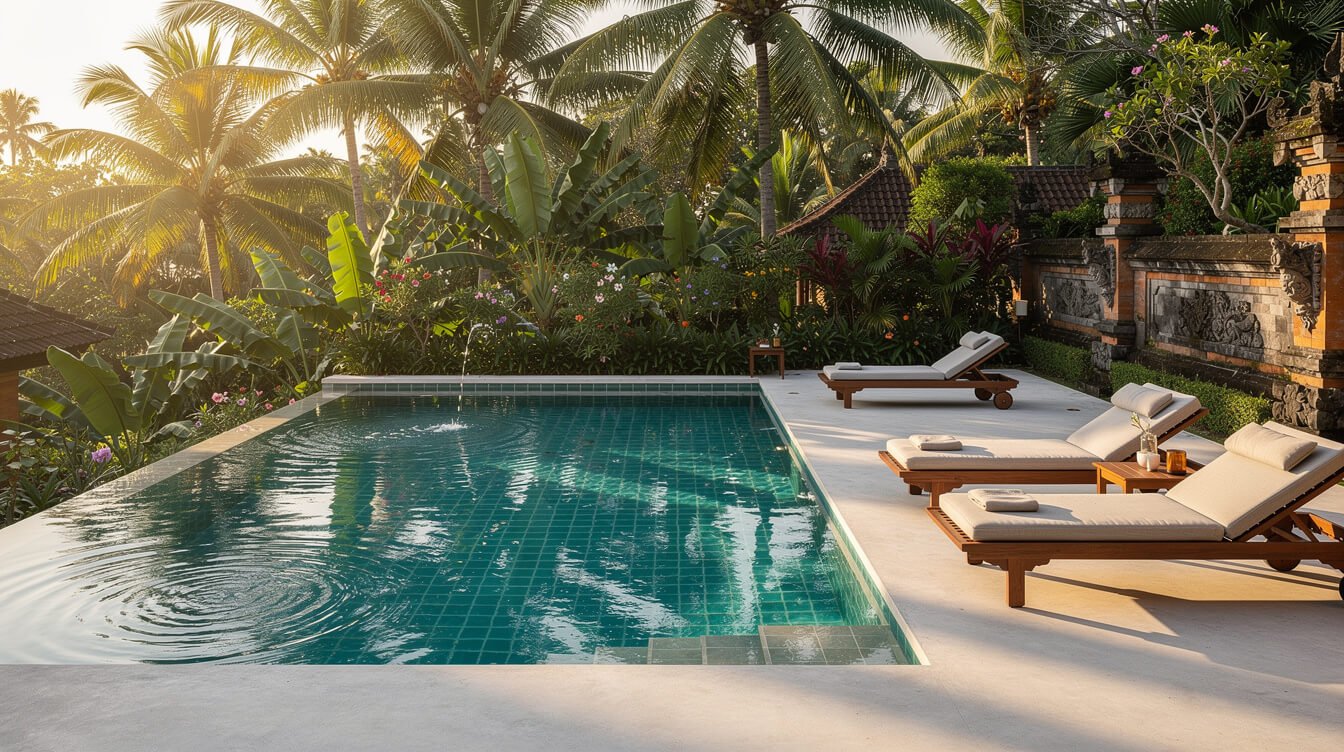
Here’s the confusion worth clearing up, because most of what ranks for this topic online is actually about something else. A flower pool is a decorative surprise — petals arranged into a heart, a date, initials, floating across the surface of a private swimming pool, usually set up by hotel staff while you’re out for dinner and revealed when you return. It’s a wonderful gesture for an anniversary or a honeymoon, and it photographs beautifully. But it isn’t a wellness ritual. Nobody’s soaking in a flower pool; you’re swimming past the petals or taking photos beside them.
A flower bath, by contrast, is meant to be entered. It’s smaller in scale, warmer, usually indoors or in a private tub rather than a full pool, and the point isn’t the photo — it’s the twenty or thirty minutes you spend still, with warm water and fragrance doing their slow work on your shoulders.
Plenty of travel articles use the two terms interchangeably, which is understandable — they share an aesthetic and both involve flowers and water. But if you’re planning a stay and you specifically want the ritual experience rather than the romantic photo moment, be precise when you ask your villa team. Say “flower bath,” not “flower pool,” and you’ll get the tub, the stillness, and the scent — not just the surface decoration.
That said, there’s no reason you can’t have both during the same stay. Many couples arrange a flower pool for one evening’s surprise and a proper flower bath on another day, purely for the ritual itself. If romance planning is part of your trip, our guide to why a private villa beats a resort for a Bali honeymoon covers how staff can coordinate both.
Get a free 3-day sample itinerary
Planning your Ubud days around a stay at Villa Amrita? We’ll send you a 3-day sample itinerary, hand-held and ready to adapt.
How to Experience an Authentic Balinese Flower Bath in Ubud
There are two honest paths to a flower bath here, and they lead to fairly different experiences.
The first is booking a treatment at one of Ubud’s dedicated spas — many offer a flower bath as a standalone service or bundled with a massage. It’s a reliable option if you’re staying somewhere without in-house staff, and Ubud has no shortage of genuinely skilled therapists. Our guide to Ubud’s traditional spa scene walks through what separates an authentic treatment from a tourist-trap one.
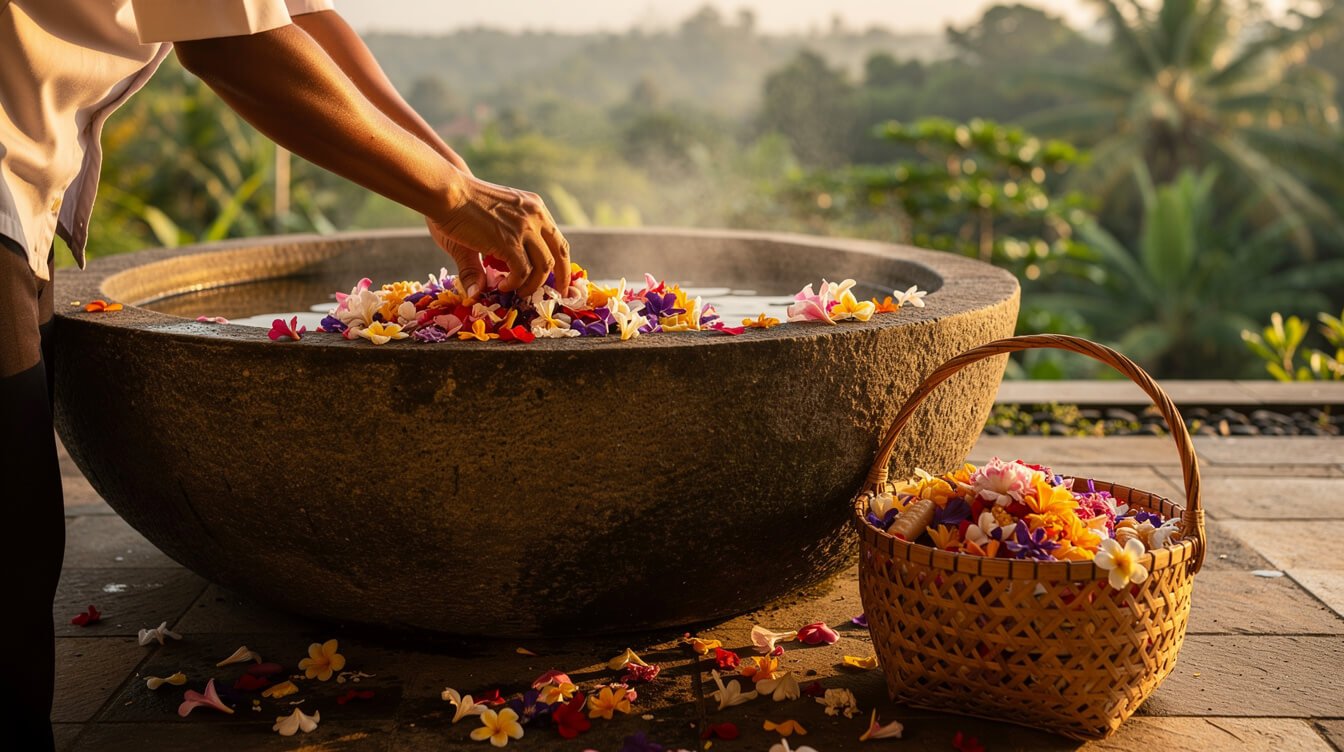
The second is arranging it directly through your villa. This is where staying somewhere staffed changes the experience entirely. Rather than booking a slot and traveling to a spa, you ask your villa manager the morning of (or the night before, if you’d like it to be a surprise for someone you’re traveling with), and the team handles it — the tub, the petals sourced fresh that day, the timing built around whatever else you have planned. No appointment card, no travel time, no sharing the space with the next guest in line.
If you’re the one arranging the surprise — a birthday, an anniversary, a quiet thank-you to someone who needed one — tell the staff what the occasion is. Balinese hospitality treats that kind of detail as part of the job, not an inconvenience. A good villa team will ask what scent you prefer, what time works, and whether you’d like it paired with a massage, without needing to be asked twice.
Budget-wise, it helps to think of the two paths differently. A spa treatment is a fixed, published price — easy to compare, easy to book online in advance, but fixed in scope too: a set duration, a set room, a set menu of flowers. A villa-arranged bath is closer to a favor than a transaction, even when there’s a small fee attached. You’re not choosing from a laminated menu; you’re describing what you want to someone who already knows your villa, your schedule, and often your preferences from earlier in the stay. For a single quick treatment between activities, the spa route is simpler. For something meant to be the quiet center of an evening, the villa route is worth the extra conversation it takes to arrange.
What to Expect During Your Ritual, Step by Step
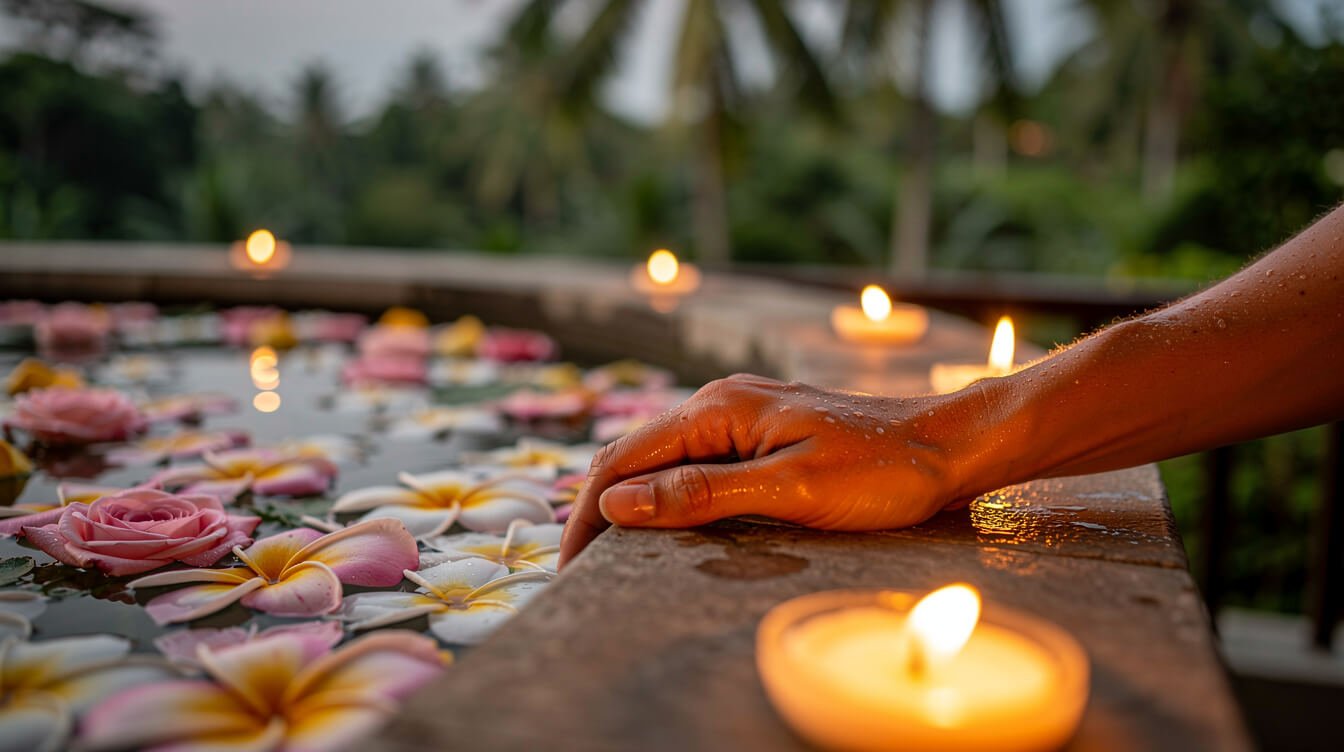
If you’ve never had one, here’s roughly how it unfolds when arranged well:
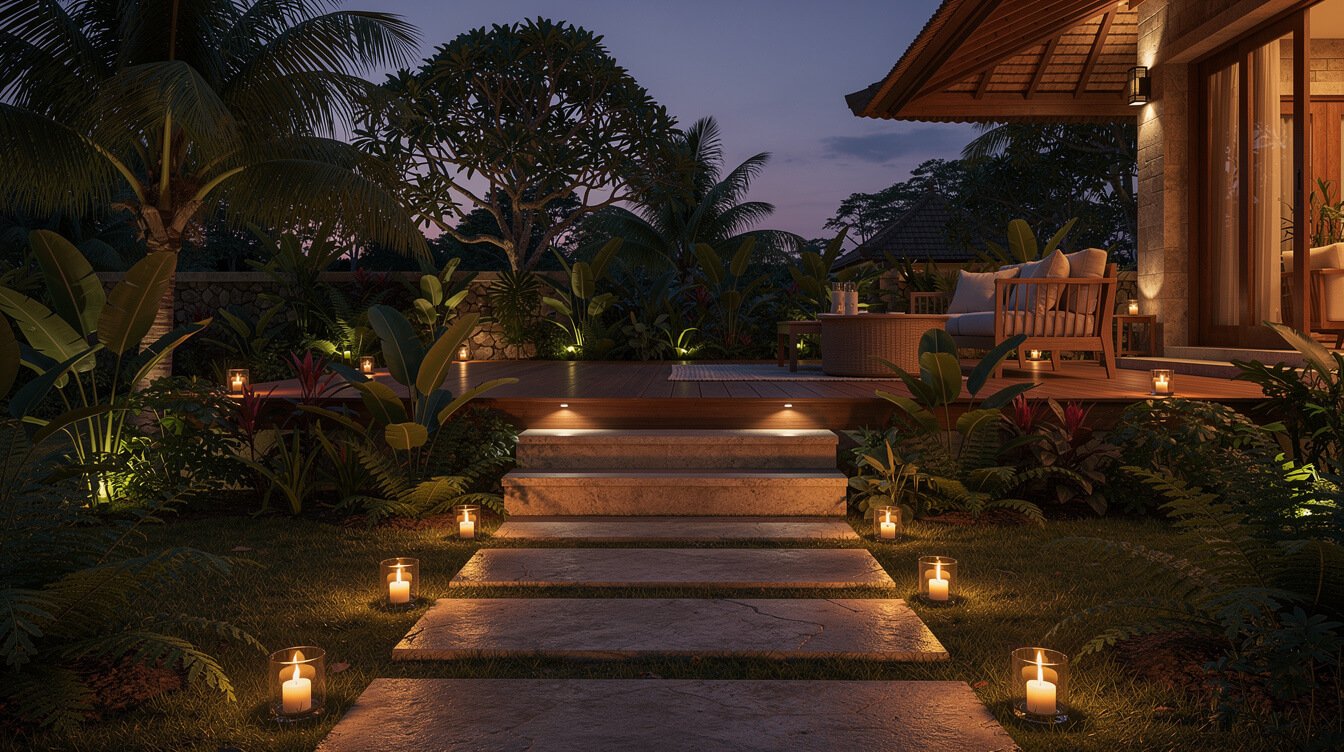
- Preparation, usually 30-45 minutes before. Fresh petals are gathered, the tub is filled, and candles or soft lighting are set up if it’s evening. Most villa staff prepare this quietly, without needing you present.
- Water temperature, your call. Traditionally it’s closer to room temperature, since Bali’s climate rarely calls for a hot bath — but any good villa will heat it if you prefer warmth, especially in the evening.
- The scent arrives first. Most guests say this is the part they didn’t expect — the fragrance fills the air around the tub well before you’re in the water, and it’s the detail that tends to stick in memory longest.
- Thirty minutes, no rush. Unlike a spa slot, there’s no one waiting on the clock. Stay as long as the water stays warm.
- Afterward. Many guests pair it with a short massage, a pot of ginger tea, or simply a quiet hour on the terrace before dinner. The ritual tends to slow down whatever comes next, too.
One practical note: petals do stain lighter fabrics if you’re wearing a swimsuit rather than bathing as intended, and the water will need draining and the tub cleaning afterward — all handled by villa staff, not something you need to think about.
Book the Villa
A flower bath is one request away when you stay somewhere staffed. Check availability and bring this ritual into your own trip.
Frequently Asked Questions
Is a flower bath the same as a flower pool?
No. A flower pool is a decorative petal arrangement floated across a swimming pool, usually as a romantic surprise. A flower bath is a smaller, warm soak you actually sit in, rooted in Balinese purification tradition rather than photo styling.
How much does a balinese flower bath cost in Ubud?
Spa treatments typically range from a modest add-on price to a mid-range standalone service, depending on the spa and whether it’s bundled with a massage. Arranging one through a staffed villa is often included as part of the stay or available for a small request fee, since the villa already has the staff and setting — ask when you book.
What flowers are traditionally used?
Frangipani, marigold, hibiscus, and rose are the most common, often combined for both color and fragrance, with ylang-ylang or ginger flower used by some spas for a heavier evening scent.
Can I request a flower bath as a surprise for someone else?
Yes — this is one of the most common requests villa staff receive. Let your villa manager know the occasion and preferred timing, and they’ll typically prepare it while you’re both out, timed for your return.
Is a flower bath spiritually significant, or just aesthetic?
Both, depending on intention. Its roots trace to the use of flowers in Balinese offerings and the purification logic behind rituals like melukat. Most spas and villas today offer it as a wellness experience rather than a religious one, but the lineage is real, not invented for tourism.
What’s the best time of day for one?
Evening is the most common choice, since the cooler air makes the warm water more welcome and the fading light suits candles well. That said, a late-afternoon bath after a day of temple visits or rice-terrace walking is its own kind of perfect timing — there’s no single correct hour, only whatever fits the rhythm of your day.
A Small Ritual Worth Protecting
It would be easy for a tradition like this to flatten into just another spa menu item, photographed and forgotten by checkout. What keeps it from doing that, at least here, is the people who still take the time to pick the petals fresh and ask what scent you’d prefer. That’s the difference between a flower bath and a flower pool, in the end — one is staged for a photo, and the other is made, by hand, for you specifically. If an evening with nothing on the schedule but warm water and frangipani sounds like the right way to close out a day in Ubud, it’s one of the easiest requests you’ll make during your stay.
Join our newsletter — fun, new, exciting Bali news
Stories from the garden, the kitchen, and the village — delivered a little less often than you’d expect, and always worth opening.