The Knives That Wake the Village Before a Ceremony
It starts before the roosters have properly got going. Somewhere down the lane, a knife comes down on wood. Then another, a half-beat behind. Then a dozen of them, falling into one rhythm, quick and dry and oddly musical, like rain on a tin roof if the rain had somewhere to be. If you’re awake in the blue hour before six, lie still and listen. The village is cooking for the gods.
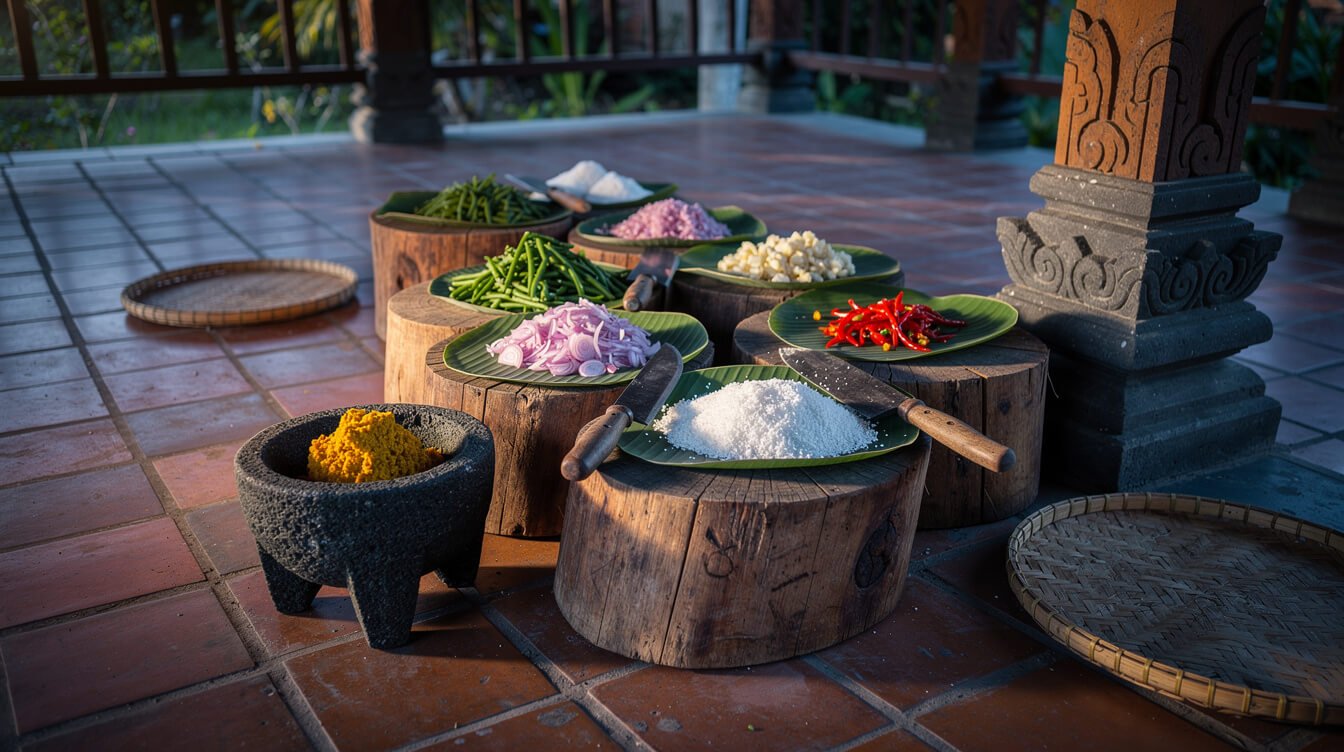
This is mebat, the communal cooking that comes before a big ceremony: a temple anniversary, a wedding, the days before Galungan. The men of the banjar gather in the open pavilion of their village hall, each one kneeling or squatting at a round chopping block sawn straight from a tree trunk. They work with broad, heavy knives, and they work together, mincing meat, long beans, grated coconut, shallots, garlic and chilies finer than you’d think a blade could manage. It’s how lawar is made, the spiced mix at the heart of every ceremonial meal, along with the minced sate wound around lemongrass and bamboo sticks.

Get a Free 3-Day Sample Itinerary
A walk down the lane, a long lunch, the rice fields in the last light of the day. We will send you a three-day Ubud rhythm built around the moments most visitors walk straight past.
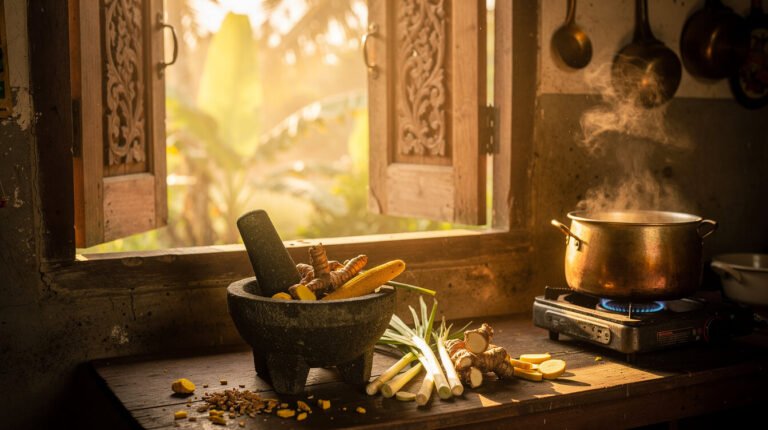
Walk past later and you’ll see it laid out in heaps on banana leaves. Pale coconut, green beans, red chili, and a stone mortar of base genep, the yellow spice paste of turmeric, galangal, ginger and a dozen other things that Balinese cooks grind by hand. There’s coffee in glasses, clove cigarettes, a lot of laughing. Nobody is paid. It’s ngayah, work given freely to the community, and the older men are teaching the younger ones the rhythm without ever quite saying so.
Meanwhile the women are elsewhere, folding the palm-leaf offerings that will carry the food to the temple. By the time the sun clears the trees, the chopping has stopped and the lane smells of toasted spice and woodsmoke.

Book the Villa
Three bedrooms, a full in-villa team, and a pool of your own, and mornings that start with the village already awake. Check availability for your dates.
A gentle word if you come across it: smile from the edge, ask before you take a photo, and don’t be surprised if someone offers you a taste. The same banjar that answers the kulkul drum for village work is the one doing the cooking, and the gamelan that drifts in before dinner often belongs to the same ceremony. Our guide to Balinese religion explains what the ceremonies are for, and if you’d like to taste the everyday cousin of lawar, nasi campur is where to start. When you stay at a staffed villa in Ubud, the team will usually know when a neighbor’s ceremony is coming and can tell you what you’re hearing.
So if a rhythm of knives wakes you before dawn, don’t reach for the earplugs. Lie there and let it carry you. The village is getting ready for a celebration, one fine cut at a time.

Join Our Newsletter
Fun, new, exciting Bali news — straight from the villa, every so often.