Pura Luhur Uluwatu Temple: The Cliff Temple’s Story, Sunset Kecak and a Day Plan from Ubud
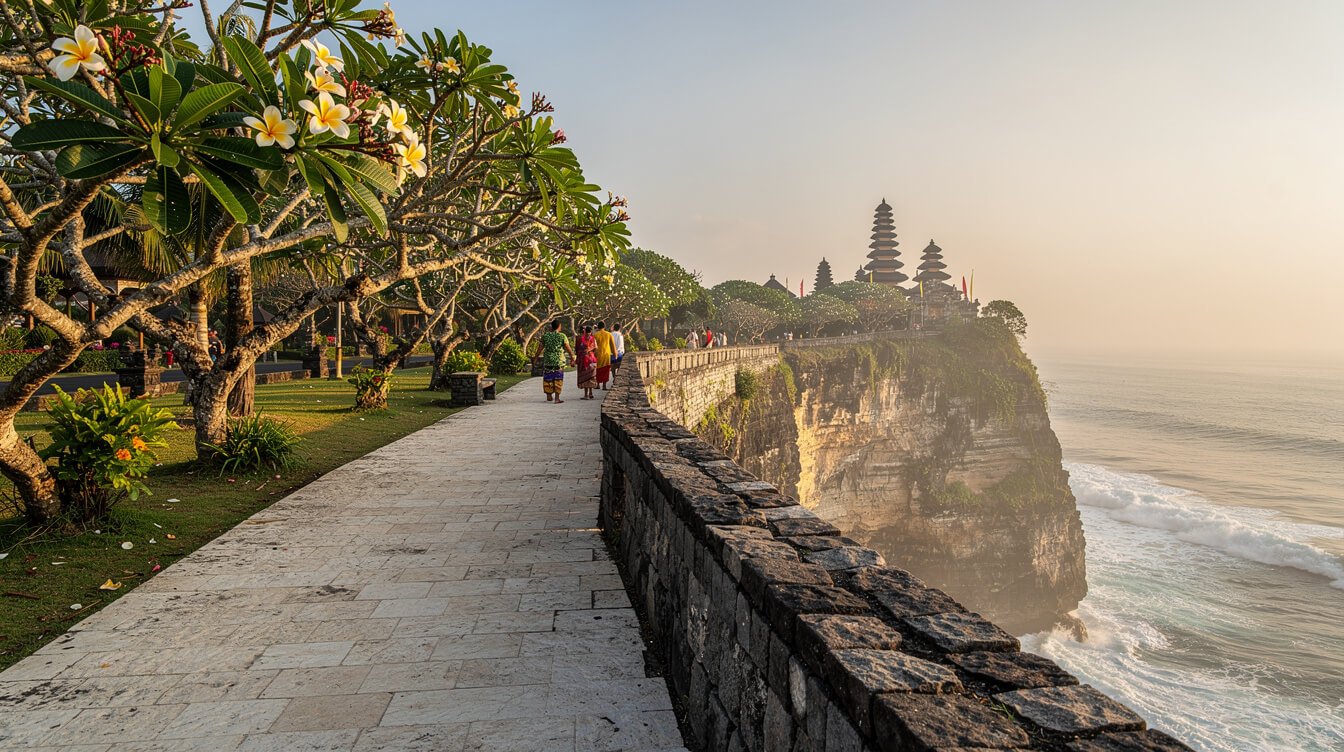
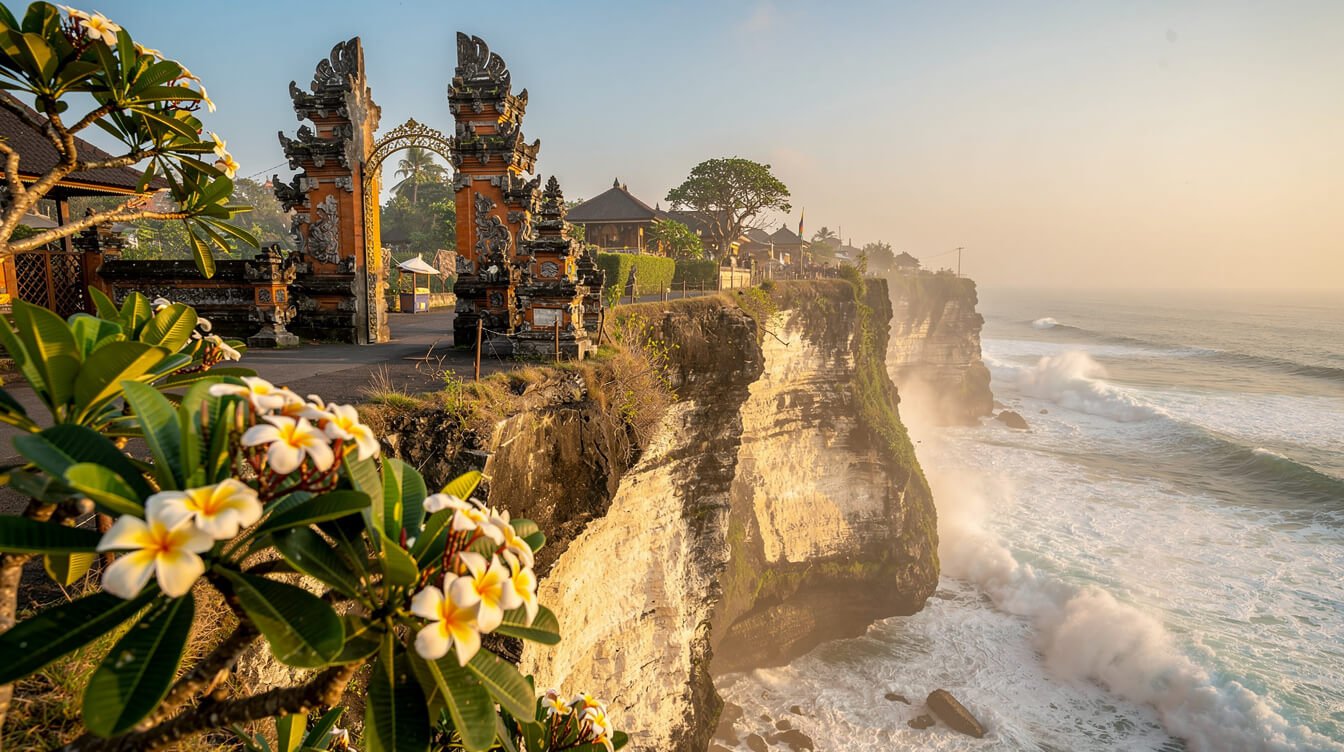
The wind finds you first. It comes up off the Indian Ocean, climbs about 70 meters of pale limestone, and moves through the frangipani trees along the cliff path, salty and warm. Below, the swell breaks into white lace against the rocks. Ahead, a small tiered shrine stands right at the edge of the island, outlined against the late afternoon sky. This is Pura Luhur Uluwatu temple, one of the most sacred places in Bali, and one of the most beautiful places on the island to watch the day end.
Most guides to Uluwatu give you a ticket price, a warning about the monkeys and a reminder to arrive by 4:30 pm. That’s useful, but it leaves out why the temple matters and how to fit it into a day from Ubud without spending most of it in traffic. This guide covers both. You’ll find the temple’s story and its place in Balinese belief, what you can and cannot see, how to dress and behave, how to keep your sunglasses away from the macaques, an honest comparison of the Uluwatu and Ubud Kecak performances, a realistic day plan from Ubud, and the current 2026 ticket prices and hours.
Why Pura Luhur Uluwatu Temple Matters: A Guardian at the Edge of Bali
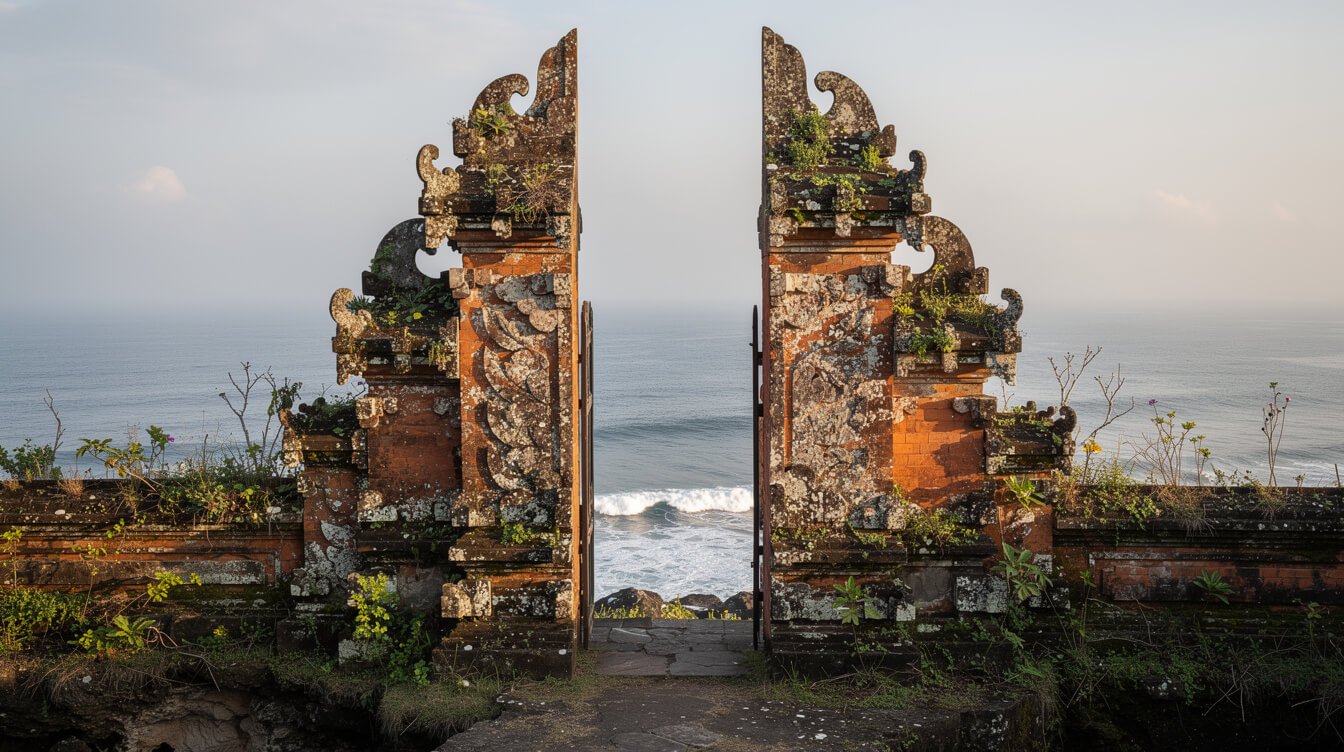
To understand Uluwatu, start with its name. Pura means temple. Luhur suggests something exalted or of divine origin. Ulu means the head or the top, and watu means stone. Put together, it’s the sacred temple at the head of the rock, which is exactly where it stands: on the southwestern tip of the Bukit Peninsula, at the very edge of Pecatu village, where the land simply stops.
One of Bali’s directional guardian temples
Pura Luhur Uluwatu is counted among Bali’s sad kahyangan jagat, a small group of temples believed to protect the whole island, each guarding one direction. Uluwatu watches over the southwest, facing the open sea. In Balinese Hindu thinking, the mountains are associated with the sacred and the sea with powerful, untamed forces. A guardian temple on a sea cliff isn’t a scenic accident. It’s a place where those forces are held in balance, and Balinese families from across the island come here to pray, not just the people of the nearby villages.
Two priests and a cliff
Tradition holds that a shrine stood here as early as the 11th century, linked to the sage Mpu Kuturan, who is credited with shaping much of Bali’s temple and village structure. The temple’s best-known story belongs to the 16th century, when the Javanese priest Dang Hyang Nirartha traveled through Bali founding and strengthening sea temples along the coast. Balinese tradition says Nirartha reached moksha, spiritual liberation, here at Uluwatu, and that he left the world from this cliff. Accounts differ in the details, as old sacred stories do, but the feeling around the temple is consistent. People speak about this place quietly.
If you’ve already visited the water temples inland, such as Tirta Empul, Uluwatu shows you the other half of Balinese sacred geography. Tirta Empul is about springs, purification and the mountain’s gift of water. Uluwatu is about the edge, the sea and protection. Seeing both gives you a much fuller sense of how the island thinks about itself. Our wider guide to temples around Ubud fills in the rest of the picture.
A living temple, not a monument
Uluwatu isn’t a ruin or a museum. Its odalan, the temple anniversary festival, comes around every 210 days on the Balinese pawukon calendar, and during those days the paths fill with families in white and gold carrying tall offerings on their heads. Big island-wide holy days like Galungan bring worshippers too. If your visit coincides with a ceremony, you may find some areas busier or more restricted. That’s a privilege to witness, not an inconvenience. Step aside, stay quiet and let the procession pass.
What You Can and Cannot See at Pura Luhur Uluwatu Temple
A lot of first-time visitors arrive expecting to walk into the temple itself. You won’t, and it helps to know that before you go.
The closed inner sanctum
Balinese temples are laid out in courtyards that become more sacred as you move inward. At Uluwatu, the innermost part, where the main shrine stands on the cliff edge, is reserved for people coming to pray. Visitors aren’t allowed in. This isn’t about keeping tourists out for the sake of it. It’s an active place of worship, and the inner space is kept for those who come in devotion, in ritual dress, with offerings. You’ll see the shrine’s tiered roofs and carved stone gateways from the paths, and that view, with the ocean behind, is the one in all the photographs.
The clifftop paths
What you can explore is the best part for most visitors anyway. Stone paths with low walls run along the cliffs in both directions from the temple, shaded in places by frangipani and small trees. To the south, the path climbs to viewpoints looking back at the temple perched on its headland. To the north, you get long views of the coastline and, on clear days, the surf lines rolling in from the southwest. Walk both directions if you have time. The views change completely within a few hundred meters, and the crowds thin out quickly once you walk away from the main gate area.
The amphitheater
Set back on the cliff is the open-air amphitheater where the Kecak performance takes place each evening, with the ocean and the setting sun as its backdrop. You’ll need a separate ticket for the show, which we cover below.
If you love the stories behind the stones, there’s also a newer way to explore. We wrote about an augmented-reality app that brings Uluwatu’s history to life as you walk the grounds, a nice option if you’d rather not hire a guide.
Get a free 3-day sample itinerary
Rice-field mornings in Ubud, one long day south to the cliffs, and a slow day after to rest. We will send you a 3-day sample itinerary that makes room for Uluwatu without wearing you out.
Dress, Offerings and Temple Etiquette
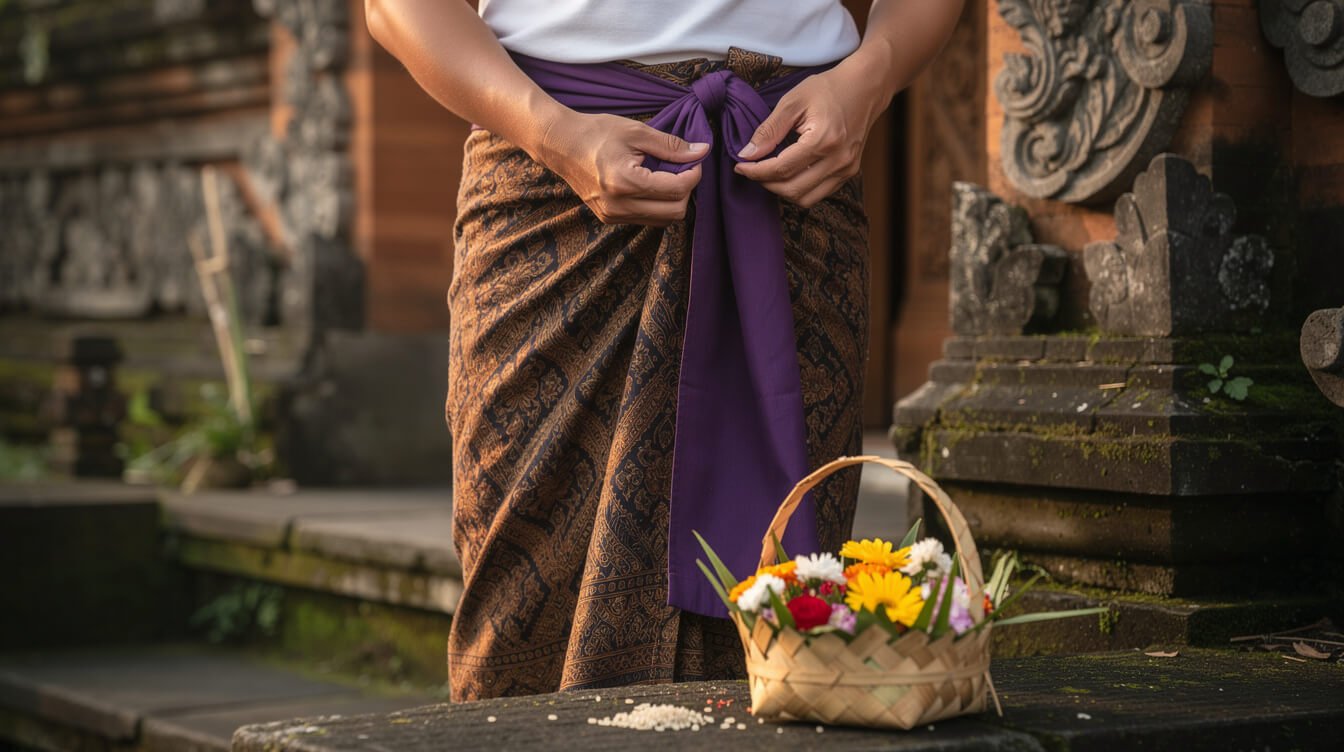
Visiting a Balinese temple asks for a little care, and it’s easy to get right. The people around you will notice and appreciate it.
Sarong and sash
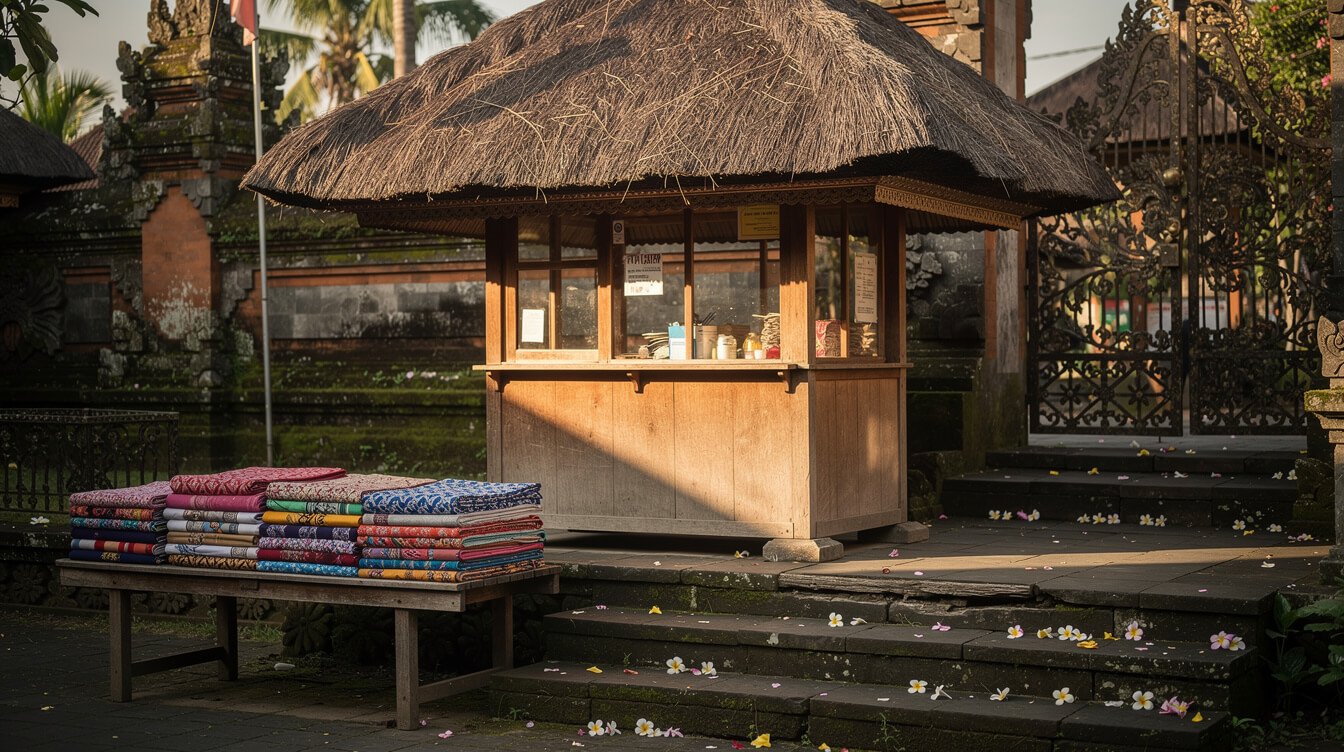
Everyone wears a sarong and a sash inside the temple grounds, men and women alike. At Uluwatu, both are included with your entrance ticket and handed out at the gate, so you don’t need to bring your own. If you have a sarong of your own, from a market in Ubud or a gift from the villa, you’re very welcome to wear it. The sash ties around your waist over the sarong. If you’re unsure how to tie either, the staff at the entrance will help you, and so will the team at the villa before you leave.
Under the sarong, wear something modest that covers your shoulders, and choose comfortable shoes. The paths are stone, uneven in places, with steps, and you’ll walk more than you expect.
Respecting offerings
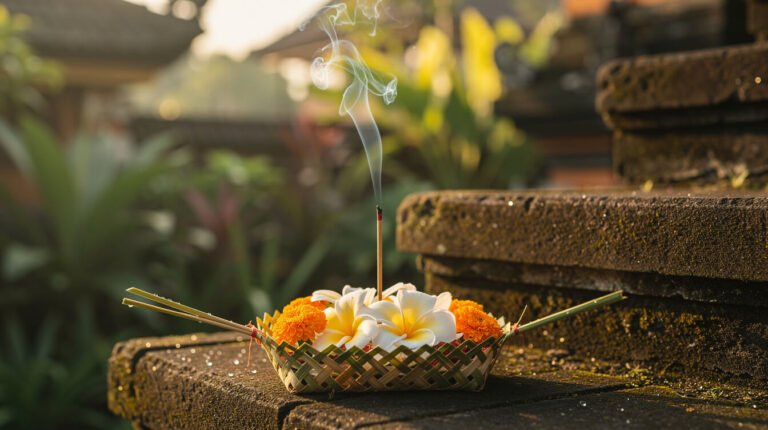
You’ll see small woven palm-leaf trays of flowers, rice and incense on steps, shrines and even the paths. These are canang sari, the daily offerings made all over Bali, and you’ll recognize them from your mornings in Ubud. (We wrote about the quiet ritual of canang sari at the villa.) Step around them, never over them, and don’t move them for a photo.
A few gentle customs
- Stay off the shrines and walls. Don’t climb, sit on or lean against shrines or temple structures, even for a photo.
- Keep your head lower than priests and people at prayer if you pass close by, and never walk in front of someone praying.
- Ask before you photograph people in ceremony. Most will say yes. Some won’t, and that’s fine.
- Keep your voice down near the temple itself, even when the paths are busy.
The menstruation custom, explained kindly
You may see a sign at the entrance asking women who are menstruating not to enter. In Balinese Hinduism, temples are kept in a state of ritual purity, and blood from any source, including an open wound, is traditionally seen as a temporary state of impurity, called sebel. It isn’t a judgment about women. It’s one of several customs that apply to everyone, including people in mourning. The custom works on trust, and no one will ask you. If it applies to you on the day, consider seeing Uluwatu another day, or simply enjoy the beaches and the evening from a clifftop café nearby instead.
The Uluwatu Monkeys: How to Keep Your Sunglasses (and Your Phone)
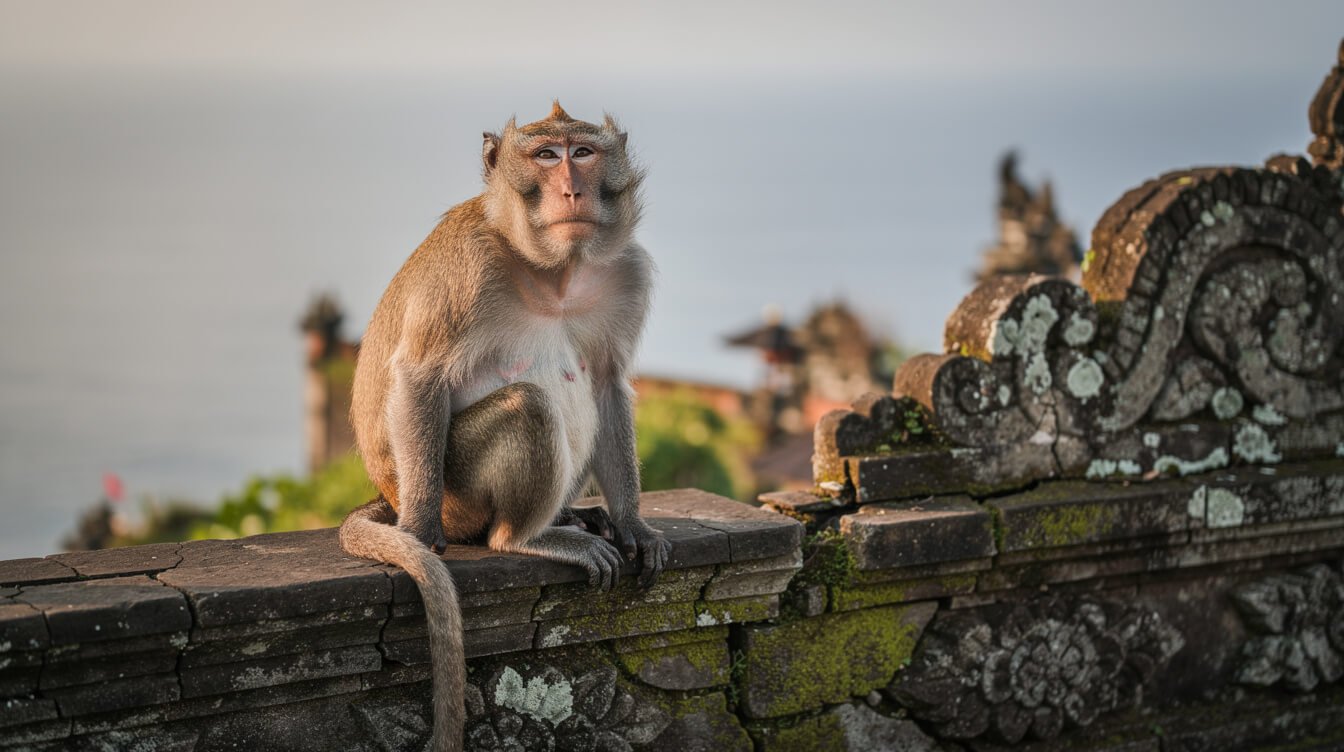
The forest around Uluwatu is home to a troop of long-tailed macaques, and they’re famous for one specific skill. They steal things, then trade them back for food. Sunglasses, hats, earrings, flip-flops and phones are their favorites. It can look like a game, and sometimes it’s funny, but a monkey running off with your phone at the cliff edge isn’t the souvenir you want.
How to avoid becoming a story
- Pack loose things away before you reach the forest paths. Sunglasses go in a zipped bag, not on your head. Hats come off. Dangling earrings come out.
- Hold your phone with a firm grip, or use a wrist strap, especially near the walls.
- Carry no food, and don’t eat on the paths. Even a rustling snack wrapper gets attention.
- Don’t stare, bare your teeth or smile wide at a monkey. To a macaque, that looks like a challenge.
- If something is taken, let it go. Don’t chase or grab. Local staff are often nearby and can usually recover items by offering fruit. A small thank-you tip is customary.
If you’re scratched or bitten
Wash the area well with soap and water and see a clinic the same day. Bali has had cases of rabies, and a doctor can advise you properly. It’s rare, but it’s not something to wait on.
If you’ve already met the much calmer macaques at the Sacred Monkey Forest in Ubud, you’ll find the Uluwatu troop a little bolder. The same rules apply. They’re just more important here.
Sunset Kecak at Uluwatu vs Kecak in Ubud: Which Should You Choose?
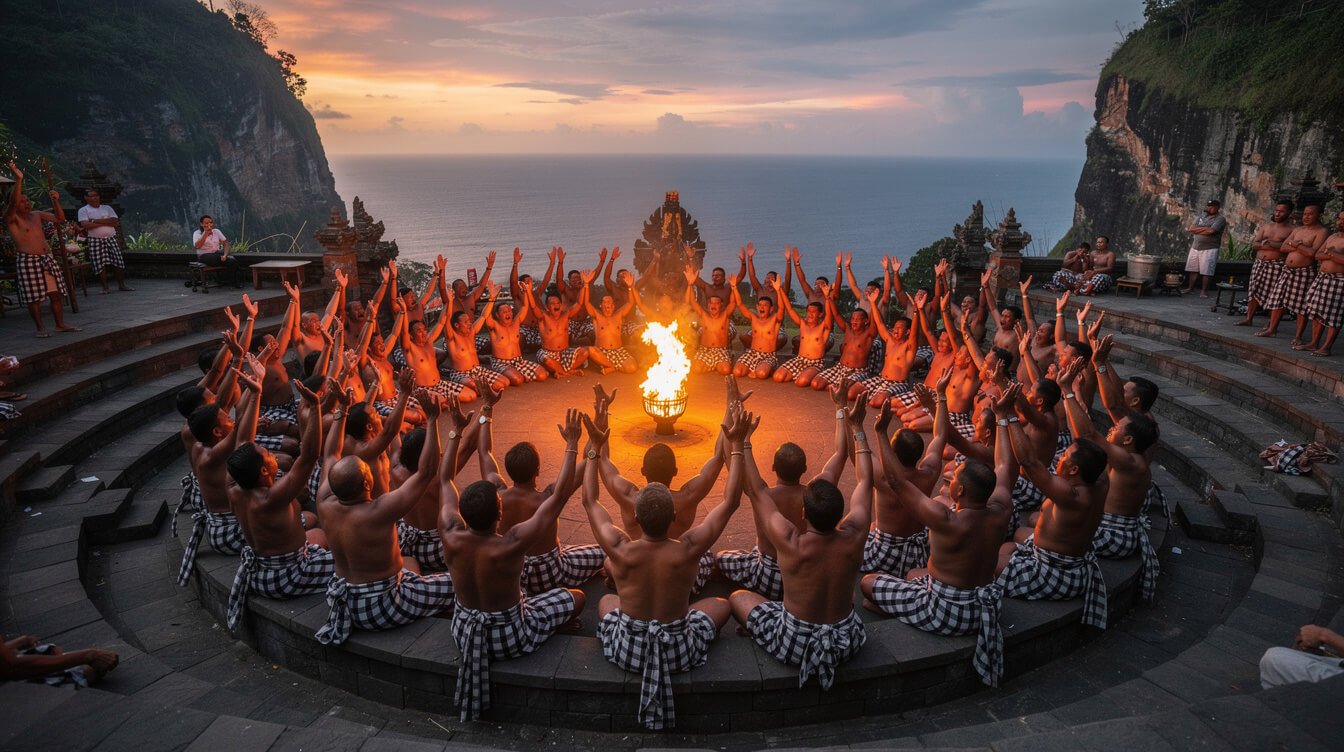
The Kecak at Uluwatu is one of the most famous performances in Bali. A circle of men in checked cloth, sometimes as many as several dozen, sits in rings around a central flame and chants a sharp, layered “cak-cak-cak” that becomes the whole orchestra. Through that sound, dancers act out an episode of the Ramayana: Rama, Sita, the demon king Rawana and the white monkey general Hanuman, who usually steals the show. At Uluwatu, the sun drops into the ocean behind the stage as the story unfolds, and by the fire scene it’s dark, with only flames and the sound of the waves below the chant.
Uluwatu: the sunset spectacle
The setting is the reason to come. Few stages anywhere have a backdrop like this. The show is larger, livelier and more playful with the audience. Hanuman likes to climb through the crowd. The trade-offs are size and distance. The amphitheater is big and busy, seating is unreserved, and in peak months you’ll want to be in your seat well before the show starts. From Ubud, it also means a long drive each way.
Ubud: the village performance
The Kecak dance in Ubud is performed at village temple stages in the evening, usually around 7:00 to 7:30 pm, and often ends with the Sanghyang Jaran fire-trance dance, barefoot on burning coconut husks. It’s smaller, quieter and closer to the village life the chant grew out of. You can have an early dinner on the terrace, walk or take a short drive over, and be home in time for a late swim.
Our honest take
If you’re spending a day in the south anyway, see the Uluwatu Kecak once. The sunset is the reason, and it really is something. If you’re only choosing one and you’re staying in Ubud, the village performance is easier and more intimate. Many guests do both: Ubud early in the trip for the story and the trance, then Uluwatu later for the cliffs and the light.
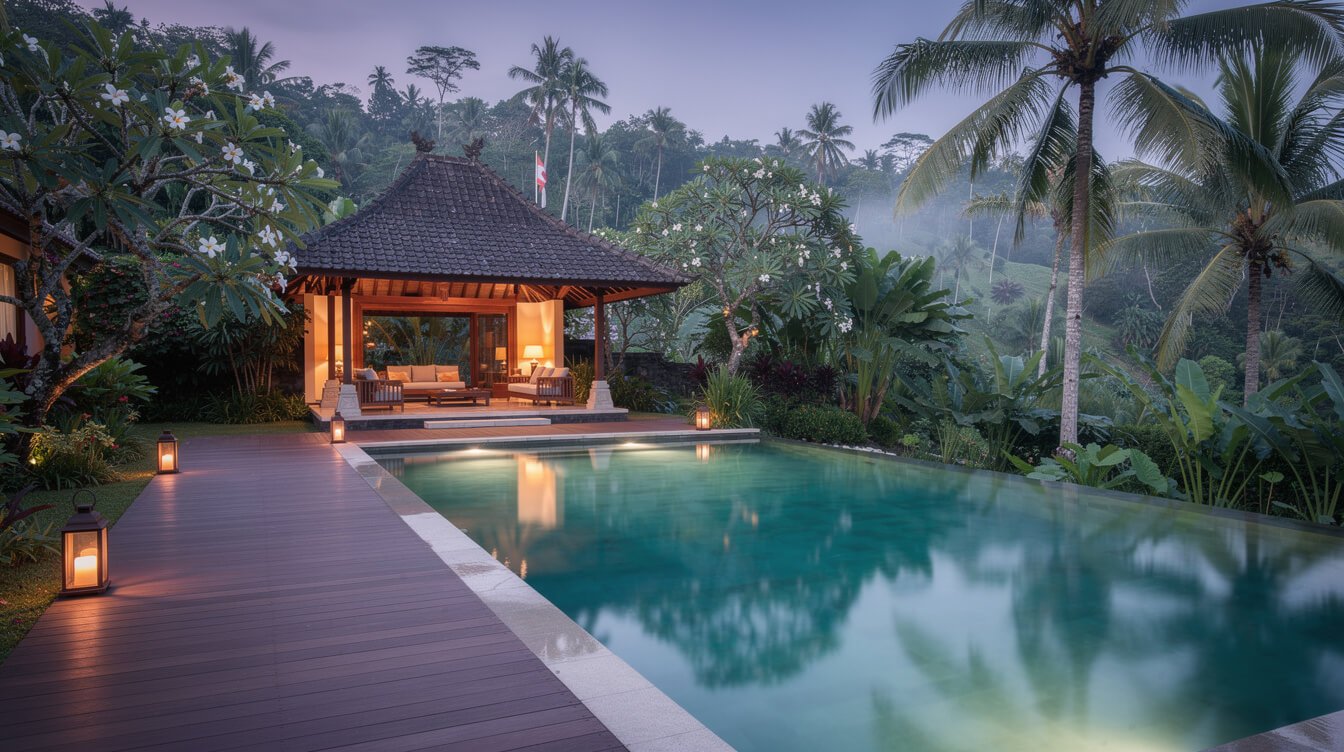
Book the Villa
Three bedrooms, a private pool waiting for you after a long day at the coast, and a team who knows the island roads and the village rhythms. Check availability for your dates at Villa Amrita.
A Day Trip to Pura Luhur Uluwatu Temple from Ubud
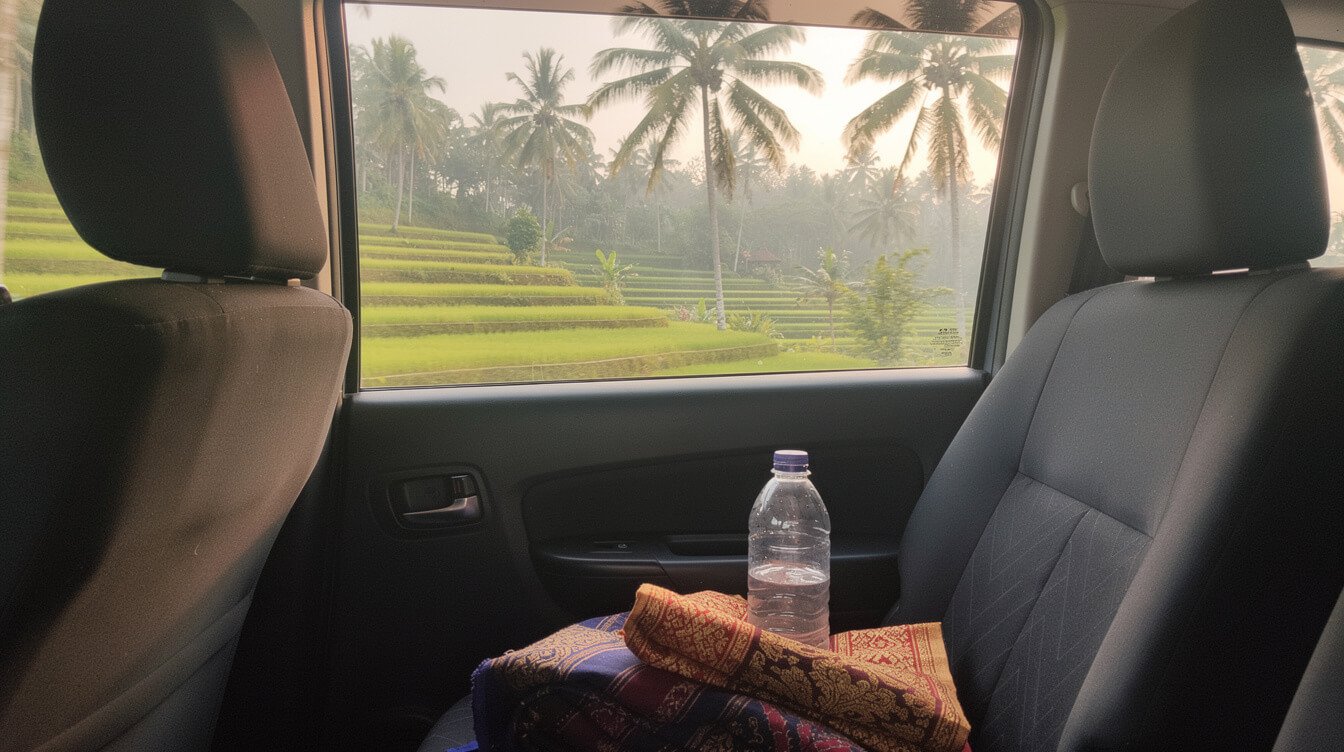
Uluwatu is roughly 50 kilometers from Ubud, at the far southern end of the island. Depending on traffic, the drive usually takes about one and a half to two hours each way, sometimes longer in the late afternoon. That makes it a full day out, not a quick evening trip. The secret is to give the day a shape, so that the drive feels like part of the journey, not the whole of it.
The sunset day (most popular)
- Morning: sleep in, swim, a slow breakfast at the villa.
- 12:30 pm: leave Ubud with a driver. Bring water, a hat and your swimsuit.
- 2:30 pm: arrive on the Bukit. Spend a couple of hours at one of the cliff beaches, such as Padang Padang. Check the tide first, since some Bukit beaches shrink to almost nothing at high tide.
- 4:30 pm: arrive at the temple, put on your sarong and walk the cliff paths in the softening light.
- 5:15 pm: take your seat for the 5:45 pm Kecak, which lines up with sunset for much of the year.
- About 7:00 pm: the show ends. Join the slow line of cars out of the temple area, or stop for a seafood dinner in Jimbaran on the way north.
- 9:00 to 10:00 pm: home to Ubud, a late swim in the pool, and the sound of frogs in the rice field.
The quiet morning (for crowd-avoiders)
The temple opens at 7:00 am, and the early hours are a different place entirely. The light is clean, the air is cooler, the paths are almost empty and the monkeys are often sleepier. Leave Ubud around 6:00 am, walk the cliffs while it’s still fresh, spend the late morning at a beach, have lunch by the sea and be home by mid-afternoon to rest by the pool. You’ll miss the Kecak and the sunset, but you’ll have the temple almost to yourself, and you could catch the Kecak in Ubud the same night.
Making the drive easier
A private driver for the day is the most comfortable way to do it, and they’ll wait for you between stops. If you’re staying with us, ask the team the day before and they’ll be glad to help you arrange one and suggest a beach for that day’s tide. You can also book a local guide if you’d like someone to explain the temple’s story as you walk. If you want to pair Uluwatu with other trips from Ubud, our guides to day trips from Ubud and beach days from Ubud are good places to start. For a different coast entirely, there’s our Nusa Penida day trip guide.
And plan something gentle for the day after. A long day in the south is wonderful, and it’s even better followed by a slow morning in the garden, a massage and perhaps a meal cooked at home. Our post on the private chef villa experience in Ubud shows what that kind of evening can look like.
Uluwatu Temple Tickets, Opening Hours and Crowds by Season
Here’s what you need to know before you go. Prices are correct at the time of writing (October 2026) but can change, so check the official temple and Kecak websites before your visit.
Tickets and prices
- Temple entrance, international visitors: about IDR 60,000 per adult and IDR 40,000 per child. Sarong and sash are included.
- Temple entrance, Indonesian visitors: about IDR 40,000 per adult and IDR 30,000 per child.
- Kecak and fire dance: about IDR 150,000 per adult and IDR 75,000 per child (ages 2 to 9). This is separate from your temple ticket, and you need a temple ticket as well.
- Parking: a small separate fee, paid in cash.
Bring cash in rupiah for the gate and parking. If you’re traveling in a busy month, buying Kecak e-tickets in advance from the official site can save you a queue. For a fuller picture of what things cost on the island, see our guide to Bali travel prices.
Opening hours and show times
- Temple: open daily, 7:00 am to 7:00 pm.
- Kecak: daily performances at 5:45 pm and 7:00 pm, each about an hour. The 5:45 pm show is the sunset show.
- Sunset: in Bali, the sun sets roughly between 6:00 and 6:30 pm all year, so the timing works in every season.
Crowds by season
Uluwatu is busy most afternoons. It’s busiest in July and August and over the Christmas and New Year holidays, when the Kecak can sell out and you’ll want to arrive early. April to June and September to October are a little calmer, with dry weather and clear sunsets. In the rainy season, roughly November to March, afternoons can be cloudy or wet, and sunsets are less certain. They can also be the most dramatic, with storm light over the sea and far fewer people. Our guide to the best time to travel to Bali goes month by month.
Pura Luhur Uluwatu Temple FAQs
Do you have to pay to get into Uluwatu Temple?
Yes. At the time of writing, entry is about IDR 60,000 for international adults and IDR 40,000 for children, including the sarong and sash. The Kecak show is a separate ticket of about IDR 150,000 per adult.
How far is Uluwatu from the airport?
About 20 kilometers, usually 30 to 45 minutes by car depending on traffic. Uluwatu is much closer to the airport than Ubud is, so some travelers visit on their arrival or departure day. If you’re flying in, our guide on how far Ubud is from Bali airport helps you plan the rest of the journey.
How long should I spend at Uluwatu Temple?
Allow about an hour to walk the cliff paths at an easy pace, and another hour and a half or so if you’re staying for the Kecak, including time to find a seat.
Can I go inside the temple?
No. The inner sanctum is reserved for worshippers. Visitors can walk the outer grounds and clifftop paths, which give you the famous views of the temple.
Is Uluwatu Temple suitable for children?
Yes, with a little care. Keep small children close near the cliff walls, hold onto hats and snacks around the monkeys, and consider the earlier Kecak show so little ones aren’t out too late.
Is Uluwatu a good area to stay?
It’s lovely for surfers and beach lovers, with dramatic cliffs and good beach clubs. For culture, rice fields, yoga, food and a central base for exploring the whole island, many travelers prefer Ubud and visit Uluwatu on a day trip.
What are the most famous temples in Bali?
Alongside Uluwatu, the best known include Besakih, the mother temple on Mount Agung; Tanah Lot on its sea rock; Ulun Danu Beratan on the lake at Bedugul; and the spring temple of Tirta Empul near Ubud.
Final Thoughts: Pura Luhur Uluwatu, at the Edge of the Day
There’s a moment at Uluwatu, just after the sun touches the water, when the chant rises, the wind drops for a breath and the whole cliff seems to go quiet inside the noise. It’s a big, busy place, and yet many people leave saying the same thing: it felt sacred. Go with that in mind. Wear the sarong with care, keep your sunglasses in your bag, walk a little farther along the cliff than everyone else, and give the temple the respect it has earned over a thousand years.
Then come home. After a long day in the south, there’s something deeply restful about driving back up into the cool green of Ubud, the frogs singing in the dark rice fields, a light left on for you by the pool. If you’d like to make Ubud your base for exploring Bali, from the temples in our village to the cliffs at the island’s edge, we’d love to help you plan it.

Join our newsletter — fun, new, exciting Bali news
Temple festivals worth planning around, seasonal notes from Ubud, and small stories from the garden and kitchen. Delivered now and then, always worth opening.