Bali Belly: How to Avoid It (and Recover Gently) When Your Base Is Ubud
It usually arrives on day three. The jet lag has finally loosened its grip, you’ve had your first long swim, your first plate of babi guling, your first smoothie bowl piled with dragon fruit. Then one morning your stomach starts to grumble, and you remember the two words every friend warned you about before you left: Bali belly. Take a breath. It’s common, it’s almost always short, and most of it can be avoided with a handful of calm habits that have nothing to do with skipping the island’s food.
We’re the in-villa team at Villa Amrita, a staffed three-bedroom pool villa in the rice fields outside Ubud. Between us we cook, clean, garden and look after guests every day of the year, so we’ve seen Bali belly from every angle: the guest who skipped every salad and still caught it, the family who ate at warungs for two weeks and never had a twinge, and everyone in between. This guide is what we tell our own guests. It covers your real odds, where the risk actually hides around Ubud, how locals eat street food without fear, what a staffed villa changes, a gentle recovery plan, and the red flags that mean it’s time to see a doctor.
A quick note before we start: we’re hospitality people, not doctors. Everything here is general travel advice. If you’re unwell, worried, pregnant, travelling with young children or living with a health condition, please speak to a medical professional.
What Bali Belly Actually Is (and Your Real Odds of Catching It)
Bali belly is simply the local nickname for travelers’ diarrhea. Thailand has “Bangkok belly,” India has “Delhi belly,” and Mexico has “Montezuma’s revenge.” The cause is the same everywhere: food or water carrying bacteria, viruses or occasionally parasites that your gut hasn’t met before. The most common culprit is a strain of E. coli known as ETEC, though others such as Campylobacter, Salmonella and norovirus can play the same role.
It isn’t a sign that Bali is dirty or that you did something foolish. Your digestive system is simply meeting a new neighborhood of microbes and reacting loudly. Your Balinese hosts don’t get sick from the same plate because their bodies have lived alongside those microbes since childhood. Stress, long flights, heat, dehydration, alcohol and a sudden change of diet all make the meeting rougher.
So what are your odds?
Honest answer: meaningful, but not inevitable. Health authorities estimate that travelers’ diarrhea affects somewhere between a third and two thirds of visitors to many tropical destinations during a stay, depending on the season, the length of the trip and how people eat. Surveys of Bali visitors land in a similar range. Most cases show up within the first week, and the large majority are mild.
- Typical symptoms: loose or watery stools, cramps, bloating, nausea and sometimes vomiting or a low fever.
- Typical length: most mild cases settle within one to three days. Clinics in Bali note that around 90% of cases resolve within a week without special treatment.
- The real danger: not the bug itself but dehydration, especially in tropical heat and especially for children and older travelers.
- Is it contagious? It can spread person to person through poor hand hygiene, so wash hands well and keep a separate towel for whoever is unwell.
The good news is that the habits which cut your risk are small. You don’t have to give up warung food, iced coffee or fruit. You just need to know where the risk concentrates, which is rarely where people expect.
Where Bali Belly Risk Really Hides Around Ubud
Most Bali belly advice is written for beach resorts in the south. Ubud is different. It’s a town of cafes, cooking classes, jungle swings, rivers, waterfalls and temple springs, and each brings its own small risks. Here’s where our guests actually run into trouble, roughly from most to least common.
1. Tap water in sneaky places
Bali’s tap water isn’t treated to drinking standard. Few people drink it on purpose. The slip-ups are smaller: rinsing a toothbrush under the tap, swallowing a mouthful in the shower, or eating fruit washed in it. Keep a bottle of filtered water by the bathroom sink, and keep your mouth closed in the shower. Boiled tap water is fine for tea and coffee.
2. Raw salads and pre-cut fruit
Ubud’s healthy-cafe culture is wonderful, and most of it is very clean. But raw leaves and pre-cut fruit are only as safe as the water they were washed in and the hands that cut them. Busy, well-reviewed cafes with fast turnover are a far better bet than a fruit platter that has sat in the sun. Fruit you peel yourself, like bananas, mangosteen, rambutan and salak, carries almost no risk.
3. Ice: mostly a myth, with one caveat
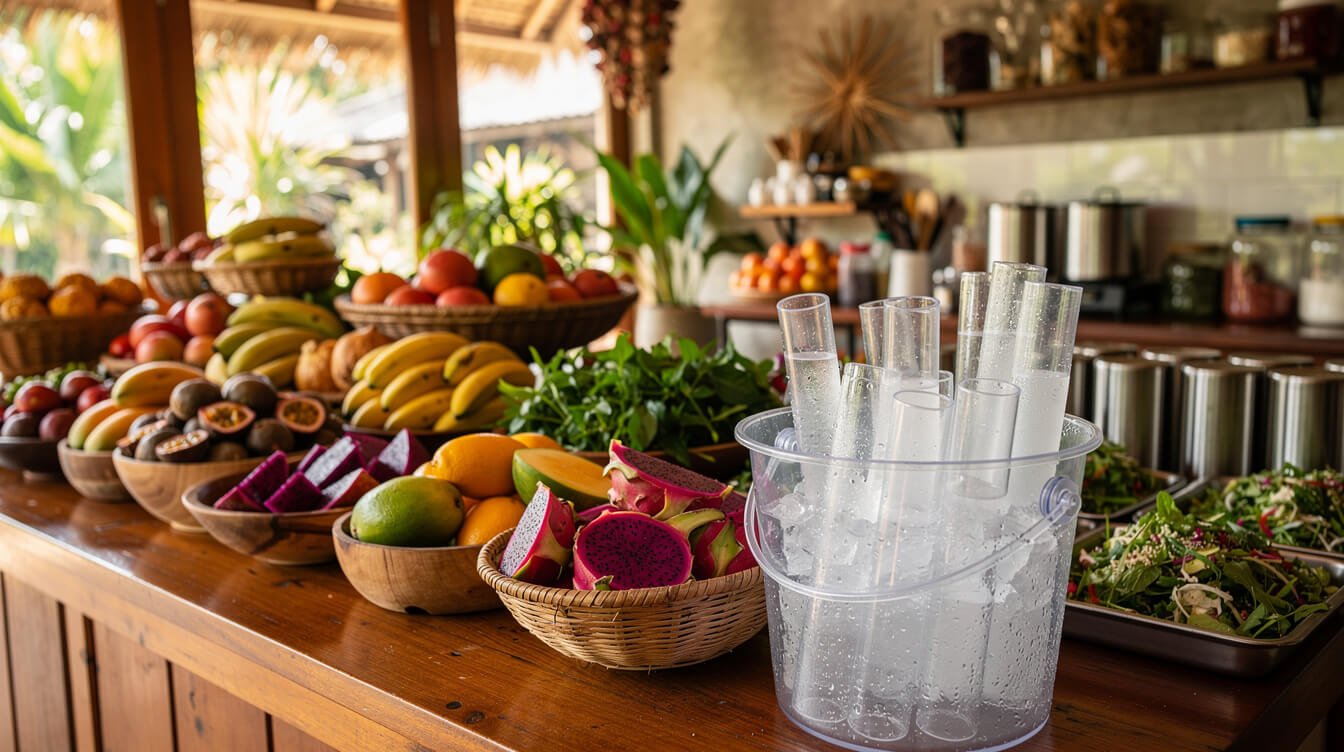
Many travelers skip ice completely, but in Ubud’s restaurants and cafes it’s rarely the problem. Most use factory-made ice from purified water, which you’ll recognize as uniform cylinders with a hole through the middle. The caveat is the small roadside stall that chips ice off an irregular block. That ice may have been made for cooling, not drinking. If the ice looks like tubes, enjoy your iced coffee. If it looks like shards, ask for your drink without it.
4. Food that has been sitting warm
A dish that has been sitting lukewarm for hours is riskier than anything spicy or unfamiliar. Buffets in the afternoon heat, rice that’s been out since breakfast, and sauces kept at room temperature are where bacteria multiply. Hot, freshly cooked food is your friend.
5. Rivers, waterfalls and rafting
Ubud’s rivers are beautiful, and a swim under a waterfall is a highlight for many guests. After heavy rain, though, the water carries runoff from villages and fields upstream. Swim, laugh and enjoy it, but try not to swallow the water, especially rafting on the Ayung in the rainy season. If you’re heading out, our Ubud waterfall guide covers which falls are calmer for swimming.
6. Temple springs
At water temples like Tirta Empul, the purification ritual involves bathing under spouts of spring water. During blessings, a priest may also sprinkle holy water and offer a few drops to sip. These are sacred moments, and we’d never suggest refusing one. The amount offered is tiny. If you’re anxious, a respectful touch of the water to your lips is enough. In the bathing pools, keep your mouth closed as the water falls over you.
Notice what isn’t on the list: spicy food, unfamiliar food and “street food” as a category. The sambal won’t make you ill. Poor handling will. Which brings us to the warungs.

Get a free 3-day sample itinerary
Rice-field walks, warungs our own team loves, a temple morning and plenty of slow time by the pool. We’ll send you a free 3-day sample itinerary for Ubud, paced gently for your first days on the island.
Eating Fearlessly at Warungs: The Habits Locals Follow
Please don’t let Bali belly talk you out of warung food. The small family kitchens of Ubud serve some of the most generous, honest cooking on the island, and many of our happiest guest stories begin with a plate of nasi campur eaten on a plastic stool. You simply choose them the way a Balinese family would.
- Follow the crowd. A warung full of locals at lunchtime means fast turnover and fresh food. An empty one at 3 PM means the dishes have been sitting since morning.
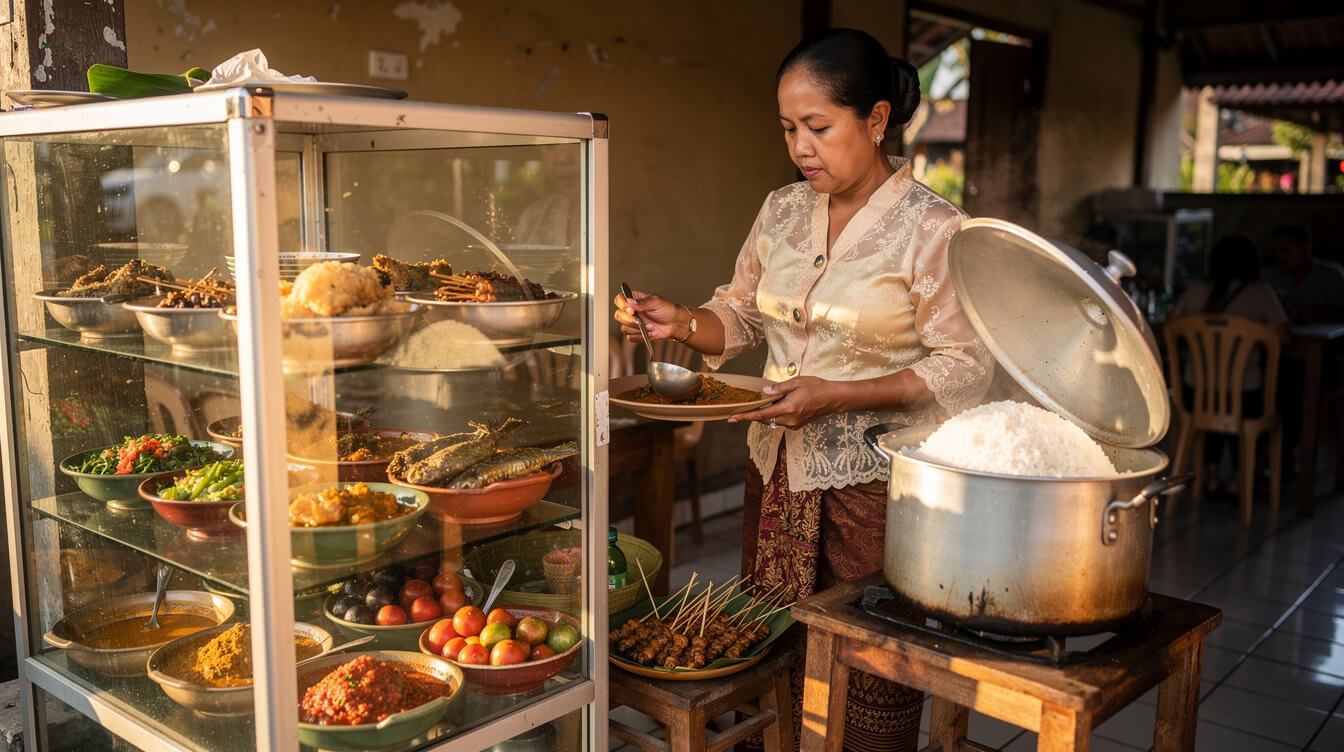
- Go early for display-case warungs. Many warungs cook everything in the morning and display it in a glass cabinet. Lunch is the sweet spot. Late afternoon is when we’d choose something cooked to order instead.
- Order things that go into a hot wok. Mie goreng, nasi goreng, cap cay and soups come straight off the fire, which makes them reliably safe.
- Watch the hands and the cloth. Clean surfaces, food that’s covered from flies, and a cook who handles money and food separately are all good signs.
- Sambal is fine; very raw garnishes are optional. If your stomach is sensitive in the first few days, ask for no raw cucumber or herbs on the side, and keep the sambal.
- Drink sealed or boiled. Bottled water, hot tea, coffee, young coconuts opened in front of you and canned drinks are all safe choices.
- Wash or sanitize before you eat. Many Balinese eat with the right hand. If you’d like to try it, wash your hands first.
Want somewhere to start? Our guides to the best warungs near Ubud, where to eat authentic Balinese food in Ubud and what to eat at Ubud’s street food markets all point to places our own team eats. And if you’re taking a cooking class, the Balinese cooking class guide explains what to look for. The good schools wash every leaf in filtered water and cook everything you eat.
Give your stomach a gentle first 48 hours
The single most useful habit is pacing. Your gut is tired from the flight, and the heat is new. For the first two days, eat cooked food, go easy on alcohol and rich cocktails, drink more water than feels necessary, and save the raw-food adventures for day three. Most guests who follow this barely notice the change.
What a Staffed Villa Changes About Bali Belly
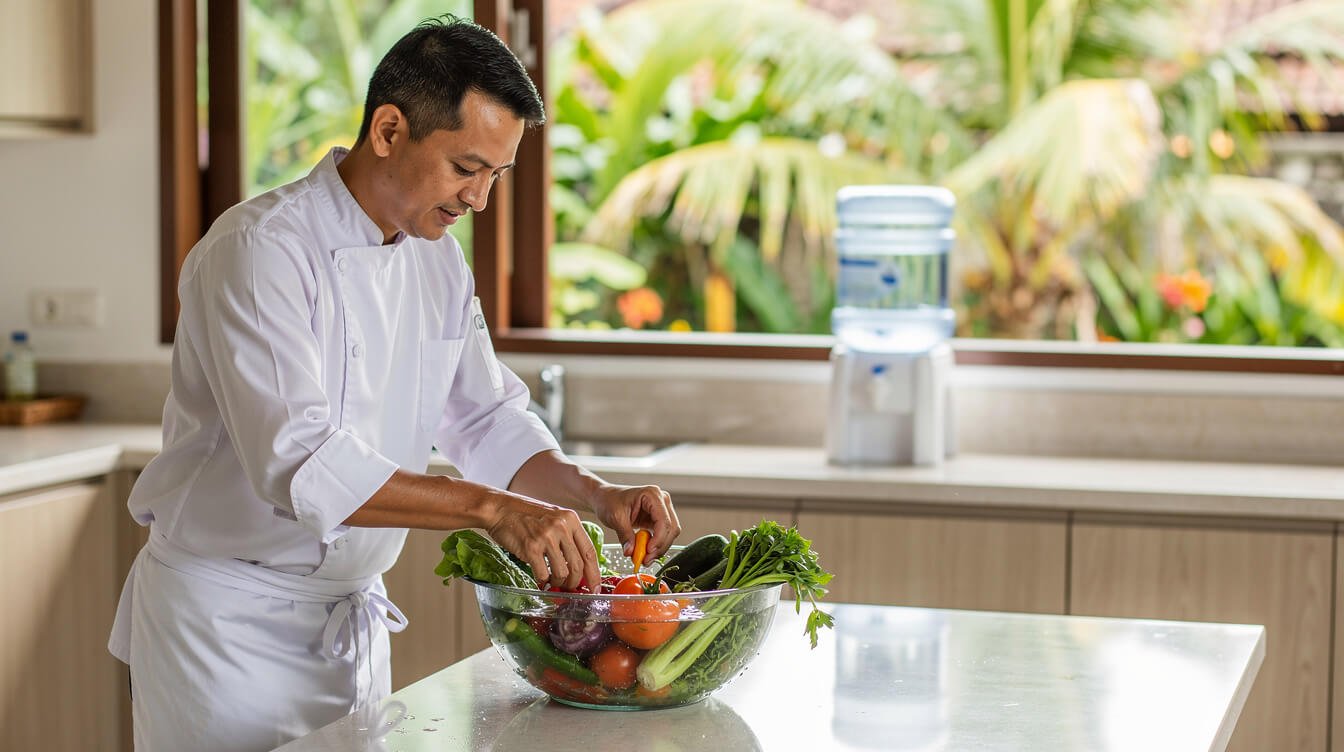
We’ll be honest: no villa, hotel or restaurant can promise you’ll never catch Bali belly. Microbes travel on banknotes, door handles and the hands of the friend you hugged at the airport. What a staffed villa can do is take most of the everyday risk off your plate, quite literally, so you can spend your energy on the island rather than on worrying about it.
Water you never have to think about
At Villa Amrita, drinking water comes from large sealed gallons and filters, not the tap. There’s water in every bedroom, by the pool and in the kitchen. The bathrooms get bottles for brushing your teeth, and we refill them every day.
A kitchen that cooks for your stomach
Our chef washes fruit and salad leaves in filtered water, cooks everything fresh to order, and keeps raw and cooked food apart. Nothing is left sitting out in the heat. If you’d like to ease in gently, just say so. For your first two days, the kitchen will make lighter, well-cooked Balinese dishes, and the raw salads can wait until your stomach has settled. You can read more about how this works in our guide to a private chef villa in Ubud.
Someone who knows where to go
Our manager keeps the details of nearby clinics and pharmacies on hand, can arrange a driver at any hour, and can call ahead so that a doctor is expecting you. When you feel rotten, not having to search for directions in a language you don’t speak makes a real difference.
A gentle place to recover
If Bali belly finds you anyway, you won’t be recovering in a hotel room with a minibar for company. You’ll have a shaded daybed, a quiet bedroom, and a kitchen that can bring you coconut water, plain rice or warm broth on request. It’s a big part of why so many families and groups choose a staffed villa in Ubud over a string of hotels.
If Bali Belly Gets You Anyway: A Gentle 48-Hour Recovery Plan
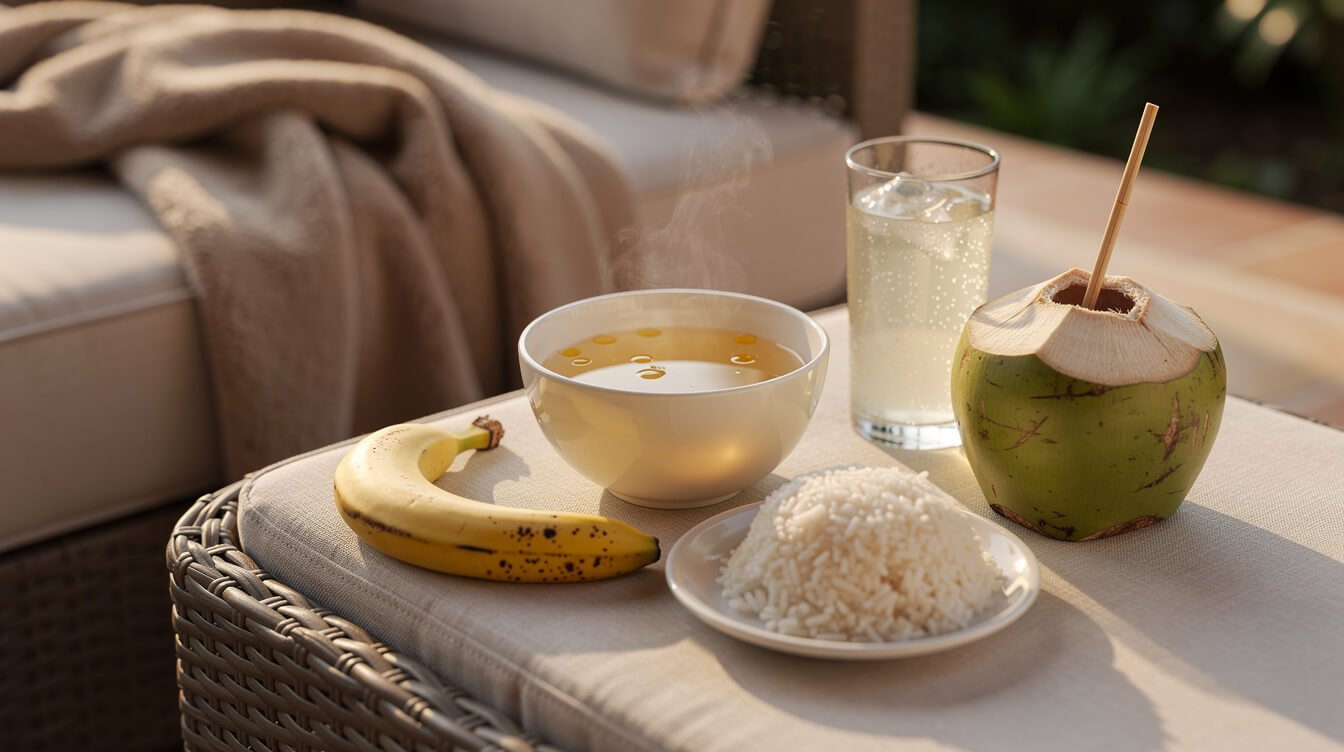
Even careful travelers catch it. If it happens, here’s the calm, simple plan we suggest to guests with mild symptoms. If you have any of the red flags in the next section, skip straight to a doctor.
Hours 0 to 12: rest and rehydrate
- Sip, don’t gulp. Take small, frequent sips of water and an oral rehydration solution. Indonesian pharmacies (look for the word apotek) sell rehydration salts, often under the name Oralit. Electrolyte drinks such as Pocari Sweat are in every minimart.
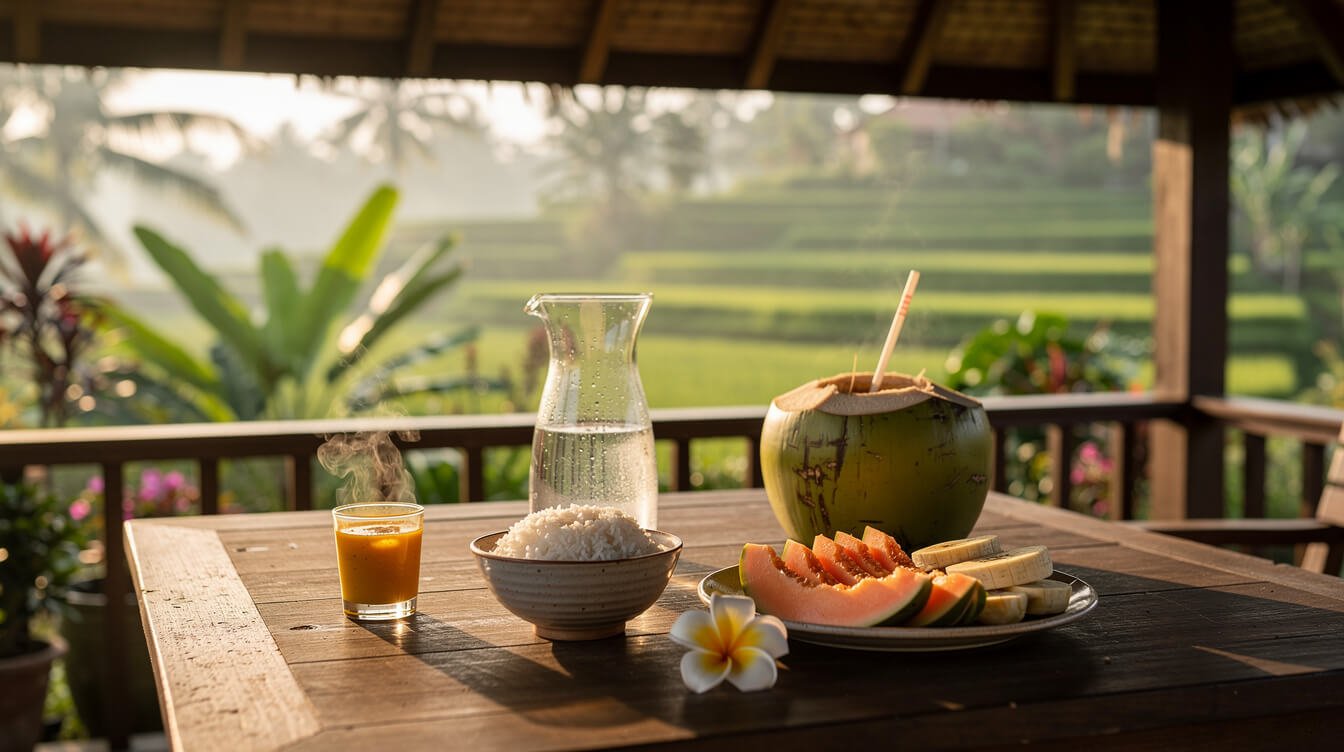
- Young coconut water is gentle and naturally rich in potassium. It’s a lovely second drink, though it doesn’t replace a proper rehydration solution if you’re losing a lot of fluid.
- Rest in the shade. Cancel the volcano sunrise. Heat and exertion make dehydration worse.
- Skip alcohol, coffee and very sweet juices. They can all make symptoms worse.
Hours 12 to 36: plain, warm and simple
Once you feel like eating, start small. Plain steamed rice, clear chicken broth, bubur (Indonesian rice porridge) without the sambal, ripe bananas, dry crackers and plain toast are all easy on a tired gut. Our chef often makes a simple bubur ayam without the spice, which guests tell us is the most comforting thing they ate all trip.
Hours 36 to 48: ease back in
Add soft cooked vegetables, steamed fish or chicken, and eggs. Hold off on spicy food, fried food, dairy, raw salads and alcohol until you’ve had a full day without symptoms.
What about Balinese remedies?
You’ll hear plenty of local advice. Many Balinese reach for kunyit asam, a turmeric-and-tamarind jamu (herbal tonic), or a warm ginger drink when their stomach is unsettled. We love jamu, and you can read about our morning jamu ritual, but think of it as comfort rather than a cure. Activated charcoal tablets are also widely sold in Bali, and you’ll see them recommended on travel forums. Many doctors are cautious about them, partly because charcoal can stop other medicines from being absorbed.
And medicines?
Over-the-counter anti-diarrheal tablets are easy to buy and can help with a long journey. But they aren’t right for everyone. Doctors generally advise against them if you have a fever or blood in your stool, and they aren’t for young children. Antibiotics are sometimes prescribed for more serious cases, but that’s a decision for a doctor who has examined you. Please don’t self-prescribe from a pharmacy counter. When in doubt, ask a pharmacist or call a clinic.

Book the Villa
Three bedrooms, a private pool, filtered water in every room and a chef who cooks fresh for your stomach. Let our team take care of the details while you take care of Ubud. Check availability for your dates.
When It’s Not Just Bali Belly: Red Flags and Ubud Clinics
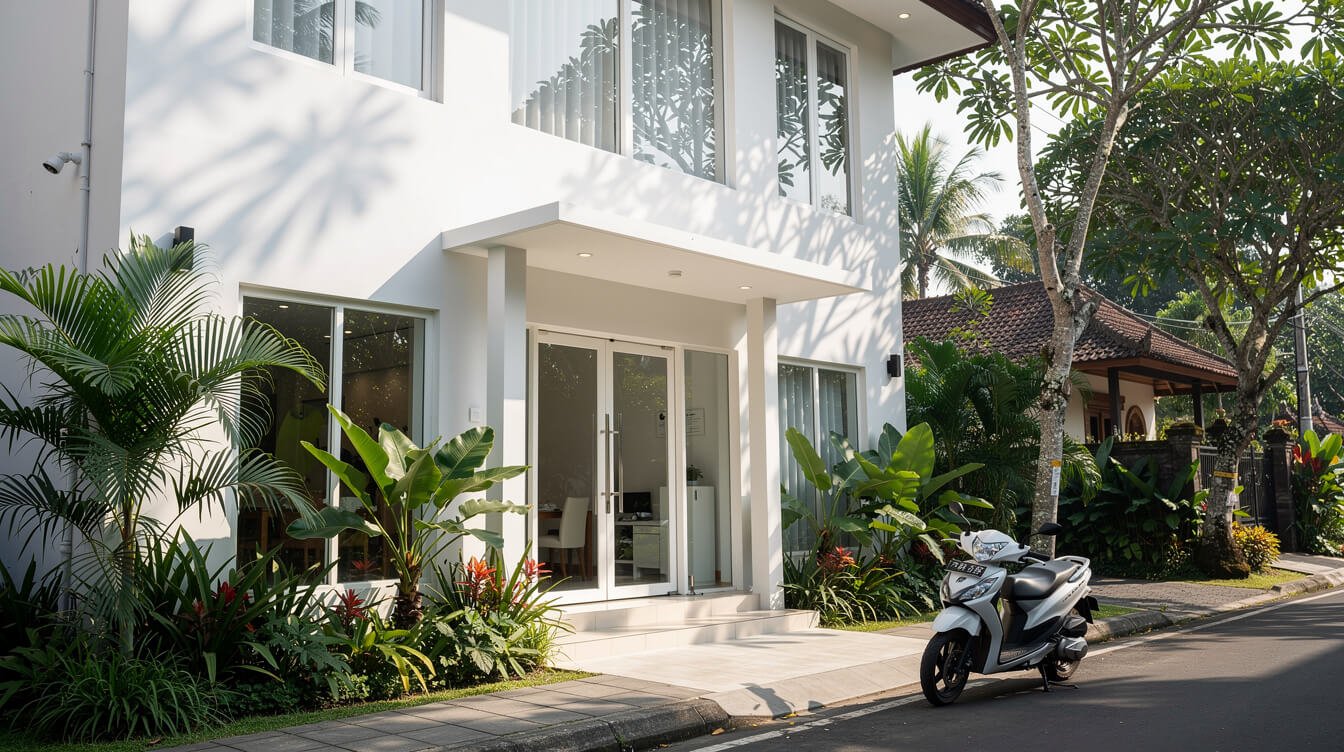
Most Bali belly is a nuisance, not an emergency. But please see a doctor promptly if any of these apply:
- Symptoms last more than two to three days, or are getting worse rather than better.
- You can’t keep fluids down, or show signs of dehydration: very dark urine or little at all, dizziness when standing, a dry mouth, or unusual sleepiness.
- There’s blood or mucus in your stool.
- You have a high fever, severe abdominal pain, or feel confused or very weak.
- The person who is unwell is a baby or young child, pregnant, elderly, or living with a chronic illness. They dehydrate faster, so seek help sooner rather than later.
When it might be something else
Not every tummy upset in Bali is Bali belly. A high fever with a severe headache, pain behind the eyes, muscle or joint aches, or a rash can point to dengue fever. Dengue is spread by mosquitoes and is more common in the wet season. It needs a doctor and a blood test, and certain over-the-counter painkillers can be risky with it, so get it checked rather than treating it yourself. Food poisoning that starts within a few hours of a meal and comes with heavy vomiting is a different illness from Bali belly too. It often passes faster, but the same dehydration rules apply.
Getting care around Ubud
Ubud has international-standard clinics with English-speaking doctors, including BIMC Ubud Medical Centre, which says Bali belly is one of the most common reasons travelers come through its emergency room. Many clinics can rehydrate you with an IV drip, run stool or blood tests, and prescribe if needed. Hotel and villa doctor call-outs are also common. For serious emergencies, the larger hospitals are in Denpasar and the south, roughly an hour away by car depending on traffic.
If you’re staying with us, simply tell any of the team. We’ll call ahead, arrange a driver and help with the paperwork. Wherever you stay, keep your travel insurance details on your phone. Many policies cover clinic visits for travelers’ diarrhea, but they usually want you to call their assistance line first. For more on staying well generally, see our honest guides to whether Bali is safe to travel and whether Ubud is safe.
Before You Fly: A Simple Bali Belly Prep Kit
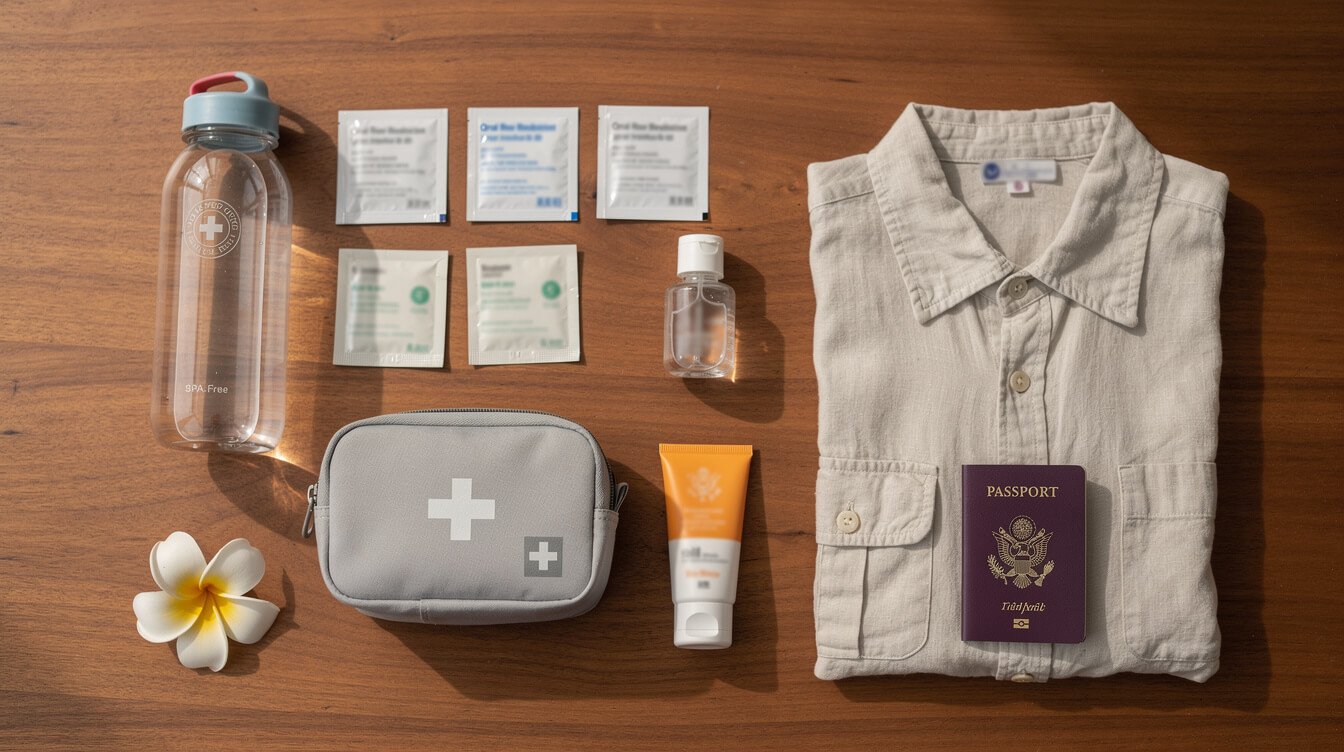
A little preparation at home makes the whole trip calmer. Here’s what we suggest guests pack or arrange before they leave.
- A travel-health appointment. Visit a travel clinic or your doctor a few weeks before you fly. Ask about routine vaccines and the ones commonly recommended for Indonesia, such as hepatitis A and typhoid, and ask what they’d suggest you carry for travelers’ diarrhea.
- Oral rehydration sachets. They’re easy to buy in Bali, but having two or three in your bag means you won’t have to go shopping when you feel worst.
- Hand sanitizer for warungs, markets and scooter rides, where soap isn’t always nearby.
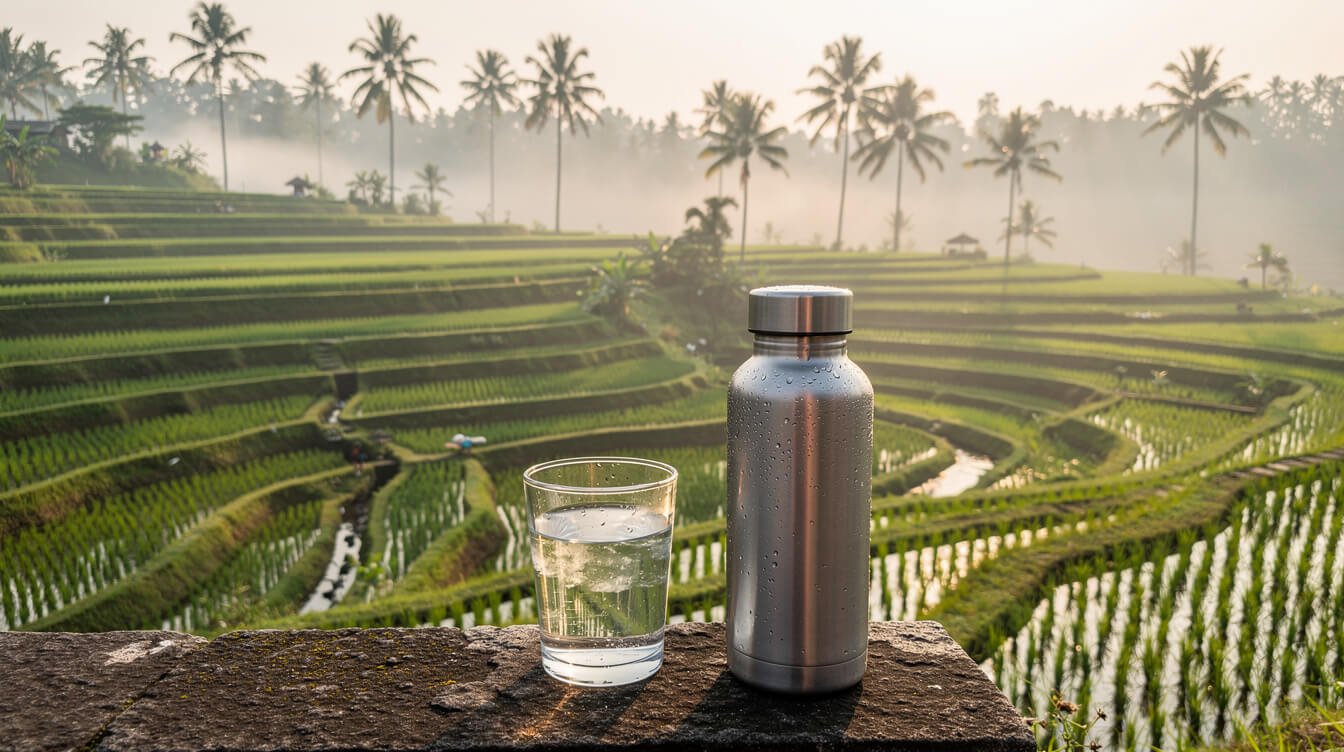
- A reusable water bottle. Most villas, cafes and many shops in Ubud offer filtered refills, which is kinder to the island than a trail of plastic bottles.
- Probiotics, if you like them. The evidence is mixed. Some research suggests that certain strains, such as Saccharomyces boulardii, may modestly reduce the risk. Ask your doctor or pharmacist whether they’re worth it for you.
- Travel insurance that includes medical cover, with the emergency number saved on your phone.
Our full Bali packing list covers everything else, from rain jackets to temple sarongs, and our Bali travel tips are a good read on the flight over.
Bali Belly FAQ
How long does Bali belly last?
Most mild cases settle within one to three days. Some linger for up to a week, and a small number last longer. If you’re not improving after two or three days, or you have any of the red flags above, see a doctor.
Can you build up immunity to Bali belly?
Partly. Long-stay visitors and expats often find they get ill less often over time, as their gut adjusts to local microbes. But there are many different bugs, so getting it once doesn’t make you immune to the next one.
Is it safe to drink ice in Ubud?
In established restaurants and cafes, almost always. Look for factory-made ice: uniform cylinders with a hole through the middle. Skip irregular chipped ice at roadside stalls.
Should I avoid street food to prevent Bali belly?
No. Choose busy stalls, food cooked to order and hot dishes straight from the wok. Badly handled food at a smart cafe is riskier than a sizzling plate of mie goreng from a busy warung.
What about kids and Bali belly?
Children dehydrate much faster than adults, so keep them drinking, pack child-appropriate rehydration salts, and see a doctor early if they can’t keep fluids down, are unusually sleepy or have a fever. Don’t give anti-diarrheal tablets to young children unless a doctor recommends them. Our family guests often find a villa kitchen helps a great deal, because the chef can cook simple food the kids already like.
Can I still swim if I have Bali belly?
It’s kindest to stay out of shared pools until you’ve been symptom-free for at least 48 hours, both for your own recovery and for everyone else in the water.
Final Thoughts: Eat Well, Drink Clean, Rest When You Need To
Bali belly is a real part of travel here, but it doesn’t need to shape your trip. Drink filtered water, eat hot food from busy kitchens, ease in for the first two days, keep a few rehydration sachets in your bag, and know when to call a doctor. Then go and eat the island: the Balinese food of Ubud is one of the best reasons to come.
And if you’d like someone else to think about the water, the washing of the salad leaves and the quickest way to a clinic at midnight, that’s exactly what our team is here for. You enjoy Ubud. We’ll take care of the rest.

Join our newsletter — fun, new, exciting Bali news
Seasonal notes from Ubud, warungs worth the detour, ceremony days to plan around, and small stories from our garden and kitchen. Delivered now and then, always worth opening.