Tibumana Waterfall: A Swimmer’s Guide to the Falls Near Ubud
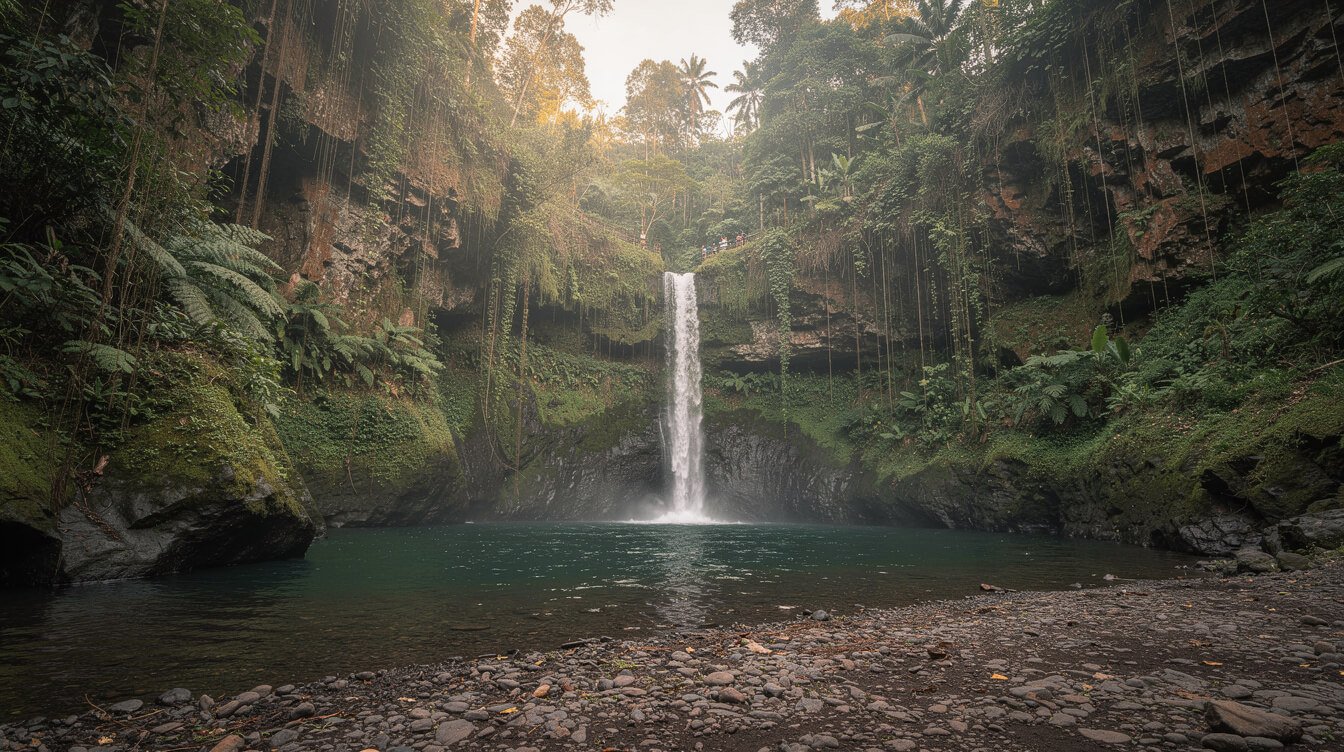
You hear it before you see it. Halfway down the steps, past the bamboo bridges and the smell of wet ferns, the forest opens into a round green bowl and there it is: one clean ribbon of water dropping off a mossy lip into a pool wide enough to swim in. Tibumana waterfall sits in the village of Apuan, in the Bangli regency, about 30 to 40 minutes east of Ubud. It’s one of the easiest waterfalls in Bali to reach, one of the few where swimming is the main event, and on a clear morning it’s one of the calmest.
This guide covers the practical side: tickets, hours, the walk, and how to get there. It also covers the parts most guides skip. Why the water is sometimes green and sometimes brown, what the local story says about the dark hollow beside the falls, which afternoons it can close early, and how it honestly compares with Kanto Lampo just down the road.
Where Tibumana Waterfall Is and How to Get There
Tibumana waterfall is in Banjar Bangunlemah, Desa Apuan, in the Susut district of Bangli. Bangli is the only one of Bali’s nine regencies without a coastline. It’s all river gorges, bamboo, rice terraces and cool upland villages, and Tibumana is one of its southern edges, not far past the border with Gianyar. From central Ubud, the drive takes 30 to 40 minutes depending on traffic through Bedulu. From the beach areas in the south, plan on an hour and a half or more.
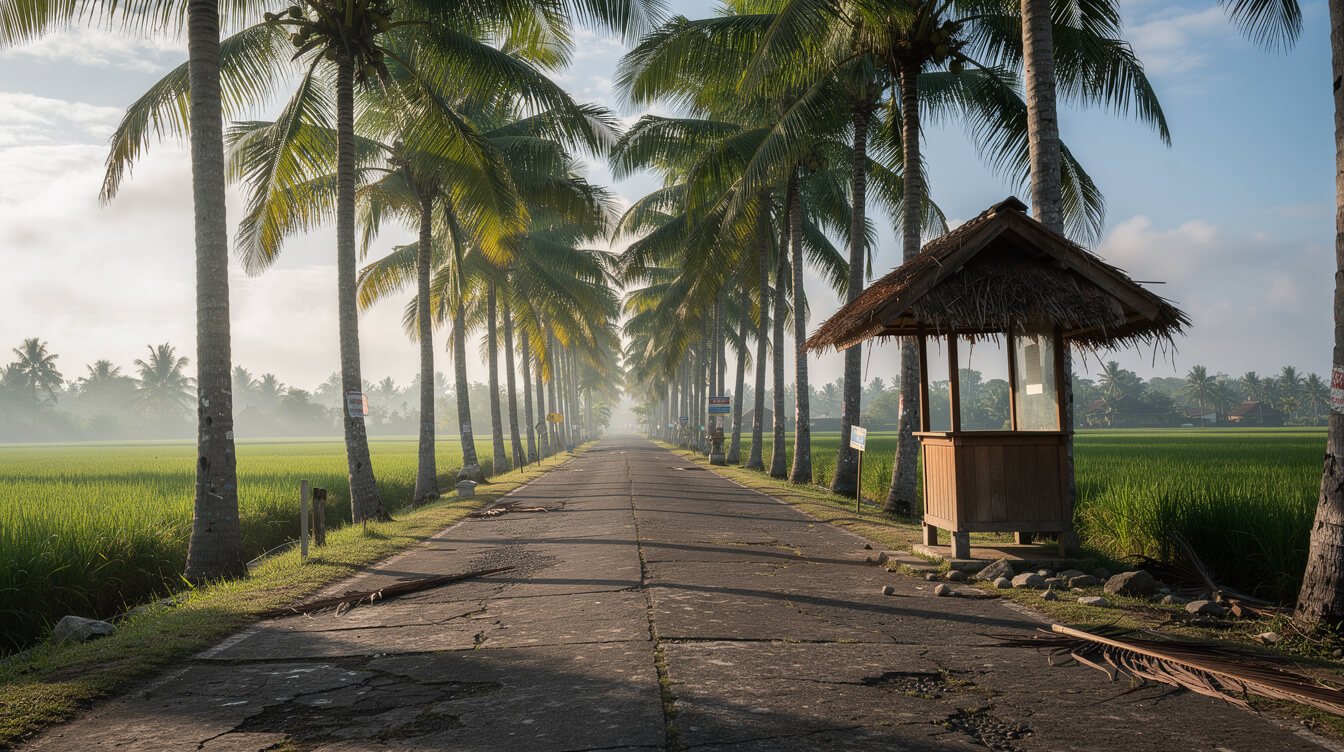
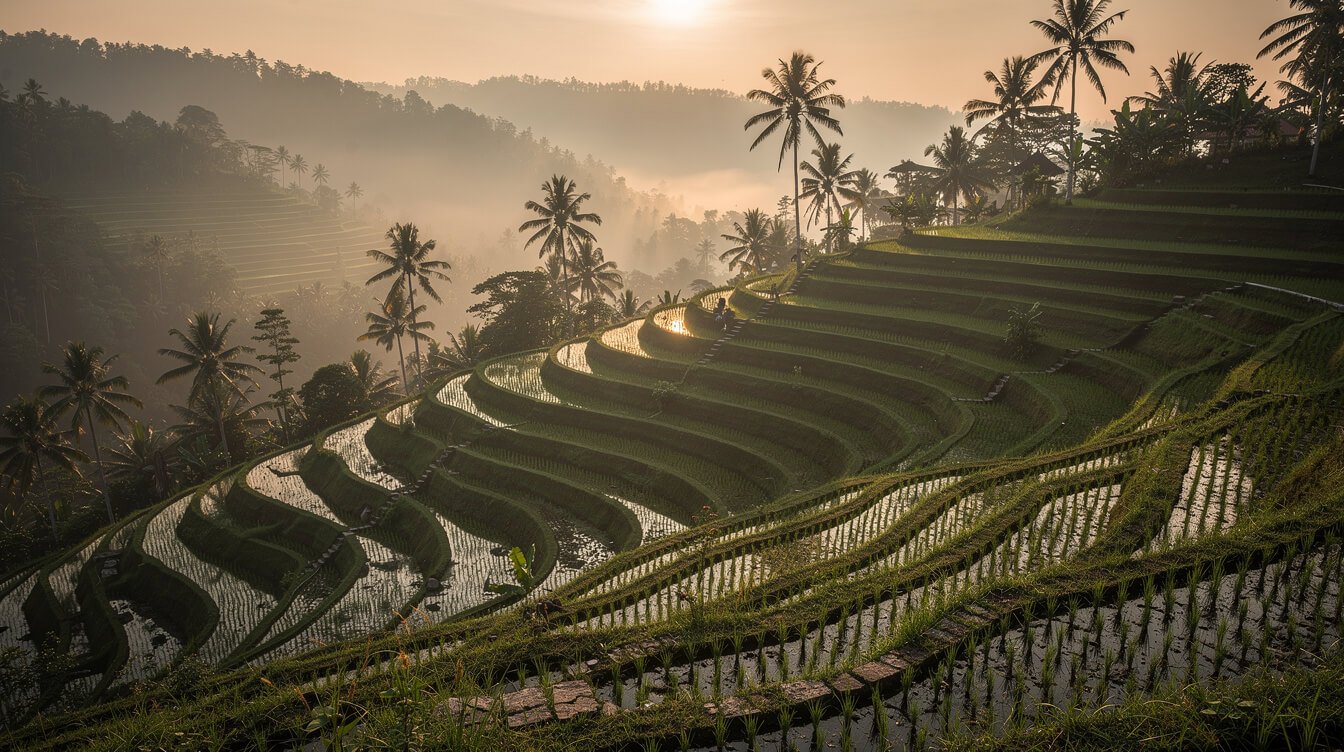
The last few kilometers are the best part of the drive. You leave the main road and follow narrow village lanes past family compounds and rice fields, and the final stretch to the ticket booth runs between two long rows of coconut palms. Ask your driver to slow down there. It’s a lovely approach, and many people take their favorite photo of the day before they ever see the water.
Driver, scooter or ride-hailing?
There’s no public transport to Tibumana, so your choices are a private driver, a scooter, or a Grab or Gojek ride. A private driver is the easiest by far, especially if you want to add a second waterfall or a village stop. They wait in the car park while you swim, and you don’t have to think about the ride back. A scooter works if you’re confident on Bali roads. The route is paved all the way, though the village lanes are narrow. Ride-hailing is fine for the trip out, but drivers are scarce around Apuan, so getting a car back can take a while. If you book one, ask the driver to wait or arrange your return before you go down.
If you’re staying in Ubud, Tibumana fits easily into a morning. Our Ubud waterfall guide shows how it sits among the other falls east of town.
Tibumana Waterfall Tickets, Hours and the Walk Down
Tibumana is run by the village, and you pay at a booth before you reach the car park. Most visitor reports from 2025 and 2026 put the entrance fee at about Rp 25,000 per person (around US$1.50). A few recent reviews mention Rp 30,000, and older posts quote Rp 10,000 to 15,000, so treat anything lower as out of date. Parking is free or a few thousand rupiah. Bring cash in small notes. Card payment is sometimes possible, but don’t count on it.
Opening hours are usually given as roughly 7 AM to 6 PM daily. Some local listings say 8 AM, and the gate can close earlier for private events (more on that below). Like most village-run sites in Bali, hours shift without notice, so treat these as a guide, not a promise.
What’s on site
- At the top: a handful of small warungs and cafés along the path from the car park, good for coffee before or lunch after.
- At the bottom: simple toilets, a changing room and small lockers for a few thousand rupiah. There’s no food down at the pool, so carry water.
- Not available: lifeguards, towel hire, or anywhere to leave large bags. Keep valuables with your driver.
The walk down
The trail is about 500 meters, and it takes 10 to 15 minutes at an easy pace. It’s a gentle mix of concrete steps, dirt paths and two or three bamboo bridges over small streams. In the wet months you’ll pass a smaller seasonal waterfall on the way. It runs during and after the rains and dries to a trickle by the middle of the dry season. Watch for the small sign pointing left toward the falls. If you walk straight past it, you’ll end up wandering the gardens wondering where the water went.
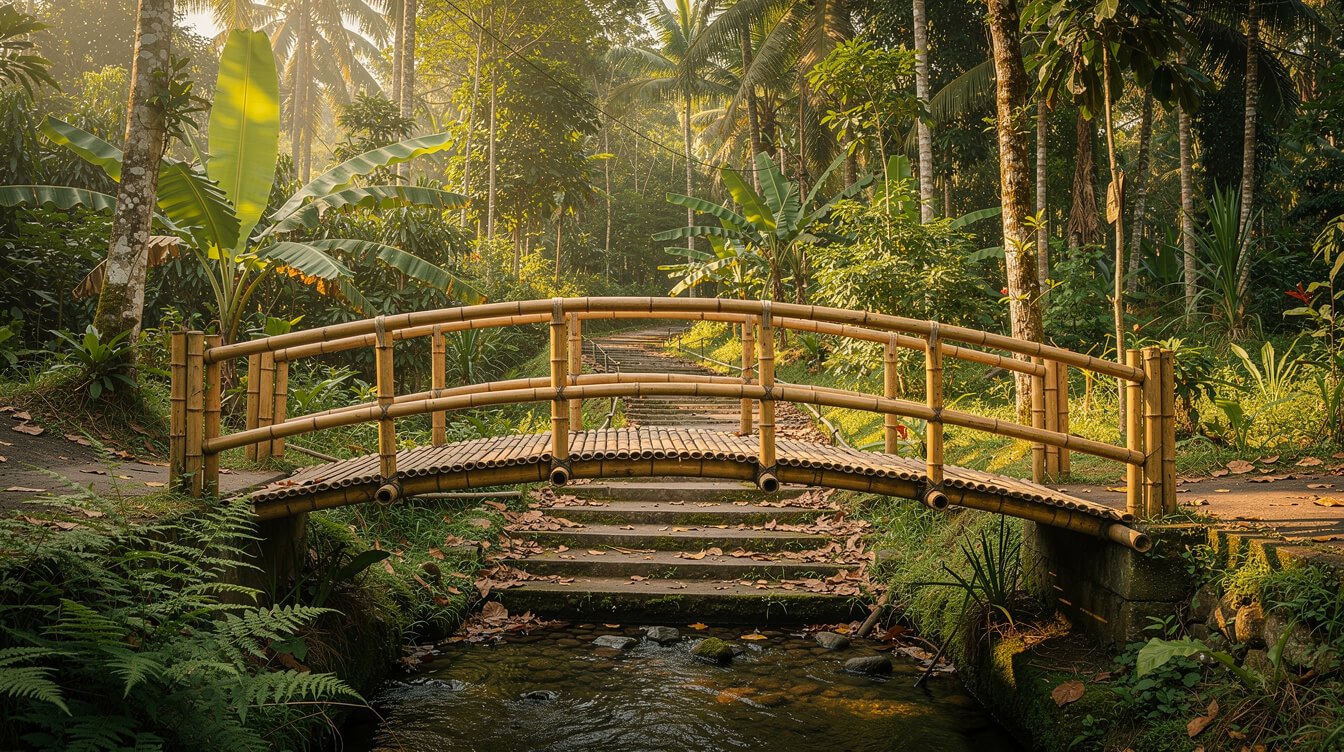
Coming back up is the same path in reverse, with more stairs than you remember. It’s an easy climb by Bali standards, much gentler than the long staircases at Sekumpul or Tegenungan, but take it slowly on humid days. The bridges and steps can be slippery after rain, so wear shoes or sandals with real grip. The path isn’t suitable for wheelchairs or strollers.
Get a free 3-day sample itinerary
Three easy days in Ubud: rice field walks at first light, a temple morning, a market, and a waterfall swim before breakfast. We will send you a free 3-day sample itinerary.
What You’ll Find at the Bottom
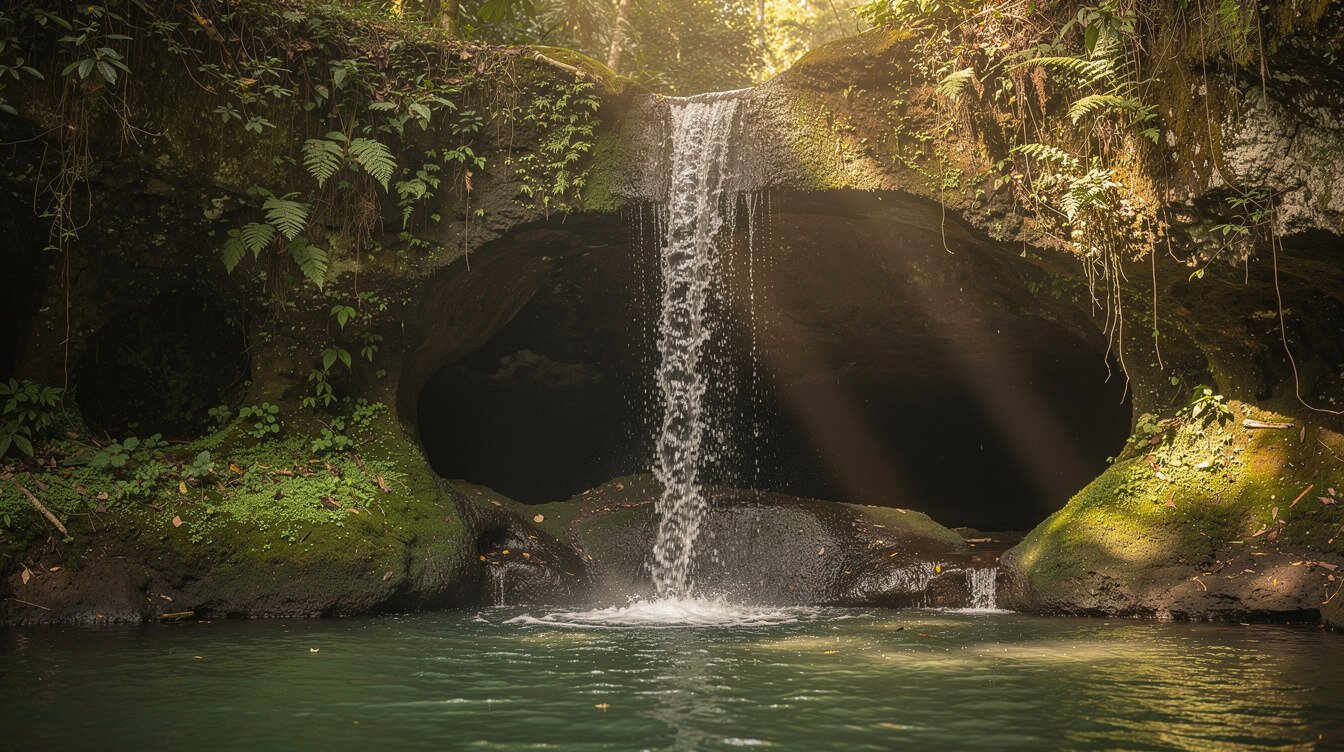
Tibumana is a single-drop waterfall. Estimates of its height range from 10 to 20 meters depending on who’s measuring and how much water is falling, but height isn’t really the point. What makes it special is the setting. The water drops from a rock overhang into a near-circular pool, enclosed on three sides by high walls of dark stone draped in moss, ferns and hanging roots. The canopy closes overhead, so even at midday the light down here is soft and green. A pebbly shore slopes gently into the water like a small beach, and the pool drains out downstream as a shallow river.
There’s a flat dry area near the changing room where people leave their bags, plus plenty of rocks to sit on. Unlike Kanto Lampo, there’s no single “signature” spot that everyone lines up for. You can stand on the shore, wade in, swim toward the falls, or shoot from the bridge on the way down. Even on a busy morning the crowd spreads out, so it rarely feels like a queue.
The cave behind the water
Look closely at the rock beside the falling water and you’ll see a dark hollow in the cliff. Local legend says it’s the mouth of a cave passage that runs all the way to Pura Goa Raja, the cave shrine within the great Besakih temple complex on the slopes of Mount Agung, many kilometers to the northeast. Nobody has proved it, and nobody really needs to. It’s the kind of story that tells you how the village sees this place. Not just a swimming spot, but part of a sacred landscape that ties every spring and river back to the mountain.
That’s also why you may see small offerings on the rocks near the water. Step around them, keep your voice down if anyone is praying, and don’t climb on any shrine or carved stone. If a ceremony is taking place, watch from a respectful distance and wait for it to end before you swim. In Bali, water is never just water. It’s what the island’s whole wet-season rhythm and rice calendar are built on.
Can You Swim at Tibumana Waterfall?
Yes, and that’s the reason to come. Of the waterfalls close to Ubud, Tibumana has one of the best natural pools for an easy swim. The shore shelves gently, the pool isn’t deep enough for diving but is deep enough to float in, and on a hot day the first cold step feels wonderful. The catch is that the water changes a lot with the weather, and that’s what most online photos leave out.
Green or brown? Read the water first
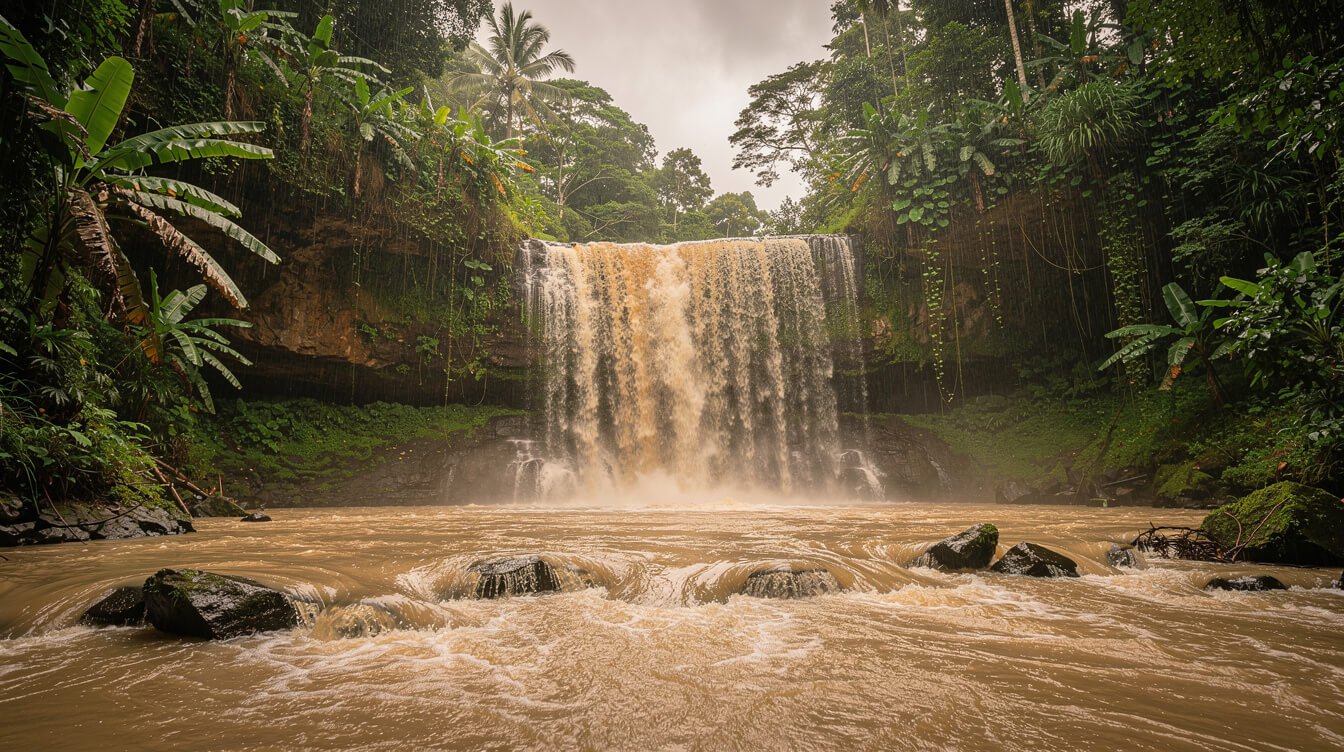
In the dry season (roughly May to October), after a few days without heavy rain, the pool is usually a clear, cool green. That’s the color in every travel photo. After heavy rain, it turns milky brown. Runoff from the forest and the rice fields upstream carries silt into the river, and the flow over the falls gets heavier and faster. Several visitors in 2026 reviews describe the water as murky. One in January said it was too cloudy to swim, and another in August said they had no wish to get in. Both are fair. Others swam happily the same months, a week apart.
Here’s a simple way to decide:
- Clear green, gentle flow: swim, enjoy, stay a while.
- Slightly cloudy, normal flow: a wade or a quick dip near the shore is fine for most adults.
- Brown, fast, or rising: stay out. Strong flow can push you around, debris can come over the edge, and you can’t see the bottom.
- Heavy rain upstream in the last hour, or the water rising while you’re there: leave the water and head back up the steps. In Bali’s gorges, flash rises can arrive quickly even if it isn’t raining where you stand.
Swimming safely
Don’t swim directly under the falls. The water hits much harder than it looks, and rocks can come over the lip, especially in the wet season. Enter slowly, since the rocks at the edge are slippery. There are no lifeguards, so keep children close and within arm’s reach. If you have open cuts or a sensitive stomach, skip swimming when the water is cloudy. It’s river water draining farmland, not a filtered pool. A towel, a dry bag and water shoes will make your visit much more comfortable.
When to Visit Tibumana Waterfall
Time of day: go early. At opening, you’ll often share the pool with only a few people, and the light coming through the canopy is at its softest. Tour groups start arriving from mid-morning, and by late morning to early afternoon the shore is busy with swimmers and photographers. It’s never as tight as Kanto Lampo’s photo line, but it’s a different, quieter place at 7:30 AM than at noon.
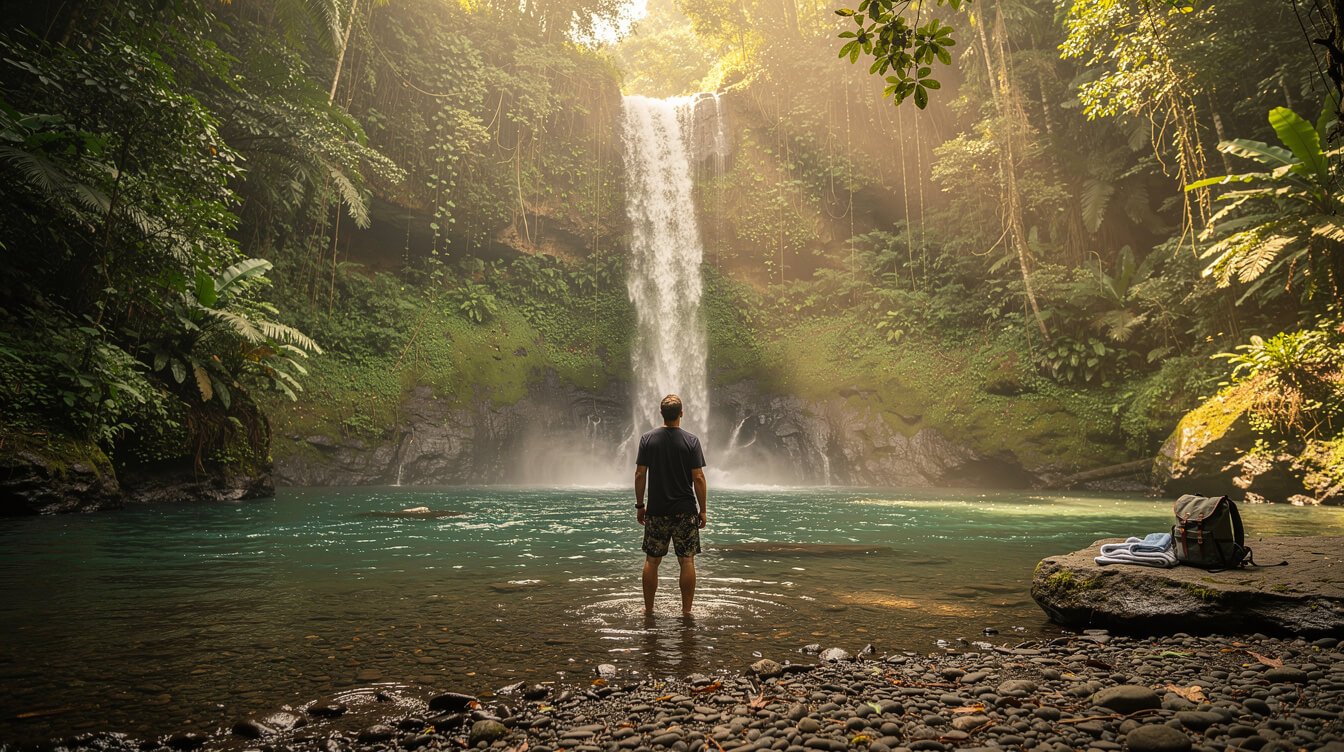
Season: the dry season gives you the clearest water and the best chance of a proper swim. The wet season, roughly November to March, brings a much heavier waterfall and greener forest, with a better chance of brown water and slippery paths. If you’re visiting now, in mid-November, it’s the start of the wet season. Mornings are often clear, and the rain tends to come in the afternoon. That’s another reason to go early, and to check how the water looks before you change. Our guide to Bali weather in November covers the month’s pattern in more detail.
The odd closed afternoon: Tibumana is popular for pre-wedding shoots and occasionally for small ceremonies. One visitor in October 2025 found the ticket office closing early at 4:30 PM because a wedding was being set up at the falls that evening. Temple ceremonies in the village can affect access too. If a late-afternoon visit matters to you, ask your driver to check ahead, or simply go in the morning.
Weekends and holidays: Indonesian public holidays and weekends bring more domestic visitors from mid-morning. Weekday mornings are the quietest of all.
Book the Villa
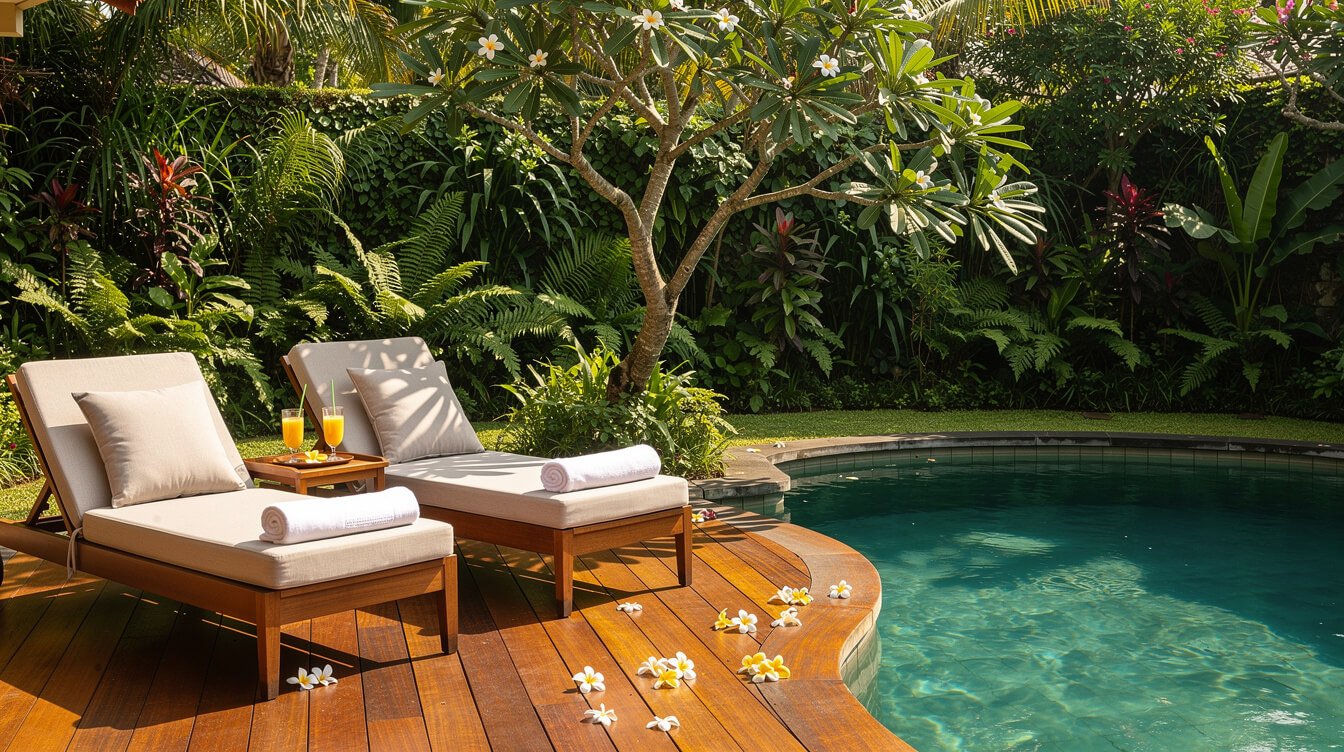
Come back from the pool by lunchtime to three bedrooms, a private pool and a quiet tropical garden in Ubud, with a team on hand so the rest of your day stays unhurried. Check availability for your dates.
Tibumana Waterfall vs Kanto Lampo (and Taman Sari Next Door)
Tibumana is usually paired with two neighbors. Kanto Lampo is about 20 to 25 minutes’ drive away, toward Gianyar. Taman Sari waterfall is just a few hundred meters down the road. Each offers something different, and the best plan often includes two of the three.
| Tibumana | Kanto Lampo | Taman Sari | |
|---|---|---|---|
| Shape | Single tall ribbon into a round pool | Wide stepped cascade over volcanic ledges | Broad two-tier falls |
| Swimming | Yes, best of the three when clear | Wading and soaking, mostly shallow | Often clear water, good for a dip |
| Crowds | Moderate, spread out | Busy, with a queue for the main photo spot | Varies, busiest late morning |
| Walk | 10 to 15 minutes, gentle | 5 to 10 minutes, steep steps | Short, close to the car park |
| Feel | Calm, enclosed, green | Bright, lively, photogenic | Open and refreshing |
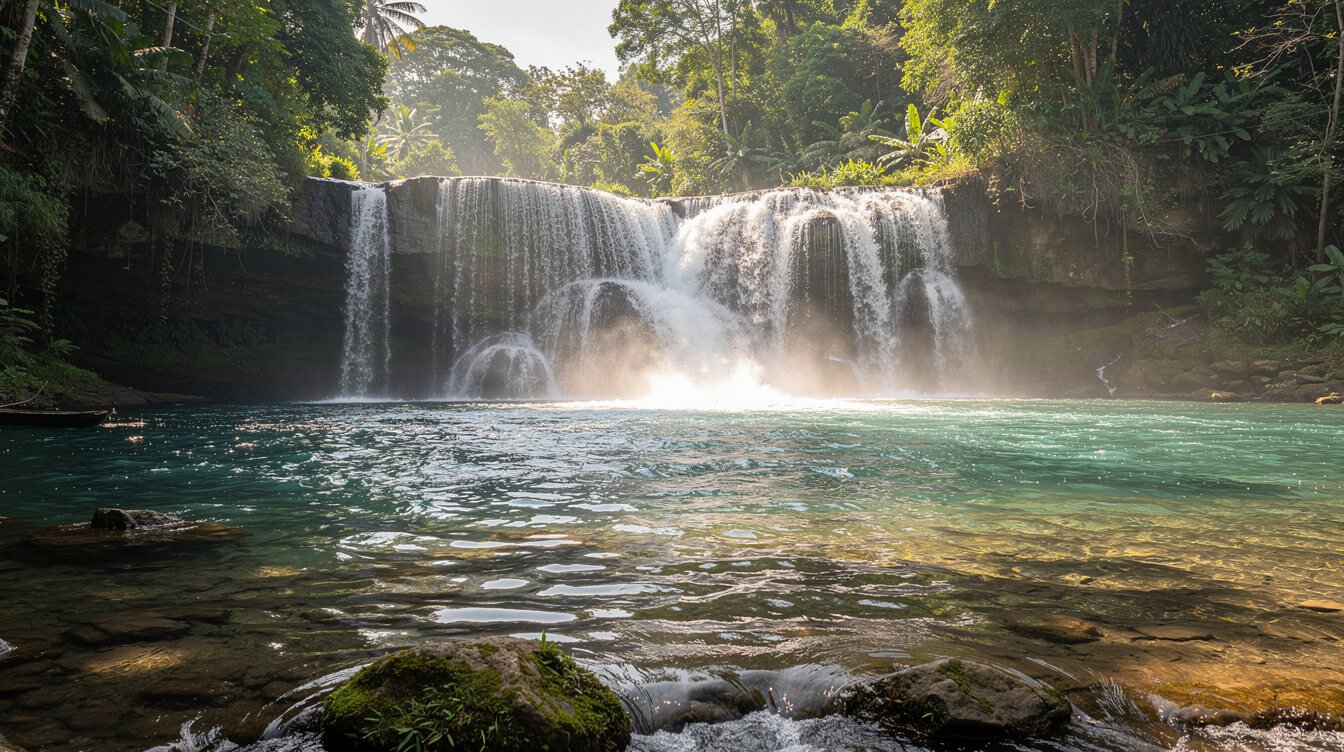
If you want a swim and some quiet, Tibumana wins. If you want the classic photo, Kanto Lampo is the one. Our honest Kanto Lampo waterfall guide covers its photo-line etiquette and rainy-season cautions. On days when Tibumana’s pool is brown, Taman Sari is worth checking. One visitor in January 2026 found its water clear and blue on the same morning Tibumana’s was cloudy. Want a big, powerful fall closer to town? Tegenungan is the other classic, though it’s far busier.
An Easy Half Day From Ubud: A Tibumana Waterfall Loop
You don’t need to chase six waterfalls in a day. Two good stops, one cultural visit and a slow lunch make a far better morning. Here’s a loop that works well from Ubud:
- 7:00 AM, leave Ubud. Coffee in the car, roads still quiet.
- 7:40 AM, Tibumana. Walk down, read the water, swim if it’s clear. Allow about an hour and a half.
- 9:15 AM, Taman Sari. A few minutes away. A short look or a second dip, especially if Tibumana was cloudy.
- 10:15 AM, either Kanto Lampo or Goa Gajah. Kanto Lampo if you want the cascade (expect a line by now). Or stop at the 11th-century Goa Gajah elephant cave on the way back through Bedulu, for carved stone and a different kind of quiet.
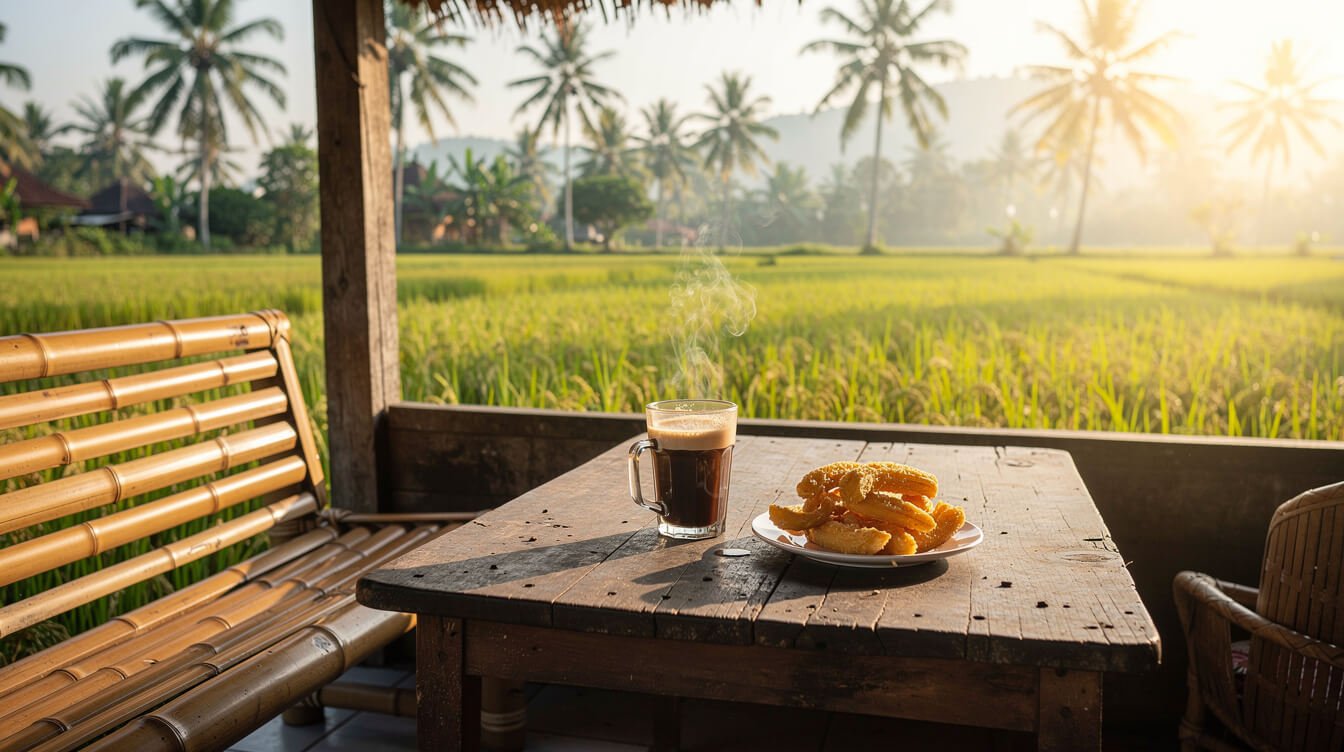
- 11:30 AM, a warung lunch. Pick one of the simple roadside spots between Bangli and Ubud for nasi campur and iced tea, or coffee and fried banana.
- Early afternoon, back in Ubud. Home before the afternoon rain, with the rest of the day for a nap or the pool.
Want a fuller day? Continue north from Tibumana to the traditional village of Penglipuran and the cave waterfall at Tukad Cepung, both in Bangli. It makes a long but rewarding day. Our day trips from Ubud roundup and the island-wide Bali waterfall guide have more routes to choose from.
A private driver for a half day costs a fixed rate. Agree on the stops and the price in advance. If you’re staying with us, ask the team about trusted drivers and which mornings look clearest that week. They’ll know whether the river has been running brown.
Tibumana Waterfall FAQ
How much is the Tibumana waterfall entrance fee?
Most 2025 and 2026 reports put it at about Rp 25,000 per person, with a few mentions of Rp 30,000. Lockers and parking are a few thousand rupiah more. Bring cash in small notes.
What are Tibumana’s opening hours?
Roughly 7 AM to 6 PM daily. Some listings say 8 AM, and it can close early for private events or ceremonies. Morning is the safest bet.
How long do you need at Tibumana waterfall?
Plan on one to two hours on site, including the 10 to 15 minute walk each way. Door to door from Ubud, Tibumana on its own takes about two and a half to three hours.
Is the water clean enough to swim in?
In the dry season, after a few rain-free days, it’s usually clear and green. After heavy rain it turns brown from upstream runoff. Look before you change. If it’s brown or fast, stay out.
Is Tibumana good for kids?
Yes, for children who can manage stairs. The gentle shore makes it one of the friendlier waterfalls for families. Stay within arm’s reach in the water, keep everyone away from the falls themselves, and bring water shoes.
Can you fly a drone at Tibumana?
Visitors do, but the gorge is narrow, the trees are tall, and GPS signal drops quickly. Fly early before people arrive, ask the staff first, and never fly over a ceremony or people praying.
What should I wear?
Swimwear under light clothes, shoes with grip, and a sarong or shirt to cover up in the village and near any shrine. Bring a towel. None is provided.
Tibumana is at its best when you meet it on its own terms. Go early, look at the water before you jump in, step around the offerings, and let the village keep its stories. Do that, and you’ll float in a cool green pool under a single ribbon of falling water, with the forest closing in overhead, and drive back to Ubud before the rest of the island has finished breakfast.

Join our newsletter — fun, new, exciting Bali news
Ceremony days, market finds, new trails and small stories from Ubud. Delivered now and then, always worth opening.