Kanto Lampo Waterfall: An Honest Guide to the Falls Near Ubud
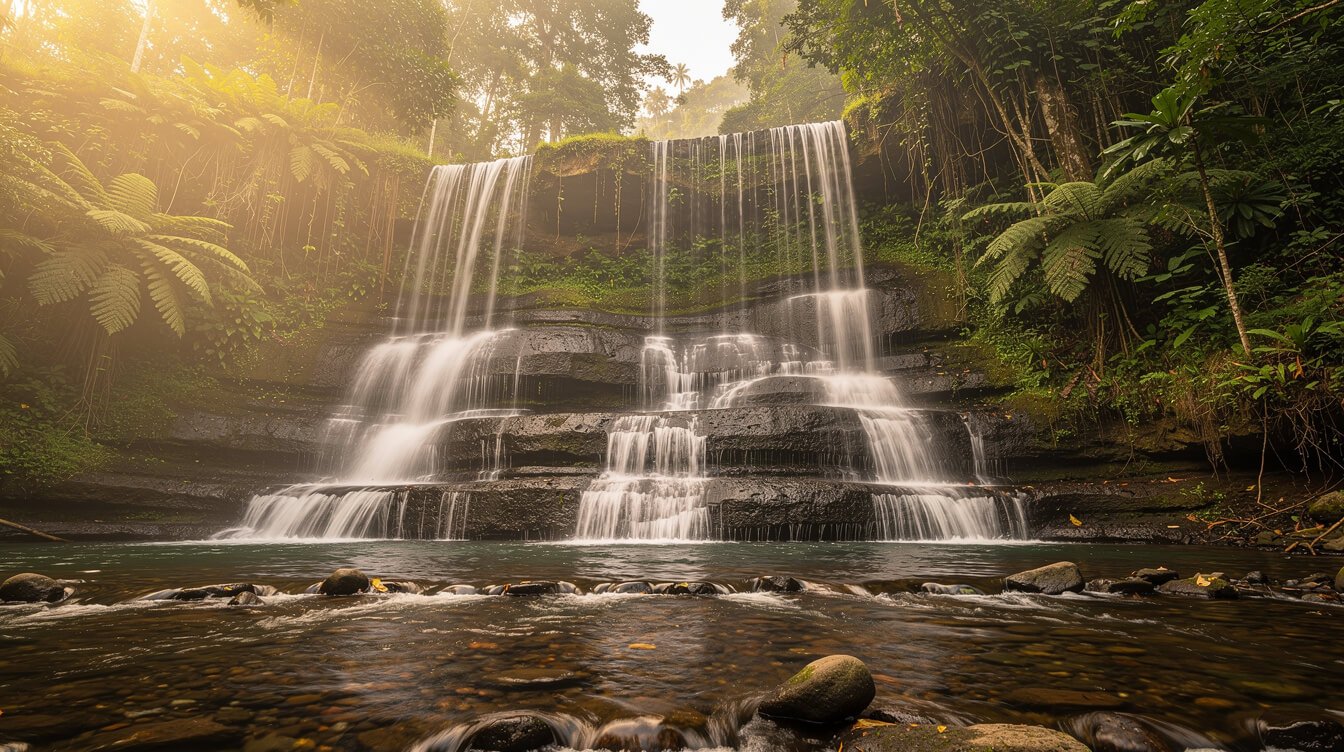
Water doesn’t drop at Kanto Lampo. It spreads. It slides down ledge after ledge of dark volcanic rock in thin white sheets, like a staircase someone left the tap running on, and lands in a shallow river cool enough to make you gasp on a hot morning. Kanto Lampo waterfall sits in the village of Beng, just outside Gianyar town, about 30 to 40 minutes from Ubud. It’s small, it’s close, and on the right morning it’s lovely. On the wrong one, in the wrong season, you’ll spend most of your visit standing in a line.
This guide is about getting the right morning. Most of what you’ll read online is written for the dry-season photo: where to stand, how to pose. That’s here too, but so is the part almost nobody covers. What changes in the rainy season, when to turn back, why there’s a shrine at the bottom of the steps, how Kanto Lampo honestly compares with Tibumana, and how to fold it into an easy half day from Ubud with lunch included.
Where Kanto Lampo Waterfall Is and How Long You Need
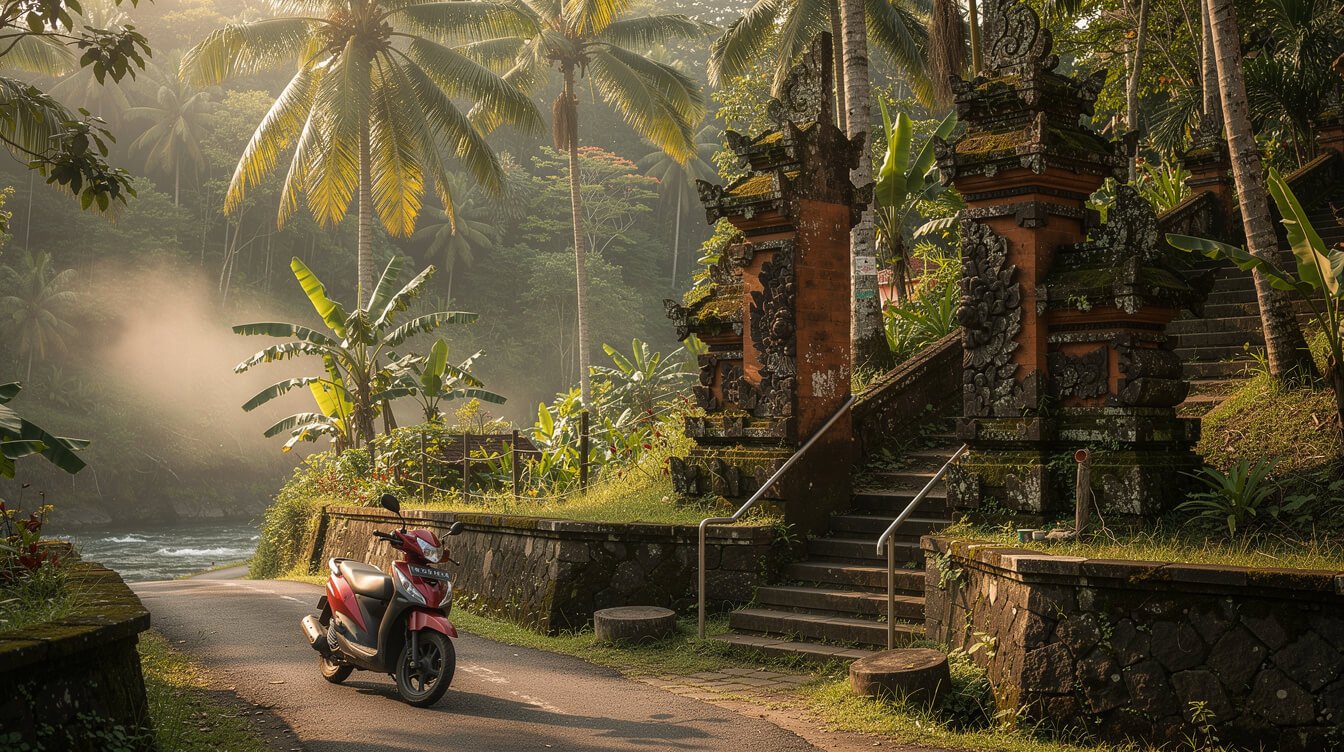
Kanto Lampo waterfall is in Banjar Kelod Kangin, Desa Beng, in the Gianyar regency of Bali, roughly one kilometer from the center of Gianyar town and about 11 kilometers from Ubud. By car, plan on 30 to 40 minutes from central Ubud depending on traffic through Bedulu and Gianyar. From the airport it’s closer to an hour and a half. The last stretch runs through village streets, past family compounds and small shops, and then you’re suddenly at a car park with a ticket booth and a staircase going down into a green river gorge.
Unlike most Bali waterfalls, Kanto Lampo isn’t up in the highlands. It sits in the warm lowlands, closer in climate to Denpasar than to the cool hills above Ubud. You’ll feel that at the top of the stairs. The coolness only arrives when your feet reach the river.
How long do you need at Kanto Lampo?
Plan on 45 to 90 minutes on site. The walk down takes five to ten minutes. Allow 20 to 30 minutes to stand in the water, look around, and take your photos if the platform is clear. Add time for the queue if it isn’t, and add ten minutes for the climb back up, which is the part most visitors remember. Door to door from Ubud, Kanto Lampo on its own is a two-and-a-half to three-hour outing. Paired with a second waterfall and lunch, it makes a relaxed half day.
Tickets, hours and what’s on site
The waterfall is run by the local community, and its own website lists the entrance fee at about Rp 25,000 per person (roughly US$1.50). Older blog posts quote Rp 10,000 or Rp 20,000, so treat anything lower as out of date. Third-party guides give opening hours of roughly 6:30 AM to 5:30 PM daily. Hours and prices in Bali shift without notice, so treat both as approximate and bring cash in small notes.
At the bottom you’ll find lockers for a few thousand rupiah, towels and cheap sandals for sale, a small café, and basic toilets. There are no proper changing rooms, so arrive with your swimwear on under your clothes. Parking is either free or a couple of thousand rupiah.
If you’d like to see how Kanto Lampo fits among its neighbors before you go, our full Ubud waterfall guide maps every fall within an hour of town.
What Kanto Lampo Waterfall Is Actually Like
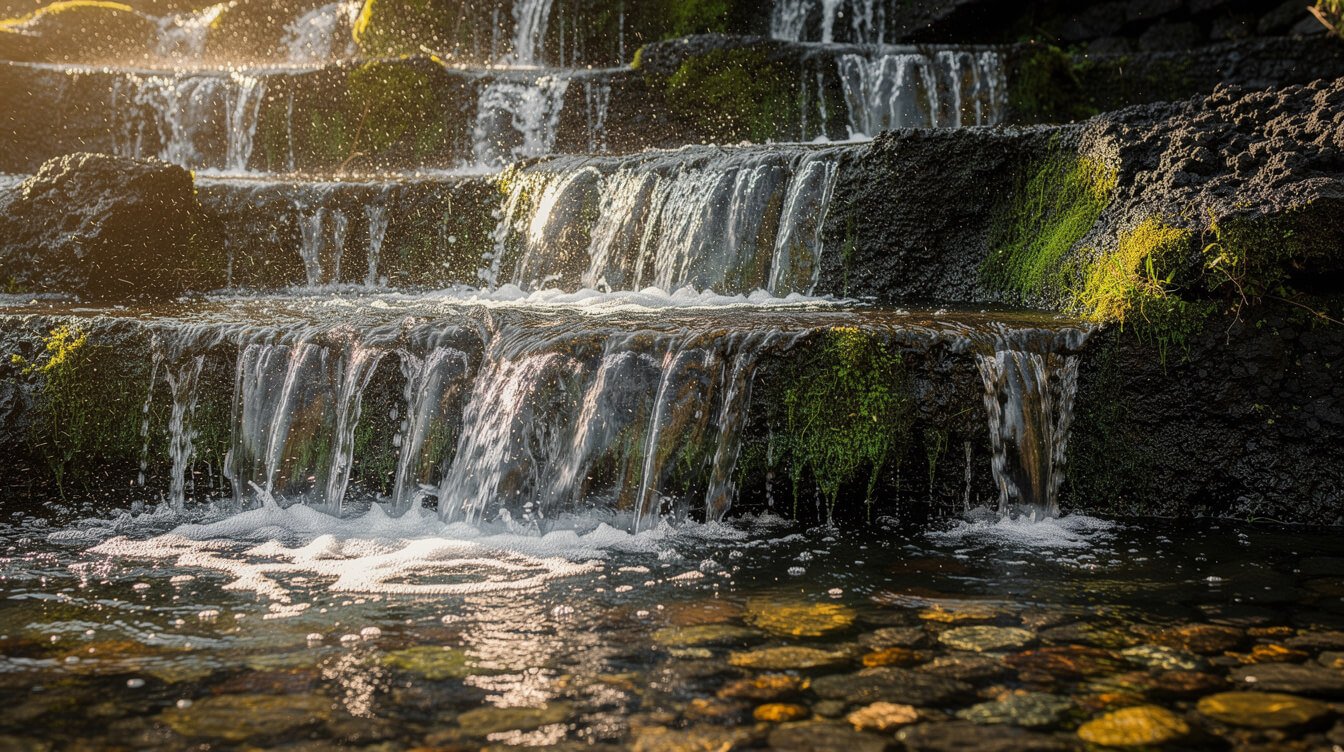
Here’s the honest picture. Kanto Lampo is about 15 meters tall. It isn’t a plunge into a deep jungle pool, and it isn’t a roaring cliff. What makes it special is its shape. The water fans out across a wide face of stepped black rock, splitting into dozens of small cascades that catch the light. Up close it looks almost sculpted, and in a sense it partly is.
A waterfall shaped by people and rice
Kanto Lampo is young as Bali waterfalls go. Local accounts, including the waterfall’s own site, tie its present form to irrigation rather than geology alone. Water from the village’s subak irrigation channels, the cooperative system that feeds Bali’s rice fields, began spilling over the rocks above the river, and the cascade you see today grew from that overflow. It only became a visitor attraction in the last decade or so. That’s part of its charm. It’s a waterfall made by the same water that grows the village’s rice.
The name comes from a tree. Kanto lampo is a tree that grows along this river, and locals describe its fruit turning from green to yellow to red as it ripens. Ask at the ticket booth and someone may point one out.
The steps, the rocks and the platform
Getting down is easy. A paved staircase with a handrail drops into the gorge, though the number of steps depends on whom you ask. One guide counts about 50, while plenty of visitors climbing back up in the midday heat swear it’s well over a hundred. If you have bad knees or you’re carrying a toddler, take it slowly on the way back.
At the bottom, the river is shallow, mostly ankle- to knee-deep. You can wade across to the base of the falls, stand under the spray, and climb onto the low rock ledge in front of the cascade, which is where every photo you’ve seen was taken. The rocks are sharp in places and very slippery everywhere, so water shoes are the best few dollars you’ll spend on this trip. Across the river, a narrow bamboo bridge and a second set of steep steps lead to a viewpoint on the far bank. It’s a lovely place to watch the falls without getting in.
Is it a swimming spot? Not really. The pool is too shallow for laps or jumps. Think of it as a cold-water soak on a hot morning: you’ll get wet, you’ll laugh, and you’ll want a towel waiting.
Beat the Line: Timing and Photo Etiquette at Kanto Lampo
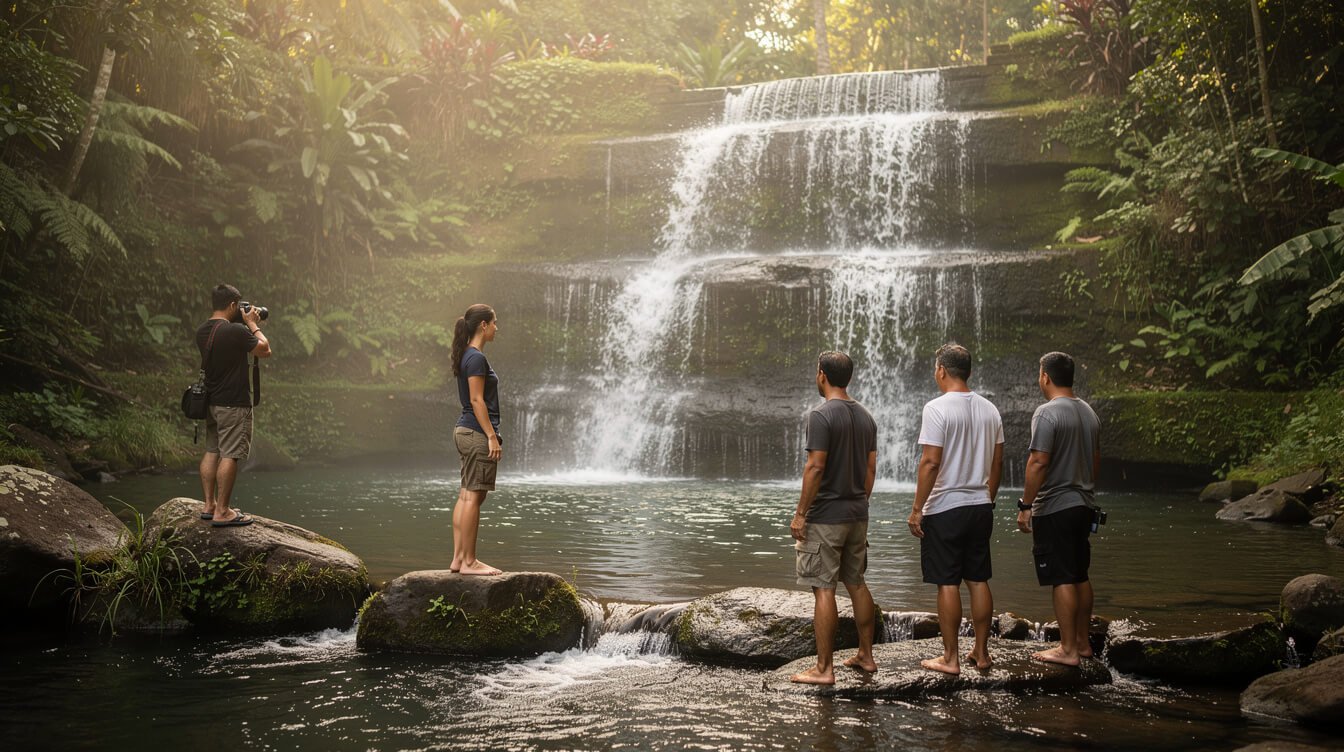
Kanto Lampo’s popularity comes almost entirely from one photograph: a person standing on the ledge, arms up, with the cascade behind them. That means there’s often a line, and at busy times visitors report waiting over an hour. Local photographers work the base of the falls and will pose you and shoot on your phone for a small tip. Many visitors love this. Others find it turns the place into a studio. Both are fair.
When to go
- Go early, on a weekday. The first hour after opening is the quietest. By mid-morning, tour vans arrive from the south and the line starts building.
- Skip weekends and Indonesian public holidays. Local families visit then too, which is lovely to see but means more people on the rocks.
- Know about the private slots. The waterfall’s own price list includes private “booking area” sessions from 6 AM, lasting one to three hours, for groups of up to 10 (from about Rp 1,500,000). They’re popular for pre-wedding shoots. On a morning when one is booked, the main platform may be reserved until 7, 8 or even 9 AM. If the first hour matters to you, have your driver call ahead.
- Light matters. The gorge is shaded early and bright later. Mid-morning gives the softest glow on the water, so arriving around opening and lingering until the sun reaches the rock face is a good compromise.
Photo etiquette that keeps everyone happy
- When it’s your turn on the ledge, take your few shots and step down. The people behind you have been waiting too.
- Keep swimwear for the water. Pull a shirt or sarong on before you walk back past the shrine and up through the village.
- Don’t climb above the falls or onto the upper ledges. It’s dangerous, and the water up there has a ceremonial role (more on that below).
- Ask before flying a drone, and never fly one over a ceremony.
- If you use one of the local photographers, tip in cash. Rp 20,000 to 50,000 is fair for a quick session.
Want Kanto Lampo without the line at all? Cross the bamboo bridge, sit on the far bank, and watch the water and the posing for a while. It’s surprisingly peaceful from there.
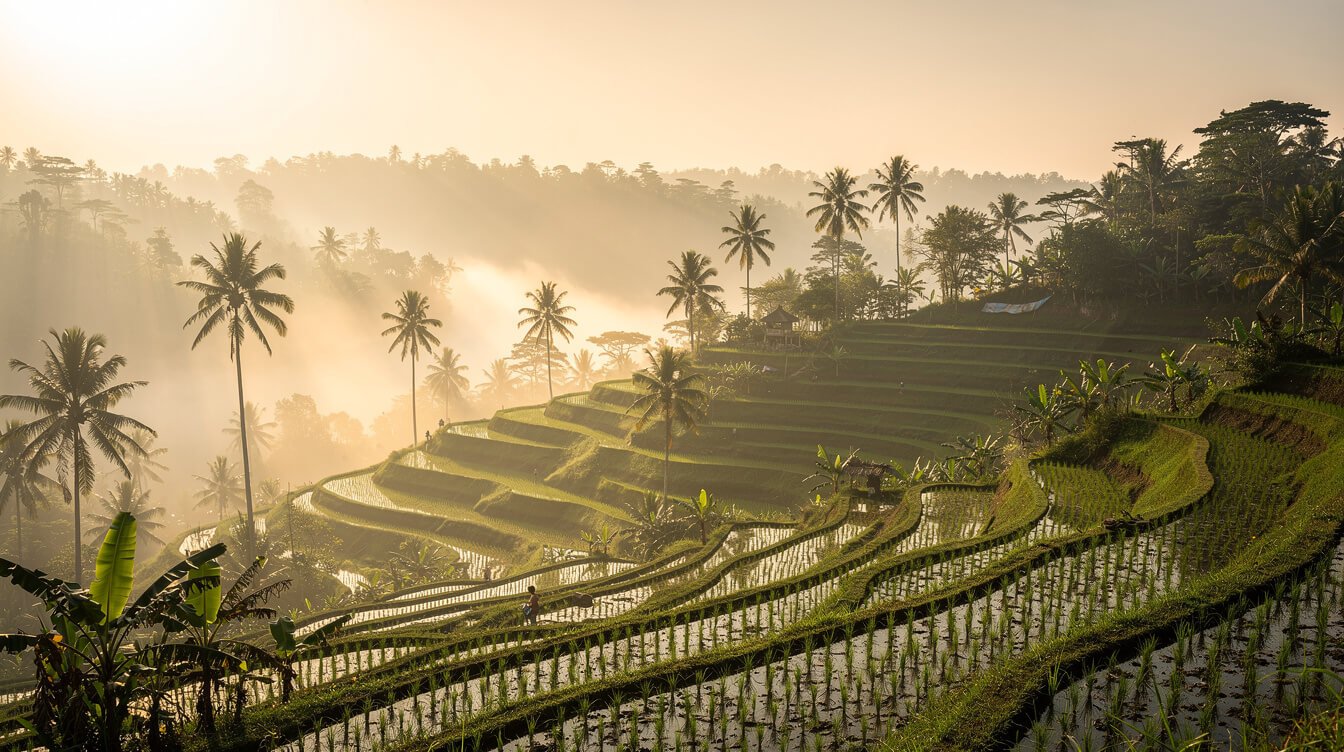
Get a free 3-day sample itinerary
Three easy days in Ubud: rice field walks at first light, a temple morning, a market, and a waterfall before breakfast. We will send you a free 3-day sample itinerary.
Visiting Kanto Lampo Waterfall in the Rainy Season
Almost every guide tells you the best time to visit Kanto Lampo is the dry season, April to October, when the water runs clear and the rocks show their pattern. That’s true. But plenty of us travel between November and March, and the waterfall doesn’t close for the season. It changes, and you need to know how.
Bali’s rainy season usually arrives in November. If you’re reading this now, the first heavy afternoon storms have already started. Our guide to Bali weather in November covers what that feels like day to day, and our longer Bali rainy season guide explains why it’s a beautiful time to visit.
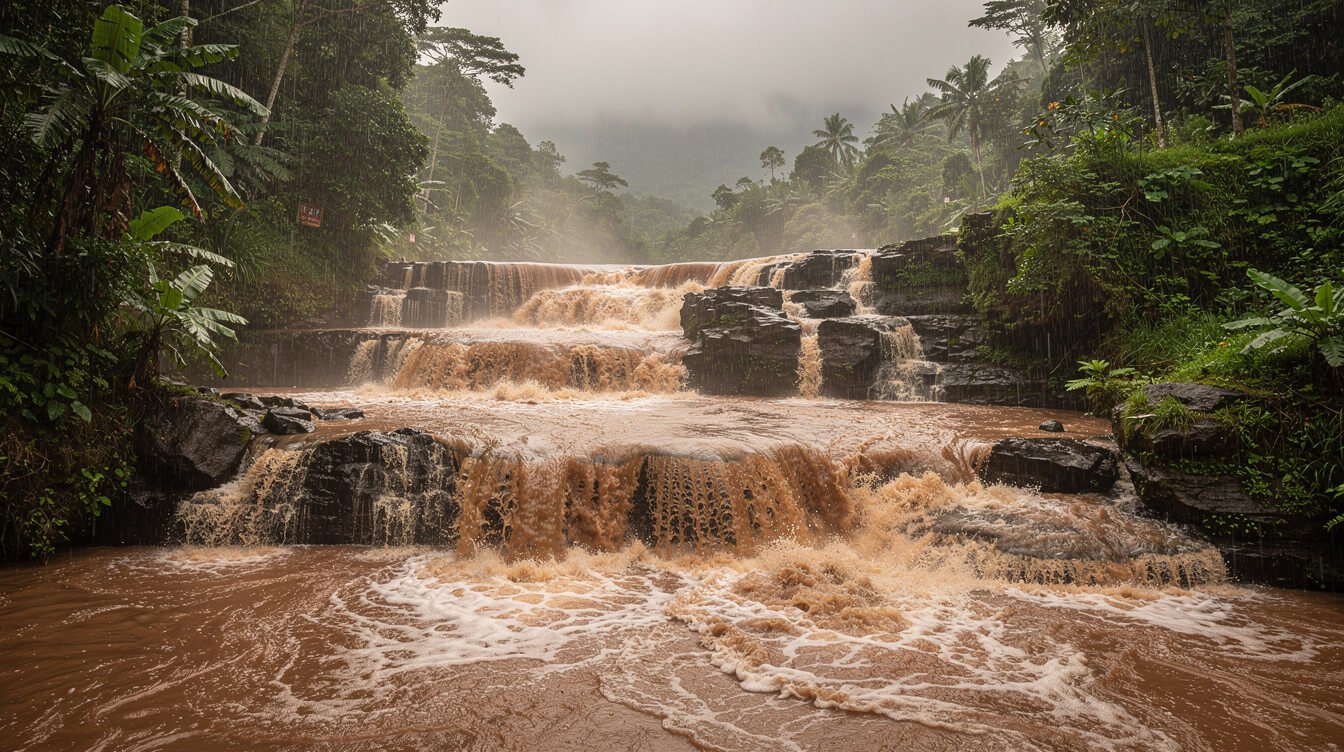
What changes in the wet season
- The water turns brown. After rain the river carries soil from upstream fields, so the clear sheets of the dry-season photo become a tea-colored rush. It’s dramatic, but it’s a different picture.
- The flow gets stronger. More water means more power on the ledges and deeper, faster water at the base. Standing on the rocks becomes harder and riskier.
- Everything is slippery. The stairs, the bamboo bridge, the rocks. Moss and wet stone are a bad combination in flip-flops.
- The river can rise without warning. This is the part that matters most. Rain in the hills above Gianyar can raise the river at Kanto Lampo hours later, even when the sky over the falls is blue.
When not to go, and when to turn back
- Skip it on the morning after a night of heavy rain. Choose a later day in your trip.
- Go in the morning. Wet-season storms usually build in the afternoon.
- If the water at the base is brown and fast, enjoy the view from the stairs or the far bank and don’t wade in.
- If the water level starts rising, the color darkens suddenly, or you see branches and debris coming over the top, leave the river straight away. Don’t wait to finish your photo.
- If staff have roped off the base or the gate is closed, that’s the answer for the day. The waterfall can close on high-water days.
Whatever the season, enjoy the water from the outside. River water anywhere in Bali isn’t for drinking, and keep your mouth closed under the spray too. Our guide to avoiding Bali belly explains why.
There’s an upside to the wet season. Crowds thin out, the gorge turns an almost electric green, and on a clear morning between storms you may find the platform empty. Many of the island’s waterfalls are at their most powerful from December to February, as our Bali waterfall guide explains. Just treat the river with respect, and let the weather make the call.
The Shrine at Kanto Lampo: Holy Water and Respectful Behavior
Before you reach the water, look to the side of the path near the base of the falls. You’ll see a small shrine, often wrapped in cloth, with little palm-leaf offerings of flowers and incense on its ledge. Easy to walk past on the way to the photo. Worth stopping for.
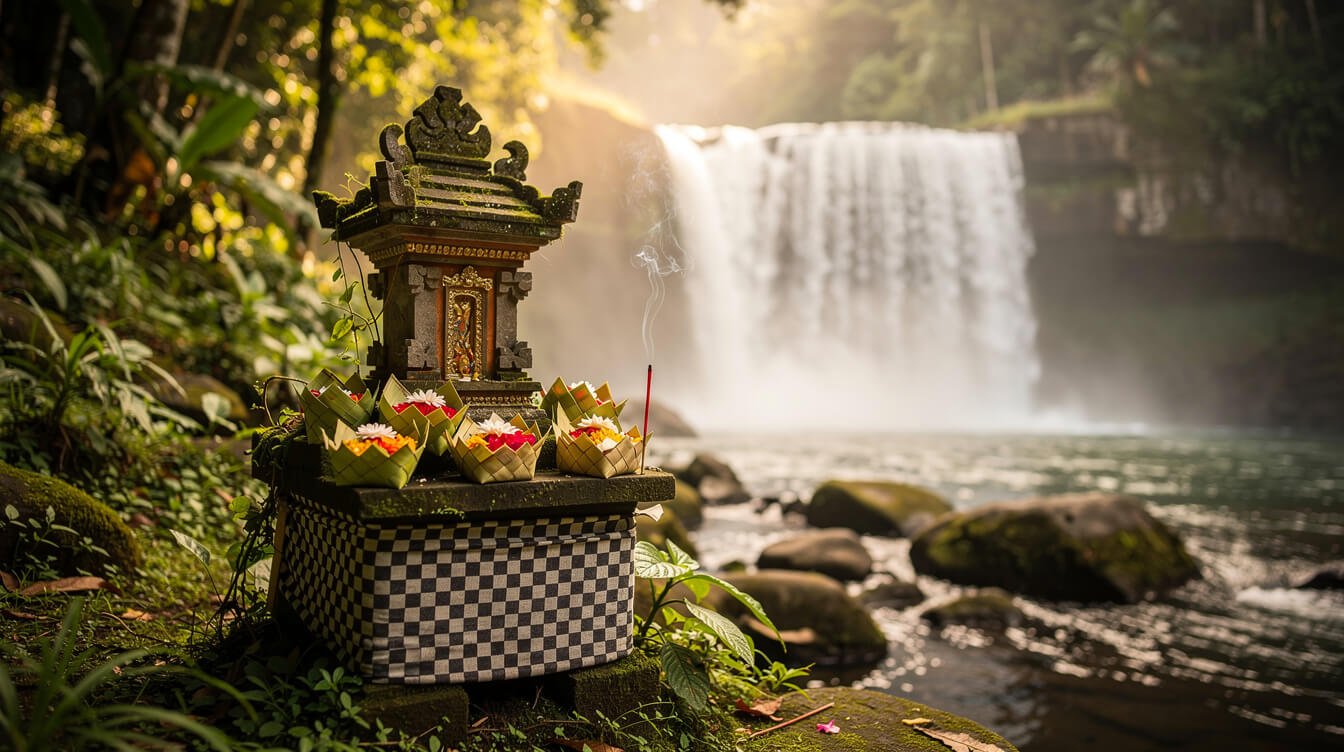
To the families of Beng, Kanto Lampo is more than an attraction. The waterfall is treated as a beji, a sacred water source. When the community holds ceremonies, people come down to the river to perform mendak toya, the ritual collection of holy water. That water is used in offerings to the gods (Dewa Yadnya) and in rites for the ancestors (Pitra Yadnya), including cremations. You may arrive to find a procession in white and gold carrying offerings down the steps. If you do, you’re seeing the real reason this river matters.
Water sits at the heart of Balinese Hinduism, so much so that the faith was once called Agama Tirta, the religion of holy water. Our gentle guide to Bali religion explains more, and a morning at Tirta Empul shows the same idea on a much larger scale.
How to be a good guest at the falls
- Never step over or on offerings. Small palm-leaf offerings may be on the path or rocks. Walk around them.
- Don’t sit on, lean on or climb the shrine, and don’t use it as a prop in photos.
- Dress modestly near the shrine. Swimwear is normal in the river, but cover up when you pass the shrine and walk through the village.
- If a ceremony is underway, give it space. Wait at the side, keep your voice low, and don’t photograph people praying without a nod of permission.
- Respect local custom on purity. As at other sacred sites in Bali, local custom asks women who are menstruating not to enter shrine areas.
- Take your rubbish home. The community has worked hard to keep the river clean as visitor numbers have grown.
Across the river there’s also a small cave. Locals tell a story that soldiers used it during the Dutch colonial period. It’s a reminder that this quiet gorge has had a long life before its photogenic one.
If you’re visiting around Galungan, the next one falls in mid-January 2027, you’ll see more ceremonial activity across Gianyar, with penjor bamboo poles arching over village streets. It’s a beautiful time to drive through.
Kanto Lampo Waterfall or Tibumana? An Honest Comparison
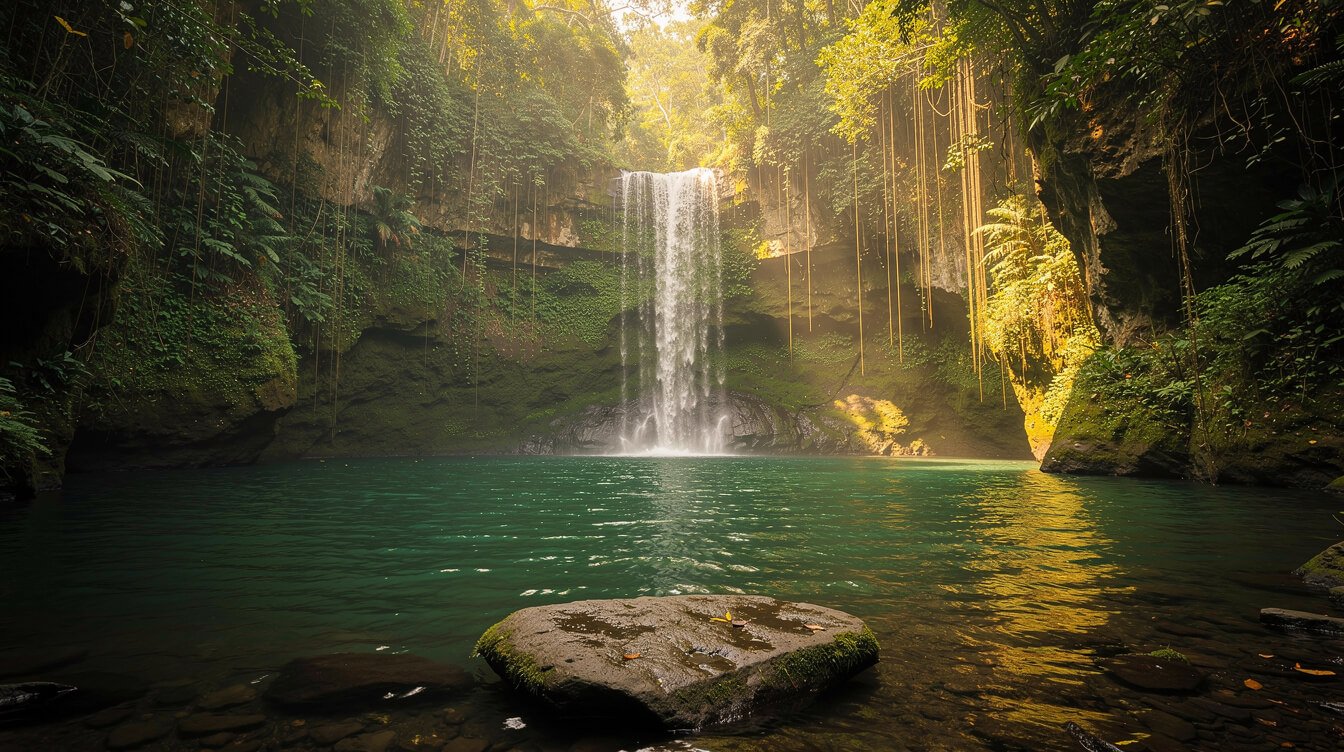
This is one of the most common questions about waterfalls near Ubud, and the answer depends on what kind of morning you want. Tibumana is about 25 minutes north of Kanto Lampo, in the Bangli regency, and the two are often sold together on tours.
| Kanto Lampo | Tibumana | |
|---|---|---|
| The fall | Wide, stepped cascade over rock ledges | Single curtain falling into a round pool |
| The walk | Short, steep staircase into a gorge | Longer, gentler path through forest and fields |
| The water | Shallow, ankle- to knee-deep; a soak, not a swim | A real pool, popular for a dip in calm conditions |
| Crowds | Busy mid-morning, with a photo line | Usually calmer, with less of a queue |
| Best for | A playful photo and a quick, close outing | A quiet, green, unhurried hour |
| Rainy season | Dramatic but brown; easy to see from the steps | Pool becomes rough after rain; swimming often off |
Is Tibumana worth visiting? Yes, especially if crowds bother you or you want to swim. Many people who visit both prefer Tibumana’s calm. Is Kanto Lampo worth it? Yes, if you go early, you like the idea of standing in a staircase of water, and you won’t mind a short wait for a photo. It’s also the easier of the two to reach from Ubud and Gianyar.
Our honest suggestion is to do both. Start at Kanto Lampo at opening, before the line, then drive to Tibumana for a quieter second act. For more options with fewer people, our guide to the best hidden waterfalls in Ubud covers the gentle spots tour vans tend to skip.
Book the Villa
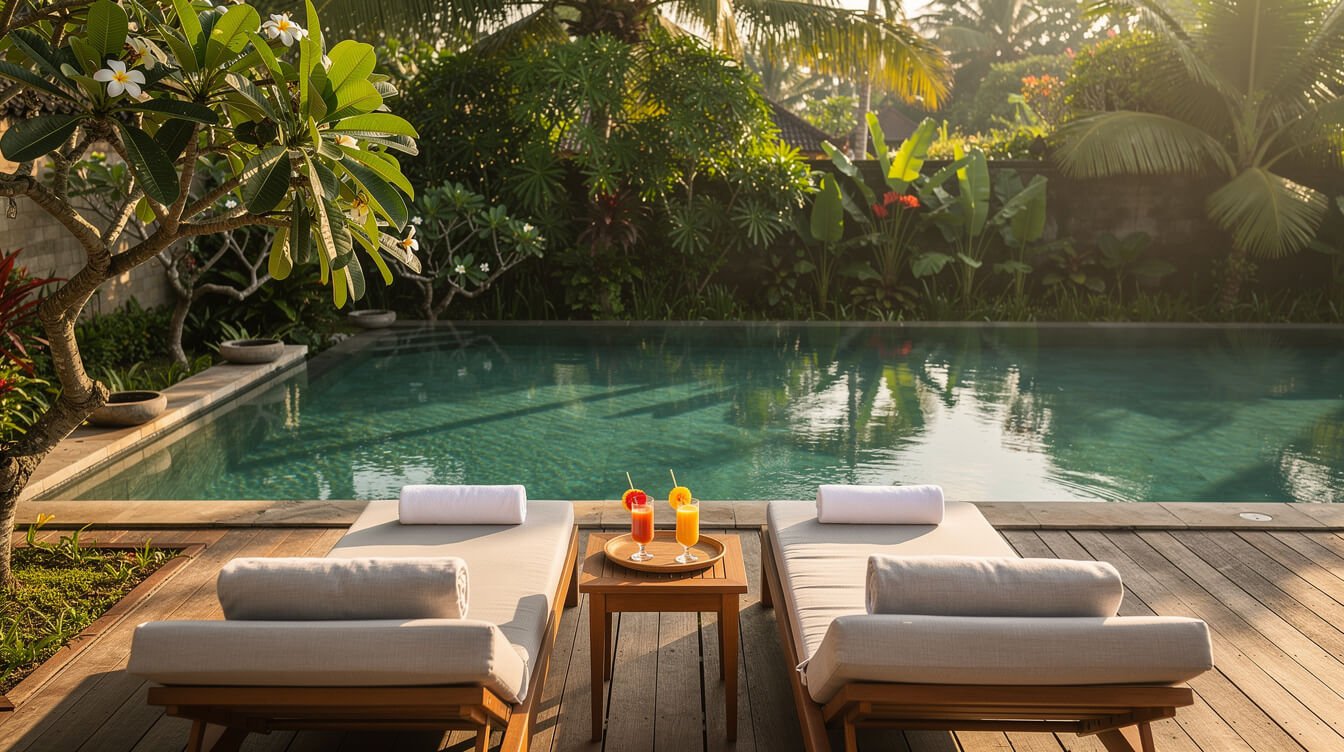
Come back from the waterfall by lunchtime to three bedrooms, a private pool and a quiet tropical garden in Ubud, with a team on hand so the rest of your day stays unhurried. Check availability for your dates.
A Half-Day Kanto Lampo Waterfall Loop From Ubud
Kanto Lampo works best as the first stop of a slow half day, not as a whole day on its own. Here’s a loop that gets you home by early afternoon, before the rainy-season clouds arrive and in time for a long lunch or a swim.
The morning
- 6:15 AM. Leave Ubud. Bring a towel, water shoes, a dry bag for your phone, a light cover-up, small cash, and a bottle of water.
- 7:00 AM. Kanto Lampo. Wade in, take your photo if the ledge is clear, sit on the far bank for a while.
- 8:15 AM. Drive about 25 minutes to Tibumana for a calmer second waterfall and, conditions allowing, a proper swim. Or head west to Tegenungan if you’d like one big, roaring fall instead.
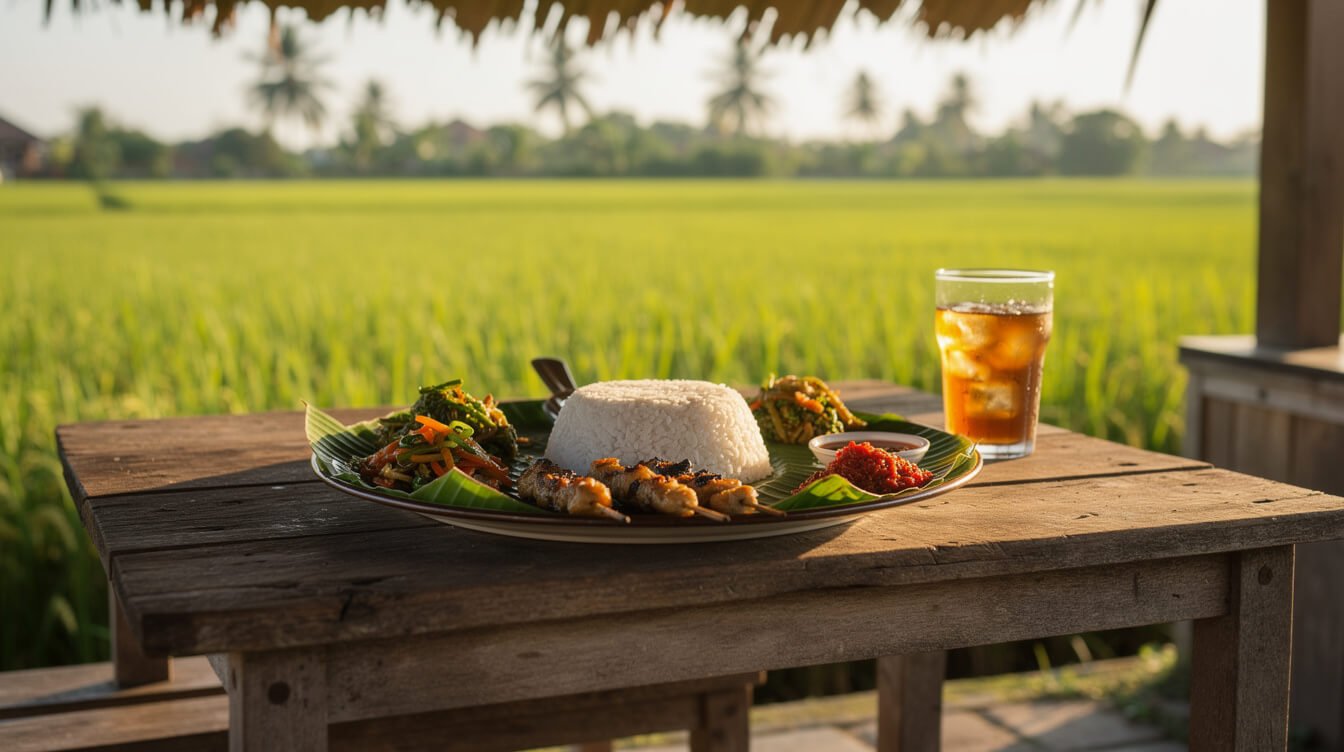
- 10:00 AM. Breakfast-lunch in Gianyar. The town is famous for babi guling, spit-roasted suckling pig, served at simple warung with rice, crackling, lawar and sambal. Vegetarians will find nasi campur with tempeh and vegetables at almost any warung.
- 11:30 AM. On the way home, stop at Goa Gajah, the “Elephant Cave” temple in Bedulu, just east of Ubud. It’s worth half an hour, and sarongs are available at the gate.
- 12:30 PM. Back in Ubud, damp, happy, and ready for a nap.
Getting there
The easiest way is to hire a private driver for the morning, which in Ubud typically costs a fixed half-day or full-day rate. Agree on the price and stops in advance. Confident scooter riders can manage the route, but the village roads are narrow and the steps at the falls are hard work in wet sandals. If you’re staying with us, ask the team about trusted drivers and which mornings look clearest that week.
Want more waterfalls nearby? Our classic guide to waterfalls near Ubud and our day trips from Ubud roundup have routes north and east for a longer day.
Kanto Lampo Waterfall FAQ
How much does Kanto Lampo waterfall cost?
The waterfall’s own site lists the entrance fee at about Rp 25,000 per person. Lockers, parking and photographer tips are extra and small. Prices change, so bring a little more cash than you think you need.
What are Kanto Lampo’s opening hours?
Roughly 6:30 AM to 5:30 PM daily, according to recent guides. Private group sessions can run from 6 AM, so the main platform may be reserved early on some mornings. The site can also close on high-water days in the rainy season.
Can you swim at Kanto Lampo?
You can wade and soak, but the water at the base is shallow, mostly ankle- to knee-deep. It isn’t a swimming hole. In the rainy season, stay out of the water when it’s brown and fast.
Is Kanto Lampo a natural waterfall?
Partly. It runs over natural volcanic rock, but local accounts, including the waterfall’s own site, say its current form grew from irrigation water spilling into the gorge. It’s a cascade shaped by Bali’s rice-field water system as much as by geology.
Is Kanto Lampo good for kids?
For confident walkers, yes. The shallow water is fun for children. The steep steps and slippery rocks need close supervision, and the climb back up is tiring for small legs. Water shoes for everyone.
What should I wear?
Swimwear under light clothes, water shoes, and a sarong or shirt to cover up near the shrine and in the village. There are no proper changing rooms.
Kanto Lampo is at its best when you treat it as what it is: a small, bright, village waterfall, made in part by rice and kept sacred by its neighbors. Go early, step carefully, leave the offerings where they lie, and you’ll come back to Ubud with cold feet, wet hair, and a slow morning you’ll remember.

Join our newsletter — fun, new, exciting Bali news
Ceremony days, market finds, new trails and small stories from Ubud. Delivered now and then, always worth opening.