Bali Weather in November: The Quiet Turn to Green in Ubud
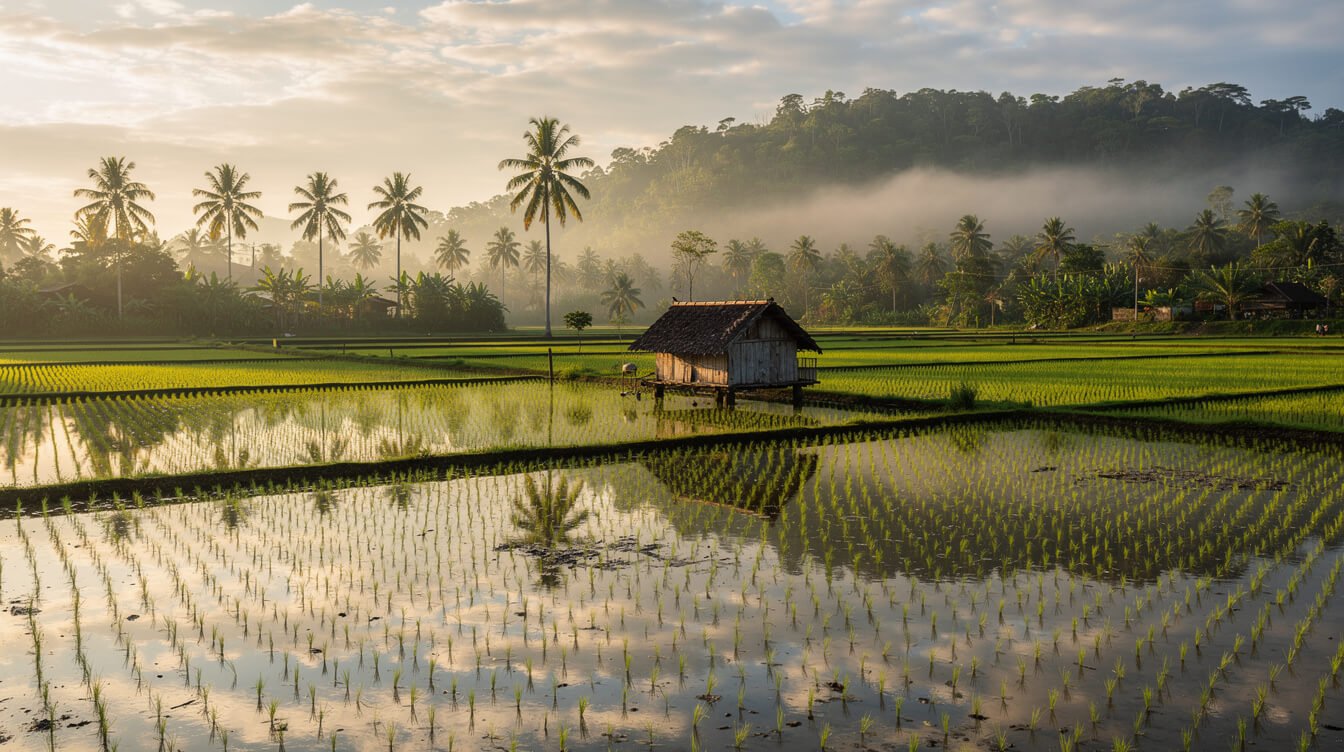
Picture a November morning in Ubud. The sky over the rice fields is pale and clean, the air smells faintly of turned mud and frangipani, and in the paddy below the villa a farmer is pressing young green shoots into ankle-deep water, one handful at a time. Around mid-afternoon the light changes. Clouds gather over the hills, a cool breath moves through the garden, and you can smell the rain a full minute before you hear it. That, in a sentence, is Bali weather in November: the month the island turns from gold back to green, and Ubud slows down to match.
Most November guides are written from the beach, where the start of the wet season mostly means a risk to sunbathing. This one comes from the team at a staffed villa in the rice fields outside Ubud, where November is one of the quietly beautiful months. Below you’ll find honest weather numbers, what this year’s late-arriving rains may mean for your trip, how the rain actually behaves in the highlands, who November suits, the best things to do, and a short packing and getting-around guide.
Bali Weather in November at a Glance
November is the hinge between Bali’s two seasons. The long dry months of July to October are ending, and the wet season, which broadly runs from November through March, is beginning. Here’s what the averages say. One honest caveat first: different weather services measure at different stations and over different years, so published numbers vary quite a lot. Treat these as ranges, not promises.
- Daytime temperatures: roughly 27–30°C (81–86°F) on the coast. Ubud usually runs a degree or two cooler during the day.
- Nights: around 23–24°C (73–75°F) by the sea. Ubud evenings feel fresher, especially after rain.
- Rainfall: published monthly averages range from about 115 mm to around 250 mm, depending on the source and the station.
- Rainy days: somewhere between roughly 11 and 20, with the highlands at the wetter end.
- Humidity: high, around 80–85%. Before a storm, the “feels like” temperature can climb into the low 30s°C.
- Sea temperature: warm, about 27–28°C, though seas can be choppier for boat trips to the Nusa islands.
Ubud vs the coast in November
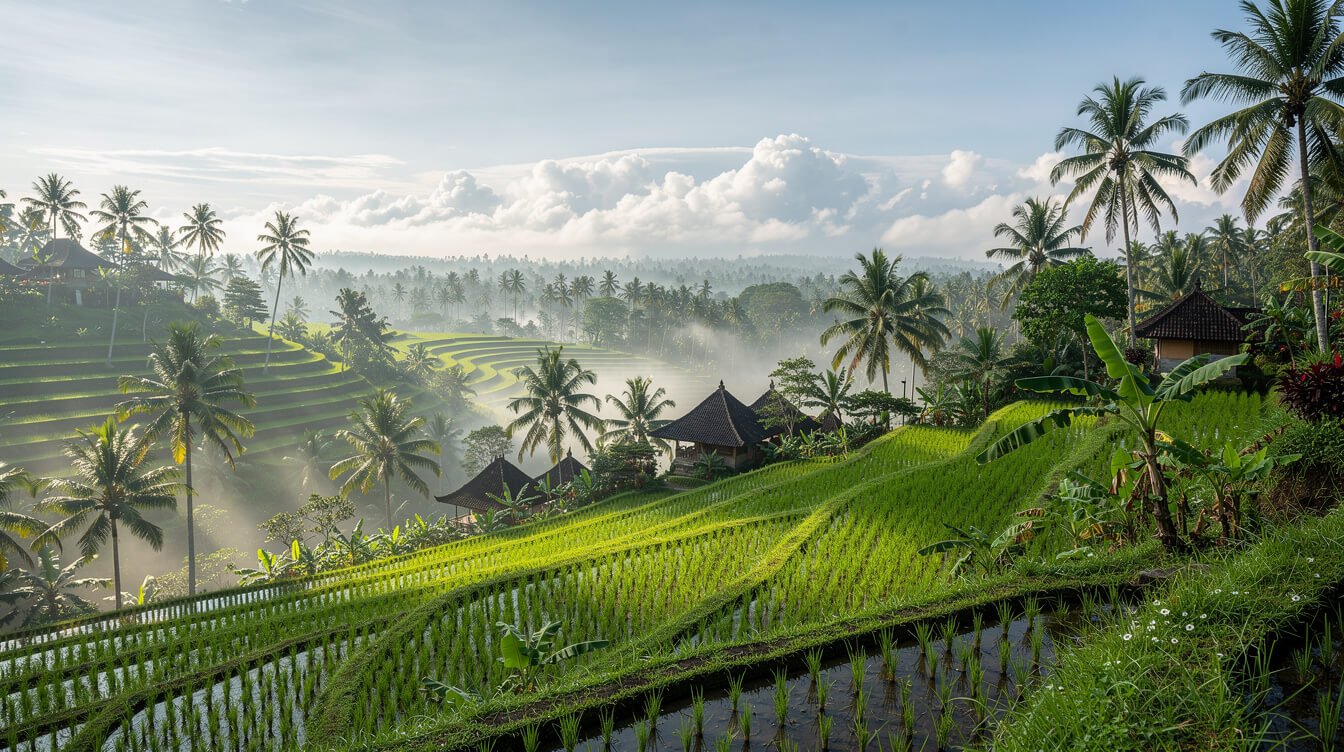
Ubud sits inland, in the foothills that rise toward Bali’s volcanoes. That means it tends to see rain a little earlier in the day, and a little more of it, than the southern beaches. The Bukit Peninsula around Uluwatu is usually the driest corner of the island this month. But the highlands get something in return. Mornings are softer and often misty, the air after a storm is noticeably cooler, and the landscape turns green much faster than it does on the coast.
For the bigger picture, our month-by-month guide to Ubud puts November in context, and our general guide to the weather in Ubud explains why the town has its own microclimate.
Why November Is Ubud’s Quiet Turning Point
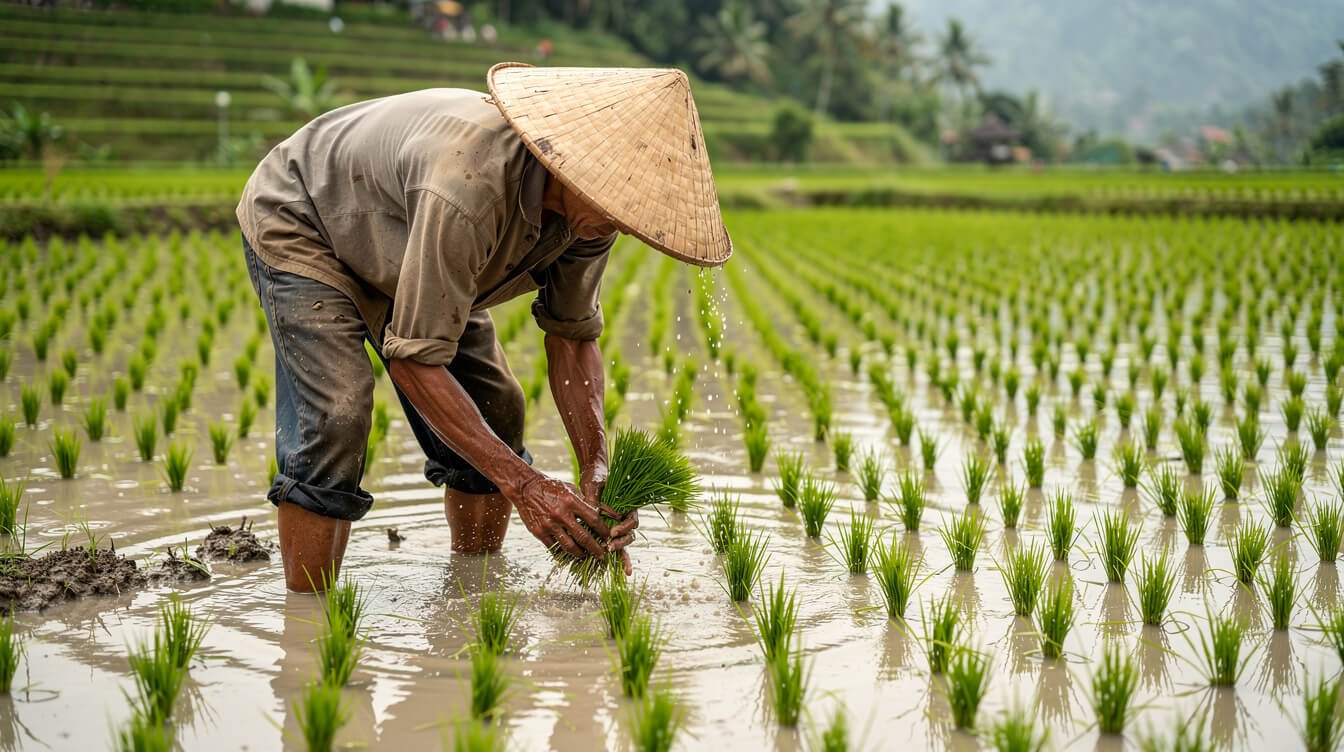
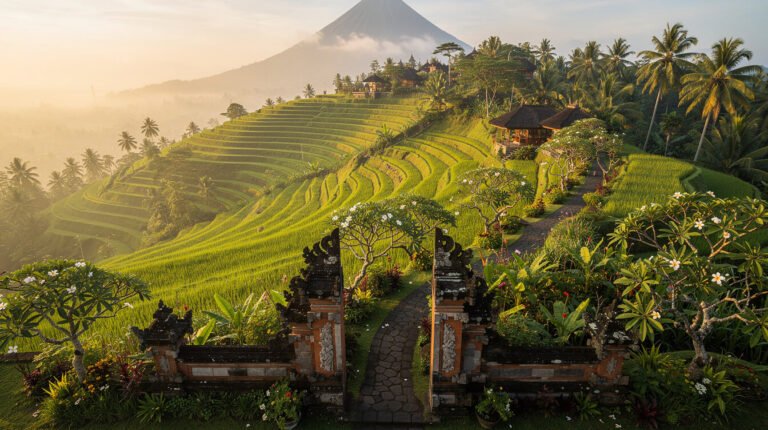
If you visit Ubud in August, you see the rice terraces at their most golden and their most crowded. In November, you see something rarer: the fields beginning again.
The rice fields wake up
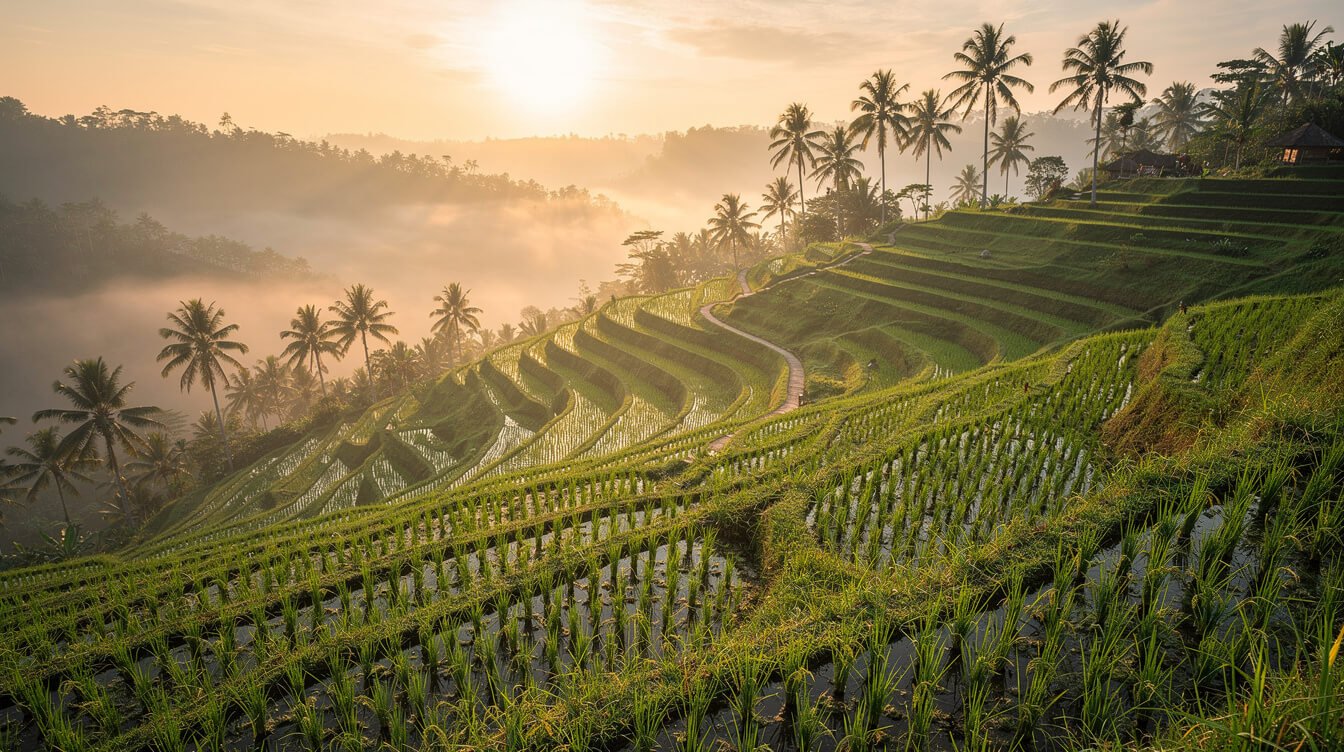
Balinese rice farming runs on subak, a centuries-old cooperative system that shares water between farms through channels, tunnels, and small water temples. Planting schedules are staggered across the island, so you’ll see fields at every stage all year. But as the rains return, many fields around Ubud are flooded and replanted. For a few weeks, the terraces become mirrors that reflect the sky. Then the first shoots come up, an almost electric green. Walk past the same field on your first day and your last, and you’ll see the difference.
The smell of the first rain
Ask anyone who lives here what November means, and they’ll probably mention the smell. After months of dry heat, the first proper rain on warm stone and red earth fills the whole valley with a scent that’s hard to describe and impossible to forget. Frogs start up in the paddies at dusk. The garden stretches, too. Leaves you passed yesterday seem bigger this morning, and the whole place feels newly awake.
Fewer people, slower days
The big dry-season crowds of July and August have gone home, and the Christmas rush hasn’t arrived yet. Temples are calmer, rice-field paths are emptier, and the roads in and out of Ubud are a little kinder. If you’ve ever wanted to see Ubud as the people who live here see it, November is one of the best times to try. It’s the same quality that makes November popular with long-stay visitors, as we describe in our guide for digital nomads in Bali.
Get a free 3-day sample itinerary
Cool-morning rice walks, a rainy-afternoon massage, and an evening dance under a rinsed sky. We will send you a 3-day sample itinerary for Ubud that already works with the November rhythm.
How Rain Really Works in Ubud in November
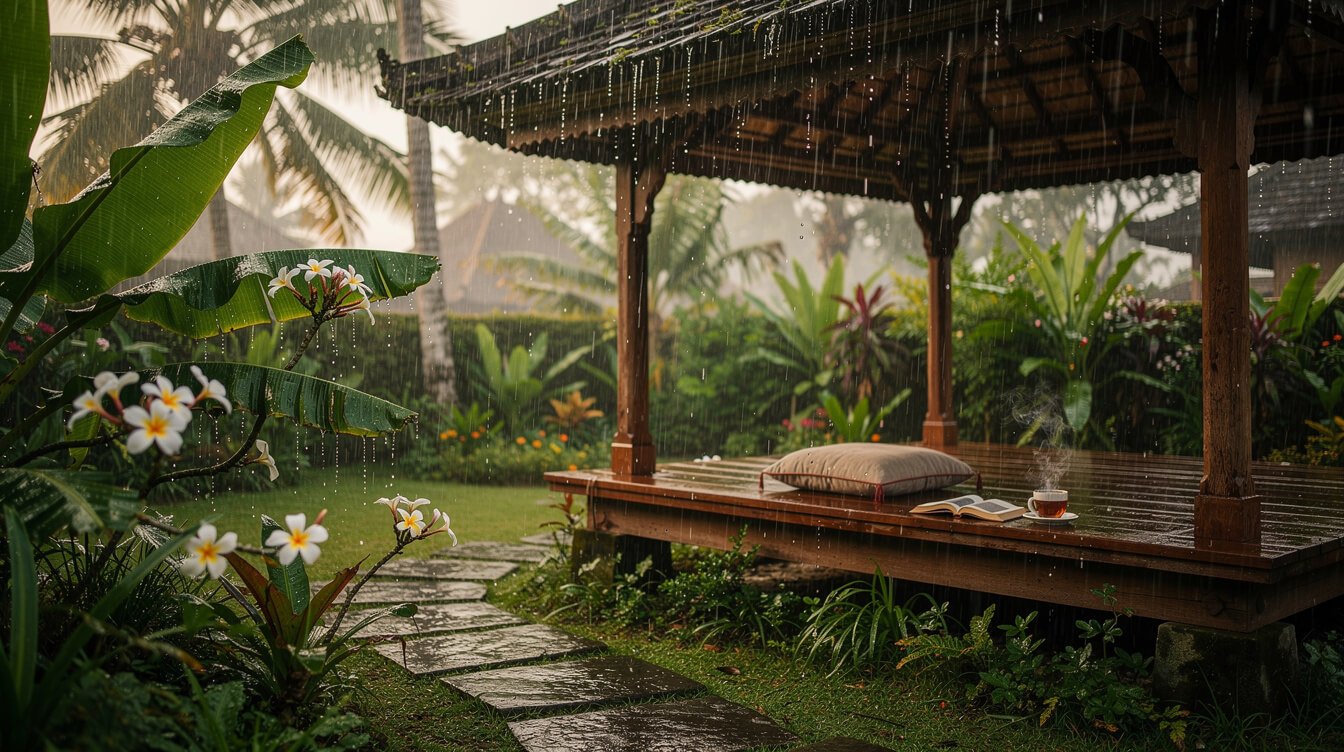
“Rainy season” sounds like gray skies for days. In Ubud, Bali weather in November almost never works like that. Here’s the typical pattern.
A typical November day
- 6:00–10:00: usually the best part of the day. Clear or lightly misty skies, cool air, and soft light over the fields. This is your window for walks, temples, and photographs.
- 10:00–13:00: warm and increasingly humid. Clouds start to build over the hills to the north.
- 13:00–17:00: the likeliest time for rain. When it comes, it often comes hard: a loud, warm downpour that might last twenty minutes or a couple of hours.
- Evening: often clear again, rinsed and cool, with frogs and crickets taking over the soundtrack.
Some days don’t rain at all. Early in the month especially, you can go several days with only a passing shower. Other days, a storm settles in for the afternoon and evening. The pattern is a tendency, not a timetable.
How to plan around it
The simple rule we give every guest: explore in the morning, slow down in the afternoon, and save evenings for food and culture. Book your rice-field walk or temple visit for early morning. Leave the afternoon open for a massage, a cooking session, a swim, or a nap to the sound of rain on the roof. If you head out for the day, carry a light rain jacket and think of any downpour as a reason to stop for coffee.
For a deeper look at how the whole wet season unfolds from November through March, see our full guide to the Bali rainy season.
November 2026: Why This Year May Start Drier Than Usual
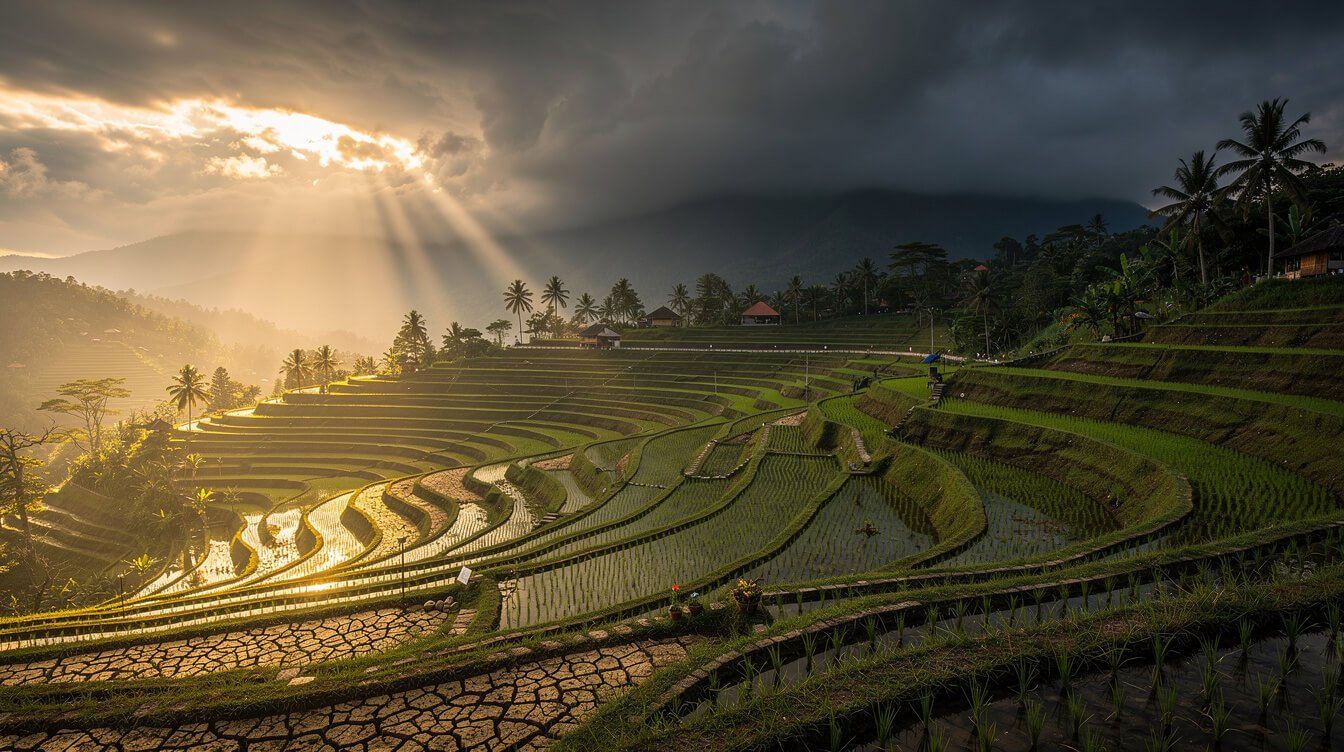
Here’s something most November guides won’t tell you, because it’s specific to this year. In September 2026, Indonesia’s national weather agency, BMKG, said the 2026–2027 rainy season is expected to arrive later than usual across much of the country. They pointed to a strong El Niño combined with a positive Indian Ocean Dipole. In BMKG’s words, as reported by Tempo, rain is “coming late and occurring for a shorter period.”
For Bali specifically, the outlook suggested that some parts of the island would enter the rainy season in November, while the majority of Bali would follow in December.
What that could mean for your trip
- Early November may feel more like late dry season: warmer, sunnier, and with fewer afternoon storms than a typical year.
- The green-up may come in stages: some fields will be flooded and replanted earlier, others later, depending on local water and rain.
- It’s still a forecast: seasonal outlooks deal in probabilities, and Bali’s weather has its own mind. Pack for rain anyway, and enjoy the sun if it shows up.
We’ll be watching the sky from the villa terrace all month. If you’re planning a November visit and want to know what the week ahead actually looks like, just ask. We’re always happy to tell you what we’re seeing.
Is November a Good Time to Visit Bali? Who It Suits
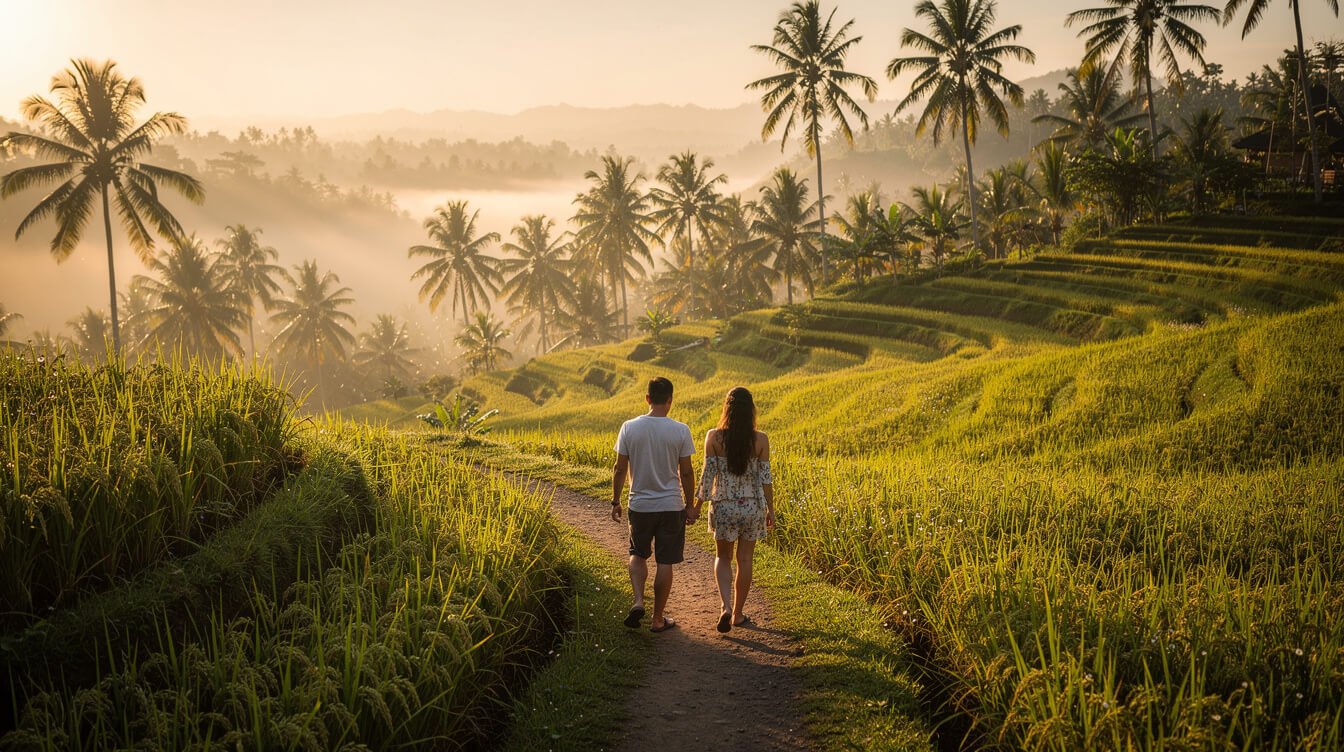
November is a shoulder month: past the peak, before the holidays. Whether it suits you depends mostly on what you came for.
November is wonderful for
- Couples: quieter temples, emptier paths, and long rainy afternoons are, frankly, very romantic. Our guide to romantic things to do in Ubud works especially well this month.
- Wellness seekers: yoga in the cool mornings, spa treatments in the afternoon, early nights. November’s rhythm makes this kind of trip feel effortless. See our spa and wellness retreat guide.
- Slow travelers and families: if you’d rather stay a week in one place than see six places in a week, November rewards you. A home base with a pool, a garden, and a kitchen makes the rainy hours part of the holiday, not a gap in it.
- Nature lovers and photographers: newly flooded paddies, rivers rising, waterfalls coming back to life, and dramatic skies most afternoons.
November is less ideal for
- Beach-first trips: afternoon storms and choppier seas can interrupt surf, snorkeling, and boat days.
- Anyone who dislikes humidity: the hours before a storm are warm and sticky.
- Tight, once-only itineraries: if every hour is planned and there’s no room for a rain delay, the drier months of May to October are a safer bet.
What about crowds and costs?
Because November falls between the summer peak and the Christmas period, flights and accommodation across Bali are generally easier to find, and often better value, than in July, August, or late December. It varies by property and by date, so check directly for yours. If you’re curious how seasonality works for staffed villas in Ubud, our guide to off-season villa rates in Ubud explains the general picture, and our honest guide to Bali travel prices covers the rest of the budget.

Book the Villa
Three bedrooms, a private pool that is lovely in warm rain, and a team who keeps the coffee hot and the umbrellas by the door. Check availability for your November dates at Villa Amrita.
Best Things to Do in Ubud in November
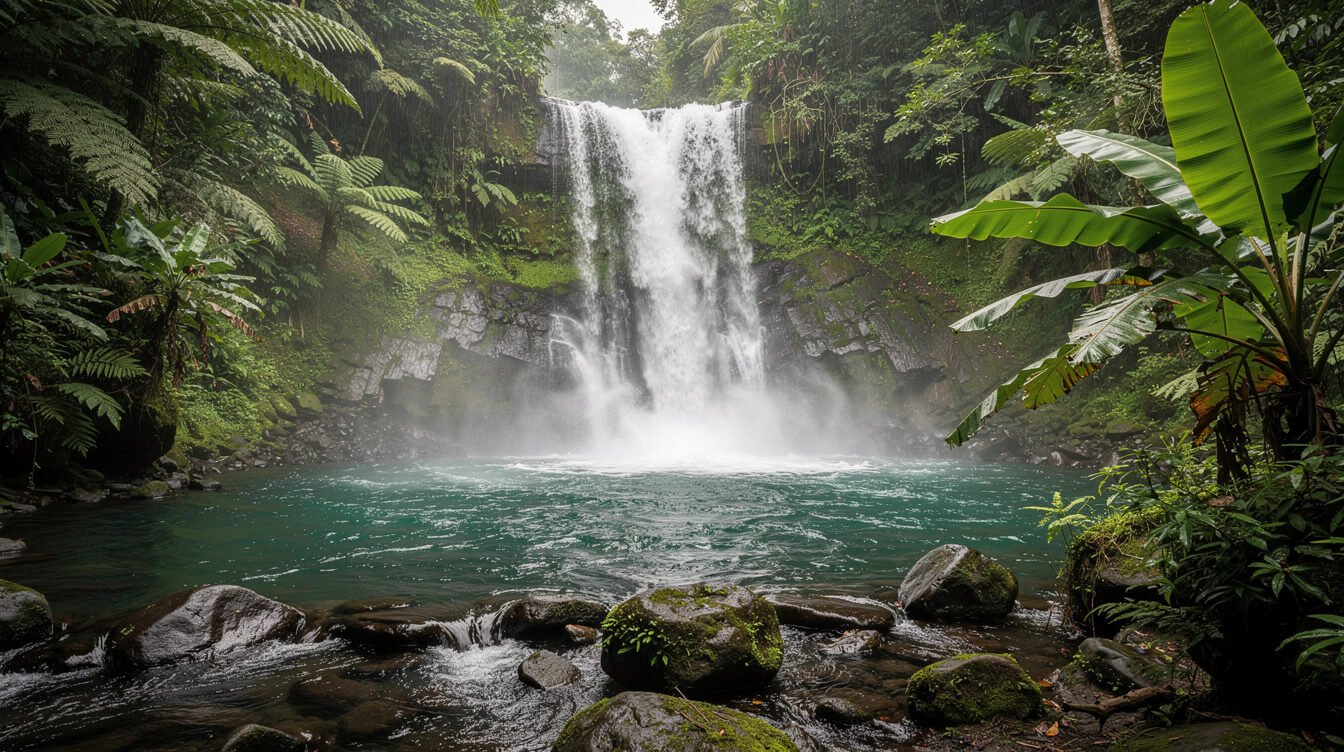
November rewards a simple mix: active mornings outdoors, gentle afternoons under a roof, and evenings for food and culture.
Morning walks through the new green
Go early, when the light is soft and the paths are dry. The Campuhan Ridge Walk is cool and quiet at sunrise, and the Tegallalang rice terraces are far calmer than in peak season. For timing tips, see our guide to the best time to trek the rice terraces near Ubud.
Waterfalls as they come back to life
After the dry months, the first rains bring the waterfalls around Ubud back to full voice. Visit in the morning, when the paths are less slippery and the water is usually clearer. One important safety note: rivers can rise quickly after heavy rain upstream, so skip swimming after a big storm and always follow local advice. Our Ubud waterfall guide covers which ones are easiest to reach.
Sunrise on Mount Batur
Early-morning treks usually finish before the afternoon clouds build, so November can still be a good month for the Mount Batur sunrise trek. Visibility at the top is never guaranteed in any month. Your guide will make the call on the day.
Rainy-afternoon rituals
- A Balinese massage or flower bath: nothing beats a slow treatment while the rain drums on the roof. Try a Balinese flower bath at least once.
- A cooking class: learn to grind bumbu, the spice paste at the heart of Balinese cooking. Our Balinese cooking class guide lists the best options, or ask the chef at your villa to teach you at home.
- Yoga: Ubud’s studios are calmer in shoulder season. Our Ubud yoga retreat guide has ideas for every level.
Evenings of dance and ceremony
Rain usually clears by evening, which leaves time for a performance like the Kecak dance. Temple ceremonies also happen all year round, following the Balinese calendar, and you may come across a village procession on an ordinary weekday. We don’t publish ceremony dates in advance, because they follow local temple calendars and can shift. Ask us when you arrive and we’ll tell you what’s happening nearby.
What to Pack and How to Get Around in November

Packing list
- A light, breathable rain jacket or poncho. Skip the heavy waterproofs; you’ll overheat.
- Quick-dry clothing in linen or technical fabric. Cotton takes a long time to dry in this humidity.
- Sandals with grip for wet paths, plus a pair of shoes that can get muddy.
- A light layer for cool Ubud evenings and early starts.
- Insect repellent: mosquitoes become more active as the rains begin, so use repellent at dawn and dusk.
- Sun protection: November mornings can be bright and strong. Bring reef-safe sunscreen and a hat.
- A sarong: useful for temple visits, and handy as a towel or wrap.
- A dry bag or zip pouches for your phone and passport on day trips.
Our full what to pack for Bali guide covers everything else.
Getting around
Afternoon downpours can turn roads slick and slow traffic, especially around central Ubud. If you’re not experienced on a scooter, November is a good month to hire a driver instead. A driver who knows the area can also read the sky and move your day trip earlier or later. Plan longer journeys, like the airport transfer or a trip to the north, for the morning when you can.
Booking tips
November is usually easier to book than peak season, but the month leads straight into the busy end-of-year period. If your dates run into December, plan ahead. And if you’re weighing November against December, our guide to Bali weather in December shows how the two months compare.
Bali Weather in November: Frequently Asked Questions
How much does it rain in Bali in November?
Published averages range from about 115 mm to around 250 mm for the month, spread over roughly 11 to 20 rainy days. Most rain falls in short, heavy afternoon or evening showers, not all-day drizzle. Ubud and the highlands are typically wetter than the southern coast.
Is November the rainy season in Bali?
November is usually the start of the rainy season, which broadly runs from November to March. In 2026, Indonesia’s weather agency BMKG expected the rains to arrive later than normal, with most of Bali entering the wet season in December.
Is November a good time to visit Ubud?
For many travelers, yes. You’ll find greener landscapes, fewer crowds, and a slower pace. If your trip is beach-focused, or you need guaranteed sunshine every day, the drier months of May to October may suit you better.
What is the temperature in Ubud in November?
Expect warm days in the mid to high 20s°C (around 77–84°F) in Ubud, slightly cooler than the coast, with fresher evenings, especially after rain. Humidity makes it feel warmer before a storm.
Can you swim in Bali in November?
Yes. The sea stays warm at around 27–28°C, and a private pool is lovely even in warm rain. Seas can be choppier for boat trips, and you should avoid swimming in rivers or under waterfalls after heavy rain.
Is Bali cheaper in November?
November is generally a quieter, shoulder-season month, so flights and accommodation are often easier to find and better value than in peak summer or late December. Prices vary by property and date, so check directly.
November or December: which is better?
November is usually drier and much quieter. December brings more rain and the holiday crowds, but also festive energy. If you want calm and green, choose November. If you want a celebration, December.
Final Thoughts: Watch Ubud Turn Green
The best way to enjoy Bali weather in November is to meet it halfway. Give the cool mornings to the rice fields, the temples, and the waterfalls. Let the afternoons be slow. Listen to the first big rain of the season hit the garden, and notice how the whole valley smells afterward. Then go out for dinner under a rinsed, starry sky.
November in Ubud isn’t the loud, busy Bali of the high season. It’s quieter and greener: farmers planting in mirror-bright fields, frogs singing at dusk, and a team at the villa who keeps the coffee hot and the umbrellas by the door. If that sounds like your kind of trip, we’d love to help you plan it. Our guide to staying in a villa with staff explains how it all works.

Join our newsletter — fun, new, exciting Bali news
Seasonal notes from Ubud, ceremony days worth knowing about, and small stories from the garden and kitchen. Delivered now and then, always worth opening.