Tirta Gangga: How to Visit East Bali’s Water Palace From Ubud
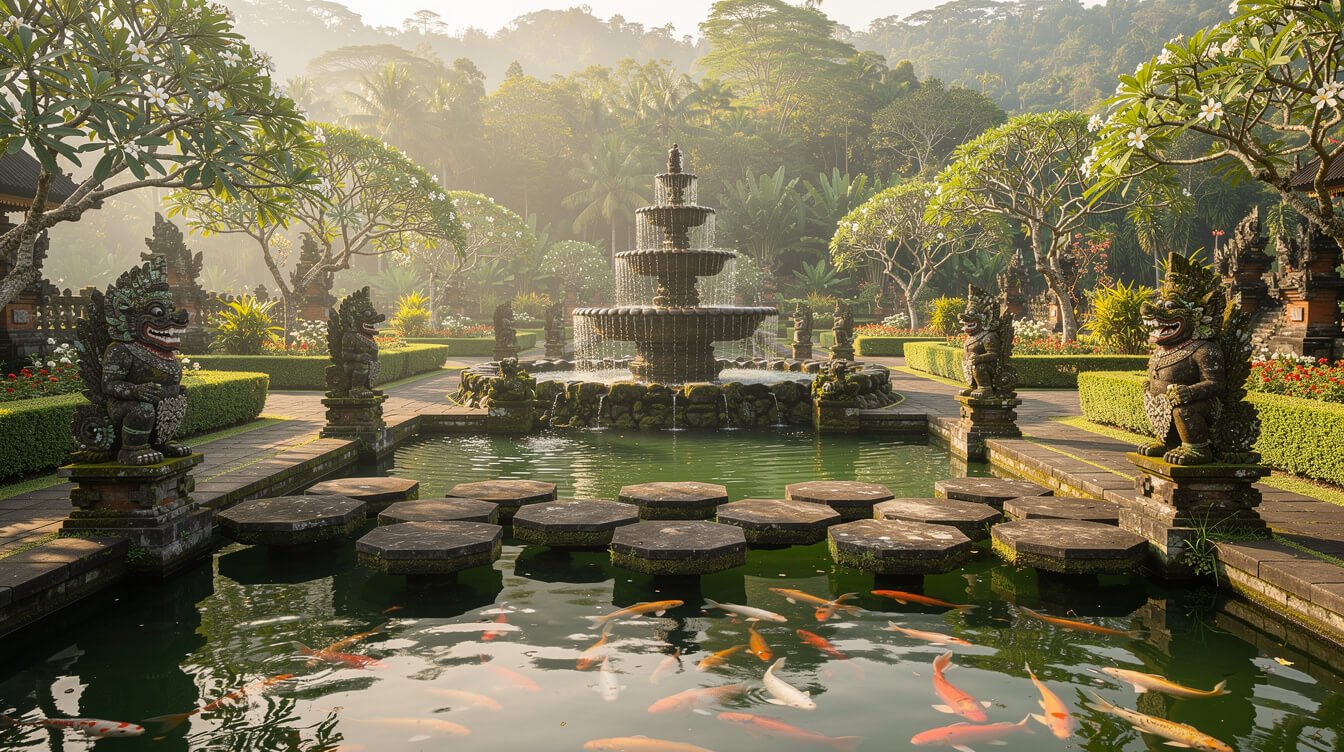
You hear it before you see it. Water falling from carved stone mouths into green ponds, the slap of a fat koi turning at the surface, a rooster somewhere beyond the wall. Then the garden opens in front of you: rows of octagonal stepping stones laid across the water, an eleven-tiered fountain, old grey statues watching from the edges, and the dark shoulder of Mount Agung behind it all. This is Tirta Gangga, the royal water garden of East Bali. It’s one of the most graceful places on the island, and it’s worth the long drive from Ubud if you plan the day well.
Most guides to Tirta Gangga are written by tour sellers, or by places that want you to stay right next door. This one is written from Ubud, for guests who want to go east and come home again the same evening, unhurried. It covers what the garden actually is, the story behind it, how to walk the stepping stones with some grace, the swimming question, a realistic day plan from Ubud, an honest word about the “Gates of Heaven,” and the rice-terrace walks behind the palace that almost everyone misses.
What Tirta Gangga Is: A Royal Water Garden Around a Sacred Spring
Tirta Gangga isn’t a temple, and it isn’t a resort pool. It’s a royal pleasure garden of about 1.2 hectares in the village of Ababi, roughly seven kilometers north of Amlapura, the old capital of the Karangasem kingdom. The name tells you why it’s here. Tirta is the Balinese word for holy water. Gangga is the Ganges, India’s most sacred river. Together they mean “water of the Ganges,” a way of saying that this spring is blessed.
Long before there was a garden, a spring rose here under a banyan tree. It still does. At the top of the grounds you’ll find the spring and a small shrine beside it, and this is the part of Tirta Gangga that matters most to the Balinese. Villages around Ababi still come here to collect tirta for their own ceremonies, sometimes arriving in procession with offerings, ceremonial umbrellas and gamelan. If you want to understand why water carries so much weight on this island, our gentle guide to Bali religion is a good place to start.
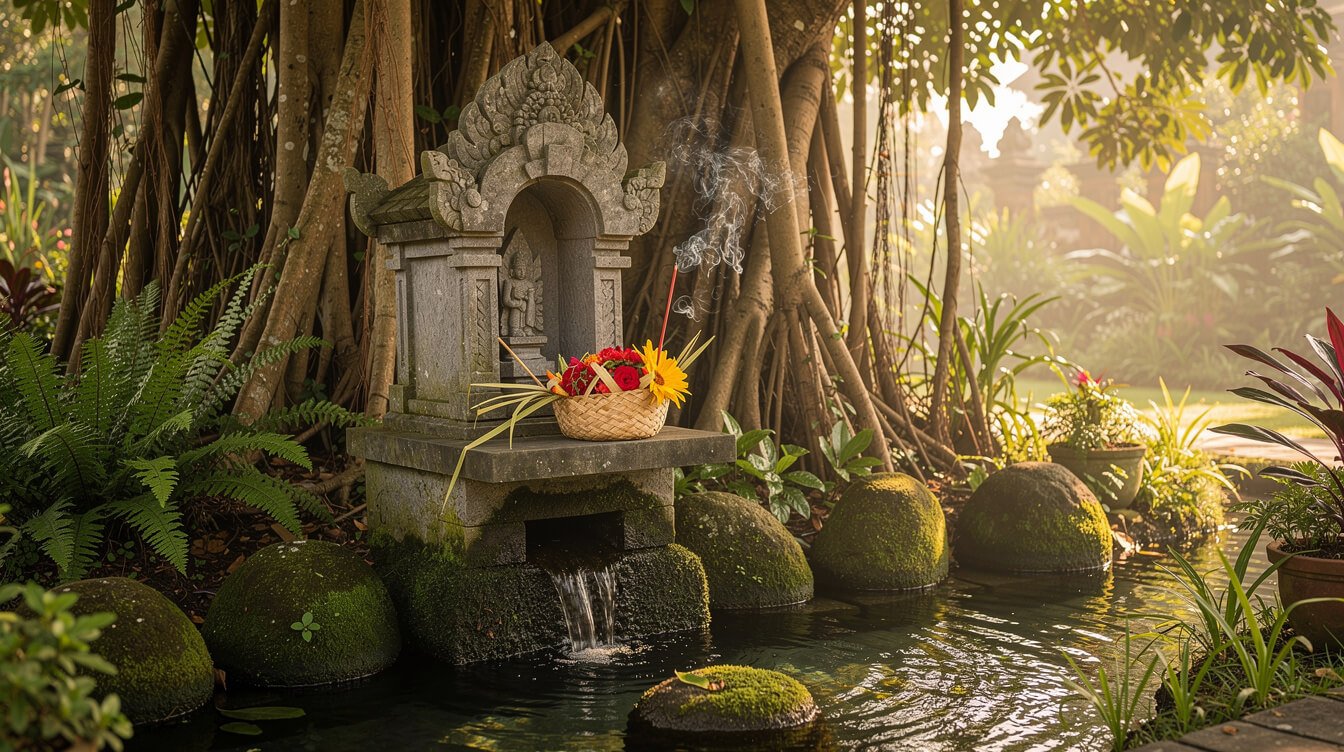
The spring’s water does a lot of work on its way downhill. Around a third of it is piped to Amlapura as drinking water. The rest fills the swimming pools, then the ornamental ponds, and finally flows out into the rice fields below the garden. So when you stand on a stepping stone at Tirta Gangga, the water under your feet is on its way to somebody’s rice.
That is the quiet gift of this place. Yes, it’s beautiful and very photogenic. But it’s also a working spring, a family garden and a small piece of the old kingdom, all at once. Walk it slowly and you’ll feel all three.
A Short History of Tirta Gangga: The Raja, the Mountain and the Rebuild
Tirta Gangga was the dream of Anak Agung Anglurah Ketut Karangasem, the last raja of Karangasem. He loved water and loved building with it. Before Tirta Gangga, he had already created Taman Ujung, a much larger water palace on the coast near Amlapura, finished in 1921. Indonesia’s tourism ministry dates the start of Tirta Gangga to 1946, and the royal family’s own history places the main work around 1948. The raja drew the plans himself, and family accounts describe him working knee-deep in mud beside the laborers.
Then the mountain spoke. In 1963 Mount Agung erupted in one of the deadliest volcanic events of the twentieth century. The lava flowed down the valleys on either side of the garden, but months of earthquakes brought down most of what had been built, and much of what remained was carried off. Land reform had already cut the royal family’s income, so repairs came slowly.
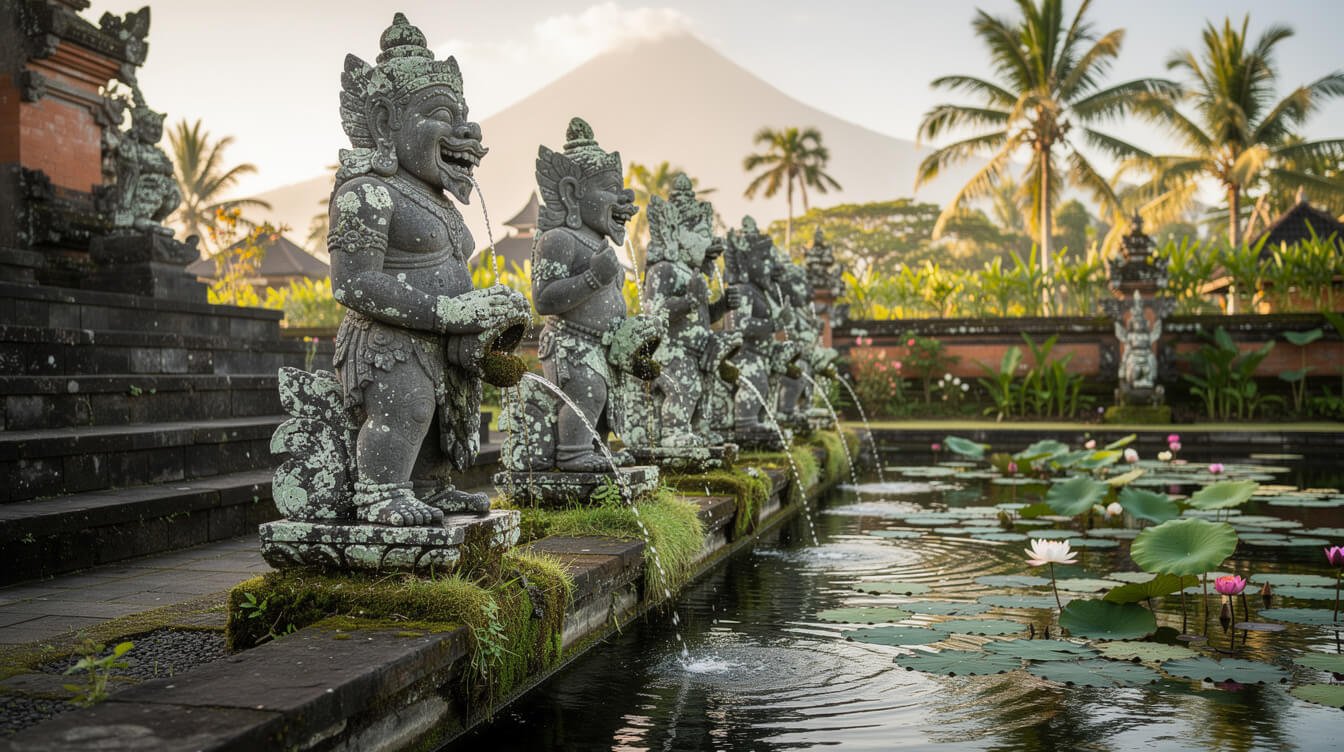
The garden opened to paying visitors in 1970. In 1979 the raja’s son, Dr. Anak Agung Made Djelantik, began restoring it, and from 2002 his own son, an architect, led a fuller restoration with help from donors. Much of what you see today, including many of the statues, dates from that rebuild. Tirta Gangga still belongs to the royal family, which is part of why it feels more like a cared-for home garden than a theme park.
Knowing this changes how you see it. Those weathered figures by the ponds aren’t ancient relics. They’re the work of a family that lost a garden to the mountain and patiently put it back, piece by piece, with Agung still standing over their shoulder. You can see the same relationship with the volcano across East Bali, from the temple courtyards to the way every family compound is laid out.
Walking Tirta Gangga Gracefully: Stepping Stones, Fountain and Koi
The garden is laid out on three levels. You enter at the bottom, beside the largest pond and its long island, crossed by small bridges with carved dragons. In the middle stands the eleven-tiered Nawa Sanga fountain, the symbol of Tirta Gangga. Its name refers to the nine directions of the Balinese compass, each guarded by its own god, and figures from the Mahabharata stand around it. Beside the fountain is the pond everyone has seen in photos, crossed by rows of octagonal stepping stones. At the top are the spring, the pools and a restaurant terrace looking back over the whole garden.
How to cross the stepping stones
The stones are wide and stable, but they’re wet, and there’s a lot of water around them. A few small habits make the crossing calm instead of chaotic:
- Wear sandals with grip, or go barefoot if you’re steadier that way. The stones get slick, especially in the wet season.
- Leave valuables behind. The management asks visitors not to carry them across. A phone in a zipped pocket or a strap is wiser than one in your hand.
- Take turns. From late morning there’s often an informal line for the most photographed stones. Step off once you have your photo so the next person can have theirs.
- Keep little ones close. The ponds are shallow by the stones but deep enough to frighten a child. Hold small hands the whole way.
Feeding the koi
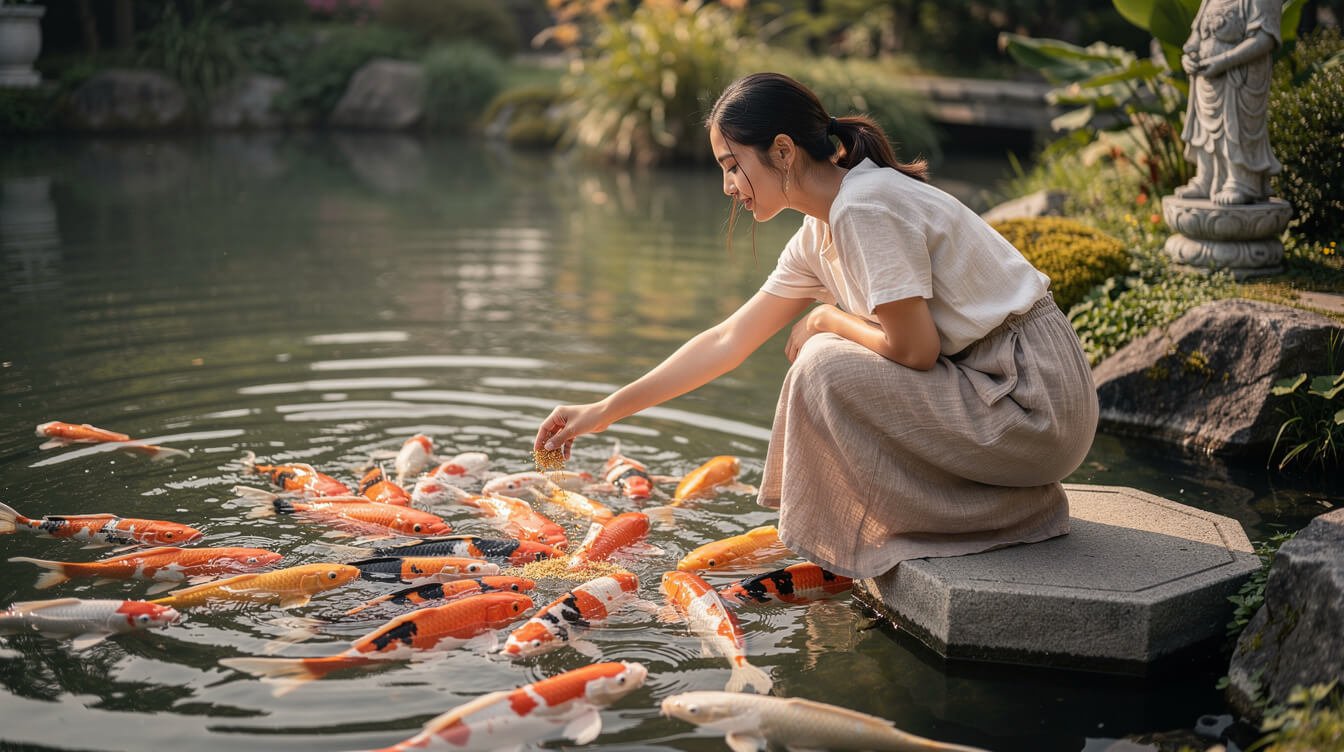
Feeding the koi is half the joy of Tirta Gangga. Small bags of fish food are sold at the stalls outside the gate for a few thousand rupiah, usually cheaper than inside. Crouch low on a stone, scatter a pinch, and within seconds you’ll be surrounded by a slow, jostling crowd of orange, white and black fish, some of them as long as your forearm. Feed a little at a time and use only the food sold for them. Bread and snacks foul the water the spring has worked so hard to keep clear.
Keep your voice low as you move toward the top of the garden. The spring shrine is a sacred place, not a backdrop. Don’t wear swimwear near it, don’t climb on it, and step back quietly if villagers arrive with offerings. Treat it the way you’d treat any temple, and you’ll be welcome.
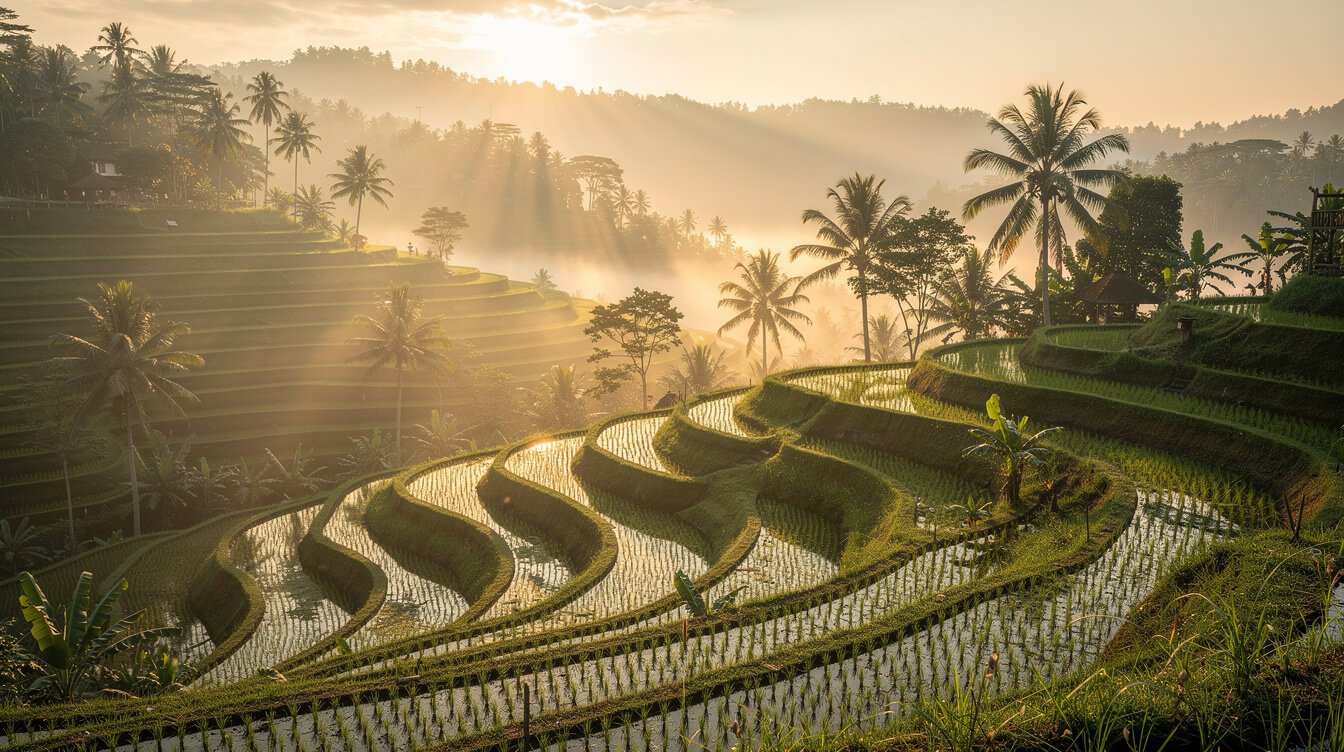
Get a free 3-day sample itinerary
Three good days in Ubud and beyond: rice field walks at first light, a temple morning, a market, and one long, lovely day trip east. We will send you a free 3-day sample itinerary.
Can You Swim at Tirta Gangga?
Yes. Tirta Gangga swimming happens in separate spring-fed pools on the upper level, never in the ornamental ponds. The water runs from the spring through a pipe into a top pool, a main pool and a shallow children’s pool. It’s clear, unheated and properly cool, the kind of cold that takes your breath for a second and then feels wonderful after a hot drive. There are changing rooms nearby. Bring your own towel and a dry change of clothes.
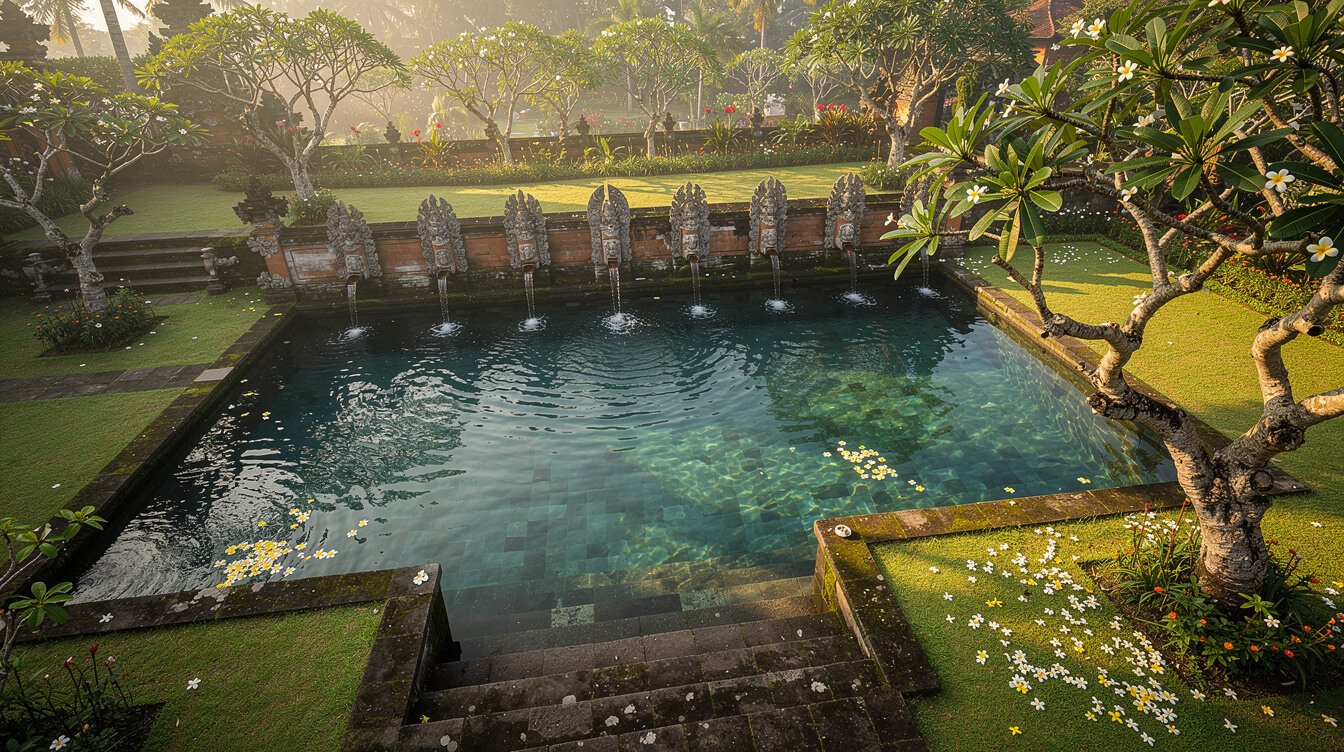
Here’s the detail many older guides get wrong. On 1 March 2025 the ticket price went up, and detikBali reported that access to the pools and the small museum is now included in the entrance ticket. Blogs that still quote a separate pool fee of IDR 10,000 to 20,000 are describing the old system.
Tirta Gangga tickets and hours (approximate)
- Foreign adults: about IDR 90,000
- Foreign visitors 65 and over: about IDR 70,000
- Children aged 5 to 12: about IDR 45,000
- Jukung (wooden boat) ride on the lower pond: about IDR 20,000 extra
- Drones, filming and pre-wedding shoots: charged separately
- Hours: the operator lists 8 AM to 6 PM daily, closed on Nyepi (next on 8 March 2027). Some sites list earlier openings, so don’t plan around getting in before 8.
Prices in Bali change without much warning, so treat these as a guide and carry some small cash for parking, fish food and the boat. Pool etiquette is simple: swimwear in the pools only, cover up as you walk back through the garden, and give local families space. On Indonesian public holidays the pools fill with families from all over the island, which is lovely to see but not the quiet swim you might picture. A weekday morning is calmest.
One more thing. A single pool here is set aside for melukat, ritual cleansing. If you’re curious about purification rites, read about the much better known spring at Tirta Empul Temple, just north of Ubud, where visitors can take part with the right guidance. At Tirta Gangga, simply swim where swimming is meant to happen.
Tirta Gangga From Ubud: Planning Your East Bali Day
Let’s be honest about the drive. Tirta Gangga is about 64 kilometers from Ubud, and the trip usually takes two to two and a half hours each way, sometimes more after rain or around a village ceremony. That’s a real commitment. It turns Tirta Gangga from “a quick stop” into the anchor of a full East Bali day. Planned well, it’s one of the most beautiful days you can have on the island.
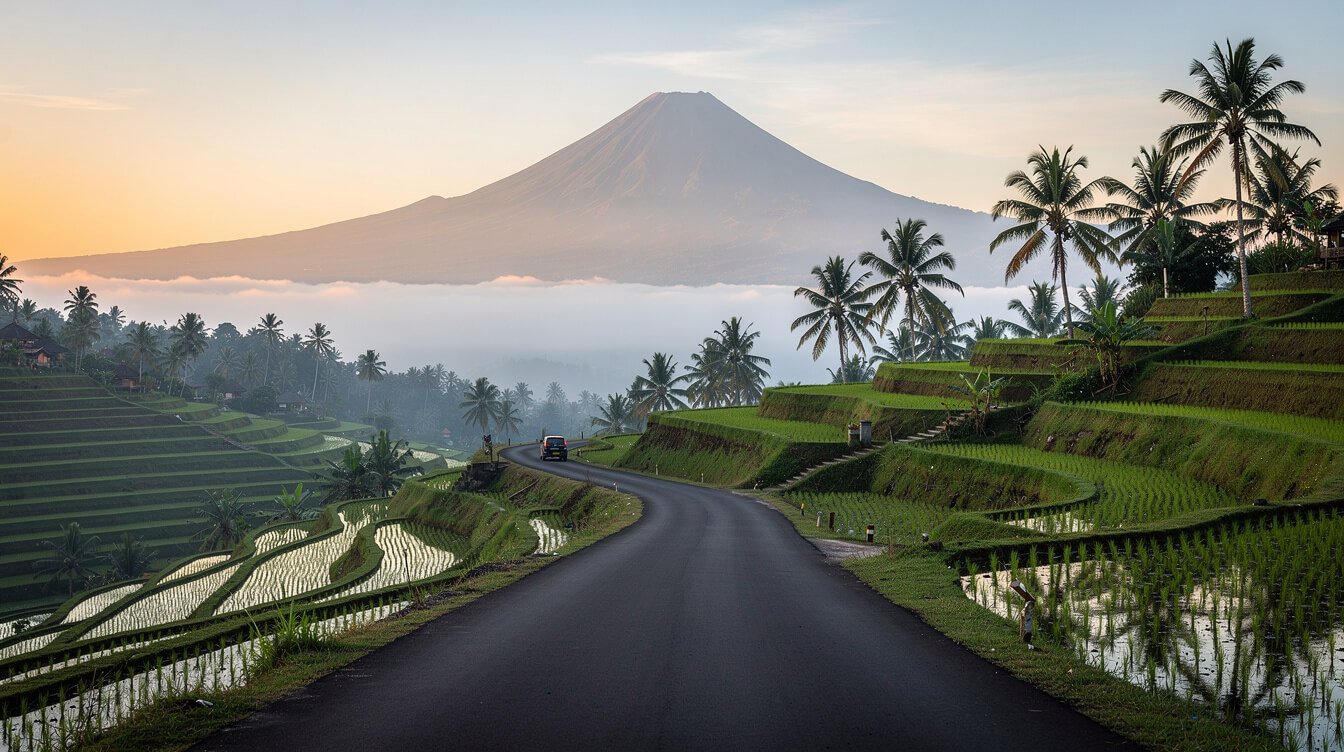
A gentle loop from Ubud
- Leave early, around 6 or 6:30 AM. The roads east are quieter, the light is soft, and on a clear morning you’ll see Agung rising above the rice fields as you drive.
- Arrive at Tirta Gangga for the 8 AM opening. The garden is at its quietest until about 10, when drivers start arriving from Lempuyang and the south. Visitors and guides put the busiest stretch at roughly noon to 3 or 4 PM.
- Swim, feed the koi, then walk the terraces outside the garden before the heat builds (more on that below).
- Add one more stop, not three. Taman Ujung, the same raja’s coastal water palace, is about 10 kilometers away and far less crowded. Lempuyang is about the same distance in the other direction.
- Come home through Sidemen. The Sidemen valley is about 45 minutes to an hour from Tirta Gangga, all rice terraces and hills, and it makes a slow, scenic road back toward Ubud. On the way you’ll pass the salak gardens of Sibetan, where you can stop for the island’s sweetest snake fruit straight from the farms.
Most guests go with a private driver for the day. Grab and Gojek are unreliable this far east, so don’t count on an app ride home. Agree on the route, the stops and the price before you set off. A driver who knows the east can also steer you around ceremony road closures. If you’re staying with us, ask the team about trusted drivers and an early start. For more ideas on which way to point the car, browse our guide to day trips from Ubud.
Tirta Gangga in the wet season
From November to March, expect clear mornings and heavy afternoon rain. Tirta Gangga stays open and the spring keeps flowing, so the rain matters less here than at a beach. It actually favors the early plan: be in the garden at 8, done with the terraces by 10, and on the road home before the clouds build over Agung. The stepping stones get slicker in the wet months, so take your time. Our Bali rainy season guide has more on planning around the afternoon downpours.
Book the Villa
Come home from a long day in the east to three bedrooms, a private pool and a quiet tropical garden in Ubud, with a team on hand so your evening stays unhurried. Check availability for your dates.
Is the Gate of Heaven Real? An Honest Answer
Most Tirta Gangga day trips are sold together with Pura Lempuyang, home of the “Gates of Heaven,” so it’s worth answering the question people ask most. Is the Gate of Heaven real? Yes, the gate is real. It’s a candi bentar, a split temple gate, at Pura Penataran Agung Lempuyang, the lowest of a chain of temples climbing the slopes of Mount Lempuyang. It’s one of Bali’s great directional temples, and on a clear morning the gap between its two carved halves frames Mount Agung perfectly.
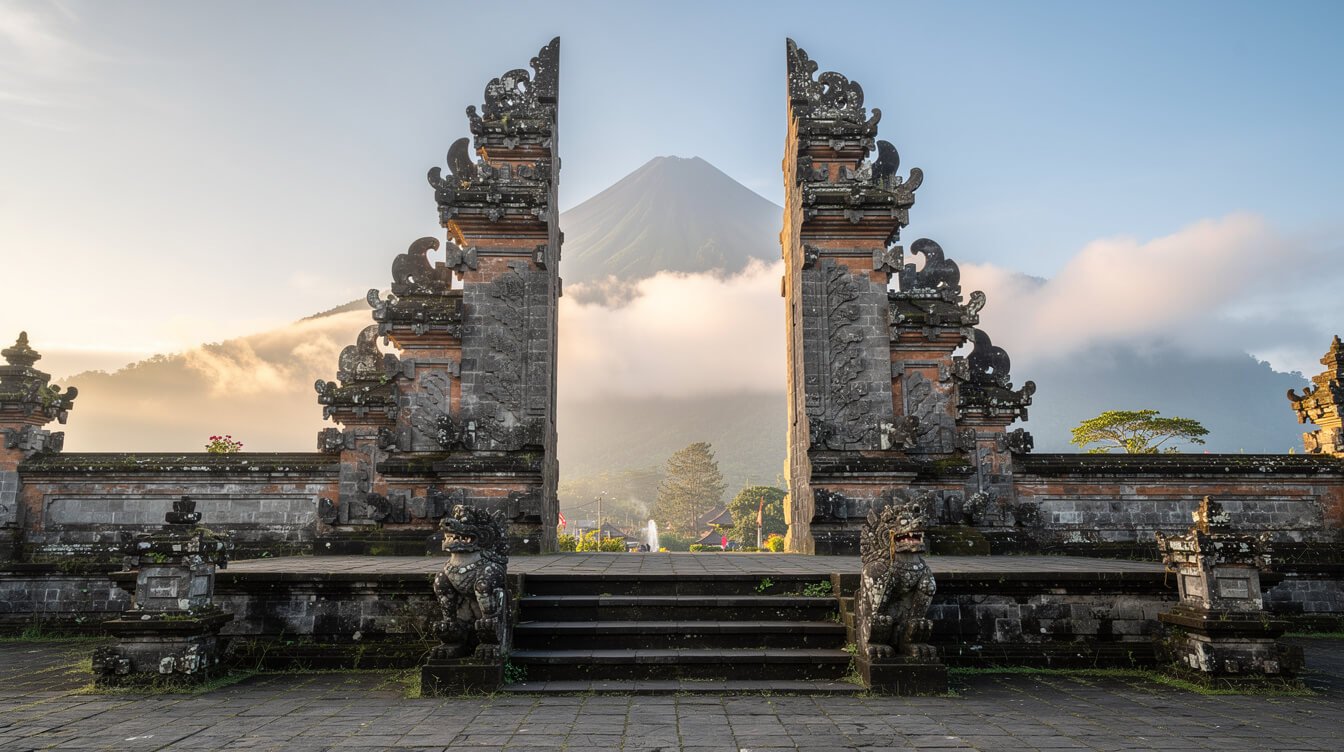
What isn’t real is the lake. In the famous photo the gate seems to stand on still water that mirrors the mountain. There’s no water there. A local photographer holds a small mirror just under your phone’s lens, which doubles the gate and the sky. It’s a clever trick and a kind tradition, but it surprises a lot of visitors.
Here’s what to know before you add it to your day:
- The queue is long. You receive a numbered ticket and wait for your group to be called. Recent visitors describe waits of two to four hours at busy times, for about a minute and a few poses at the gate.
- Fees are separate. Recent guides list about IDR 100,000 for foreign visitors plus about IDR 50,000 for the shuttle from the parking area, with a sarong included. Check current prices on the day.
- The mountain is never guaranteed. By mid-morning, cloud often hides Agung, and in the wet season it can stay hidden all day.
- It closes to tourists for temple festivals. For around five days at each of Lempuyang’s piodalan festivals, which begin on Galungan, only worshippers may enter. The next Galungan falls on 13 January 2027. Our Galungan guide explains what that season looks like.
Our honest advice: if the photo matters to you, go to Lempuyang first, at dawn, and accept the wait. If it doesn’t, give that time to Tirta Gangga and the terraces instead. You’ll come home with fewer photos of yourself, and more of Bali.
Beyond the Palace Walls: Rice-Terrace Walks Around Ababi
This is the part of Tirta Gangga that almost no one writes about. The overflow from the spring doesn’t stop at the garden wall. It runs out into the fields, and the hills around Ababi hold some of the loveliest rice terraces in East Bali. Narrow paths and terrace dikes lead out from the main road into curving green steps of rice, small irrigation channels singing beside your feet, and on a clear day the sea glinting far off to the east.
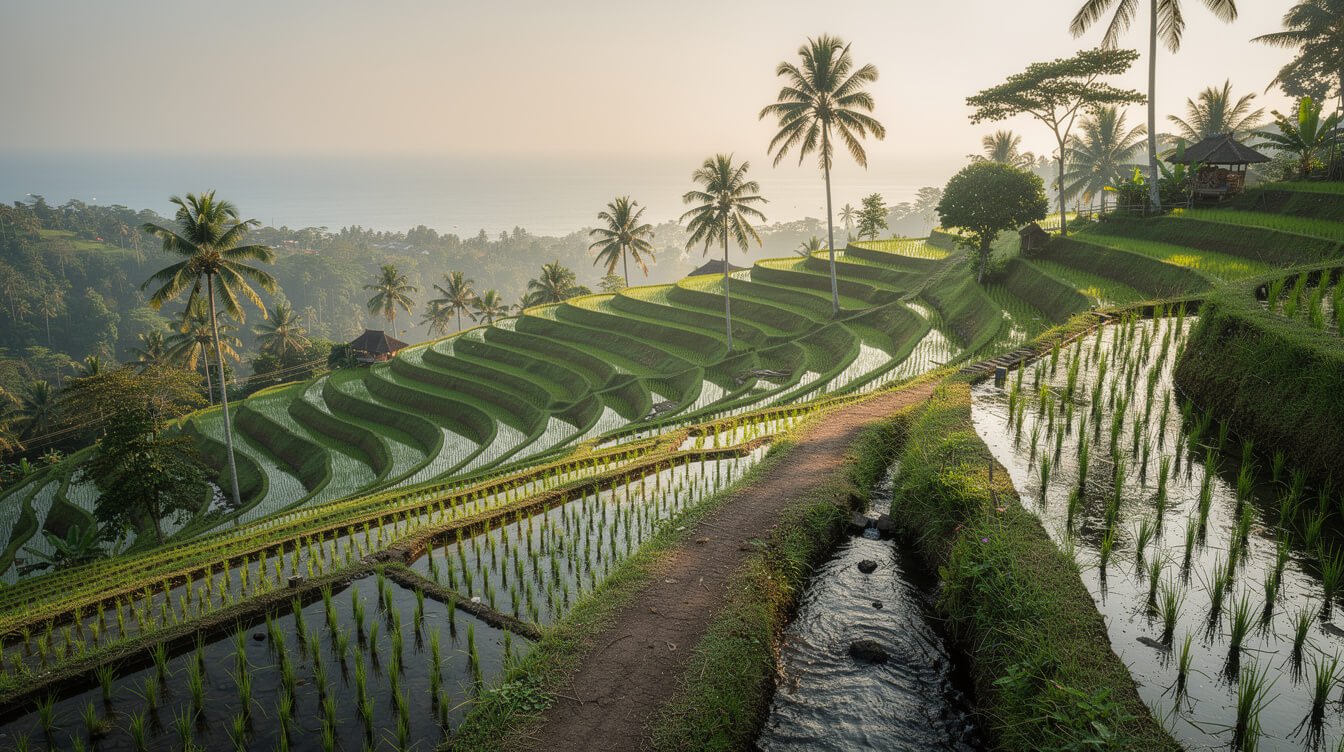
Go between about 7 and 9 AM, before the heat, and ideally straight after your swim. Wear shoes with real grip, because the dikes are narrow and often muddy. Stay on the paths, never walk through planted fields, and greet the farmers you pass. These are working terraces, watered by the same subak system that sustains the famous fields of Jatiluwih. A local guide can lead you on a loop through the villages; agree on the route and price before you start.
Walking here, you finally see the whole story of Tirta Gangga. Holy water rises under the banyan, fills the raja’s pools and ponds, then leaves the garden to feed the rice that feeds the village. It’s a perfect small picture of how Bali works.
Tirta Gangga FAQ
How long do you need at Tirta Gangga?
About an hour to an hour and a half to walk the three levels, cross the stepping stones and feed the koi. Allow two to three hours if you want to swim, have lunch on the upper terrace and walk the rice terraces outside.
Do you need a sarong at Tirta Gangga?
Not to walk the gardens, as it’s a royal garden rather than a temple. Dress modestly anyway, keep swimwear for the pools, and cover up near the spring shrine. A light sarong in your bag is useful if you’re also visiting temples on the same day.
Is Tirta Gangga worth the drive from Ubud?
Yes, if you make a day of it. As a solo stop it’s a long round trip for an hour in a garden. As the heart of an East Bali loop, with an early swim, a terrace walk, Taman Ujung or Lempuyang, and a slow drive home through Sidemen, it’s one of the island’s most rewarding days.
How is Tirta Gangga different from the Ubud Water Palace?
The Ubud Water Palace, Pura Taman Saraswati, is a temple with a lotus pond in the center of town, a short walk from the market. Tirta Gangga is a far larger royal garden, two hours east, with a sacred spring, swimming pools and rice terraces all around it.
Can you visit Tirta Gangga in the rain?
Yes. It stays open and the pools are spring-fed, so a shower doesn’t spoil the visit. Go early to beat the afternoon downpours and take extra care on the wet stepping stones.
Tirta Gangga rewards the traveler who arrives early and leaves room for the slow things: a cold swim, a handful of fish food, a quiet minute by the spring, a walk out into the terraces. Bring that pace back to Ubud with you, to a long lunch, a late swim, and a garden going quiet at dusk.

Join our newsletter — fun, new, exciting Bali news
Ceremony days, market finds, new trails and small stories from Ubud. Delivered now and then, always worth opening.