Bali Food: Your Complete Guide to the Flavors That Define the Island
Bali food is the kind of thing that changes the way you think about flavor. Not in the way a Michelin-starred tasting menu surprises you — but in the way your grandmother’s kitchen does. Something slower, more grounded. Every dish on this island carries a story: of Balinese people who cook with the same spice paste their great-grandmothers used, of morning markets where the ingredients were alive in the ground hours ago, of meals that are made for the gods before they reach your plate.
If you’re planning a trip and wondering what to eat, this guide will take you beyond the tourist-menu nasi goreng. We’ll walk you through the essential dishes, the spice traditions that make Bali food unmistakable, where to find the most authentic meals, and why having a private chef during your stay might be the single most unforgettable food experience of your trip.
Why Bali Food Tastes Different From Anywhere Else
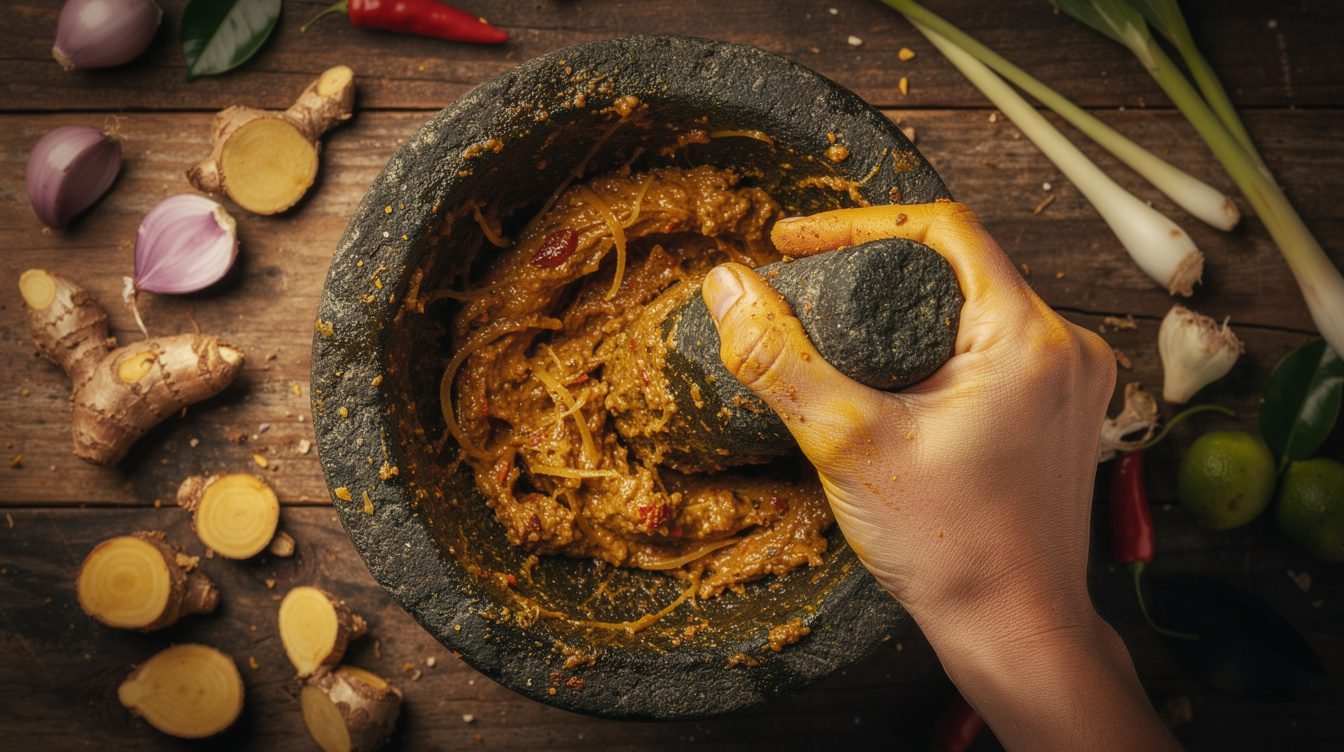
The first thing you notice about Bali food is the depth. Every bite carries layers — sweet, savory, spicy, and earthy all arriving together. This isn’t accidental. Balinese cooking builds flavor through bumbu, the hand-ground spice pastes that form the backbone of nearly every dish. Where Thai food balances sweet-sour-salt-heat, and Japanese food celebrates minimalism, Balinese cuisine goes for warmth and complexity. The flavors wrap around you.
Several things make the food here genuinely distinct from the rest of Indonesia and Southeast Asia:
- Hindu food culture. Bali is the only Hindu-majority island in Indonesia. This means pork features prominently — particularly the famous babi guling (suckling pig) — while the rest of the archipelago is predominantly halal. Ceremonial food traditions also shape daily cooking in ways you won’t find elsewhere.
- Fresh, volcanic soil ingredients. Bali’s volcanic terrain produces some of the most nutrient-rich soil in Southeast Asia. The vegetables are sweeter, the herbs more aromatic, the rice more fragrant. You taste the difference, especially in Ubud where the rice terraces surround you.
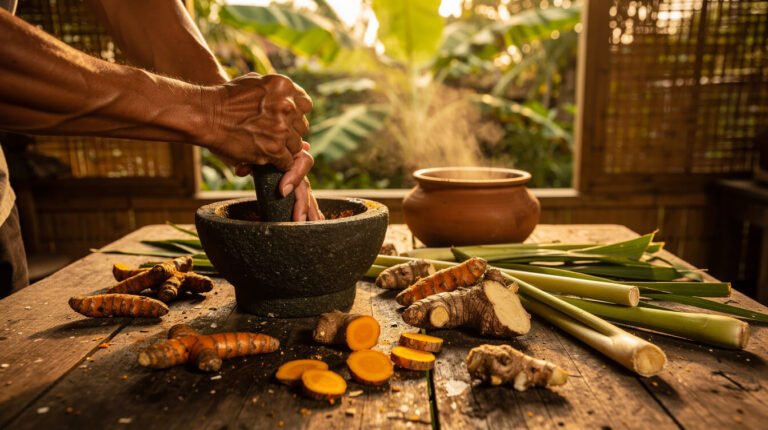
- Spice paste tradition. Every Balinese household has its own version of base genep (the “complete” spice paste). It’s not bought from a store — it’s ground fresh on a cobek (stone mortar) every morning. The same paste might season a lawar, marinate a duck, or flavor a soup.
- Cooking for ceremony. In Bali, food is made for the gods first, the community second, and the family third. This spiritual relationship with cooking means every dish carries intention. The chef doesn’t just prepare food — they prepare offerings.
When you understand these foundations, eating in Bali stops being “trying local food” and starts being an immersion into a living culture. As we cover in our Bali travel guide, the food is one of the main reasons visitors fall in love with the island.
The Essential Bali Food Dishes You Need to Try
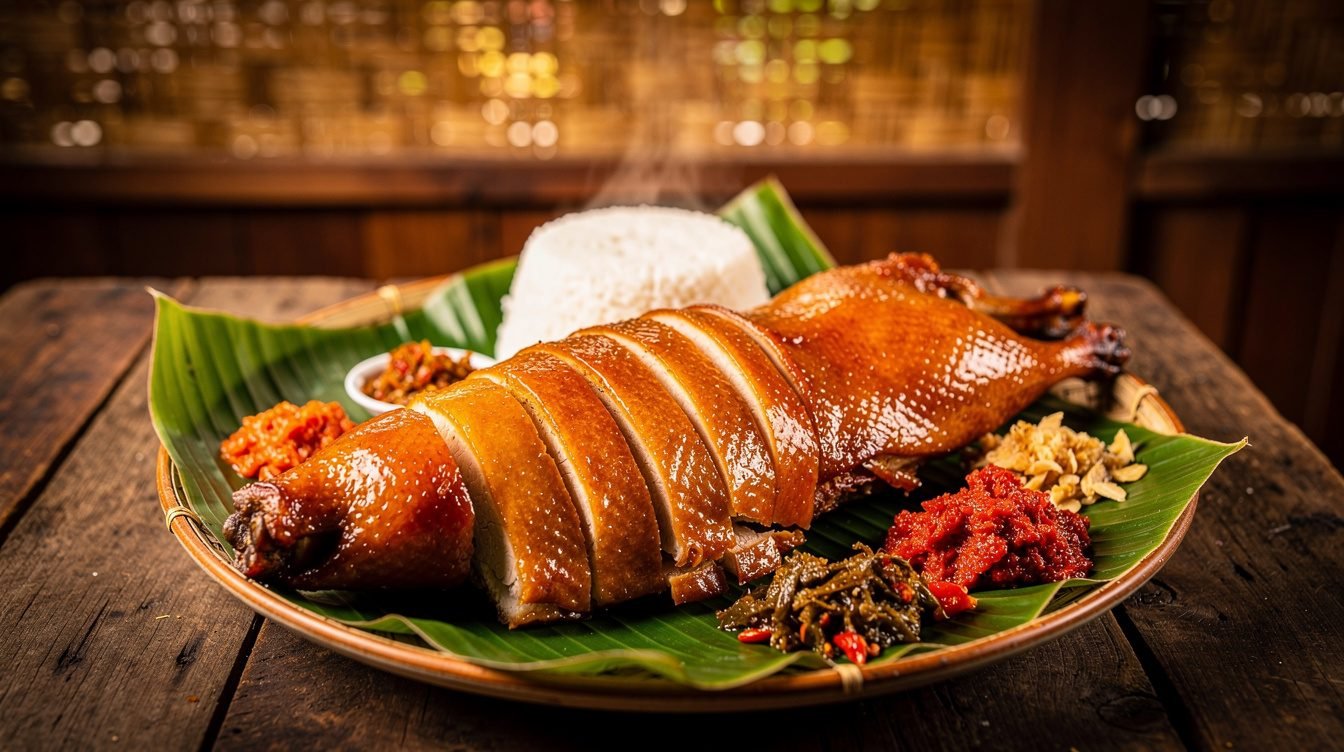
Here’s the list that matters — the dishes that Balinese people actually eat, the ones your villa chef will suggest when you ask “what should I try?” These aren’t ranked by popularity with tourists. They’re ranked by how central they are to Balinese food culture.
Babi Guling (Suckling Pig)
The crown of Balinese cuisine. A whole pig is stuffed with a spice paste of turmeric, coriander, lemongrass, garlic, and chilies, then slow-roasted over coconut husks until the skin crackles and the meat falls apart. The best babi guling is served from family-run warungs where they’ve been perfecting their recipe for generations. Every part of the pig is used — crispy skin, tender meat, rich broth, and spiced blood sausage (urutan).
Sate Lilit
Forget the sate you’ve had elsewhere. Sate lilit is uniquely Balinese — minced fish (or chicken or pork) mixed with grated coconut, coconut milk, lime leaves, and spice paste, then wrapped around lemongrass stalks or bamboo sticks and grilled over coals. The coconut keeps the meat incredibly moist. You’ll find these at temple ceremonies, morning markets, and good warungs across Ubud.
Lawar
A finely chopped mixture of vegetables, coconut, and spices — sometimes mixed with minced meat and fresh blood (in the ceremonial version). Lawar shows up at every Balinese celebration and is arguably the most “Balinese” dish you can eat. Green lawar uses green beans and young coconut; red lawar includes blood and spiced meat. Both are extraordinary.
Nasi Campur Bali
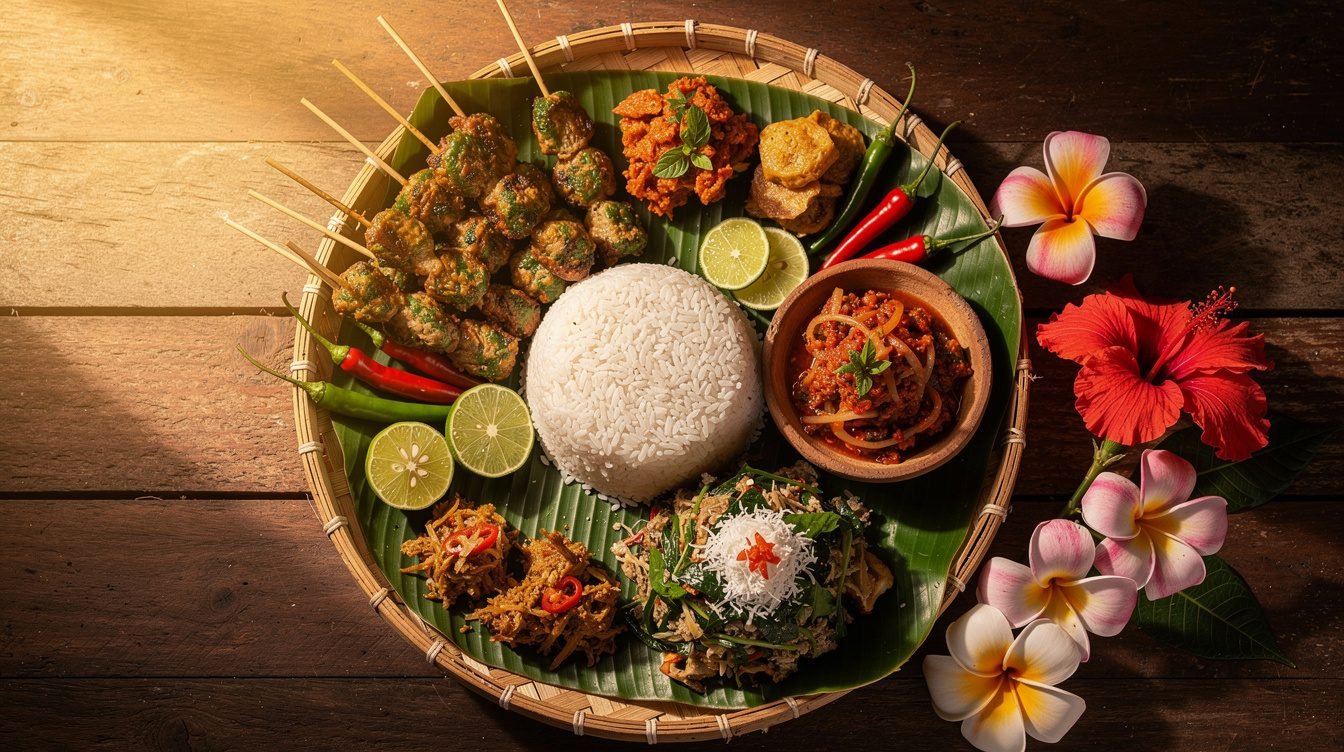
The daily meal of Bali. A mound of steamed rice surrounded by small portions of whatever the cook has prepared that morning — typically some combination of shredded chicken, lawar, sate lilit, fried peanuts, sambal, and crispy fried tempeh or tofu. No two nasi campur are identical. The beauty is in the variety.
Bebek Betutu
Slow-cooked duck wrapped in banana leaves and buried in rice husks or roasted for up to 12 hours. The spice paste penetrates to the bone, and the meat becomes impossibly tender. Traditional preparation takes most of a day — this is a dish built on patience. The version in Ubud, where ducks are raised in the rice paddies, is the one to seek out.
Sambal Matah
Raw shallot and lemongrass sambal — bright, sharp, and addictive. Unlike the cooked sambal you’ll find across Indonesia, sambal matah is fresh and crunchy. It goes on everything: grilled fish, rice, sate, even eggs at breakfast. Once you try it, you’ll want the recipe.
Nasi Goreng and Mie Goreng
Fried rice and fried noodles — Indonesia’s national comfort foods. In Bali, they come with a fried egg on top, krupuk (prawn crackers), pickled vegetables, and sambal. Simple, satisfying, available everywhere from street carts to villa kitchens. They’re what morning tastes like when your chef knows your preferences.
Where the Flavor Comes From: Base Genep and Bali’s Spice Foundation
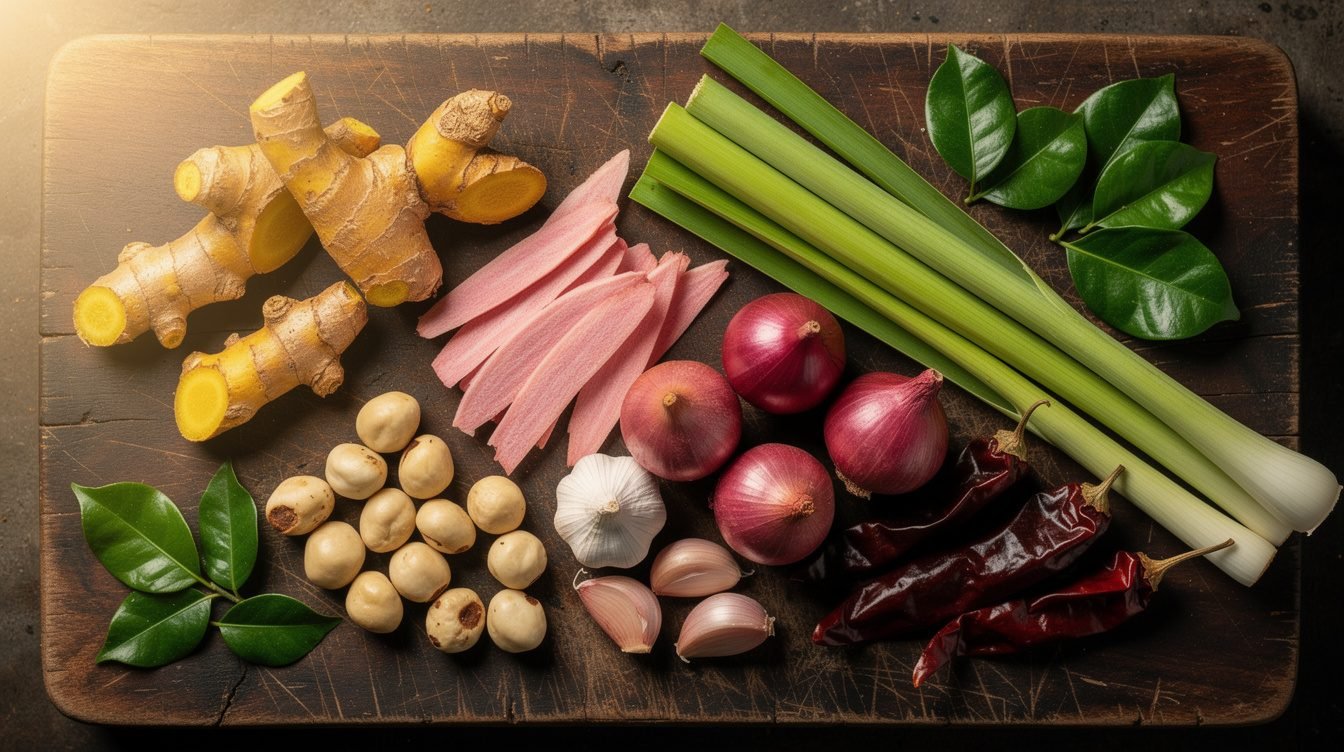
If there’s one thing that separates Bali food from the rest of Southeast Asian cooking, it’s base genep — the “complete spice paste” that anchors nearly every traditional dish. Understanding base genep is understanding Balinese food at its root.
The standard base genep includes:
- Turmeric (kunyit) — the golden foundation, anti-inflammatory and earthy
- Galangal (laos) — sharper and more citrusy than ginger
- Lemongrass (sereh) — bright, floral, distinctly Southeast Asian
- Shallots (bawang merah) — sweet red onion, used abundantly
- Garlic (bawang putih) — crushed fresh, never powdered
- Candlenuts (kemiri) — rich, creamy, adding body to the paste
- Coriander seeds (ketumbar) — toasted and ground
- White and black pepper — for heat and warmth
- Lesser galangal (kencur) — the secret ingredient, peppery and aromatic
- Torch ginger (kecicang) — floral and complex
Every Balinese household grinds these fresh on a cobek (stone mortar). The proportions vary — each family has their own version passed down through generations. The result is a fragrant, golden paste that becomes the base for soups, marinades, stir-fries, and ceremonial dishes.
There’s also base rajang (the “chopped” paste) used for dishes like sambal matah and some lawar preparations — coarser, with more visible texture. And base wangen, the aromatic paste used specifically for offering preparations.
When you taste the difference between a dish made with fresh-ground bumbu and one made with store-bought paste, you understand why Balinese cooks spend an hour at the mortar before the cooking even begins. The spices are alive. The flavors sing.
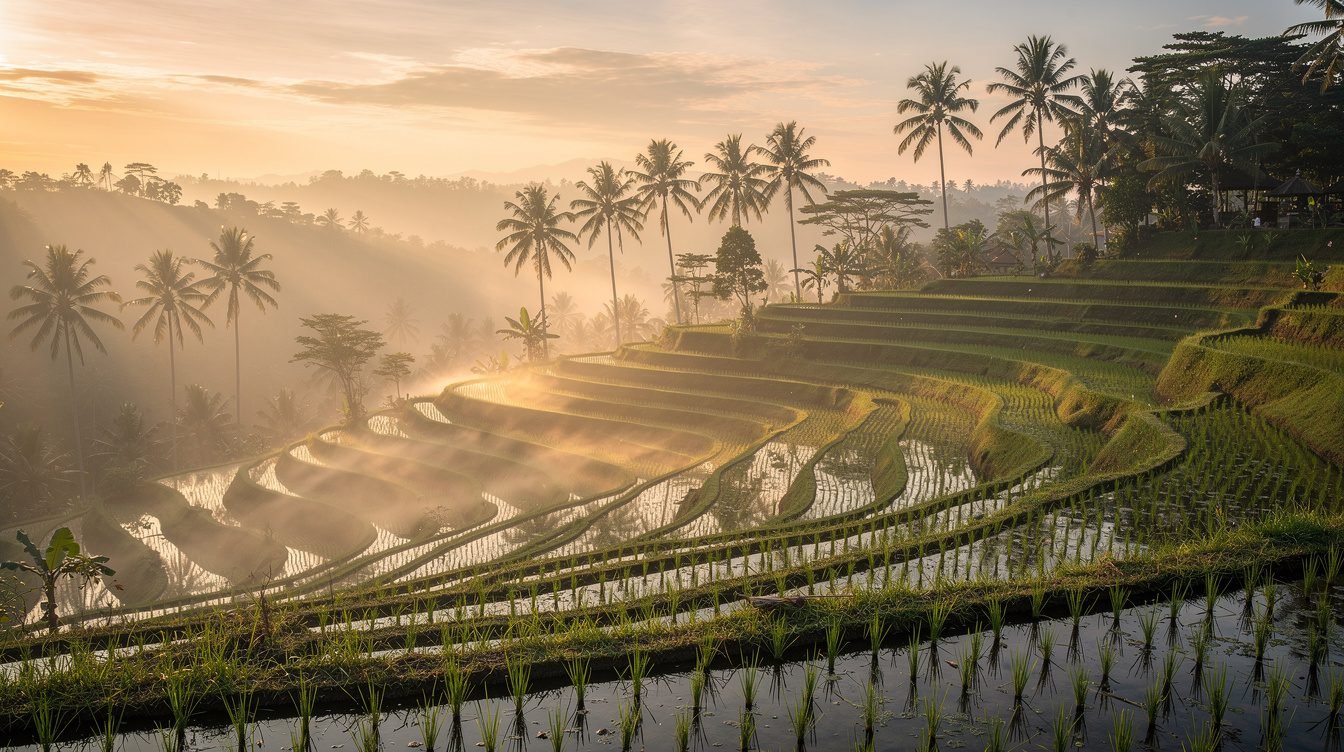
Get a Free 3-Day Sample Itinerary
See how your days in Ubud could unfold — morning markets, rice terrace walks, the best warungs, and evenings by the pool. We put together a sample itinerary so you can start imagining.
The Morning Market: Where Bali Food Begins Each Day
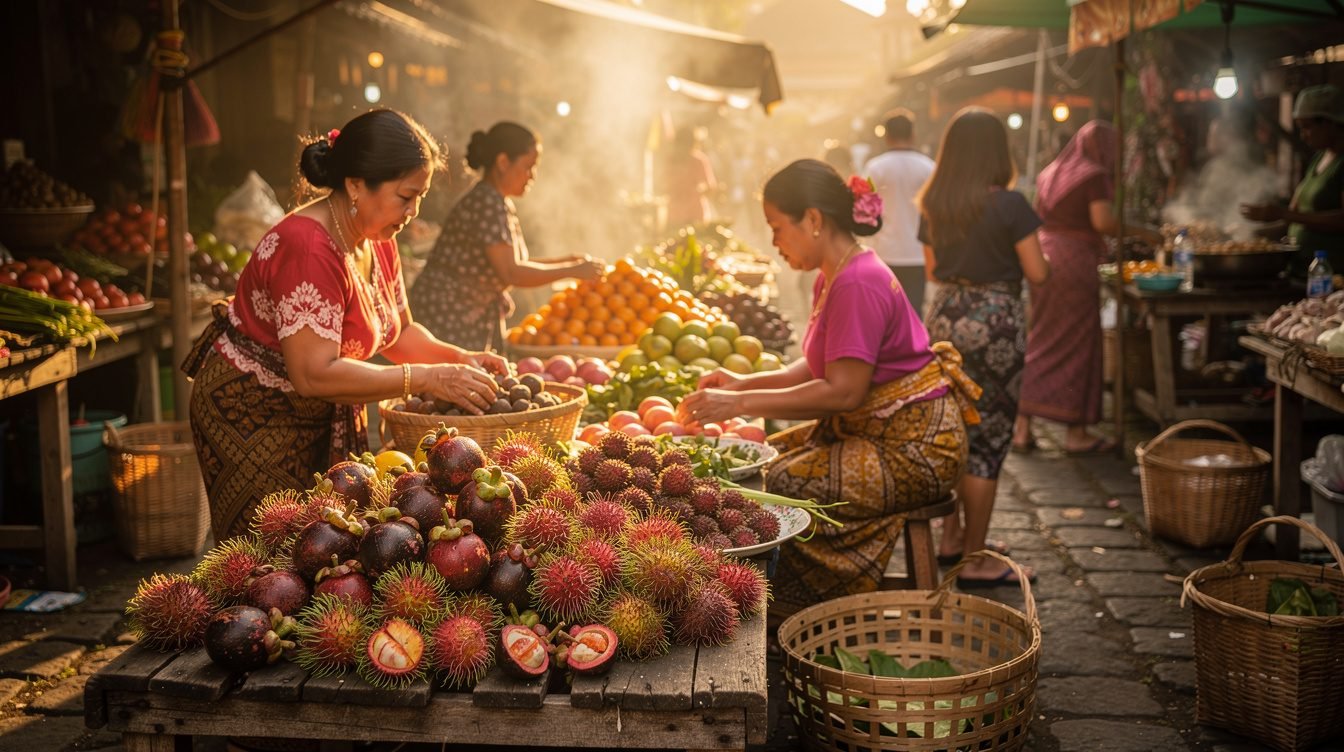
If you want to understand Bali food, wake up early and follow a Balinese cook to the market. In Ubud, the Ubud Traditional Market (Pasar Ubud) transforms before dawn into a sprawling, fragrant, slightly chaotic wonderland of fresh produce. By 6 AM, the stalls are stacked with snake fruit (salak), rambutan, mangosteen, morning glory, long beans, fresh turmeric roots, and every herb you’ve never heard of.
This is where your chef goes. Not to a supermarket — to the women who’ve been selling from the same stall for 20 years. They know which turmeric is freshest, which shallots are sweetest, which eggs came from the free-range chickens in the next village.
Beyond the Ubud market, don’t miss:
- Gianyar Night Market — the largest and most celebrated food market in Bali. Open from late afternoon, it’s a gauntlet of sate, babi guling, jajan (Balinese sweets), and nasi campur prepared by specialists who do one thing perfectly. This is where Balinese families come to eat.
- Sukawati Market — less touristy, great for produce, with a surprisingly good warung section on the upper floor.
- Sanur Morning Market — smaller, calmer, with outstanding fresh seafood and local breakfast stalls.
The market experience connects directly to things to do in Ubud Bali — it’s one of the most authentic cultural activities you can have, and it costs almost nothing. Some of the best mornings start with a market walk followed by breakfast at a warung tucked in the back alley.
Ubud Bali Food Experiences: From Warungs to Fine Dining
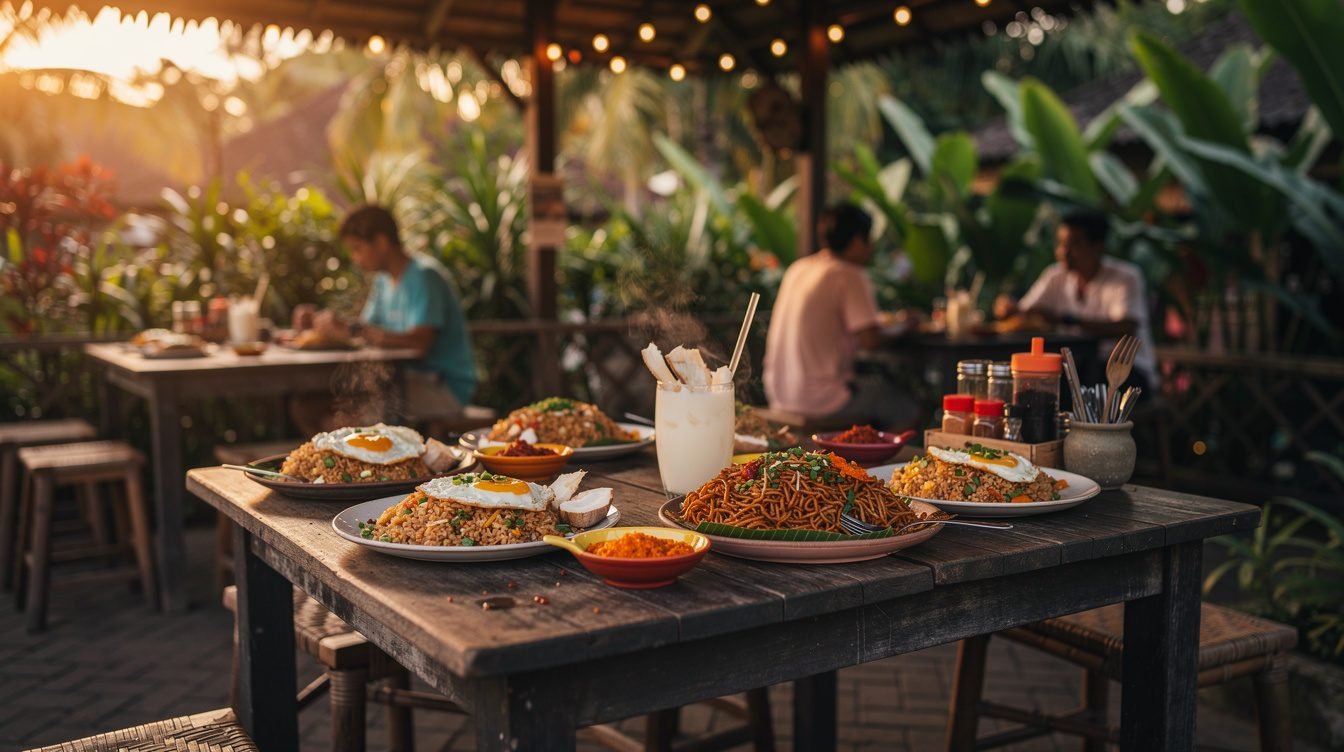
Ubud has become Bali’s food capital — not because of tourist demand, but because the ingredients are best here. The rice is local, the vegetables are grown in the volcanic soil of the surrounding valleys, and the cooking traditions of the Gianyar regency (where Ubud sits) are some of the oldest on the island.
Warungs: Where the Real Bali Food Lives
A warung is a small family-run eatery. No reservations, no menus sometimes — just whatever the cook made that morning. The best warungs in Ubud serve babi guling, nasi campur, or a single specialty dish with extraordinary consistency. Prices are 20,000-40,000 IDR ($1.30-$2.60) per plate. The food is honest, the portions are generous, and the cook is usually the owner’s mother or grandmother.
Cooking Classes
Ubud’s cooking classes are among the best in Southeast Asia. They typically include a market tour at dawn, followed by 3-4 hours of hands-on preparation of 6-8 dishes. You’ll learn to grind bumbu, make sate lilit, wrap food in banana leaves, and cook over charcoal. It’s physical, fun, and you leave understanding why Balinese food tastes the way it does.
Fine Dining: Locavore and Beyond
At the other end of the spectrum, Ubud is home to Locavore — consistently ranked among Asia’s best restaurants. Their philosophy of using 95% Indonesian ingredients in innovative tasting menus has helped redefine how the world sees Indonesian food. Mozaic, Room4Dessert, and Hujan Locale follow a similar farm-to-table philosophy.
The best approach is to mix experiences: warung for breakfast, cooking class one morning, fine dining for a special evening, and your private villa chef for everything in between. That range — from a 25,000 IDR nasi campur to a 12-course tasting menu — is what makes Ubud’s food scene genuinely extraordinary.

Taste Bali From Your Own Villa
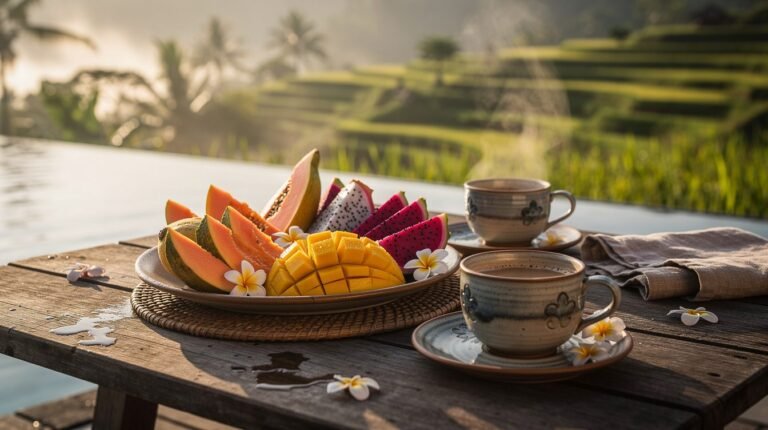
A private chef, a tropical garden, three bedrooms, and a pool. Your mornings start with fresh fruit and Balinese coffee on the deck. Your evenings end with a meal made just for you.
The Private Chef Experience: Bali Food in Your Own Villa
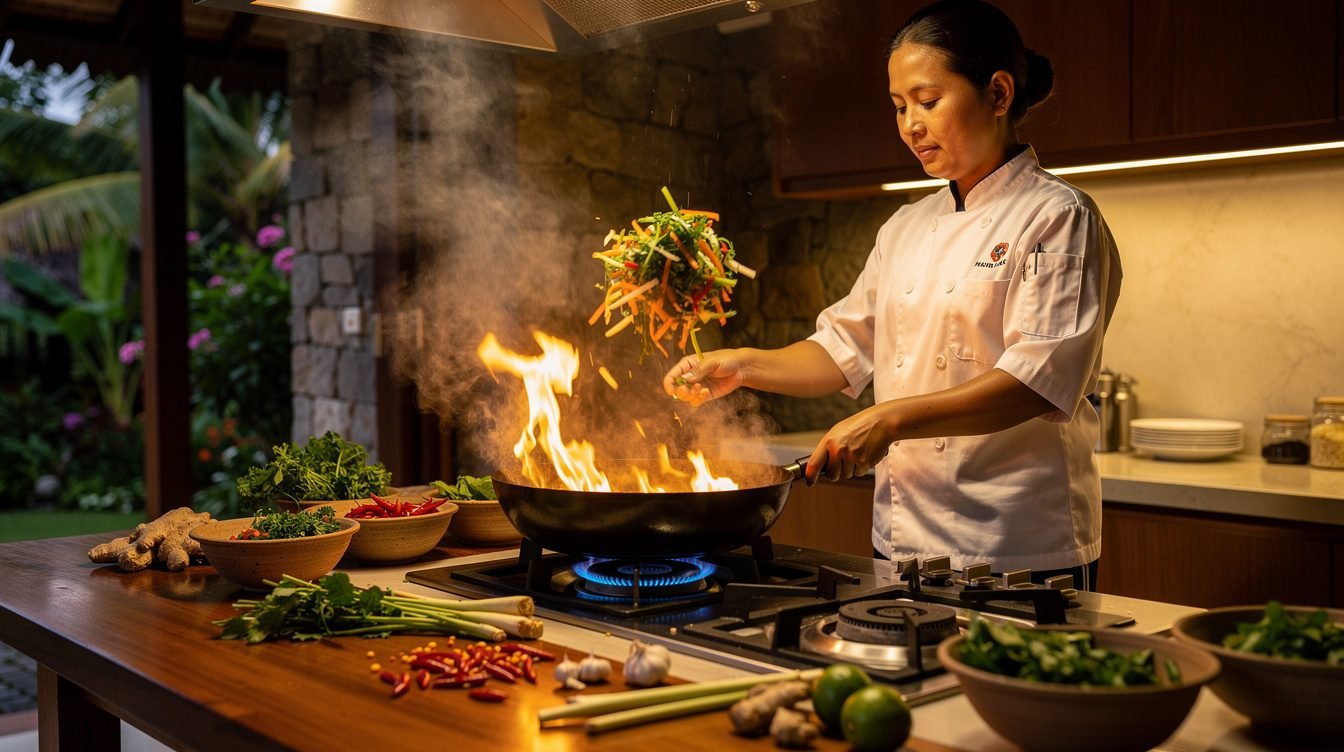
Here’s the thing nobody tells you about Bali food until you’ve experienced it: the most memorable meals often happen at your own villa.
When you stay at a staffed villa in Bali, your chef isn’t cooking from a restaurant menu. She’s cooking the way her family cooks — with fresh market ingredients, her own bumbu recipe, and the freedom to prepare whatever suits you. Want to try babi guling without hunting for a warung? She’ll prepare it. Curious about lawar? She’ll make the traditional version with all the right herbs. Vegetarian? She’ll build a plant-based nasi campur that puts most restaurant versions to shame.
What makes the private chef experience different from eating out:
- Custom menus daily. Tell the chef what you’re curious about, what you loved yesterday, what dietary needs you have. She adapts every meal.
- Market-fresh ingredients. The chef shops the morning market before you wake. By the time you’re having coffee on the pool deck, she’s already back with everything for the day.
- Cook-along sessions. Ask your chef to teach you. Most are delighted to show you how to grind bumbu, wrap sate, or make sambal matah. It’s more intimate than any cooking class.
- Meals on your rhythm. Breakfast at 10 AM? Dinner at sunset by the pool? A late-night snack after the rice fields walk? The kitchen runs on your schedule.
This is what separates a villa stay with a private pool from a hotel experience — you’re not ordering from a menu. You’re being fed by someone who genuinely cares how your day tastes.
Bali Food and Ceremony: How Flavor Connects to the Sacred
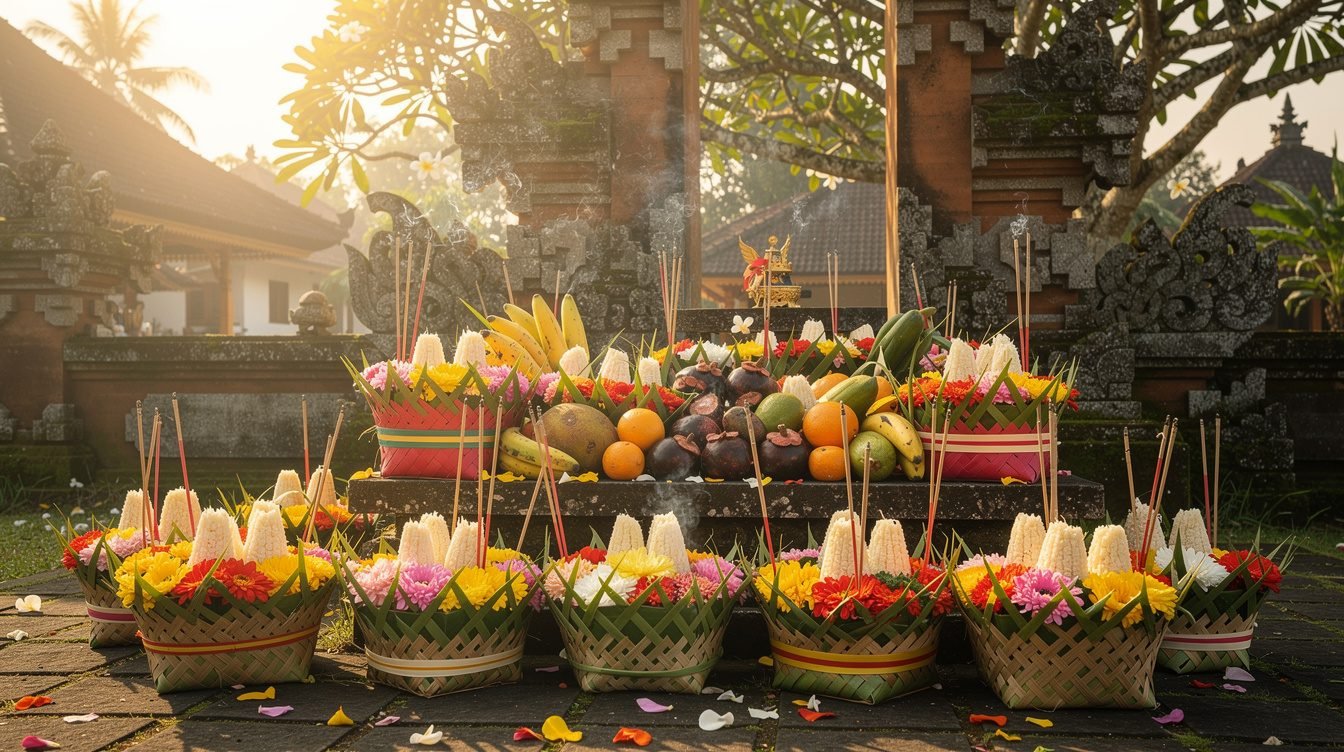
In Bali, food and spirituality are inseparable. Every dish cooked for a ceremony follows specific rules — which ingredients to use, how they must be prepared, who can prepare them, and in what order. This isn’t symbolic. The Balinese genuinely believe the food carries spiritual energy.
Banten: The Daily Offerings
You’ll see canang sari everywhere in Bali — small woven palm-leaf baskets filled with flowers, rice, and sometimes small sweets, placed at doorways, shrines, and intersections three times daily. These contain food offerings: rice, fruit, and sweets that feed the spirits before the family eats.
Ceremonial Cooking: A Communal Act
During temple ceremonies and village celebrations, the entire banjar (community) comes together to cook. Men typically handle the meat — butchering, preparing lawar, and roasting the babi guling. Women prepare the rice, sweets, and offerings. The scale is extraordinary: a village ceremony might involve preparing food for 500 people, all cooked over wood fires in the temple courtyard.
Galungan and Kuningan
These twin ceremonies (celebrated every 210 days on the Balinese calendar) bring the most elaborate food preparations. Every household prepares babi guling, lawar, and jajan (ceremonial cakes). The streets fill with tall penjor (bamboo poles) decorated with offerings. If your visit coincides with Galungan, you’ll see — and smell — Bali food at its most profound.
Megibung: Eating Together
Megibung is the Balinese tradition of communal eating — sharing food from a single large platter, sitting together on the ground. It’s practiced during ceremonies and family gatherings. The act of eating together from one source carries deep meaning: equality, community, shared nourishment.
Understanding this sacred connection changes how you experience bali food during your stay. When you see canang sari with rice and fruit placed carefully at a temple gate, or watch a village prepare for ceremony, you’re witnessing a food culture that has been unbroken for over a thousand years. Our wellness retreat guide explores more of how Balinese traditions enrich the visitor experience.
Your Bali Food Questions Answered
Is Bali food spicy?
It can be, but it doesn’t have to be. The base spice pastes have warmth and depth, but the real heat comes from sambal — which is always served on the side. You control the spice level. Tell your villa chef or warung server “tidak pedas” (not spicy) and they’ll adjust.
Is Bali food safe for travelers?
Generally yes, especially at established warungs and villas with private chefs. Stick to places where food is cooked to order (not sitting out), drink bottled or filtered water, and avoid raw vegetables at street stalls if your stomach is sensitive. At a staffed villa, your chef handles food safety — that’s one less thing to think about.
Can I eat vegetarian or vegan in Bali?
Absolutely. Ubud is arguably the vegan capital of Southeast Asia. Dozens of restaurants specialize in plant-based Indonesian and international cuisine. Traditional Balinese food also has strong vegetarian options — tempeh, tofu, gado-gado (vegetables with peanut sauce), lawar made with green beans and coconut, and an endless variety of sambals. Your villa chef can prepare entirely plant-based menus with no notice.
Is there halal food in Bali?
Yes. While Bali’s Hindu culture means pork is common, most restaurants offer chicken, seafood, and vegetable options. Many warungs are halal-certified, and Ubud has several specifically halal restaurants. Just ask — Balinese people are deeply respectful of dietary requirements.
What Balinese desserts should I try?
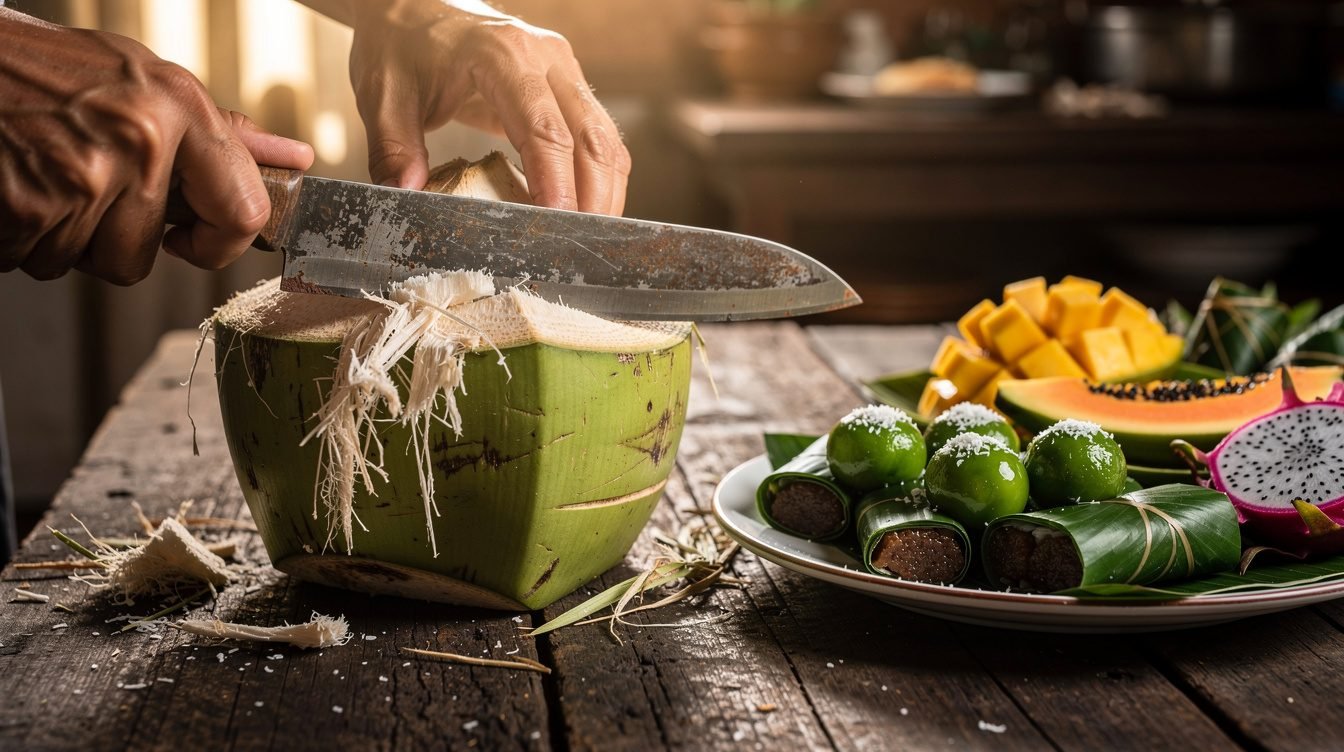
Start with klepon — small green rice-flour balls filled with liquid palm sugar and rolled in fresh coconut. Then try dadar gulung (green coconut crepes), pisang goreng (fried bananas with palm syrup), and bubur injin (black rice pudding with coconut cream). Every one is made from natural ingredients — pandan for green color, coconut for sweetness, rice flour for texture.
What should I drink with Bali food?
Young coconut water (es kelapa muda) is the natural pairing — refreshing and cuts through spice. Balinese coffee (kopi Bali) is strong and grounding, traditionally served with the grounds settled at the bottom. Fresh juice stands are everywhere: mango, pineapple, dragon fruit, watermelon. For alcohol, try arak (rice spirit) mixed with honey and lime — the local cocktail. As you plan your trip, our packing guide covers what to bring and what your villa already provides.
Where’s the best bali food in Ubud?
The warungs along Jalan Dewi Sita and Jalan Goutama serve dependable nasi campur and sate. For babi guling, the family-run stalls in Gianyar market are hard to beat. For a splurge, Locavore reimagines Indonesian ingredients. But honestly? Some of the best bali food we’ve seen our guests enjoy is prepared by their own villa chef — custom, fresh, and on their schedule. Our spa guide also covers pairing food experiences with wellness activities for the complete Ubud day.

Join Our Newsletter
Fun, new, exciting Bali news — straight from our team in Ubud. No spam, just the real rhythm of the island delivered to your inbox.