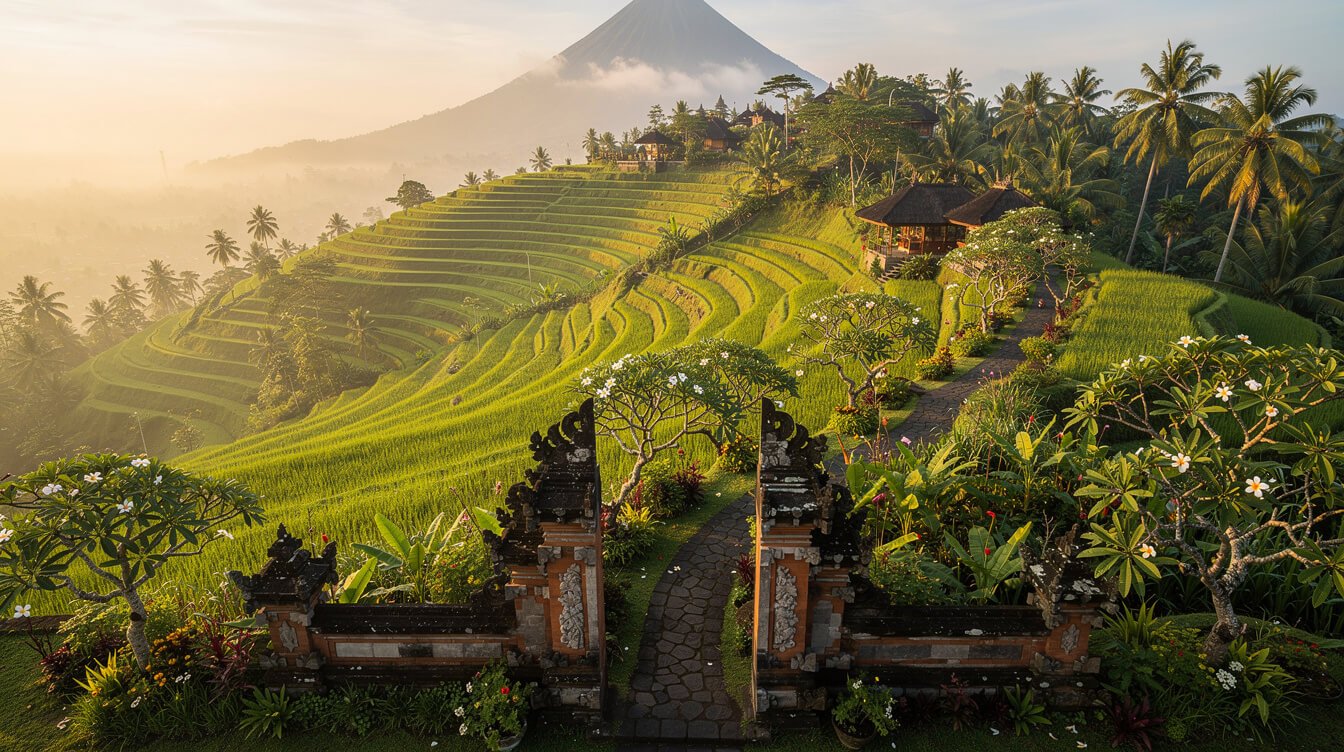
Bali Itinerary 7 Days: Your Complete Week-by-Week Guide to Ubud and Beyond
Your bali itinerary 7 days starts the moment the warm air hits your skin at Ngurah Rai airport. That first breath — frangipani and rain-wet asphalt and something sweet you can’t quite name — tells you the island is already working on you. Seven days is not a lot, but it’s enough. Enough to feel the rhythm of Ubud’s village mornings, chase waterfalls through jungle ravines, stand on a clifftop as the Indian Ocean throws itself against limestone, and eat some of the most extraordinary food of your life.
This isn’t a rush-through-everything itinerary. It’s built around Ubud as your anchor — the cultural heart of Bali, where rice terraces and temples and artist studios sit within a 10-minute drive of your front door. From there, you’ll fan out to the coast, the highlands, and the volcanic interior. Each day has a natural arc: morning stillness, afternoon exploration, evening unwinding. Here’s how to spend your week.
Day 1: Arrive, Settle Into Ubud, and Let the Jet Lag Go
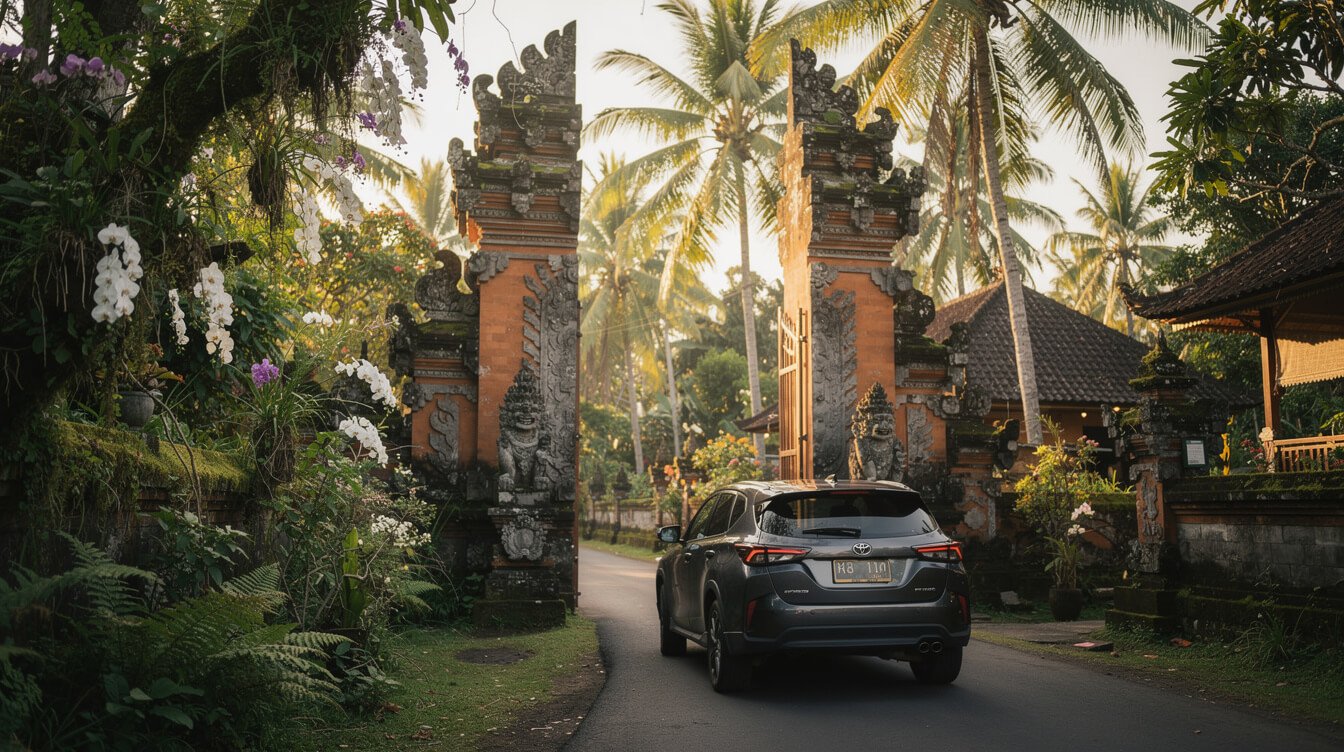
Most international flights land at Ngurah Rai International Airport (DPS) in the south. The drive to Ubud takes about 90 minutes — long enough to decompress, short enough that you won’t lose the day entirely.
Getting from the airport to Ubud
Pre-book a private driver rather than haggling at the taxi stand. Your accommodation can usually arrange this for you. The route passes through Denpasar and climbs gradually into the green interior — you’ll know you’re close when the road narrows, the trees lean in, and the air smells different.
Your first afternoon
Don’t try to do too much. Check in, swim if there’s a pool, and let the garden sounds replace whatever noise was in your head before you left. If you’re staying in a private villa with staff, your team will likely have cold towels and fresh fruit waiting. This matters more than it sounds.
Evening: Ubud’s restaurant scene
Walk into central Ubud for dinner. Jalan Goutama and Jalan Dewi Sita are both lined with restaurants that range from excellent Indonesian street food to refined tasting menus. For your first night, choose something casual — a nasi campur plate or fresh-caught grilled fish with sambal. You’ll eat well all week. No need to peak on day one. Check our complete guide to Ubud restaurants for specific recommendations by cuisine and budget.
Day 2: Tegallalang Rice Terraces and Ubud’s Cultural Core
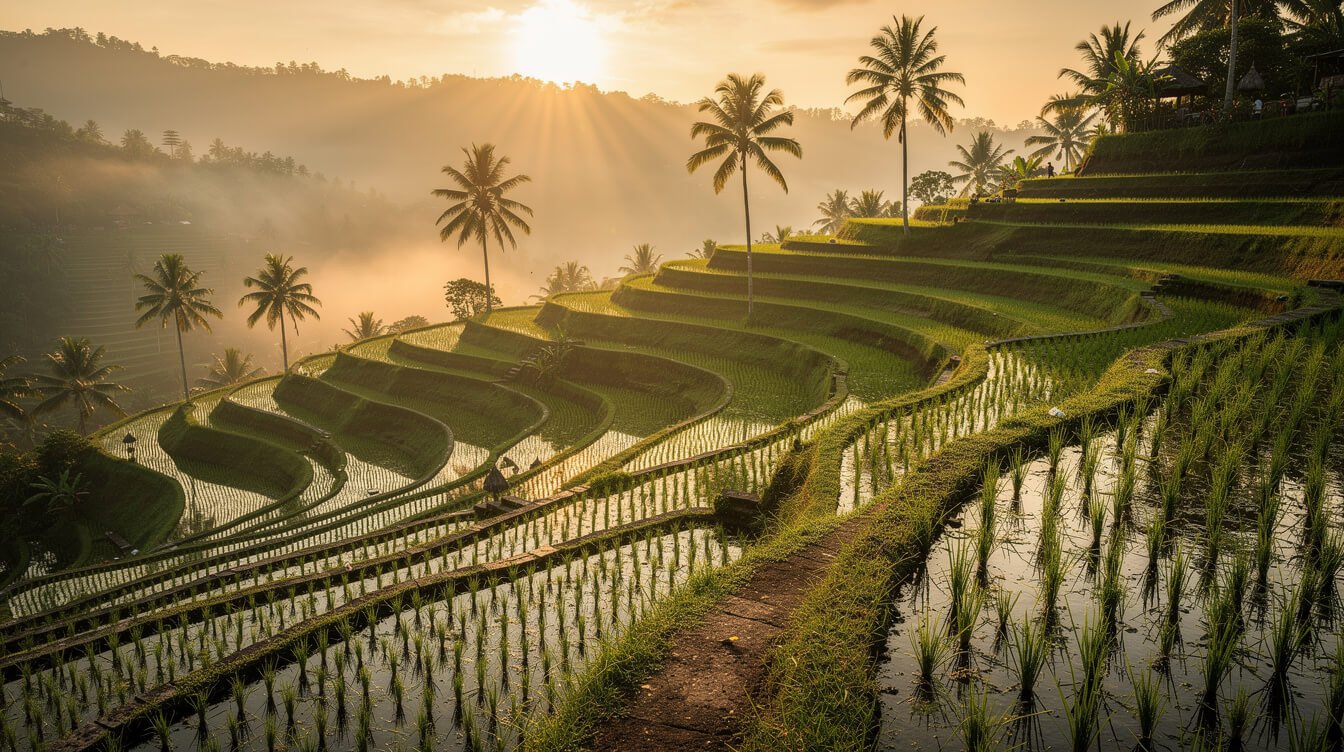
Wake up early. This is not a request — it’s a recommendation born from experience. Ubud mornings between 6 and 8 a.m. have a quality of light and quiet that changes everything. The mist sits in the valley. Birds you’ve never heard before compete with roosters. The air is cool enough to drink.
Morning: Tegallalang Rice Terraces
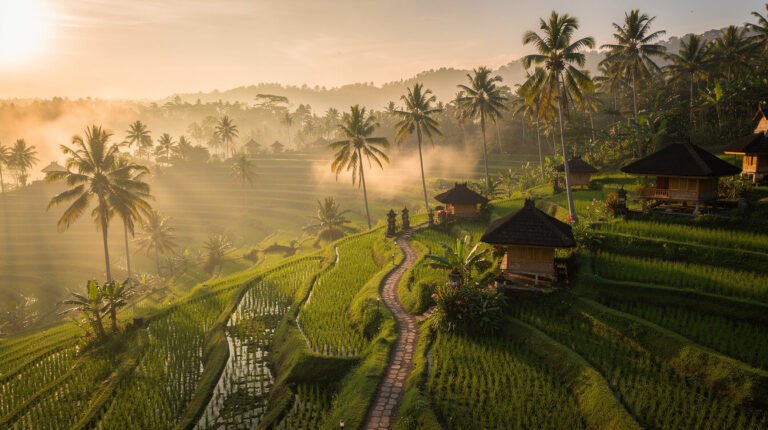
Drive 20 minutes north to Tegallalang. Arrive before 8 a.m. to avoid the crowds that build later. The terraces cascade down a steep river valley in geometric steps carved over centuries using the Balinese subak irrigation system — a UNESCO-recognized tradition of cooperative water management that dates back to the 9th century.
Walk the paths between the paddies. The green shifts shade depending on where the rice is in its growing cycle — bright chartreuse for new shoots, deep emerald for mature stalks, golden for harvest-ready fields. Our complete guide to Bali’s rice terraces covers the best time to visit each terrace system and what to expect season by season.
Afternoon: Sacred Monkey Forest and Ubud Palace
Head back to central Ubud for the Sacred Monkey Forest Sanctuary. The forest itself — ancient banyan trees with root systems that dwarf the stone temples beneath them — is the real attraction. The monkeys are entertaining but secondary. Walk slowly. Look up.
From the Monkey Forest, it’s a 10-minute stroll north to Ubud Palace (Puri Saren Agung). The palace still functions as a royal residence and hosts traditional Legong and Barong dance performances most evenings. If you can catch a show tonight, do — the courtyard setting, with torchlight flickering on carved stone, is unforgettable.
Evening: Ubud Market at golden hour
The Ubud Art Market (Pasar Seni) faces the palace across the main road. By late afternoon, the morning produce sellers have packed up and the art and handicraft vendors spread out. Batik textiles, hand-carved wooden masks, woven baskets, silver jewelry. Bargain gently — it’s expected, but the prices are already fair by most standards.
Get a Free 3-Day Sample Itinerary
Planning your Ubud stay? We’ll send you a curated 3-day sample itinerary with our favorite morning walks, restaurants, and hidden temple visits — straight from the team who lives here.
Day 3: Temples, Holy Springs, and Bali’s Spiritual Interior
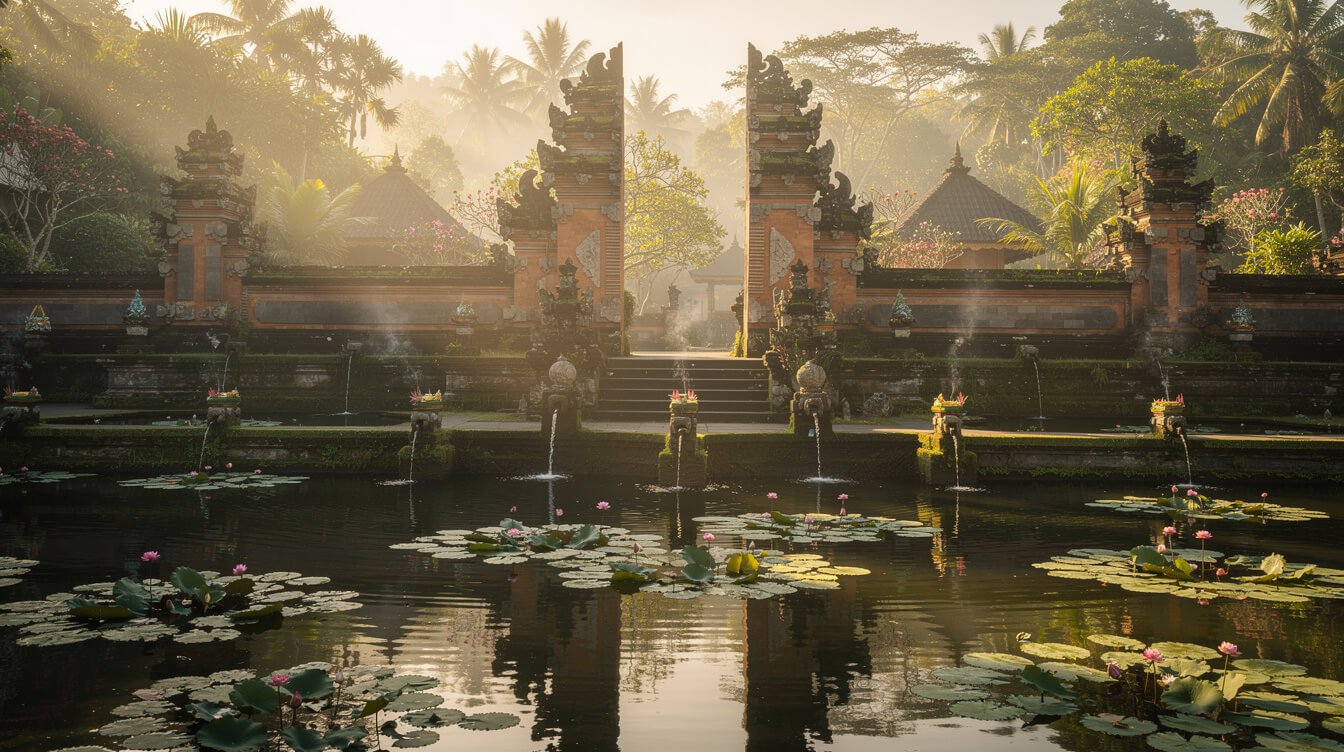
Day three of your bali itinerary 7 days takes you deeper into the island’s spiritual landscape. Bali has over 20,000 temples — more than any other region its size on earth. Today you’ll visit two of the most significant.
Morning: Tirta Empul Water Temple
Drive 30 minutes northeast to Tirta Empul, the sacred spring temple near Tampaksiring. The temple was founded in 962 AD around a natural spring that Balinese Hindus believe has purifying properties. Visitors can participate in the ritual bathing — walking through a series of fountains while offering prayers at each one.
Bring a sarong (or borrow one at the entrance). Move with the rhythm of the other bathers. The water is cold enough to make you gasp, which is part of the point — it wakes something up.
Midday: Gunung Kawi
Just 15 minutes south, the 11th-century rock-cut shrines of Gunung Kawi sit at the bottom of a deep river valley. You’ll descend over 300 steps through rice paddies to reach the carved cliff facades — royal tombs cut directly into the volcanic rock face. The scale is startling. Most visitors spend 45 minutes here; give yourself 90 and sit by the river.
Afternoon: Return to Ubud and rest
Temple days are more tiring than they sound — the heat, the stairs, the emotional weight of ancient sacred spaces. Head back to your accommodation. Swim. Read on a daybed. If you’re in a staffed villa, ask the cook about dinner — this is a perfect evening for a private Balinese meal at your own table rather than going out. For more ideas about things to do across Bali, including temple visits organized by region, see our full experiences guide.
Day 4: Waterfalls and the Wild North
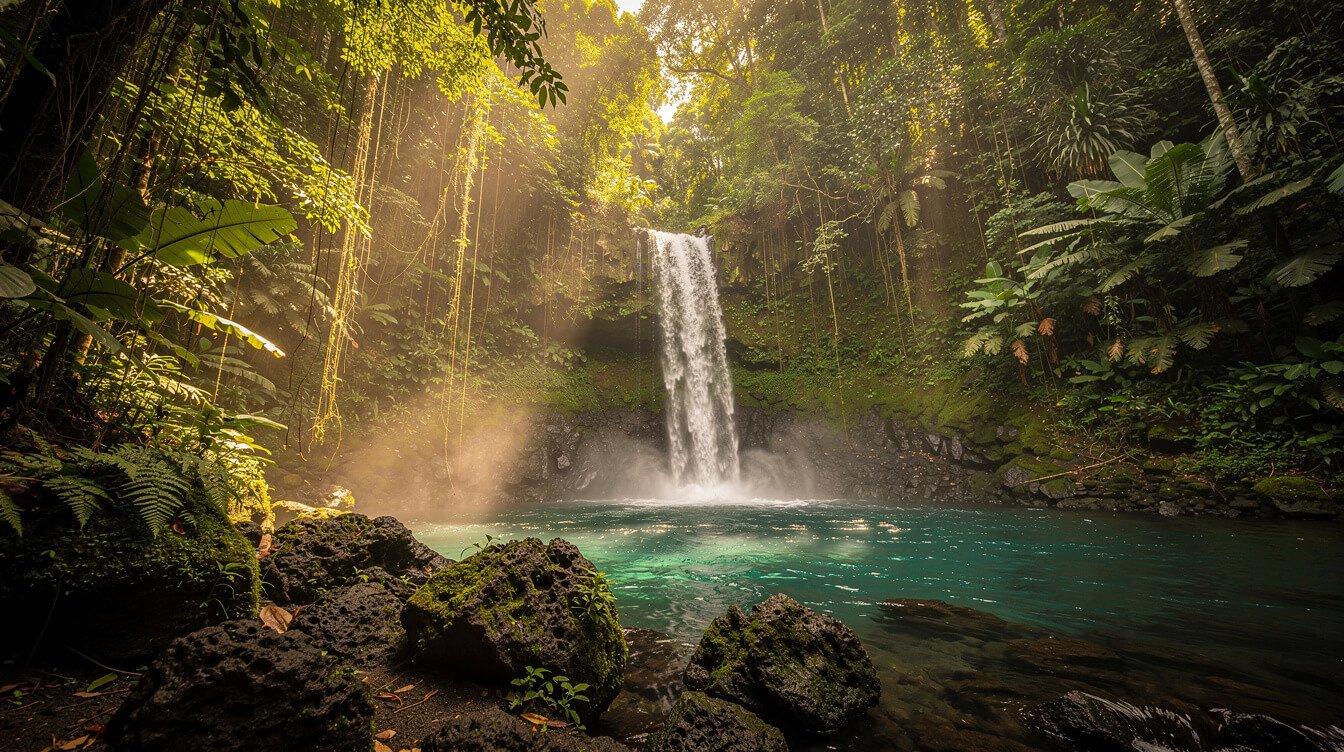
Bali’s interior is volcanic, vertical, and very wet. The combination produces waterfalls — hundreds of them, tumbling through jungle ravines all across the central highlands. Today you’ll head north of Ubud into some of the island’s most dramatic scenery.
Morning: Tegenungan Waterfall
Start close. Tegenungan is just 30 minutes south of Ubud — a wide curtain of water dropping into a natural pool surrounded by jungle. Arrive before 9 a.m. to beat the crowds. The stairs down are steep and can be slippery; wear shoes with grip.
Midday: Kanto Lampo or Tibumana
From Tegenungan, continue to either Kanto Lampo (a cascading rock-face waterfall that’s extraordinary for photos) or Tibumana (quieter, with a cave behind the falls). Both are within 20 minutes of each other. You could do both if you start early enough, but don’t rush — part of the experience is the walk through the jungle to reach each one.
Afternoon: Lunch and Kintamani volcano views
Drive north to the Kintamani ridge for lunch with a view of Mount Batur and its crater lake. The restaurants along the rim road are not gourmet, but the panorama — an active volcano reflected in a cobalt lake, with cloud shadows rolling across the caldera — needs no culinary accompaniment. On clear days, Mount Agung rises behind Batur like a second act you weren’t expecting.
Evening: Back to base
The drive back to Ubud takes about an hour. You’ll descend from volcanic highlands through terraced farmland and increasingly dense tropical forest. It’s a good time to rest in the car and let the day settle.
Day 5: Cooking Class, Art Galleries, and Ubud’s Creative Side
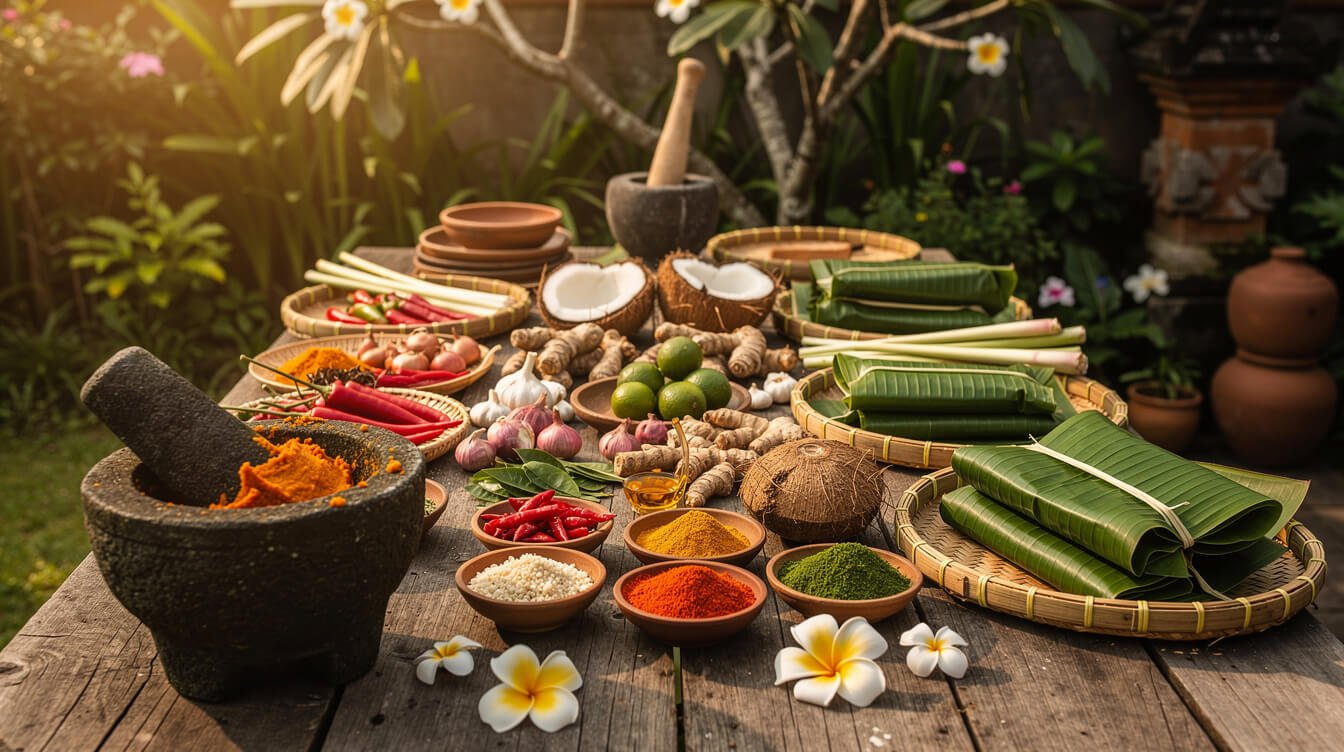
Halfway through your bali itinerary 7 days, slow down. Today stays close to Ubud and trades temples and waterfalls for food and art — two of the things this town does better than almost anywhere in Indonesia.
Morning: Balinese cooking class
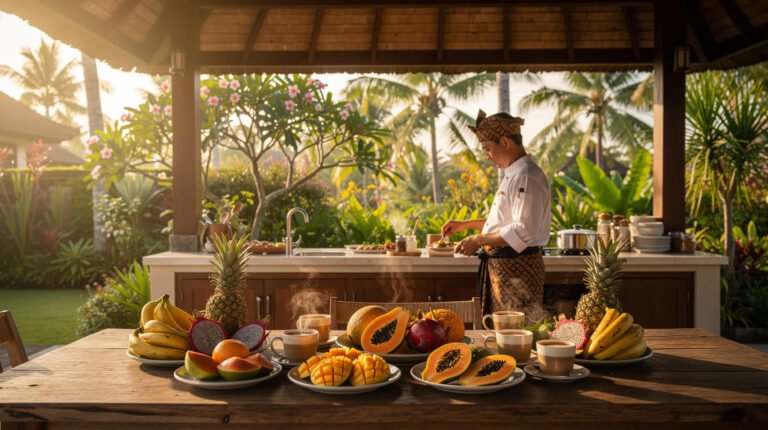
A cooking class is the single most underrated experience in Ubud. Most start with a guided visit to the local morning market — where you’ll learn to identify galangal versus ginger, buy fresh turmeric still caked in volcanic soil, and watch your instructor negotiate for the fattest duck.
Back in the kitchen (often an open-air pavilion surrounded by garden), you’ll grind spice pastes by hand in a stone mortar, wrap fish in banana leaf, and cook a full multi-course Balinese meal: lawar, sate lilit, bebek betutu, jaje batun bedil. You eat everything you make. The recipes travel home with you.
Afternoon: Ubud’s galleries and studios
Ubud has been a center for Balinese art since the 1930s, when European painters Walter Spies and Rudolf Bonnet began collaborating with local masters. The tradition continues. Visit the ARMA Museum for its permanent collection of traditional and modern Balinese painting, or walk through the studios along Jalan Hanoman where working artists sell directly.
For contemporary work, the Neka Art Museum’s collection traces Balinese art from the classical wayang style through the Young Artists movement of the 1960s to present-day installations. Give yourself at least two hours — each room is a different era.
Evening: Yoga and sunset
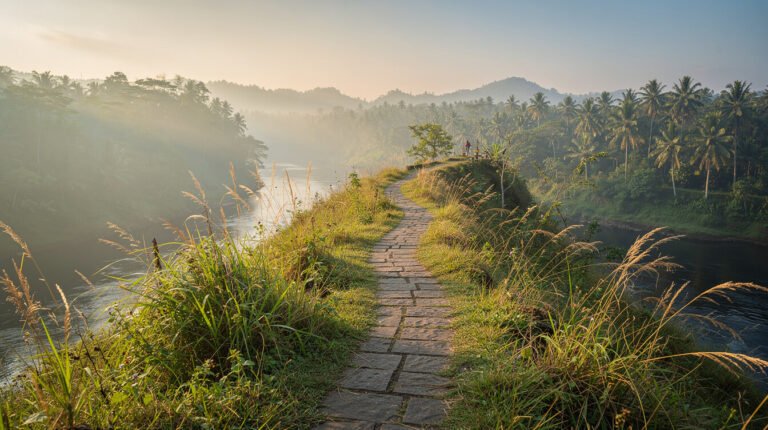
Ubud is the yoga capital of Southeast Asia. Drop in to a sunset class at The Yoga Barn or Radiantly Alive — both welcome all levels. If yoga isn’t your thing, the Campuhan Ridge Walk at golden hour gives you the same expansiveness: a narrow path along a ridge between two river valleys, with sunset light turning the tall grass to copper.
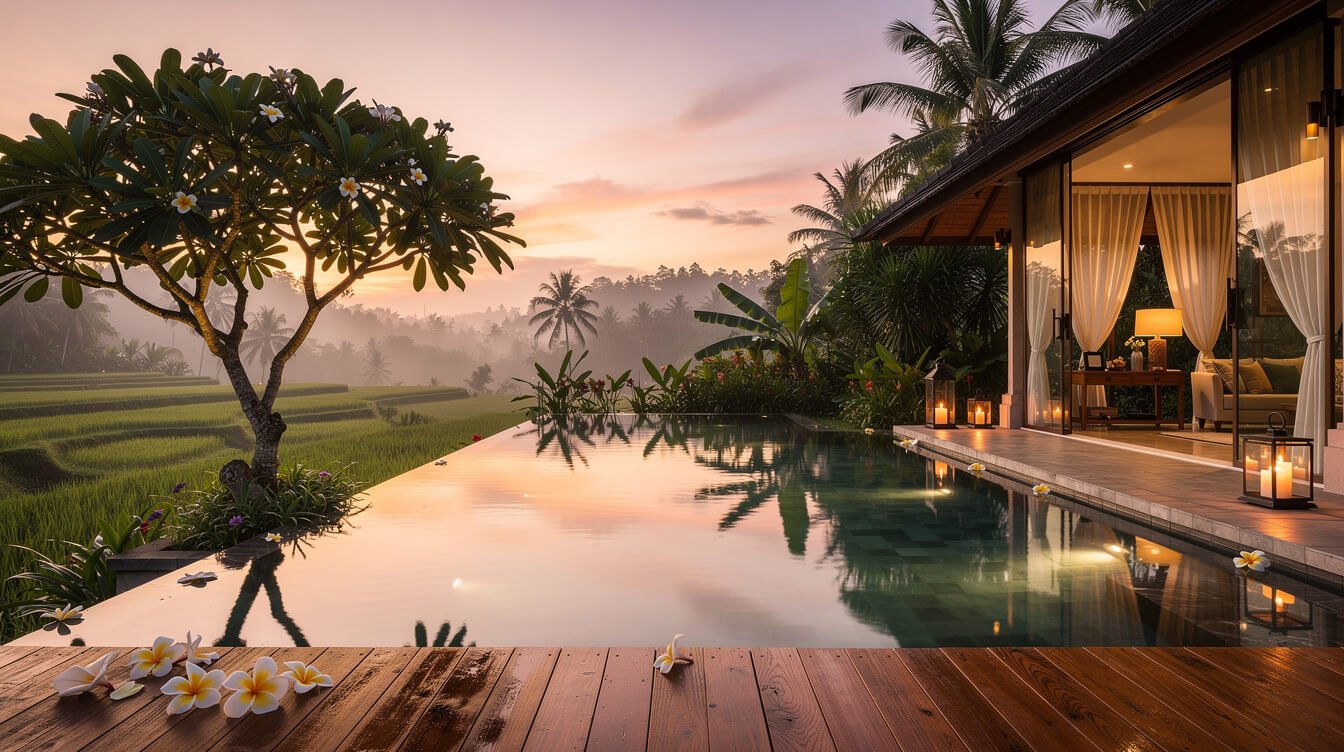
Make Ubud Your Home Base
Villa Amrita is a 3-bedroom pool villa with full staff — chef, housekeeper, and villa manager — in the heart of Ubud. The perfect anchor for your 7-day Bali itinerary.
Day 6: Uluwatu, Beaches, and Bali’s Dramatic South Coast
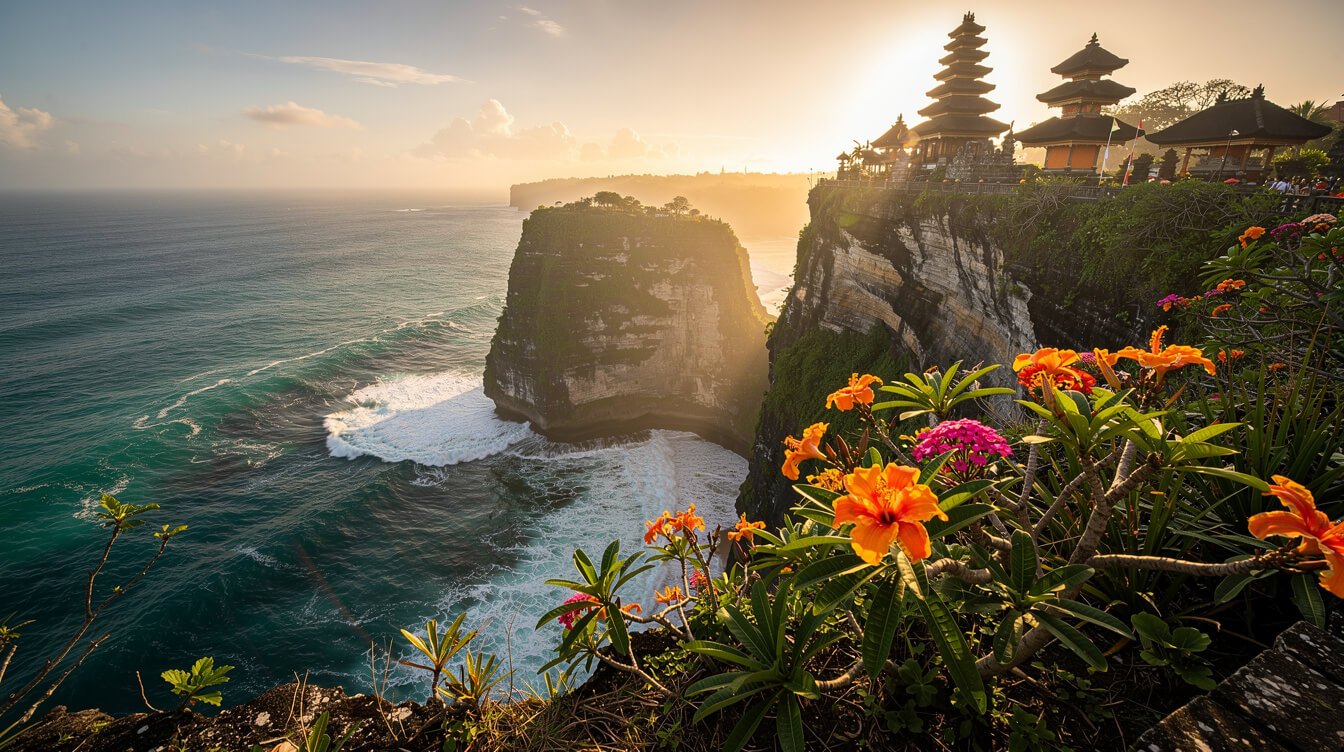
Today is a big day trip. You’ll leave Ubud early and head south to the Bukit Peninsula — Bali’s limestone tail, where dramatic cliffs drop straight into the Indian Ocean and the surf breaks are world-class.
Morning: Drive south and beach time
The drive from Ubud to the Bukit Peninsula takes about 90 minutes. Head directly to one of the southern beaches. Padang Padang is small, sheltered, and ringed by limestone walls — you descend through a narrow rock crevice to reach the sand. Bingin is for surfers and those who like their beaches with a view of someone else catching waves. Thomas Beach offers more space if the others are crowded.
Afternoon: Uluwatu Temple
Pura Luhur Uluwatu sits on a clifftop 70 meters above the sea. It’s one of Bali’s six key directional temples, guarding the island’s southwestern approach. The views are vertigo-inducing and magnificent. Watch the long-tailed macaques (they will steal your sunglasses — tuck them away) and walk the cliff path that wraps around the temple’s seaward side.
Evening: Kecak fire dance at sunset
Stay at Uluwatu for the nightly Kecak performance. Fifty or more men sit in concentric circles in an open-air amphitheater overlooking the ocean. As the sun drops into the water behind them, they chant — cak cak cak cak — in interlocking rhythmic patterns while dancers act out scenes from the Ramayana. No instruments. Just voices, firelight, and the ocean. It’s one of the most powerful performances you’ll see anywhere.
Drive back to Ubud after the show (about 2 hours). Or, if you’d prefer to break the drive, grab dinner at one of the seafood restaurants on Jimbaran Bay — tables in the sand, grilled fish by lantern light, the airport runway twinkling across the water.
Day 7: Your Last Morning, Departure, and What to Do With Extra Time
If your flight is in the afternoon
Use the morning. Walk the Campuhan Ridge at sunrise if you missed it earlier. Visit a silver workshop in Celuk village on the way to the airport. Or simply sit on your terrace with coffee and let the garden do what it does — the bird calls, the palm shadows moving across the pool, the gardener clipping something you can’t name but can definitely smell.
The drive to the airport from Ubud takes 90 minutes in normal traffic, closer to 2 hours during peak times. Leave earlier than you think you need to. Bali traffic is unpredictable, and the airport security queue can be long.
If you have an extra day or two
Add a sunrise trek to Mount Batur (depart 2 a.m., summit at dawn, back by 10 a.m.). Or take a fast boat to Nusa Penida for its dramatic cliff formations, manta ray snorkeling, and the famous Kelingking Beach viewpoint. Both are full-day commitments worth making if your schedule allows.
What a bali itinerary 7 days gives you
A week in Bali doesn’t let you see everything. It lets you see enough to understand why people keep coming back. You’ll leave with rice-paddy green burned into your visual memory, a spice paste recipe you’ll actually use at home, and the knowledge that somewhere in Ubud, a cook is already prepping tomorrow’s market run for the next guest who walks through the gate.
Practical Tips for Planning Your 7-Day Bali Itinerary
Where to stay
Ubud makes the best base for a week in Bali. It’s centrally located, culturally rich, and within day-trip distance of both the north coast and the southern beaches. Staying in one place — rather than switching hotels every two days — means less packing, less driving, and more time actually experiencing things. A private villa or boutique hotel in Ubud with staff means you have a cook, a housekeeper, and someone who knows the village. That changes the texture of every day.
Getting around
Hire a private driver for the day trips (Days 3, 4, and 6 especially). Rates are typically 600,000–800,000 IDR per day (about $38–50 USD) including fuel. Your accommodation can recommend someone trustworthy. For exploring central Ubud, walk or rent a scooter if you’re comfortable with Bali traffic — which is animated but manageable once you understand the flow.
Best time to visit
April through October is dry season — the most predictable weather for a bali itinerary 7 days. June through August is peak tourist season (higher prices, bigger crowds). September and October offer the sweet spot: dry weather, lower prices, and thinner crowds. November through March is rainy season — dramatic afternoon downpours, lush greenery, and significantly fewer visitors. Bali is beautiful year-round; each season offers something different.
Budget planning
Mid-range daily budget: $100–200 USD per person including accommodation, transport, meals, and activities. Add more for premium dining and private villa stays. Temple entry fees run 20,000–50,000 IDR ($1.25–3 USD). A cooking class costs $35–60 USD. Waterfall entries are usually 20,000 IDR ($1.25 USD).
What to pack
- Sarong and sash — required for every temple visit (or borrow at the entrance)
- Reef-safe sunscreen — the equatorial sun is no joke, and Bali’s reefs need protection
- Light rain jacket — even in dry season, afternoon showers happen
- Water shoes or sport sandals — for waterfall walks and river crossings
- Insect repellent — especially for evening outdoor dining in rice field areas
Frequently Asked Questions About a 7-Day Bali Itinerary
Is 7 days enough for Bali?
Seven days is enough to experience Bali’s cultural core (Ubud), natural highlights (rice terraces, waterfalls, volcano), and southern coast (Uluwatu, beaches). You won’t cover the east coast, the remote north, or the Gili Islands — but you’ll leave with a genuine understanding of what makes the island extraordinary rather than a blur of rushed stops.
Should I stay in one place or move around?
For a 7-day trip, staying in Ubud as a single base works better than hotel-hopping. You avoid the stress of packing and unpacking every two days, and Ubud’s central location puts the major day-trip destinations within 60–90 minutes. The southern beaches (Day 6) are the farthest point on this itinerary at roughly 90 minutes each way.
Do I need a visa for Bali?
Most nationalities can get a Visa on Arrival (VOA) valid for 30 days. The fee is 500,000 IDR (~$32 USD), payable at the airport. You can also apply for the e-VOA online before departure to skip the line. Check your country’s specific requirements — some nationalities qualify for visa-free entry for shorter stays.
Is Bali safe for solo travelers?
Bali is one of the safest destinations in Southeast Asia for solo travelers, including women traveling alone. Standard precautions apply: watch your belongings in crowded markets, don’t leave valuables unattended on the beach, and be cautious on scooters. The Balinese are genuinely warm and welcoming — you’ll feel it from the first interaction.
What’s the best way to handle money in Bali?
Indonesian Rupiah (IDR) is the local currency. ATMs are widely available in Ubud and tourist areas. Carry cash for temple entries, markets, small restaurants, and tips. Credit cards are accepted at upscale restaurants and hotels. Alert your bank before traveling.

Join Our Newsletter — Fun, New, Exciting Bali News
Ubud stories, travel tips, and what’s happening at the villa — delivered to your inbox. No spam, just warm notes from Bali.