Bali Travel Tips: Your Complete First-Timer Guide to the Island
Your first trip to Bali begins long before the plane touches down at Ngurah Rai airport. It begins with the questions — the dozens of small, practical bali travel tips that separate a smooth arrival from a scrambled one. Which currency should you carry? Do you really need a visa? What do you actually wear to a temple? And once you’re on the ground in Ubud, standing in the warm morning air with the scent of frangipani and incense smoke drifting across the street — what then?
This guide covers the essential bali travel tips that first-time visitors wish they’d known, written from the ground in Ubud by a team that hosts travelers year-round. We’ll walk you through entry requirements, money, transport, temple etiquette, food, cultural customs, and accommodation — with the kind of ground-level detail that the big travel sites tend to gloss over.
Bali Travel Tips for Visas, Entry, and Money
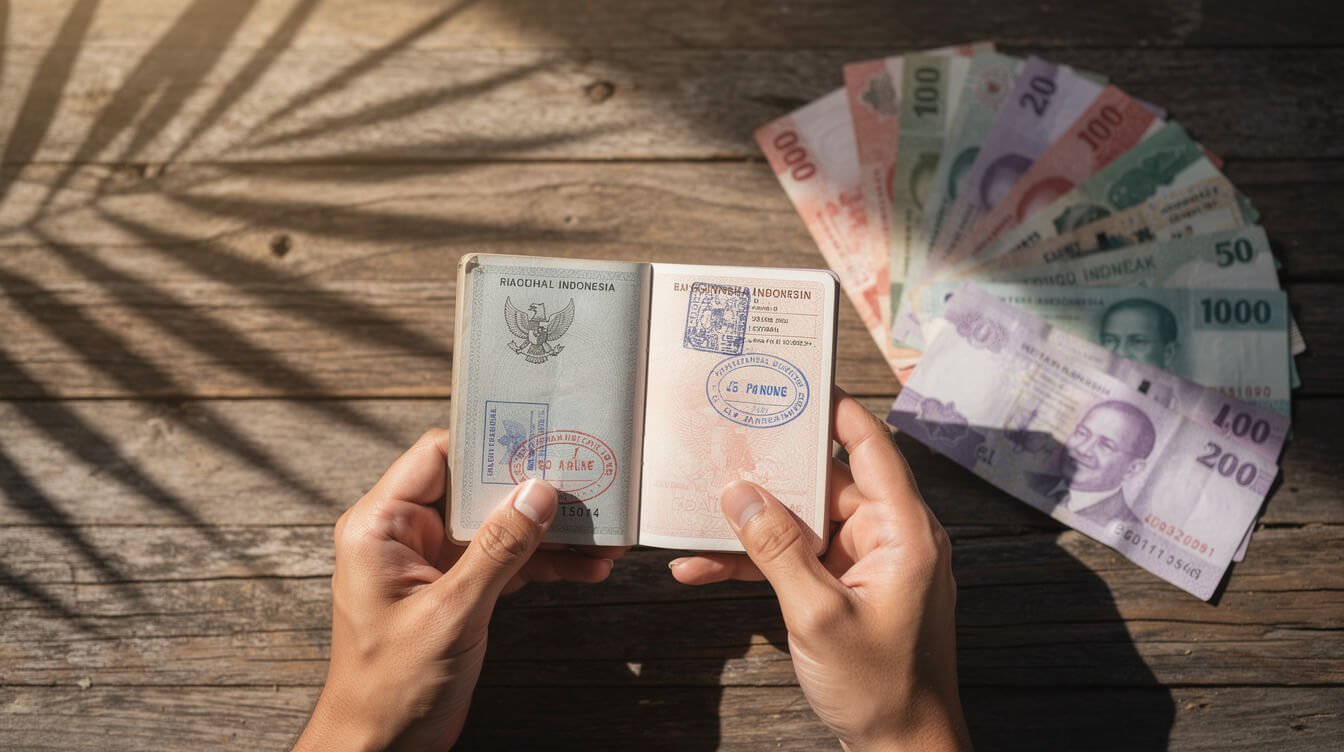
Indonesia offers a Visa on Arrival (VOA) for most nationalities, valid for 30 days and extendable once for another 30 days. The cost is 500,000 IDR (roughly $32 USD) and you can pay online before arrival at the official Molina portal — highly recommended, because the VOA queue at arrivals can stretch past an hour during peak season.
You’ll also need to pay the Bali tourist levy of 150,000 IDR ($10 USD) before arriving. Do this at lovebali.baliprov.go.id. Keep the QR code on your phone — immigration officers check it.
Passport and insurance essentials
Your passport must be valid for at least six months beyond your intended stay. Travel insurance is not technically required at the border, but Bali’s private hospitals are expensive — a simple clinic visit can cost $100-200 USD without coverage. Get proper travel insurance with medical evacuation included.
Currency and payment
The Indonesian Rupiah (IDR) is the local currency. As of mid-2026, 1 USD is approximately 15,800 IDR. ATMs are widely available in tourist areas, but many charge withdrawal fees of 25,000-50,000 IDR per transaction. Bring a travel-friendly debit card with no foreign transaction fees — Wise, Revolut, or Charles Schwab are popular choices among travelers.
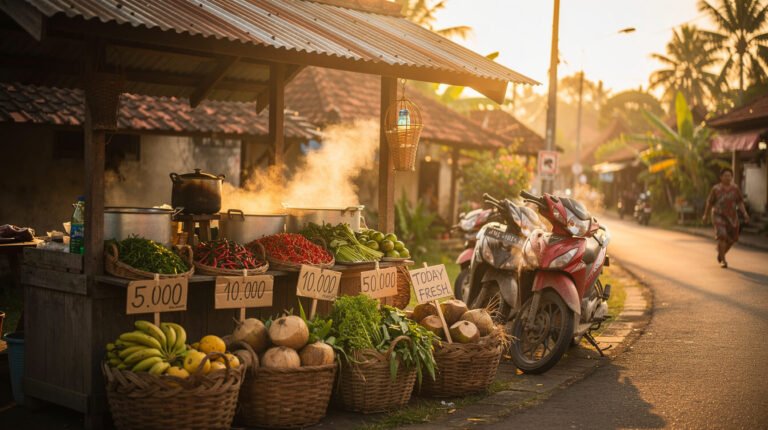
Cash is still king in markets, warungs (small local restaurants), and for temple donations. Credit cards work at hotels, larger restaurants, and shops, but many smaller businesses are cash-only. Carry denominations of 10,000 to 50,000 IDR for daily purchases — vendors sometimes struggle with change for 100,000 notes.
Tipping is not customary in Indonesia, but small tips for exceptional service are appreciated. A good guideline: 10,000-20,000 IDR for restaurant service, 50,000-100,000 IDR per day for private drivers or guides.
Getting Around Bali: Transport That Actually Works
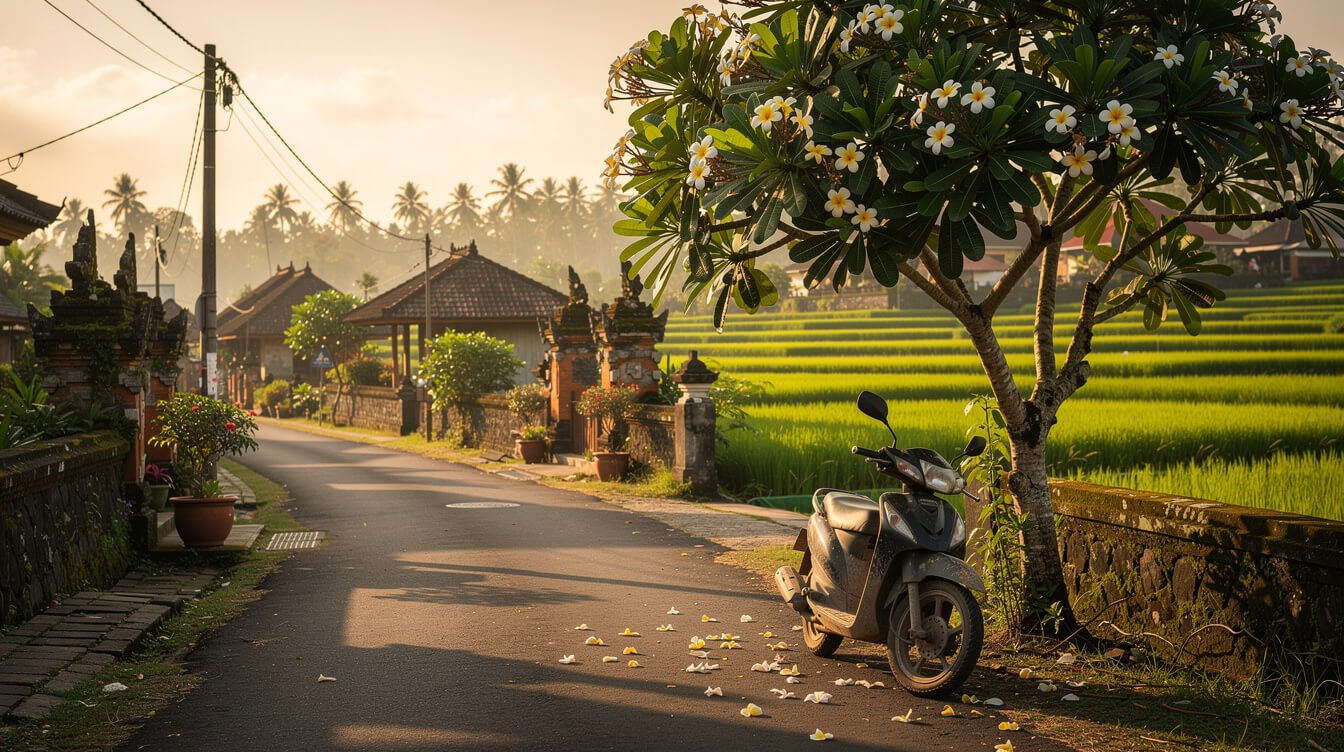
Bali doesn’t have a public transit system — no trains, no metro, no reliable bus network. This surprises many first-time visitors. Here’s what actually works.
Ride-hailing apps: Grab and Gojek
Grab and Gojek are your best friends for getting around. Both offer car rides and motorbike taxis at transparent, metered prices. A 30-minute car ride from Ubud to the nearest beach area costs roughly 80,000-120,000 IDR ($5-8 USD). Motorbike rides are even cheaper — about half the price.
One important note: ride-hailing apps are technically banned from picking up at airports, major temples, and some tourist hotspots where taxi cartels operate. At the airport, use the official taxi counter or arrange a villa transfer in advance. In Ubud, walk a block away from the Monkey Forest or central market before ordering a Grab — it’s just how things work here.
Renting a scooter
Scooter rental is the most popular way to get around for confident riders. Daily rates run 70,000-100,000 IDR ($4.50-6.50 USD). You’ll need an International Driving Permit (IDP) with a motorcycle endorsement — Bali police do check, and the fine for riding without one is 500,000 IDR. More importantly, your travel insurance likely won’t cover scooter accidents without a valid IDP.
If you’ve never ridden a scooter before, Bali is not the place to learn. The traffic is dense, roads are narrow, and dogs, chickens, and ceremonial processions share the lanes. Many travelers rent a scooter in Ubud where traffic is calmer, but the winding hillside roads have their own challenges.
Private drivers
For day trips, a private driver is surprisingly affordable — 500,000-700,000 IDR ($32-45 USD) for a full day with a car. Your driver doubles as a local guide, suggesting stops, translating at markets, and waiting patiently while you explore. If you’re staying at a staffed villa in Ubud, your villa manager can usually arrange a trusted driver with a single message.

Get a Free 3-Day Sample Itinerary
Planning your first Bali trip? We’ll send you a curated 3-day Ubud itinerary — temples, rice terraces, food spots, and quiet corners most visitors miss.
Bali Travel Tips for Temple Visits and Cultural Etiquette
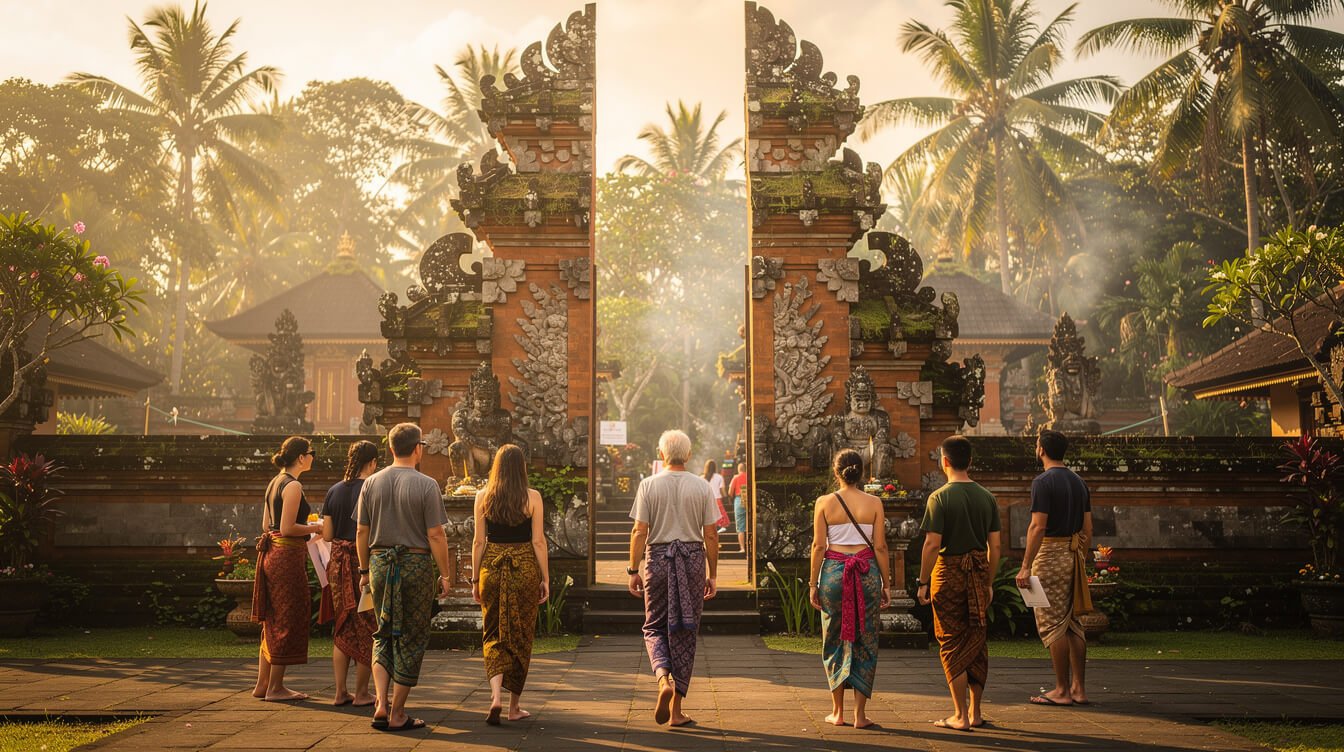
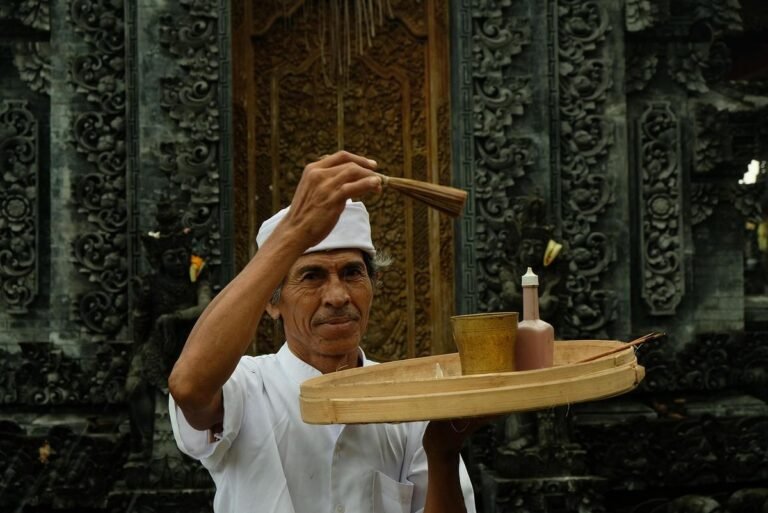
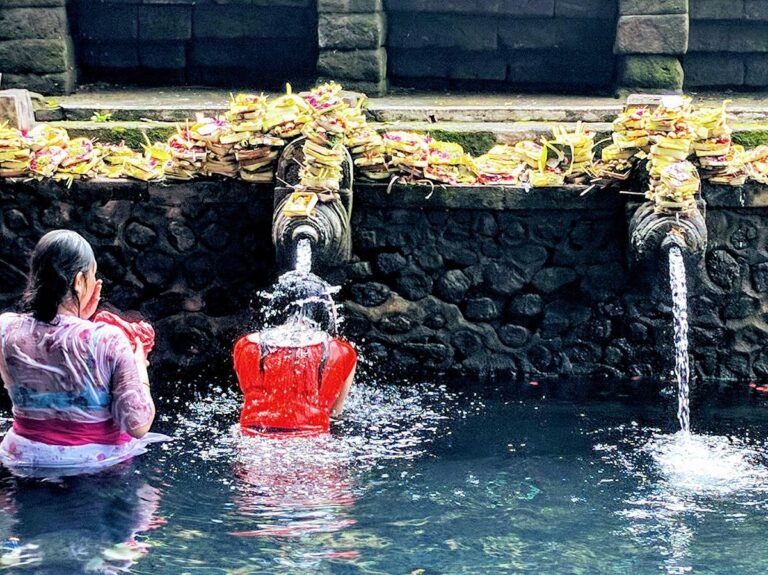
Bali is a Hindu island in a predominantly Muslim country, and religion is woven into every aspect of daily life. You’ll see it in the small flower-and-incense offerings (canang sari) placed on doorsteps, sidewalks, and car dashboards every morning. You’ll hear it in the gamelan music drifting from village temples during ceremonies. Understanding and respecting these traditions is one of the most important bali travel tips you’ll receive.
What to wear at temples
Every temple visit requires a sarong and sash. Most major temples provide loaners, but carrying your own is better — you can buy a beautiful handmade sarong at Ubud Market for 50,000-100,000 IDR. Both men and women must cover their knees and shoulders. No tank tops, shorts, or revealing clothing.
During menstruation, women are respectfully asked not to enter temple grounds. This isn’t a judgment — it’s part of Balinese Hindu belief about ritual purity. Signs at most temples mention this rule.
Ceremony days and Nyepi
Bali’s calendar is full of ceremony days. Galungan (celebrating the victory of good over evil) happens every 210 days and transforms the island — tall bamboo penjor decorations line every road, and families gather at ancestral temples. Nyepi (Day of Silence, usually in March) shuts down the entire island for 24 hours: no flights, no driving, no lights, no leaving your accommodation. It’s extraordinary to experience, but you must be prepared.
Smaller village ceremonies happen almost daily. If you encounter a procession on the road — men in white, women balancing towering fruit offerings on their heads, gamelan musicians playing — pull over, wait respectfully, and enjoy one of the most authentic moments Bali offers.
Daily offerings and sacred spaces
Those small palm-leaf trays with flowers, incense, and rice that you see everywhere? Those are canang sari — daily offerings to the gods. Never step on them. Walk around them. This is the single most-repeated piece of cultural advice for Bali, and it matters. The woman who made that offering spent her morning preparing it, and each one carries a prayer.
What to Eat in Bali: A First-Timer’s Food Guide
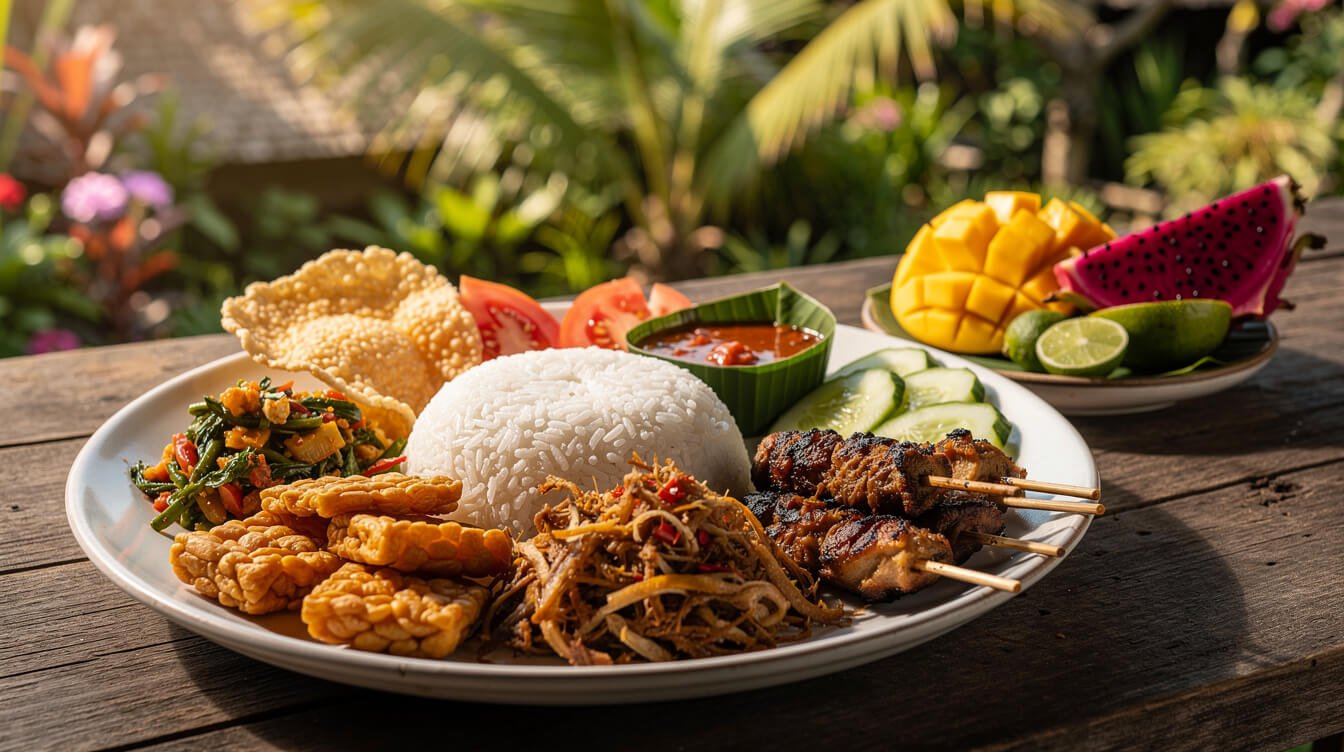
Balinese food is its own world — distinct from the rest of Indonesia and deeply tied to the island’s Hindu culture. Here’s what to eat and where to find it.
Must-try Balinese dishes
Nasi Campur — the essential Bali plate. Steamed rice with small portions of different dishes: sautéed vegetables, shredded chicken, sambal, peanuts, fried tempeh, and a small serving of lawar (a mixed vegetable-and-coconut dish). Every warung makes it differently. Price: 25,000-40,000 IDR at a local warung.
Babi Guling — Bali’s famous spit-roasted suckling pig. The best versions have crispy skin, tender meat, and a complex spice paste (bumbu) that’s been marinated overnight. Ibu Oka in Ubud is the most famous, but locals will tell you their neighborhood’s version is better. Try both.
Sate Lilit — minced meat (fish, chicken, or pork) mixed with grated coconut, lime leaves, and spices, then wrapped around a lemongrass stalk and grilled. Unlike the skewered satay you’ll find in the rest of Southeast Asia, sate lilit is distinctly Balinese.
Lawar — a traditional mix of vegetables, grated coconut, and minced meat with rich spices. Some versions include fresh blood (lawar merah). Ask before ordering if that’s not your thing.
Where to eat
Warungs are your best value. These small family-run restaurants serve the most authentic food at the lowest prices — 20,000-50,000 IDR for a full meal. In Ubud, look for warungs away from the main tourist streets. The further you walk from Jalan Raya Ubud, the better the food and the lower the prices.
For a special dinner, Ubud’s restaurant scene is extraordinary. Locavore (fine dining with local ingredients), Mozaic (French-Balinese fusion), and Room 4 Dessert (10-course dessert tasting) all offer experiences you won’t find anywhere else. Book well in advance.
Water and food safety
Never drink tap water in Bali. This is non-negotiable. Bottled water is available everywhere for 3,000-5,000 IDR. Use it for brushing teeth too. Ice in restaurants is generally safe (it’s commercially produced), but ice from market stalls may not be.
Street food is generally safe if the stall is busy — high turnover means fresh cooking. If your stomach is sensitive, start with cooked dishes and add raw items gradually over your first few days. Many travelers carry basic electrolyte sachets and activated charcoal tablets as insurance.
Understanding Ubud: Bali’s Cultural Heart
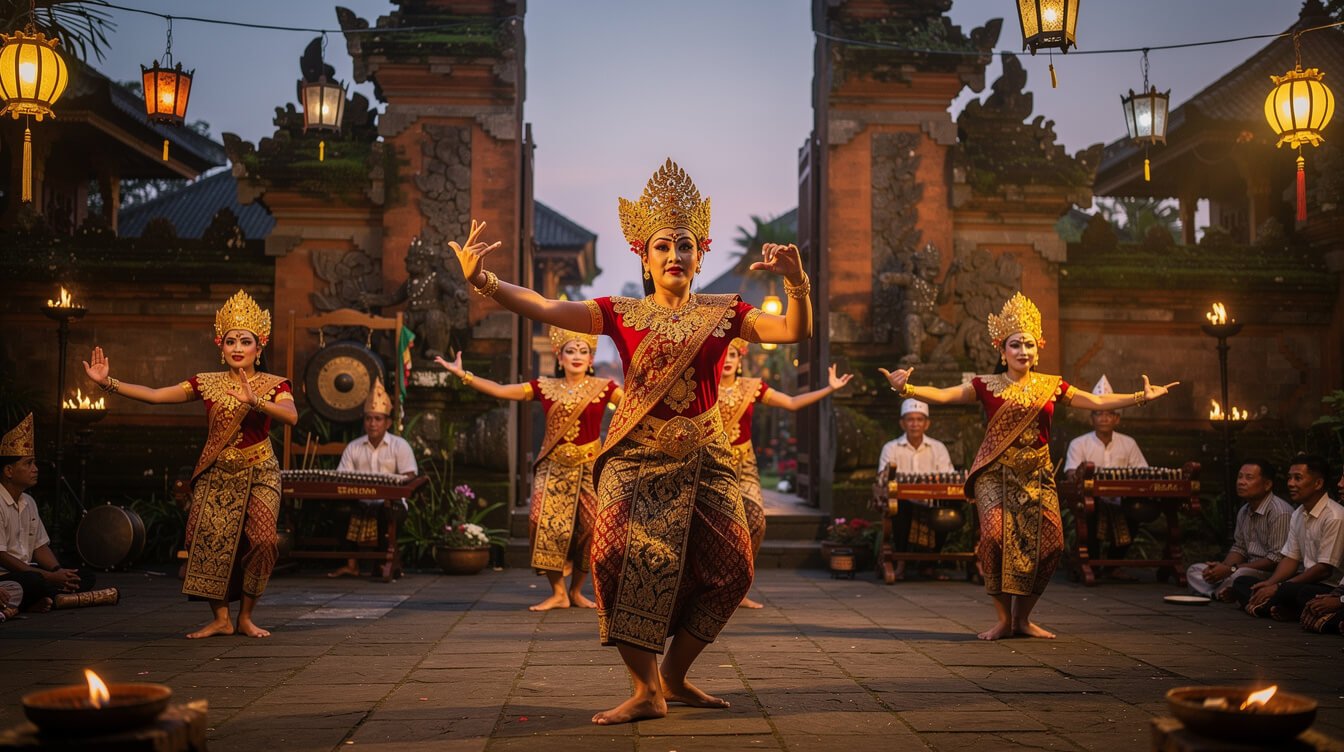
Most bali travel tips focus on the beach areas — Seminyak, Canggu, Kuta. But Ubud, an hour north in the foothills, is where Bali’s cultural heartbeat is loudest. It’s where you’ll find the rice terraces, the traditional dance performances, the artisan workshops, and the slower pace that drew travelers here long before the beach clubs arrived.
What makes Ubud different
Ubud sits at roughly 200 meters elevation, surrounded by river valleys and rice paddies. The air is cooler than the coast — noticeably so in the morning. You’ll wake to the sound of roosters, the distant chime of temple bells, and the gardener clipping frangipani for the morning offerings. It’s a different Bali entirely from the beach strip.
The town itself is walkable — central Ubud covers about 2 square kilometers. But “greater Ubud” includes the surrounding villages of Penestanan, Campuhan, Tegallalang, and Mas, each with their own character. Many of the best accommodations, restaurants, and experiences sit outside the central buzz.
Must-do experiences in Ubud
Tegallalang Rice Terraces — the most photographed landscape in Bali, and genuinely worth visiting despite the crowds. Go early (before 8 AM) to beat the tour buses. If you want a quieter rice terrace experience, try the Jatiluwih terraces, a UNESCO World Heritage site about 90 minutes from Ubud.
Ubud Monkey Forest — a sacred natural reserve and temple complex with over 1,000 long-tailed macaques. Keep your sunglasses, water bottles, and anything shiny secured. The monkeys are clever and fast.
Traditional dance performances — Ubud hosts nightly dance performances at various temple venues. The Kecak fire dance at Uluwatu (sunset show) is iconic, but the Legong and Barong dances at Ubud’s Pura Dalem Taman Kaja are equally mesmerizing and far less crowded. Tickets cost 80,000-100,000 IDR.
Morning market — Ubud Market runs two sessions. The local produce market starts before dawn and wraps by 8 AM — this is where Balinese cooks buy their morning ingredients. The tourist market opens around 8 AM with textiles, carvings, and souvenirs. See both if you can.
For a comprehensive Ubud itinerary, our 7-day Bali itinerary breaks down day-by-day suggestions, including quiet corners most visitors miss.

Stay at Villa Amrita in Ubud
Three bedrooms, private pool, full staff — chef, housekeeper, villa manager. Your Ubud home base, held for you.
Bali Travel Tips for Choosing Your Accommodation

Where you stay shapes your entire Bali experience. The island’s accommodation ranges from $10/night guesthouses to $2,000/night cliff-edge resorts, and the right choice depends entirely on what kind of trip you’re building.
Hotels and resorts vs. private villas
Most first-time visitors default to hotels. They’re familiar, predictable, and easy to book. But Bali’s real accommodation strength — the thing that sets it apart from every other destination in Southeast Asia — is the private villa.
A staffed private villa gives you something a hotel never can: a team that’s entirely yours. A cook who learns your breakfast preferences by day two. A villa manager who arranges your day trips, recommends the restaurant the guidebooks don’t know about, and sorts out logistics so you never have to. A gardener who clips fresh flowers for your room each morning because that’s just what he does.
This is what makes a Bali villa stay fundamentally different from a hotel room — it’s not about the square footage or the private pool (though those are wonderful). It’s about having people who are genuinely invested in your experience. If you’re traveling with family, a group of friends, or as a couple wanting privacy and personal attention, a villa with a private chef in Bali transforms a vacation into something you’ll talk about for years.
Where to base yourself
Ubud — for culture, rice terraces, yoga, and quiet. Cooler temperatures. Best for: couples, families, wellness seekers, creatives, anyone wanting to slow down.
Seminyak/Canggu — for beaches, surf, nightlife, and cafes. Best for: young travelers, digital nomads, beach lovers, social travelers.
Uluwatu — for dramatic cliffs, world-class surf, and upscale beach clubs. Best for: surfers, honeymooners, luxury travelers.
Sanur — for a quiet beach town with calm waters and a village feel. Best for: families with young children, older travelers, anyone avoiding the Seminyak buzz.
For a complete breakdown of Ubud’s neighborhoods, our guide to where to stay in Ubud covers everything from the artistic hillside of Penestanan to the quieter rice-field villages south of town.
Booking tips
Book accommodation at least 2-3 months ahead for peak season (July-August and December-January). Shoulder season (April-May, September-October) offers the best value — lower prices, fewer crowds, and the landscape is lush from recent rains.
When booking a villa, book direct through the villa’s own website whenever possible. You’ll typically get better rates than OTA platforms, and you can communicate directly with the team about dietary needs, airport transfers, and special requests before you arrive. The best accommodation in Bali operates on relationships, not transactions.
Frequently Asked Questions About Bali Travel

Is Bali safe for first-time travelers?
Yes. Bali is one of the safest destinations in Southeast Asia. Violent crime against tourists is extremely rare. The main risks are petty theft (keep valuables secured at the beach), traffic accidents (especially on scooters), and the occasional tourist scam (inflated prices at markets, unlicensed money changers). Use common sense, don’t flash expensive jewelry, and you’ll be fine.
How many days do you need in Bali?
A minimum of 7 days to see Ubud and one beach area properly. 10-14 days is ideal for a first trip that includes cultural sites, beach time, and a few day trips. Our 10-day Bali itinerary shows how to structure a trip that covers Ubud, the southern beaches, and the eastern coast without feeling rushed.
What’s the best time to visit Bali?
Dry season (May-September) offers the most consistent weather. But Bali’s “wet season” (October-April) is underrated — the rain usually comes in short afternoon bursts, prices are 30-50% lower, the rice terraces are at their greenest, and you’ll have temples and trails largely to yourself. Many repeat visitors prefer it.
Do I need vaccinations for Bali?
No specific vaccinations are required for entry. However, the CDC recommends being up to date on routine vaccinations and considering Hepatitis A, Typhoid, and Japanese Encephalitis for longer stays or rural travel. Dengue fever is present in Bali — bring DEET-based mosquito repellent and use it religiously, especially at dawn and dusk.
Can I use my phone in Bali?
Yes, but international roaming is expensive. Buy a local SIM card at the airport — Telkomsel (the largest carrier) offers tourist packages with generous data allowances for around 100,000-200,000 IDR. WiFi is available at most accommodations and cafes, but cellular data is essential for ride-hailing apps and maps when you’re out exploring.
What should I pack for Bali?
Light, breathable clothing (cotton and linen work best), a sarong for temple visits, reef-safe sunscreen, mosquito repellent with DEET, a light rain jacket or umbrella, comfortable walking shoes for rice terrace treks, and sandals for daily wear. Leave the heavy jeans and formal wear at home — Bali is casual, even at nice restaurants.
Final Thoughts: Your Bali Trip Starts Now
The best bali travel tips all point in the same direction: prepare practically, but leave room for the unexpected. Book your visa online before you fly. Carry cash in small denominations. Learn to say “terima kasih” (thank you) and “permisi” (excuse me). Wear a sarong at temples. Eat at warungs. Stay somewhere with people who care about your experience.
Bali rewards the traveler who arrives with an open mind and a willingness to slow down. The rice terraces look different in the rain than the sun. The temple ceremonies hit differently when you understand what they mean. The food tastes better when someone’s grandmother made it in a kitchen behind a warung.
And when you find the right place to stay — a place where the staff knows your name by dinner, where the chef asks what you’d like for breakfast tomorrow, where the pool catches the morning light and the garden smells like jasmine and wet earth — you’ll understand what it means to be held by a place rather than just visiting it.
That’s Bali at its best. And it’s waiting for you.

Join Our Newsletter — Fresh Bali News and Travel Ideas
Ubud stories, travel tips, and villa updates — delivered to your inbox. No spam, just genuine Bali.