Bali Yoga Teacher Training: Your Complete Guide to Choosing a Program and Where to Stay
You’ve probably already scrolled through a dozen program pages — the same beach shots, the same “life-changing” promises, the same 200-hour certificates photographed on the same wooden decks. What none of them tell you is what actually shapes a Bali yoga teacher training experience day to day: not the curriculum alone, but where you sleep, what you eat, and whether your body has anywhere quiet to recover between sessions. This is the guide the school directories skip.
Bali Yoga Teacher Training: What You Need to Know Before You Commit
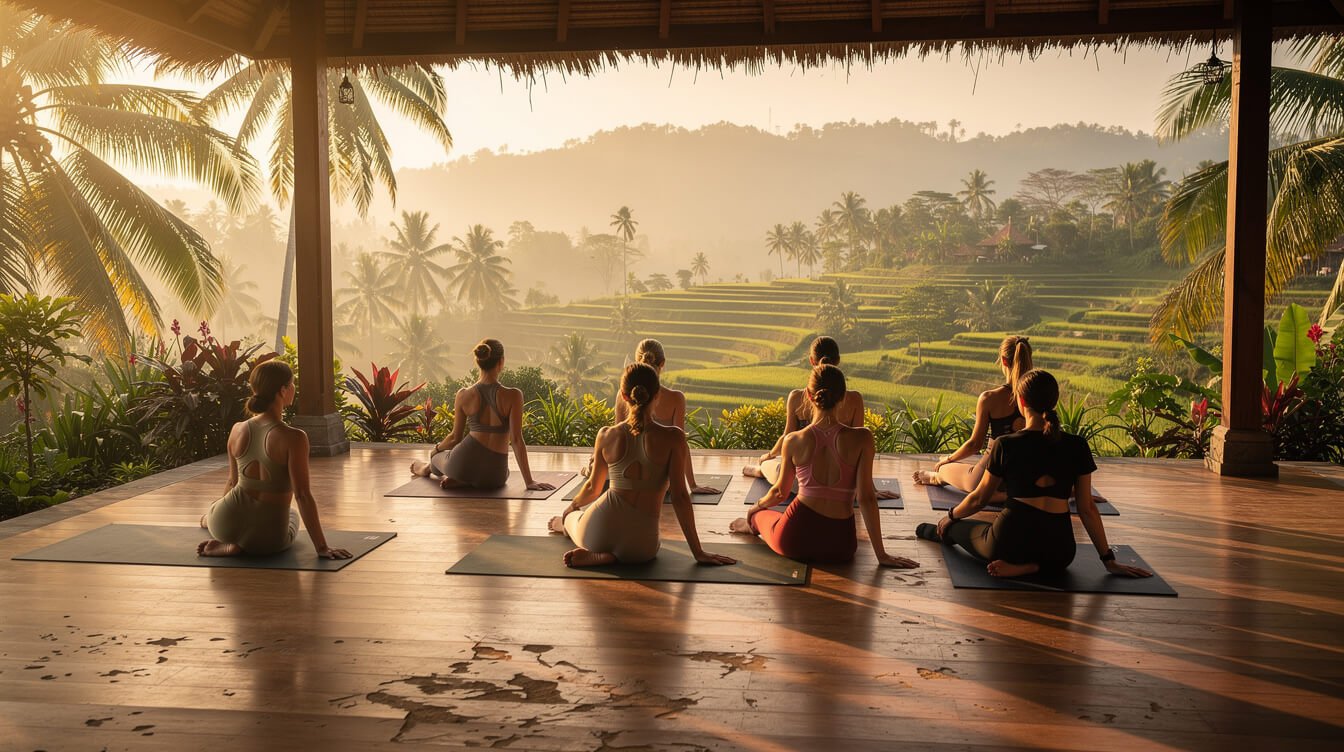
Bali has become the default answer to “where should I do my YTT” for a reason — the island has a genuine, decades-deep yoga culture, not an imported one, and Ubud in particular sits at its center. But “doing YTT in Bali” covers an enormous range of experiences, from 40-person dormitory-style trainings on the beach in Canggu to intimate six-person intensives tucked into the rice terraces above Ubud.
Before you commit, get clear on the fundamentals: is the program Yoga Alliance registered at the level you need (200-hour, 300-hour, or the full 500-hour path)? What’s the daily schedule — two sessions a day, or four? Is accommodation included in the tuition, or are you sourcing your own? That last question matters more than most applicants realize, and it’s the one this guide spends the most time on, because where you rest between sessions determines whether you finish the month able to teach — or just able to survive.
Most programs run 21 to 28 days. That’s long enough for your body to genuinely change, and long enough for a bad living situation to genuinely wear you down. Treat the accommodation question with the same seriousness you’d give the curriculum. And if you’re still weighing a full teacher training against something gentler, our guide to a yoga retreat in Bali lays out how the two experiences actually differ.
How to Choose the Right YTT Program in Bali (Beyond the Instagram Photos)
Every program’s marketing looks similar: golden hour, a row of mats, a teacher mid-pose against jungle green. What separates a program that will actually serve you from one that will just photograph well is harder to see from a landing page.
There’s a logistics layer worth sorting early too. Most trainees enter Indonesia on a visa-on-arrival or an extended social/culture visa depending on length of stay — check your program’s start and end dates against current requirements well before you book flights, since visa runs mid-training eat into days you’d rather spend recovering. It’s a small administrative task that’s easy to leave until the last week, and the worst possible week to be dealing with immigration paperwork is the one right before your final assessment.
Ask about teacher-to-student ratio directly — a 1:15 ratio means you’ll get corrected maybe twice in a month; 1:6 means daily, individual feedback. Ask what happens on rest days: some programs schedule none, treating 28 straight days of two-a-days as a badge of intensity rather than a recipe for injury. Ask how assessment works — is certification automatic on completion, or does it require demonstrated teaching competency? The honest programs will tell you plainly. The ones dodging the question are worth a second look.
Curriculum lineage matters too. Ashtanga-rooted programs, Hatha-Vinyasa hybrids, and yin-focused trainings produce meaningfully different teachers. If you already know the style you want to teach, choose the lineage before you choose the location — then work backward to find where that specific training happens to run in Bali. If you’re still deciding, sitting in on a single class with a prospective lead teacher, in person or via a recorded sample, tells you more than any syllabus PDF.
One filter worth applying that rarely appears in review sites: does the program’s structure leave room for you to actually process what you’re learning, or is every waking hour scheduled? Integration needs unstructured time. Build that expectation in before you sign the deposit.
It’s also worth talking to alumni directly rather than relying on the testimonials a program chooses to publish. Most schools will connect you with a recent graduate if you ask — and the answer to “what would you change” tells you more in five minutes than the entire marketing site.
Where to Stay During Your Bali Yoga Teacher Training
This is the part almost nothing online addresses honestly. Most YTT tuition either bundles you into shared dormitory housing on the training compound, or leaves you to sort your own accommodation from a spreadsheet of guesthouses you’ve never seen. Neither option was built with a month-long, physically demanding month in mind.
Shared dorm housing means shared sleep schedules — someone’s 5 AM alarm becomes everyone’s 5 AM. Guesthouse hopping means starting each week in unfamiliar surroundings, hauling your gear between neighborhoods, never quite settling into a rhythm. Both erode the one resource a YTT month actually runs on: consistent, protected rest.
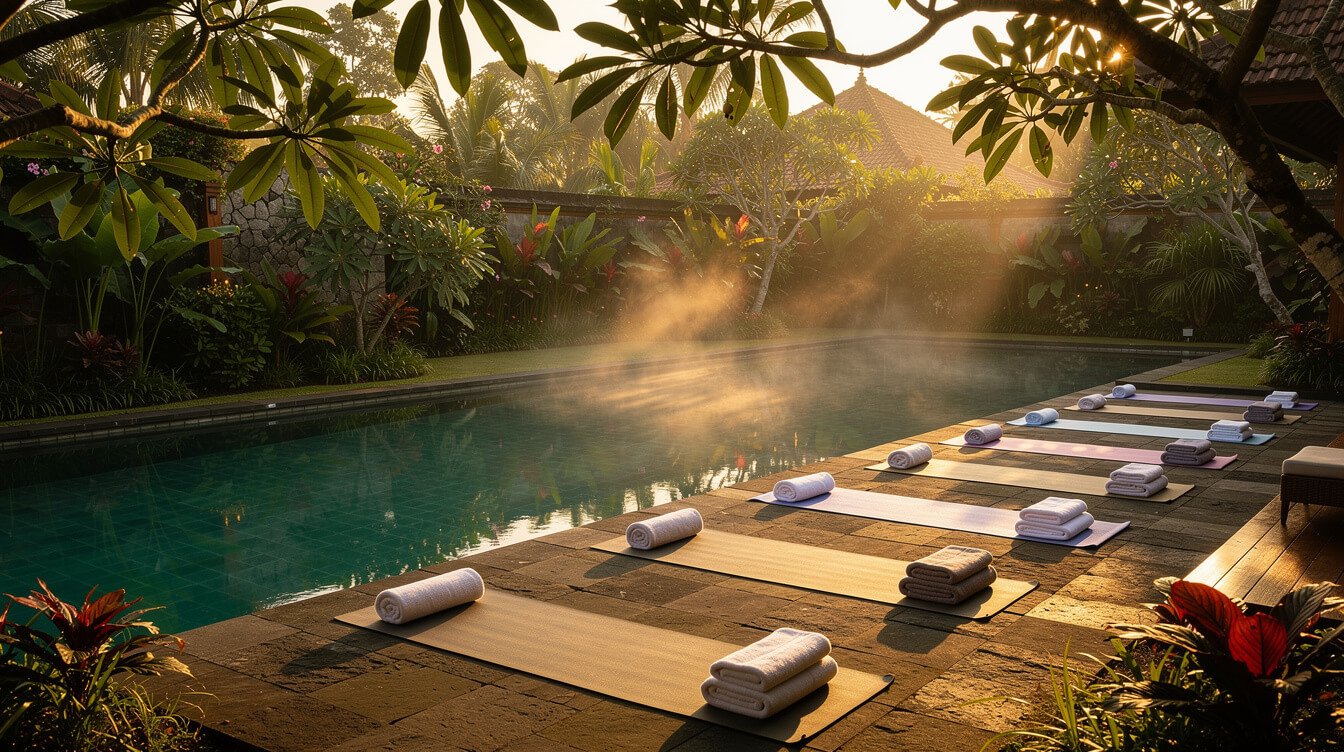
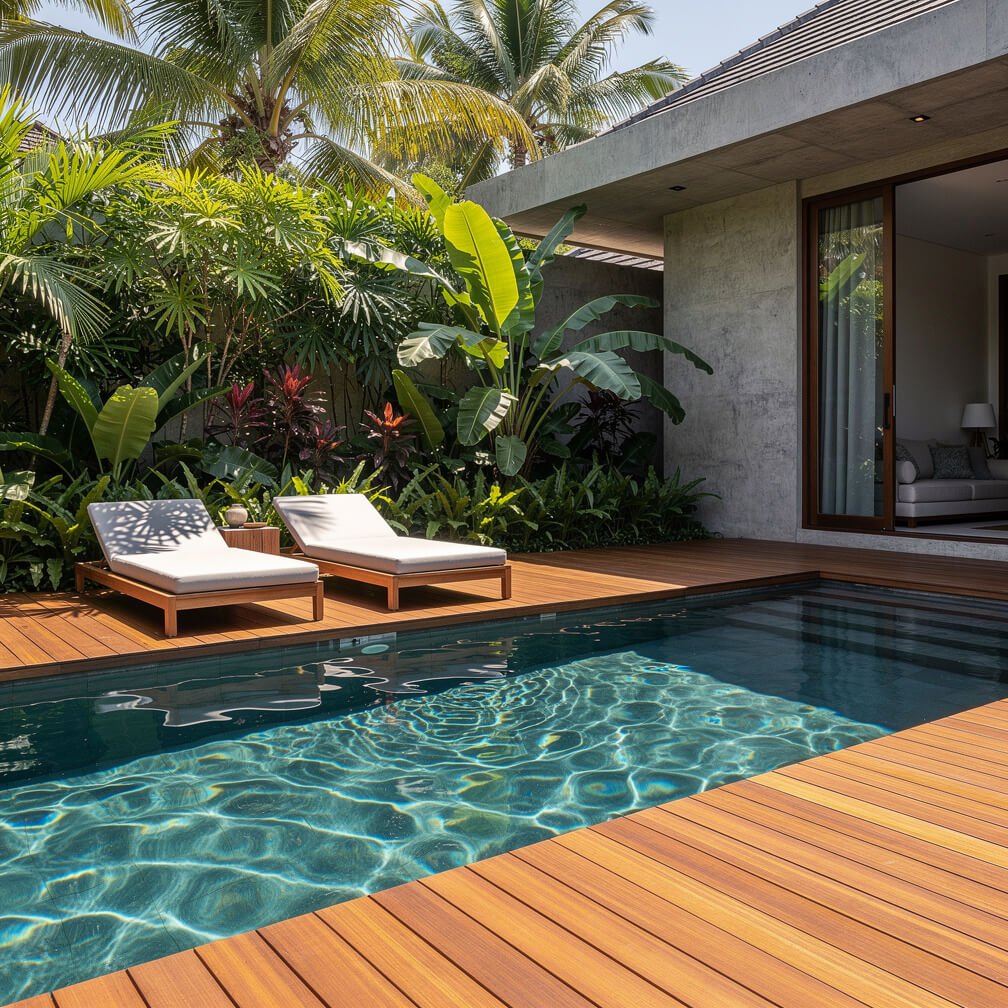
A small cohort — four to six trainees — based together in a private villa changes the math entirely. You keep your own room. You share a kitchen a chef is actually running, not a hot plate in a hallway. You have a pool to drop into after a two-hour backbend clinic instead of a shared bathroom queue. And critically, you have somewhere quiet to be when the group energy of an intensive training gets to be too much — because a month of constant proximity to strangers, however lovely, asks something of you that no syllabus mentions.
If your program doesn’t include housing, or includes housing you’re not sold on, it’s worth pricing out a private villa split across your cohort before defaulting to the guesthouse list your school hands you. The math is often closer than people expect once you count meals — see our breakdown of what a villa with a private chef in Bali actually costs per person once catering is included.
Get a free 3-day sample itinerary
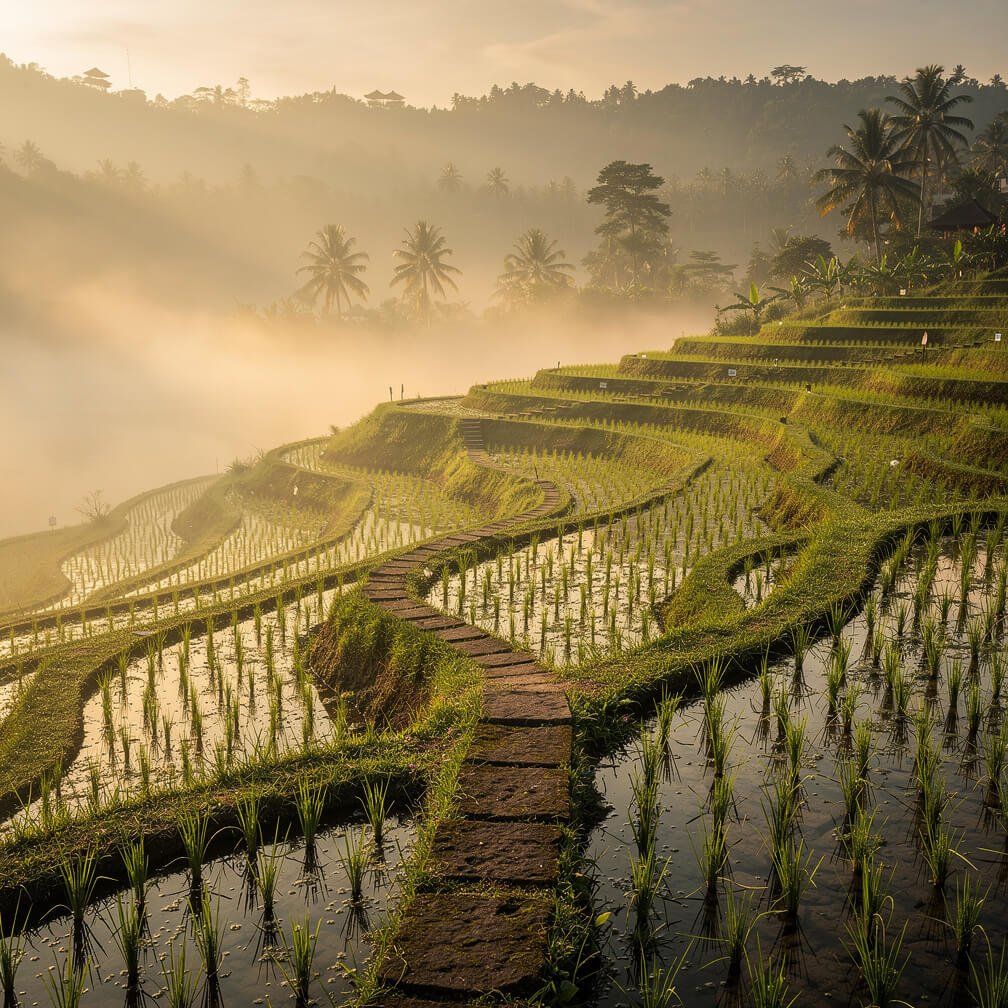
Not sure what to do with your days off between sessions? Tell us your training dates and we’ll send a slow, sensible 3-day Ubud itinerary built around real rest.
What a Typical Day During Bali YTT Actually Looks Like
Mornings start early — most programs open with a 6 or 6:30 AM practice, before the heat sets in and before the day’s theory blocks begin. If you’re staying somewhere with a kitchen and someone in it, this is where it shows: fresh fruit and coffee waiting rather than a scramble to find something open before sunrise.
The middle of the day is usually theory-heavy — anatomy, philosophy, teaching methodology — often the part trainees underestimate before arriving. Your body might be tired, but your mind needs to be sharp for three or four hours of dense material. This is exactly the stretch where sleep quality from the night before shows up as the difference between absorbing the lecture and staring blankly at your notebook.
Afternoons typically bring a second practice, often more advanced or adjustment-focused, followed by a block of free time before dinner. What you do with that free time matters more than people expect going in. Trainees who have a pool to float in, a hammock, a quiet corner that isn’t a shared dorm bed, consistently report finishing the month steadier than those without anywhere private to land.
Evenings vary — some programs run a final gentle session or restorative class, others leave the evening open entirely. Either way, by day ten or so, the cumulative fatigue is real. Plan your month assuming you’ll need somewhere genuinely restful, not just somewhere to sleep.
The True Cost of Yoga Teacher Training in Bali (Beyond Tuition)
Tuition is the number every program advertises, and it’s rarely the full picture. A realistic 200-hour budget in Bali needs to account for accommodation (whether bundled or separate), meals outside what’s provided, laundry (you’ll go through more activewear than you think), local transport to and from the training space if you’re not staying on-site, and a buffer for the inevitable extra treatment — a massage, a physio visit — your body will ask for by week three.
Shared dorm-style accommodation bundled into tuition tends to be the cheapest headline number, but often pushes hidden costs into meals and transport once you factor in how far training compounds can sit from anywhere to eat well. Independent guesthouse bookings give you more control but add planning overhead during a month when you have very little spare bandwidth to plan anything.
A private villa split across a small cohort sits in an interesting middle position: per-person cost is often comparable to a mid-range guesthouse once you split it four or six ways, but it includes a chef handling meals, someone managing the household logistics, and a pool and garden you’re not sharing with forty other trainees. For groups who value their time and energy during an already demanding month, that trade is frequently worth the modest premium.
Whatever path you choose, ask your program directly for a full cost breakdown — not just tuition — before you commit. The honest ones will give you one without hesitation.
As a rough frame: budget tuition plus 30-40% for a realistic month once accommodation, meals not covered by your program, laundry, local transport, and one or two treatments are counted. It’s rarely the number on the landing page, but it’s the number that actually determines whether you finish the month rested or running on fumes.
Recovery and Self-Care During Intensive YTT (Your Body Will Thank You)
Two practices a day for three or four weeks is a genuine physical load, even for experienced practitioners. Overuse injuries — wrists, lower backs, hamstrings — are common enough in YTT cohorts that most lead teachers expect to see at least a few by the halfway mark. The trainees who avoid them tend to share one habit: they protect recovery time as seriously as they protect practice time.
That means real sleep, not compressed sleep squeezed between social time and homework. It means somewhere to ice a tight shoulder or float weight off a sore lower back — a pool does real, simple work here. It means food that actually supports repair, not just what’s convenient at 9 PM after a long day. And it means permission to skip a session when your body is asking you to, without guilt, without falling behind — the programs worth choosing build that flexibility in.
Made, our chef, has cooked for enough wellness groups moving through Ubud to know the pattern by week two: appetites shift, energy dips at odd hours, and small, frequent, nutrient-dense meals do more good than three big ones. It’s a small thing that adds up over a month. Trainees on lighter, more meditative weeks often tell us it feels closer to a meditation retreat in Bali than a training block — which is exactly the balance a good rest day should strike.
If you’re evaluating where to stay, ask plainly whether there’s a pool, whether the kitchen can flex to your training schedule, and whether your room is actually quiet. These aren’t luxuries for a YTT month — they’re the infrastructure recovery runs on.
A massage or two mid-training isn’t indulgence, either — it’s maintenance. Ubud has a genuine, long-standing tradition of Balinese massage and healing practice, distinct from the spa-menu version sold to day-trippers, and a good therapist who knows what a month of backbends does to a lower back is worth seeking out around week two, before soreness becomes something that actually limits your practice.
Book the Villa
Running or joining a small YTT cohort? Three ensuite bedrooms, a chef, and a garden that’s just yours for the month — see dates and hold the villa for your training group.
Frequently Asked Questions About Bali Yoga Teacher Training
How much does yoga teacher training in Bali cost?
200-hour programs typically run from around $1,800 to $3,500 for tuition alone, depending on school reputation, lineage, and whether basic accommodation is bundled in. Add accommodation, meals, and incidentals as outlined above, and a realistic all-in month lands closer to $3,500-$6,000 for most trainees.
Do I need prior yoga experience to join a YTT in Bali?
Most 200-hour programs ask for at least six months to a year of consistent personal practice, though this varies by school. The physical demands are real — two sessions a day for three to four weeks — so arriving with some base conditioning matters more than arriving with perfect form.
Is Bali yoga teacher training worth it if I don’t plan to teach?
Frequently, yes. Many trainees complete a 200-hour program purely to deepen their own practice, with no intention of teaching a single class. The certification is a byproduct; the immersion, the daily discipline, and the community are usually the actual draw.
Can a small group book a private villa together for YTT?
Yes — this is increasingly common for cohorts of four to six who’d rather share a household than scatter across separate guesthouses. If you’re organizing a group, reach out directly with your training dates and headcount and the team will help you work out whether it fits.
Why Small-Group YTT Cohorts Are Choosing Private Villas in Ubud
We’ve hosted enough small wellness groups moving through their own training months to notice the pattern clearly: cohorts of four to six who base themselves together in a private villa finish their training differently than cohorts scattered across separate guesthouses. Not because the curriculum changes — because the surrounding conditions do.
A shared villa gives a small group its own rhythm, distinct from the wider training compound’s schedule. Early risers can have coffee on the pool deck without waking anyone. Someone who needs quiet after an intense afternoon session has a real door to close. Meals happen together, prepared by someone whose only job that day is feeding a group that’s asking a lot of their bodies. None of this replaces the training itself — but it removes the friction that otherwise eats into the energy trainees need for the syllabus. It’s the same reasoning that draws groups toward a spiritual retreat in Bali or a dedicated healing retreat in Bali rather than a hotel block — the setting is doing real work, not just providing a bed.
If you’re organizing a cohort rather than joining one — running your own YTT program, coordinating a group booking for trainees, or simply the person in your friend group who ended up holding the group chat — a three-bedroom villa built around six people, with a chef, a manager, and a garden that isn’t shared with forty strangers, is worth pricing against the dormitory default before you assume it’s out of reach. Reach out and tell the team your cohort size and training dates; we’ll help you figure out whether the math works for your group.

Join our newsletter — fun, new, exciting Bali news
A letter from Bali, every so often — what’s blooming, what’s changed in the village, what our guests keep asking about. No spam, just Ubud.