Ubud Palace Bali: A Local’s Guide to Puri Saren Agung and Its Evening Dances
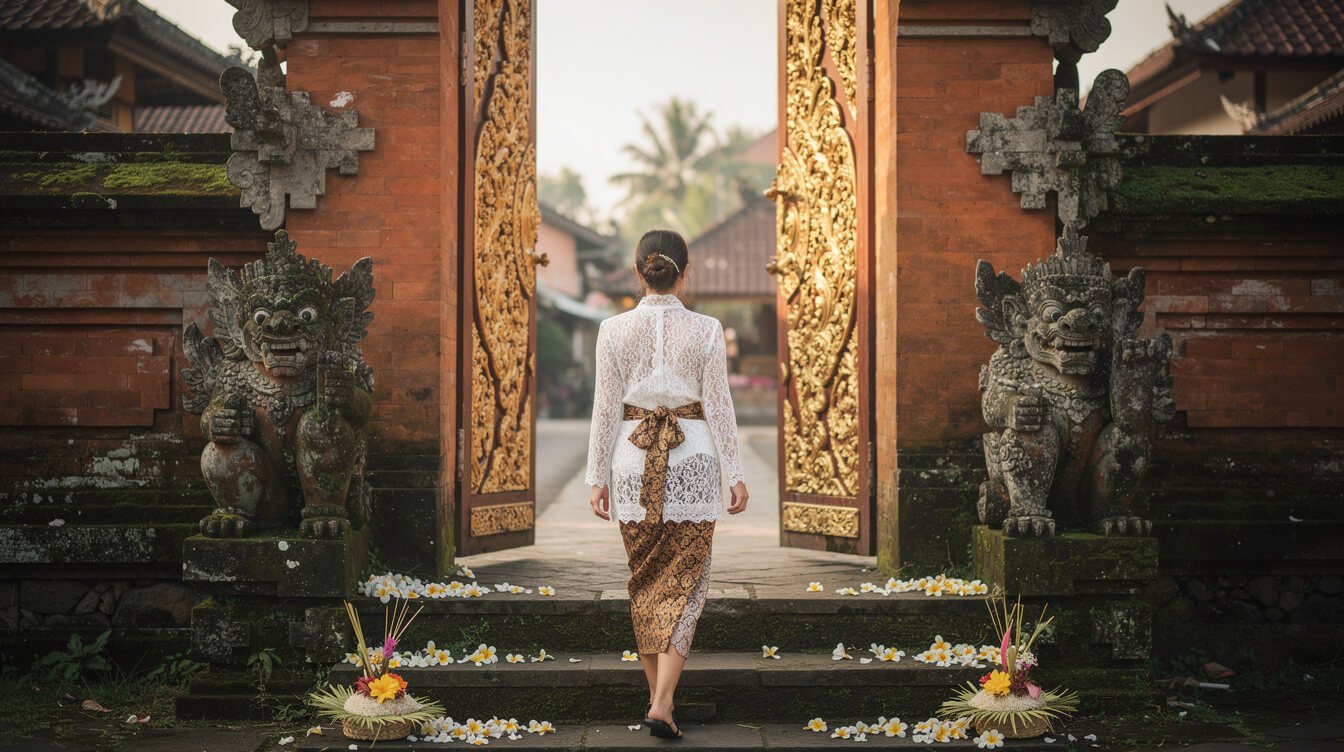
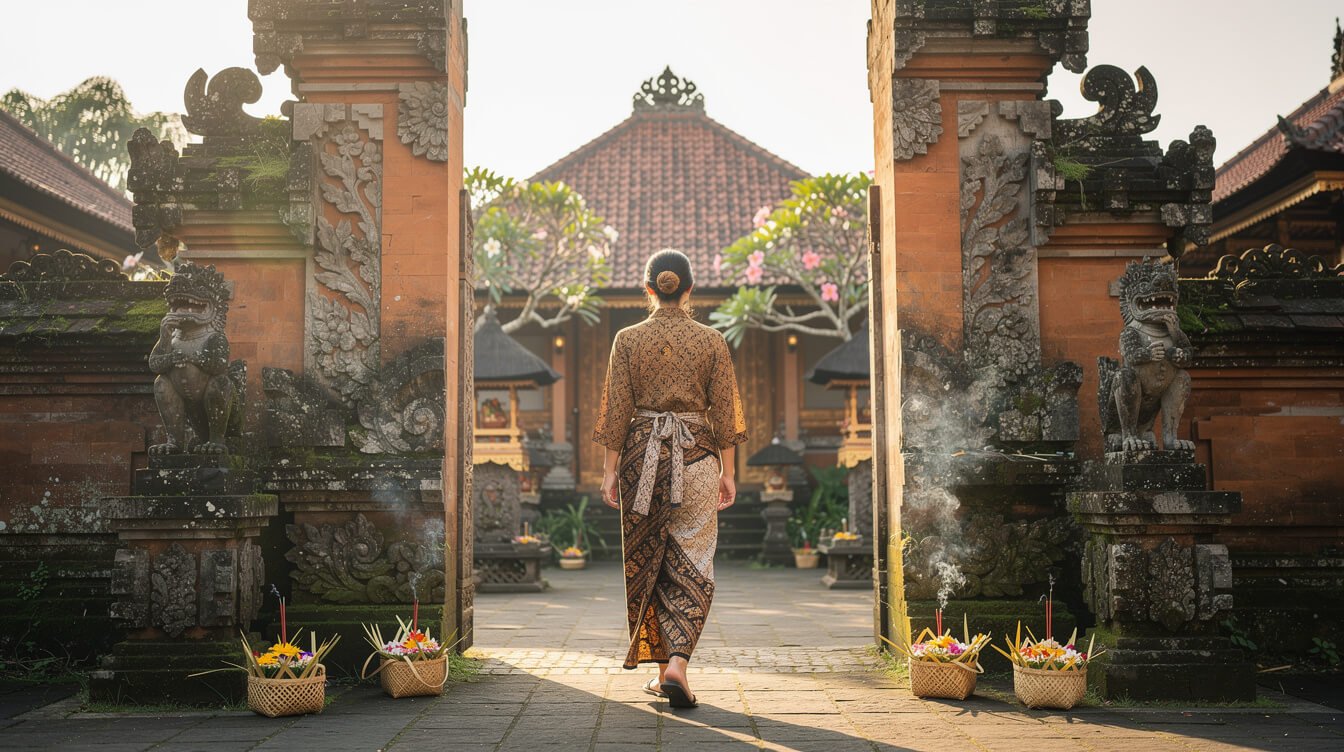
The street is still cool when you arrive. A woman in a white blouse kneels on the stone step, sets down a small square of palm leaf holding rice, a few petals and a curl of incense, and flicks water over it with a frangipani flower. Behind her rises a red-brick gate carved so densely it looks woven. Beyond the gate there are gilded doors, a frangipani tree and swept stone. This is Puri Saren Agung, the place your map calls Ubud Palace Bali. It’s the old royal heart of the town, and at seven in the morning you’ll likely have it almost to yourself.
Most guides to Ubud Palace give you the opening hours, tell you entry is free and point you toward the evening dance. That’s useful, and you’ll find all of it here. What they rarely explain is why this compound matters so much to Ubud. A family still lives here, and the palace shaped the town’s art, its ceremonies and its whole reason for drawing visitors. This guide covers the palace’s story, how to visit by day, a slow morning walk from its gates, how to choose the right night for the dance, the ceremonies that bring the whole street to a standstill, and how to make the palace part of an easy, unhurried day when you’re staying nearby.
Ubud Palace Bali: A Palace Where a Family Still Lives
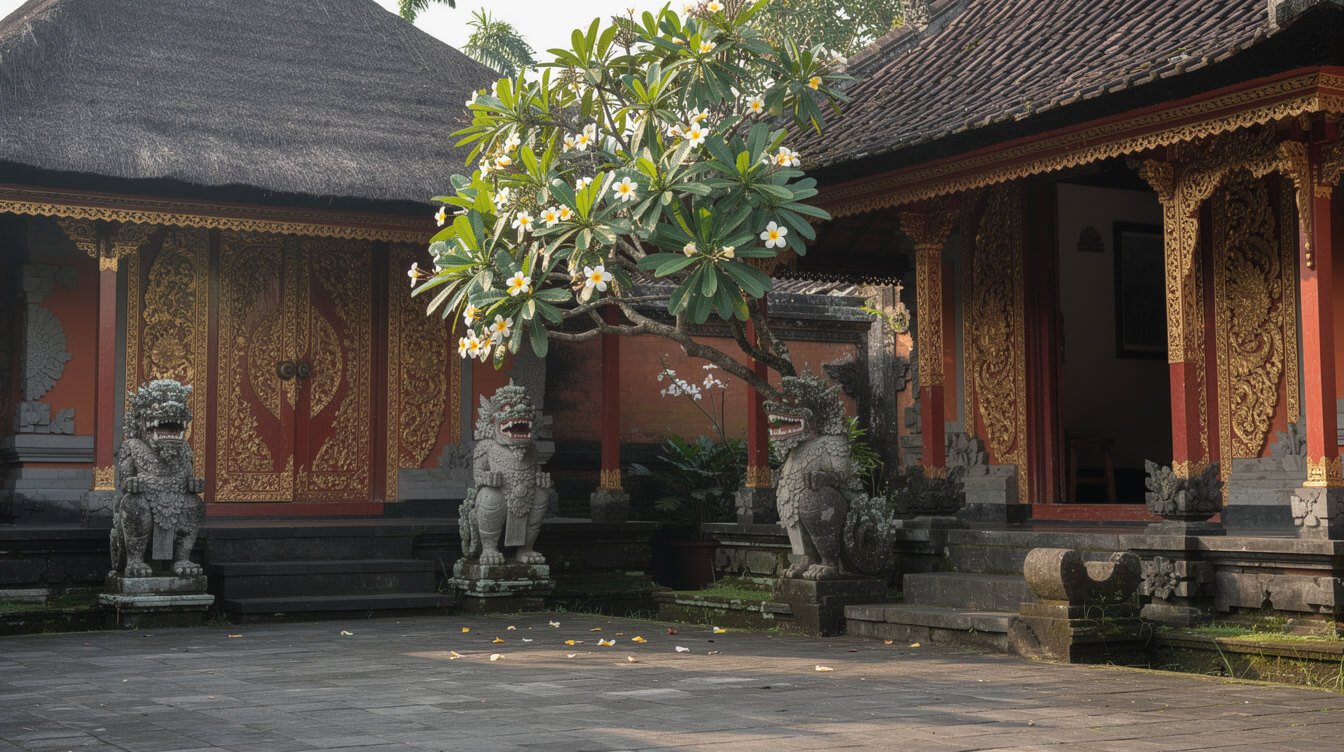
In Balinese, puri means a noble or royal residence, which is different from pura, a temple. The two can look alike, with the same carved gateways, the same tiered roofs and the same offerings on the steps, but a puri is a home. Saren Agung roughly means the great inner residence. So when people in Ubud say Puri Saren Agung, they mean the principal house of the royal family that once ruled this part of Gianyar.
That family is still here. Ubud’s royal house is the Sukawati line, and members of the family carry the title Cokorda (also written Tjokorda), a mark of their princely rank. Some online guides will tell you nobody lives in the palace anymore. That isn’t what you’ll find on the ground, or what most current local sources say. The front courtyards are open to visitors, but the inner residential compounds behind them are private homes, and you’ll see signs and closed doors marking where the public part ends.
Knowing this changes how the place feels. You aren’t walking through a museum. You’re walking through the front rooms of a family that still makes offerings here every morning, still hosts ceremonies for the whole town, and still plays a real role in village life. Seen that way, the quiet etiquette of a visit (covered shoulders, soft voices, stepping around offerings) feels less like a rule and more like simple good manners as a guest.
What you’ll actually see
The public area is compact. You’ll pass through the main gate into a series of courtyards connected by smaller carved gateways, with open-sided pavilions called bale set on raised stone platforms. Look closely at the doors and beams: red lacquer, gold leaf, demons and deities and flowering vines cut into every surface. Stone guardian figures watch each threshold. Frangipani and banyan trees shade the stone, and in the mornings you’ll often hear brooms on the paving and smell incense from the family shrines beyond the walls.
Plan on around 20 to 40 minutes for a slow walk through the open courtyards. Architecture lovers and photographers can easily spend longer, especially in the soft light just after opening.
A Short History: The Sukawati Princes, the 1930s Artists and Ubud’s Rise
“What is the history of Ubud Palace?” is one of the questions people search most, and most guides answer it in a sentence. The real story explains why Ubud became the cultural center of Bali.
A royal seat at the crossroads
Local histories trace the palace to the nineteenth century and the reign of Ida Tjokorda Putu Kandel, an early ruler of Ubud. The location was deliberate. The palace sits where the main east-west road through town crosses the route running south toward the Monkey Forest. That put the palace at the center of trade, ceremony and village politics, facing the market across the street rather than hiding behind walls in the countryside.
Much of what you see today was rebuilt in the twentieth century. A major earthquake in 1917 damaged royal and temple buildings across Bali, and Ubud’s palace was restored afterward. One name often linked with the rebuilding is I Gusti Nyoman Lempad, the remarkable artist, sculptor and architect whose carving style still defines much of Ubud’s look.
The prince who invited the artists
The figure most responsible for modern Ubud is Tjokorda Gede Agung Sukawati (1910 to 1978). In the late 1920s and 1930s he welcomed European artists to the town, most famously the German painter Walter Spies and the Dutch painter Rudolf Bonnet. Rather than simply hosting foreign visitors, the palace became a meeting point where Balinese painters, carvers, dancers and musicians traded ideas with them.
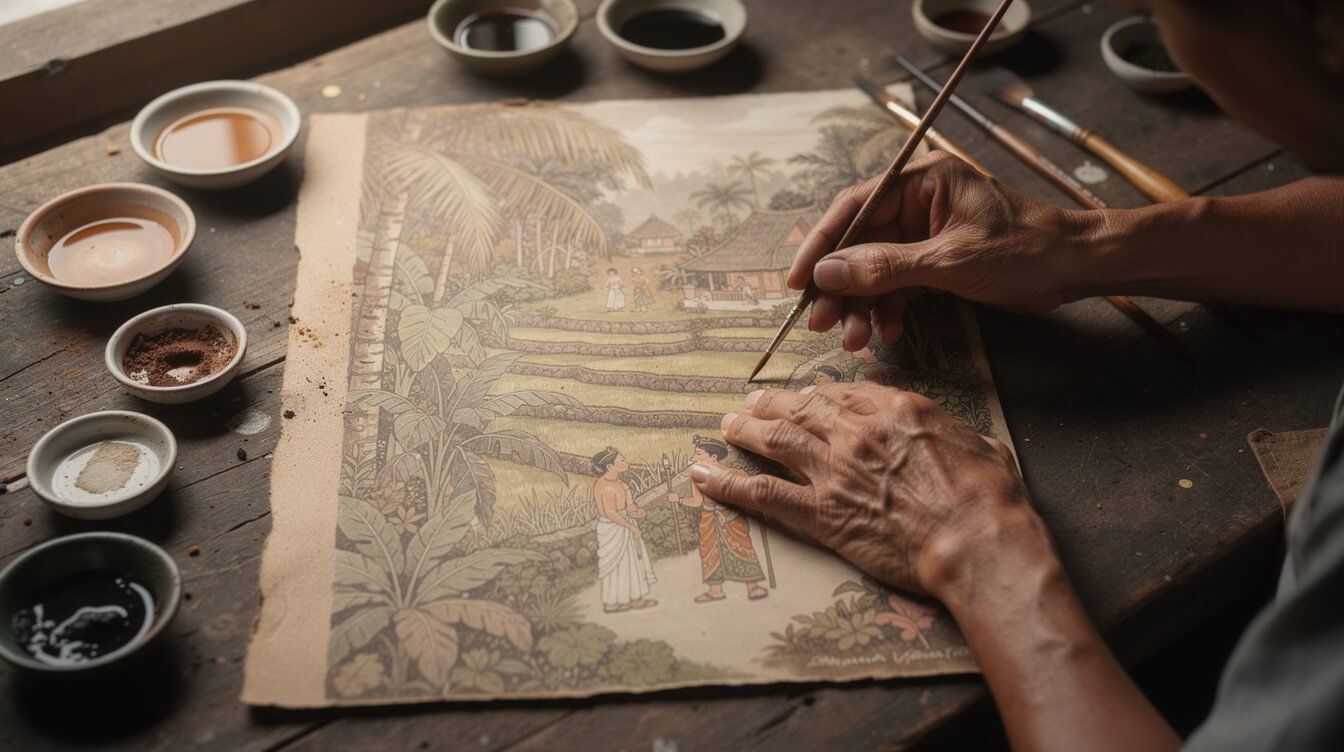
In 1936 this circle founded Pita Maha, an artists’ association that helped Balinese painters develop and sell new work. Village scenes, dense jungles and rice-field life appeared on canvas in a style that still fills Ubud’s galleries today. Later, the Sukawati family and Bonnet were among those behind the Puri Lukisan Museum, the town’s first art museum, just a short walk from the palace.
The influence reached far beyond painting. With royal patronage, Ubud’s dance troupes and gamelan orchestras flourished, and travelers started coming specifically for the arts. That is the real answer to why Ubud, a small inland town with no beach, is the place most people picture when they think of Balinese culture. It started here, in these courtyards.
If this history draws you in, you’ll find more of it across town. The temples of Ubud carry the same carving traditions, and the wider Ubud area is full of studios where the Pita Maha styles are still taught.
Get a free 3-day sample itinerary
A palace morning, a lotus temple, an evening of Legong and slow days by the pool in between. We will send you a 3-day sample itinerary for Ubud, built around the town’s own rhythm.
Visiting Ubud Palace by Day: Hours, Entry, Dress and Etiquette
The practical side is simple, which is part of the palace’s charm. Here’s what you need to know for a daytime visit in 2026. Details can shift, so treat times as typical rather than guaranteed.
Where it is
Ubud Palace sits on Jalan Raya Ubud, the main road through town, at the corner where Monkey Forest Road begins. The Ubud Art Market and the traditional market are directly across the street. If you’re in central Ubud, you can walk. From further out, a driver can drop you right at the gate, though finding parking nearby is hard at busy times.
Opening hours and entry
- Daytime hours: typically from around 7 or 8 AM until about 5 PM, every day. Published times vary slightly from source to source, so arrive at 8 AM if you want to be safe.
- Entry: free for the open courtyards. There’s no ticket booth for daytime visits.
- Evening: the courtyard reopens as a stage for the nightly dance (see below), which does need a ticket.
- Best time: the first hour after opening, before tour groups arrive and while the light is soft and low. Late afternoon is the second-best window.
What to wear
There’s no strict ticketed dress code like at some major temples, but you’re entering a sacred family home, so cover your shoulders and knees. A light shirt with sleeves and a sarong or long skirt or trousers are ideal. If you forget, sarongs are sold everywhere in the market across the road, and buying one there is a pleasant first errand of the day. If you don’t know how to tie one, the team at the villa is always happy to show you before you head out.
Etiquette that matters
- Step around offerings. The small palm-leaf trays on the ground, called canang sari, are prayers. Walk around them, never over them.
- Respect closed doors. Anything marked private, roped off or behind a closed gate is part of the family’s home.
- Keep your voice low and don’t climb on platforms, statues or shrines for photos.
- Photograph courteously. Photos of architecture are fine. If a ceremony or prayer is underway, step back and ask before photographing people.
- Women who are menstruating are traditionally asked not to enter sacred spaces in Bali. It’s a matter of local custom and personal discretion, not enforcement.
For a short read on why the offerings appear on every step in Ubud each morning, our note on canang sari offerings is a gentle introduction.
A Slow Morning Walk From Ubud Palace
The palace is best as the start of a morning rather than a stop on a tour-bus checklist. Everything below is within a few minutes’ walk, and the whole loop takes two to three relaxed hours with coffee.
1. The palace at opening (7:30 to 8:15 AM)
Walk the courtyards while the stone is still damp from the morning sweep and the incense is fresh. Watch the morning offerings being placed. This is the hour when Ubud Palace feels most like a home.
2. The traditional market across the street (8:15 to 9 AM)
Cross Jalan Raya Ubud to the market. Early in the day, the produce and offering stalls are busiest with local shoppers: piles of frangipani and marigold, banana leaves, rambutan and snakefruit, and the makings of the day’s offerings. The craft stalls open as the morning goes on. Our Ubud market guide covers what to look for and how to bargain kindly.
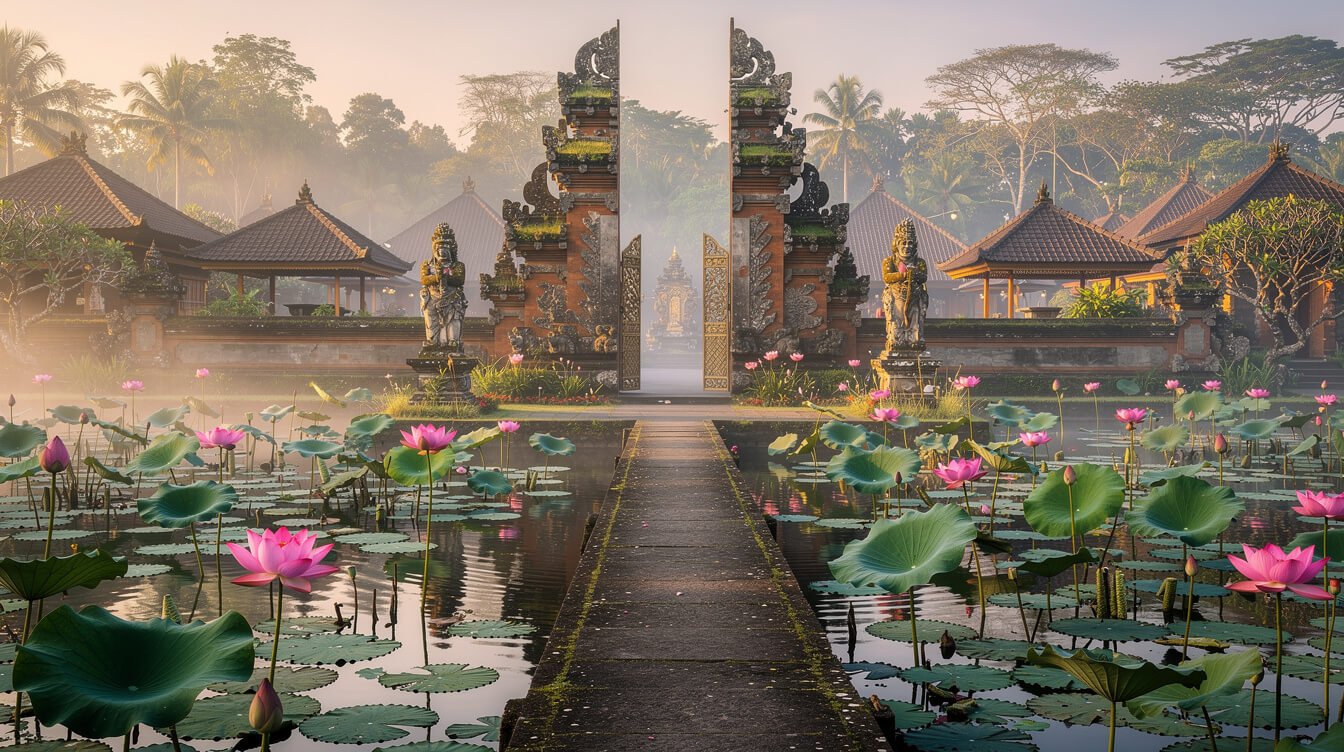
3. Pura Taman Saraswati, the lotus temple (9 to 9:30 AM)
A few minutes’ walk west along the main road brings you to Pura Taman Saraswati, a temple to the goddess of learning and the arts, fronted by ponds packed with lotus. The temple is closely tied to the royal family, and its carving is often associated with Lempad. Mornings are the best time to visit, before the lotus flowers close against the heat. Our full guide to the Ubud Water Palace has the details.
4. Coffee and a quiet lane (9:30 AM onward)
From Saraswati, wander north up Jalan Kajeng, a narrow lane whose paving stones carry inscriptions left by local families, past small homestays and family compounds. Or stay on the main road for coffee at one of the cafés overlooking the temple ponds. If you still have energy, the Puri Lukisan Museum is close by, and the Campuhan Ridge walk starts a short drive west.
By late morning the town gets hot and busy. That’s a good time to head back to the pool and save your energy for the evening.
The Evening Dances at Ubud Palace: Choosing Your Night
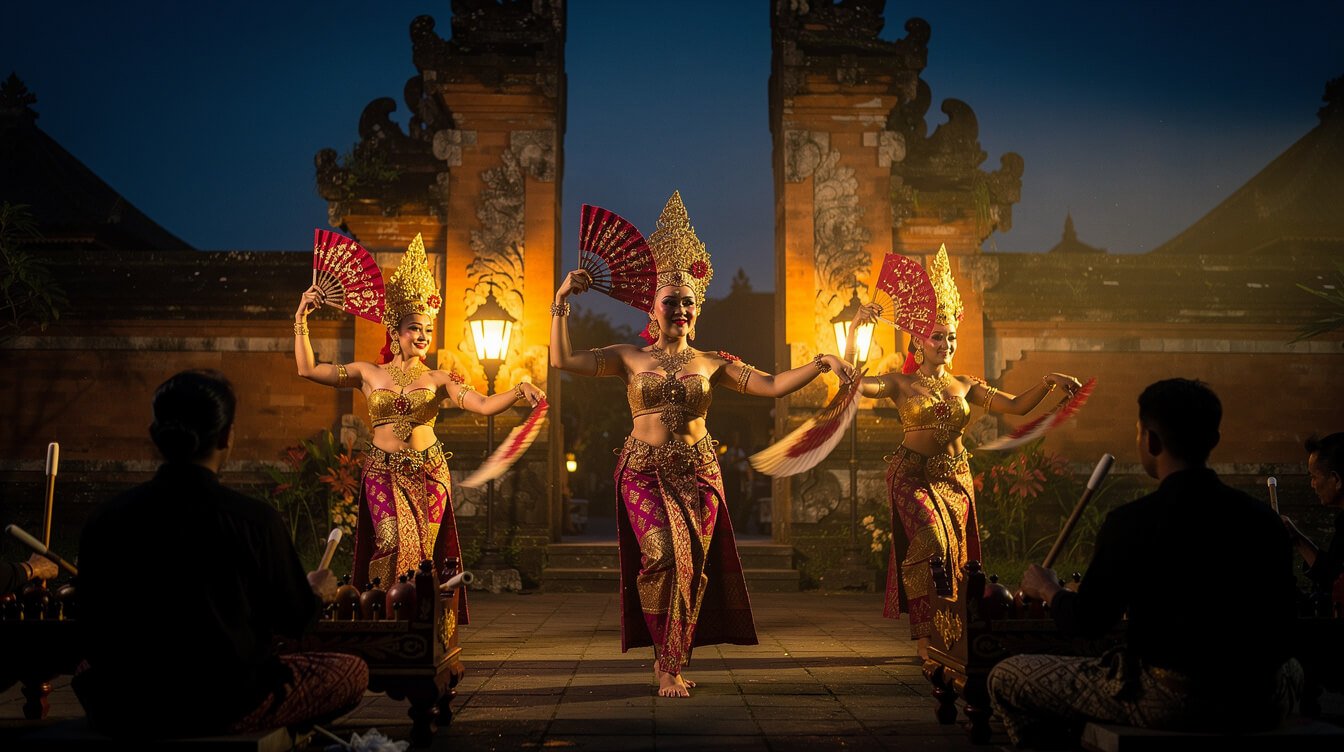
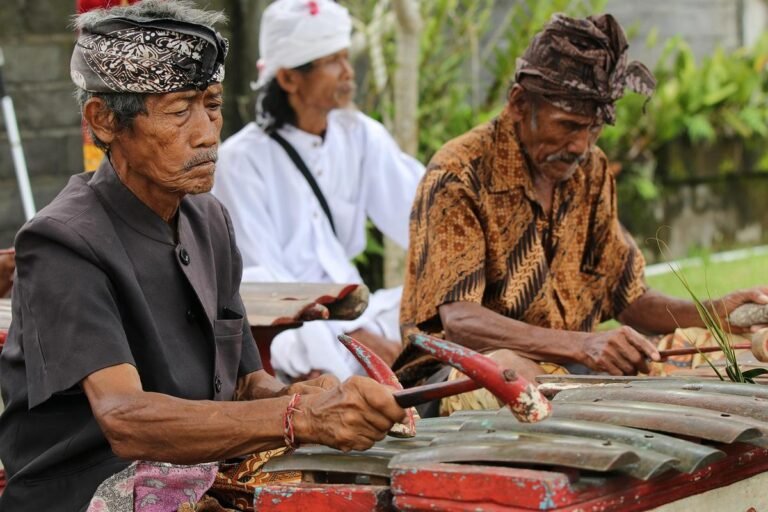
At night the same courtyard you walked through in the morning becomes a stage. The carved gate is lit with warm lamps, the gamelan orchestra sits cross-legged at the edge, and dancers in gold and magenta move against the stone. Watching a dance at the palace is one of the simplest and most beautiful evenings you can have in Ubud.
The essentials
- Start time: nightly, typically at 7:30 PM.
- Length: about 90 minutes.
- Tickets: usually around IDR 100,000 per person, sold at the gate and by ticket sellers along the main road during the day. You can also book online. (If you’re new to the currency, our guide to Balinese money helps.)
- Seating: first-come, first-served on simple chairs. Arrive 30 to 45 minutes early in busy months if you want a seat near the front.
Which dance on which night
The program rotates through the week. A recently published 2026 schedule for the palace looked like this, but troupes and programs do change, so confirm on the day:
- Sunday: Legong with a Mahabharata story
- Monday: Legong
- Tuesday: Ramayana Ballet
- Wednesday: Legong and Barong
- Thursday: Legong and a trance-style program
- Friday: Barong
- Saturday: Legong
Choosing by mood
For grace and detail, choose Legong. This is the classic court dance of Bali, with tiny precise movements of eyes, fingers and fans, and glittering costumes. It suits the palace setting perfectly, since Legong grew up in royal courts like this one.
For story and spectacle, choose the Ramayana. The epic of Rama, Sita and the demon king is easy to follow even if you don’t know the plot, with monkey warriors and plenty of drama. It’s a good pick for families with older children.
For mythic energy, choose Barong. The Barong, a lion-like protective spirit, battles the witch Rangda in a story about the endless balance of good and evil. It’s theatrical, a little wild and often funny.
If you’d like to compare, Ubud’s famous fire-and-chanting performance is a different experience entirely, held at other venues around town. Our Kecak dance guide explains where and when, and our Uluwatu temple guide compares it with the clifftop show in the south.
Book the Villa
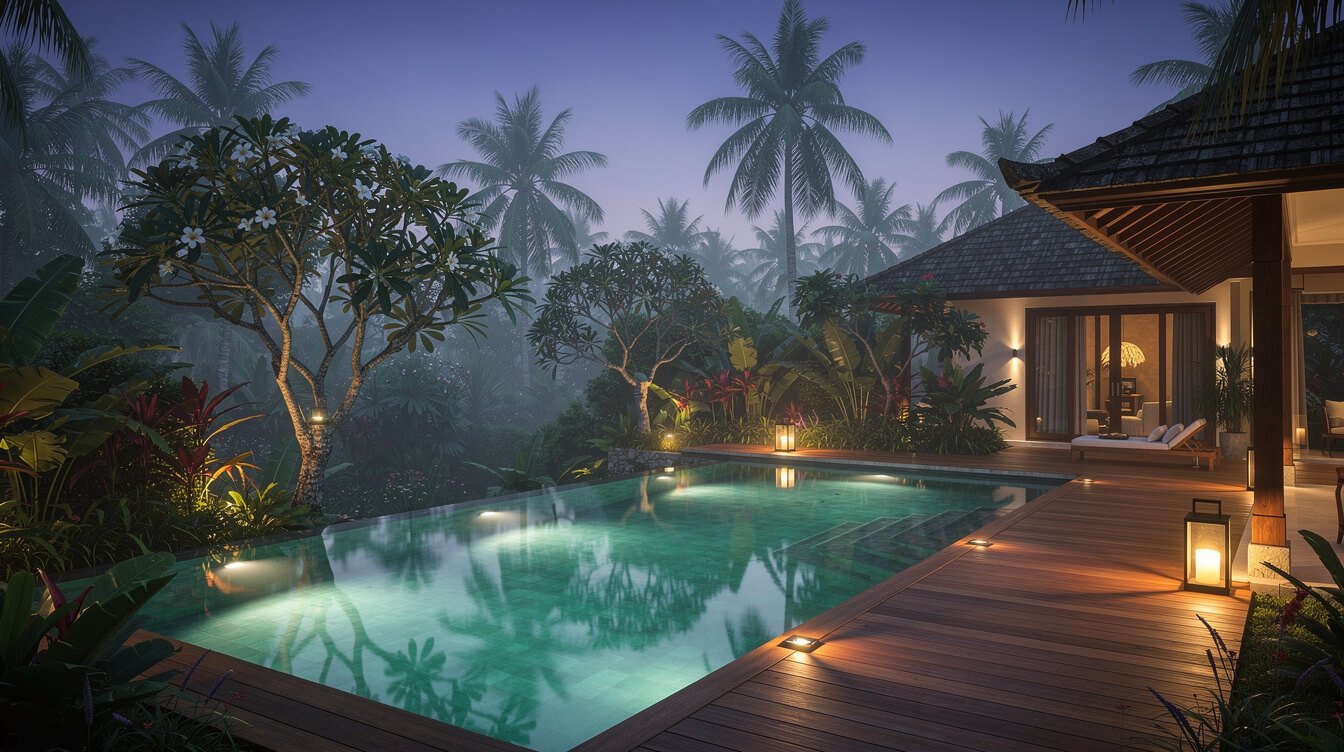
Three bedrooms, a private pool and a team who knows which night to see the Legong and when a ceremony will close the main road. Central Ubud is about ten minutes away. Check availability for your dates.
When Ubud Palace Comes Alive: Ceremonies, Processions and Royal Cremations
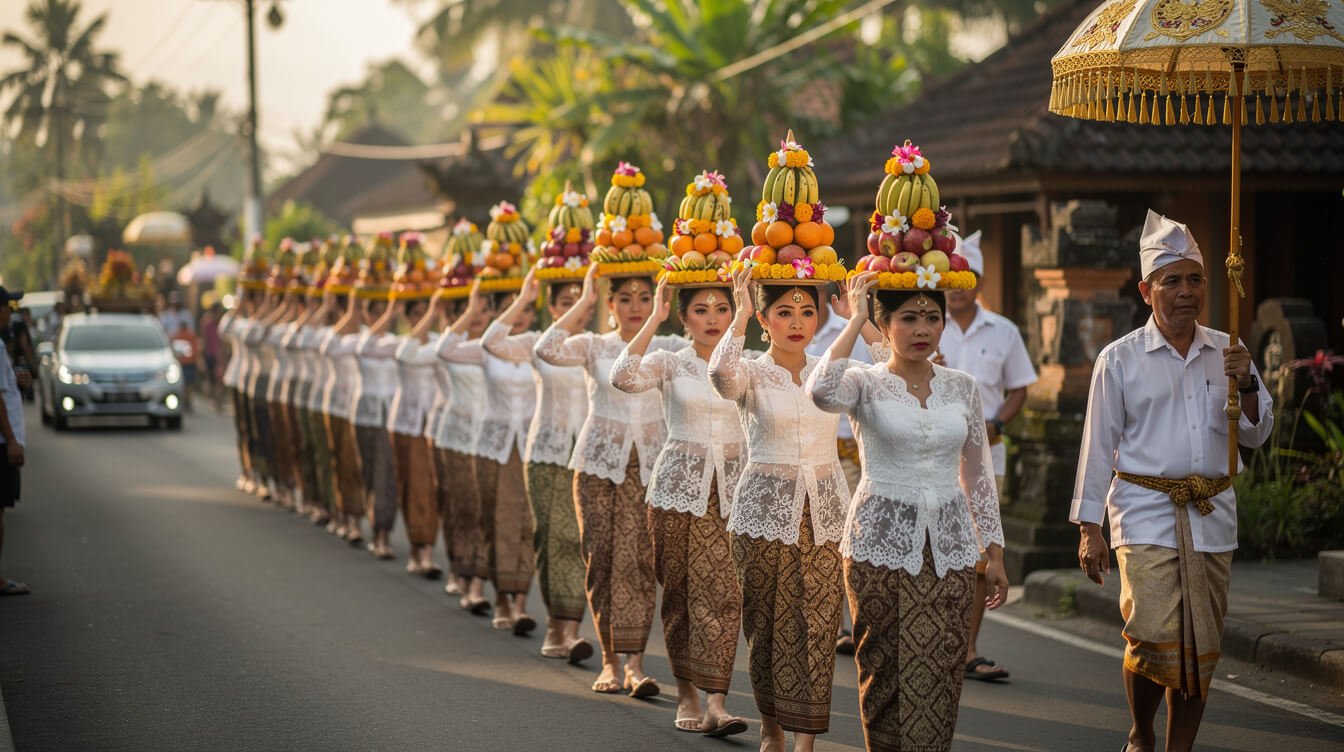
Because it’s a living royal household, Ubud Palace is also a ceremonial center. On important days, its gates fill with people dressed in white and gold, gamelan rings out from the courtyards, and the main road outside may close for processions.
Temple days and odalan
Every Balinese temple celebrates its own anniversary, its odalan, on a 210-day cycle. Around Ubud, the palace family takes part in many of these and in island-wide festivals like Galungan. You may see women carrying towering offerings of fruit and flowers on their heads, men in white headcloths, and ceremonial umbrellas moving down Jalan Raya Ubud toward a temple. If you come upon a procession, step to the side, stay quiet and let it pass. Watching respectfully from the edge is welcome.
Royal cremations
The largest events tied to the palace are royal cremations. When a senior member of the royal family dies, the family and the whole community may spend weeks building a towering cremation tower and a carved sarcophagus, often in the shape of a bull. On the day, hundreds of men carry the tower through the streets toward the cremation ground, spinning it at crossroads to confuse wandering spirits, while crowds fill every sidewalk. These cremations are among the most extraordinary sights in Bali, and they’re rare: their timing follows the family’s circumstances and the Balinese calendar, not a tourist schedule.
If you’re curious about what a cremation means in Balinese belief, and how visitors can attend respectfully, our guide to cremation ceremonies in Ubud covers the basics.
What this means for your visit
On a major ceremony day, parts of the palace may close to visitors, and traffic in central Ubud can stop entirely for an hour or more. That’s not a reason to avoid the town. It’s a reason to stay flexible, because these moments are often the most memorable part of a trip. A villa team that lives in the village calendar will usually know about a big day before you do and can help you plan around it, or toward it.
How Ubud Palace Fits Into Your Stay: Getting There and Getting Home
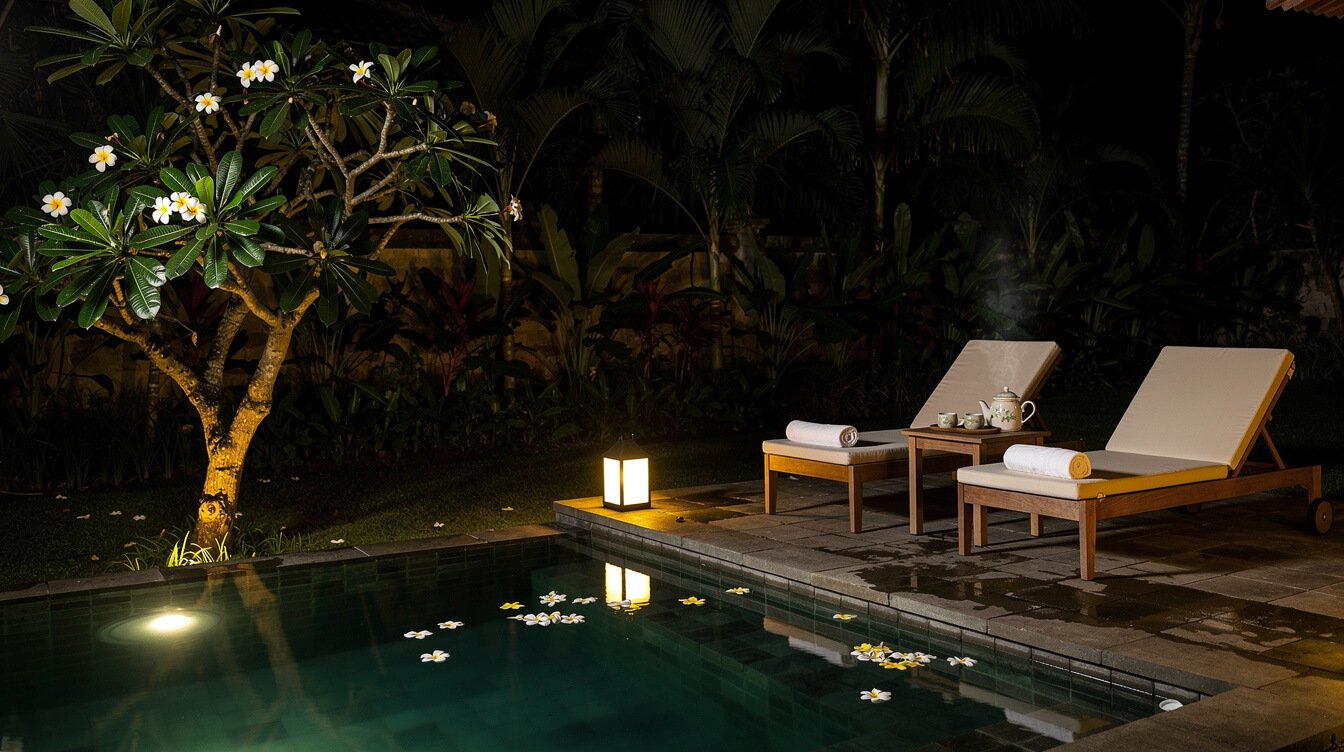
The palace is easy to fold into almost any Ubud itinerary, because it sits right in the middle of town and asks very little of you. Here’s how to make it effortless.
From the villa
Central Ubud is about ten minutes by car from Villa Amrita. The simplest approach is to arrange a driver for the morning or evening. They’ll drop you at the palace gate and collect you afterward, which spares you the hunt for parking on Jalan Raya Ubud. If you’re staying with us, mention your plans to the team the day before. They can help arrange the driver, suggest the right night for the dance you want to see, and tell you if a ceremony is likely to close the main road.
A simple palace day
- Morning: palace at opening, the market, Saraswati and coffee (see the walk above).
- Midday: back to the villa for lunch, a swim and a long, slow afternoon in the shade.
- Evening: return for the 7:30 PM dance, then dinner in town or back at the villa.
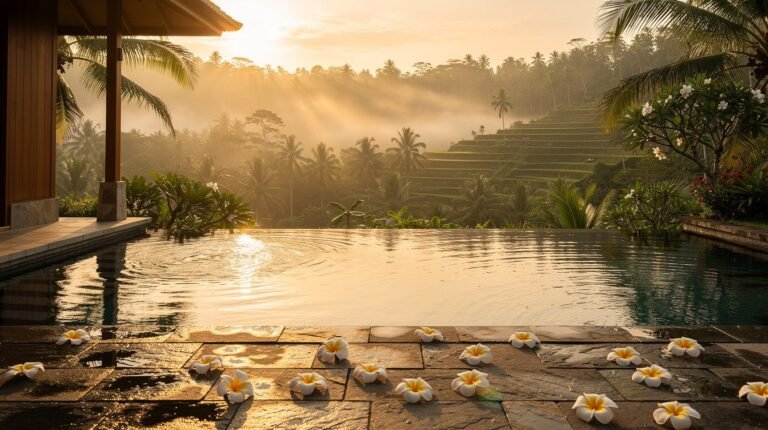
That second trip into town is where staying close pays off. After the show the lamps go down, the gamelan players pack their instruments and central Ubud fills with scooters. Twenty minutes later you can be home, with lanterns lit around the pool and the frogs starting up in the garden. If you’d rather not go out for dinner, our private chef can have something waiting for you.
How many days do you need?
The palace itself takes a morning and an evening, but Ubud rewards slowness. If you’re still deciding how long to stay, our guide to how many days in Ubud helps you plan. For more ideas around town, see things to do in Ubud. For longer outings, there are day trips from Ubud, including the holy spring at Tirta Empul.
Ubud Palace Bali: Frequently Asked Questions
What time does Ubud Palace close?
The open courtyards typically close around 5 PM for daytime visits. The courtyard then reopens in the evening for the nightly dance performance, which usually starts at 7:30 PM and runs about 90 minutes.
Is Ubud Palace free to visit?
Yes. Entry to the public courtyards during the day is free. The evening dance performances are ticketed, typically around IDR 100,000 per person.
Does the royal family still live at Ubud Palace?
Yes. Puri Saren Agung remains the home of descendants of Ubud’s royal Sukawati family. Visitors can walk the front courtyards, while the inner residential areas are private.
What is the history of Ubud Palace?
The palace dates to the nineteenth century and the reign of Ida Tjokorda Putu Kandel. Much of it was restored after the 1917 earthquake. In the twentieth century, Tjokorda Gede Agung Sukawati hosted artists such as Walter Spies and Rudolf Bonnet, and the Pita Maha artists’ association was founded in 1936. That helped make Ubud the cultural center of Bali.
How long do I need at Ubud Palace?
Around 20 to 40 minutes is enough for the courtyards. Add two to three hours if you combine it with the market, Saraswati temple and coffee, and another two hours if you return for the evening dance.
What should I wear to Ubud Palace?
Cover your shoulders and knees. A sarong is perfect and easy to buy at the market across the street.
Is the Ubud Palace dance worth it?
For most visitors, yes. It’s affordable, central and set against the palace’s own carved gate, with a live gamelan orchestra. Choose your night by the dance you want to see and arrive early for a good seat.
Is Ubud Palace the same as the Ubud Water Palace?
No. The Water Palace usually refers to Pura Taman Saraswati, the lotus-pond temple a few minutes’ walk west of the palace. They’re easy and lovely to visit together.
Final Thoughts: Let the Palace Set Your Ubud Rhythm
Ubud Palace in Bali is small, free and right on the main road, which makes it easy to rush past. Don’t. Come once in the cool of the morning, when the offerings are fresh and the courtyards are quiet, and again at night, when the same stones glow under the lamps and the gamelan begins. Between those two visits you’ll understand something about Ubud that no checklist explains: this is a town where art, ceremony and everyday life still share the same front door.
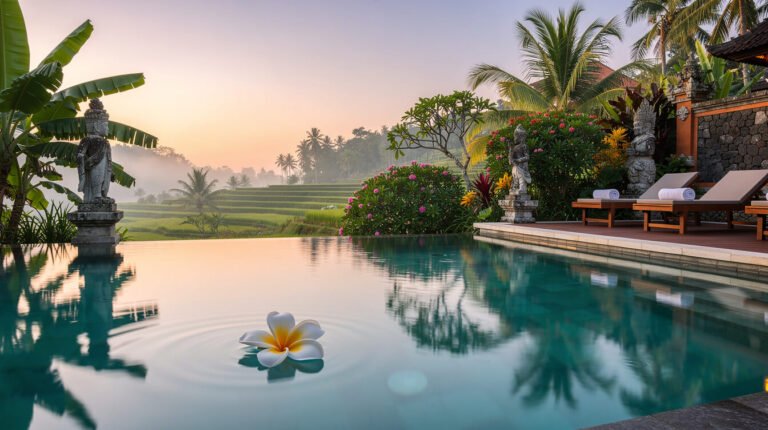
Then go home to a quiet garden, a cool pool and a team who’ll ask how the dance was. We’d love to be that home for you.

Join our newsletter — fun, new, exciting Bali news
Ceremony days worth planning around, new dance nights in Ubud, and small stories from the garden and kitchen. Delivered now and then, always worth opening.