Jamu: Indonesia’s Herbal Tonic, from Ubud Markets to Your Kitchen
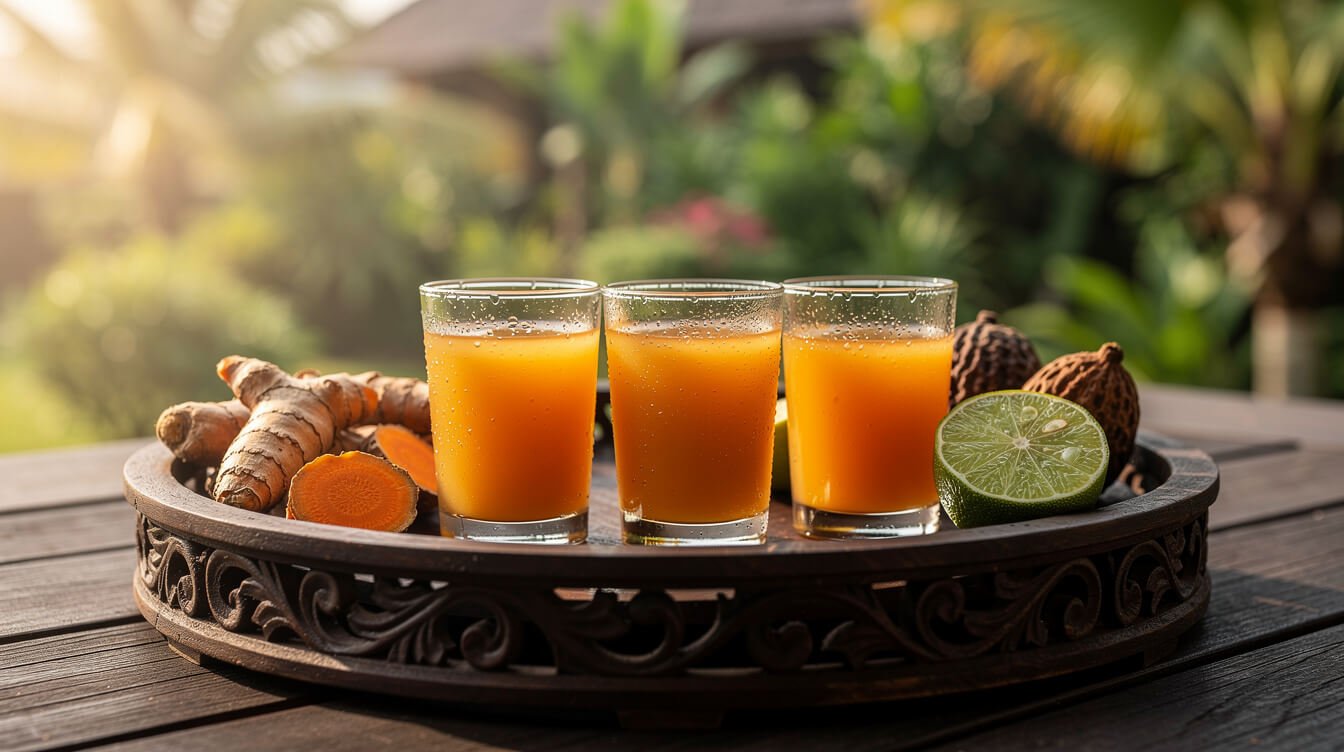
The glass is small, the color of late afternoon, and it smells like the inside of a spice market: earthy turmeric, sharp ginger, a sour edge of tamarind. The first sip is bitter and bright. The second is easier. By the third you understand why people across Indonesia start their day this way. This is jamu, the herbal tonic Indonesian families have made for more than a thousand years, and one of the most direct ways to taste everyday life in Bali.
You may have seen jamu in a bottle at a juice bar back home, sold as a turmeric shot. In Ubud it is something warmer and older: a drink poured from a seller’s basket at the morning market, mixed in a family kitchen, or offered to you on the terrace by someone who wants you to feel well. This guide covers what jamu is, where it comes from, the main kinds and how they taste, Bali’s own herbal drinks called loloh, where to try it around Ubud, a simple recipe you can make at home, and an honest look at benefits and safety.
What Is Jamu? Indonesia’s “Prayer for Health” in a Glass
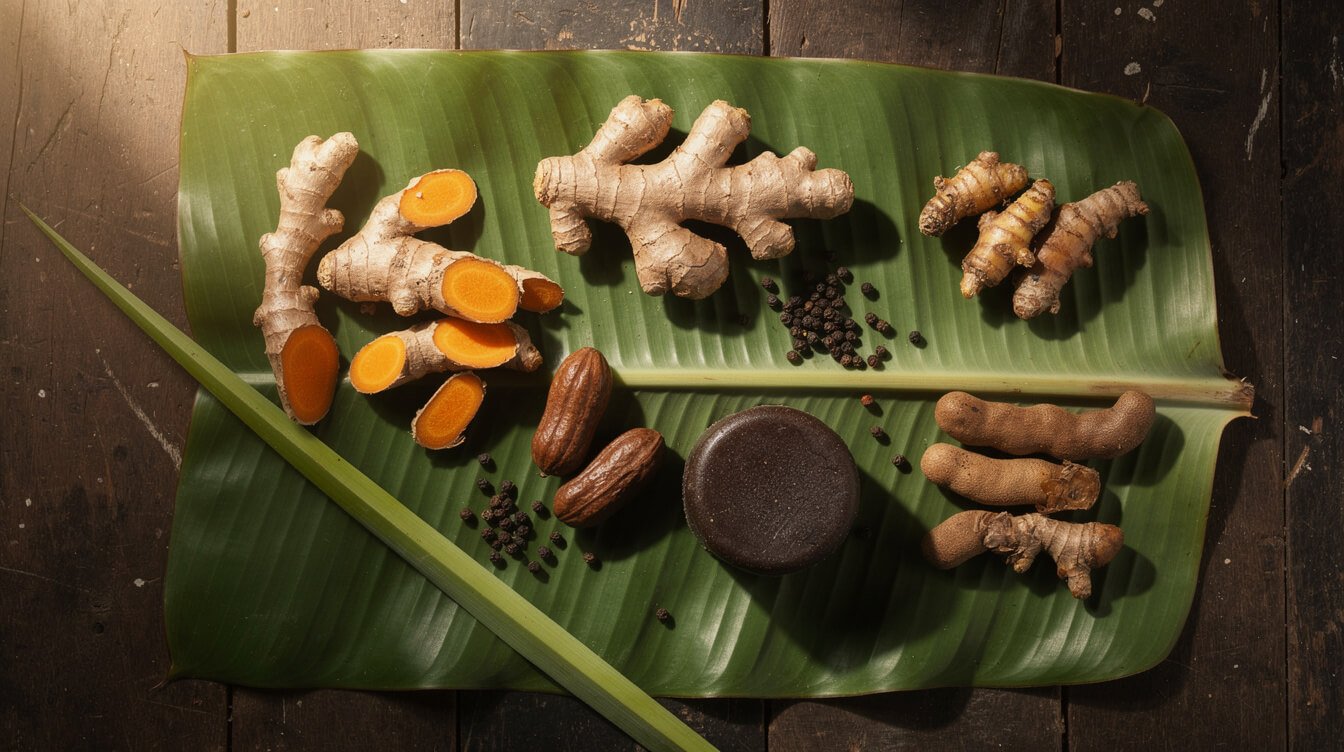
Jamu is a traditional Indonesian herbal medicine, most often drunk as a fresh tonic. It is made from roots, rhizomes, bark, leaves, flowers, seeds and fruit, which are pounded or ground, mixed with water, often simmered, and usually sweetened with palm sugar or honey. The best-known versions are bright orange from fresh turmeric, but jamu can be green, cream or almost black, depending on the plants that go in.
The word is often traced to old Javanese, where it is linked to the idea of a prayer or wish for health. That meaning matters. Jamu is not a single recipe or a supplement. It is a whole way of looking after yourself: small daily doses of plants from the kitchen and garden, taken to keep the body in balance rather than to cure a disease once it arrives.
What jamu is made of
Almost every jamu starts from a short list of ingredients that grow easily in Indonesian gardens:
- Kunyit (turmeric). The base of the classic golden jamu. Fresh turmeric root is juicier and more fragrant than the dried powder.
- Jahe (ginger). Adds heat and a warming finish.
- Kencur (aromatic ginger, Kaempferia galanga). A small, camphor-scented root used in beras kencur.
- Temulawak (Javanese turmeric, Curcuma xanthorrhiza). Larger and more bitter than ordinary turmeric.
- Asam jawa (tamarind). Gives the sour, fruity backbone.
- Gula merah or gula aren (palm sugar). The traditional sweetener, with a caramel depth that white sugar lacks.
- Leaves and spices such as betel leaf, pandan, lemongrass, cinnamon, clove and black pepper.
Every maker has their own proportions. The same name can taste noticeably different from one seller to the next, and that variation is part of the tradition, not a flaw in it.
Jamu is a habit, not a cure
In Indonesian homes, this is something you drink a little of, often, rather than a lot of, once. A small glass in the morning, a different blend after childbirth, a warming ginger version in the rainy season. Think of it the way you might think of a cup of herbal tea your grandmother swore by: a daily kindness to yourself, made from plants you can name.
A Short History of Jamu: From Javanese Royal Courts to UNESCO

The tradition belongs first to Java, the island just west of Bali. Its history is usually traced to the Mataram kingdom of Central Java, between roughly the 8th and 10th centuries. Pestles and grinding stones from that era have been found in archaeological digs, and scholars point to scenes of herbal preparation on the carved reliefs of temples such as Borobudur. Recipes were kept in the royal courts of Java and passed into villages through healers, then down through families by word of mouth.
The jamu gendong sellers
The most famous image of jamu is the jamu gendong: a woman carrying a basket of glass bottles on her back, wrapped in a cloth sling, walking a regular morning route through the lanes of a town. Gendong means to carry on the back. She stops for regular customers, pours a small glass of whichever blend suits them that day, and often finishes with a sweet chaser to wash away the bitterness. Many of these sellers have historically come from Sukoharjo in Central Java, a regency closely tied to the jamu tradition.
Today many sellers use a bicycle or a motorbike with a box on the back instead of a basket, but the idea is the same: a fresh tonic, sold in small portions, by someone who knows her customers.
From factories to cafes
In the 20th century, it also became an industry. Large Indonesian companies began producing packaged powders, pills and bottled drinks, which are now sold in every minimarket. In the last decade, a younger generation has started reinventing it again, with jamu cafes in Jakarta serving kunyit asam made with coffee-bar techniques, restaurants in Bali mixing jamu into cocktails, and small brands bottling it fresh in Europe and Australia.
Recognized as world heritage
Indonesia’s Ministry of Education and Culture listed the tradition as national intangible cultural heritage in 2019. In December 2023, UNESCO inscribed “Jamu wellness culture” on its Representative List of the Intangible Cultural Heritage of Humanity. The recognition is not for a drink alone. It honors the knowledge, habits and family practices around it: how plants are chosen, how recipes are taught, and how people care for each other through them.

Get a free 3-day sample itinerary
Three good days in Ubud: rice field walks at first light, an early morning at the market with a glass of jamu, a temple, and a slow village afternoon. We will send you a free 3-day sample itinerary.
Types of Jamu and What They Taste Like
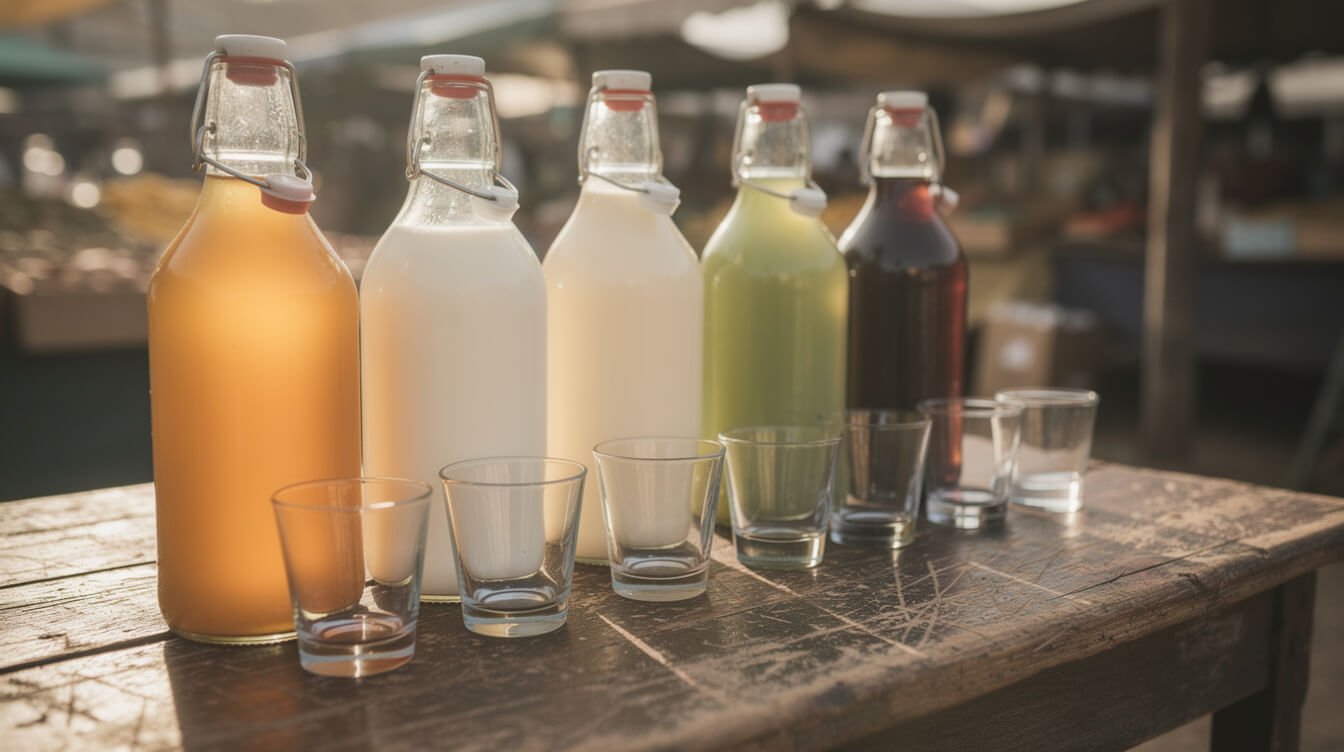
Walk up to a seller and you will usually see several bottles, each a different color. Here are the kinds you are most likely to meet, roughly from easiest to most challenging for a first-time drinker.
Kunyit asam (turmeric and tamarind)
The classic golden jamu and the best place to start. Fresh turmeric is simmered with tamarind and palm sugar, then strained. It tastes sour-sweet and earthy, a little like a spiced iced tea with a turmeric edge. If you have had a “jamu juice” outside Indonesia, it was almost certainly a version of this.
Beras kencur (rice and aromatic ginger)
A pale, creamy drink made from soaked rice ground with kencur root and sweetened with palm sugar. It is soft, sweet and gently spicy, with a slight grit from the rice. Indonesian parents often give it to children, and it is many people’s favorite.
Sinom
Made with young tamarind leaves and turmeric, sinom is lighter and more refreshing than kunyit asam, with a green, herbal sourness. Lovely over ice on a hot afternoon.
Jahe (ginger)
Sweetened ginger tonic is sharp, hot and often served warm. It is the drink people reach for in the rainy season or when they feel a cold coming on.
Temulawak
Made from Javanese turmeric, temulawak is earthier and more bitter than ordinary turmeric blends. Many Indonesians drink it for appetite and digestion. It is an acquired taste, so try a small cup first.
Paitan (the bitter one)
Pait means bitter, and this one earns its name. Paitan is usually made from bitter herbs such as sambiloto (Andrographis paniculata). Locals drink it in one quick swallow and follow it with a sweet chaser. If you are curious, ask for a tiny taste.
How to drink jamu like a local
- Start small. A traditional serving is a small glass, not a large bottle.
- Ask for a chaser. Sellers often follow a bitter jamu with a little beras kencur or a sweet ginger syrup.
- Drink it in the morning. It is traditionally a morning drink, though many people take it whenever they need it.
- Shake the bottle. Fresh tonics settle, and the good stuff sinks to the bottom.
Loloh: Bali’s Own Herbal Drinks
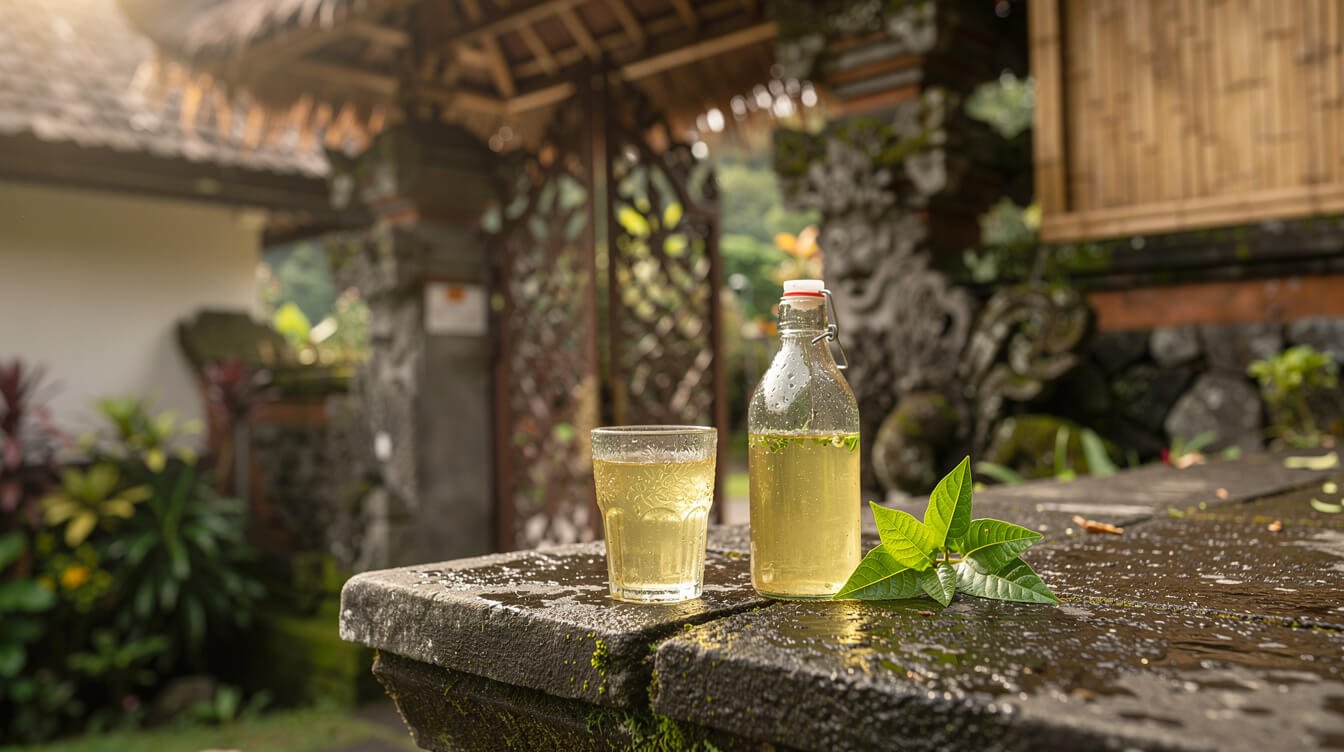
Here is something many jamu guides miss. Jamu is a Javanese tradition, and while you will find it all over Bali, the Balinese have their own herbal drinks, known as loloh. They are made in the same spirit, from leaves, roots and fruit gathered close to home, but they belong to Balinese villages and to the island’s own healing traditions.
Loloh cemcem from Penglipuran
The best-known loloh is loloh cemcem, made in Penglipuran, a traditional village in the cool highlands of Bangli Regency, about an hour’s drive northeast of Ubud. It is brewed from the leaves of the cemcem tree (Spondias pinnata, a type of hog plum), which are crushed, mixed with tamarind, palm sugar, a little salt and sometimes shredded young coconut, then strained. The result is green-gold, sour, slightly bitter, sweet and a little salty all at once, and very refreshing served cold. Villagers sell it in small bottles from their family compounds, and it keeps for only a few days because it contains no preservatives.
Usada and the Balinese way of healing
Balinese herbal knowledge is recorded in usada, traditional healing texts written on palm-leaf manuscripts called lontar. They describe plants, preparations and prayers, and they are still consulted by balian, the traditional healers found in many villages. In Bali, a herbal drink sits inside a wider view of health that includes balance, ceremony and offerings. Our article on jackfruit leaves in Balinese medicine gives a taste of how one plant can carry both practical and spiritual meaning.
You may also meet jamu’s cousins in the spa. Boreh, a warming Balinese body scrub made from spices such as clove, ginger and rice, comes from the same family of ideas. Our guide to traditional spa treatments in Ubud covers where to try it.
Where to Try Jamu in Ubud and Around Bali

You don’t have to look hard for it in Bali. The trick is finding it fresh.
The morning market
Go early. The traditional market in central Ubud is busiest just after dawn, when village cooks are buying the day’s produce, and that is when jamu sellers have their fullest bottles. Look for a woman with a row of glass bottles, often on a low table or the back of a motorbike, with regulars stopping for a quick glass. A steady queue is your best quality signal, because the bottles are refreshed often. Our Ubud market guide explains how the market works and the best time to go.
While you are there, pick up the raw ingredients too. Fresh turmeric, ginger, kencur and tamarind pulp are sold by the handful at the spice stalls, usually for very little. It is a good moment to try other local tastes, such as salak, the snake fruit.
Warungs, cafes and wellness menus
Many small warungs and cafes in Ubud serve it by the glass, and the town’s yoga and wellness scene has made fresh turmeric tonics easy to find. Quality varies a great deal. A freshly made glass with a clear, bright smell is a very different drink from a pre-made bottle that has sat in a fridge for a week. Ask whether it was made today.
A cooking class
Some Balinese cooking classes in and around Ubud include a jamu demonstration, so you can grind the roots yourself and take the recipe home. Ask about it when you book. Our guide to Balinese cooking classes in Ubud helps you choose one.
A day trip to Penglipuran
If you want to taste loloh cemcem where it is made, combine it with a morning walk through Penglipuran village, known for its tidy stone lanes and bamboo forest. Go early, before the tour buses, and buy a bottle from one of the family compounds.
Bottled jamu from shops
Minimarkets and supermarkets sell bottled herbal drinks and packaged powders. They are convenient, but they are a different product from fresh jamu. Check the production date, and look for a BPOM registration number, which shows the product is registered with Indonesia’s food and drug authority. You can check a number on BPOM’s own site at cekbpom.pom.go.id.
Ordering jamu in Indonesian
- Satu gelas: one glass
- Kurang manis: less sweet
- Tanpa gula: no sugar
- Hangat / dingin: warm / cold
- Mau coba dulu: may I try a little first?
- Dibungkus: to take away
For more everyday phrases, see our Bali language guide.

Book the Villa
Come back from the morning market to three bedrooms, a private pool and a quiet tropical garden in Ubud, with a team on hand so your days stay yours. Check availability for your dates.
How to Make Jamu at Home: A Simple Kunyit Asam Recipe
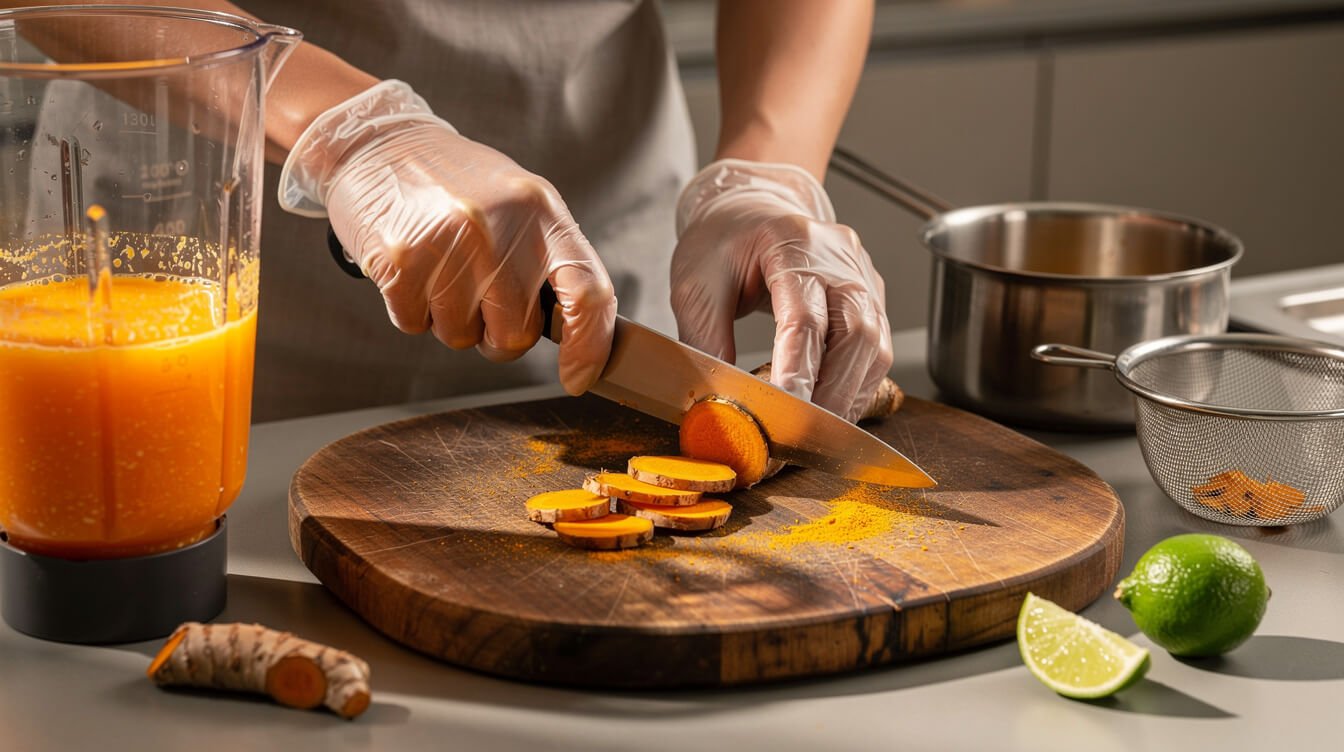
The good news: kunyit asam is easy to make in any kitchen with a blender. This version is close to what you would taste at an Ubud market, with palm sugar instead of honey and tamarind for the sour note. It makes about 1 liter (4 cups), enough for a small glass every morning for four or five days.
Ingredients
- 200 g (about 1 cup, sliced) fresh turmeric root
- 30 g (a 2-inch piece) fresh ginger
- 2 tablespoons tamarind pulp (seedless block or paste)
- 3 to 4 tablespoons grated palm sugar, or to taste (honey works too)
- 1 liter (4 cups) water
- A pinch of salt
- A pinch of black pepper
- Juice of 1 lime (optional)
Method
- Prepare the roots. Scrub the turmeric and ginger well. Young roots with thin skin don’t need peeling. Slice them into thin coins. Wear gloves if you have them, because turmeric stains hands, boards and countertops.
- Blend. Blend the turmeric and ginger with 2 cups of the water until smooth.
- Simmer. Pour into a saucepan with the remaining water, the tamarind, palm sugar and salt. Bring to a gentle simmer and cook for about 15 minutes, stirring now and then. Watch it closely, as it can boil over.
- Strain. Let it cool a little, then strain through a fine sieve or a muslin cloth, pressing the pulp to get every drop.
- Finish. Stir in the black pepper and lime juice. Taste and adjust the sweetness. If you use honey instead of palm sugar, add it now, once the liquid has cooled.
- Store. Pour into clean glass bottles and keep in the fridge for up to 4 or 5 days. Shake before serving.
Tips for better homemade jamu
- Use fresh roots if you can. If you only have powder, about one-third of a cup of ground turmeric stands in for one cup of fresh, though the flavor is flatter.
- Don’t skip the black pepper. Turmeric’s main active compound, curcumin, is poorly absorbed on its own. Piperine in black pepper improves absorption.
- Make it your own. Add a stalk of bruised lemongrass, a pandan leaf or a cinnamon stick to the simmer.
- Use glass, not plastic. Turmeric will stain plastic bottles and blender jars permanently.
If you are staying with us, ask the team where they buy their turmeric. Everyone in the village seems to have a favorite seller.
Jamu Benefits: Honest Expectations and Staying Safe
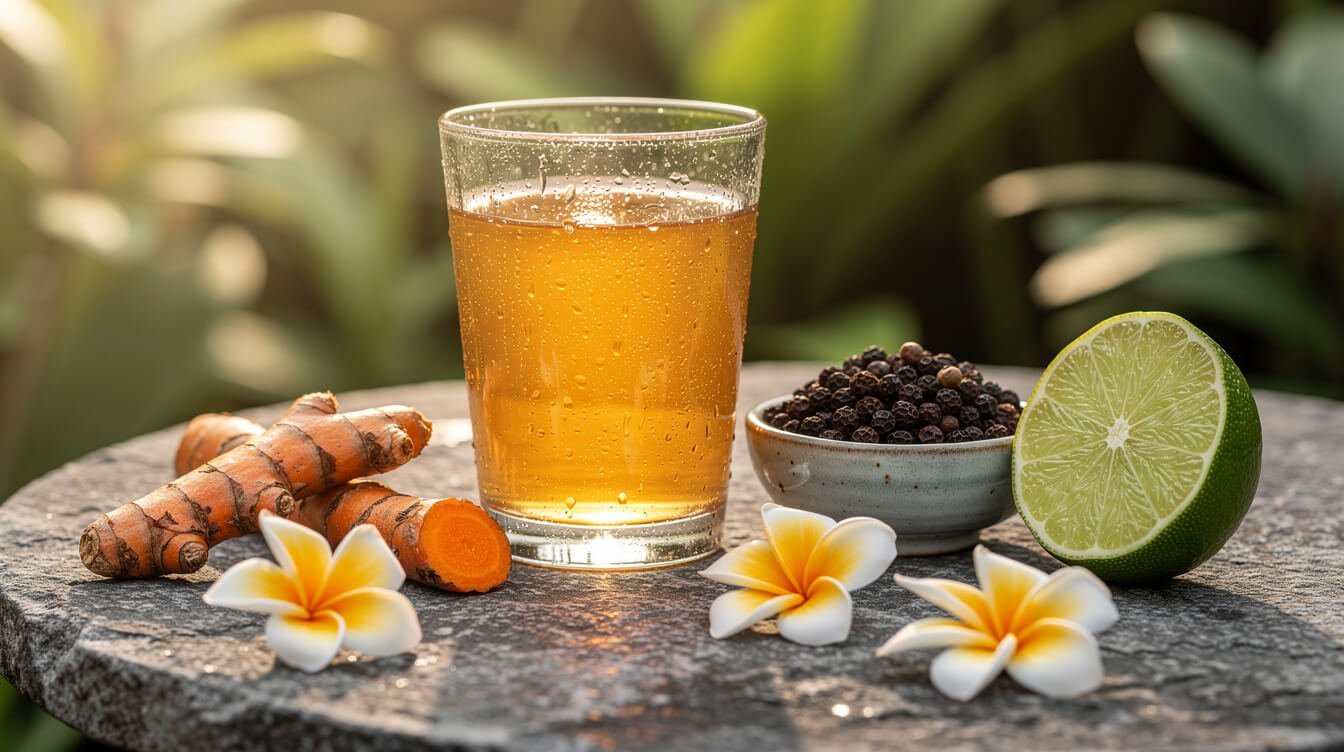
Search for jamu benefits and you’ll find long lists of promises. The truth is gentler and more interesting.
What the ingredients may do
Many of these ingredients have been studied. Curcumin in turmeric has anti-inflammatory and antioxidant properties, and ginger is well known for easing nausea and supporting digestion. Researchers have documented hundreds of plants used in Indonesian herbal drinks and are working to test many of their traditional uses. But a small homemade glass contains modest, variable amounts of these compounds, and there is little clinical research on jamu drinks themselves.
The fair way to see it: jamu is a flavorful, low-calorie way to bring fresh turmeric, ginger and other plants into your day. Indonesians drink it as part of a wider habit of looking after themselves, and that habit is where much of its value lies. It is not a treatment for any illness. If you feel unwell in Bali, see a doctor or a pharmacist. Our guide to Bali belly covers what to do if your stomach complains.
Who should be careful
- If you take blood thinners, diabetes medication or other regular medicines, ask your doctor or pharmacist first. Turmeric and ginger can interact with some drugs.
- If you are pregnant or breastfeeding, check with your doctor before drinking jamu regularly.
- If you have gallstones or a sensitive stomach, go easy on concentrated turmeric, and don’t drink strong blends such as temulawak on an empty stomach.
- If you are giving it to children, stick to gentle blends such as beras kencur and keep the portions small.
Fresh jamu and hygiene
Fresh, unpasteurized jamu from a stall carries more risk of a stomach upset than a sealed bottle. Choose a busy seller, buy in the morning, and start with a small glass. If you are in your first days in Bali and your stomach is still adjusting, it can be wiser to try jamu at a cafe or make your own.
Be wary of factory “jamu” pills and capsules
This is the one serious warning. Indonesia’s food and drug authority (BPOM) regularly seizes illegal products sold as jamu that contain hidden pharmaceutical drugs, and health authorities in the United States and elsewhere have issued warnings about imported products of this kind. The problem products are mostly capsules, pills and powders marketed for joint and muscle pain or for male vitality, not the fresh drink you buy at a market. Avoid unlabeled or unregistered products, be suspicious of anything that promises fast or dramatic results, and check a BPOM number before you buy.
Jamu FAQ
What does jamu taste like?
It depends on the kind. Kunyit asam is sour-sweet and earthy, beras kencur is creamy and gently spiced, ginger jamu is hot and sharp, and bitter blends such as paitan are very bitter. Most jamu balances bitterness with palm sugar or honey.
Is jamu the same as turmeric juice?
Not quite. “Jamu juice” sold abroad is usually a version of kunyit asam, the turmeric and tamarind blend. In Indonesia, jamu is a whole family of herbal drinks and remedies, and many contain no turmeric at all.
When is the best time to drink jamu?
Traditionally in the morning, often before breakfast. If you have a sensitive stomach, have it with or after food instead.
How much jamu should I drink?
A small glass, roughly 100 to 150 ml (3 to 5 oz), is a typical serving. More is not better.
Can I bring jamu home from Bali?
Fresh jamu won’t survive the trip, but sealed jamu powders and dried spices travel well. Rules on bringing plant products into your home country vary, so check your customs rules and declare them if required. Australia and New Zealand in particular are strict.
How long does homemade jamu last?
About 4 to 5 days in a sealed glass bottle in the fridge. If it smells sour in a fermented way, or starts to fizz, throw it out.
Is jamu Balinese?
Jamu comes from Java, but it is drunk all over Indonesia, including Bali. The Balinese also have their own herbal drinks, called loloh, such as loloh cemcem from Penglipuran village.
Jamu asks very little of you: a small glass, a moment of attention, a willingness to taste something bitter before it turns sweet. Try it at the market one early morning, learn to make it in your own kitchen, and you’ll carry a little of Bali home with you every time you reach for the turmeric. For a gentler, story-shaped introduction, read our short piece on a morning glass of jamu at the villa, then explore more of the island’s flavors in our guides to Balinese cuisine, nasi campur and luwak coffee.

Join our newsletter — fun, new, exciting Bali news
Ceremony days, market finds, new trails and small stories from Ubud. Delivered now and then, always worth opening.