What the Morning Offerings Tell You About Ubud
Before you wake — before the coffee is set on the pool deck, before the garden path is swept, before the chef heads to the morning market — someone in the villa has already been to every threshold, every shrine, every stone step with a small woven tray of flowers.
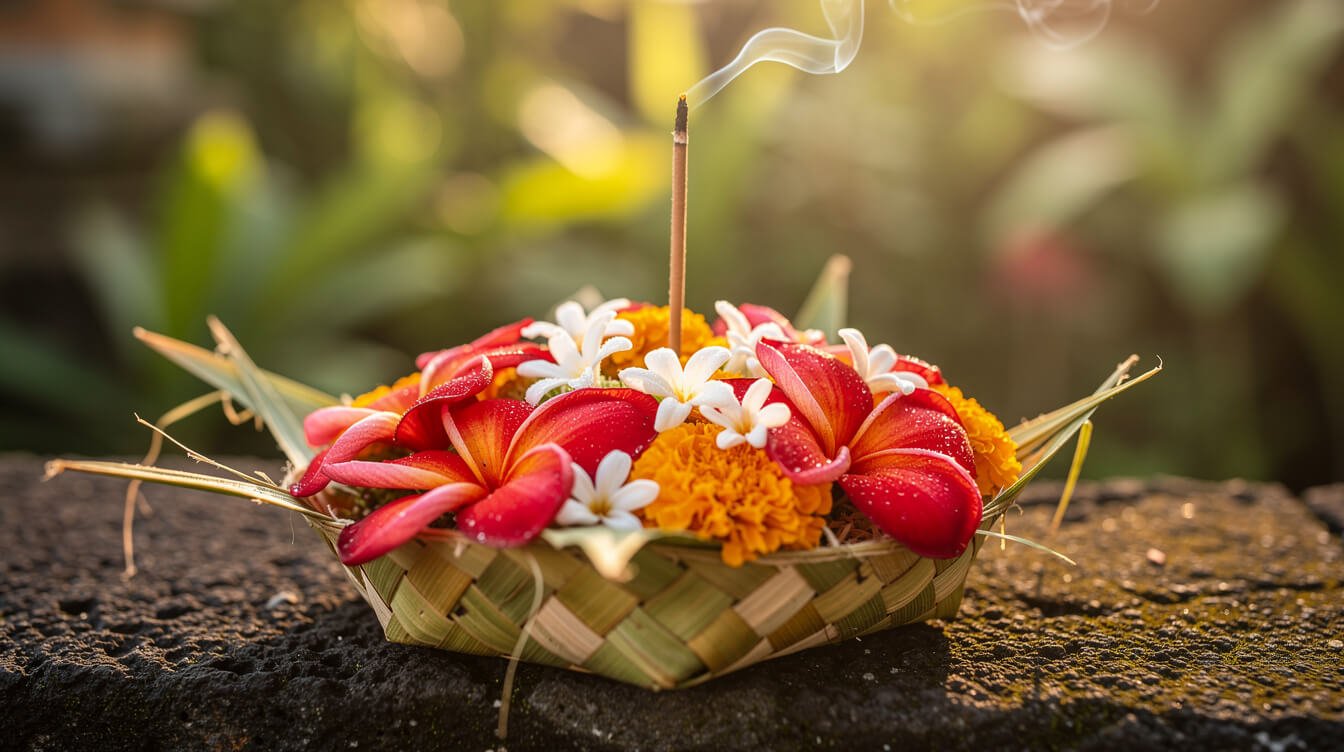
This is the canang sari. The daily offering. And once you notice it, you’ll see Ubud differently.
The Quiet Ritual Before Your Day Begins
Made arrives before six. She moves through the compound the way water moves through stone — following a path worn by years of repetition. She carries a basket of offerings she wove herself from young coconut palm leaves, each one no bigger than her open hand.
Inside each tray: red frangipani petals, white jasmine, a few grains of cooked rice, a small square of banana leaf, and a thin stick of incense. The colors are not random. Red for Brahma. White for Shiva. Yellow marigold for Mahadeva. The arrangement is a prayer you can hold.
Where the Offerings Go
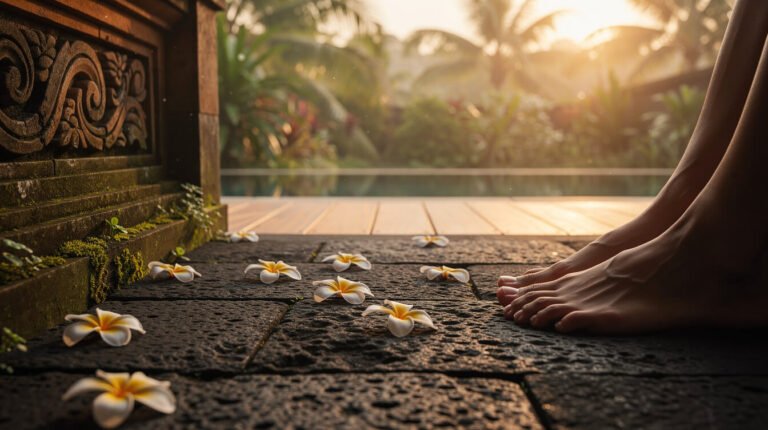
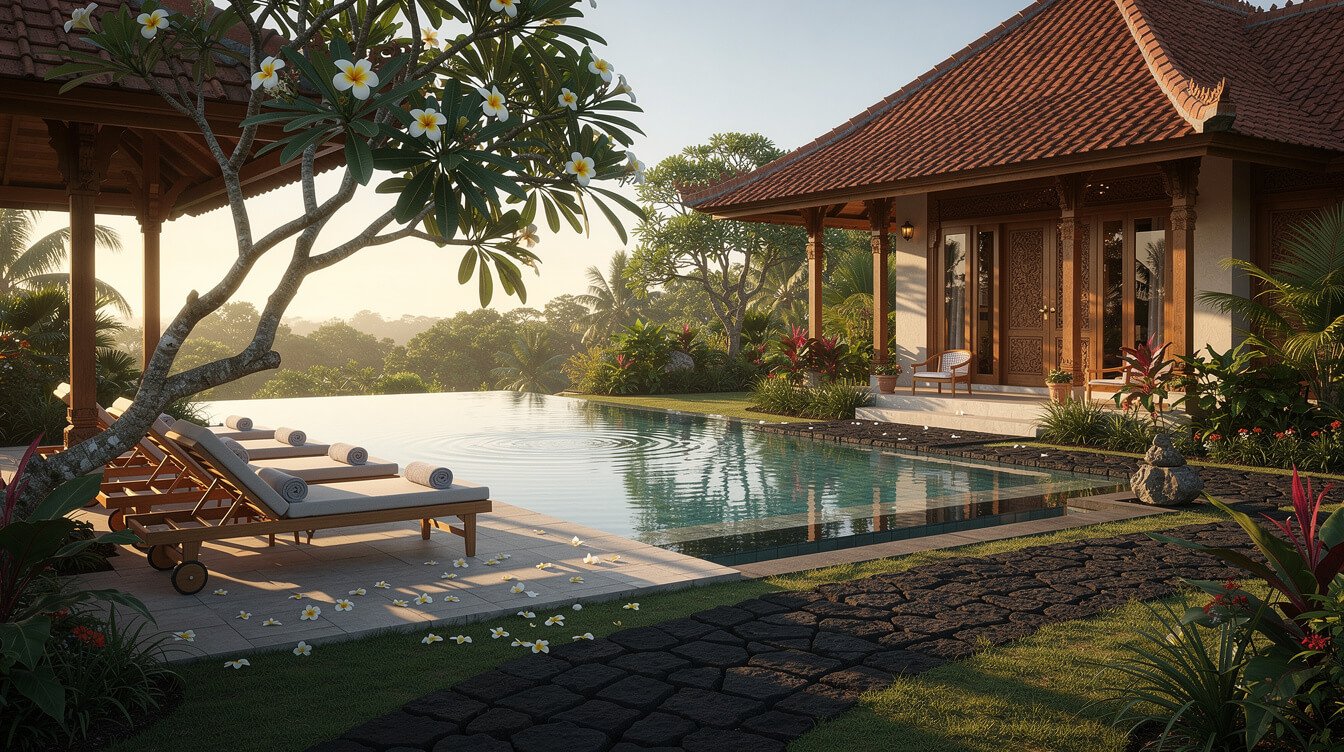
She places them everywhere. On the family shrine near the garden gate. On the stone step leading to the pool. At the base of the big frangipani tree. On the small altar tucked inside the kitchen. At the threshold of each bedroom door — so quietly you might sleep through the entire ceremony and only find the evidence when you step outside: a thin curl of incense smoke dissolving into warm morning air, a scatter of petals on volcanic stone.
This happens in every home in Ubud. Every shop, every warung, every temple, every taxi dashboard. The island runs on these small acts of gratitude — what the Balinese call Tri Hita Karana, the three causes of well-being: harmony with the divine, with other people, with the natural world.
Get a Free 3-Day Sample Itinerary
See what a few days in Ubud actually looks like — morning offerings, market visits, rice terrace walks, and evenings by the pool.
What the Smoke Carries
The incense is the bridge. Made lights each stick with a single match, cups her hand around the flame for half a second, and sets it down beside the flowers. The smoke rises straight in the still morning air — and the scent is nothing like the heavy incense you might know from a yoga studio or gift shop. It’s lighter. Sweeter. Closer to sandalwood than patchouli, with a clean edge like eucalyptus.
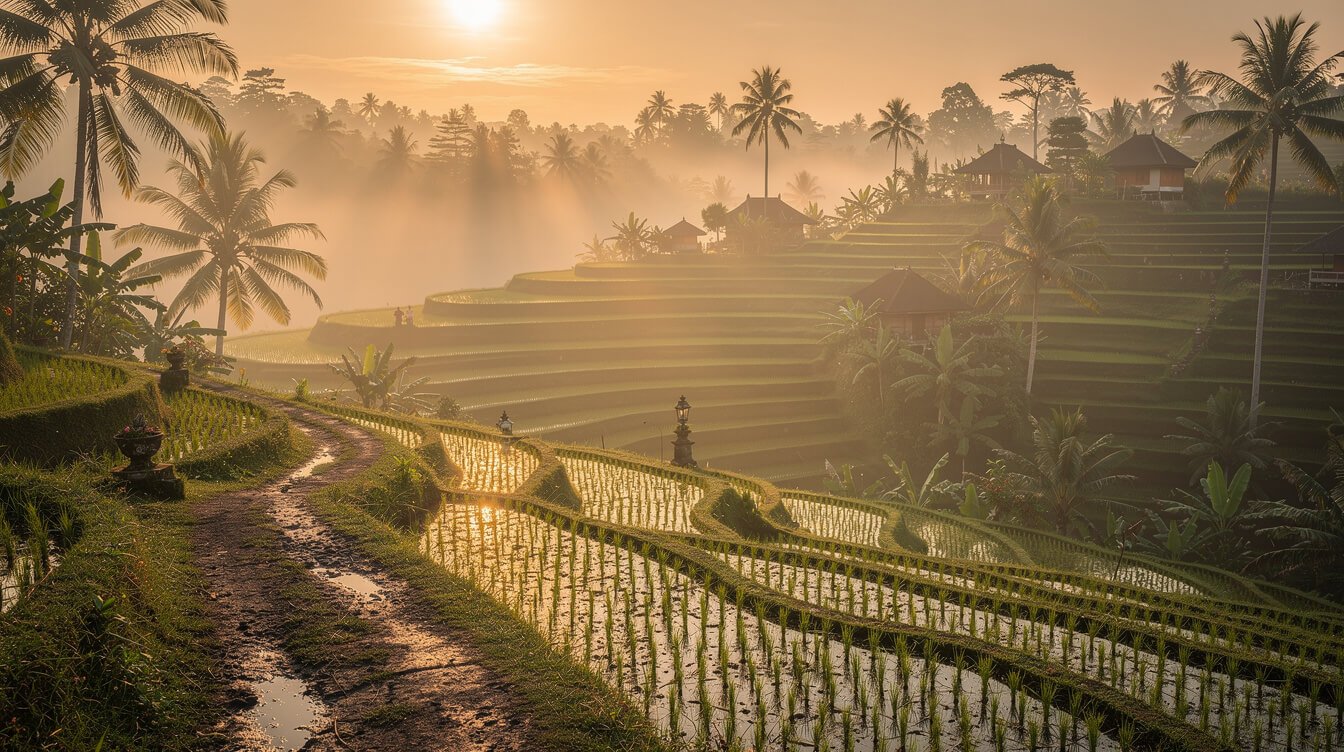
Mixed with the frangipani that’s already blooming in the garden and the damp earth smell of the rice terraces beyond the wall, it becomes something you can’t replicate. You can only be here for it.
The Offering Is Not for You
This is the part most visitors misunderstand. The canang sari isn’t a performance. It isn’t hospitality theater. Made doesn’t place offerings because you’re watching — she places them because the day hasn’t properly started until she does. It’s the same gesture her mother made, and her mother’s mother. It’s as ordinary to her as brushing your teeth, and as sacred as anything she knows.
But here’s what it does for you, even without trying: it slows you down. You walk more carefully past a doorway when there are fresh flowers on the step. You notice things — the curl of a petal, the way incense ash settles on stone like grey snow, the small coconut-leaf tray beginning to soften in the humidity. The offering teaches you to look at the ground.
Book the Villa
Wake up to fresh offerings on your doorstep, a garden that’s already been tended, and a team that’s already thinking about your morning.
Book NowBy Afternoon, the Flowers Have Changed
The morning offerings begin to soften in the heat. Petals darken. Incense sticks lean. A gecko walks across a tray near the pool, unbothered. This isn’t neglect — it’s the point. The offering was never meant to last. It was meant to be given. Tomorrow there will be new flowers, new incense, new gratitude. The same hands. The same gesture. The same stone step.
If you’ve spent a morning watching a gamelan procession pass the villa gate, or walked through the healing traditions of Ubud, you’ll recognize what the canang sari really is: a daily reset. A small, deliberate act of noticing. The Balinese have been practicing mindfulness for centuries — they just never called it that.
And Made has already finished. She’s in the kitchen now, arranging fruit. The incense will burn for another twenty minutes. By then, you’ll be at the pool with your coffee, stepping carefully around the flowers on the stone step — and you’ll realize you’ve already started the day differently than you planned.

Join Our Newsletter
Fun, new, exciting Bali news — stories about Ubud life, villa updates, and the small moments that make this place unforgettable.