
Bali Rainy Season: Your Complete Guide to Visiting Bali During the Wet Season
The Bali rainy season has a reputation problem. Somewhere between the first Google search and the third blog telling you to avoid November through March, the wet months become a wall of crossed-out dates on your calendar. But here is what those guides leave out: this is when Bali is at its greenest, its quietest, and — for travelers who know what to expect — at its most rewarding.
We host guests year-round from our staffed villa in Ubud. What we see during the rainy season is not weeks of grey misery. It is warm mornings that glow, short afternoon downpours that clear the air and leave everything smelling of wet earth and frangipani, and evenings where the sky breaks open into colors you rarely get during dry months. The Bali rainy season is not something to endure. It is a different way to experience the island — slower, deeper, and more intimate.
This guide covers everything: when the rainy season happens, what each month actually feels like, why many experienced travelers prefer it, what to do, what to pack, and how a staffed private villa turns an afternoon shower into one of the best parts of your day.
What the Bali Rainy Season Actually Looks Like
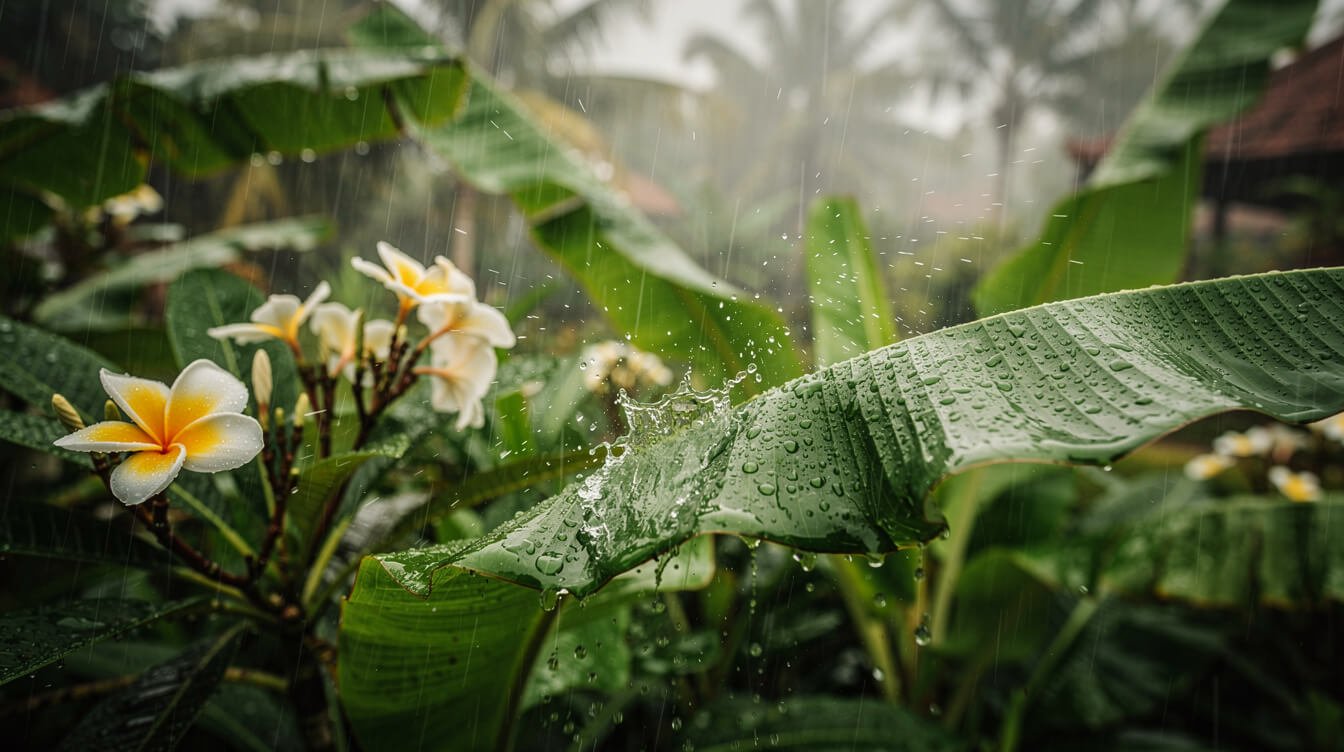
The phrase “rainy season” conjures images of all-day storms and flooding — the kind of weather that cancels plans entirely. In Bali, it means something else. The rain here is tropical: warm, sudden, dramatic, and usually finished within an hour or two.
A typical Bali rainy season day follows a reliable rhythm. Mornings are clear or lightly overcast. The sun comes through, temperatures sit around 28-32°C (82-90°F), and you have a full morning to explore, swim, or wander through the Tegallalang rice terraces. By early to mid-afternoon, clouds build. The air thickens with humidity. Then the rain arrives — hard, warm, straight down. It drums on tiled roofs, turns garden paths into small rivers, fills the air with the smell of tropical earth. And then, usually within an hour or two, it stops. The late afternoon often opens into golden light.
Some days, the rain comes in the evening instead. Some days — even during peak wet season — it skips you entirely. The point is this: the Bali rainy season rarely means a day lost. It means an hour or two rearranged.
What It Does Not Look Like
This is not London grey. It is not a cold, day-long drizzle. The rain is warm. You can stand in it wearing a t-shirt. Between showers, the sun returns and temperatures stay tropical. Humidity is higher than dry season, and the air feels fuller, but the tradeoff is everything around you turning impossibly, almost unreasonably green.
When Is the Bali Rainy Season and What Each Month Feels Like

The Bali rainy season typically runs from November through March, with December and January as the wettest months. But the transition is gradual, not a switch. Here is what each month actually feels like.
November: The Transition Begins
Scattered afternoon showers begin, usually 2-3 days per week. Mornings are still reliably sunny. This is one of the best-kept secrets in Bali travel timing — fewer crowds than October, lower prices starting to appear, and the landscape beginning its transformation from dry-season brown to wet-season green.
December and January: Peak Wet Season
Rain comes most days, typically in the afternoon or evening. Showers are heavier and last longer — sometimes two to three hours. Humidity peaks. But mornings remain open for activities, and the island is at its most lush. These are also the months of some of Bali’s most important ceremonies, including the buildup to Nyepi (Balinese New Year). Hotel and villa rates drop significantly compared to the July-August peak, even factoring in the holiday spike around Christmas and New Year.
February: Still Wet, Still Beautiful
Similar to January but with slightly fewer rain days. The landscape is at peak green. Waterfalls are at their most powerful — if you want to see Tegenungan or Kanto Lampo in full force, this is the month. Tourist numbers remain low.
March: The Fade-Out
Rain frequency drops. Showers become lighter, shorter, less predictable. March often feels like September — warm, partly cloudy, with occasional tropical bursts. By the end of March, the dry season rhythm takes over. If you want the benefits of rainy season (prices, quiet) with increasingly dry weather, March is your sweet spot.

Get a Free 3-Day Sample Itinerary
Planning your Bali trip? We will send you a sample 3-day Ubud itinerary — including rainy season tips from our team.
Why the Bali Rainy Season Is Worth Considering

The wet months are not just tolerable. For a certain kind of traveler, they are genuinely better. Here is why.
The Island Turns Green
This is not a subtle change. Rice terraces that look dry and golden in August turn into cascading layers of vivid emerald. Gardens explode. Frangipani trees bloom harder. The rice field walks around Ubud feel like stepping into another world. If you care about landscape photography — or just want your morning view to take your breath away — wet season Bali is incomparable.
Fewer Crowds Everywhere
July and August, Bali’s high season, can feel crowded at popular sites — long waits at Tirta Empul, packed restaurants in Central Ubud, tour buses at every viewpoint. During the rainy season, those same places breathe. You get the temple to yourself at sunrise. You walk straight into the restaurant that had a 45-minute wait in August. The slower pace is not a compromise — it is the point.
Significantly Lower Prices
Flights, villas, tours, spa treatments — everything costs less during the wet season. A villa rental that commands premium rates in July may offer 30-50% savings in January. For families or groups where the cost difference is multiplied across multiple rooms, this is real money.
Waterfalls at Their Peak
Bali’s waterfalls need rain. During dry season, some of the smaller ones slow to a trickle. In wet season, every cascade is thundering. Tegenungan, Tibumana, Kanto Lampo, Tukad Cepung — they are all at their most dramatic from December through February.
A Richer Cultural Calendar
Some of Bali’s most significant ceremonies happen during or near the wet months. Galungan and Kuningan (the victory of good over evil, celebrated every 210 days) often fall in this period. The buildup to Nyepi — with its Ogoh-Ogoh parades and the extraordinary island-wide day of silence — is an experience no dry-season visitor gets.
What to Do in Bali During the Rainy Season

The trick to a great Bali rainy season trip is simple: plan mornings outdoors, afternoons indoors (or under cover), and stay flexible. Here is how to structure your days.
Mornings: Get Outside Early
Rain almost never comes before noon. Use your mornings for the outdoor things: temple visits, rice terrace walks, market shopping, cycling tours, or sunrise hikes. The air is cooler and cleaner after overnight rain, and the light is soft and beautiful. A morning walk along the Campuhan Ridge after a night of rain is one of Ubud’s best-kept experiences.
Afternoons: Embrace the Indoor Side of Bali
This is when the rain typically arrives — and it is the perfect excuse to explore the gentler side of the island.
- Spa and wellness: A traditional Balinese spa treatment while rain drums on the roof is one of the most atmospheric experiences Bali offers. Book your spa sessions for the afternoon slot.
- Cooking classes: Learn Balinese cuisine in a covered kitchen. Several Ubud cooking schools include a morning market visit (before the rain) followed by indoor cooking and eating through the afternoon.
- Gallery and museum hopping: Ubud’s art museums — the ARMA, Neka, Puri Lukisan — are ideal rainy-afternoon destinations. The galleries are covered, air-conditioned, and usually quiet during wet season.
- Yoga and meditation: Ubud’s yoga studios run classes throughout the day. An afternoon yoga session while rain falls on a thatched roof is the kind of sensory experience you simply cannot get at home.
- Restaurant exploration: Use the rain as your excuse to linger at Ubud’s extraordinary restaurants — a long lunch at Locavore, an afternoon at Alchemy, a slow coffee at Seniman.
Evenings: The Best Part
After the rain passes, wet-season evenings in Ubud are extraordinary. The air smells of clean earth and flowers. Sunsets — when they come — are more dramatic than dry-season ones, with towering clouds lit up in orange and pink. Evening cultural performances continue rain or shine, with covered pavilions protecting both dancers and audience.
How a Staffed Villa Changes Your Bali Rainy Season Experience

Here is where the gap between a hotel stay and a staffed private villa becomes obvious. When the rain comes, a hotel room feels like a box you are waiting in. A villa feels like a place you are living in.
Your Private Covered Terrace
Most Ubud villas — certainly ours — have covered outdoor living areas, deep verandas, and sheltered pool decks. When the afternoon rain arrives, you do not retreat to a windowless room. You sit on the terrace with a book, watch the rain hit the pool surface, listen to the sound of water on tropical leaves, and feel the warm mist. It is one of the most atmospheric experiences Bali offers, and it only happens during the wet season.
Your Chef Adapts the Menu
When it rains in the afternoon, our private chef often shifts to comfort food — a rich soto ayam (chicken soup with turmeric), warm jamu (traditional herbal drinks), or freshly fried pisang goreng (banana fritters) served on the covered terrace. This is not something you request. It is something that happens because the chef lives in this climate and knows what the rain calls for.
Your Manager Adjusts Your Day
A staffed villa means someone is watching the weather for you. If rain is building early, your villa manager might suggest moving your rice terrace walk to tomorrow and booking a spa treatment for today. If the forecast opens up unexpectedly, they will call your driver and rearrange. This kind of flex is not possible with pre-booked, non-refundable resort schedules.
Your Pool Stays Warm
Bali rain is warm — and so is the pool. Swimming in a private pool during a tropical downpour, with rain hitting the surface around you while the water stays bath-temperature, is genuinely one of the best feelings in travel. You will not get that at a shared hotel pool where everyone retreats to their room the moment the first drops fall.

Experience Bali’s Rainy Season from a Staffed Villa
Three bedrooms, private pool, full staff — chef, housekeeper, villa manager. Your rainy season retreat in Ubud.
What to Pack for Bali’s Rainy Season

Packing for the Bali rainy season is not about packing for bad weather. It is about packing for warm weather that gets wet. Here is what experienced travelers bring — and what you can skip. For a deeper dive, see our complete Bali packing guide.
The Essentials
- A light, packable rain jacket: Not a heavy waterproof — something thin and breathable that dries quickly. You will sweat in anything heavier.
- Quick-dry clothing: Synthetic or linen-blend fabrics that handle humidity and dry overnight. Cotton takes forever in tropical moisture.
- Waterproof sandals or reef shoes: Havaianas or Tevas for wet sidewalks, slippery temple steps, and spontaneous puddle crossings. Leave the leather shoes at home.
- A dry bag or waterproof pouch: For your phone, passport, and wallet. A simple roll-top dry bag (10-15L) protects everything during sudden downpours.
- A compact umbrella: Many Balinese carry one. They are also sold for a few dollars at any minimart.
- Insect repellent: Mosquitoes increase during wet season. DEET-based or picaridin-based repellent is essential, especially at dawn and dusk.
- Sunscreen: Yes, still. The UV index stays high even on overcast days. You will get sunburned through clouds if you are not careful.
What You Can Skip
- Heavy rain gear or rubber boots — this is the tropics, not a Scottish moor
- Jeans or heavy fabrics — they absorb moisture and never dry
- Elaborate blow-dry styling equipment — the humidity wins every time
Frequently Asked Questions About the Bali Rainy Season

Does it rain all day during Bali’s rainy season?
No. Rain typically comes in short bursts lasting one to three hours, usually in the afternoon or evening. Mornings are generally clear and sunny. Full-day rain is rare — maybe a few times per season.
Is it safe to visit Bali during the rainy season?
Yes. The main consideration is driving on wet roads, which can be slippery, and the slight increase in mosquito activity. Serious flooding is uncommon in Ubud’s highland areas, though low-lying coastal areas like Kuta can experience temporary waterlogging after heavy storms. Use a reputable driver (your villa team can arrange one) and carry mosquito repellent.
What is the cheapest month to visit Bali?
Generally, January and February offer the lowest prices for flights and accommodation. November and early December (before the holiday surge) are also excellent value. The exception is the Christmas-New Year period (roughly December 20 to January 5), which sees peak pricing regardless of weather.
Can I still go to the beach during rainy season?
Absolutely. The rain is warm and the ocean stays swimmable. Surf conditions actually improve on Bali’s east coast during wet season (the west coast sees bigger, rougher swells). Beach days are still very much possible — you just might get a tropical shower in the afternoon. For a broader trip planning perspective, the beach is only one part of a Bali itinerary.
Is Ubud or the coast better during rainy season?
Both work, but Ubud has a particular advantage. The highland climate means slightly cooler temperatures, less humidity than the coast, and the dramatic green rice terraces that are the signature of wet-season Bali. Ubud also has more covered activities — museums, yoga studios, cooking classes, spa treatments — making it easier to fill rainy afternoons. If you are considering where to base yourself, our Ubud neighborhood guide covers the best areas.
Should I buy travel insurance for rainy season Bali?
Always — regardless of season. But wet-season travel does carry a slightly higher risk of flight delays due to tropical storms (rare but possible). Standard travel insurance covers weather-related disruptions. Make sure your policy includes medical coverage for Indonesia.
What about dengue fever during rainy season?
Dengue risk does increase slightly during wet season due to more standing water for mosquitoes. Preventive measures are straightforward: use repellent (especially dawn and dusk), wear light long sleeves in the evening, and stay in accommodation with screens or air conditioning. Your villa team can provide mosquito coils and repellent if needed.

Join Our Newsletter
Fun, fresh Bali travel tips and Ubud stories — delivered to your inbox. No spam, just the good stuff from our team in Ubud.