The Gamelan You Hear But Never Find
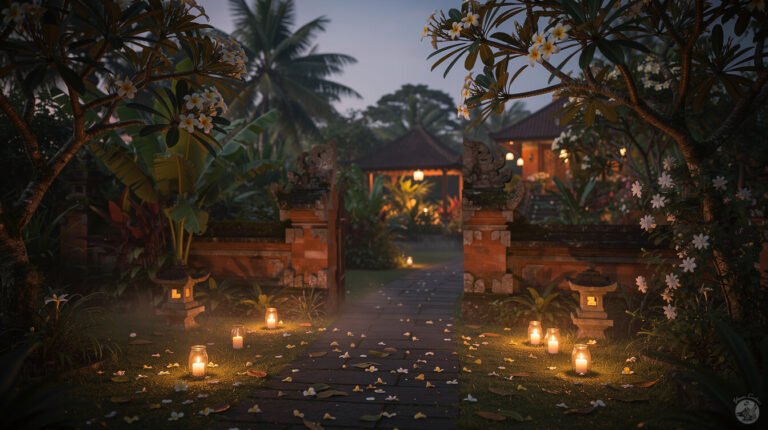
It starts around dusk. Somewhere past the garden wall, past the next compound, past two or three turns in the narrow lane — the sound of gamelan begins. Bronze notes, layered and shimmering, drifting through the warm evening air of Ubud like smoke from a neighbor’s kitchen.
You stop what you’re doing. You listen. You try to figure out which direction it’s coming from.
You won’t.
How the Sound Moves Through the Valley
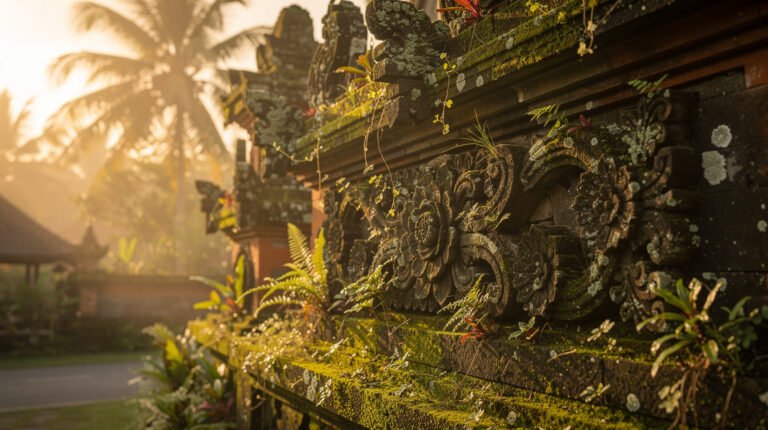
Ubud sits in a valley of river gorges and rice terraces, and sound doesn’t travel here the way you expect. The gamelan bounces off stone walls, bends around temple gates, gets absorbed by dense tropical canopy and then released again from a completely different angle. One moment it sounds close — just across the road. The next, it’s far away, somewhere deep in the village where the lanes get too narrow for cars.
This is the auditory texture of what makes Ubud different. The sound isn’t piped in. There’s no speaker. Somewhere, a group of men are practicing in a banjar — a neighborhood pavilion — for a ceremony that might be tomorrow or might be next week. They’ve been playing these compositions since they were children.
What You’re Actually Hearing
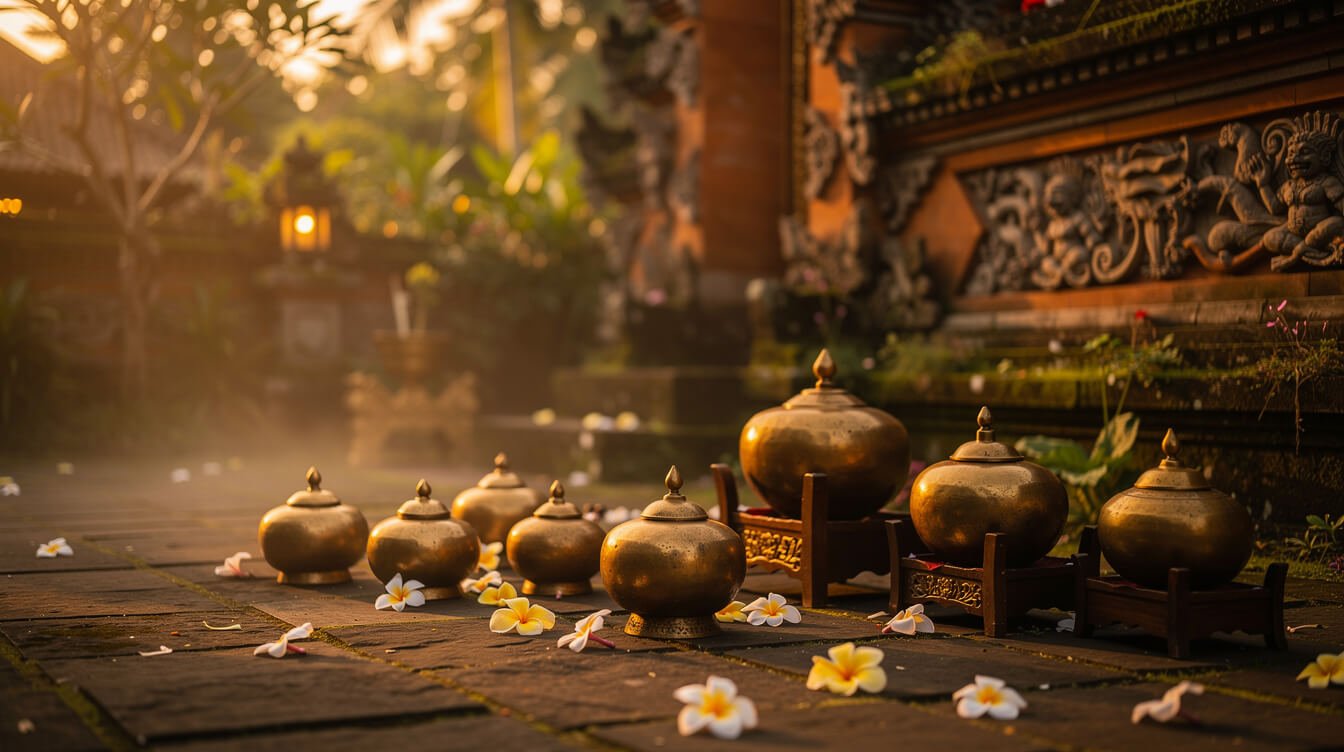
The metallophones. The gongs. The interlocking patterns called kotekan, where two players share a melody between them so tightly that it sounds like one impossible instrument. The tempo shifts without warning — slow and contemplative, then suddenly rapid, cascading, urgent. Then quiet again.
If you’ve spent time in a yoga studio here, you’ve probably heard recordings of this music used for meditation. But recordings miss the essential quality: the way it exists in space. The way it fills the garden without filling the room. The way it sits underneath the frogs and the insects and the distant motorbike, just another layer of the evening.
The Part That Stays With You
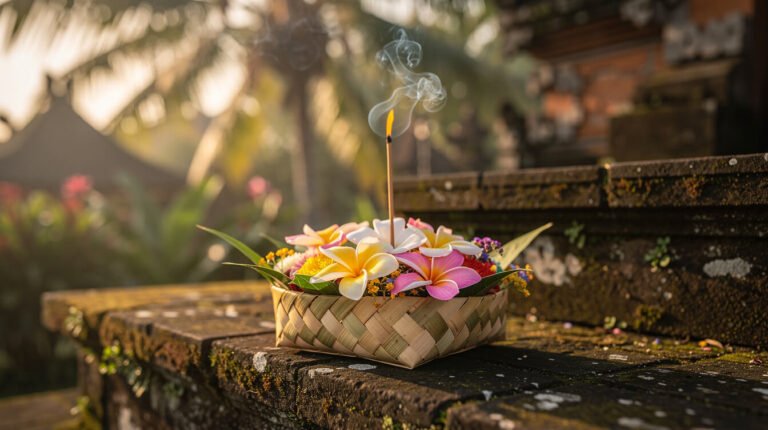
After a few evenings at the villa, you stop trying to find the source. You stop walking toward it. You just let it arrive — the same way you let the breeze arrive, or the scent of incense from the neighbor’s evening offering. It becomes part of how you measure time here. Not by the clock, but by the sounds that mark each hour.
Morning has the roosters and the broom on stone. Afternoon has the rain, when it comes. And evening has the gamelan — distant, unhurried, belonging to nobody you can see but everyone who lives here.
If you’re planning a stay in Ubud, you won’t find this on any itinerary. It just happens. And once you’ve heard it, you’ll keep hearing it long after you leave.