Bali Tiger: The Island’s Lost Big Cat, and Where Its Stripes Still Live
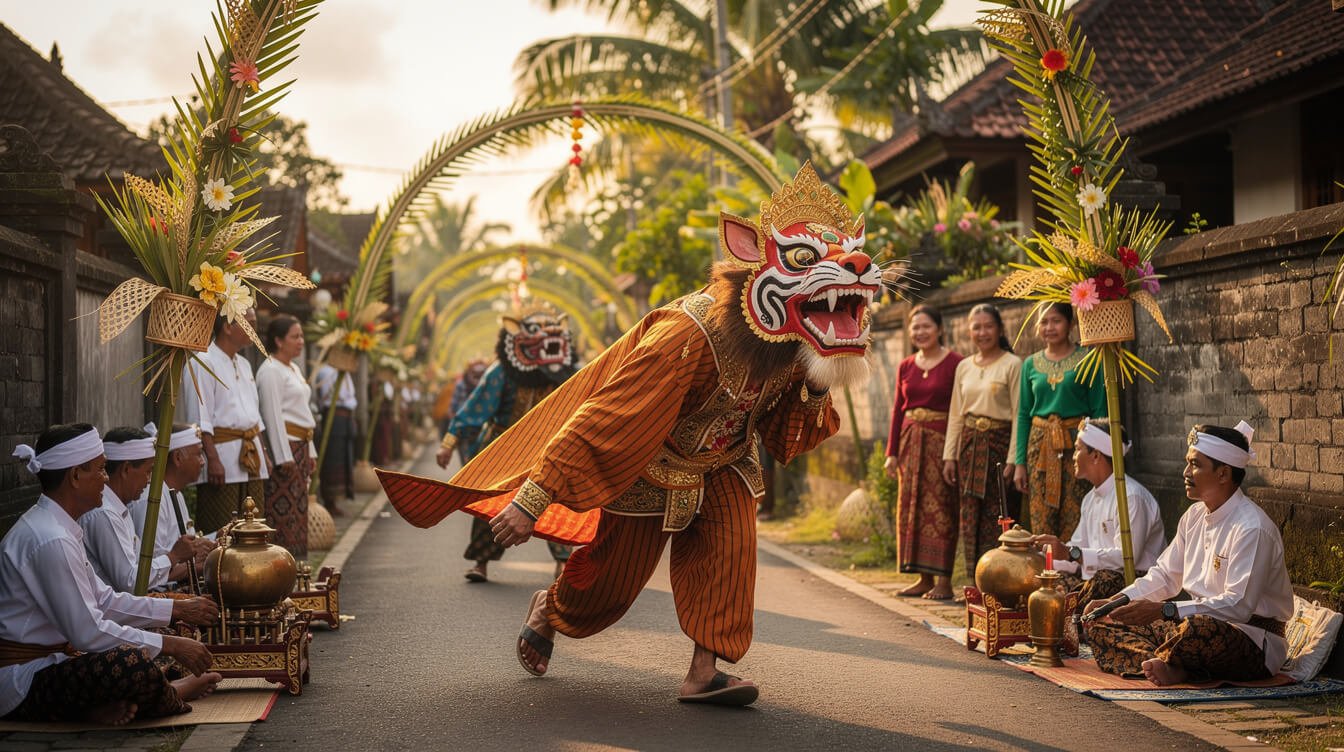
Walk into a village in Ubud during Galungan and you might meet a tiger. It comes down the lane at walking pace, two dancers inside one striped body, a carved red-and-gold face swinging from side to side, a small gamelan clattering along behind it. Children run ahead to warn the next compound. Someone sets an offering on the ground. The real Bali tiger has been gone for more than eighty years, yet here it still is, stopping at gates and being fed flowers.
This guide is about both of those tigers: the small, dark cat that once hunted deer in the dry forests of western Bali, and the one that still dances. Most pages about the Bali tiger stop at the obituary. Here you’ll find what the animal actually was, how and when it disappeared, how it fits into the story of the world’s three extinct tigers, where its image survives in Balinese ritual and art, what wild Bali looks like now, and how to see the tiger’s Bali for yourself from a base in Ubud.
The Smallest Tiger: What the Bali Tiger Was
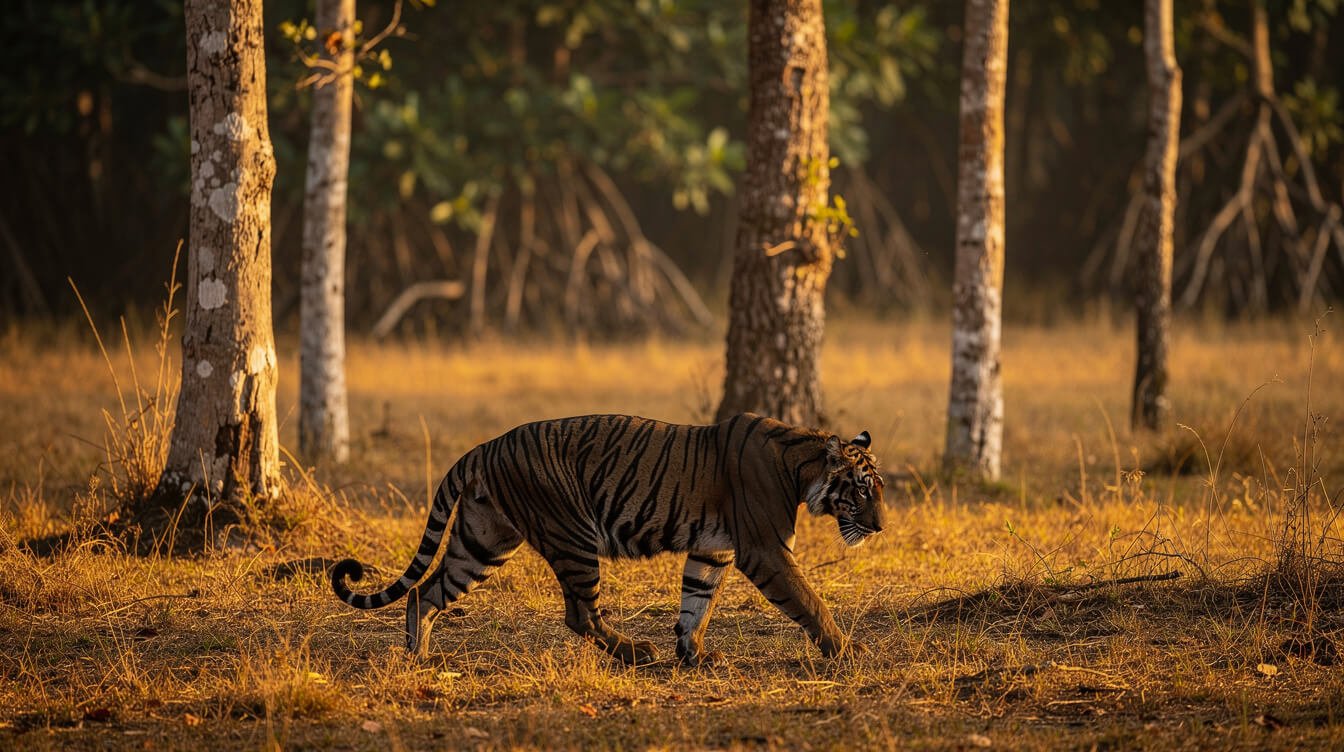
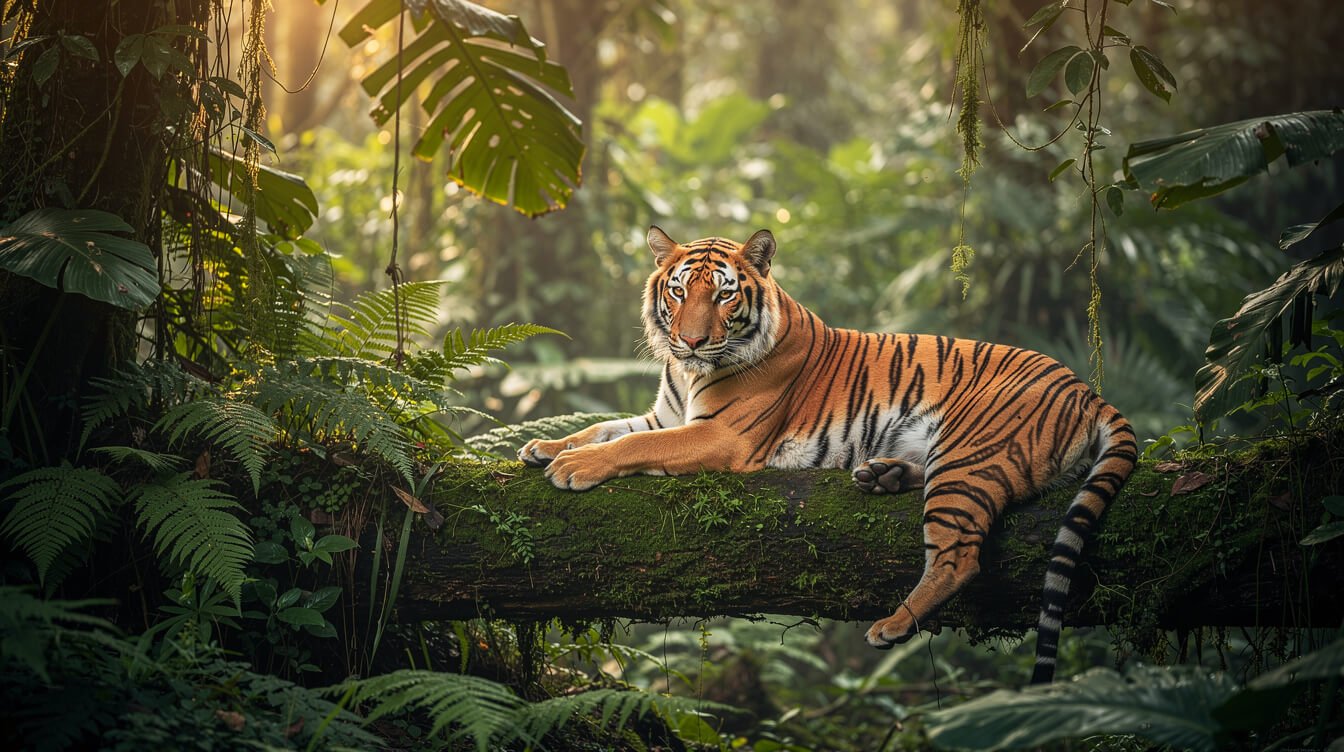
The Bali tiger was the smallest tiger anyone has measured. Males weighed roughly 90 to 100 kilograms (200 to 220 pounds), and females around 65 to 80 kilograms. That’s about the size of a large leopard, and roughly a third of a big Amur tiger from the Russian Far East. Skins of males measured about 2.2 to 2.3 meters from nose to tail tip. Museum skins show dense, narrow dark stripes, and the zoologist who first described it noted a brighter coat than the Javan tiger’s.
The German zoologist Ernst Schwarz gave it a scientific name in 1912, Panthera tigris balica, based on a skin and skull in a Frankfurt museum. For most of the twentieth century it was treated as its own subspecies. In 2017, the Cat Specialist Group of the IUCN revised tiger taxonomy and grouped the tigers of Bali, Java and Sumatra together as one island subspecies, Panthera tigris sondaica, the Sunda tiger. So, strictly speaking, the Bali tiger was a local population of the same island tiger that still lives, critically endangered, in Sumatra’s forests. Genetic work on old museum samples suggests tigers reached these islands roughly 11,000 to 12,000 years ago, at the end of the last ice age.
Where did the Bali tiger live?
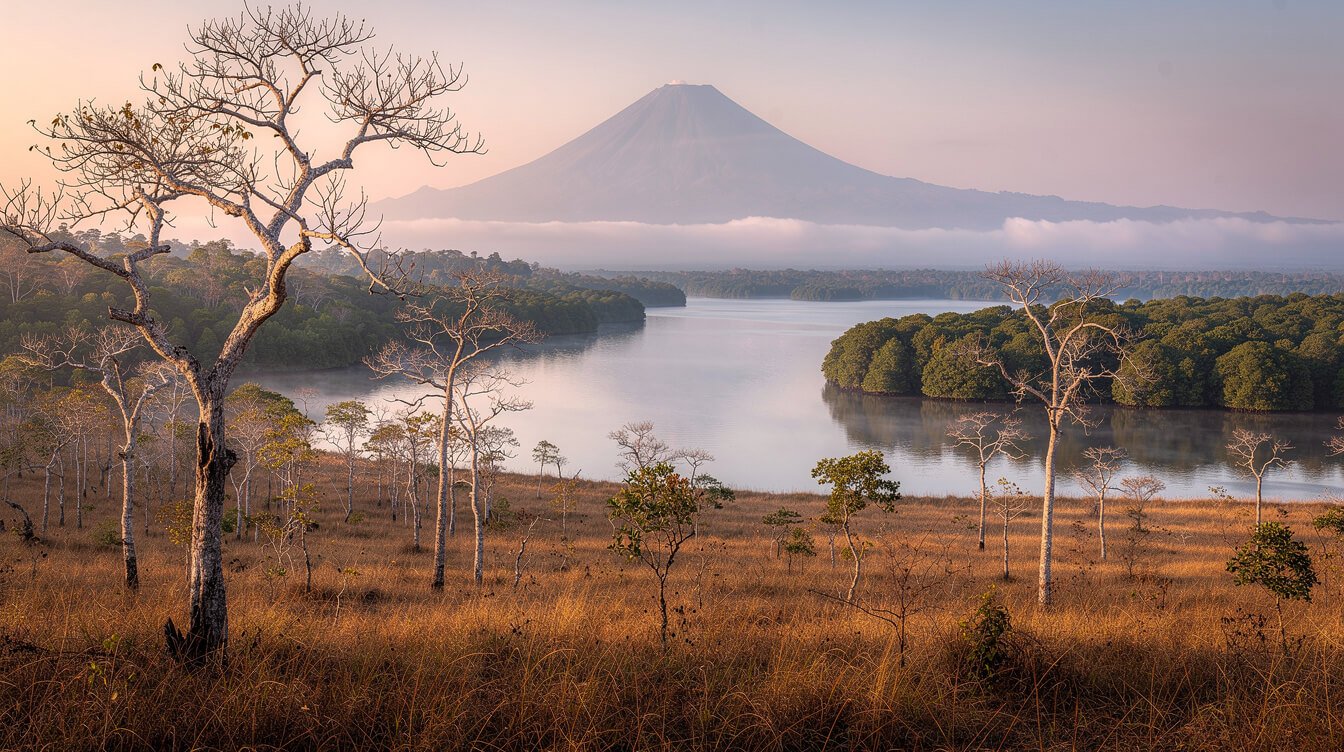
This is one of the most-asked questions about the animal, and the answer surprises people who picture tigers in thick jungle. Most known specimens came from the dry west of the island, where mangroves, coastal dunes, monsoon forest and open savanna meet. Its main prey was most likely the Javan rusa deer, which still grazes the same coast today. The Balinese called the tiger samong, and in everyday speech it was, and still is, macan.
Bali is a small island, under 6,000 square kilometers, and much of it was already farmed by the nineteenth century. The tiger population was probably never large. That small range is part of why it disappeared so quickly once the pressure came.
How the Bali Tiger Disappeared
The end came within a few decades. In the late nineteenth century, plantations and new irrigated rice fields spread across Bali’s fertile northern slopes and coastal plains, squeezing the forest edge. After the Dutch took control of the whole island in the early twentieth century, the tiger also became a trophy. European sportsmen crossed from Java with high-powered rifles. A common method was a heavy steel foot trap hidden under a tethered goat, followed by a shot at close range. One gunmaker from Surabaya is recorded as killing more than twenty tigers in only a few years, and a well-known photograph from November 1911 shows a hunting party in northwest Bali posing with a dead tiger.
The last confirmed Bali tiger is usually given as an adult female shot at Sumbar Kima in western Bali on 27 September 1937. Sources differ on how much longer a few animals lasted. A small number may have survived into the 1940s, and some researchers allow for the early 1950s, but no specimen reached a museum after the Second World War. Reports of tigers in the west in later decades have never been confirmed, and on an island this small and this closely farmed, a hidden breeding population is not realistic.
In 1941 the colonial government set aside a game reserve in western Bali, the beginning of what is now West Bali National Park. It came too late for the tiger. The IUCN formally lists the Bali tiger as extinct. What’s left of it is a handful of skins, skulls and bones in museums in London, Frankfurt, Stuttgart, Leiden, Budapest and Bogor, the last of which holds the remains of the last known animal.
It’s worth telling this part plainly and gently. The hunters were mostly outsiders, and the farmers who cleared the forest were feeding families. Bali didn’t lose its tiger through anyone’s single decision. It lost it the way most places lose their large animals: slowly, then all at once.
The Three Extinct Tigers, and the Java Question
If you’ve searched for the Bali tiger, you’ve probably seen the question “what are the three extinct tigers?” The usual answer is the Bali tiger, the Javan tiger and the Caspian tiger. Each story is a little different.
- The Bali tiger was the first to go, gone by the 1940s and possibly the early 1950s.
- The Javan tiger, Bali’s nearest neighbor, held on in Java’s southeastern forests into the 1970s. The IUCN listed it as extinct in 2008. In 2024, researchers published DNA results in the journal Oryx from a single hair found in 2019 on a fence near Cipendeuy village in Sukabumi, West Java. It matched a Javan tiger museum specimen from 1930. The authors themselves say more genetic and field evidence is needed, so treat it as a hopeful question mark, not a rediscovery.
- The Caspian tiger once ranged from Turkey and Iran into Central Asia and was gone by around the 1970s. Genetic studies have since shown it was almost identical to the living Amur (Siberian) tiger, and the 2017 taxonomy now groups both with the mainland tigers. That closeness is why Kazakhstan has begun a project to bring Amur tigers back into former Caspian range.
Did tigers cross between Bali and Java?
The Bali Strait is only about two and a half kilometers wide at its narrowest point, near the ferry crossing between Gilimanuk and Ketapang in East Java. During ice ages, when sea levels fell, Bali was joined to Java by land. Tigers are also strong swimmers. Genetic studies of museum specimens show Bali and Javan tigers were very closely related, which is why they’re now classed together. Bali sits just west of the Wallace Line, the deep-water boundary between Asian and Australian wildlife. That’s why tigers reached Bali but never reached Lombok, a short ferry ride to the east.
What is the second-largest tiger?
Since the question often comes up alongside the Bali tiger: the Amur tiger is usually ranked largest, with the Bengal tiger of India and Bangladesh close behind and generally named the second-largest. The island tigers of Sumatra, Java and Bali sat at the other end of the scale, and the Bali tiger was the smallest of all.
Get a free 3-day sample itinerary
Curious about the Bali behind the stories? See how three easy days from Ubud can unfold: a temple morning before the crowds, an afternoon with the painters and carvers, an evening of dance and a long slow breakfast in the rice fields. We will send you a free 3-day sample itinerary.
Where the Bali Tiger Still Lives: Barong Macan, Painting and Folklore
Here’s the part the encyclopedia pages leave out. The animal is gone, but in Balinese culture the tiger never really left. It moved from the forest into ritual, carving and paint.
Barong Macan, the tiger Barong
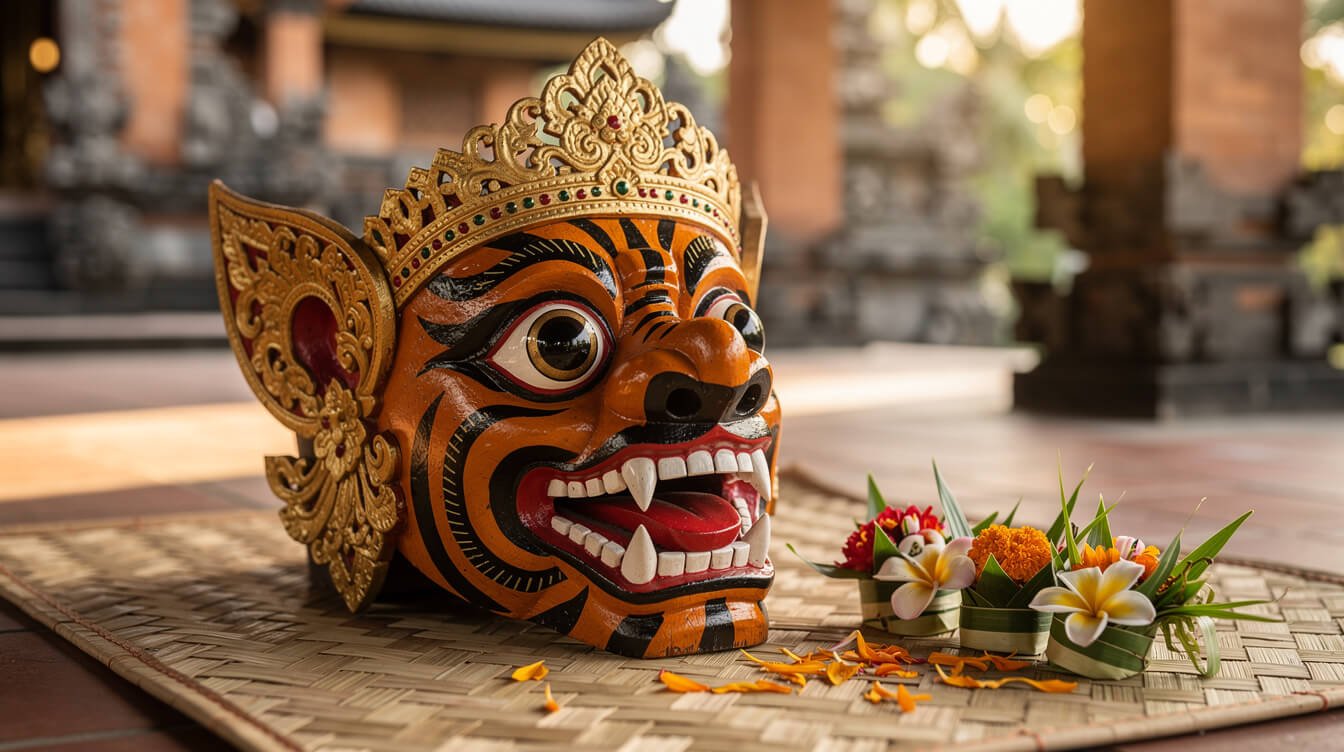
The Barong is a protective spirit, the guardian figure you may already know from the Barong and Rangda dance. Most visitors only ever see the lion-like Barong Ket, with its shaggy coat and mirrored crown. But the Barong takes several animal forms: Barong Bangkal (a boar), Barong Gajah (an elephant), Barong Naga (a serpent) and Barong Macan, the tiger. The tiger Barong has a striped body and a carved wooden face with round staring eyes and bared fangs. In the villages that keep one, the masks are sacred objects, stored in the temple and woken with offerings and prayers before they dance.
You’re most likely to meet a tiger Barong around Galungan and Kuningan, the ten-day festival when Balinese families welcome their ancestors home. During this period, groups take Barong figures through the village from gate to gate, a tradition called ngelawang, to drive off bad influences and bless each household. Children often carry small Barong of their own. Many of these are boars or lion-Barong, but tigers turn up too. The next Galungan falls on Wednesday, 13 January 2027, with Kuningan on Saturday, 23 January. If you’re in Ubud then, a slow walk through the back lanes in the afternoon is the best way to meet one. You can read more about the festival in our guide to Galungan in Bali, and about Barong and the other dances in our guest’s guide to Balinese dance.
Tigers in Kamasan painting
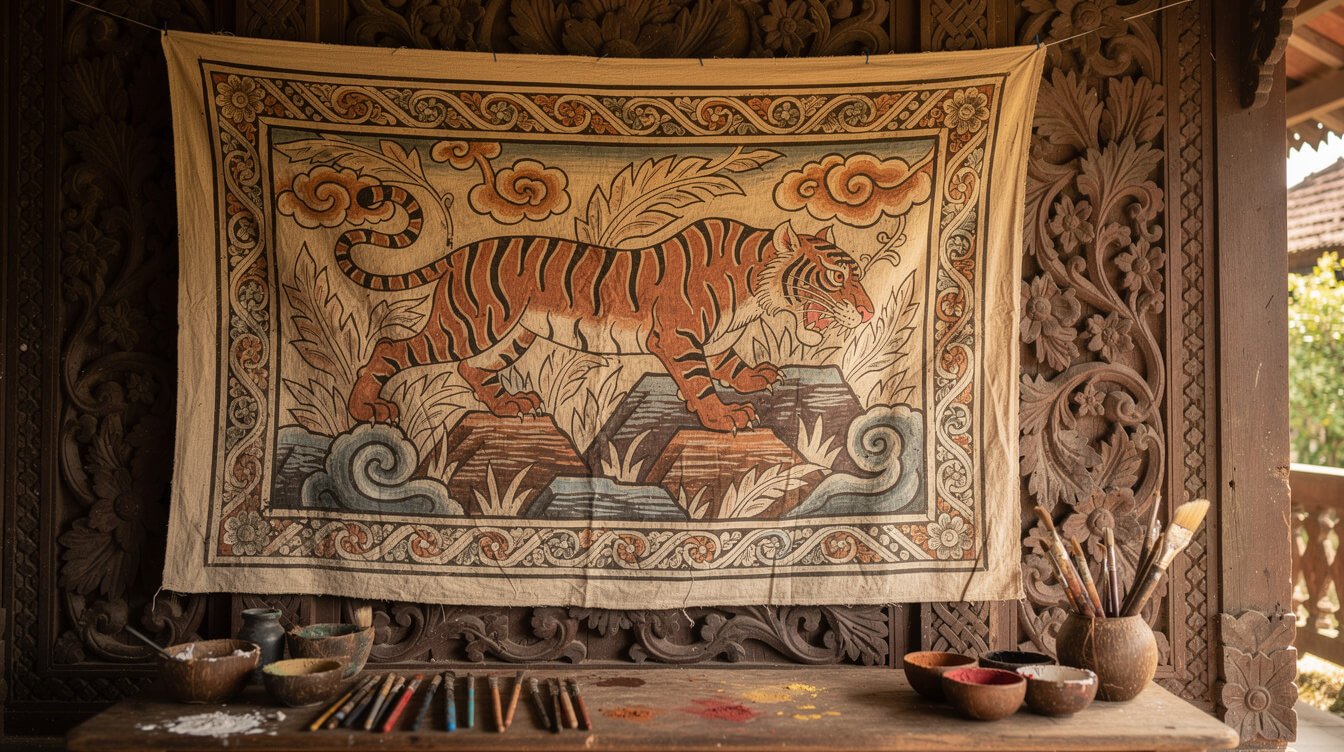
The tiger also appears in Kamasan painting, the classical narrative style of the old Klungkung kingdom in East Bali. Painted on cloth in earthy natural pigments, these works tell stories from the epics and from folk tales, and tigers show up among the stylized rocks, leaves and clouds. The village of Kamasan, about an hour from Ubud, still has family studios where you can watch painters work. The ceiling of the Kerta Gosa pavilion in Semarapura is the most famous public example of the style.
Amulets, whiskers and carved guardians
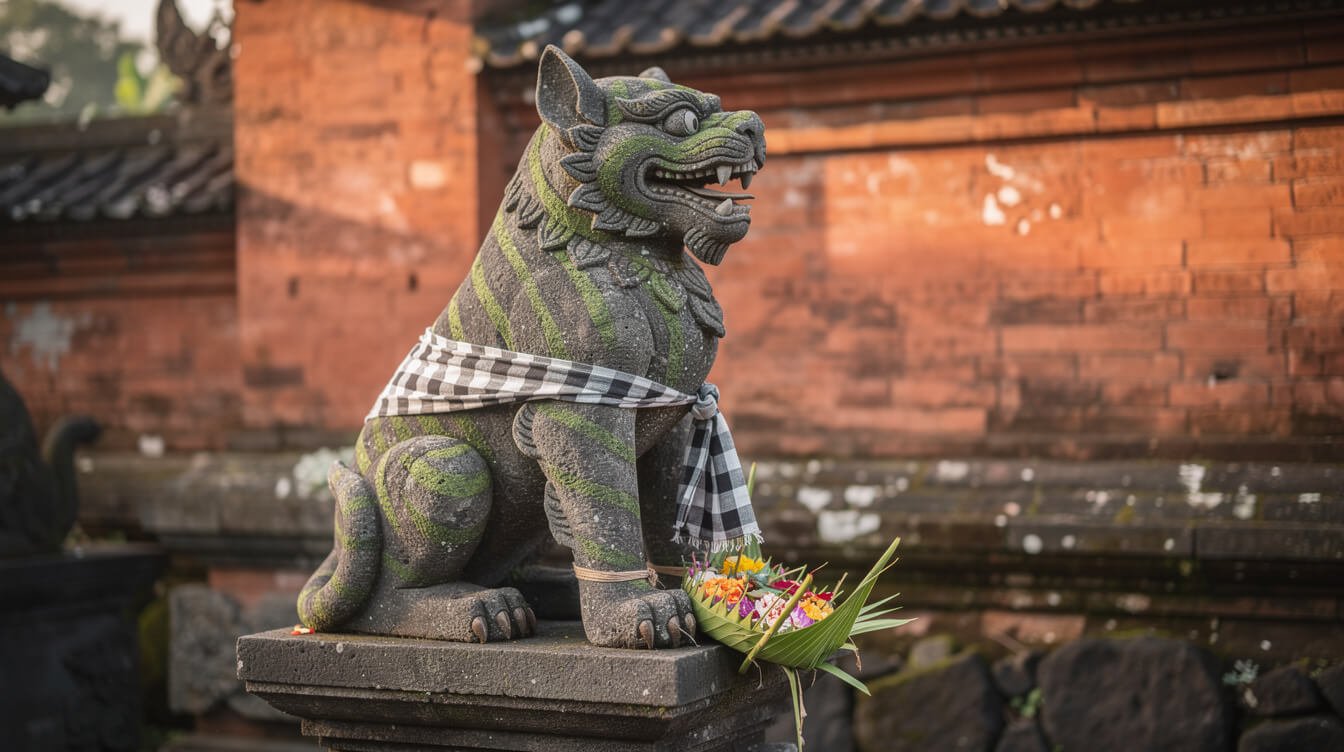
In the 1930s, the Mexican artist Miguel Covarrubias recorded that Balinese babies wore protective necklaces of black coral with a tiger’s tooth or a piece of tiger bone. Powdered tiger whisker was said to be a powerful, undetectable poison. These were real beliefs about a real animal, and they show how close the tiger lived to daily life. Today you’ll see the tiger in stone guardians at temple gates and in the woodcarving shops of Mas and the stone yards of Batubulan, and in the animal fables carved on temple walls. Once you start looking, the stripes are everywhere.
For a gentle grounding in the beliefs behind all this, from offerings to guardian spirits, see our guide to Balinese Hinduism.
What Wild Bali Looks Like Today
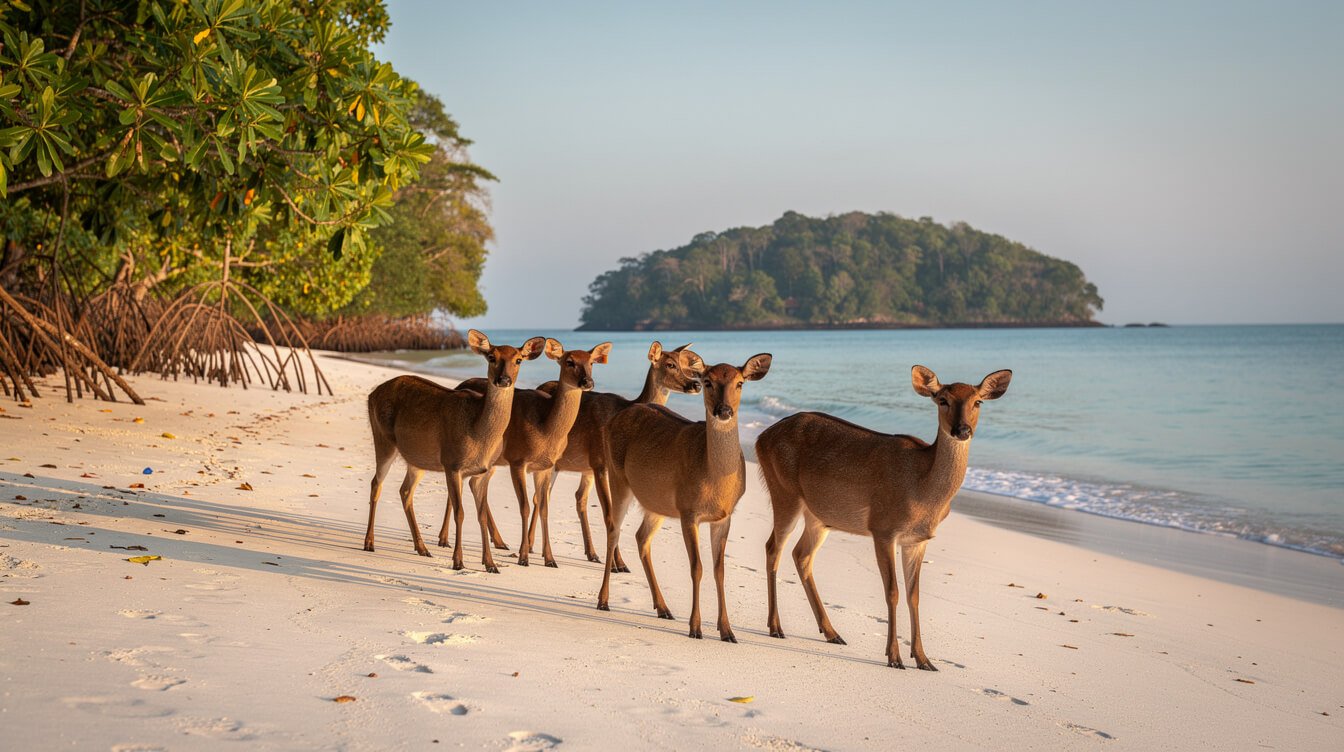
Another common search is “what predators are in Bali?” The honest answer is reassuring, especially if you’re traveling with children: Bali has no big cats and no large land predators at all. The wild animals you might meet are smaller and almost all shy.
- Leopard cats. Bali’s only wild cat now is the leopard cat, about the size of a house cat, known locally as kucing hutan. It lives in forest and farmland edges and is rarely seen. In August 2026, Bali’s conservation agency released one, handed over by a villager, back into West Bali National Park.
- Long-tailed macaques. The animal you’re most likely to have a real encounter with. Keep food and sunglasses out of reach in temple forests.
- Civets. Small, nocturnal and mostly heard on rooftops rather than seen.
- Snakes and monitor lizards. Reticulated pythons, a few venomous species and water monitors live on the island. They avoid people, and you’re very unlikely to see one on a normal trip.
West Bali National Park, the tiger’s old range
If you want to stand where the Bali tiger once hunted, go west. West Bali National Park, which grew out of that 1941 reserve, covers the dry northwest corner of the island: monsoon forest, savanna, mangroves and coral reefs. The deer the tiger once hunted are still here. Javan rusa graze the coastal grassland and wander the beaches of Menjangan Island, whose name means “deer.” The park is also one of the last wild homes of the Bali starling, the bright white bird you can read about in our Bali starling guide.
Standing in that forest at dawn, with deer moving through the grass and no tiger anywhere behind them, is a quietly powerful way to understand what the island lost.

Book the Villa
Make a home in the rice fields your base for Barong nights, gallery mornings and a trip out west. Three bedrooms, a private pool and a tropical garden, with a team on hand to help you plan your days out and cook your dinners. Check availability for your dates.
Seeing the Bali Tiger’s World from Ubud
You can’t see a Bali tiger. But you can spend a few unforgettable days tracing the life it left behind. Here is how we’d suggest doing it from Ubud.
In and around Ubud
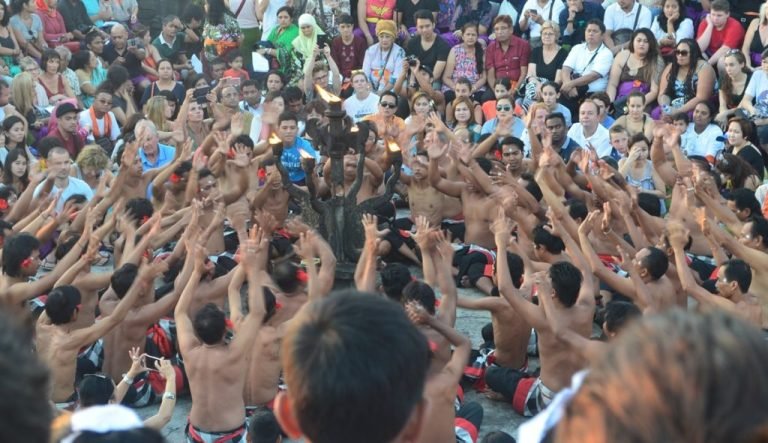
- A Barong performance. Ubud has evening dance performances most nights, and the Barong appears regularly. The tiger Barong is rarer, so if you particularly want to see one, ask locally which village groups keep one and whether they’re performing during your stay. Our kecak dance guide and Ubud Palace guide cover where the evening dances happen.
- The galleries. Ubud’s art museums trace Balinese painting from the classical Kamasan style onward, and the Agung Rai Museum (ARMA) is a lovely place to learn to read the old narrative paintings. Look for animals in the margins.
- Carvers’ villages. Mas, just south of Ubud, is the woodcarving village. Batubulan, further south, is known for stone. Tigers are a common subject in both.
Kamasan and Klungkung (half day)
Kamasan village and the Kerta Gosa pavilion in Semarapura are about an hour east of Ubud and pair easily with other East Bali stops. Our list of day trips from Ubud has more ideas for that side of the island.
West Bali National Park (best as an overnight)
- Getting there: roughly three and a half to four hours each way by car from Ubud, depending on traffic on the main west road. That’s a long day, so many visitors stay a night near the park.
- Where to start: the park headquarters is at Cekik, just outside the ferry town of Gilimanuk, and there’s a ranger post at Labuan Lalang on the north coast, the departure point for boats to Menjangan Island.
- Guides: you need a licensed guide to walk inside the park, and a guide makes deer, starlings and other wildlife far easier to find.
- Fees: since late 2024, the entry fee for foreign visitors has been listed at Rp 200,000 per person per day, with extra charges for activities such as diving. Fees change, so confirm at the ranger post.
- Best time: early morning, when the deer are grazing and the heat hasn’t built yet.
Ask the villa team to help you plan the drive and timing, and to point you toward Barong performances and festival dates during your stay.
Bali Tiger: Frequently Asked Questions
Is the Bali tiger extinct?
Yes. The last confirmed Bali tiger was shot in western Bali in September 1937, and the population was probably gone by the 1940s, or the early 1950s at the latest. The IUCN lists it as extinct.
Are there tigers in Bali today?
Not in the wild. Some of the island’s wildlife parks keep tigers, but these come from other tiger populations and are not Bali tigers.
How big was the Bali tiger?
Males weighed about 90 to 100 kilograms and females about 65 to 80 kilograms, which makes it the smallest tiger on record.
What did the Bali tiger eat?
Mostly Javan rusa deer, probably along with wild boar, smaller deer and other mammals. The rusa still lives in West Bali National Park today.
What are the three extinct tigers?
The Bali tiger, the Javan tiger and the Caspian tiger. A 2024 DNA study raised the possibility that Javan tigers survived longer than thought, but that hasn’t been confirmed.
Is it safe to hike in Bali with children?
Yes, as far as wildlife goes. Bali has no large predators. The main animal to be aware of is the macaque in temple forests, and normal care with snakes on overgrown paths. Our guide to family stays in Ubud has more on traveling here with kids.
Where can I see a Barong Macan?
Your best chance is during Galungan and Kuningan, when Barong figures travel from house to house in many villages. The next Galungan is 13 January 2027. Outside that window, ask locally about village performances.
Final Thoughts: An Island That Remembers
Balinese life is built around offering things to what can’t be seen: ancestors, guardians, the spirits of a crossroads or a river. It feels fitting, somehow, that the Bali tiger should live on here in the same way. It’s no longer in the forest, but it’s still part of daily life, carved at gates, painted on cloth and walked through the village once every 210 days to bless the households.
Come for the rice fields and the quiet mornings, and keep an eye out for stripes. When you see a tiger mask swinging down a village lane during Galungan, you’ll know exactly what it carries with it.

Join our newsletter — fun, new, exciting Bali news
Ceremony dates like Galungan and the full moons, wildlife and culture stories, entry-rule changes and small moments from Ubud. Delivered now and then, always worth opening.