Wayang Kulit in Bali: Shadow Puppets, Lamplight and Where to See a Performance Near Ubud
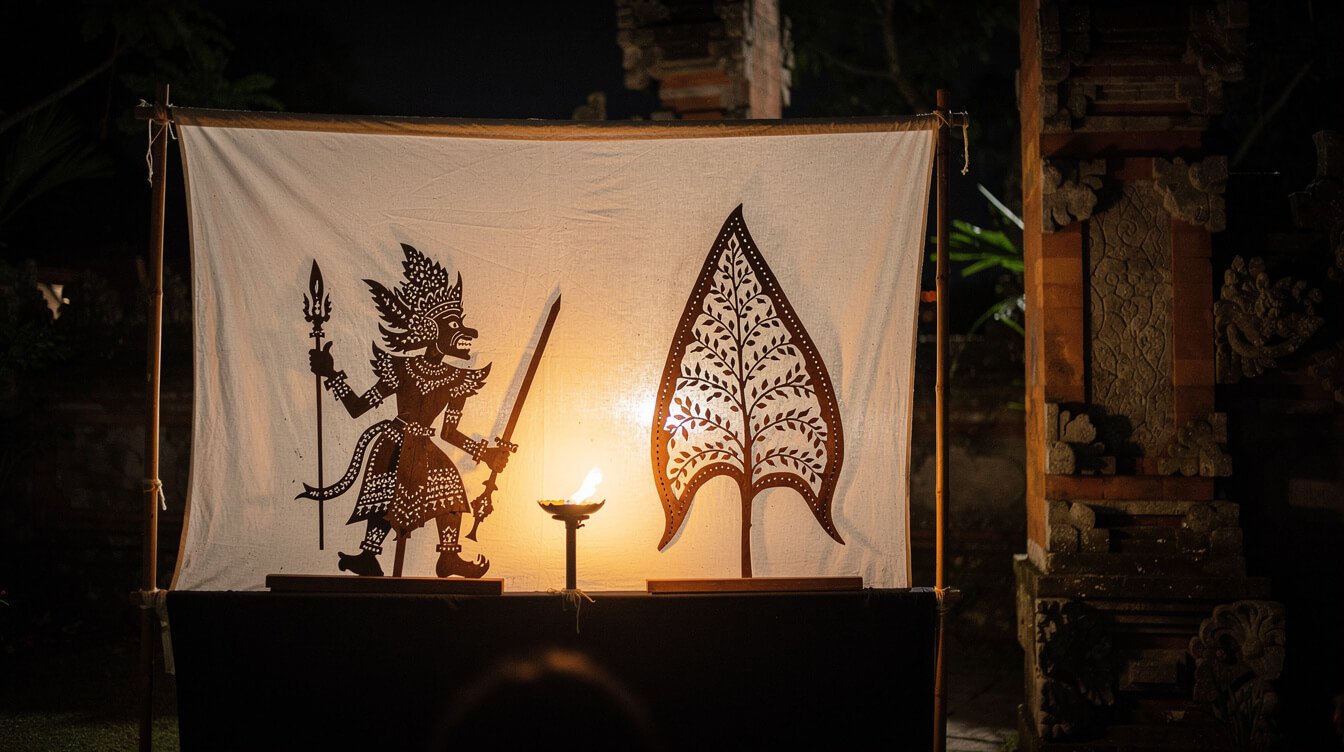
The screen is just a stretched white cloth, a little stained at the edges. Behind it hangs a small lamp, and in its flame a whole world begins to move. A tall leaf-shaped figure spins and trembles. A prince steps forward, a demon roars in a voice that seems far too big for one throat, and somewhere in the dark a quartet of bronze instruments ripples like water over stones. This is wayang kulit, the leather shadow-puppet theater of Indonesia, and in Bali it is still very much alive: performed in temple courtyards on festival nights, in family compounds for ceremonies, and in a few places near Ubud where you can see how the puppets are made.
Most guides to wayang kulit describe the Javanese form in the abstract. This one is written from Ubud for travelers who want to understand what they are watching here. You’ll learn what wayang kulit is and where the name comes from, a short history and its UNESCO recognition, how Balinese wayang differs from Javanese, the sacred daytime and purification shows most visitors never hear about, the puppet-makers of Sukawati, and how to actually find and enjoy a performance near Ubud. We finish with a short FAQ.
What Is Wayang Kulit? Leather, Lamplight and the Dalang
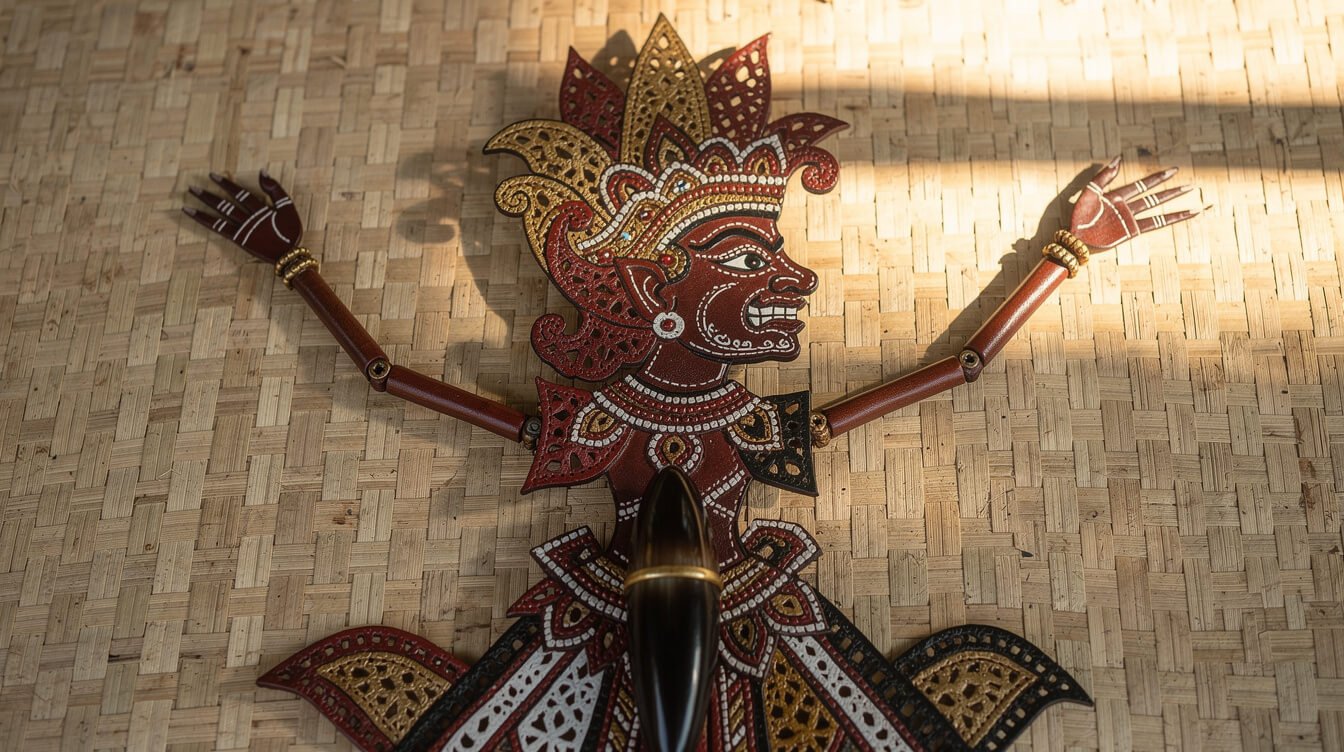
Wayang is the Indonesian word for puppet theater, and it is often linked to bayang, meaning shadow. Kulit means skin or leather. So wayang kulit is, quite literally, leather shadow theater. If you’re wondering what Indonesian puppets are called, that’s your answer: wayang covers the whole family, from flat leather shadow puppets to carved wooden rod puppets (wayang golek, mostly in West Java) to the masked dance drama called wayang wong.
The puppets themselves are flat figures cut from rawhide, usually cow or buffalo. Craftsmen punch hundreds of tiny holes and slits through the leather so that light pours through in lace-like patterns. Each figure is then painted, sometimes gilded, and fixed to a central rod of horn or wood, with thinner rods on the jointed arms. Seen face-on in daylight, they are bright and detailed. In performance, most of the audience sees only their shadows.
At the center of it all is the dalang, the puppeteer. In a Balinese show one person does almost everything. The dalang moves every puppet, speaks every voice (gods, kings, ogres, comic servants), sings, tells jokes, cues the musicians by tapping a wooden knocker against the puppet chest, and keeps the story going for hours. Two assistants sit beside him, handing over puppets and keeping the lamp alive. It is a remarkable feat of memory and stamina, and a good dalang is respected as a priest, a scholar and an entertainer at once.
The stories come mostly from the two great Hindu epics, the Mahabharata and the Ramayana, along with Balinese tales such as the Calonarang witch story. The dalang rarely performs a whole epic. Instead, he picks a single episode and weaves in local humor, moral teaching and commentary on everyday life in the village.
A Short History of Wayang Kulit in Java and Bali
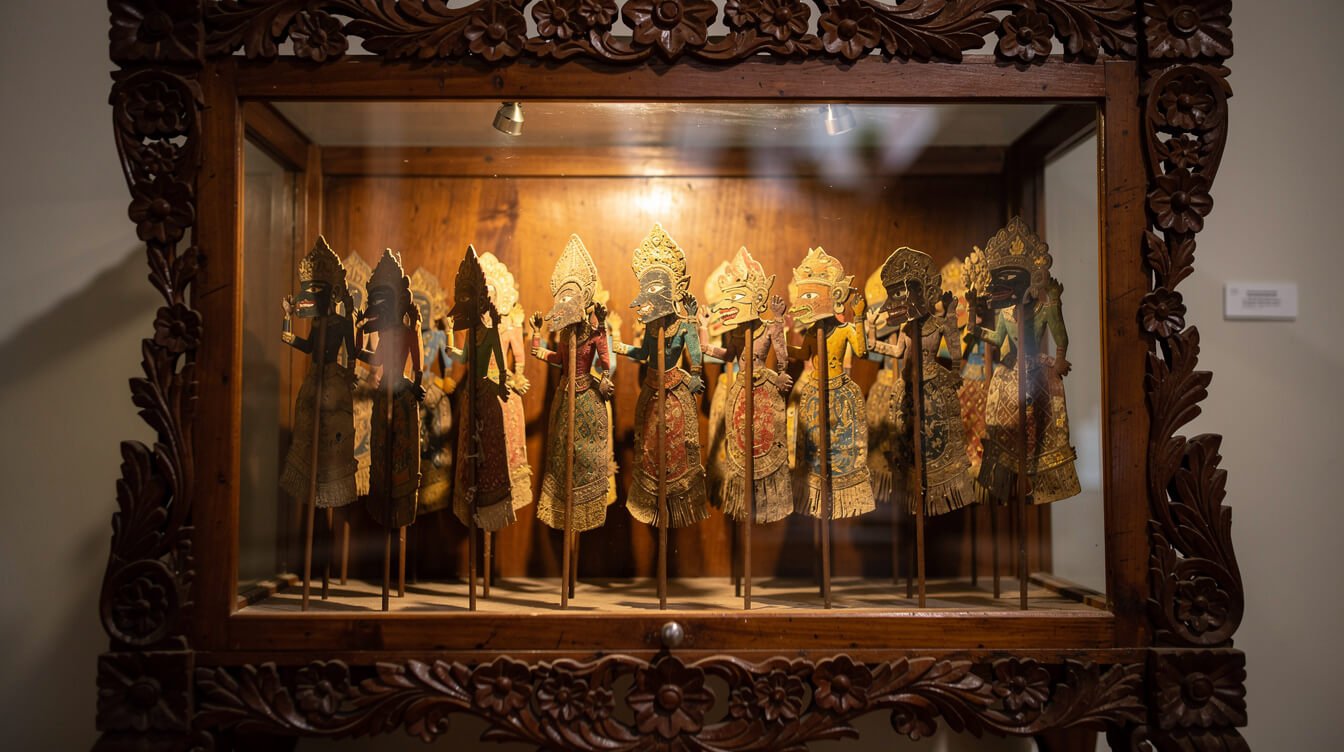
Wayang kulit is old. Javanese inscriptions from the 9th and 10th centuries already mention performances that look like early shadow theater. Scholars still argue about its origins. Some trace it to India and the spread of Hindu culture across the archipelago. Others see roots in much older local rituals that called on the spirits of ancestors, with the epics added later. Most likely, both are true at once.
The art took different paths on the two islands. In Java, after Islam spread from the 15th and 16th centuries, puppet shapes became more stylized and elongated, with long thin arms and sharply angled faces. Bali, which remained Hindu, kept a style closer to the older forms: rounder, sturdier figures with more naturalistic faces. Javanese puppets often look elegant and abstract. Balinese ones look a little more like people (or demons) you might actually meet.
The UNESCO recognition
In 2003, UNESCO proclaimed Indonesia’s wayang puppet theater a Masterpiece of the Oral and Intangible Heritage of Humanity, and in 2008 it was inscribed on the Representative List of the Intangible Cultural Heritage of Humanity. Indonesia now marks National Wayang Day every 7 November, the anniversary of that first proclamation. If you’re in Bali in early November, keep an eye out for special performances and school events.
In Bali the tradition never became a museum piece. It is woven into religious life, which is why the most meaningful shows still happen at temples rather than on stages. For background on that religious life, our gentle guide to Balinese Hinduism is a good place to start.
How Balinese Wayang Kulit Is Different
If you’ve seen wayang kulit in Java, or in a museum film, a Balinese night show will still surprise you. Here are the differences worth knowing before you sit down.
The music: gender wayang
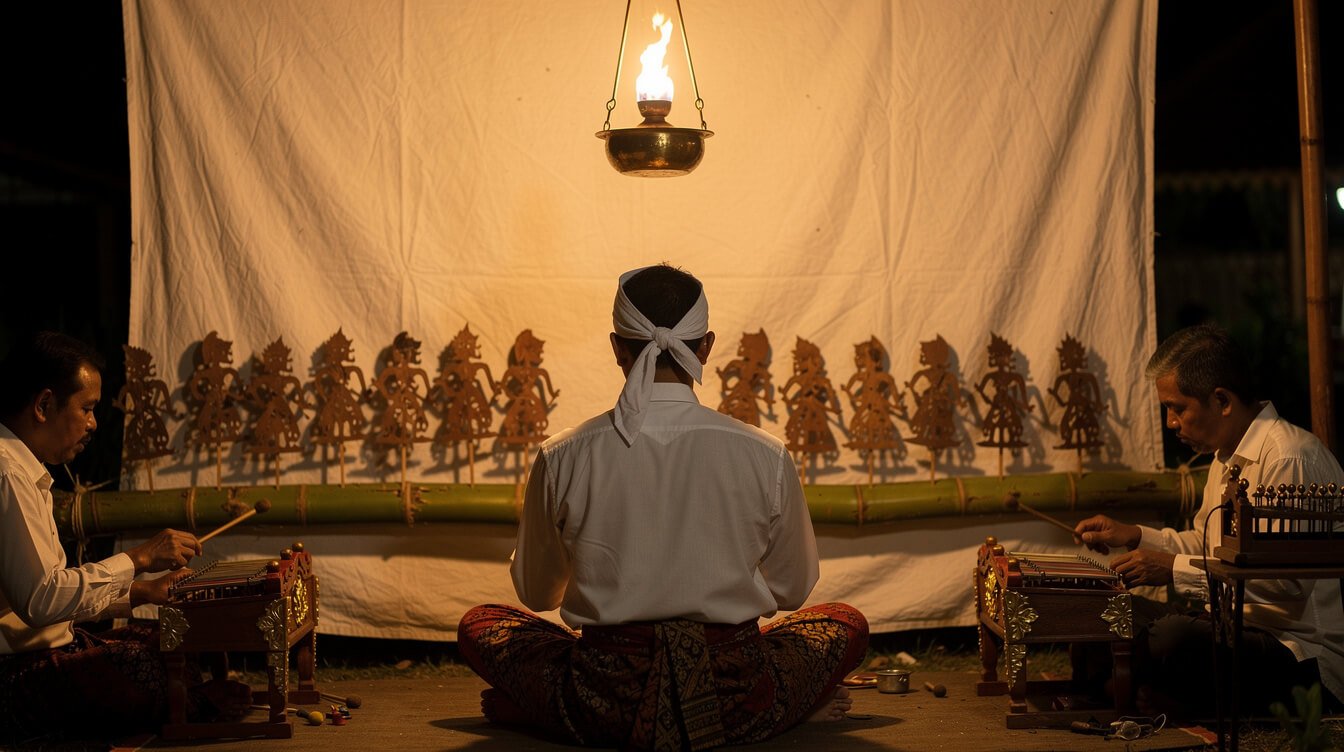
Javanese wayang is usually accompanied by a full gamelan orchestra with singers. In Bali, most shows use a much smaller ensemble called gender wayang: typically four bronze metallophones, played in interlocking pairs, with each player striking the keys with two mallets and damping them with the edge of the hand. The sound is shimmering and intricate. For the Ramayana stories, drums, cymbals and a gong are often added. If you’re curious where those bronze keys come from, our story about the gong-smiths of Tihingan visits a village that forges them. Gender wayang deserves its own guide, which we’ll add soon.
The flame
Traditional Balinese shows are lit by a coconut-oil lamp hung just above the dalang’s head. Because the flame moves, the shadows move too. They swell when a puppet is brought close to the lamp, sharpen when it touches the screen, and seem to breathe with every gust of night air. Some modern troupes use electric light, and in Java it is now common, but many Balinese dalang still prefer the flame. Once you’ve seen it, you’ll understand why.
The clowns who translate
The heroes and gods in Balinese wayang speak Kawi, the old literary language of Java and Bali that most of the audience doesn’t fully understand. So the dalang gives them servants. On the side of the virtuous Pandawa brothers are Tualen, a wise old man with a sagging belly, and his son Merdah. On the side of their rivals, the Korawa, are the boastful Delem and the sly Sangut. These four punakawan repeat, explain and gently mock what their masters say, in everyday Balinese. They are also where most of the jokes live, and often where the dalang slips in comments about modern life. Even if you don’t speak a word of Balinese, you’ll know when they’re on: the audience starts laughing. Our Bali language guide explains why Bali has these different registers of speech.
The kayonan
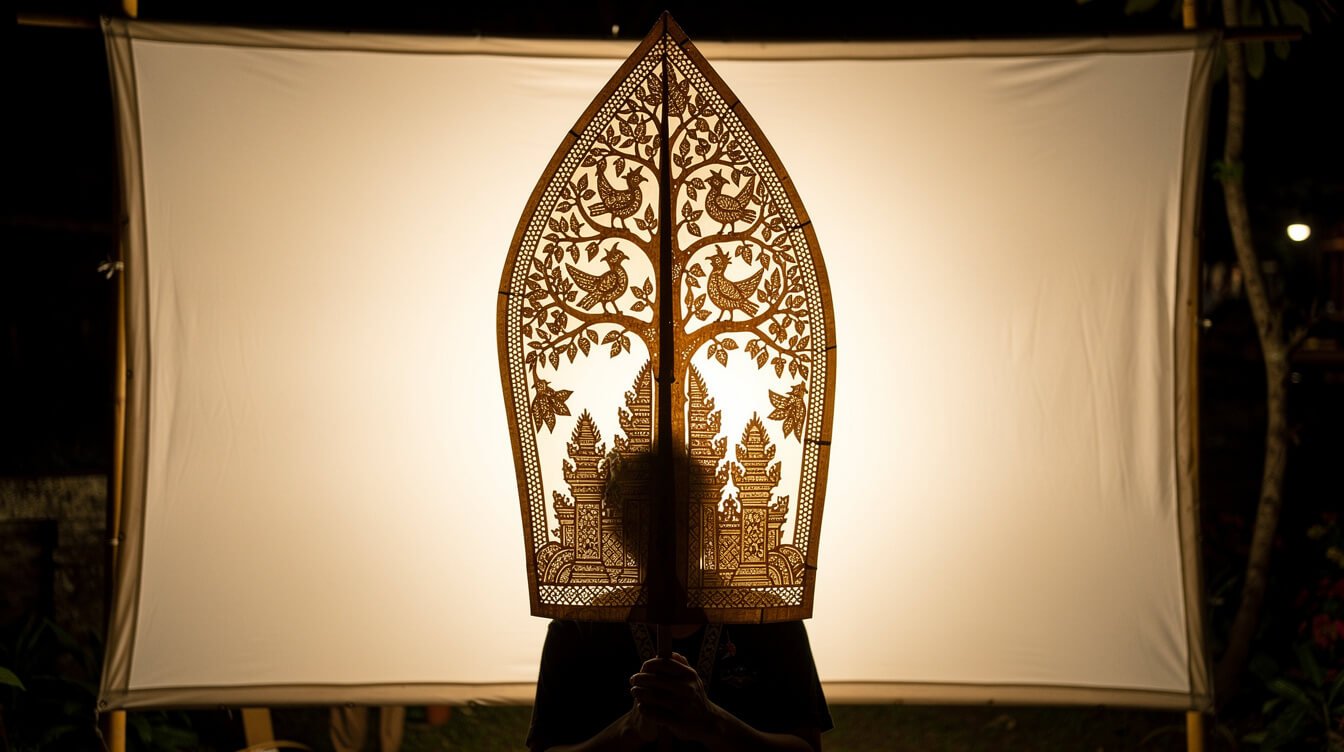
Every show opens and closes with the kayonan (also called kayon or gunungan), a tall leaf-shaped puppet carved with a tree of life. The dalang spins and flutters it across the screen to open the world of the story, and later uses it to mark scene changes, wind, fire or water. When it is planted in the center of the screen again at the end, the story is over.

Get a free 3-day sample itinerary
Want to fit a temple night, a puppet workshop and the art villages into your trip? See how three easy days from Ubud can unfold: a morning in Sukawati, an afternoon at a museum and an evening chasing the sound of gamelan. We will send you a free 3-day sample itinerary.
Sacred and Secular Wayang: Lemah, Peteng and Sapuh Leger
This is the part of wayang kulit most visitors never hear about, and it is the key to understanding its place in Bali. Not every performance is meant for an audience of people.
Wayang peteng: the night show
Peteng means night. This is the wayang most travelers picture: the screen, the lamp, the shadows and a crowd sitting on the ground. Night shows often run three to four hours, sometimes longer, and accompany temple festivals, family ceremonies and community events. They teach, entertain and keep the epics alive in village memory.
Wayang lemah: the daytime offering
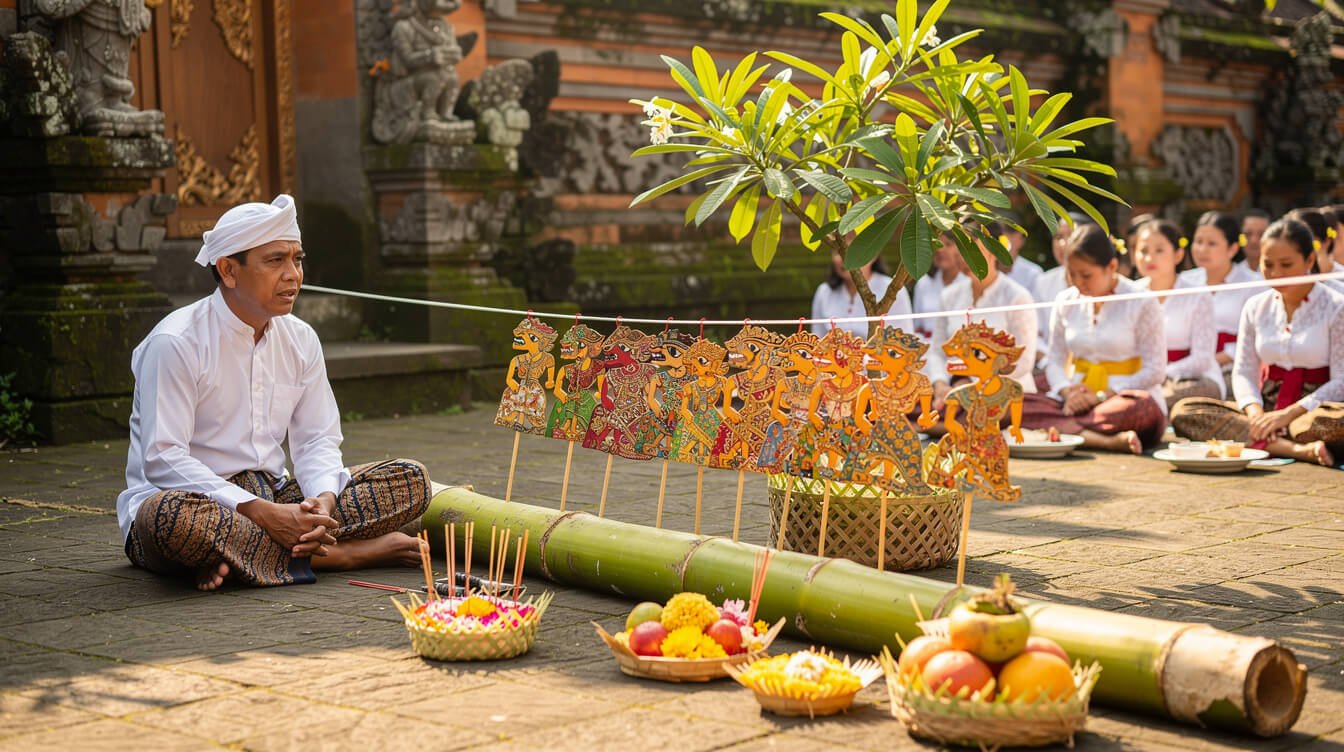
Lemah means day. In a wayang lemah performance there is no screen and no lamp. The dalang leans the puppets against a white thread stretched between two fresh branches, often from the dadap tree, and performs beside the priests during a ceremony such as a temple anniversary, a wedding, a tooth-filing or a cremation. Few people watch closely, and that is the point. The performance is an offering, part of the ritual itself, and its audience is the gods and the ancestors. If you’re attending a ceremony and see a dalang quietly performing to no one in particular, this is what you’re looking at. Watch respectfully from a distance.
Wayang sapuh leger: purification for a child
Bali runs on a 210-day ceremonial calendar called the pawukon, made up of thirty seven-day weeks called wuku. One of those weeks is Wuku Wayang, and a child born during it is believed to be vulnerable to Batara Kala, the fearsome son of Shiva. The story goes that Kala was promised anyone born in this week, and set out to devour his own younger brother, who had been born in it too. The boy hid inside the bamboo resonators of a puppeteer’s gender wayang. Kala, hungry, ate the offerings set out for the show, and the dalang demanded he return them. Unable to, Kala agreed to spare any child who had been purified through a wayang performance.
So Balinese families hold a wayang sapuh leger (sapuh means to sweep or clean), a special shadow-puppet ritual that ends with the dalang preparing holy water to bless the child. It is most often held on Tumpek Wayang, the Saturday that closes Wuku Wayang. By our pawukon count, the next one falls on 8 May 2027. It is a family rite, not a show for visitors, but knowing about it explains why the dalang in Bali is treated with such respect. Ceremonies tied to a child’s birth calendar are everywhere here; we wrote about one of them in a morning at an otonan, the Balinese birthday rite.
A related sacred form, wayang sudamala, is also performed for purification. Together, lemah, sapuh leger and sudamala are counted among Bali’s wali (sacred) wayang performances.
Sukawati: The Puppet-Makers’ Village Near Ubud
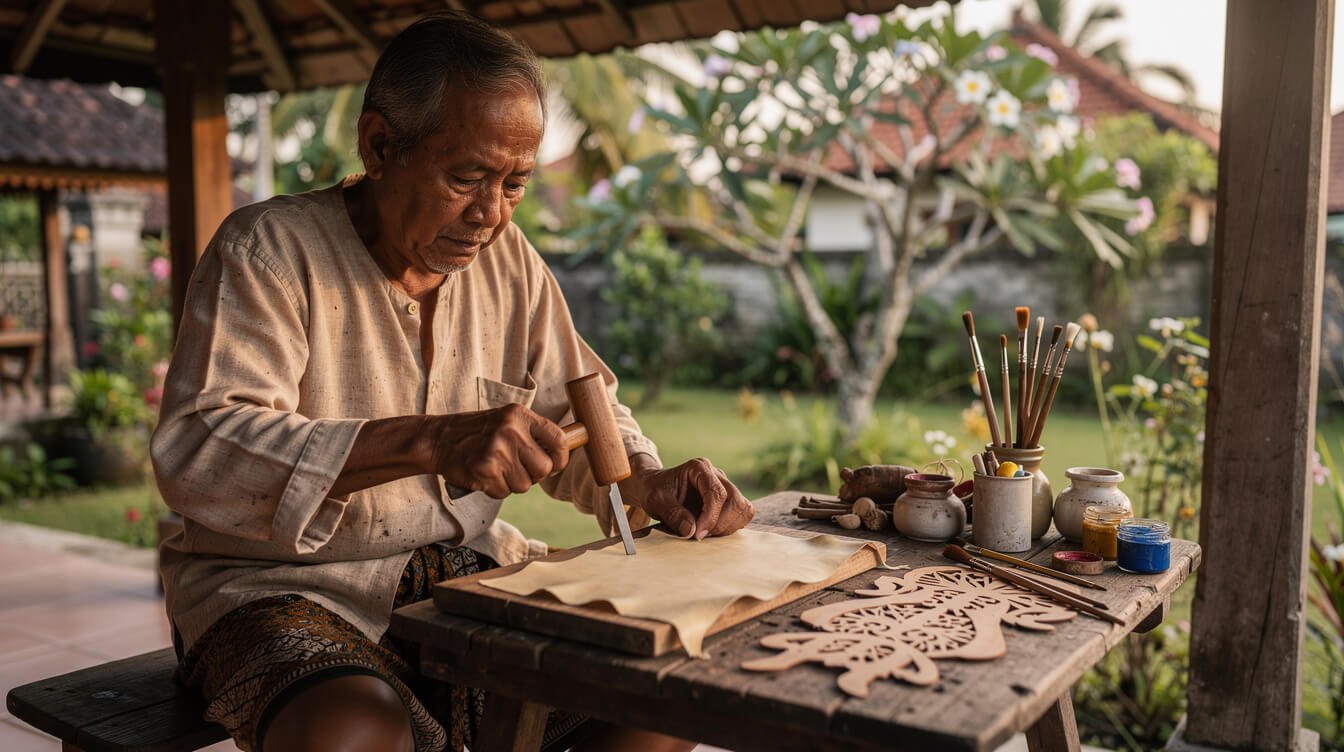
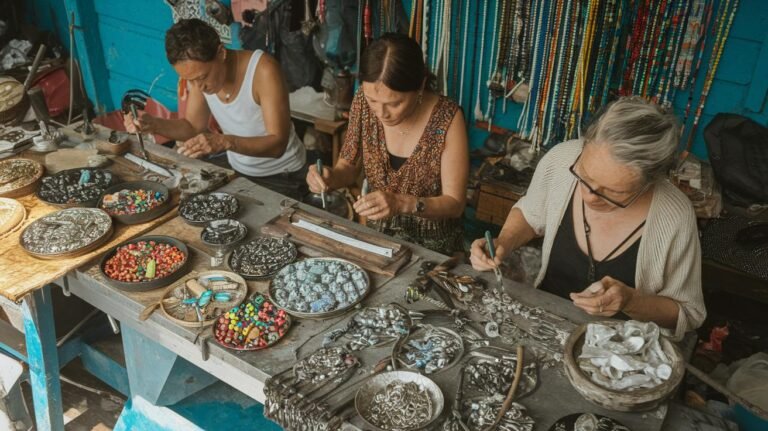
About 30 to 45 minutes’ drive south of Ubud, depending on traffic, Sukawati has long been one of Bali’s great centers of wayang kulit. Generations of dalang have come from here, and families in the lanes around the village still make puppets by hand. Many travelers know Sukawati only for its busy art market. Walk a few minutes into the residential streets behind it and listen. You may hear the soft, rhythmic tapping of chisels on leather.
How a wayang kulit puppet is made
This also answers the common question “how do you do wayang kulit?”, at least the making half of it. The process takes days or weeks per figure:
- Preparing the hide. Rawhide is soaked, scraped, stretched and dried until it is thin, stiff and slightly translucent.
- Drawing the figure. The outline is traced from a pattern. Each character has fixed proportions, headdress and posture, so a regular audience can recognize Arjuna or Rama by silhouette alone.
- Carving. Using small chisels and a wooden mallet, the maker punches out the perforations, from tiny dots to long slits. This is the slowest and most skilled stage.
- Painting. The figure is painted in strong colors, and important characters may be gilded. Colors carry meaning, though the audience at a night show mostly sees shadow.
- Mounting. The central rod, traditionally of horn, is bound to the body, and thin rods are attached to the jointed arms.
A complete set for a dalang can run to well over a hundred puppets, kept in a wooden chest that also serves as part of the stage.
Visiting and buying
Workshops change over the years, so we don’t list specific names here. The simplest approach is to ask in the Sukawati art market or ask locally before you go. Some family workshops welcome visitors to watch and buy direct, and a handful of studios in and around Ubud run hands-on puppet-carving and painting classes of two to four hours, which work well for families. Check current listings and reviews before booking. When buying, look for crisp carving, clean paintwork and the rod properly bound. Mass-produced puppets in tourist shops tend to have shallow, machine-like cuts. Sukawati pairs naturally with nearby craft villages; see our story on the silversmiths of Celuk for a morning that combines both.
Book the Villa
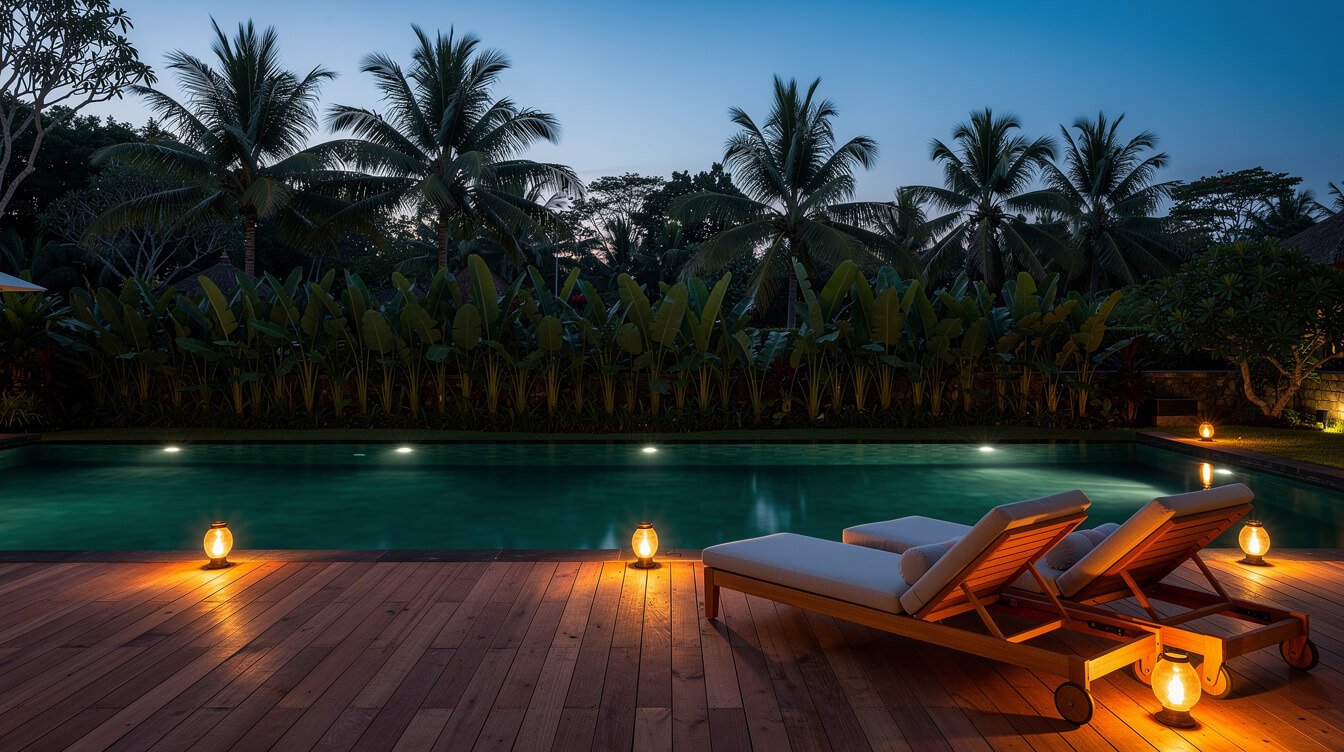
Come home from a lamplit temple night to your own quiet pool and garden. Three bedrooms and a private pool in Ubud, with a team on hand to help plan your days and cook your dinners. Ask them which village is celebrating this week. Check availability for your dates.
Where to See Wayang Kulit Near Ubud (and How to Watch)
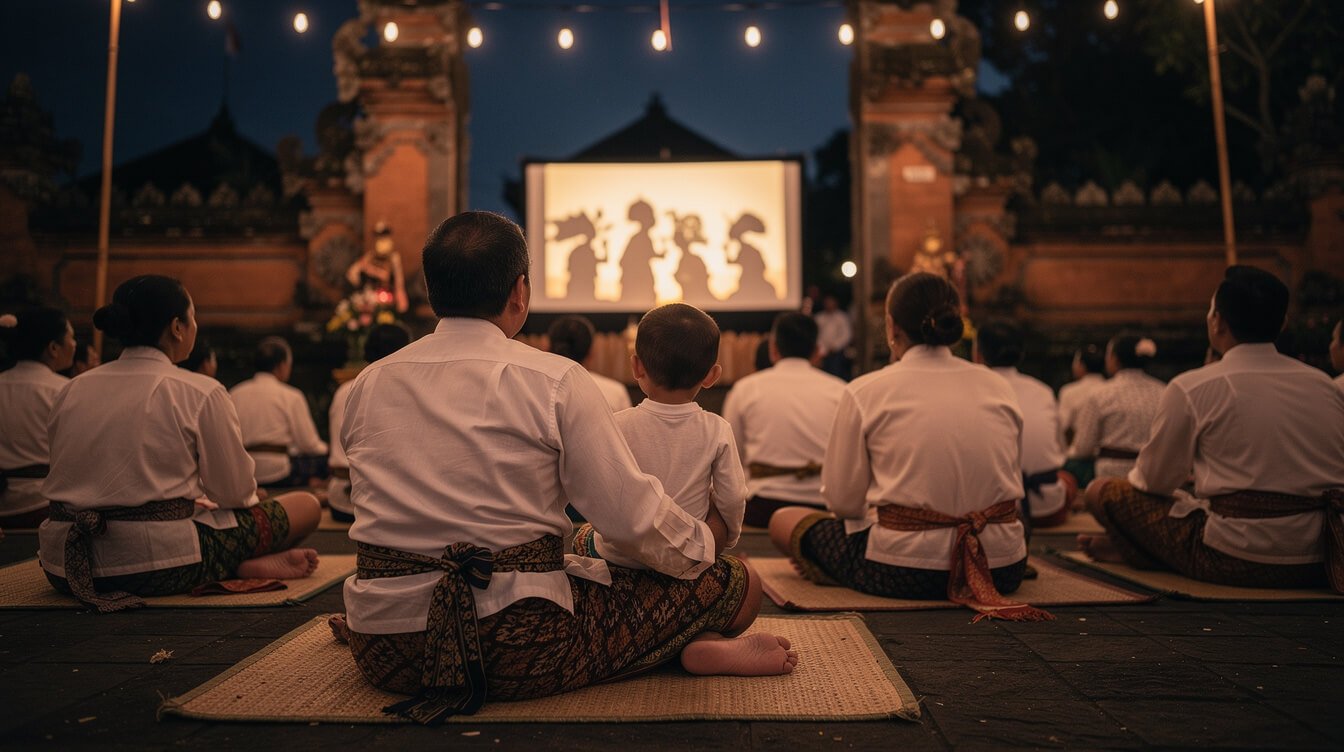
Here is the honest truth: wayang kulit in Bali is not mainly a tourist show, so there is no guaranteed nightly performance waiting for you. That makes finding one a small adventure, and it is far more rewarding when you do. These are your best options.
Temple festival nights
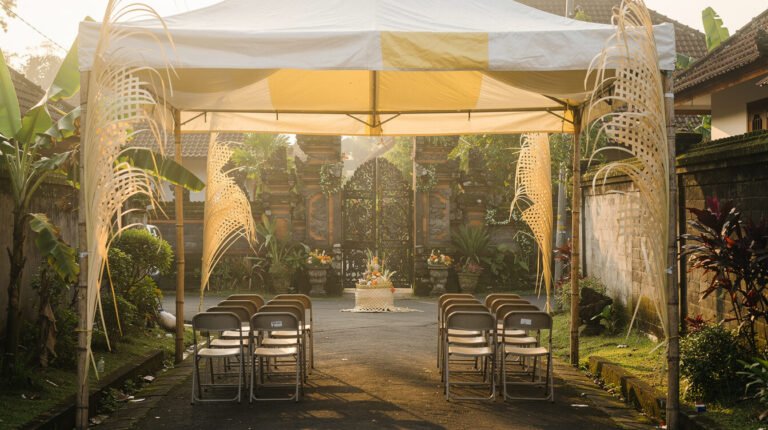
Every temple in Bali celebrates its anniversary, or odalan, once every 210 days, and there are thousands of temples. A night wayang show is a common part of the entertainment. These are not advertised online, so ask locally: your driver, a warung owner, or the team at your stay will often know which village is celebrating this week. Big holy days such as Galungan and Kuningan bring a busy season of ceremonies too. The next Galungan falls on 13 January 2027.
Ubud’s performance schedule
The tourist information office on Jalan Raya Ubud, across from the palace, posts the week’s performances. Most are dance (Legong, Barong, Kecak), but wayang kulit appears from time to time at venues around town. Check the board when you arrive, since schedules change. While you’re in the area, our guides to Ubud Palace, Balinese dance and the Kecak fire dance will help you plan the rest of your evenings.
Festivals and museums
The Bali Arts Festival in Denpasar, usually held from mid-June to mid-July, often includes wayang performances and competitions between dalang. Ubud’s own arts events can feature it as well; see what to expect at the Ubud Arts Festival. And the classical Kamasan style of Balinese painting is literally called “wayang style,” because its figures are drawn like shadow puppets. Museums such as ARMA in Ubud are a lovely way to see that connection in daylight.
If masked theater catches your interest too, read about the wayang wong masks of Pura Taman Pule. It is a different art form, a danced drama with masked performers, but it shares the same stories and the same name.
How to watch a night show
- Sit on the shadow side. Most of the audience watches the shadows. If you’re invited to peek behind the screen at the dalang and musicians, do it quietly and briefly.
- Dress for a temple. At a temple show, wear a sarong and sash, with shoulders covered. Bring a light layer, as hill nights can be cool.
- Come and go quietly. Long shows are relaxed. People chat, eat snacks, and children fall asleep on their parents’ laps. Leaving before the end is perfectly normal; just do it softly.
- No flash, no drones. Flash flattens the shadows and distracts the dalang. A quiet phone video without light is usually fine at a public show, but follow what locals around you are doing.
- Leave offerings alone. The offerings near the screen are part of the performance. Don’t step over or touch them.
- Bring the kids. Children are welcome, and they often love the battles and the clowns. A small mat and a snack go a long way.
Don’t worry about following the plot. Watch the shadows, listen for the laughter around you, and let the music carry you. If you’d like a head start, read a one-page summary of the Ramayana or Mahabharata before you go.
Shadow Puppets Around the World: Why Indonesia’s Are So Famous
Which country is famous for shadow puppets? Several, as it happens. China has its own ancient shadow play, piyingxi, with translucent, colored figures. Turkey has Karagöz, a comic shadow theater with two quarreling heroes. Cambodia has sbek thom, with huge leather panels held up by dancers. Thailand has nang yai, India’s Kerala has tholpavakoothu, and Malaysia has its own wayang kulit, closely related to Indonesia’s.
Indonesia’s wayang kulit stands out for its sheer depth: the hours-long performances carried by one dalang, the music, the philosophical content, and the fact that, especially in Bali, it remains part of living religious practice rather than a revival for visitors. That’s why it is the form most people picture when they hear the words “shadow puppet.”
The five basic types of puppets
Another question people often ask: what are the five basic types of puppets? The usual answer is hand (or glove) puppets, rod puppets, marionettes (string puppets), shadow puppets, and finger or ventriloquist puppets. Wayang kulit sits in the shadow family, but because its figures are moved by rods, it is also a cousin of rod puppetry. Indonesia has examples of several types, from leather wayang kulit to the wooden rod puppets of wayang golek.
Wayang Kulit FAQ
What does wayang kulit mean?
Wayang means puppet theater (often linked to bayang, shadow), and kulit means skin or leather. Together: leather shadow-puppet theater.
How long is a wayang kulit performance in Bali?
Night shows usually last three to four hours, and some run longer. Javanese all-night shows can go on until dawn. Shows put on at tourist venues are shorter, often around an hour or two.
Can I see wayang kulit in Ubud?
Yes, but it takes a little luck and local knowledge. Check the tourist information board in central Ubud, and ask locally about temple festivals in nearby villages. Don’t count on a fixed nightly show.
Is it OK for tourists to attend a temple wayang show?
Generally yes, if you dress respectfully, sit quietly with everyone else, and stay away from the priests and offerings. If you’re unsure, ask someone from the village; people are usually happy to welcome you.
Can I buy a wayang kulit puppet as a souvenir?
Yes. Buying from a workshop in or around Sukawati supports the makers directly. Hand-carved puppets cost far more than mass-produced ones, and they are worth it.
Is wayang kulit suitable for kids?
Very. The battles, the monsters and the clown servants are a hit with children, and a hands-on puppet-making class can be a highlight of a family trip.
The Oldest Cinema in Bali
Long before screens lit up our pockets, Balinese villages gathered on warm nights in front of a single white cloth and a single flame. One voice told the story. One quartet of bronze instruments carried it. The shadows did the rest. Wayang kulit has survived for more than a thousand years because it still does something no film quite can: it puts you in the same courtyard as the storyteller, with the frangipani dropping from the trees and the incense drifting over the crowd.
When you’re in Ubud, go looking for it. Ask about the next odalan. Visit Sukawati and listen for the tapping chisels. Try carving a puppet of your own. And when you finally sit on a mat in a temple courtyard and the lamp flares behind the screen, settle in. The story has only just begun.

Join our newsletter — fun, new, exciting Bali news
Ceremony dates like Galungan and the full moons, culture stories, entry-rule changes and small moments from Ubud. Delivered now and then, always worth opening.