Tegallalang Rice Terrace: Your Complete Guide to Ubud’s Most Iconic Living Landscape
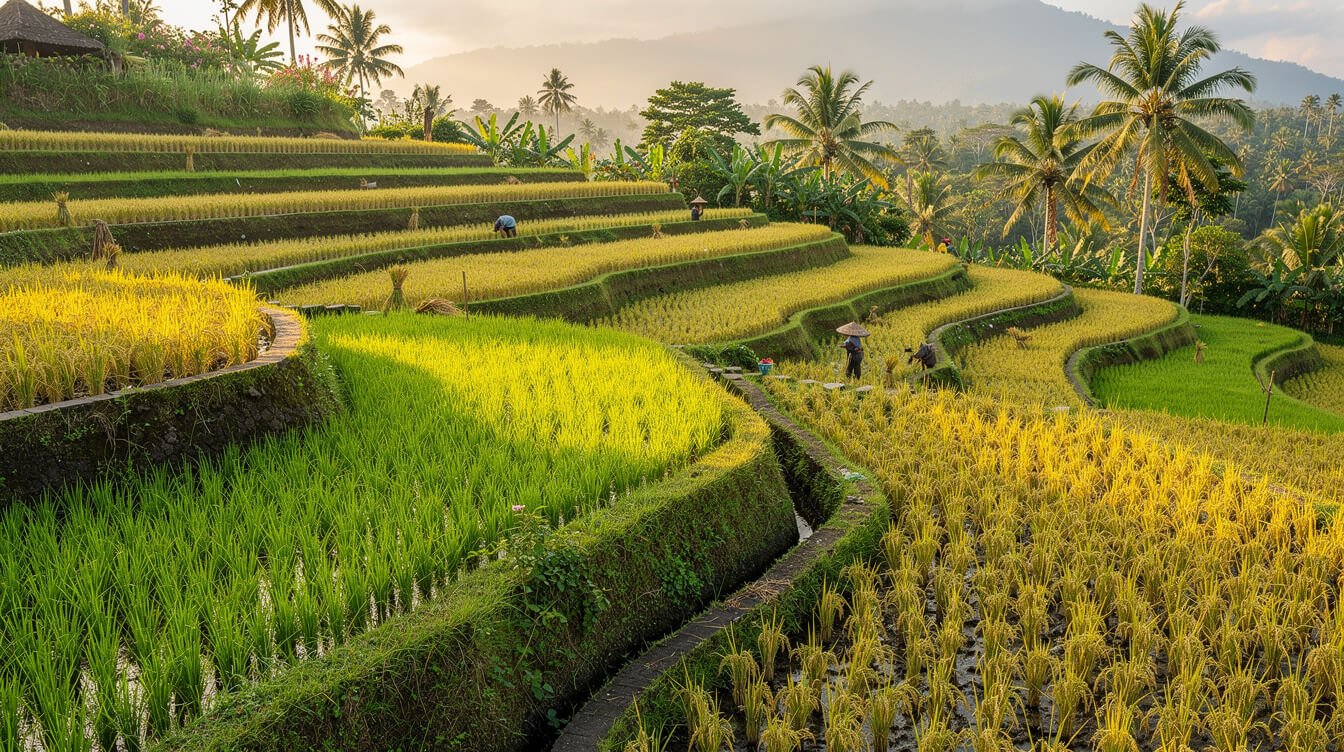
The Tegallalang rice terrace is one of those places that photographs can’t prepare you for. You’ve seen the images — cascading green paddies, coconut palms framing the valley, that particular shade of emerald that only exists in Ubud’s volcanic soil. But what those images leave out is the sound of water moving through thousand-year-old channels, the warmth of morning air rising from the valley floor, and the quiet reality that you’re standing inside a working farm that has fed families for over a millennium.
Most guides treat Tegallalang as a photo opportunity — arrive, snap, leave. This guide treats it as what it actually is: a living agricultural landscape shaped by one of humanity’s most sophisticated water management systems, surrounded by villages whose daily rhythms are still governed by rice. Whether you’re planning a morning visit from your villa in Ubud or building an entire day around the terraces and their neighbors, here’s everything you need to know about experiencing Tegallalang the way it deserves.
What Makes Tegallalang Rice Terrace Different from Every Other Rice Field in Bali
Bali has rice terraces everywhere. Drive fifteen minutes in any direction from Ubud and you’ll pass paddies. So why does everyone come to Tegallalang?
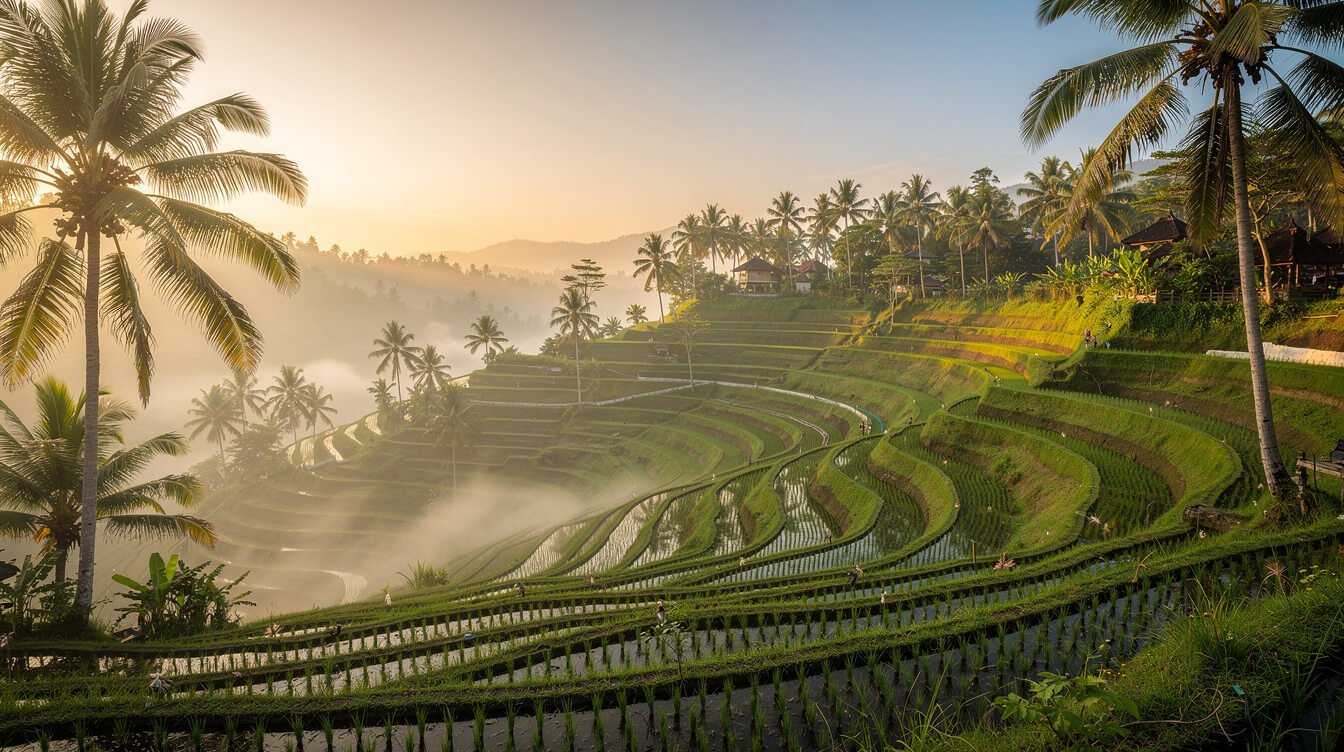
Three things set it apart. First, the dramatic cascade — the valley drops steeply here, creating a visual staircase of paddies that’s unusual even by Balinese standards. Most rice terraces in Bali are gentle slopes. Tegallalang falls away in defined tiers, each one carved from volcanic earth and held in place by centuries of careful maintenance.
Second, UNESCO recognition. Tegallalang is part of the Cultural Landscape of Bali Province, inscribed in 2012 — not for its beauty, but for the subak irrigation system that makes it work. The subak is a cooperative water management tradition dating to the ninth century, and Tegallalang is one of its finest surviving examples.
Third, altitude. At roughly 600 meters above sea level, the air at Tegallalang is noticeably cooler than in central Ubud. The rice grows more slowly here, the greens are deeper, and the morning mist that fills the valley before sunrise gives the terraces an atmosphere that lower-elevation paddies simply don’t have.
But here’s what no competitor guide mentions: Tegallalang isn’t a museum. Farmers work these fields every day. The water you hear running through the channels is actively irrigating crops that will feed real families. When you visit, you’re walking through someone’s workplace — and understanding that changes the experience entirely.
The Subak System: A Thousand-Year-Old Water Democracy You Can See Working
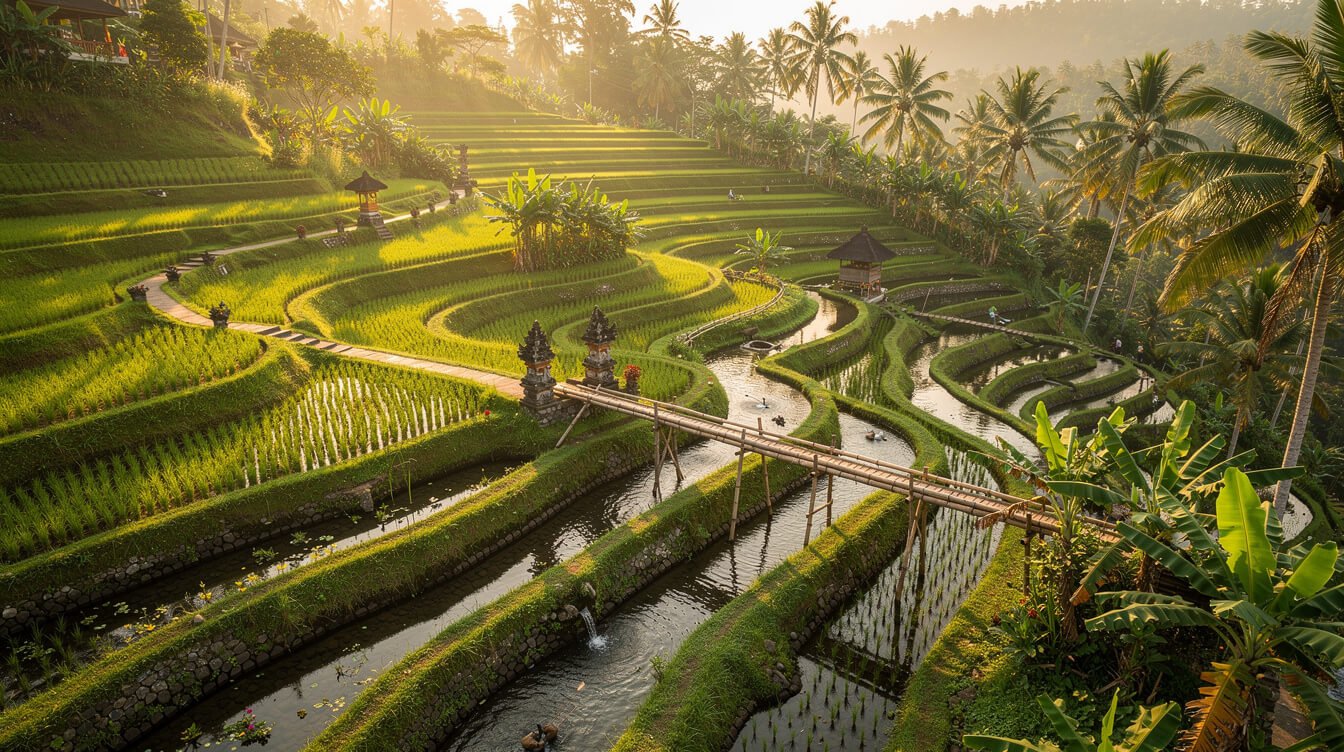
The word subak describes both the physical irrigation system and the community of farmers who manage it. Each subak is a democratic collective — every farmer whose land touches the water system gets an equal vote on when to plant, when to flood, and when to drain.
What makes this remarkable is the philosophy behind it. The subak operates on Tri Hita Karana — the Balinese concept of three causes of well-being: harmony with the divine, harmony with other people, and harmony with nature. Water isn’t just a resource to be allocated. It’s a sacred gift managed through temple ceremonies, community meetings, and generations of accumulated knowledge.
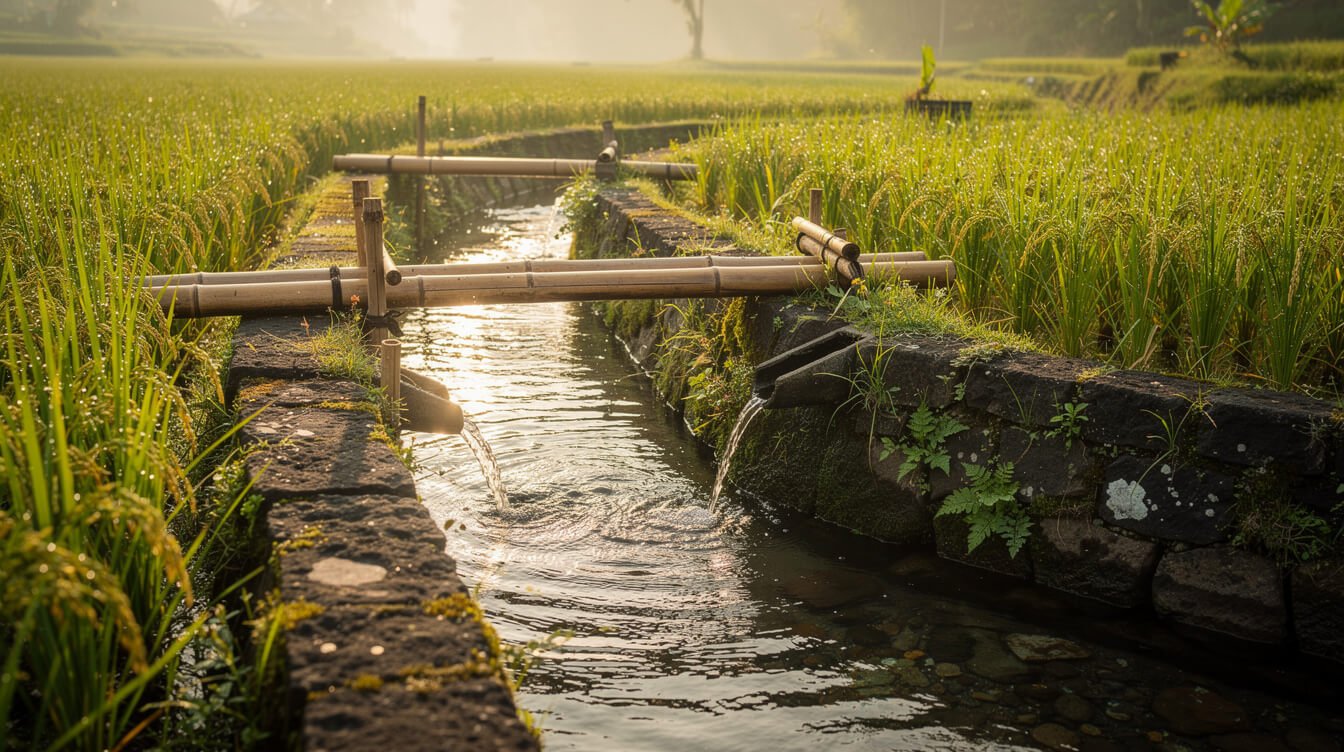
At Tegallalang, you can actually see this system working. Look for the stone and bamboo channels that wind along the edges of each terrace tier. Water enters at the highest point — diverted from mountain springs by agreements between subak communities that sometimes span dozens of villages — and flows downward through a precisely calibrated series of gates and weirs.
Each farmer’s paddies receive water according to a schedule determined at the subak temple. The water temple priest, called the jero mangku, coordinates planting cycles so that pests don’t spread between adjacent fields. When one farmer’s rice is young and green, their neighbor’s might be golden and ready for harvest. This isn’t random — it’s intentional staggering that’s been refined over centuries.
The subak system is why Bali’s rice terraces look the way they do. It’s also why UNESCO chose to protect them — not as scenery, but as one of the most sophisticated examples of cooperative resource management anywhere on earth.
When to Visit Tegallalang Rice Terrace and How to Avoid the Crowds
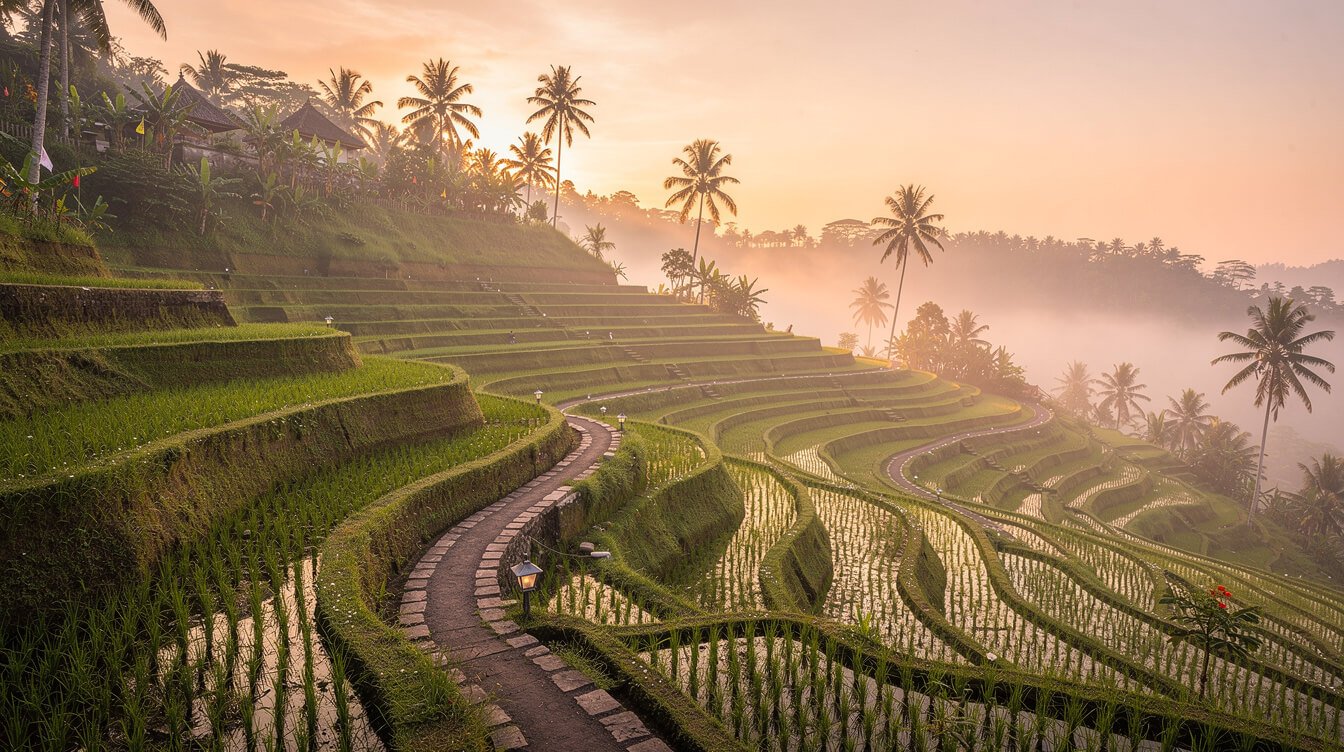
Timing at Tegallalang matters more than at almost any other Ubud attraction. Get it right, and you’ll have the terraces largely to yourself with soft morning light and birdsong. Get it wrong, and you’ll share the main viewpoints with a few hundred other visitors and a queue of tour buses.
Best time of day
Before 8:00 AM is the answer. Tour buses from south Bali typically arrive between 10:00 and 11:00, and the terraces stay crowded until mid-afternoon. If you’re staying in a villa in Ubud, you’re only 20 minutes away by car — ask your villa manager to arrange a driver for 6:00 AM. The terraces technically open at 8:00 AM, but there’s no strict gate, and locals will wave you through early if you arrive before the official start.
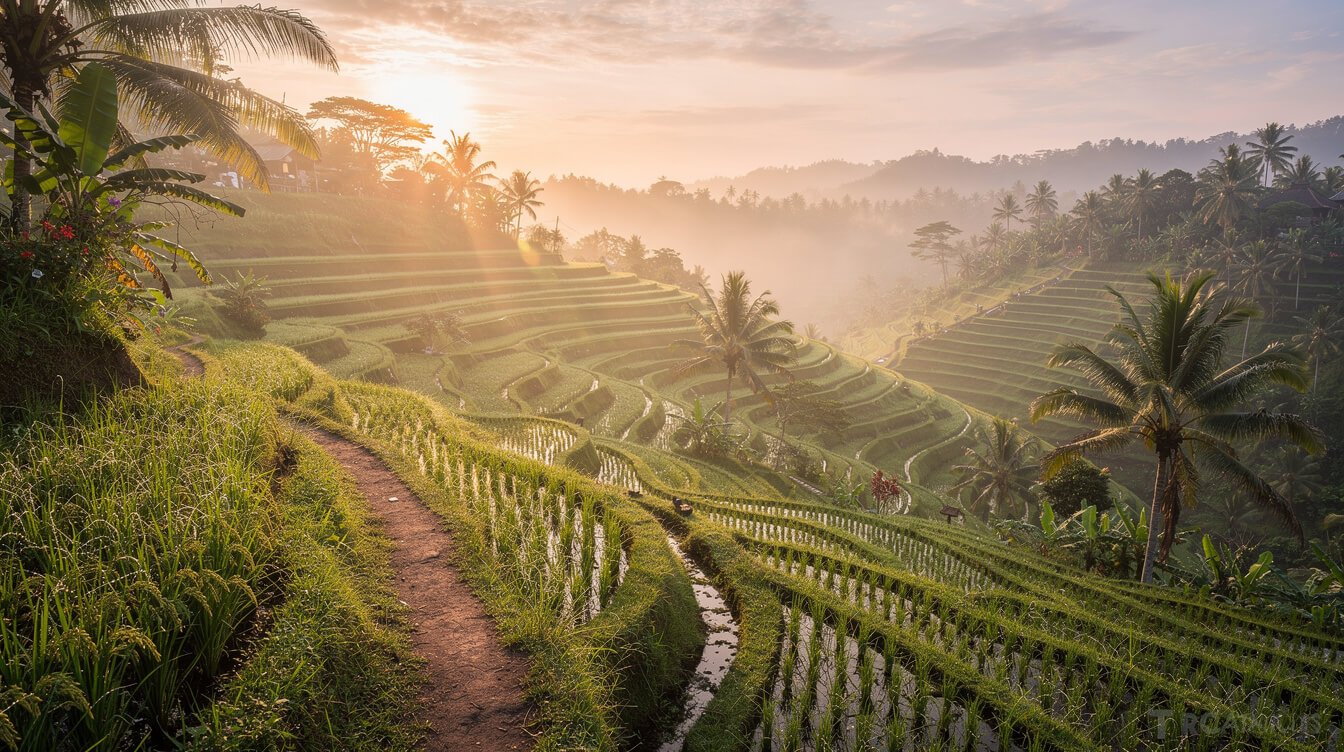
Late afternoon — after 4:00 PM — is a second good window. The light turns golden, most tour groups have left, and the terraces take on that warm, honeyed glow that photographers love.
Best months for green terraces
The terraces aren’t always green. Rice goes through growing cycles, and when a section has just been harvested, those paddies will look brown and bare. For the best chance of peak green coverage:
- March through May — end of rainy season, maximum growth
- September and October — second planting cycle reaching full height
June through August is dry season — popular for tourism but some sections may be harvested and replanted. December through February is wet season — lush and green, but expect afternoon rain. The terraces look beautiful in the rain, but the paths get slippery.
How long to spend
Plan at least two hours. One hour feels rushed and limits you to the main viewpoint. Two to three hours lets you walk the deeper paths, sit at a warung overlooking the valley, and actually absorb the rhythm of the place rather than just photographing it.
Get a Free 3-Day Sample Itinerary
Planning your Ubud days? We’ll send you a sample itinerary with our team’s favorite morning-to-evening rhythm — including the best time to visit the terraces.
What to Actually Do at Tegallalang Rice Terrace Beyond the Selfie Platforms
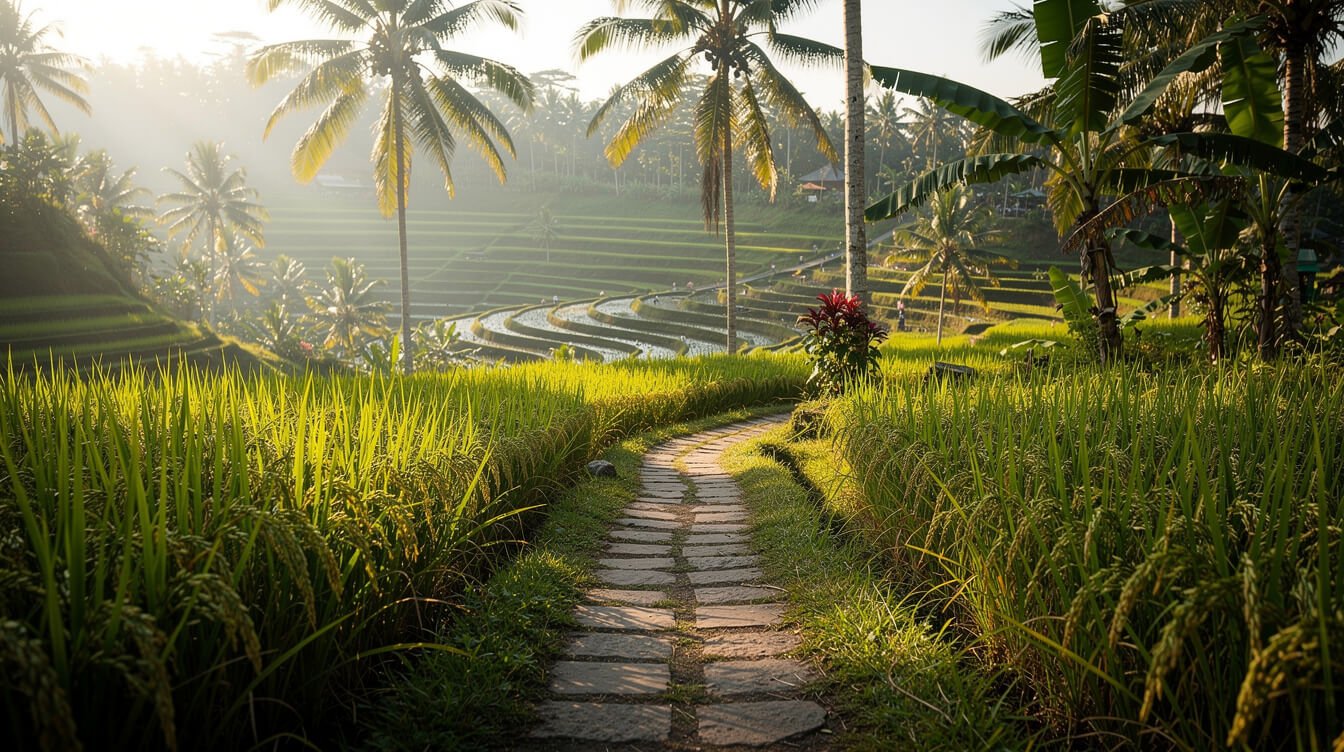
Most visitors congregate at the main viewpoint near the parking area, take photos from the elevated platforms, and leave. That’s about 20% of what Tegallalang offers.
Walk down into the terraces themselves
Stone steps lead from the main viewpoint down into the valley. The deeper you go, the fewer people you’ll encounter. The paths between paddies are narrow — single-file in places — and the sound of water through the channels becomes the dominant soundtrack. Wear shoes with grip. Flip-flops on wet volcanic stone is a recipe for a bad morning.
The two entrances
Most guides only mention the west entrance on Jalan Raya Tegallalang, where the main parking lot, souvenir stalls, and the iconic “I Love Bali” sign sit. But there’s a second entrance from the east via Kebon Road, which drops you into a quieter section with better sunrise views and less commercial infrastructure. If you’re arriving before 8:00 AM, the east entrance is the better choice.
Sit at a warung with a view
Several small warungs and cafes perch on the rim of the valley. A cup of Balinese coffee with the terraces laid out below you is one of the simplest and most satisfying experiences in Ubud. Look for spots on the eastern rim — they catch the morning light and tend to be less crowded than the main strip.
Talk to the farmers
If you visit early enough, you’ll see farmers tending their paddies. Most are happy to talk if you approach respectfully. A simple “selamat pagi” (good morning) goes a long way. Many speak basic English and enjoy explaining the planting cycle. Small donations — 10,000 to 20,000 IDR — are appropriate and appreciated if someone takes time to show you around their fields.
Skip the Bali swings (or don’t)
The famous Bali swings at Tegallalang — those high-altitude swings over the valley used for dramatic Instagram photos — are a divisive topic. They’re fun if you enjoy that kind of thing, and the views from the swing are genuinely good. But they come with long queues during peak hours and prices that vary wildly. If you want the swing experience, go first thing in the morning when there’s no wait.
The Farming Calendar: What the Terraces Look Like Month by Month
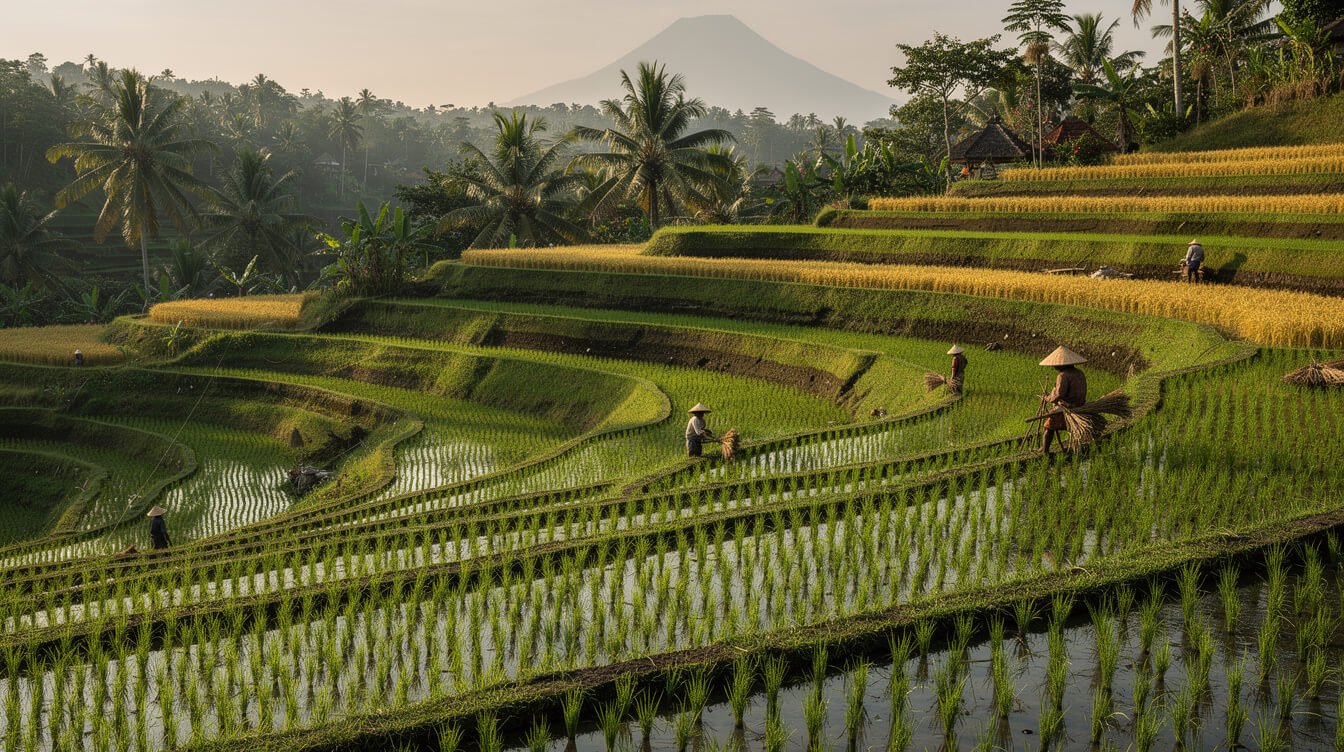
Understanding the rice growing cycle transforms your visit from “looking at green fields” to “reading a landscape.” Balinese rice farmers typically plant two or three crops per year, and the terraces go through distinct visual stages.
The stages of rice
- Freshly flooded (weeks 1-2): The paddies are mirrors — still water reflecting sky and palm trees. This is the most photogenic stage for many photographers.
- Young shoots (weeks 3-6): Bright, almost electric green. The rice is short and the water still visible between the stalks. Peak “green terrace” imagery.
- Full growth (weeks 7-12): Dense, tall rice stalks that sway in the wind. The deepest, richest green. This is when the terraces feel most alive.
- Ripening (weeks 13-15): The green shifts to gold. The rice heads droop with weight. A visual transition that’s beautiful in its own way.
- Harvest and fallow (weeks 16+): Golden stubble, then bare earth. The paddies look brown and stripped. Many visitors are disappointed at this stage, but it’s the most honest look at the farming reality.
Because the subak system staggers planting between neighboring fields, you’ll almost always see multiple stages at once — some paddies bright green, others golden, others freshly flooded. This patchwork is intentional and is one of Tegallalang’s most distinctive visual features.
When to see peak green
The terraces are most uniformly green in March through early May (post-rainy season, maximum growth) and September through October (second planting cycle peak). If seeing a wall of green is important to your visit, plan around these windows. But honestly, the terraces are compelling at every stage — there’s a stark beauty to harvest season that the Instagram crowd misses entirely.
Stay Twenty Minutes from the Terraces
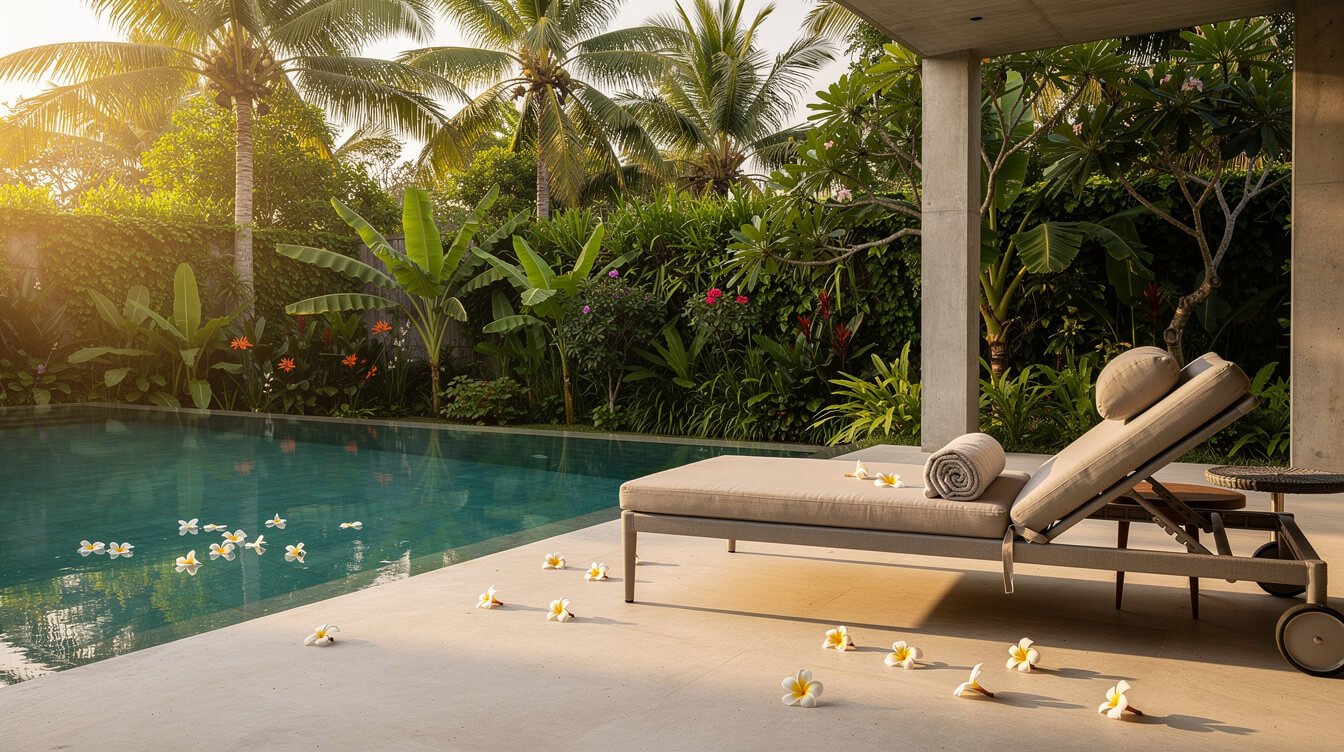
Villa Amrita is your home base in Ubud — three bedrooms, private pool, full staff. Your villa manager will arrange your Tegallalang morning so you arrive before the crowds and come home to brunch by the pool.
Walking Routes Most Visitors Miss at Tegallalang Rice Terrace
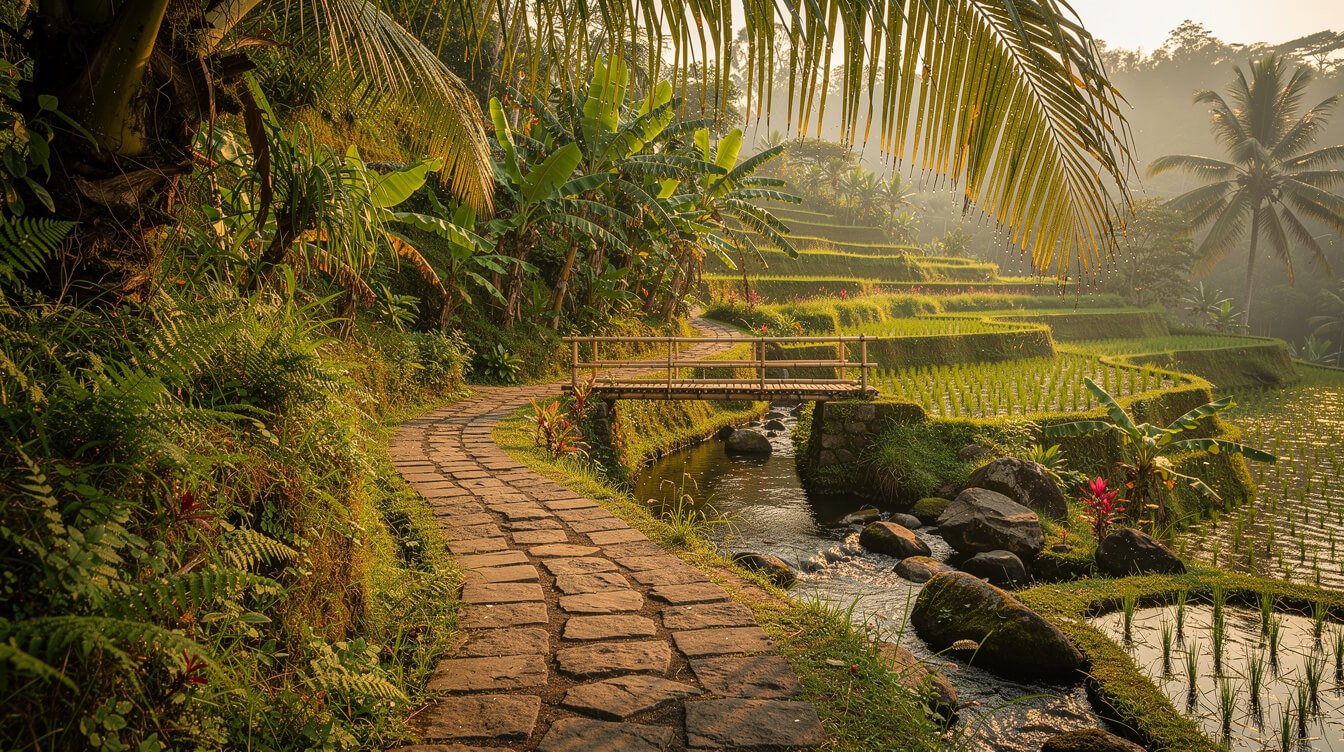
The main viewpoint at Tegallalang gives you a postcard. The walking routes give you the actual experience.
The valley floor path
From the main viewpoint, stone steps descend into the valley. Follow them all the way down to the stream at the bottom. The path crosses a small bamboo bridge and continues up the opposite side. This route takes about 45 minutes round-trip and passes through the quietest sections of the terraces. You’ll hear the subak channels and crickets more than other people.
The east rim walk
Enter from the east side via Kebon Road and follow the rim path south. This route stays elevated along the valley edge, offering continuous panoramic views without the steep descent. It’s more accessible for older visitors or anyone not keen on navigating uneven stone steps. The rim connects several small cafes where you can stop for coffee or coconut water.
The Ceking village extension
Tegallalang’s terraces are technically part of the village of Ceking. If you walk north from the main terrace area, you’ll reach the village proper — a quiet Balinese community with temples, family compounds, and working rice fields that see almost no tourists. This is where the terraces stop being an attraction and start being a neighborhood. It’s a fifteen-minute walk and feels like a different world from the main platform area.
Our villa manager often recommends combining Tegallalang with the Campuhan Ridge Walk on a different morning — two very different walking experiences that together give you the full range of Ubud’s landscapes.
How to Combine Tegallalang with Nearby Villages and Temples
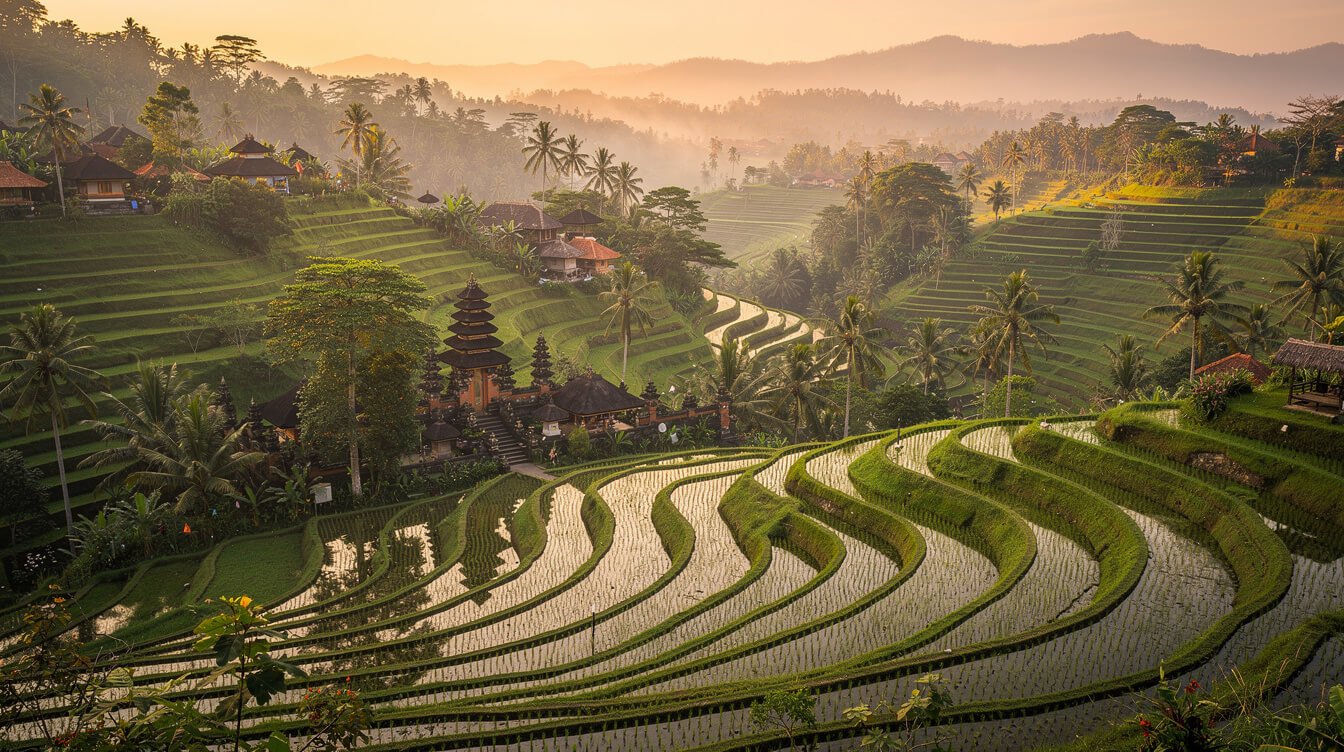
Tegallalang sits in a corridor of attractions north of Ubud. Building a half-day or full-day route around it means you’re not just ticking one box — you’re experiencing a whole stretch of the Ubud countryside.
The classic half-day loop
Morning start (6:00-7:00 AM): Tegallalang rice terraces via the east entrance. Spend 1.5-2 hours walking, sitting, absorbing. Then drive 10 minutes north to Tirta Empul — the holy spring temple where Balinese come for ritual purification. The water is ice-cold and the ceremony is real, not performative. Bring a sarong or rent one at the entrance. Back at the villa by noon for a late brunch that your chef has waiting.
The full-day culture route
Start with Tegallalang at sunrise. Then head to Gunung Kawi — an 11th-century temple carved into a river canyon, reached by descending 371 stone steps through more rice terraces. It’s one of Bali’s most atmospheric sites and far less crowded than Tegallalang. Add Tirta Empul in the late morning, lunch at a warung in Ubud’s central market area, and finish with a walk through the Monkey Forest in the cooler late afternoon.
The nature immersion day
Tegallalang at dawn, then a cycling tour through the back roads of Payangan — a village north of Ubud where the tourism infrastructure disappears entirely and it’s just you, rice fields, and volcano views. Many cycling tours pass through the Tegallalang area, so you can combine two experiences in one morning.
Practical logistics
- Getting there: 20 minutes by car from central Ubud. Grab and Gojek work, but having your villa arrange a private driver is easier — they’ll wait for you and know the less-crowded parking spots.
- Entrance fee: No fixed fee. You’ll encounter donation requests at various points — 10,000 to 20,000 IDR at each is standard and goes to the local village.
- Parking: 5,000-10,000 IDR at the main lot. Free before 7:00 AM at the east entrance.
- What to wear: Closed-toe shoes with grip, sun hat, sunscreen. Paths get slippery after rain. A light layer for early morning — it’s cooler at 600 meters elevation.
- What to bring: Cash in small denominations (for donations and warungs), water, and a reusable bag for any purchases at the nearby craft stalls.
Frequently Asked Questions About Tegallalang Rice Terrace
Is Tegallalang rice terrace worth visiting?
Yes — but how you visit matters more than whether you visit. Arriving early, walking the deeper paths, and understanding the subak system transforms it from a tourist checkpoint into one of the most meaningful cultural experiences in Ubud. If you only have time for one rice terrace in Bali, Tegallalang is the right choice.
How much does it cost to visit Tegallalang rice terrace?
There’s no fixed entrance fee. You’ll encounter voluntary donation points throughout the terraces, typically 10,000-20,000 IDR (less than $2 USD) at each. Parking is 5,000-10,000 IDR. Budget 50,000-100,000 IDR total including donations, parking, and a coffee at a warung.
Can you visit Tegallalang rice terrace in the rain?
Yes, and it’s actually beautiful — the terraces look especially vivid when wet, and the clouds in the valley create an atmospheric mood. But bring shoes with serious grip. The stone paths become genuinely slippery. An umbrella or light rain jacket is essential during wet season (November through March).
Is Tegallalang rice terrace suitable for children?
The main viewpoint and elevated platforms are fine for children. The valley paths involve steep, uneven stone steps that would be challenging for very young children. The east rim walk is a better option for families with small kids — it’s flatter and still offers panoramic views.
How far is Tegallalang rice terrace from Ubud?
About 20 minutes by car from central Ubud, heading north on Jalan Raya Tegallalang. If you’re staying in a villa in the Penestanan or Sayan area, it’s closer to 25-30 minutes. Your villa manager or driver will know the fastest route based on time of day.
What’s the difference between Tegallalang and Jatiluwih rice terraces?
Tegallalang is compact, dramatic, and close to Ubud — perfect for a morning visit. Jatiluwih is vast, sprawling, and remote — a UNESCO World Heritage Site in its own right, located in the Tabanan regency about 90 minutes from Ubud. If you have time for both, do Tegallalang for the cultural depth and Jatiluwih for the scale. If you only have one morning, Tegallalang wins on accessibility and intensity.
Your Morning at the Terraces, Then Home to the Villa
Here’s what a Tegallalang morning looks like when you’re staying at a staffed villa in Ubud. Your manager arranges the driver for 6:00 AM. You arrive at the east entrance while the mist is still in the valley. You walk the terraces for two hours — slowly, without a schedule. You sit at a warung and drink Balinese coffee while watching the first tour buses arrive on the road above, glad you came early.
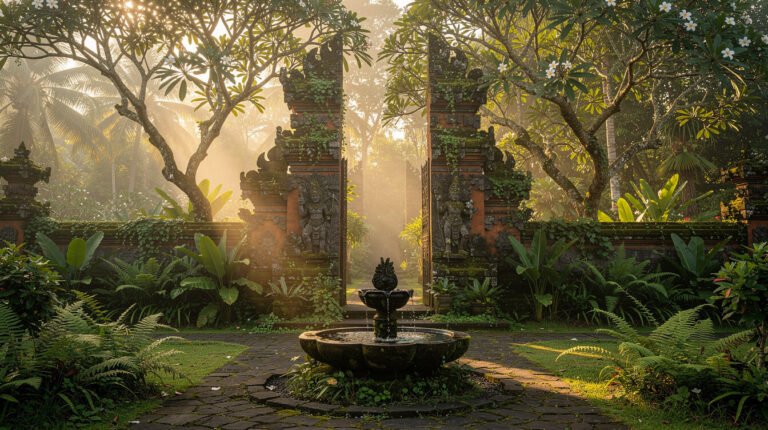
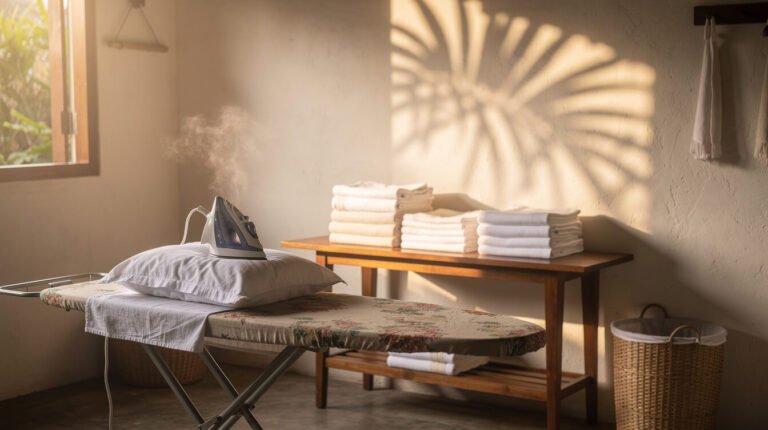
Then you drive home. And home, in this case, means walking through the garden gate, finding the pool already cleaned and the towels laid out, sitting down to a brunch that your private chef started preparing while you were gone — maybe nasi goreng with a fresh juice, or banana pancakes with coconut syrup — and realizing that the contrast between the ancient terraces and your own quiet morning is exactly what Ubud is about.
That’s the rhythm. The terraces remind you where you are. The villa reminds you how it feels to be held. If you’re building your Bali itinerary, put Tegallalang on morning one. You’ll set the tone for everything that follows.

Join Our Newsletter — Fun, New, Exciting Bali News
We send a letter from Ubud every few weeks — what’s blooming, what’s in season, which village ceremonies are coming up, and quiet tips from the team. No spam. Just Bali, from people who live it.