Nusa Penida Day Trip from Ubud: How to Do It Without Losing Your Day
It’s five in the morning in Ubud and the village is still dark. A rooster starts up somewhere past the rice field, the pool is a sheet of black glass, and you’re holding a warm coffee by the door while the car pulls in. Ninety minutes from now you’ll be wading out to a fast boat at Sanur. By ten you’ll be standing on a limestone cliff, looking down at a blue so deep it barely seems real. Nusa Penida, the rugged island off Bali’s southeast coast, is one of the most rewarding day trips you can take from Ubud, as long as you plan it like someone who’s coming home for dinner.
Most Nusa Penida guides are written for people who sleep on the island or in south Bali. This one is written for you if you’re based in Ubud. Below you’ll find an honest answer to whether the trip is worth it, a realistic timeline from your villa door to the boat, how to choose between the west and east loops, when the sea is kind enough for snorkeling with manta rays, what to know about safety, the 2026 tourism fee, and whether one night on the island beats a long day.
Is a Nusa Penida Day Trip from Ubud Worth It?
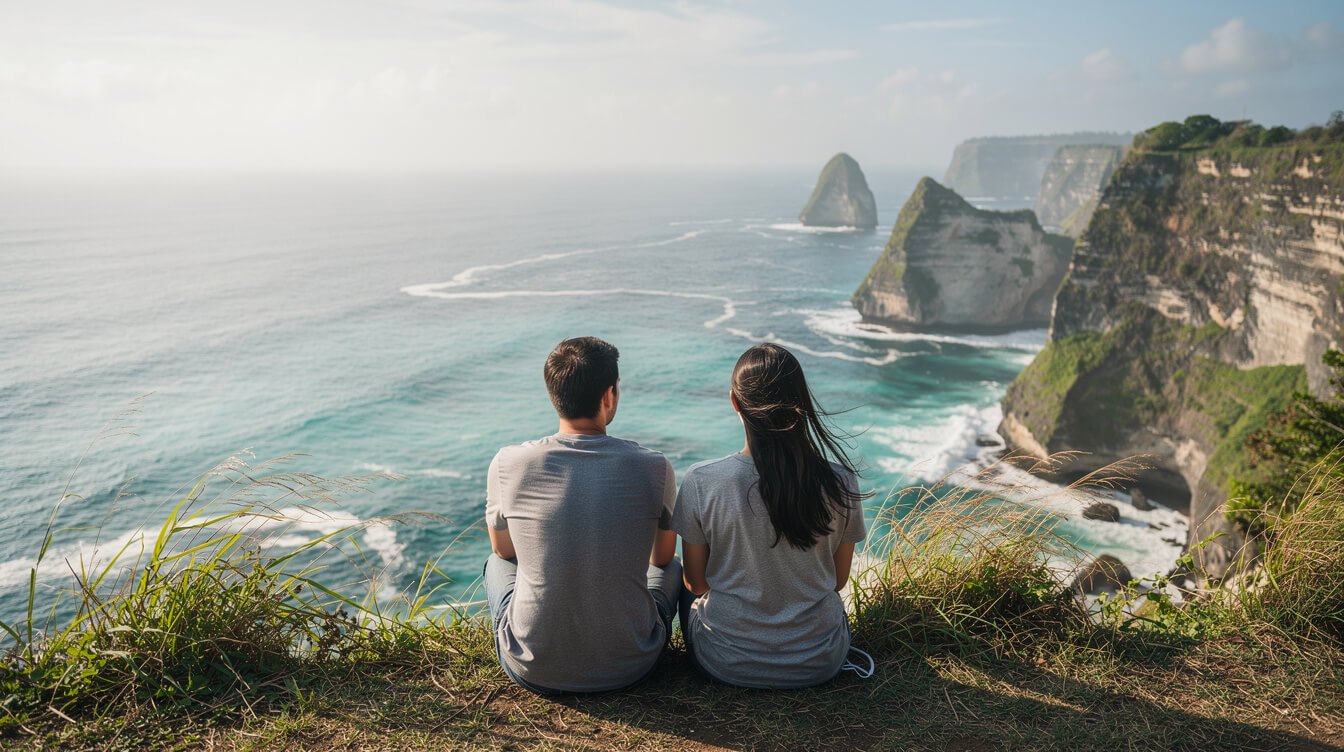
Short answer: yes, with caveats. Nusa Penida is raw in a way much of mainland Bali no longer is. Tall white limestone cliffs drop straight into the Indian Ocean, the water shifts from turquoise to ink blue within a few meters, and the roads wind past cornfields, small temples and villages where life moves at its own pace. The famous viewpoints really do live up to the photos.
The caveats are about time and energy. From Ubud, a day trip means a pre-dawn start, a drive of roughly 60 to 90 minutes to Sanur, a boat crossing of around 30 to 45 minutes each way, and then a full day on slow, bumpy island roads. It’s a big day. Plan for it, and it’s a highlight of your trip. Try to squeeze too much into it, and you’ll spend most of the day in a car.
Who will love it
- Active travelers who don’t mind an early alarm and some steep steps.
- Photographers chasing big coastal views and morning light.
- Snorkelers who want a real chance of swimming with manta rays.
- Families with older kids or teens who are comfortable on boats and stairs.
Who might skip it
- Travelers who get badly seasick. The crossing can be choppy.
- Families with toddlers, or anyone with knee or mobility issues. Many of the best views involve steep, uneven stairs.
- Anyone on a short trip of three or four nights. You may get more from a slower day closer to Ubud. Our guide to day trips from Ubud has gentler options.
If you want an island day with less effort, its smaller neighbor is worth a look. Our Nusa Lembongan day trip guide covers a calmer, flatter alternative from the same harbor.
The Ubud to Nusa Penida Timeline: From Pre-Dawn Pickup to Island Driver
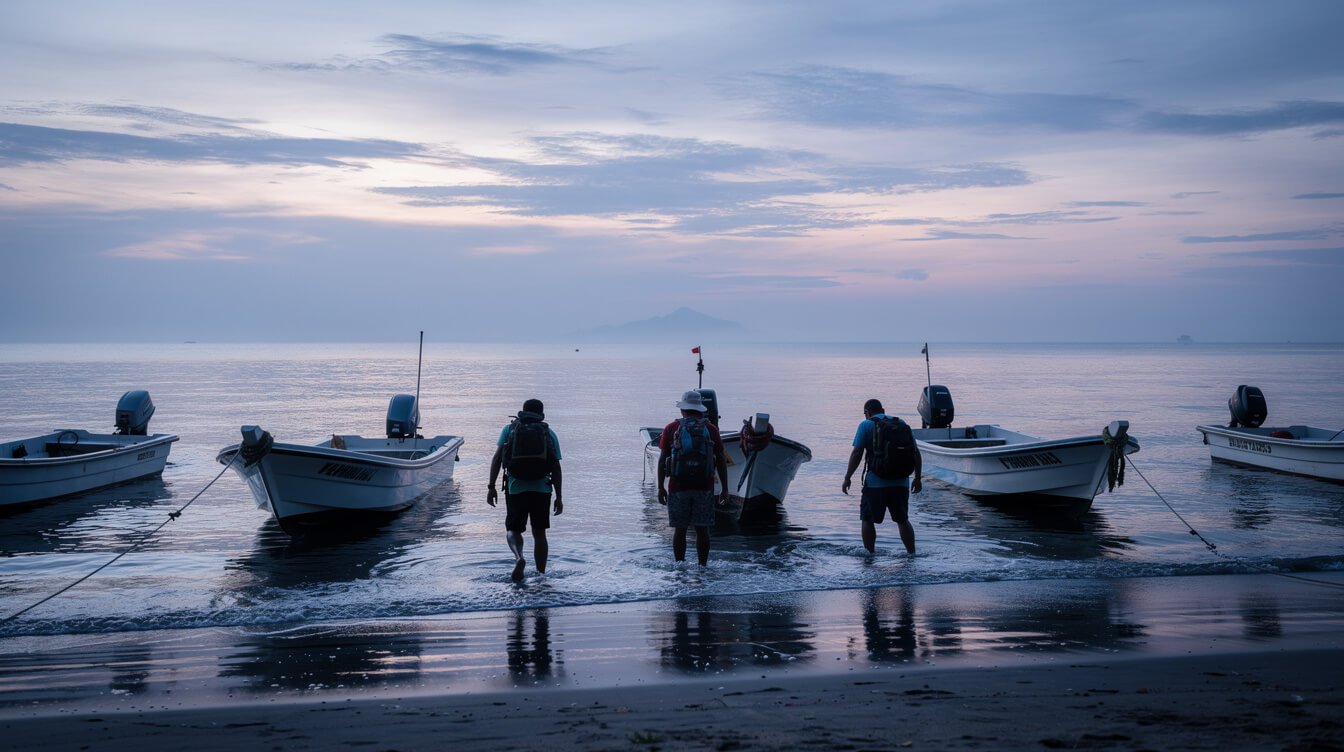
The single most important decision is the boat you catch. Fast boats from Sanur usually start running in the early morning and continue through the day. Every hour you leave later is an hour of the best light and coolest air you lose, and an hour closer to the midday crowds at the main viewpoints.
A realistic day plan from Ubud
- 5:00 to 5:30 am: Pickup at your villa. Roads are quiet, and the drive to Sanur usually takes 60 to 90 minutes, depending on traffic.
- 6:30 to 7:00 am: Arrive at Sanur harbor. Operators recommend arriving 45 to 60 minutes before your boat, especially in high season, as check-in can be busy.
- Around 7:00 to 8:00 am: Board one of the first fast boats. The crossing is roughly 30 to 45 minutes, depending on the boat and the sea.
- 8:00 am to 3:00 pm: Meet your island driver at the harbor and explore one side of the island.
- 3:00 to 4:00 pm: Catch your return boat. The last boats back to Sanur typically leave sometime between 3:00 and 5:00 pm, so confirm the time when you book and don’t cut it fine.
- Around 6:00 to 7:00 pm: Back in Ubud, salty, sun-tired and very happy to see the pool.
Boats, tickets and the 2026 tourism fee
Book a return ticket with one established operator, so you have a guaranteed seat back. Fares vary by operator and season, and are usually higher in July to September and over Christmas and New Year. Fast boats don’t carry cars or scooters, so you’ll need transport arranged on the island.
Nusa Penida also has its own local tourism levy. Under the Klungkung regency’s 2026 rules, foreign visitors pay a tourism-area retribution when they enter the island (announced at Rp25,000 per adult and Rp15,000 per child aged 4 to 13), and some individual attractions can charge their own fee on top. Klungkung has been moving these fees to electronic tickets and cashless payment, so check how to pay before you travel, and ask your boat operator or driver which fees are already included. Small parking and beach fees are still common, so bring some rupiah. ATMs on the island are few and not always stocked, so withdraw cash in Ubud or Sanur first. Our guide to Balinese currency explains how to carry and use rupiah.
Get around with a driver, not a scooter
Penida’s roads are steep, narrow, potholed in places and busy with tour traffic. Unless you’re a very experienced rider, a private car and driver is the safer, calmer choice, and split between a family or a small group it’s often good value. A good island driver also knows which viewpoints are crowded at which hour and will reorder your stops accordingly.
If you’re staying with us, ask the team the evening before and they’ll be glad to help you line up a driver to Sanur and point you toward reliable boat and island transport. Ask for an early breakfast or something to take in the car, so you’re not starting the day on an empty stomach.

Get a free 3-day sample itinerary
Rice-field mornings, one big island day, and a slow day after to recover. We will send you a 3-day sample itinerary for Ubud that leaves room for Nusa Penida without wearing you out.
West Loop or East Loop? Choosing One Nusa Penida Route
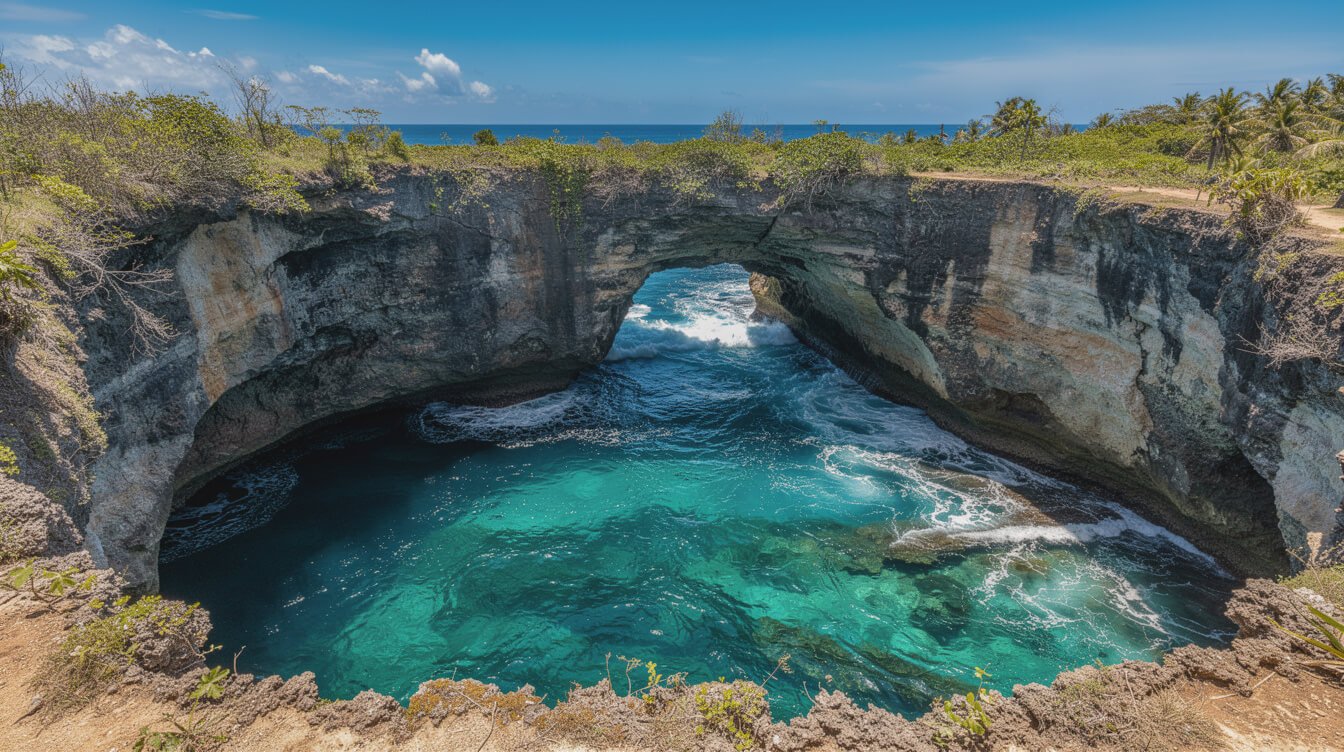
This is where most day trips go wrong. Nusa Penida is bigger than it looks on a map, and its roads are slow. The famous sights split neatly into a west side and an east side, and trying to do both in one day usually means you see each place for ten minutes and spend five or six hours in the car. Pick one loop and enjoy it.
The west loop: the famous cliffs
This is the route most first-time visitors choose, and for good reason.
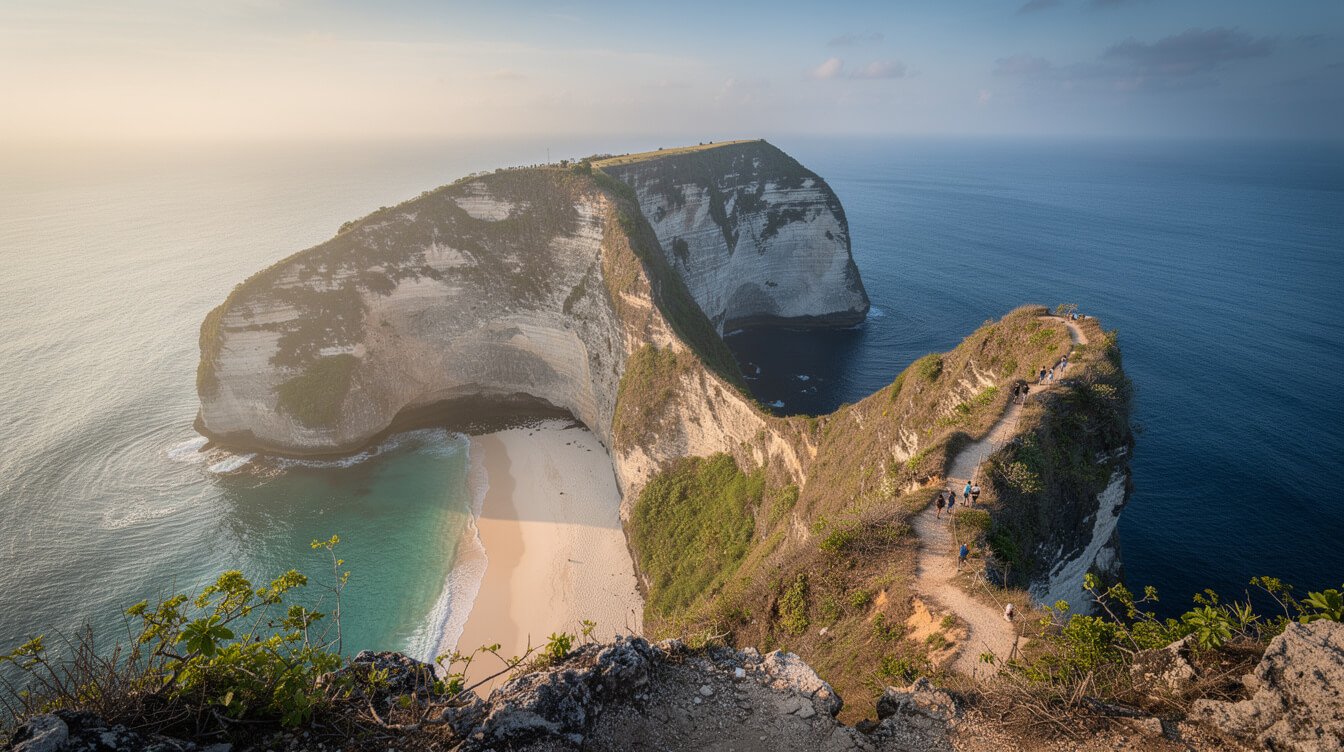
- Kelingking Beach: the T-rex shaped headland you’ve seen on every Bali feed. The view from the top is the reason most people come. The path down to the beach is very steep and exposed, and the climb back up in full sun is hard work. Many people happily enjoy the view from the top and skip the descent.
- Broken Beach (Pasih Uug): a near-perfect circular cove with a natural rock arch where the sea flows in and out. An easy, flat loop walk around the rim.
- Angel’s Billabong: a natural rock pool on the edge of the ocean, right next to Broken Beach. Beautiful, but see the safety section before you even think about swimming.
- Crystal Bay: a calmer beach with real sand, palm trees and clear water. A good place to cool off and have lunch.
The east loop: white sand and quieter viewpoints
The east is a little further from the main harbors, but often feels calmer.
- Diamond Beach: a white-sand cove framed by limestone pillars, reached by a long stairway carved into the cliff. The water is often too rough for swimming, so think of this as a view and a walk, not a swim stop. It faces east, so the morning light is lovely.
- Atuh Beach: right beside Diamond Beach, with an easier path down and more space to sit.
- Thousand Islands Viewpoint and the Rumah Pohon tree house: big views over small islets scattered along the coast.
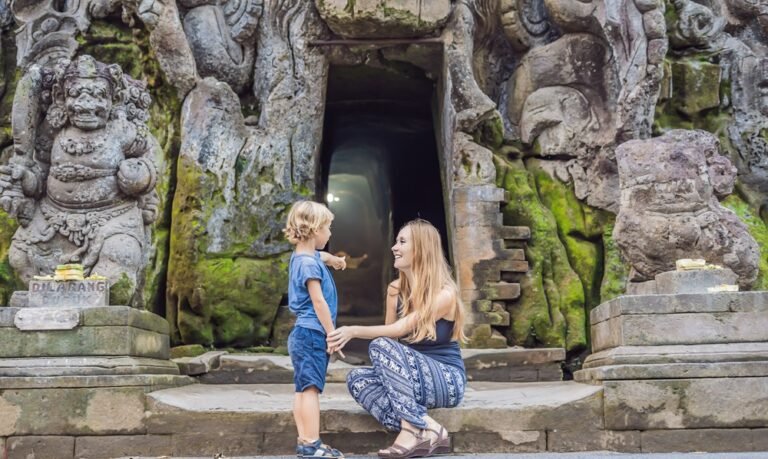
- Goa Giri Putri: a working Hindu temple inside a huge limestone cave, entered through a narrow gap in the rock. Bring or borrow a sarong and a sash, and go with respect. If you loved the evening kecak dance in Ubud, this is another quieter window into Balinese spiritual life.
How to choose
Choose the west if it’s your first visit and you want the iconic Nusa Penida views, plus the option of snorkeling. Choose the east if you’ve seen the west before, you’re traveling in a high-season week when the west is busiest, or you’d rather trade a little fame for more space. Either way, four or five stops is plenty for one day.
Snorkeling Crystal Bay and Manta Point: When the Sea Cooperates
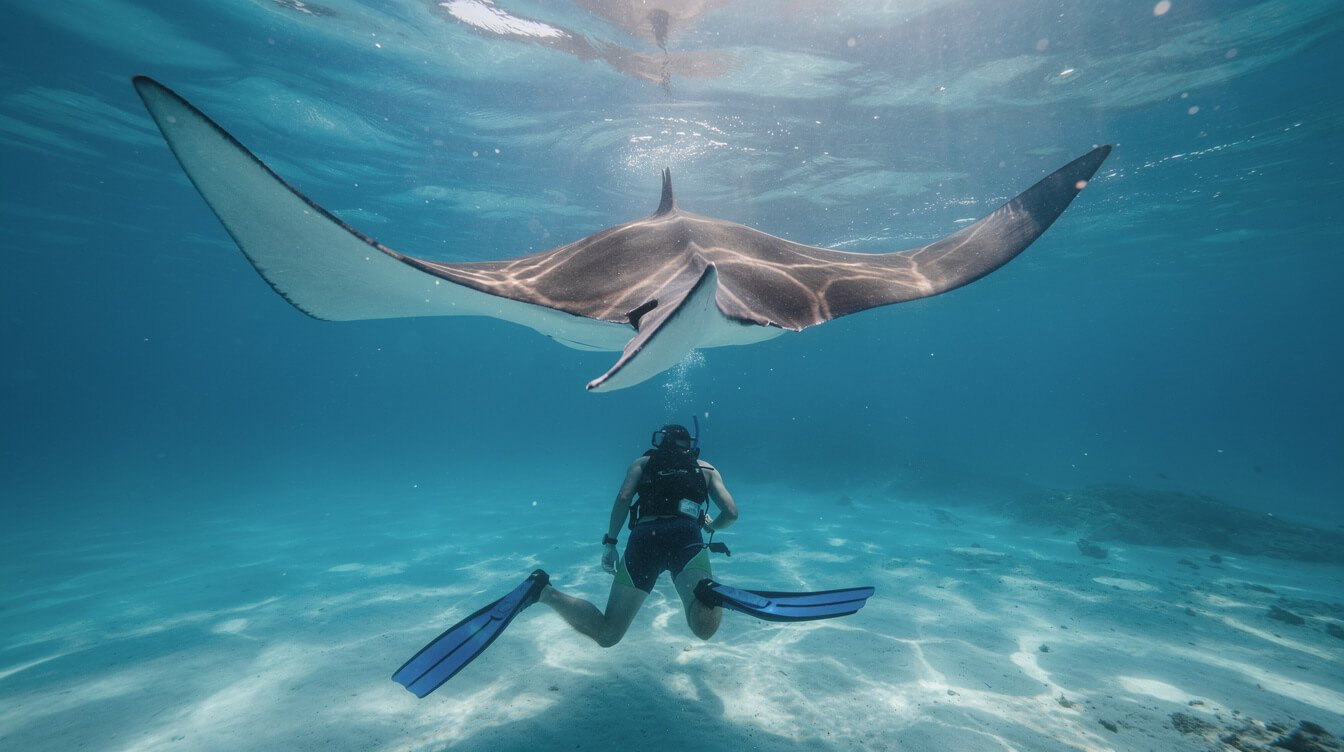
For many people, the most unforgettable moment of a Nusa Penida trip happens underwater. The waters around the island are among Bali’s best for marine life, and reef manta rays are seen here all year. Floating above one of these gentle giants as it glides beneath you, wings slowly beating, is a genuine bucket-list moment.
How snorkeling trips work
Most snorkeling trips are boat tours that leave in the morning and visit several spots, usually Manta Point or Manta Bay, Crystal Bay, Gamat Bay and Toyapakeh. You can book a snorkel trip on its own or combine a short morning on the water with a few west-side viewpoints in the afternoon. Doing both a full snorkel tour and a full land tour in one day from Ubud is a lot. Pick one as the focus.
The best time to go
- Mornings are calmer. Wind and swell often build in the afternoon.
- Mantas are year-round, but sightings depend on conditions. Operators often talk about good odds, not guarantees.
- The cooler months (roughly July to October) bring colder upwellings and, for divers, the chance to see the rare mola mola (ocean sunfish) at sites like Crystal Bay.
- The wet season (roughly November to March) can bring rougher crossings and more cancellations. Keep a flexible day in your plans. Our Bali rainy season guide explains how the weather shapes island trips.
Snorkeling tips
Currents around Penida can be strong. Wear a life vest if you’re not a confident swimmer, stay with your guide, and never touch or chase the mantas. Use reef-safe sunscreen, or better still, a rash guard. If you’re a certified diver, the island’s sites are some of the most exciting in Indonesia. Our posts on diving Manta Point and scuba diving in Sanur are good places to start.
Is Nusa Penida Safe? Stairs, Tides, Roads and the Crossing
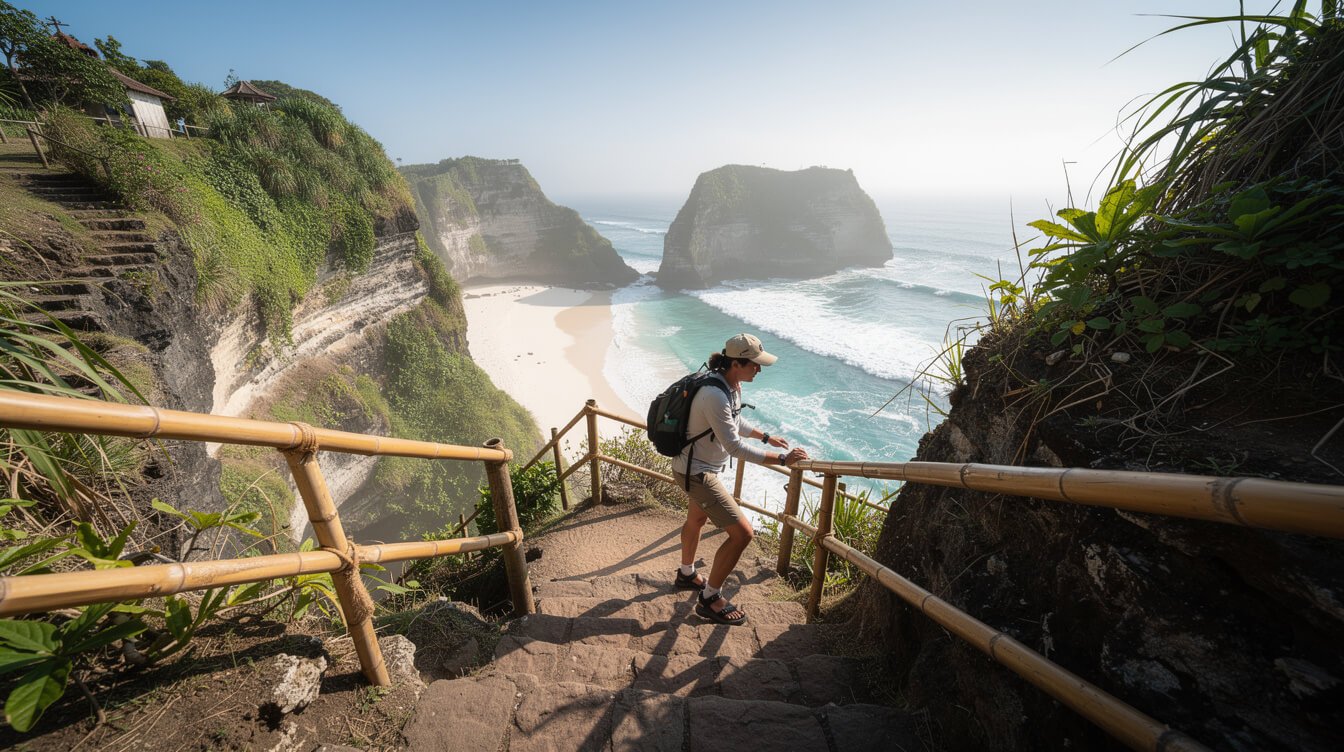
Nusa Penida is safe to visit for most travelers, and thousands of people enjoy it every week. But it is a wild coastline, not a theme park, and most of the accidents you read about are avoidable. Here’s what we tell our own guests.
The cliff stairways
The paths down to Kelingking, Diamond Beach and some of the quieter beaches are steep, uneven and often unshaded. Wear proper shoes with grip, not flip-flops. Carry water, go early before the heat, and turn around if you feel unsteady. There’s no shame in enjoying the view from the top. It’s the view everyone came for anyway.
Angel’s Billabong and the tides
Angel’s Billabong looks like a calm natural infinity pool. When the swell is up, though, big waves can break over the rock wall without warning and sweep people out to sea, and there have been fatal accidents here. Only get in if local guides say the sea is calm and the tide is right, and stay out completely if waves are washing over the edge. The same goes for rock ledges along the whole coast: never turn your back on the ocean for a photo.
The roads
Steep hills, loose gravel, blind corners and tour traffic make Penida’s roads one of the island’s biggest risks. This is why we recommend a car and driver over a scooter, especially for families.
The sea crossing
The fast boat route is busy and well established. Choose a known operator, wear your life jacket if asked, keep valuables in a dry bag, and sit toward the back if you’re prone to seasickness. If the sea is rough and a crossing is delayed or cancelled, accept it gracefully. That’s a good reason not to plan Penida for the day before a flight. For a broader picture, see our guide to whether Bali is safe to travel.
Respect the island
Nusa Penida is home to tens of thousands of people, with temples, ceremonies and village life of its own. Dress modestly away from the beaches, take your rubbish back with you, and ask before photographing people or ceremonies.
Book the Villa
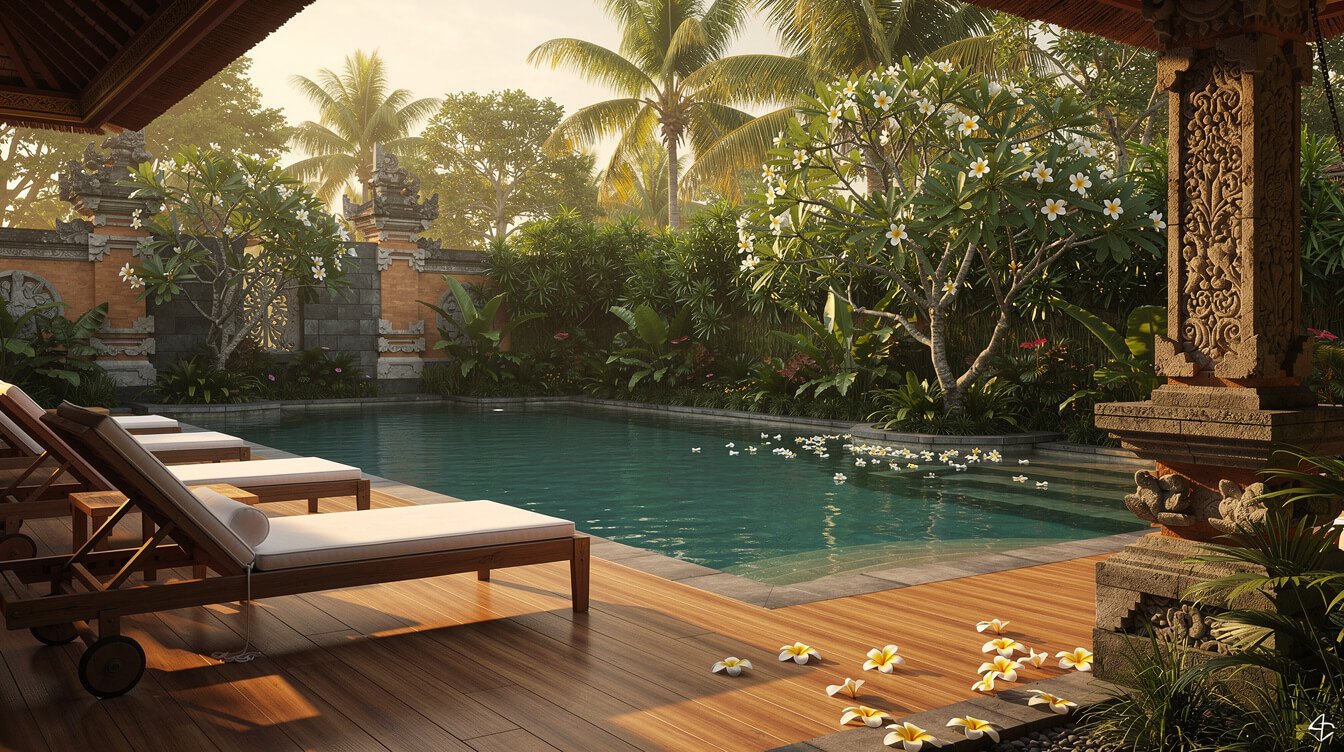
Three bedrooms, a private pool to sink into after a long day at sea, and a team who knows the village and the island roads. Check availability for your dates at Villa Amrita.
Nusa Penida Day Trip vs One Night on the Island: An Honest Comparison
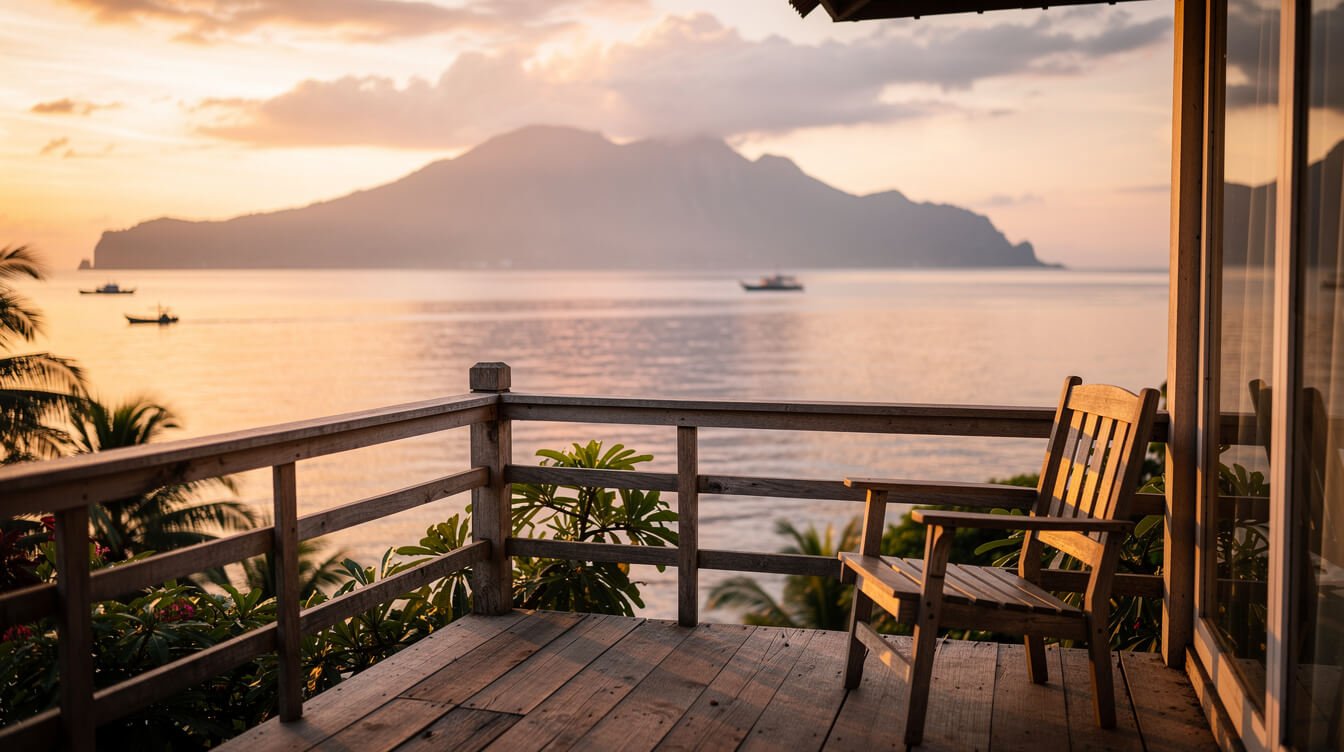
Many guides will tell you to stay overnight on Nusa Penida. They have a point. Staying a night means you can enjoy sunset at Crystal Bay, see Kelingking or Diamond Beach before the day-boats arrive, and do both loops at a calmer pace. But if you’re based in Ubud, it isn’t always the right answer.
Choose a day trip if:
- You want one big island day and you’re happy to pick one loop.
- You’re traveling as a family or group and don’t want to repack bags for one night.
- You prefer coming back to your own space, your own pool, and a proper dinner.
- You’re on a trip of a week or less and want to keep your base settled.
Choose a night (or two) on the island if:
- You want both loops, plus snorkeling or diving.
- Sunrise or sunset photography is high on your list.
- You’re happy with simpler accommodation for a night or two.
- You’re sensitive to long days in the car and on the water.
One more option: if you’re traveling the island over a longer stay, you can split your trip between Ubud and the coast and catch the boat from there. Our guide to traveling through Bali shows how to connect different regions without wasting days, and our Sanur beach day trip guide covers the harbor town itself, which is a pleasant place for a slow breakfast if you ever catch a later boat.
Coming Home to Ubud: Why the Return Feels Like the Best Part
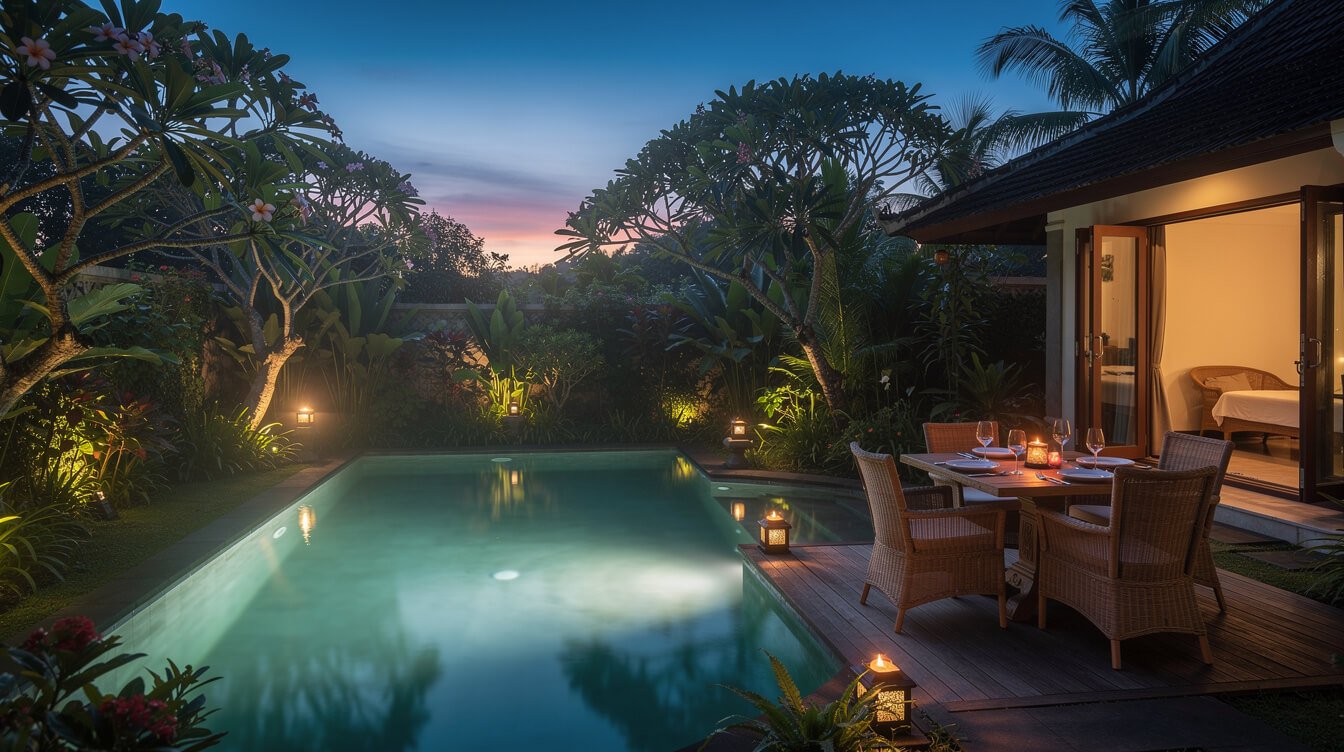
Here’s something the island guides don’t tell you. After a day of sun, salt, stairs and ocean, the drive back up into the highlands feels like a slow exhale. The air cools. The coastal traffic gives way to rice fields and temple gates. By the time the car turns into the lane, the frogs are starting up in the paddies and the light is going violet over the garden.
This is the quiet advantage of doing Nusa Penida from Ubud. You don’t end the day in a busy harbor town or a basic guesthouse. You end it at home. A swim in the pool washes off the salt. A hot shower, a cold drink on the terrace, and then dinner cooked in the villa’s own kitchen while you swap photos and stories. If you’d like the chef to cook for you that evening, let the team know in advance. Our guide to having a private chef in your Ubud villa explains how it works.
We’d also gently suggest planning the next day as a slow one. A late breakfast, a massage, a walk in the rice fields. Nusa Penida is a big day. The best trips give it room to land.
Nusa Penida FAQs
What is Nusa Penida famous for?
Nusa Penida is famous for its dramatic limestone cliffs and coves, especially Kelingking Beach’s T-rex shaped headland, Broken Beach, Angel’s Billabong and Diamond Beach, as well as snorkeling and diving with manta rays.
How long does it take to get from Ubud to Nusa Penida?
Allow roughly 60 to 90 minutes by car from Ubud to Sanur harbor, plus time to check in, and then around 30 to 45 minutes on a fast boat. Door to island, plan on two and a half to three hours.
Can you see all of Nusa Penida in one day?
Not comfortably. The island’s roads are slow, so choose either the west loop (Kelingking, Broken Beach, Angel’s Billabong, Crystal Bay) or the east loop (Diamond Beach, Atuh Beach, Thousand Islands Viewpoint). If you want both, stay a night.
How much does a Nusa Penida day trip cost?
Costs depend on your boat operator, your driver, your group size, the season, and whether you add snorkeling. Budget for return fast boat tickets, a car and driver, the island tourism levy, small attraction and parking fees, lunch, and your transfer from Ubud to Sanur. Our Bali travel prices guide gives a sense of everyday costs on the island.
Is Nusa Penida worth it for families?
For families with older children who are comfortable on boats and with some walking, yes. Stick to the easier viewpoints such as Broken Beach and the top of Kelingking, add a calm snorkel at Crystal Bay if the sea allows, and skip the steep descents. For young children, Nusa Lembongan or a beach day closer to the mainland is often an easier choice.
Do I need a guide for Nusa Penida?
You don’t need a formal guide, but a local driver who knows the island makes a big difference to timing, safety and stress. If you’d like help planning more of your Bali days, our guide to finding a tour guide in Bali is a good place to start.
Final Thoughts: Nusa Penida from Ubud, Done Gently
A Nusa Penida day trip from Ubud is a big, bright, salt-and-sunlight kind of day. Leave early. Choose one side of the island. Respect the stairs, the tides and the roads. Let the mantas surprise you if the sea is kind. Then come home to the highlands, to frogs in the rice fields and the glow of the pool, and let the island settle into memory over dinner.
If you’d like to make Ubud your base for exploring Bali, from the rice terraces on your doorstep to the cliffs of Nusa Penida, we’d love to help you plan it. Tell us what kind of stay you’re picturing, and we’ll meet you there.

Join our newsletter — fun, new, exciting Bali news
Seasonal notes from Ubud, island trips worth the early alarm, and small stories from the garden and kitchen. Delivered now and then, always worth opening.