Amed Bali: A Slow Day on East Bali’s Salt and Snorkeling Coast From Ubud
Before the dive shops, before the guesthouses and the snorkel-rental signs, the east coast of Bali made salt. It still does. Walk the black sand of Amed Bali early enough and you will find farmers carrying seawater up from the shore while the jukung fishing boats slide out under triangle sails, Mount Agung sitting huge and quiet above them all. It is about two and a half hours from Ubud, and it is one of the most rewarding long days you can take from the villa.
Almost every Amed guide online is written for people who move there for a week. This one is written for you if Ubud is your home base. Here is what Amed actually is, how to get there and back without wasting the day, where non-divers can see the reef, the salt-making tradition most visitors drive straight past, the viewpoints worth the climb, and how to decide between a long day and a single night.
What Amed Bali Actually Is: A Coast of Villages, Not a Town
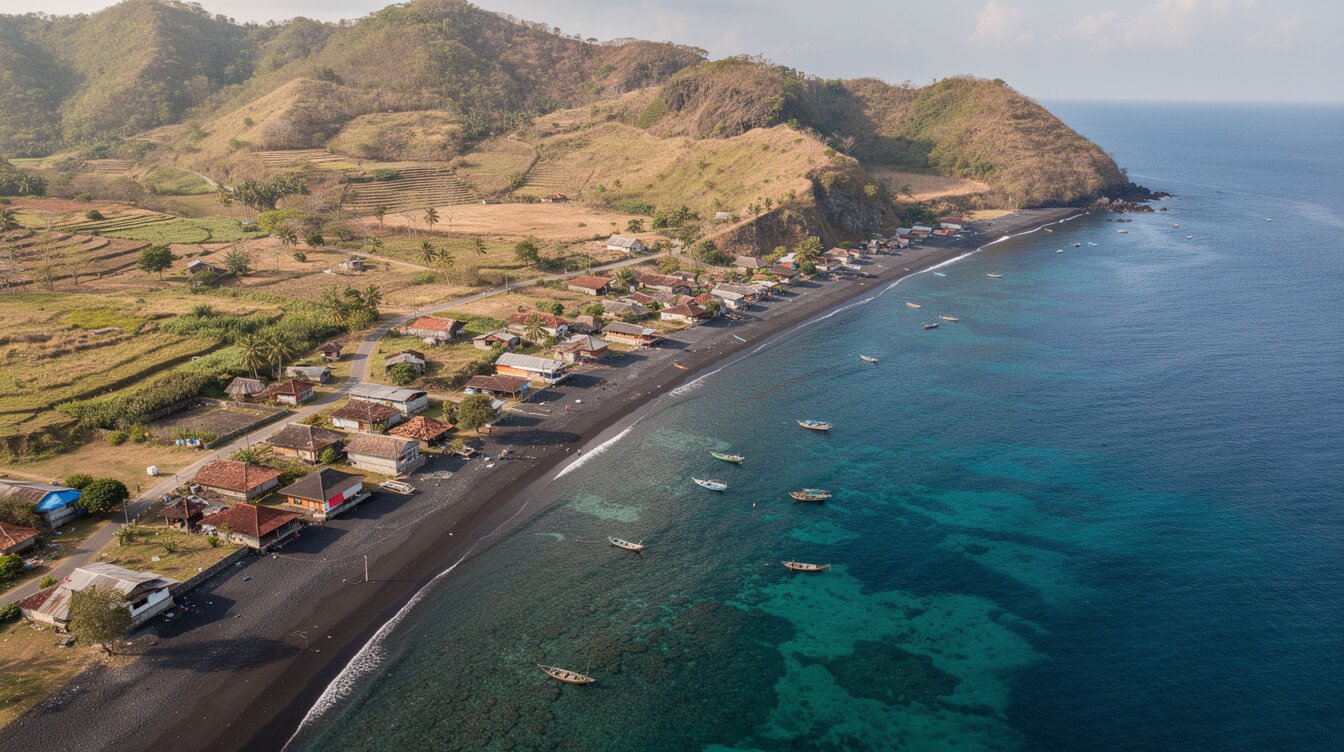
The first surprise is that there is no single place called Amed to arrive in. The name covers a stretch of roughly 14 kilometers of coastline on Bali’s far north-east, in the Abang district of Karangasem regency. It runs from Culik and Jemeluk in the north-west to Lipah, Banyuning, Selang and Aas in the south-east. Amed itself is just one hamlet, in the village of Purwakerthi, that gave its name to all the rest.
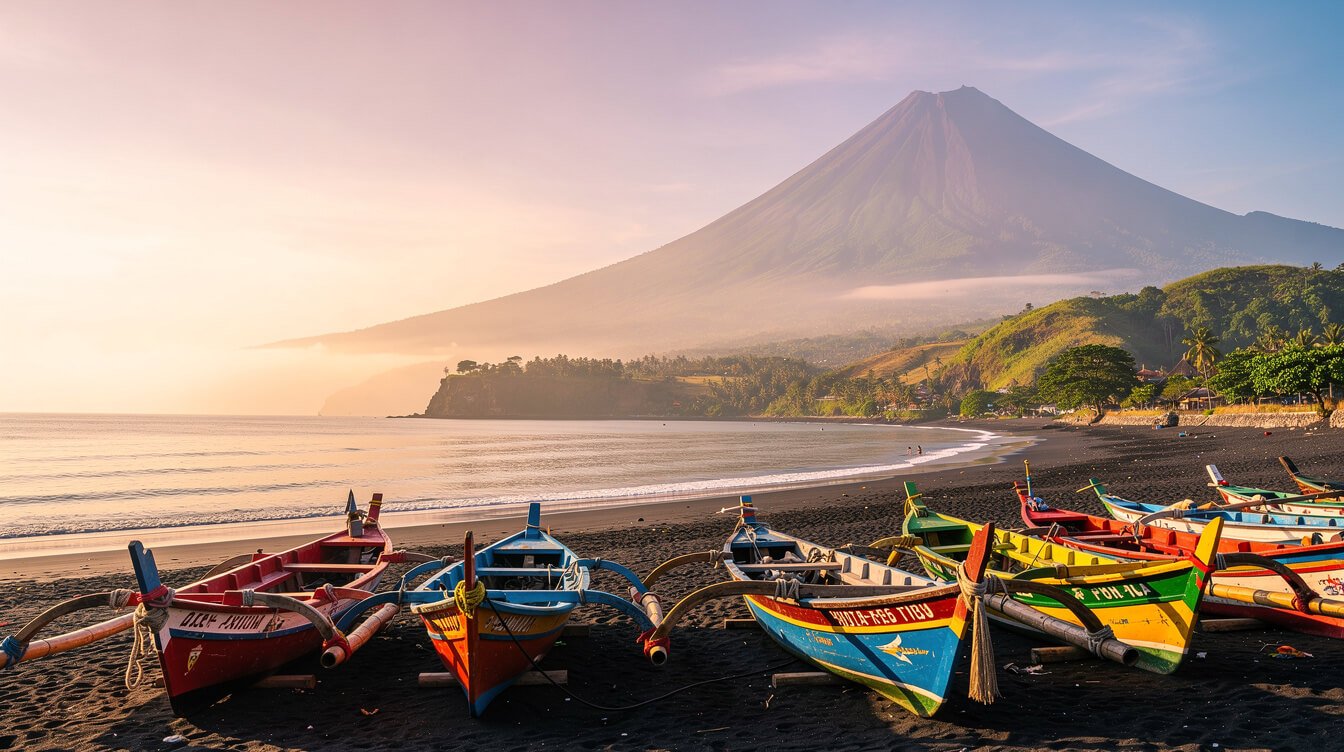
Each village sits in its own bay. Dark volcanic sand, smooth black stones at the waterline, a line of painted jukung outriggers pulled up above the tide, and a narrow road winding over the headland to the next cove. Behind it all, the land rises dry and steep, lontar palms and scrub on the lower slopes, and then the long shoulder of Mount Agung, Bali’s highest and most sacred volcano.
This is the dry side of the island. Rain falls on the mountain and much less on the coast, which is why the hills turn golden for half the year, and why the salt farmers here could work with the sun for centuries. It is also why Amed feels so different from Ubud. Where Ubud is wet green, rice, and river gorges, Amed is sea light, salt air, and wide open sky.
So when someone asks “What is Amed?”, the honest answer is: a working fishing coast with very good snorkeling, an old salt tradition, and the best seat in Bali for watching Agung. The diving came later, and the villages are still there underneath it.
Getting to Amed From Ubud: Drive Time, Drivers and the Grab Question
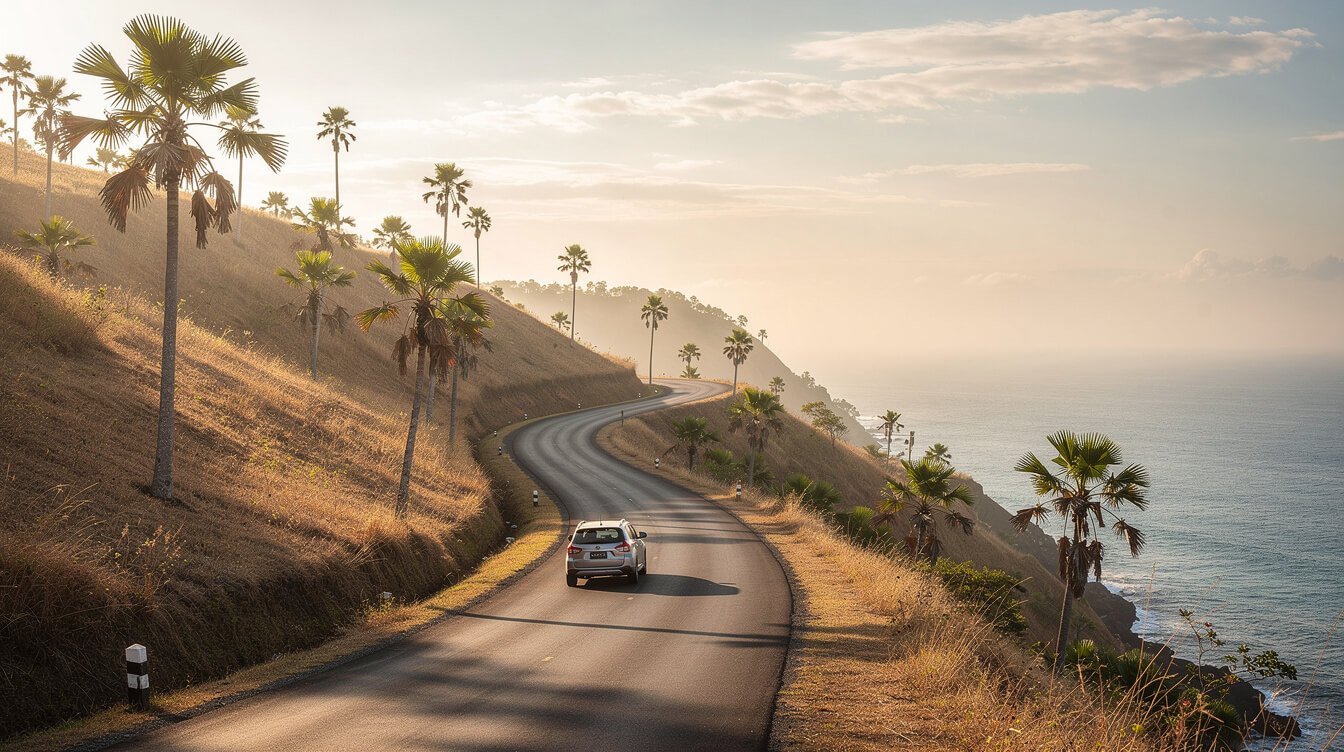
Amed is about 85 to 90 kilometers from Ubud by road, and the drive takes around two and a half to two and three-quarter hours each way. The route runs east through Gianyar and Klungkung, past Candidasa, then north around the mountain through Amlapura and Culik. The last stretch along the coast is slow and twisting, and that is part of its beauty.
That distance shapes everything. A day trip means roughly five hours in the car, so how you travel matters more than usual. A few honest options:
- A private driver for the day. This is how most people do it, and what we would suggest. Your driver waits while you snorkel, moves you between bays, and gets you home. Drivers who know the east coast typically quote full-day rates for up to about 10 hours, and a stop or two on the way is usually included. Agree on the route and the price before you set off.
- A scooter. Possible for confident riders, but this is a long, hilly ride with trucks and tight bends. We would not recommend it as a same-day return from Ubud.
- Grab or Gojek. This is the question people ask most, and the answer is no, not in any useful way. Ride-hailing apps are not reliable in Amed. A 2026 local transport guide lists both as simply “not available,” and travelers report long waits with no driver accepting. You might get a car to Amed from Ubud, but do not count on an app to get you between bays or back home.
Our suggestion for a day trip: leave Ubud around 6 am. You arrive by about 8:30, just as the water is at its calmest, and the drive home happens during the softer afternoon light. Ask the team the evening before, and they can help you think through the timing.
Snorkeling Amed Bali for Non-Divers: Jemeluk, the Japanese Wreck and the Liberty
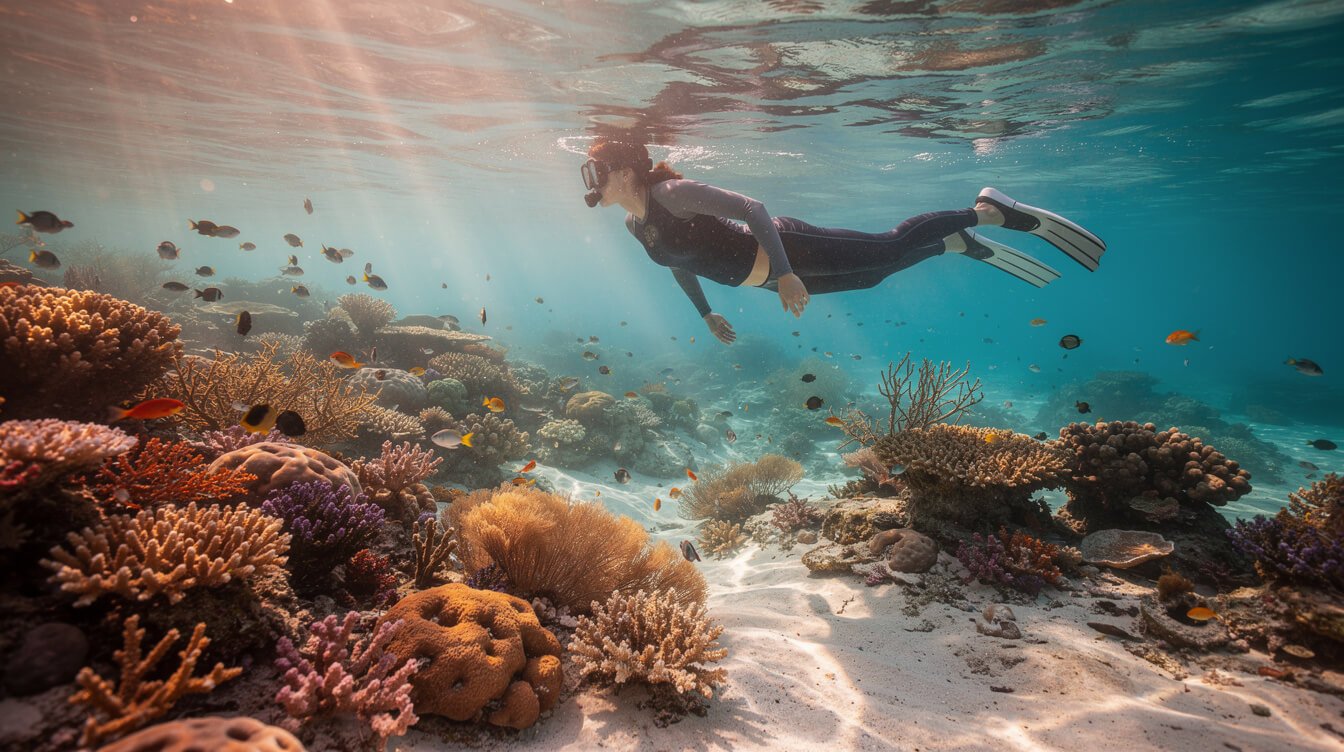
Here is the best news for anyone who has never dived: Amed’s reefs start just a few meters off the beach. You wade in from the stones, put your face in the water, and the coral is right there. Most spots need no boat at all.
Jemeluk Bay
The easiest and most popular bay, and the one to start with. It is sheltered, the current inside the bay is mild to none, and the coral begins close to shore. At about 3 to 5 meters, usually marked by a buoy, you will find a small underwater shrine with Balinese-style statues and a carved postbox, installed in 2011 by Indonesia’s national post office with the Reef Check Foundation to raise reef awareness. The statues are visible from the surface. Stronger swimmers can follow the reef toward the headland, where the wall drops steeply to almost 40 meters and the bigger schools of fish gather.
The Japanese Wreck at Banyuning
About 7 kilometers east of Jemeluk, in the hamlet of Banyuning, a steel boat roughly 20 meters long lies on a sandy slope 15 to 30 meters off a pebble beach. Its highest point is about 2 meters below the surface and the deepest parts reach about 12 meters, so snorkelers see it almost as well as divers do. Sea fans, sponges and soft coral cover the hull, and glassfish shelter inside. Nobody seems to know for certain what the ship was, despite its name. There is no ticket, just a small parking or beach fee, recently reported at around IDR 10,000 to 25,000.
One important thing: at low tide, the top of the wreck can sit less than a meter deep, and the metal is sharp. Float, don’t stand, and go at mid to high tide.
The USAT Liberty at Tulamben
Fifteen to twenty minutes’ drive north-west of Amed lies one of the most famous shore dives in the world. The USAT Liberty was a 120-meter United States Army cargo ship, torpedoed in January 1942 and beached on this coast. The 1963 eruption of Mount Agung later pushed it into the sea. Its shallowest sections are about 4 to 5 meters deep and roughly 30 meters from shore, so on a clear morning snorkelers can see the top of the hull. If you have ever wondered whether you might like diving, this is a gentle place for a first try dive with a certified instructor. A local community fee of about IDR 20,000 applies.
Doing it well
- Go early. Between about 7 and 10:30 am, the water is calmest, before the afternoon wind picks up.
- Watch the tide. Mid to high tide gives you room above the shallow reef. At a low spring tide, some spots are too shallow to swim over safely.
- Wear reef shoes. The beaches are large, smooth black stones that shift underfoot. Put your fins on in the water.
- Never snorkel alone. Amed’s bays are calm, but this is open sea. Go with a buddy or a local guide, and if you see whitecaps offshore, stick to Jemeluk or Lipah.
Gear rental is easy to find along the beach, and local guides can take you out by jukung to the spots farther along the coast.
Get a free 3-day sample itinerary
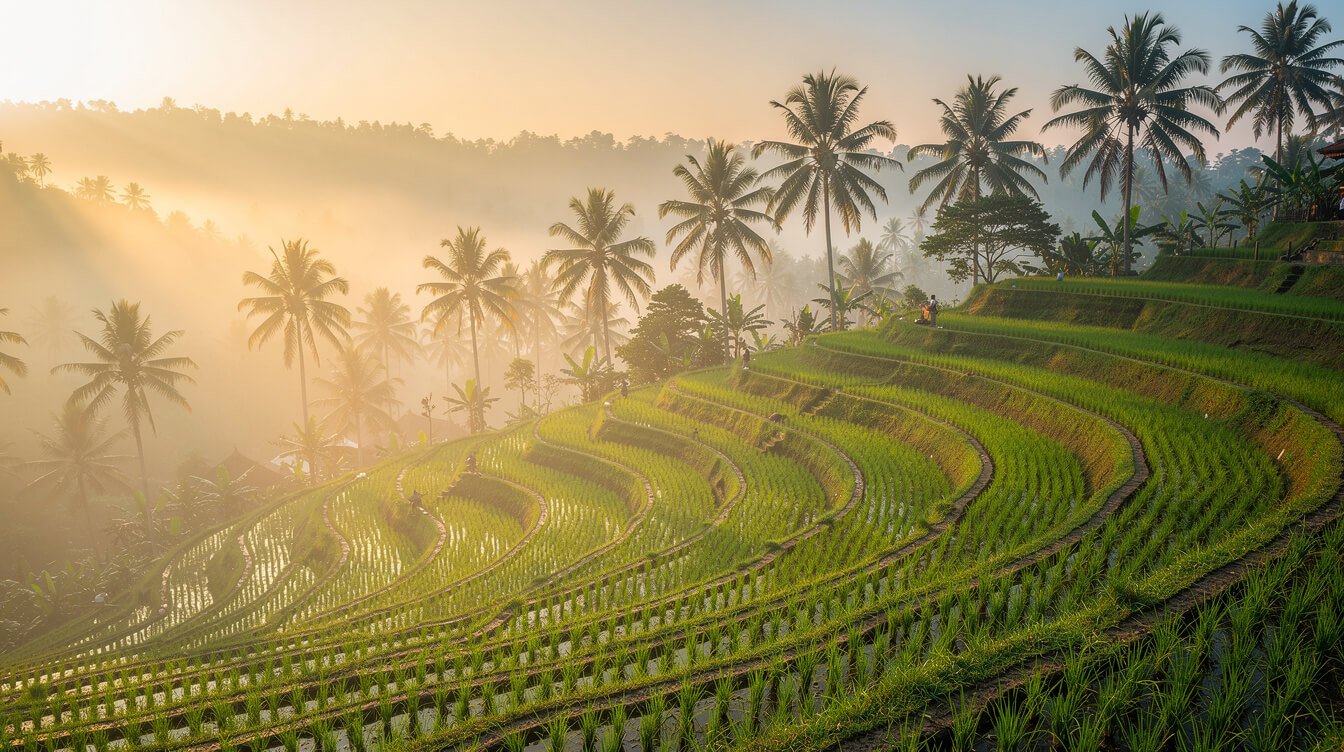
Three easy days from Ubud: rice field walks at first light, a temple morning, a market, and one long day on the east coast done the gentle way. We will send you a free 3-day sample itinerary.
Before the Dive Shops: Amed’s Salt Farmers and Jukung Fishermen
This is the part of Amed most visitors never see, and it is the reason we love this coast.
Salt-making on the Amed coast goes back centuries. The farmers’ own association traces it to the 15th century, when Amed salt was offered to the king of Karangasem. Today it is Garam Amed Bali, a product protected by Indonesia’s Geographical Indication registry since December 2015. That status means only salt made here, in this way, can carry the name, the same idea that protects Champagne or Parmigiano.
How Amed salt is made
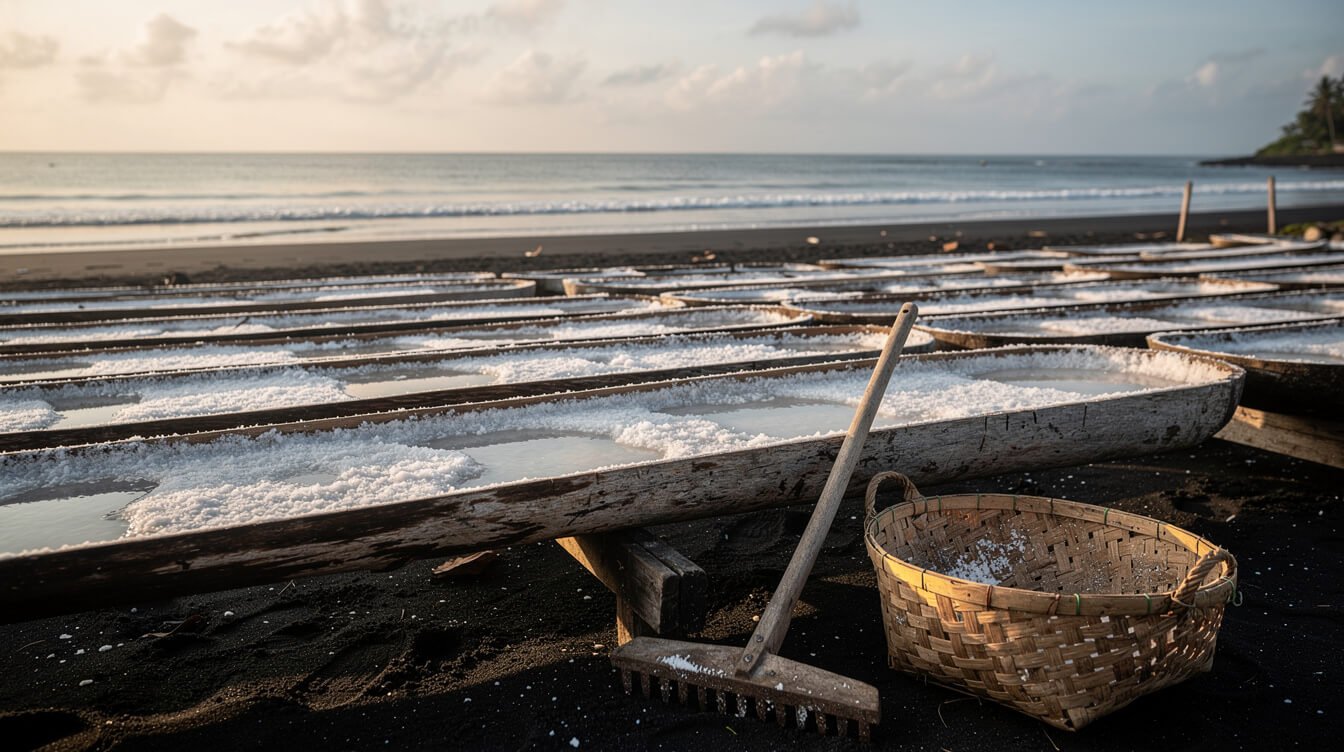
Most salt in Indonesia is made by letting seawater dry on the ground. Amed does it differently, and slowly. Farmers carry seawater up from the shore and work it into the sand of the salt field, which then dries in the sun. That salt-rich sand is loaded into a tinjungan, an upside-down cone that works as a traditional filter. Seawater is poured through, and what drips out the bottom is a concentrated brine.
The brine then goes into the palungan: long coconut-tree trunks, split and hollowed into troughs, lined up in rows along the beach. Over four to five days of sun and wind, crystals grow on the surface of the brine. The farmers rake them out by hand. The result is clean, bright and gently salty, with almost no bitterness. Since 2016, after a visit to the salt marshes of Guérande in France, the farmers have also harvested a finer bunga garam, a “flower of salt” skimmed from the very top.
The work starts before dawn. In the salt season, farmers are on the field from about 5 to 7 am, hauling water while the sky turns pink. Production follows the dry season and stops when the rains come, so if you visit in the wet months, you may find the troughs quiet.
A tradition that nearly disappeared
For years, the salt barely paid. Before the Geographical Indication, farmers sold it for as little as IDR 2,000 a kilo, and much of the old beachfront salt land was sold for tourism. The Geographical Indication changed the math. The price paid to farmers rose to around IDR 17,000 a kilo by 2019, and the number of active farmers began to grow again. Then COVID emptied the hotels and restaurants that bought the salt, and production stopped for a while. The farmers who carried on are keeping something genuinely rare alive.
You can visit. Along the main coast road there is a small salt center, a community-run spot where a farmer will show you the troughs and the filters. Visitors describe it as short and simple, with free entry and a donation of your choice. Buy a bag of salt directly from the farmers. It is the best souvenir you will bring home from Bali, and every rupiah counts here.
The jukung at dawn
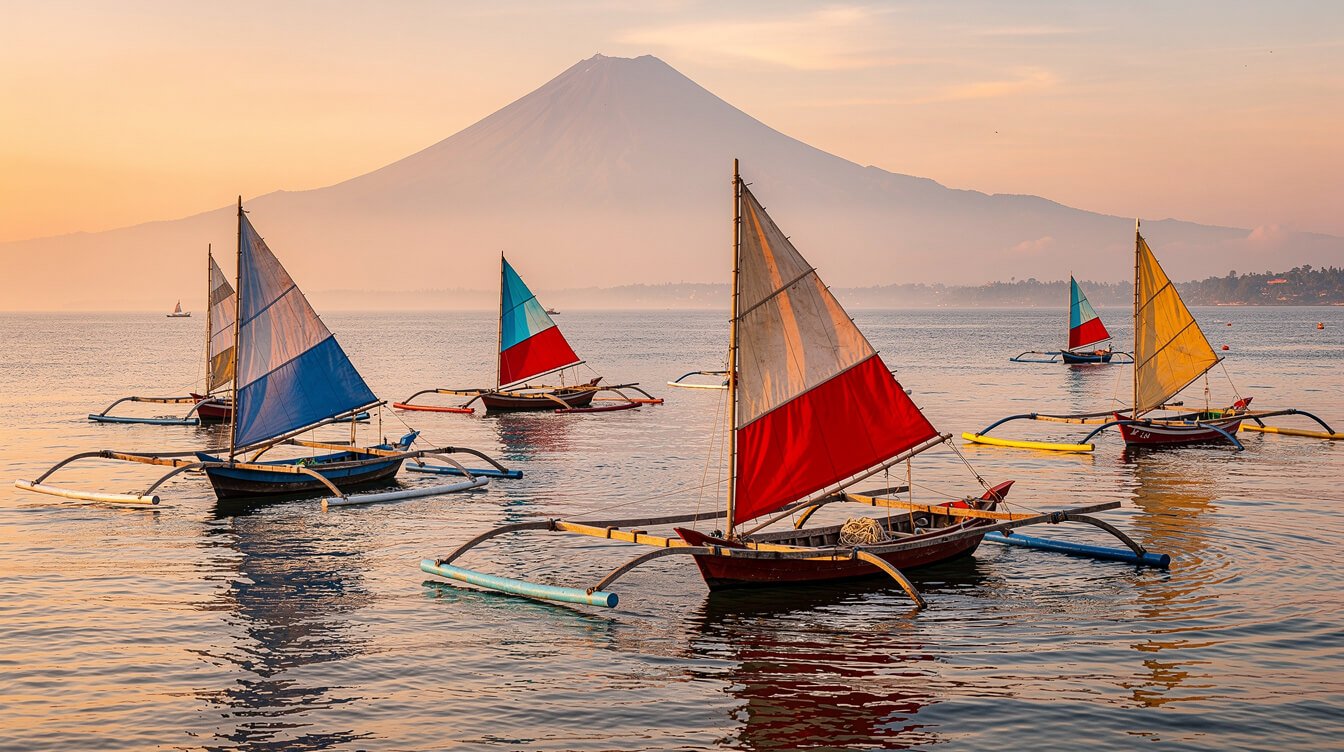
Amed’s other morning ritual happens on the water. The jukung, slim wooden outriggers with bamboo arms and painted bows, push off before sunrise to fish the open water. If you are on the beach at first light, you will see their colored triangle sails spread out across the bay with Agung behind them. It is one of the most beautiful sights in Bali, and it costs nothing at all.
Some fishermen take visitors out for snorkeling or sunrise trips in their jukung. It is a lovely way to see the coast, and the money goes straight to the family that owns the boat.
Sunrise, Sunset and Mount Agung From the Coast
Amed faces east and north, so sunrise comes up out of the sea, and Mount Agung watches over every bay. Where you stand changes the picture.
Jemeluk viewpoint. On the headland above Jemeluk Bay, the road curves around a small lookout with the whole bay below: jukung on the sand, the reef showing turquoise under the water, Agung rising behind. It is free, right on the coast road, and wonderful at golden hour.
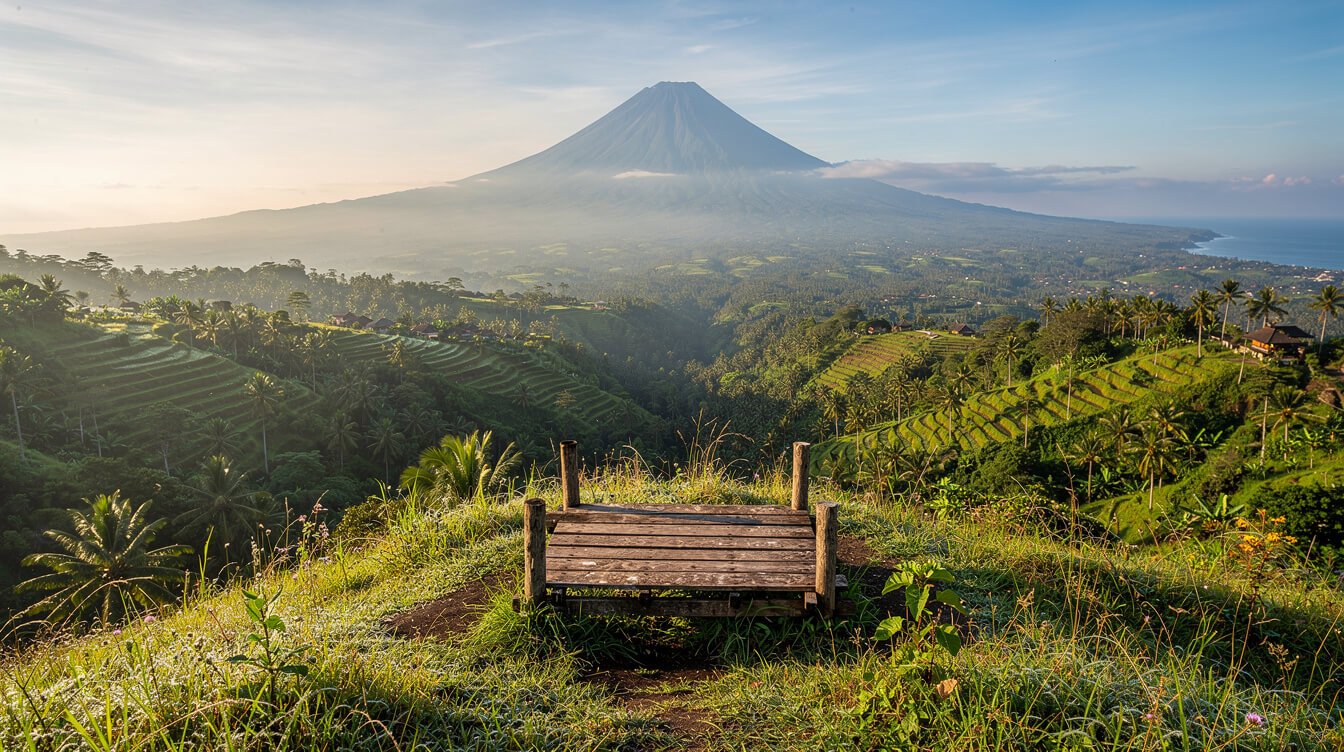
Lahangan Sweet. About 18 kilometers inland, roughly a 35-minute drive from the coast, this grassy hilltop looks straight across a deep valley at Agung, with the sea far below. Entry for international visitors is reported at IDR 100,000 per person in cash. From the gate, you either walk about a kilometer up a dirt road or pay for the shuttle (around IDR 50,000 return). Ignore anyone on the approach road pushing an unofficial shuttle and carry on to the official entrance. It is busiest at sunrise and late afternoon. Morning tends to give the clearest view.
The beach itself. Honestly, the simplest is often the best. Sit on the stones at Jemeluk or Lipah with a coffee at 6 am and watch the boats go out. In the wet season, Agung is most likely to be clear in the early morning, before the clouds build. If you see it at all, consider it a gift.
If you love that mountain, our guide to the Gates of Heaven Bali covers the famous temple gate that frames Agung, under an hour from Amed.
Day Trip or One Night? Planning an Amed Day That’s Worth the Drive
We will be honest with you: five hours of driving is a lot for one day. Whether it is worth it depends on what you want from Amed.
The full day from Ubud
Choose this if you mainly want to snorkel and see the coast. A good shape for the day:
- 6:00 am Leave Ubud. Breakfast in the car or a quick stop on the way.
- 8:30 am Snorkel Jemeluk Bay while the water is calm.
- 10:00 am Move on to the Japanese Wreck at Banyuning for a second swim.
- 11:30 am Visit the salt farmers and buy a bag of Amed salt.
- 12:30 pm Lunch by the water. Grilled fish from this morning’s boats is the obvious choice.
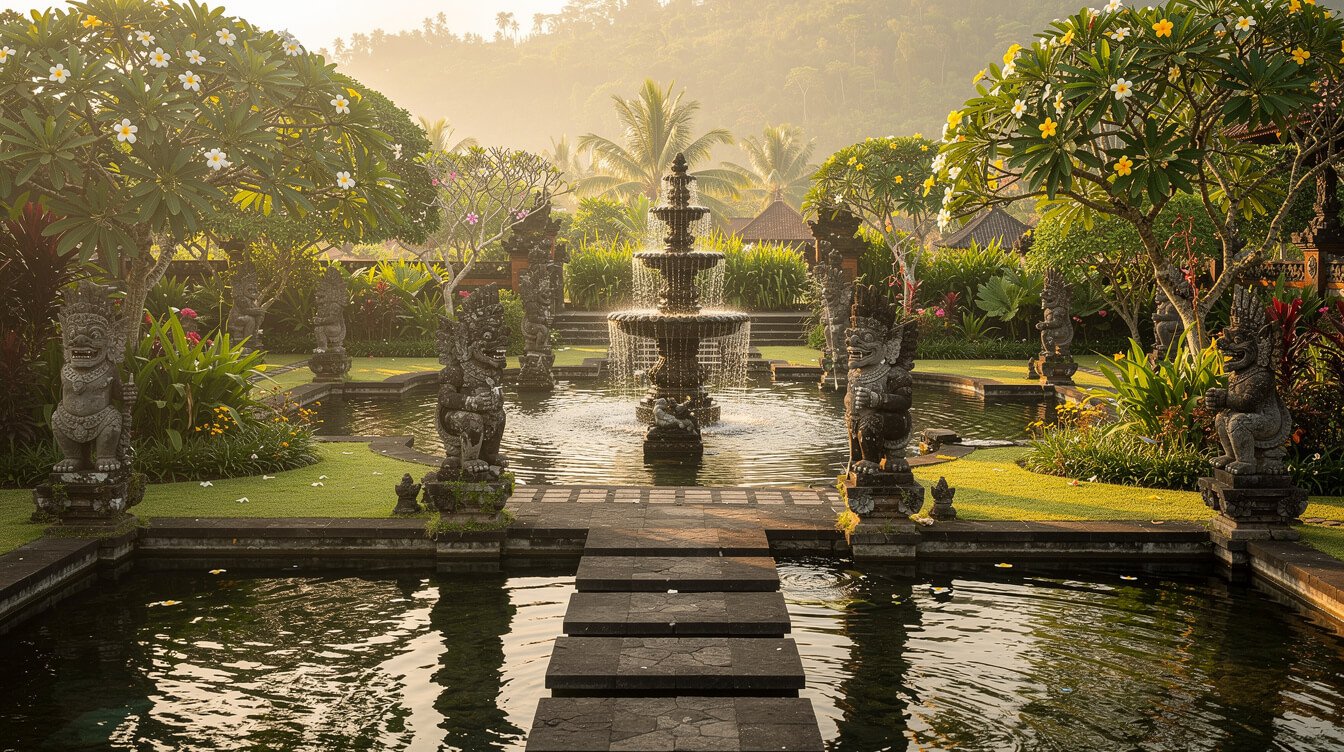
- 2:00 pm Head home, stopping for an hour at Tirta Gangga, the royal water garden about 30 minutes inland, to stretch your legs among the fountains and koi.
- 6:00 pm Back in Ubud, salty, sun-warmed and ready for the pool.
Because the drive takes you through Karangasem, you can also stop at a roadside stall for salak, the snake fruit that grows in the villages along the east road.
One night on the coast
Choose this if you want the salt farmers at work, the jukung at dawn, or a sunrise at Lahangan Sweet. All three happen around first light, which you simply cannot reach from Ubud. A single night also lets you pair Amed with Lempuyang Temple without a 3:30 am alarm.
Most of our guests treat Amed as a day out from Ubud, and the coast rewards that. If you do decide to stay a night, ask the team before you go. They can help you plan the timing so you come back to Ubud rested.
Going on to the Gilis
Fast boats run from Amed to the Gili Islands, and the crossing is shorter than from the south. If the Gilis are on your list, our guide to Gili Trawangan from Ubud covers your options in detail.
Want more ideas for days out? Our guides to day trips from Ubud and Bali beaches you can reach from Ubud have plenty more.
Book the Villa
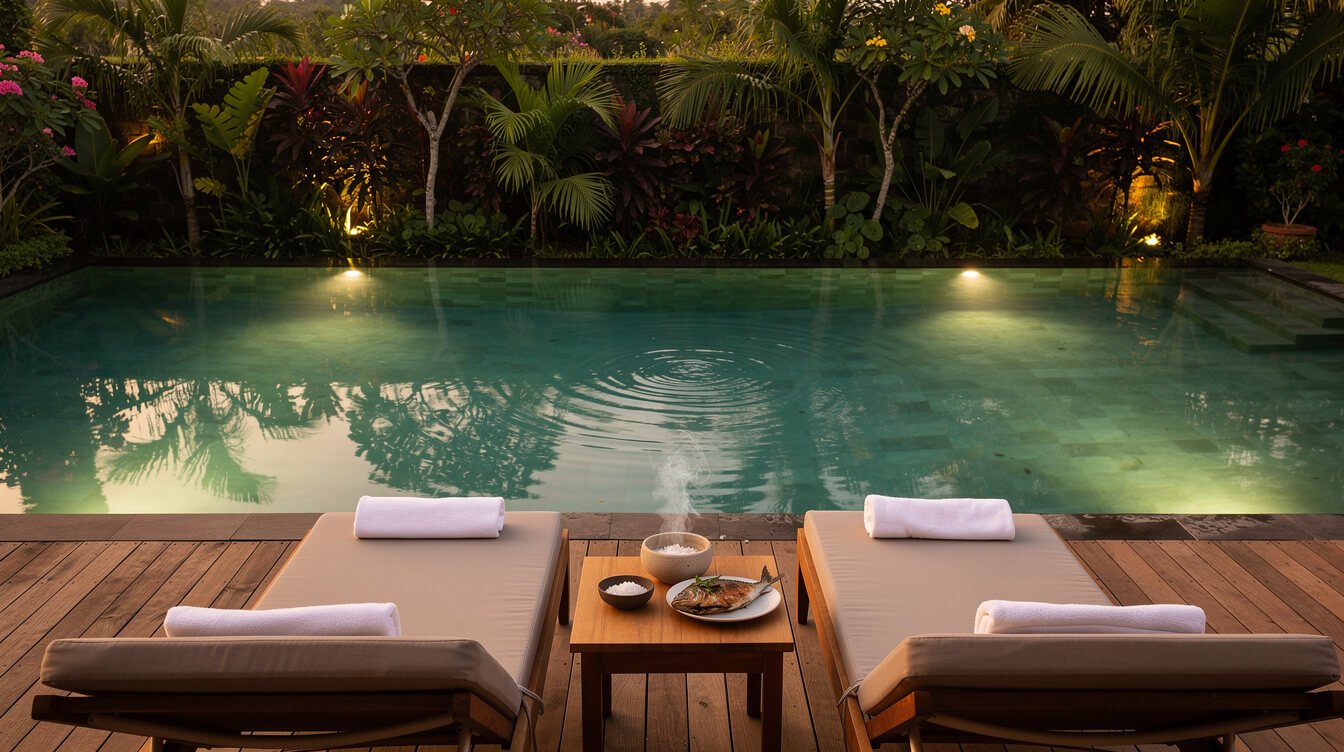
After a long, salty day on the Amed coast, come home to three bedrooms, a private pool and a quiet tropical garden in Ubud, with a team on hand so the evening stays unhurried. Check availability for your dates.
Practical Tips: Cash, Reef-Safe Sunscreen and Wet-Season Seas
Bring cash
Amed runs on rupiah. Parking, beach fees, the salt center donation, snorkel rental, viewpoint tickets and warung lunches are all cash. There are a few ATMs along the coast, but they can run dry or go offline. Bring what you need from Ubud.
Reef etiquette
- Never stand on coral, even when you are tired. Float on your back to rest, or swim back to the stones.
- Don’t touch, feed or chase anything: turtles, fish, or sea fans.
- Keep your fins up and away from the reef, especially over the shallow wreck.
- Use a mineral sunscreen without oxybenzone, or better still, wear a long-sleeved rash guard. It protects you and the reef.
Visiting in the wet season (November to March)
The east coast stays snorkelable most days through the rainy season, but expect lower visibility, around 5 to 15 meters instead of the dry season’s 15 to 25. Heavy rain sends runoff into the bays, which can cloud the water for a day or two. Mornings are usually calmer, and clouds tend to build over Agung by late morning. Be flexible: if the night before was stormy, it may be worth moving your Amed day.
Respect the villages
This is a fishing and farming coast with temples on the beach. Cover up when you walk through the village or stop for lunch, and save swimwear for the water. If a ceremony is underway, step aside and let it pass. You will often see offerings on the stones by the shore. Walk around them.
Driving and comfort
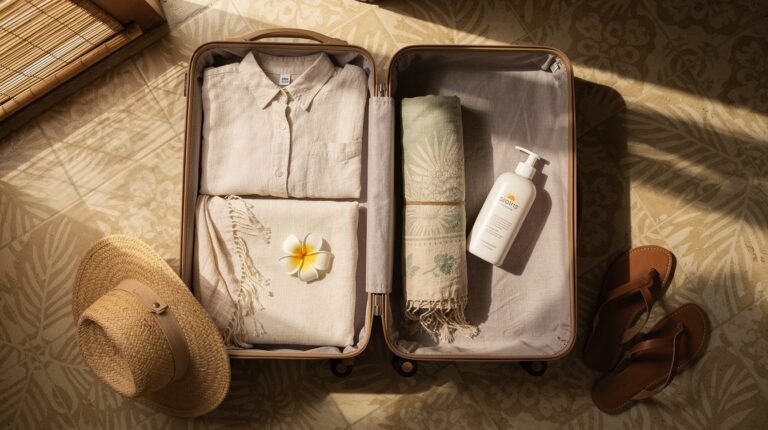
The coast road is narrow, with sharp bends over the headlands. If you get carsick, sit in the front and take something before you leave. A small towel, a change of clothes, water, and a plastic bag for wet gear will make the drive home far more comfortable.
Frequently Asked Questions
Is Amed Bali worth visiting?
Yes, especially if you love snorkeling, quiet coastline or views of Mount Agung. It is a long drive from Ubud, but the shore snorkeling, the salt farmers and the jukung at dawn give you a very different side of Bali.
How far is Amed from Ubud?
About 85 to 90 kilometers. The drive takes around two and a half to two and three-quarter hours each way by private car, depending on traffic.
Is Grab available in Amed Bali?
Not reliably. Grab and Gojek have little or no coverage on the Amed coast, so book a private driver for the day and keep their number with you.
Can you snorkel in Amed without diving experience?
Yes. Jemeluk Bay and the Japanese Wreck are both reachable from the shore, with coral and the wreck visible a few meters below the surface. Go with a buddy, at mid to high tide, in the morning.
What is Amed famous for?
Shore snorkeling and diving, its line of jukung fishing boats, views of Mount Agung, and Garam Amed Bali, a traditional sea salt made in hollowed coconut-trunk troughs and protected by a Geographical Indication since 2015.
When is the best time to visit Amed?
April to October brings the calmest seas and clearest water. Amed is still worth visiting from November to March, but visibility is lower and mornings are your best window.
Should I stay overnight in Amed or do a day trip?
A day trip works well if you mainly want to snorkel. Stay a night if you want to see the salt farmers working, the fishing boats going out, or a sunrise viewpoint, all of which happen around dawn.
Final Thoughts
Amed rewards people who come for more than the reef. Yes, the snorkeling is wonderful, and you should float over the shrine at Jemeluk and the wreck at Banyuning. But stay for the slower parts too: the salt crystals growing in a coconut trunk, the farmer who explains them, the boats going out under Agung, the grilled fish you eat with your feet in the black sand.
Then let the long road home do its work. By the time the rice fields of Ubud come back into view, the day will have settled into something you will remember for years. Come home, rinse off the salt, and slip into the pool. The rest of the evening is yours.

Join our newsletter — fun, new, exciting Bali news
Ceremony days, market finds, new trails and small stories from Ubud. Delivered now and then, always worth opening.