Gili Trawangan from Ubud: Is It Worth the Trip, and How to Do It Right
Somewhere around the second day of a slow Ubud stay, the question arrives. You’ve walked the rice fields at dawn, heard the gamelan drift across the valley at dusk, and now someone at dinner mentions Gili Trawangan: white sand, turtles in clear water, an island with no cars at all. It sounds like the perfect counterpoint to the jungle. Then you open a map, see the stretch of sea between Bali and Lombok, and wonder if it’s worth it.
Most Gili guides are written from the island itself: where to sleep, which bar to drink at, which dive shop to choose. This one starts where you are, in Ubud. It’s an honest planner for travelers who want to know whether Gili Trawangan deserves a slice of a Bali trip, which of the three Gili islands fits you best, exactly how the door-to-door journey works, how many nights make sense, what’s worth doing once you land, and how the island compares with Bali on cost and feel. No hype. Just the decisions, laid out clearly.
Gili Trawangan in a Paragraph: What It’s Famous For, and What’s Changed
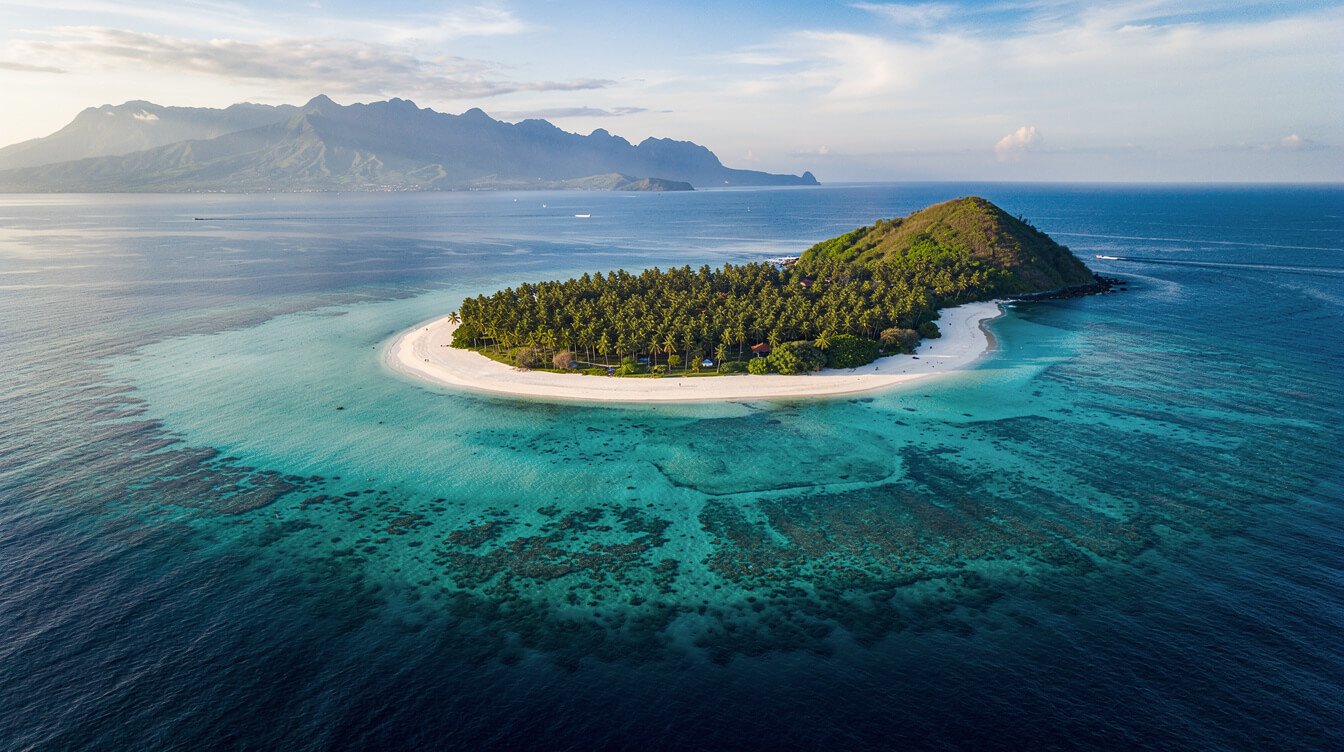
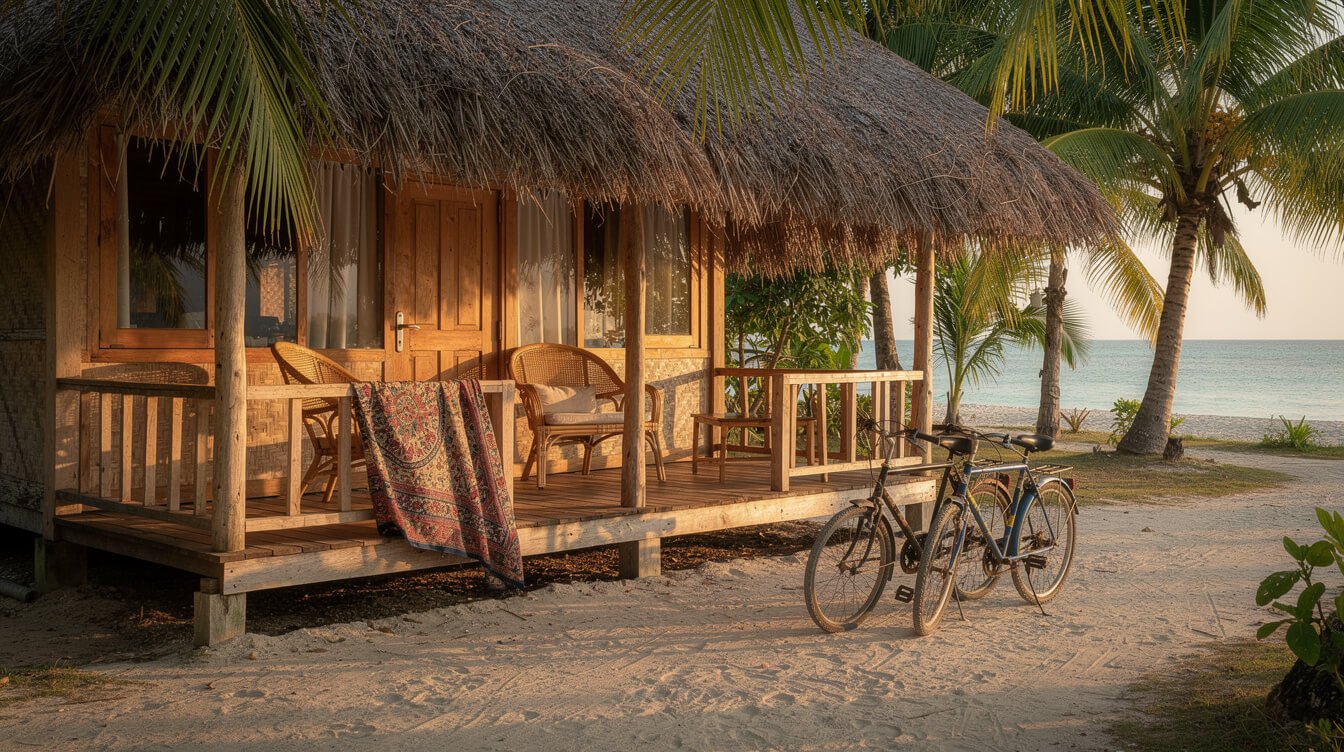
Gili Trawangan is the largest of three small coral islands off the northwest coast of Lombok, the next island east of Bali. It’s roughly three kilometers long and two wide, flat apart from one modest hill, and ringed by white sand and pale turquoise reef. There are no cars and no motorbikes. You get around on foot, by bicycle, or on a cidomo, the small horse-drawn cart that doubles as the island taxi. That alone changes the sound of the place: no engines, just bicycle bells, waves and the call to prayer from the village mosque.
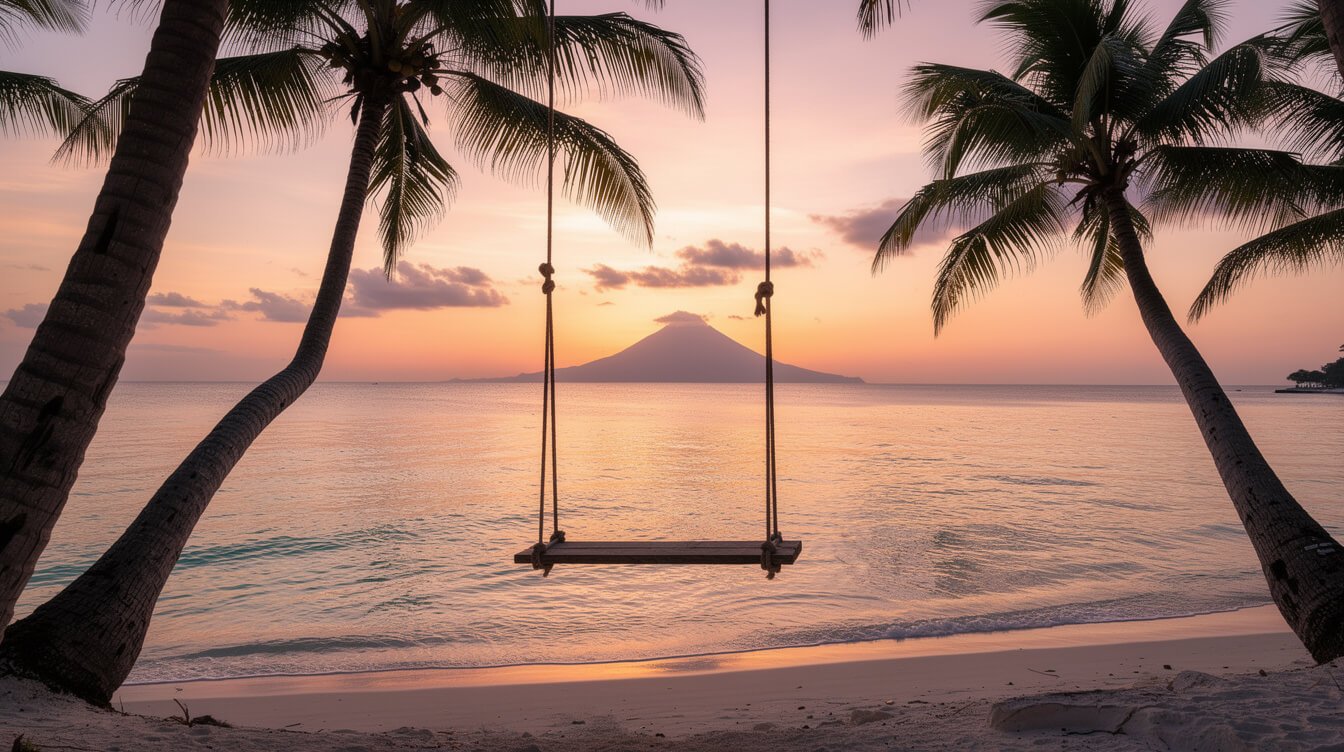
So what is Gili Trawangan famous for? Three things, mostly. First, sea turtles: green and hawksbill turtles graze the reefs close to shore, and you can often snorkel with them straight off the beach. Second, sunsets: from the west coast, the sun drops behind Bali, and on clear evenings the cone of Mount Agung stands on the horizon. Third, its reputation as the party island of the three, built over decades by the bars along the east-coast strip.
What’s changed
That party label is now only half the story. Today the island has a calmer north and west side, yoga studios, dive schools with serious conservation programs, and boutique places to stay alongside backpacker hostels. It also carries the weight of its own popularity. Recent traveler reviews speak of crowds at the famous sunset swings, busy lanes near the harbor in high season, and the gap between the dreamy photos and a working island where everything arrives by boat. Both versions are true. Which one you meet depends mostly on where you stay and when you go.
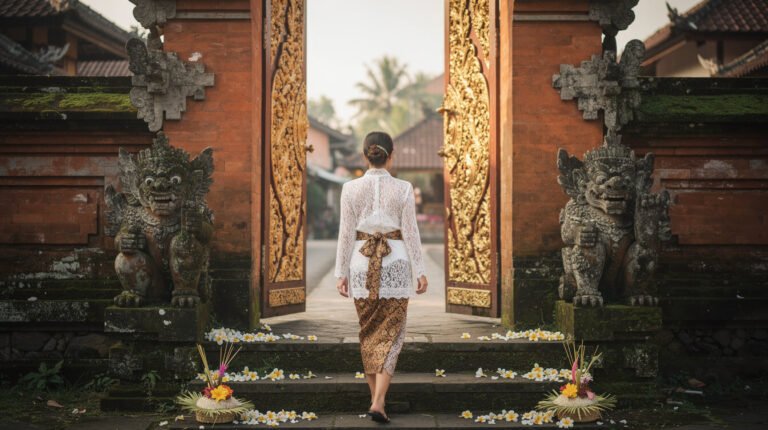
One more thing worth knowing: Gili Trawangan belongs to Lombok, not Bali. Most residents are Sasak and Muslim, so the rhythm is different from the Hindu ceremonies you’ll see in Ubud (our guide to religion in Bali explains that side). Swimwear is fine on the beach. In the village and the lanes, a shirt and a sarong are a kind gesture.
Gili Trawangan vs Gili Meno vs Gili Air: Which Island Fits Your Trip
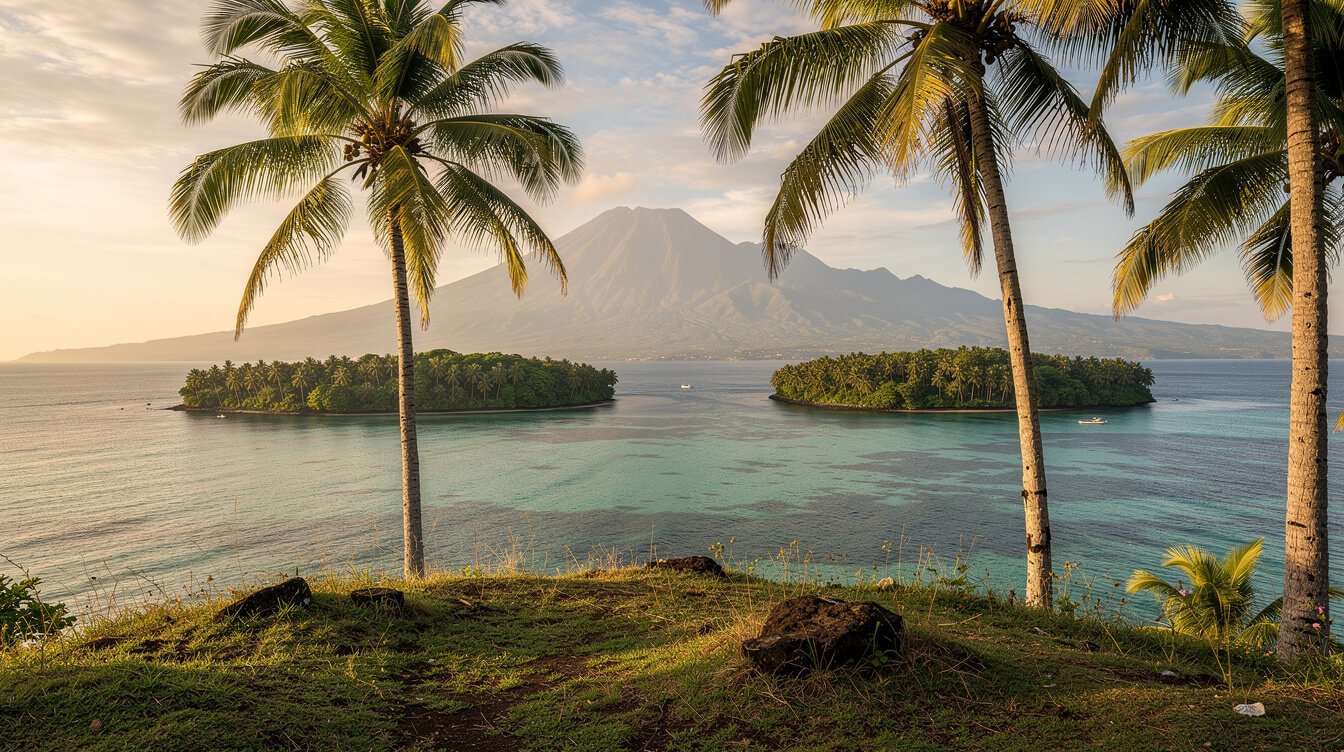
The three Gilis sit in a short line, close enough to see each other, and the same boats serve all three. But they feel surprisingly different. Choosing the right one matters more than any other decision on this trip.
Gili Trawangan: social, lively, most choice
The biggest island has the most of everything: restaurants, dive centers, places to stay at every level, a night market, and the only real nightlife in the Gilis. It suits friends traveling together, solo travelers, divers who want a choice of schools, and anyone who enjoys a buzz in the evening. If you want quiet nights on Gili Trawangan, stay on the north or west coast and cycle to the strip only when you feel like it.
Gili Meno: the quiet one
The smallest of the three is the hush between the other two. It’s the one couples tend to fall for: long empty stretches of sand, a small salt lake in the middle, and an underwater sculpture of life-size human figures off the west coast that you can snorkel over. Evenings are dark and very still. If you’re on a honeymoon (our Bali honeymoon packages guide covers the bigger picture), Meno is usually the better match than Trawangan.
Gili Air: the middle ground
Closest to Lombok, Gili Air has a real village feel, good cafes, easy snorkeling, and enough going on without the party edge. It’s the natural pick for families with older kids and for travelers who want a bit of life but also a good night’s sleep.
A simple rule: if you’d rather have options, choose Trawangan. If you’d rather have silence, choose Meno. If you can’t decide, choose Air. Small public boats and island-hopping shuttles link all three, so you can also base yourself on one and spend a day on another.
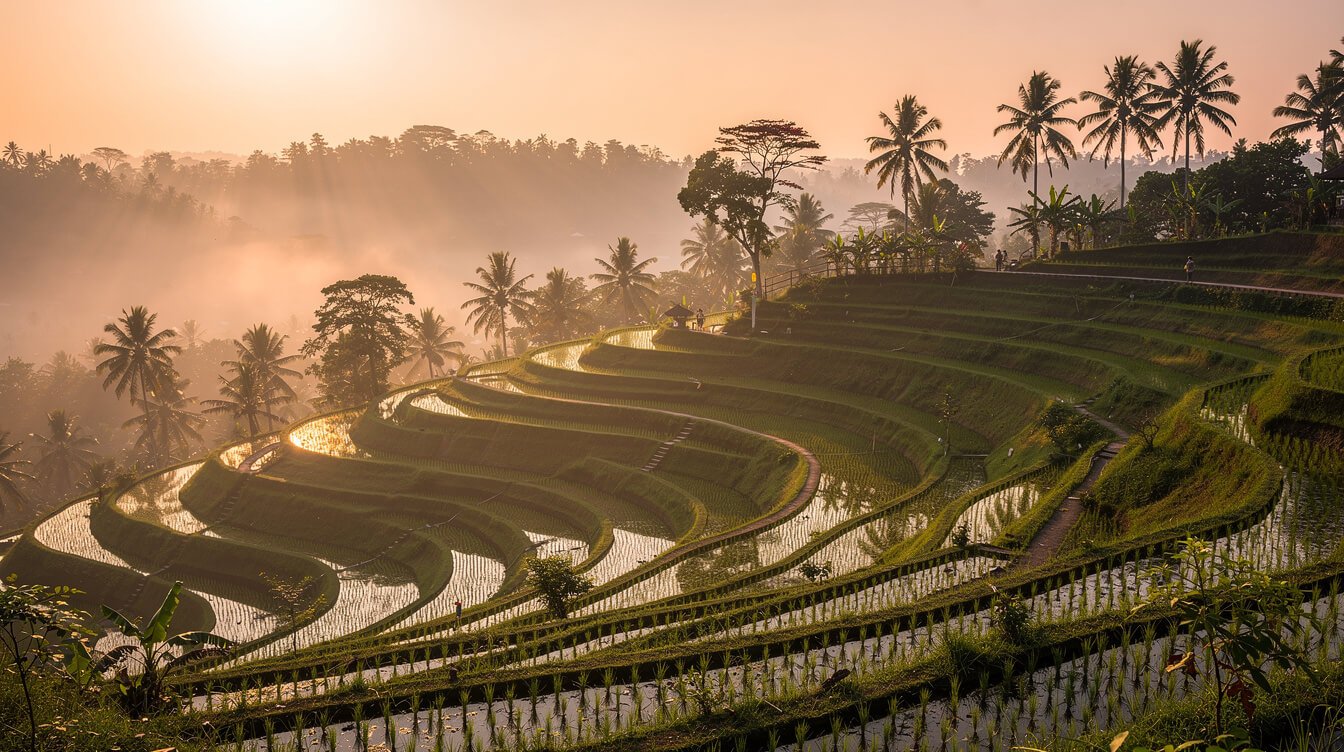
Get a free 3-day sample itinerary
Rice field walks at dawn, temple mornings, a market or two, and room to breathe before or after the islands. We will send you a free 3-day Ubud itinerary to build the rest of your Bali trip around.
Getting to Gili Trawangan from Ubud, Door to Door
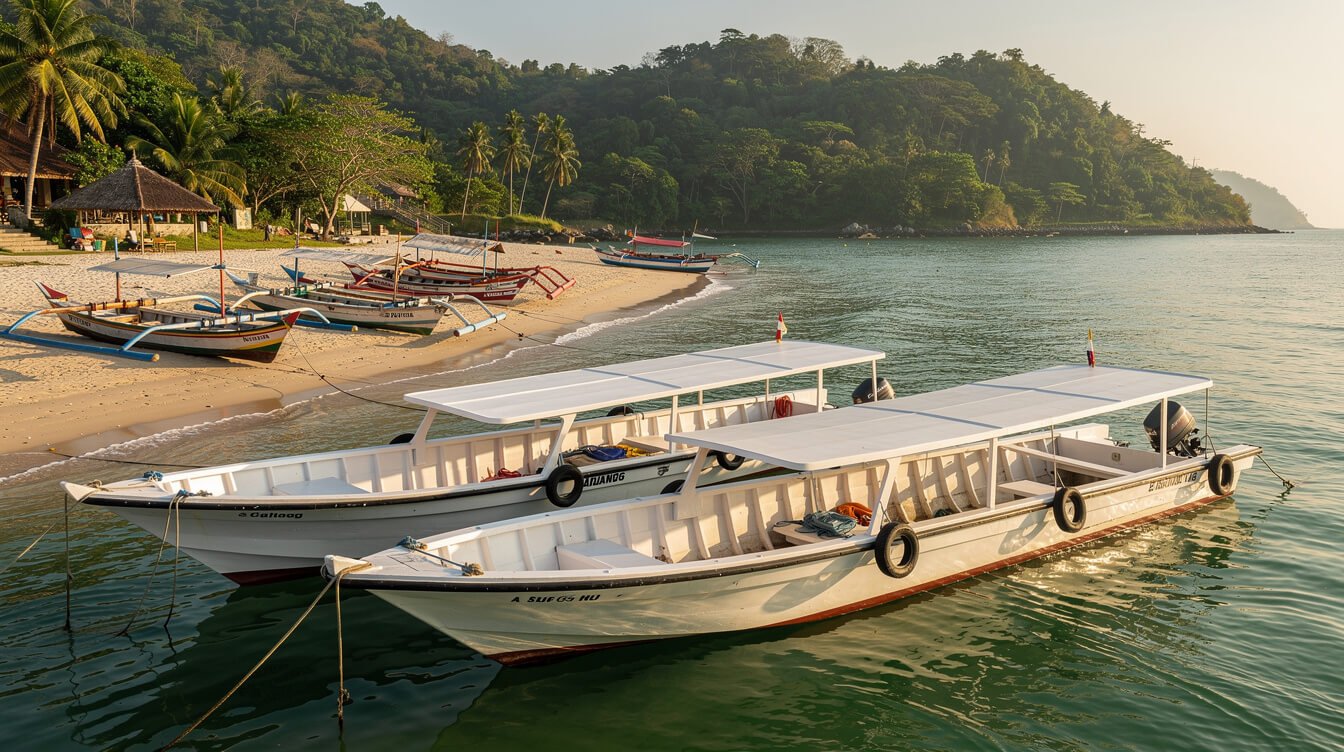
This is the part most guides skip, and it’s the part that decides whether your Gili days feel easy or exhausting. Here’s how it actually works from an Ubud base.
Step 1: the drive to the harbor
For Ubud, the practical harbor is Padang Bai in east Bali, about one to one and a half hours away by car depending on traffic. Fast boats leave from Padang Bai’s public boat dock, which is separate from the big car-ferry terminal for Lembar on Lombok, so make sure your driver knows which one you need. South Bali harbors such as Serangan and Sanur also run boats to the Gilis, but from Ubud they’re a similar drive and a much longer crossing, so they rarely make sense. Amed, on the northeast coast, has shorter crossings, but the drive from Ubud is longer. Our guide to how far Ubud is from everywhere else helps with timing.
Step 2: the fast boat
From Padang Bai, the crossing to Gili Trawangan typically takes about one and a half to two hours. Gili Trawangan is usually the first stop, followed by Gili Air (and Meno on some routes). Operators generally ask you to check in about an hour before departure. Boats from Serangan and Sanur often stop at Nusa Lembongan or Nusa Penida on the way and take around three hours or more.
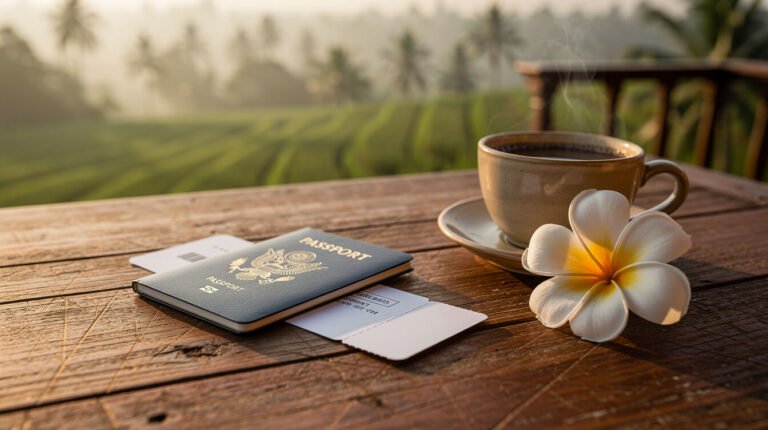
Many operators sell a combined ticket that includes a shared or private pickup from Ubud. That’s the simplest choice. Buy from the operator or a reputable booking site in advance, not from the touts at the harbor, who often charge inflated prices.
Step 3: arriving on the island
There’s no proper pier for most fast boats, so you’ll step off into shallow water. Wear sandals you don’t mind getting wet, and keep electronics in a dry bag. Expect small cash fees along the way: a harbor fee at Padang Bai and a local retribution fee for foreign visitors on arrival at the Gilis (around IDR 20,000 per person, with an increase proposed in 2026). Carry small notes, because card payment is rare at the ports.
The realistic timeline
Leave Ubud around 6:30 or 7:00, check in at Padang Bai around 8:00, sail around 9:00, and you’ll be on Gili Trawangan by late morning. Door to door, plan on four to five hours each way. That’s the single most important number in this guide.
Sea conditions and safety
The Lombok Strait is open water, and it can be rough. Mornings are usually calmer than afternoons. Weather cancellations happen most often from January to March, in the heart of the wet season (see our Bali rainy season guide and February weather in Bali). In the dry season, steady southeast winds can make afternoon crossings choppy too, as our July weather guide explains. A few habits keep you safe and comfortable:
- Choose established operators with clear schedules, recent reviews and visible life jackets on board.
- Don’t board a boat that looks overloaded, and choose a morning sailing in rough-sea months.
- Take a seasickness tablet about 30 minutes before boarding if you’re sensitive, and sit toward the back.
- Leave a 24-hour buffer between your return boat and any international flight. Operators advise it, and they mean it.
Day Trip, One Night or Two? How to Fit Gili Trawangan into a Bali Itinerary
Now that you know the journey takes four to five hours each way, the math explains itself.
Why a day trip is usually a mistake
A day trip from Ubud means eight to ten hours of driving and sailing for perhaps four hours on the island, mostly in the hottest part of the day, with a rushed return across the strait in the afternoon chop. You’d miss the two best moments Gili Trawangan has: the golden sunset on the west coast and the quiet early morning swim before the boats arrive. If you only have one spare day, choose a closer island instead. Our Nusa Penida day trip from Ubud guide and Nusa Lembongan day trip are built for that.
One night: possible, but tight
One night gives you an afternoon, one sunset, one morning snorkel and an early return. It works if you’re short on time and already know you love island life. Most people leave wishing they’d stayed longer.
Two nights: the sweet spot
Two nights gives you one full, unhurried day in the middle: snorkel with turtles in the morning, cycle the island, nap in the shade, watch the sunset, and still have a relaxed morning before the boat. For most travelers, two nights is the right size for the Gilis. Three is lovely if you dive or want to split time between two islands.
Where the Gilis fit in a Bali trip
Here’s a simple shape that works for a week to ten days:
- Start in Ubud for three or four nights. Recover from the flight, settle into the island’s rhythm, see temples, rice terraces and markets.
- Go to the Gilis for two nights in the middle of the trip.
- Return to Ubud for the final nights, so your last days are slow and your airport transfer is short and predictable.
Our 7-day Bali itinerary and 10-day Bali itinerary show how the rest of the days can fall into place. Ending in Ubud also protects your flight from a weather-cancelled boat, which is one of the most common ways Gili trips go wrong.
Things Worth Doing on Gili Trawangan (and the Cidomo Question)

Gili Trawangan rewards a slow pace. Here’s what’s truly worth your time.
Snorkel with the turtles
Turtles feed on the reefs and seagrass close to shore, especially along the east and northeast coast. Bring or rent a mask, check the current with a local dive shop first, and keep your distance. Never touch, chase or ride a turtle, and skip any tour that feeds them or lets people hold them. A good snorkel tour by glass-bottom boat also takes in Gili Meno’s underwater statues and reefs around all three islands.
Learn to dive or free-dive
Gili Trawangan has one of the densest clusters of dive schools in Indonesia, with calm, warm conditions for beginners. Many centers also support reef restoration and beach clean-ups, and some invite visitors to join.
Watch the sunset from the west coast
The wooden swings set in the shallows on the west coast are the island’s postcard shot. Expect company at sunset in high season. Walk a few minutes north or south of the busiest spots and you’ll find quieter sand, the same sky, and Mount Agung floating across the water.
Cycle the whole island
A coastal path loops the island. At an easy pace you can cycle around it in about an hour, longer with stops. Some stretches are deep sand, so expect to push the bike now and then. Bicycles are easy to rent near the harbor or through your guesthouse.
Climb the hill for sunrise
The low hill in the south of the island is the only high ground. Walk up in the cool of early morning for views of Lombok’s Mount Rinjani in one direction and Agung in the other. Old wartime gun emplacements still sit near the top.
Eat at the night market
Near the harbor, the evening market sets up with grilled fish, satay, rice dishes and sweets. It’s casual, cheap and lively. Choose stalls that cook to order, and follow the simple food habits in our Bali belly guide.
The cidomo question
Here’s the honest part. The horse-drawn cidomo is part of Gili life and moves almost all the island’s luggage and supplies. But animal-welfare groups have raised concerns for years about heat, heavy loads, long hours and limited shade and water for the horses. You’ll likely see horses that look well cared for and some that don’t.
The kind choice is simple: walk or cycle whenever you can. If you need a cidomo for heavy bags, choose one where the horse looks healthy and rested, don’t overload it, and agree on the fare before you climb on, because fares aren’t fixed. Motorized transport isn’t part of the answer. Engines are banned, and a 2026 local advisory reportedly also bars renting or riding e-bikes and e-scooters on the islands.
Book the Villa
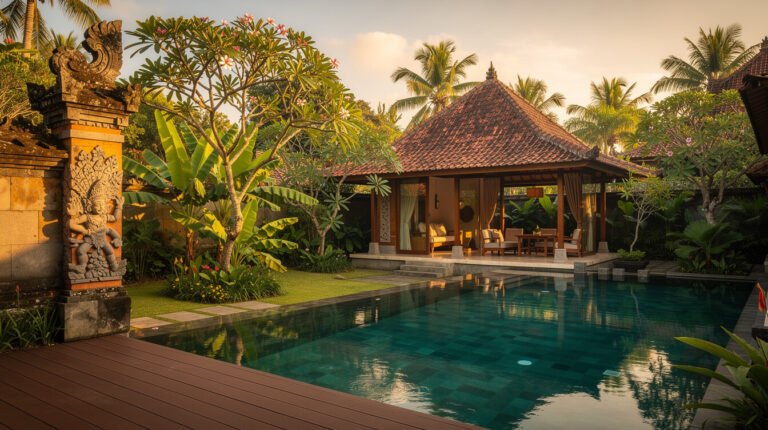
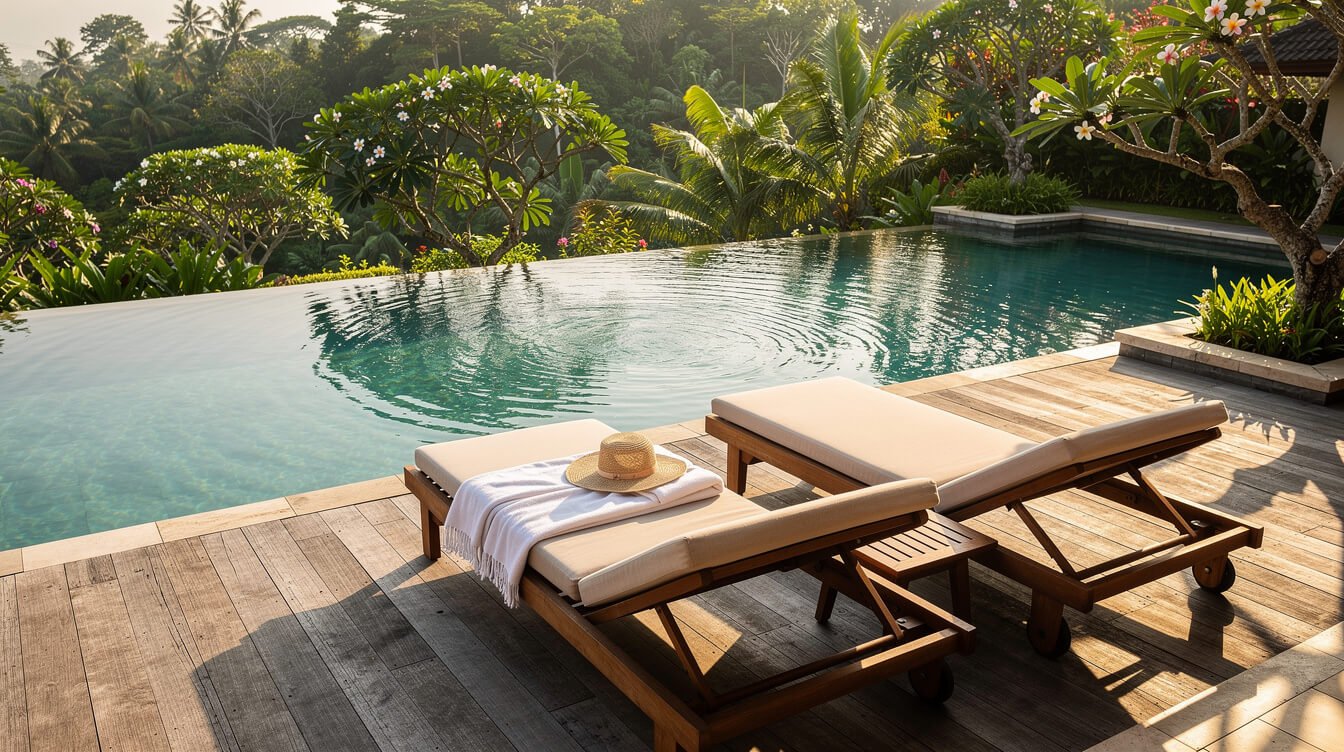
Three bedrooms, a private pool and a quiet tropical garden of your own: a calm Ubud base to start your trip, and a place to come home to after two salty days on the Gilis. Check availability for your dates.
Is Gili Trawangan More Expensive Than Bali? Is It Better?
Two of the questions people ask most, answered straight.
Is Gili more expensive than Bali?
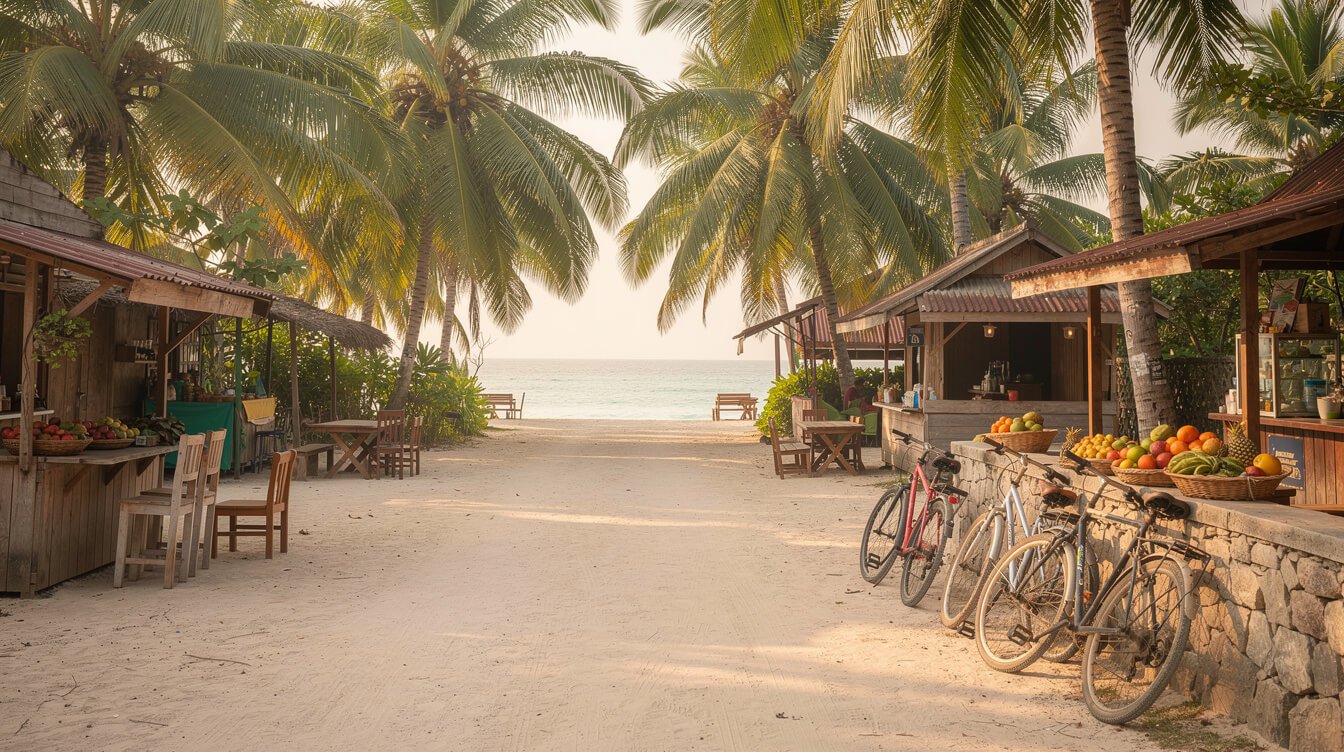
Day to day, not by much. Simple meals, coffee and bicycle hire cost roughly what you’d pay in Bali’s busier areas. Some things cost a little more, because almost everything, from drinking water to building materials, arrives by boat. Rooms range from simple guesthouses to boutique villas, much like Bali.
The real extra cost is the getting there: return fast boats, transfers to and from the harbor, and small port and island fees. Add one or two meals and nights you’d be paying for anyway, and a two-night Gili trip costs more than staying put. For a full picture of daily costs, see our Bali travel prices guide.
Is Gili better than Bali?
It’s different, and that difference is the reason to go. Bali, and Ubud in particular, is about culture: temple ceremonies, terraced rice fields, the craft villages, the daily offerings on every doorstep. The Gilis are about the sea: reef, sand, slow bicycles and early nights. Gili Trawangan has nothing like Ubud’s depth of culture, and Ubud has nothing like Gili’s warm, clear water a few steps from your door.
The best Bali trips often use both. If beaches are your priority and you don’t want the crossing, Bali has plenty of its own. Our guide to beaches in Bali and Uluwatu beach guide are good places to start.
The honest expectation check
If you picture a deserted island, Gili Trawangan in July or August will surprise you. If you picture a party town, its quiet north coast will surprise you too. Go in the shoulder months (April to June, September and October) for calmer seas and fewer people, stay away from the busiest strip if you want sleep, and give the island a full day. That’s when it shows its best side.
Coming Back to Ubud: Why the Gilis Work Best as a Contrast
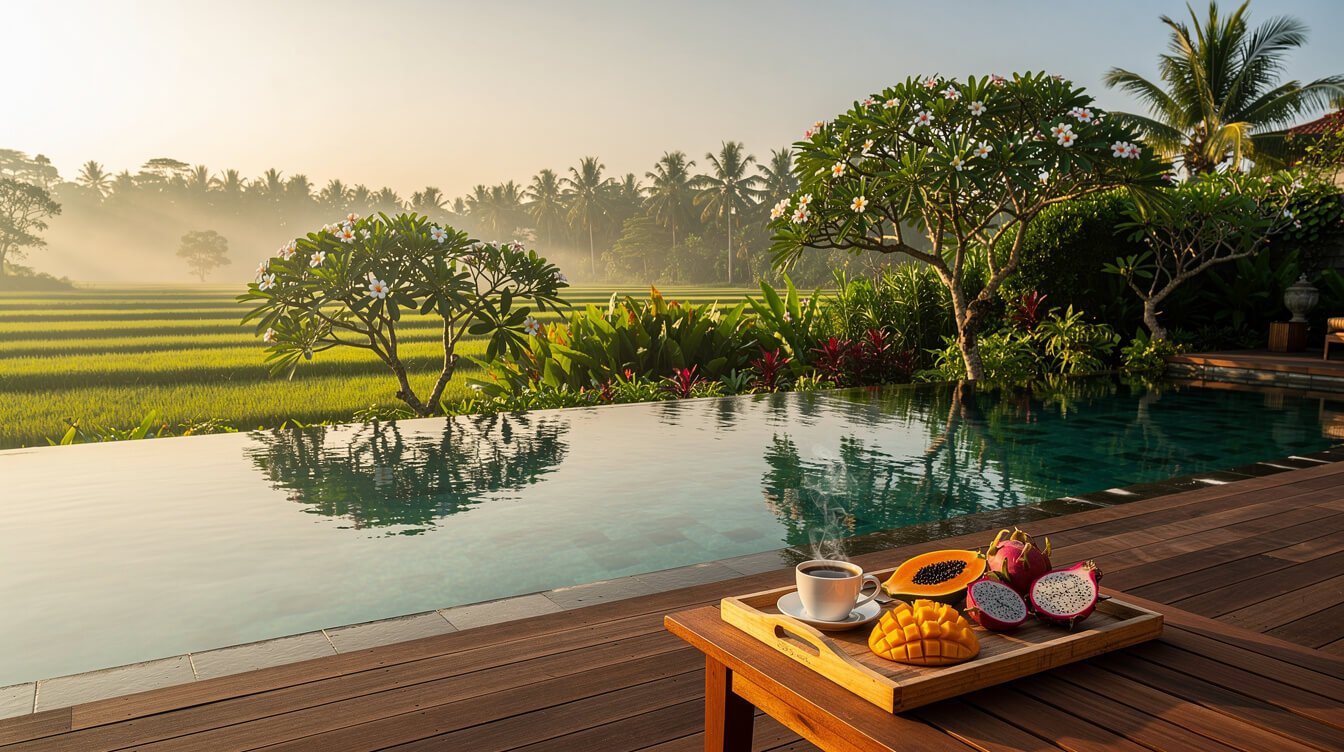
Something happens on the boat back. You’ve had salt in your hair for two days, sand in your bag and sunsets over the sea. Then the car climbs out of the coast, the air cools, the green deepens, and the rice terraces come back into view. Ubud feels different after the Gilis. Quieter, richer, more like home.
That’s why the Gilis work best as a short side trip from a calm base rather than as the main event. You get the beach days you came for without giving up the slow mornings, the ceremonies you stumble upon, and the space to rest between adventures. It also makes packing simple: take a light bag to the island and leave the rest behind. Our Bali packing guide covers what to bring.
If you’re planning a Gili side trip from Villa Amrita, ask our team when you book. We’re happy to talk through timings and harbor logistics, and the villa will be waiting when you return, ready for a long swim in the pool.
Gili Trawangan FAQ
What is Gili Trawangan famous for?
Snorkeling with sea turtles close to shore, sunsets over Bali and Mount Agung from the west coast, a car-free island where you travel by bicycle or on foot, and its long-standing reputation as the most social of the three Gili islands.
How long does it take to get from Ubud to Gili Trawangan?
Plan on four to five hours door to door: about one to one and a half hours by car to Padang Bai, around an hour of check-in, and roughly one and a half to two hours on the fast boat.
Is Gili Trawangan a party island?
It’s the only Gili with real nightlife, centered on the east-coast strip near the harbor. The rest of the island is quiet by late evening. Stay on the north or west side if you want calm nights.
Can you do Gili Trawangan as a day trip from Ubud?
You can, but it’s rarely worth it. You’d spend more time traveling than on the island and miss both the sunset and the calm early morning. Two nights is the sweet spot.
When is the best time to visit Gili Trawangan?
The dry season, roughly April to October, brings the most reliable weather. The shoulder months are calmer and less crowded. From January to March, boat cancellations are more common. Our best time to travel to Bali guide breaks it down month by month.
Is it safe to take the fast boat to the Gilis?
Thousands of travelers make the crossing every day without trouble. Choose an established operator, travel in the morning when the sea is calmer, check for life jackets, and don’t board a boat that looks overloaded. Our Bali safety guide covers other everyday precautions.
Final Thoughts: Gili Trawangan, Done the Ubud Way
Gili Trawangan is worth the trip, as long as you give it the time it needs. Choose the island that fits your mood, cross in the morning, stay two nights, walk or cycle instead of riding the carts, and come back to Ubud for the slow part of your story. Let the island be the bright, salty chapter in the middle of a calmer journey. Then come home to the rice fields, a quiet pool, and a team who’ll want to hear all about the turtles.

Join our newsletter — fun, new, exciting Bali news
Island side trips, ceremony days, the best months for calm seas, and small stories from Ubud. Delivered now and then, always worth opening.