Bali Weather in August: Clear Skies, Cool Ubud Nights and Galungan in 2027
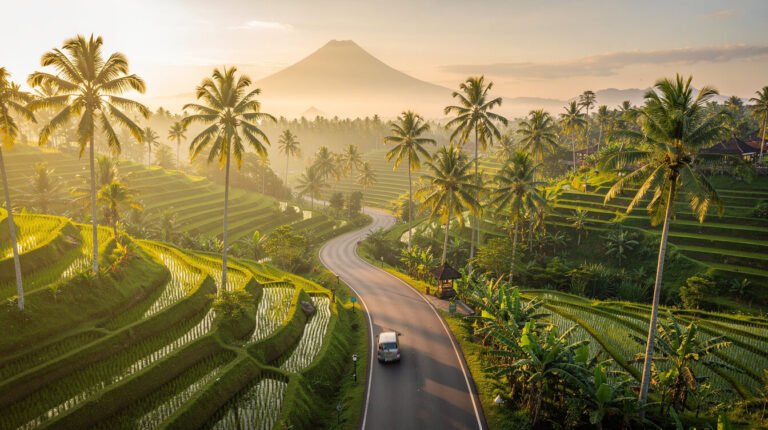
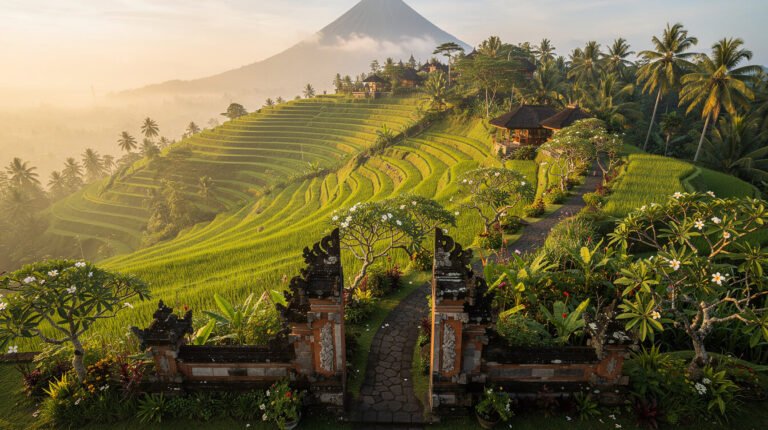
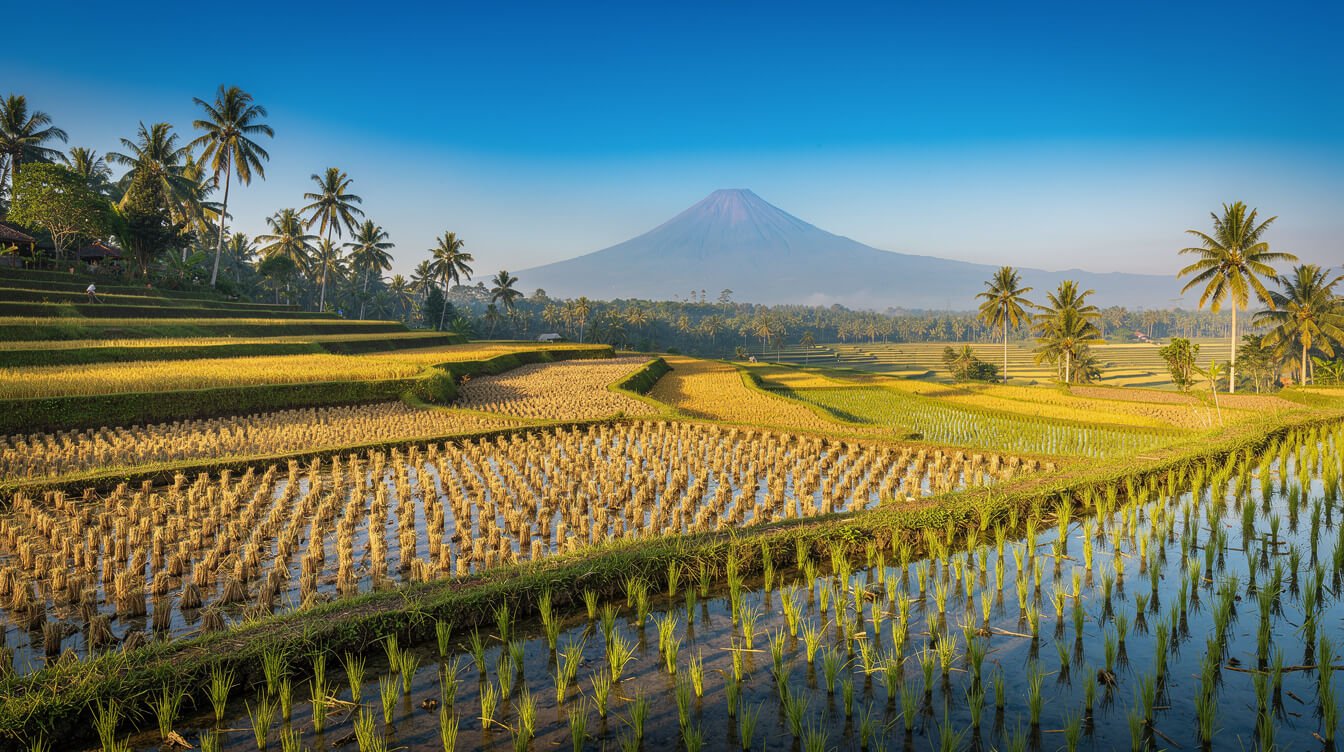
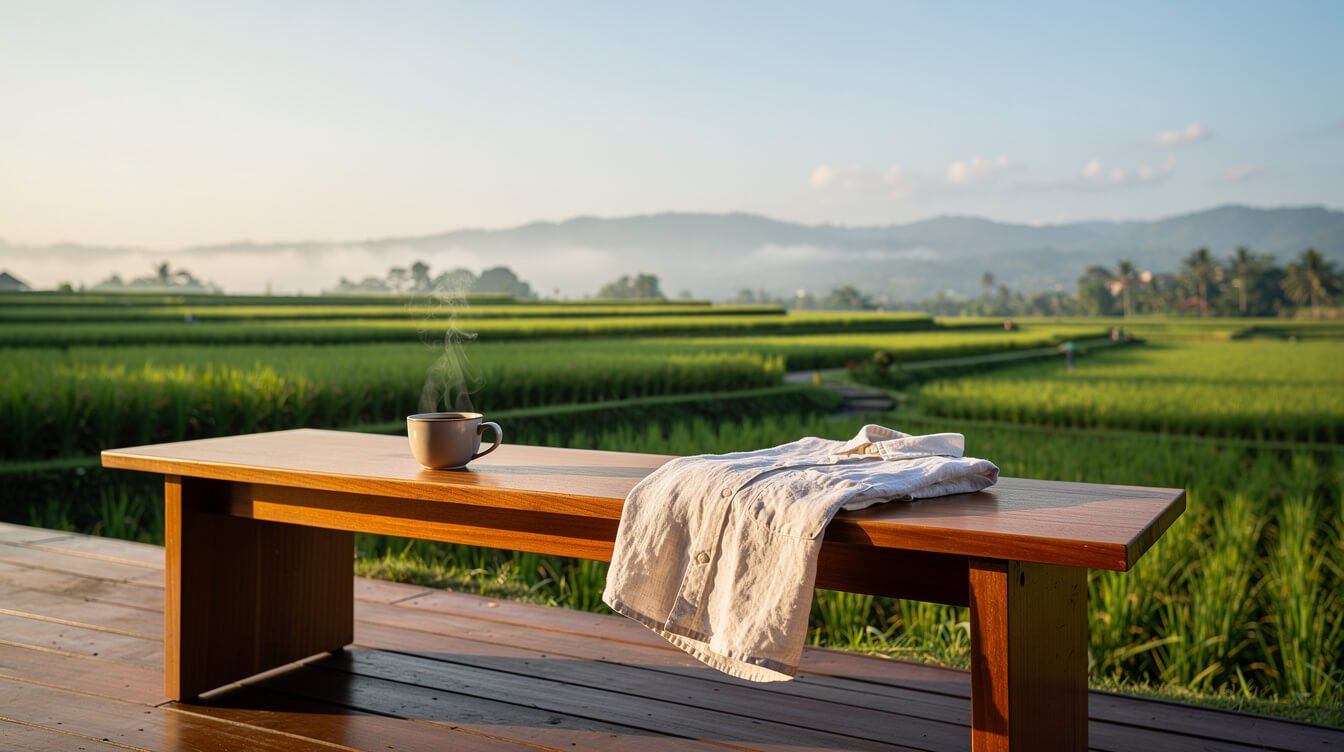
Picture a morning in Ubud in August. The sky above the rice fields is a clean, cloudless blue by half past six. The air is cool enough that you reach for a light shirt before your first coffee, and the volcano to the north is sharp against the horizon. By ten the sun is warm on the pool deck, and by evening a soft breeze moves through the garden with frangipani on it. That, in a few lines, is Bali weather in August: dry, bright, reliably sunny, and cooler at night than most people expect.
August is also one of the busiest months of the year, and in 2027 it holds something no weather table will tell you: Galungan and Kuningan, two of Bali’s most important ceremonies, fall within ten days of each other in the middle of the month, with Indonesia’s Independence Day in between. This guide comes from the team at a staffed villa in the rice fields outside Ubud, not from a beach club. Below you’ll find honest weather numbers, who August suits, what the highlands feel like, the ceremony calendar for August 2027, the best days out, how to plan around the crowds, and what to pack.
Bali Weather in August at a Glance
August sits in the heart of Bali’s dry season, which broadly runs from April or May through September or October. Steady southeast trade winds blow in from the Australian winter, bringing drier air, lower humidity and long runs of sunshine. Different weather services measure at different stations over different years, so published August numbers vary a little. Treat these as ranges, not promises.
- Daytime temperatures: roughly 27–30°C (81–86°F) on the coast. Ubud usually runs a degree or two cooler.
- Nights: around 22–24°C (72–75°F) by the sea. In Ubud, nights often settle around 20°C (68°F), and in the highlands of Kintamani or Munduk they can feel properly cold.
- Rainfall: August is one of the two or three driest months of the year. Most published averages fall somewhere between about 15 mm and 45 mm for the whole month.
- Rainy days: usually only a few, and most of those are a short shower rather than a lost day.
- Humidity: in the 70s rather than the high 80s of the wet season. The air feels lighter and you dry off quickly after a swim.
- Sunshine: often nine or ten hours a day. Sunrise is around 6:30 AM and sunset around 6:20 PM, so you get close to twelve hours of daylight.
- Sea temperature: about 26–27°C (79–81°F) around most of the island. Around Nusa Penida, cold upwellings can make deeper water feel surprisingly chilly.
- UV: very high. Clear dry-season skies mean the sun is strong even when the breeze makes it feel mild.
Ubud vs the coast in August
Ubud sits inland, in the foothills that climb toward Bali’s volcanoes, and that gentle rise changes how Bali weather in August feels on your skin. Days are warm but rarely sticky, and the evenings are among the coolest of the year. The south coast is hotter and brighter, with a steady breeze off the water. The hills also hold onto a little more moisture, so you might see a light afternoon sprinkle in Ubud on a day when Uluwatu stays bone dry. It is rarely enough to change your plans.
The “wet dry season” caveat
Bali’s seasons have become a little less predictable in recent years. Indonesia’s weather agency, BMKG, has described some recent dry seasons as wetter than normal, with more showers than the long-term averages suggest. August is still about as safe a bet as Bali weather gets, but it’s worth checking the forecast in the week before you fly and keeping one flexible day in your plans. For the full-year picture, see our month-by-month guide to Ubud.
Is August a Good Time to Visit Bali?
For weather, yes, without much hesitation. Bali weather in August gives you dry trails, clear volcano views, calm evenings and some of the best ocean conditions of the year. If your dates are fixed by school holidays or work, you are not compromising on weather by choosing August.
The honest trade-off is company. August overlaps with the European summer holidays, and around 17 August many Indonesians travel for the Independence Day holiday too. Flights fill up, popular hotels sell out, and the roads around Ubud, Canggu and Seminyak are at their slowest. Australian school winter breaks mostly finish in July, so the mix of visitors shifts a little, but the island stays full.
Who August suits
- Families whose dates are set by the school calendar. The weather is dependable and almost everything is open. Our guide to villas for families in Bali covers what to look for in a base.
- Active travelers who want to hike, climb Mount Batur, snorkel, dive or surf. Dry season is when all of it works best.
- Culture seekers traveling in 2027, who can time a trip around Galungan and Kuningan (more on that below).
- Groups and multi-generation trips who want one calm base with space for everyone.
Who might prefer another month
- Travelers who want quiet beaches and empty temples. May, June and September give you very similar weather with fewer people.
- Anyone booking late on a tight budget. Peak-season rates and limited availability make last-minute deals rare.
- Travelers who want lush, dramatic waterfalls and an emerald green landscape. Those belong to the wet season. If that appeals, compare with our guides to Bali weather in December and Bali weather in January.
Early or late August?
The weather barely changes across the month. What changes is the pace. The first three weeks are the fullest, especially the days around 17 August. In the last week, as European holidays wind down, the island often begins to soften a little, and you may find more availability. If you can shift your trip to straddle late August and early September, you keep the same skies with a little more room. Our guide to Bali weather in July covers the month before.
Ubud in August: Cool Mornings, Dry Fields and Kite Skies
The best way to understand August in Ubud is to start early. Before sunrise the valley is cool and still. A thin mist sometimes sits over the river gorges, and you can hear the village waking up long before you see it: a rooster, a scooter on the lane, the soft tap of someone sweeping the temple yard. The first two or three hours of the day are the most beautiful of all, and they are cool enough for a long walk.
A patchwork of rice fields
In the dry season, the rice fields around Ubud become a patchwork. Some terraces are golden and close to harvest. Some are freshly cut, the stubble pale in the low sun. Others hold bright new seedlings standing in mirror-flat water. In some places farmers rest the land with a dry-season crop such as corn or peanuts. It all follows the subak, the centuries-old cooperative system that shares water from temple to field. A slow walk on the Campuhan Ridge or along the paddy paths shows you every stage at once.
Kites over the stubble
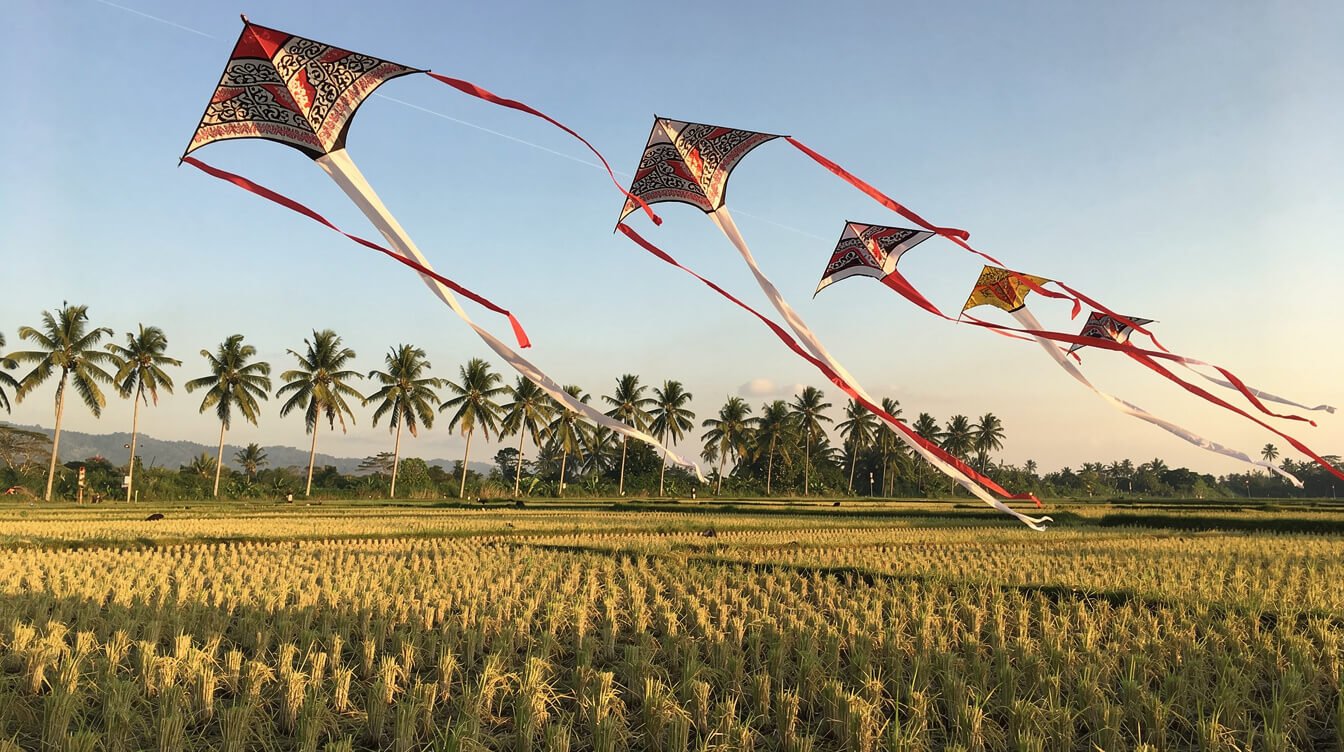
The steady dry-season wind is kite wind. Through the dry months, children and village teams fly kites from harvested fields and open ground, and some evenings the sky over Ubud is dotted with them, from small paper diamonds to huge traditional kites with long fabric tails. The big village competitions near the coast are often held in July and August, with dates set late and dependent on the wind. Even without a competition, you’ll hear the low hum of the kites’ bamboo whistles carrying across the fields at dusk.
The coolest evenings of the year
Once the sun drops behind the palms, the air cools quickly. Dinner on the terrace often calls for a light sweater, and many guests are surprised to find they sleep with the windows open and no air conditioning at all. If you are coming from a hot city summer, this alone can feel like a gift.
Busy town, quiet edges
Central Ubud is busy in August. The main streets around the palace and the Monkey Forest are slow with traffic from mid-morning, and the most photographed spots, such as the Tegallalang rice terraces, are at their fullest by late morning. A few minutes away, in the rice fields and the villages around them, life goes on at its own pace. That contrast is the secret to enjoying Ubud in peak season: visit the famous places early, then come home to somewhere quiet for the long middle of the day.
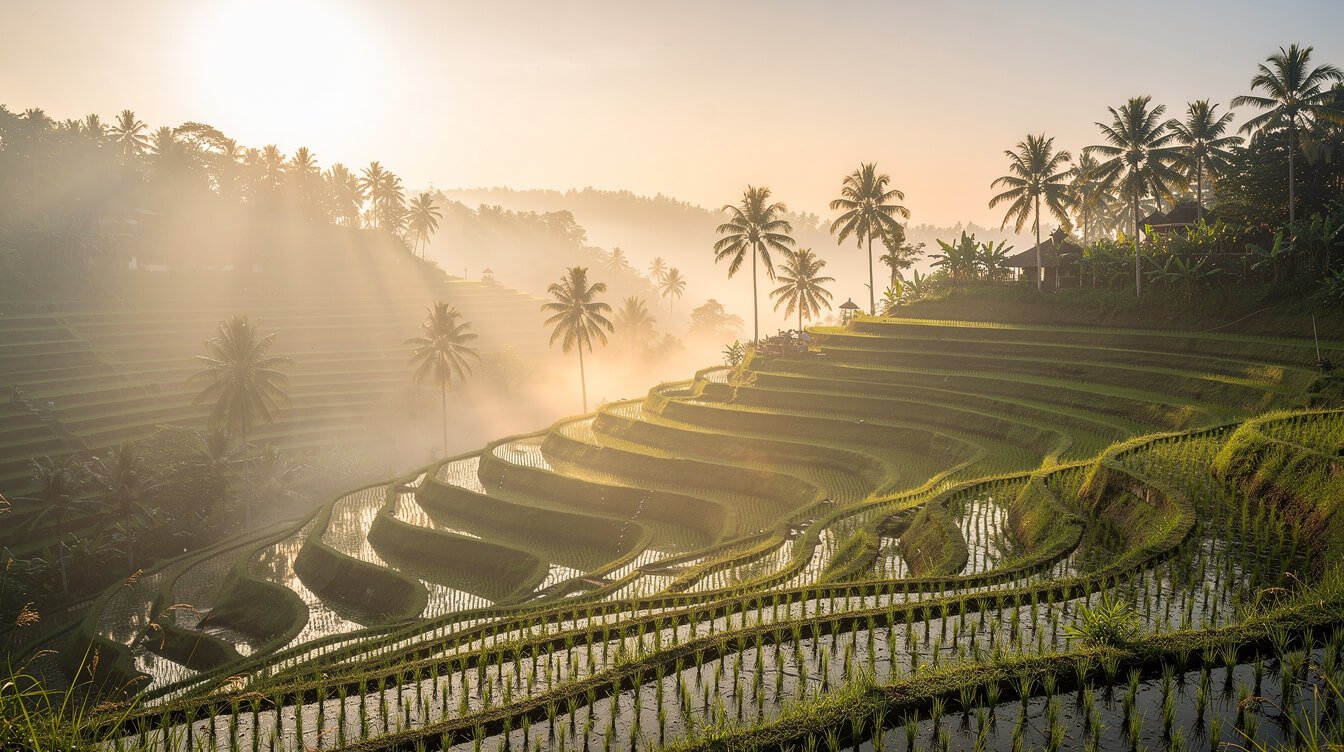
Get a free 3-day sample itinerary
Coming to Bali in August? See how three slow dry-season days from Ubud can unfold: rice field walks at first light, a temple morning before the crowds, a market, and a long afternoon with nothing planned. We will send you a free 3-day sample itinerary.
Galungan and Kuningan in August 2027: Bali’s Festival Fortnight
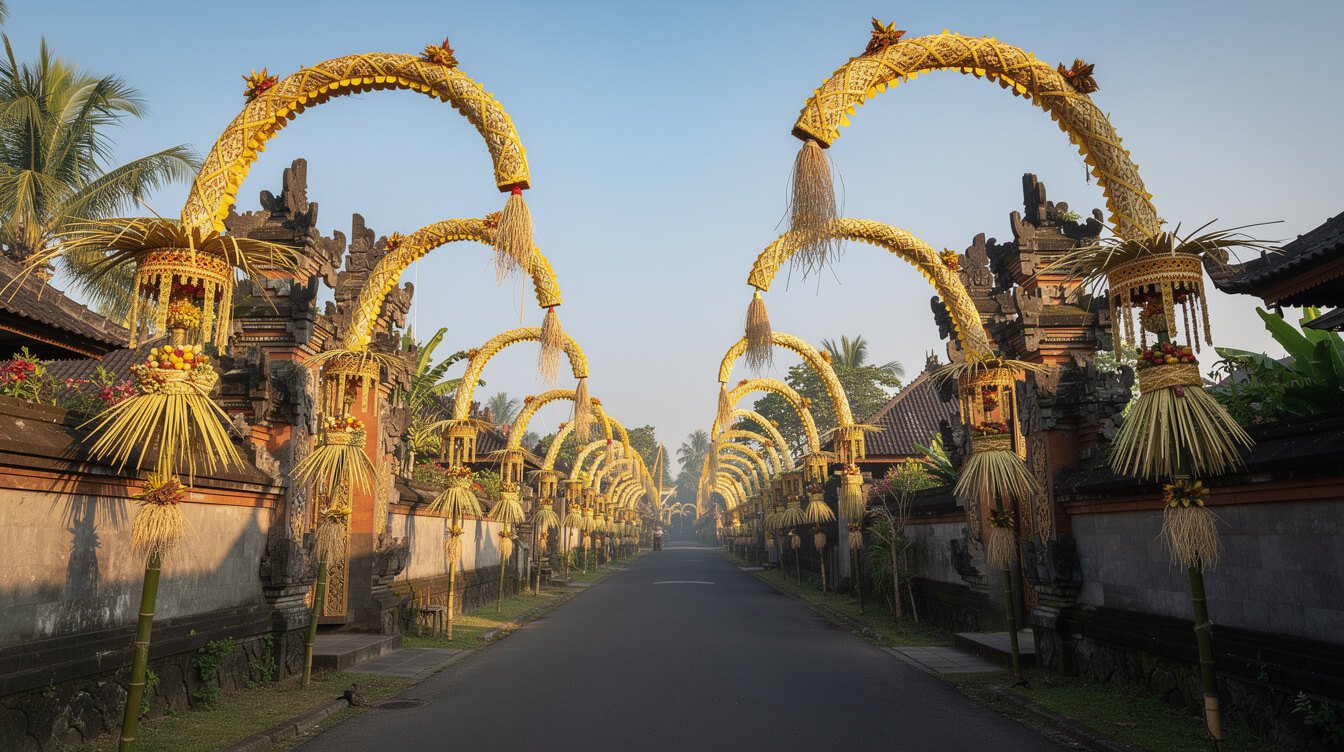
If you are planning for August 2027, this is the section to read twice. Bali follows a 210-day ceremonial calendar called the pawukon, so its biggest festivals move around the Western calendar. In 2027, Galungan comes round twice: once in January and again in August. That puts one of the most beautiful times to be on the island right in the middle of peak season.
The key dates
- Tuesday 10 August 2027 – Penampahan Galungan: the day of preparation. Families cook ceremonial food from before dawn, and the last decorations go up.
- Wednesday 11 August 2027 – Galungan: the celebration of dharma over adharma, when ancestral spirits are believed to return to their family homes. Families pray at their house temples and village temples, dressed in their finest.
- Thursday 12 August 2027 – Manis Galungan: a day for visiting family and friends.
- Tuesday 17 August 2027 – Indonesian Independence Day: a national holiday with flag ceremonies and village games.
- Saturday 21 August 2027 – Kuningan: the closing day, when the ancestral spirits are believed to depart. Offerings include yellow rice, and many temples hold their own ceremonies.
What you’ll see
In the days before Galungan, tall bamboo poles called penjor rise outside almost every home. They arch over the road, hung with woven palm leaves, rice, fruit and cakes, and for the next few weeks every village lane becomes a tunnel of them. It is one of the most striking sights in Bali, and in August the dry weather keeps them fresh and swaying in the breeze. You’ll see families walking to temple in white and gold, carrying tall offering towers, and you’ll hear gamelan from the village temples into the evening. Our guide to Galungan in Bali explains the meaning behind it all.
How it affects your trip
Galungan is a family holiday first. Many Balinese go home to their villages, so some shops, warungs and small tour operators close or run shorter hours for a day or two, and some drivers and guides take time off. Traffic can be heavy the day before as people travel home. None of this should put you off. Book drivers and day trips ahead for the 10th to the 12th, keep those days gentle, and spend them close to home, watching village life unfold around you.
If you visit a temple, wear a sarong and sash, stay to the side, never walk in front of someone who is praying, and ask before taking photos. Our guide to Balinese traditional attire explains what to wear and why.
Independence Day in the villages
Between the two ceremonies, Indonesia celebrates its independence on 17 August. In the weeks before, red and white flags and bunting go up along every road. In the villages, the day itself is wonderfully local: flag-raising ceremonies in the morning, then games in the afternoon, from sack races and cracker-eating contests to a greased pole climb for prizes at the top. In 2027 it falls on a Tuesday, so expect many domestic travelers to make a long weekend of it, and plan around the busier roads.
Best Days Out from Ubud in August

Dry season is the time to explore. Roads are dry, trails are firm, and the sea is clear on the east coast. A few ideas that work especially well in August:
Mount Batur at sunrise
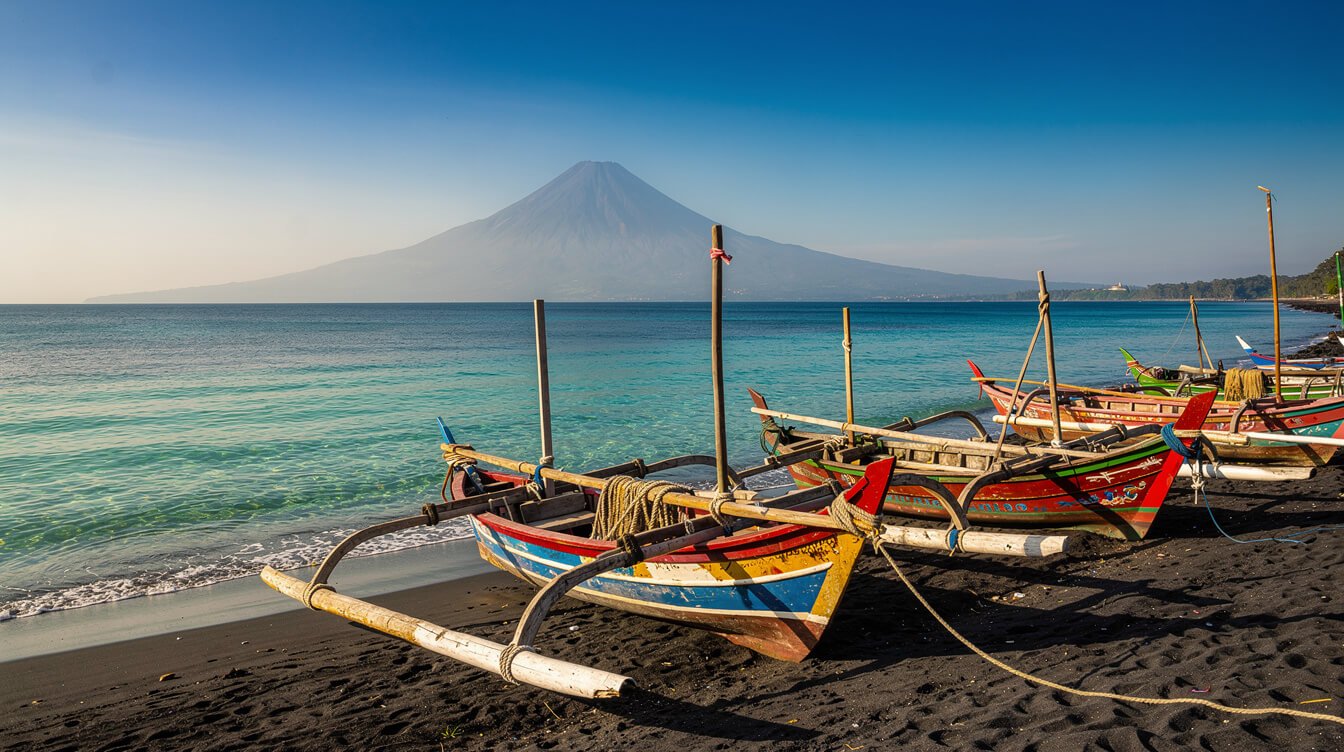
August gives you some of the clearest summit views of the year: Mount Agung, Lake Batur and, on a good morning, the peak of Rinjani on Lombok across the strait. It is also cold at the top before dawn, often around 10°C (50°F) or lower with wind chill, so bring a warm layer. Our Mount Batur sunrise guide covers timing, fitness and what to expect.
Nusa Penida and the open ocean
August is in the season when divers hope to see the mola mola, or ocean sunfish, which rise from deep, cold water around Nusa Penida, roughly from July to October. Sightings are never guaranteed, and the currents here are strong, so go with an experienced operator. Calm dry-season mornings also make the boat crossing easier. See our Nusa Penida day trip guide to plan it from Ubud.
Amed and Sidemen in the east
The east coast is calm and clear in August, which makes it a good month for snorkeling the reefs and wrecks around Amed. On the way, the quiet valley of Sidemen offers the rice field views of Ubud with a fraction of the visitors, which is welcome in peak season.
Waterfalls and water temples
In August, waterfalls run lower than in the wet season, but the pools are clearer, the steps are dry and the paths are safer. Start early to have them to yourself. Our Bali waterfall guide lists the best options near Ubud. The holy spring temple of Tirta Empul is busy in August, so arrive at opening time. If you’re there around Galungan or Kuningan, you’ll see local families coming to pray in their ceremonial dress.
Rice terraces in the west
The UNESCO-listed terraces of Jatiluwih are much quieter than Tegallalang, and on a clear August day you can see Mount Batukaru rising above them.
Surf on the west coast
The dry-season trade winds blow offshore on Bali’s west coast, and the southern swells are at their strongest. Uluwatu, Padang Padang and the Bukit reefs are for experienced surfers in August, while beginners do better at gentler beach breaks with a lesson. Our Bali surfing guide explains which coast works in which season.
Planning a Peak-Season Trip: Crowds, Prices and Getting Around
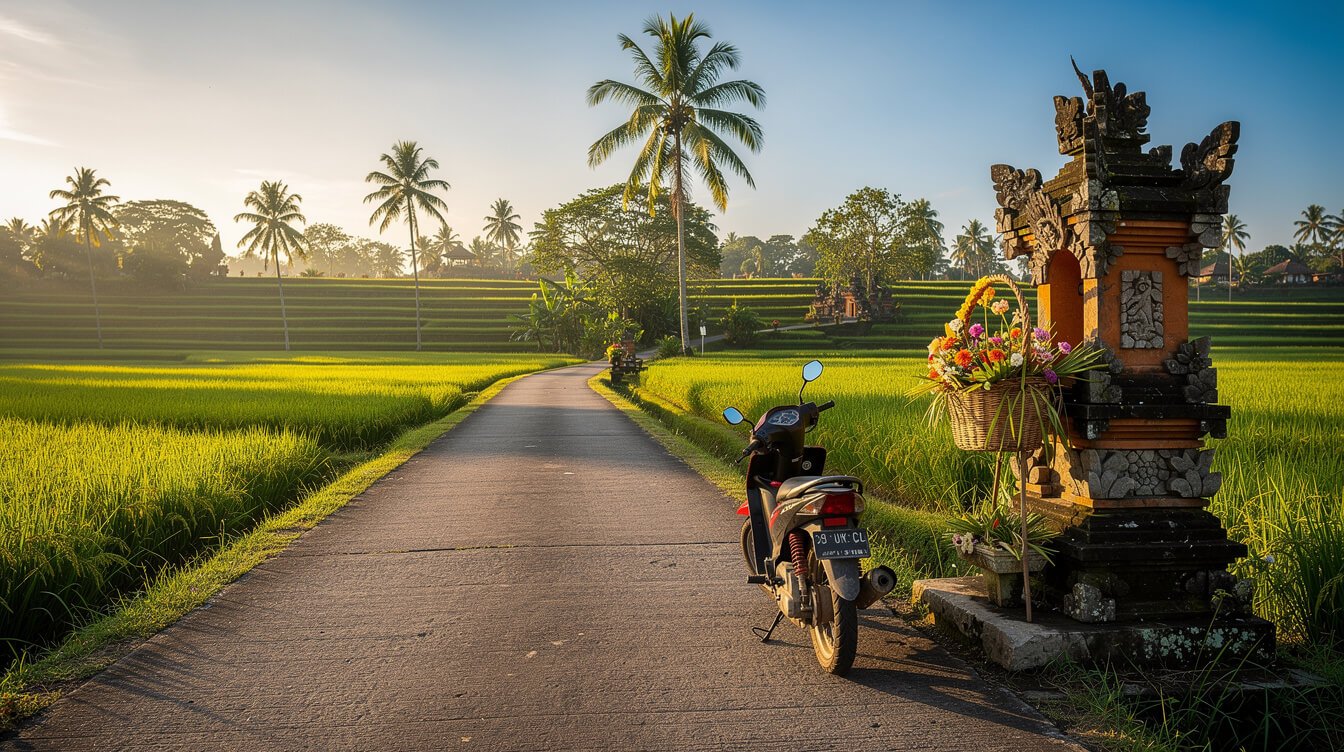
August rewards the travelers who plan. A few things make the difference:
Book early, especially for groups
Flights, villas and good drivers are booked months ahead for August. If you’re traveling with family or friends, a private villa with several bedrooms is usually easier to secure as one booking than a block of hotel rooms. For 2027, also check how your dates line up with the Galungan days (10 to 12 August) and Independence Day (17 August), since those are the busiest travel days of the month. Our guide to Bali travel prices gives a realistic sense of costs.
Arrive gently
The drive from the airport to Ubud can take ninety minutes or well over two hours in August traffic. Our guide on how far Ubud is from Bali airport explains the options. Arrange your transfer in advance, and before you fly, sort out the paperwork: the visa on arrival or e-VOA, the online arrival card, and the IDR 150,000 Bali tourist levy. Our guide to the Bali visa for US citizens walks through each step.
Plan your days around the traffic
Leave early for day trips, ideally by seven, and aim to be home by mid-afternoon before the roads thicken. Visit famous temples and viewpoints at opening time. Keep one or two days with no plan at all.
Stay healthy in the dry heat
Drink more water than you think you need, especially on hikes. Wear sunscreen even on breezy days, and take the middle of the day slowly. That is when the shade of the garden and the pool are at their best.
Let the house do the work
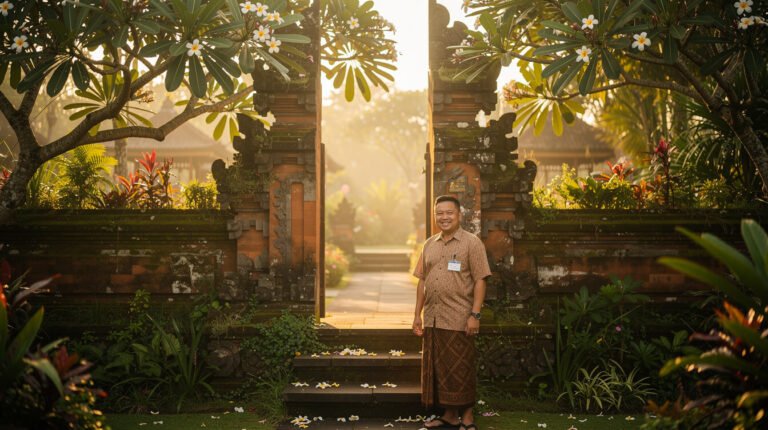
In peak season, a staffed villa takes much of the effort out of the day. A chef who shops at the morning market means you don’t have to wait for a restaurant table in town. A team that knows the local ceremony calendar can tell you when the village temple will be busy and which back roads are quiet. Read more about what that looks like in our guide to a private chef villa in Ubud.
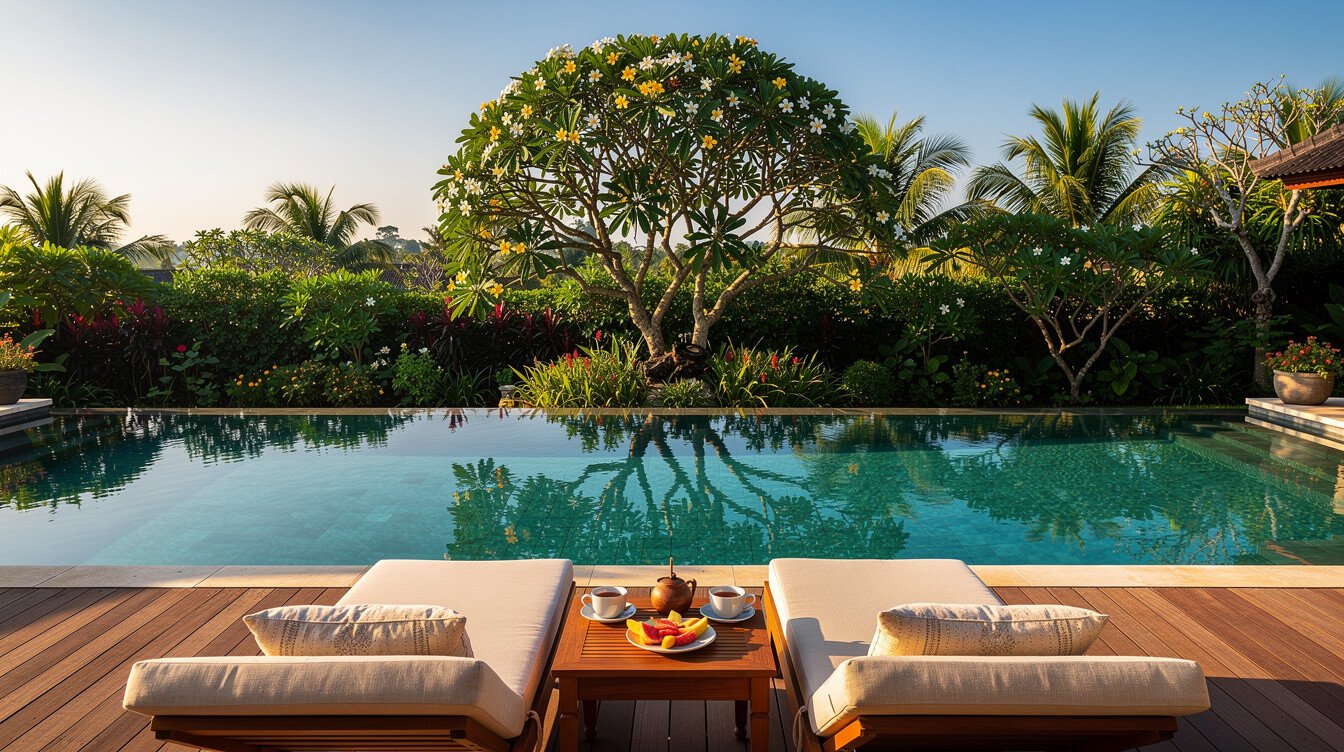
Book the Villa
August books up early. Make a quiet home in the rice fields your base for peak season: three bedrooms, a private pool and a tropical garden, with a team on hand to help you plan around the crowds and the ceremony days. Check availability for your dates.
What to Pack for Bali in August
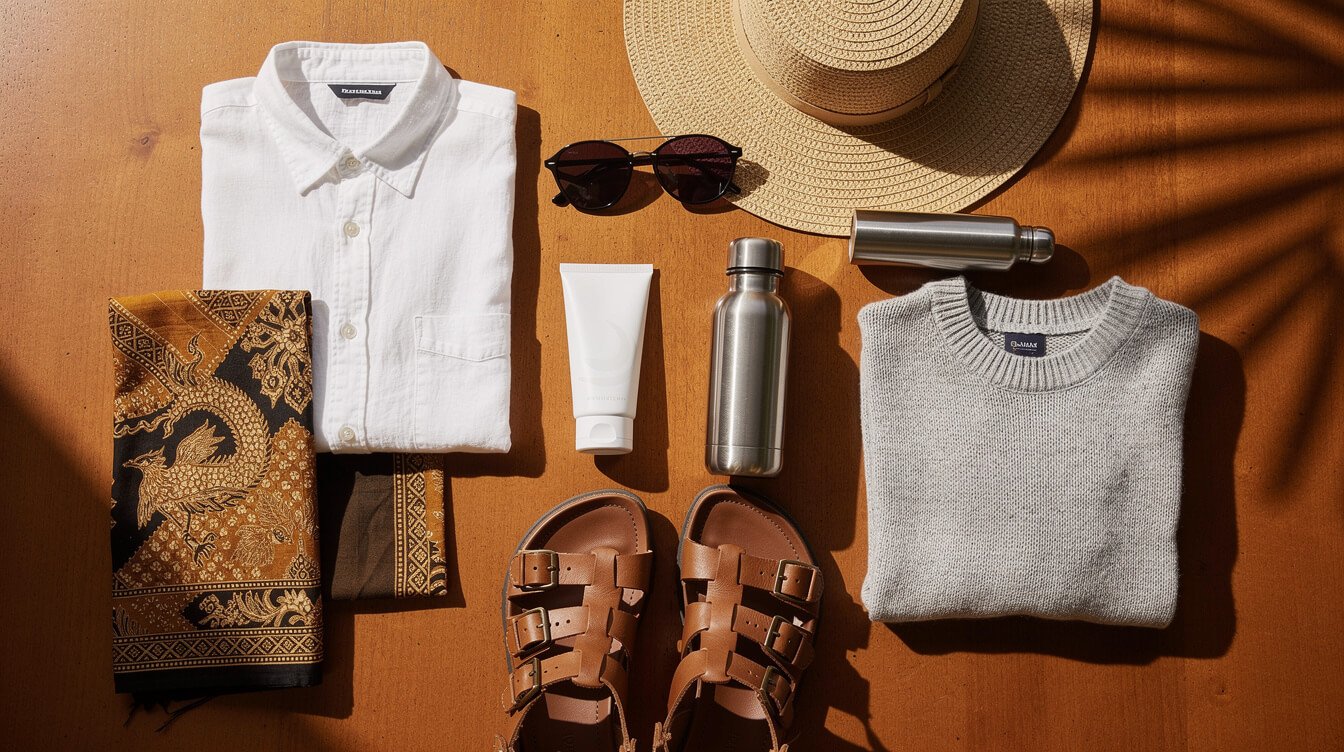
Bali weather in August calls for a light suitcase: pack for warm, dry days and cool nights, with a little extra for temples and the mountains.
- Light, breathable clothes in cotton and linen for the day.
- A warm layer for Ubud evenings, and a real jacket, hat and gloves if you’re climbing Mount Batur.
- A sarong and sash for temple visits, especially if you’ll be in Bali for Galungan or Kuningan. You can also buy them in any Ubud market.
- Reef-safe sunscreen, sunglasses and a wide-brimmed hat. The UV is strong.
- Sturdy sandals or walking shoes for rice field paths and waterfall steps.
- A reusable water bottle to cut down on plastic.
- Insect repellent for dawn and dusk. There are fewer mosquitoes in the dry season, but they don’t disappear.
- A light rain jacket or small umbrella, just in case one of those rare showers finds you.
For a full list, see our guide on what to pack for Bali.
Bali Weather in August: Frequently Asked Questions
Does it rain in Bali in August?
Very little. When it comes to rain, Bali weather in August is about as kind as it gets: it is one of the driest months of the year, with only a few rainy days on average, and most rain arrives as a brief shower. Inland areas like Ubud see slightly more than the south coast.
How hot is Bali in August?
Warm but comfortable. Expect around 27–30°C (81–86°F) by day on the coast, and a degree or two cooler in Ubud. Nights are around 20–24°C (68–75°F), cooler inland and much colder in the mountains.
Is August high season in Bali?
Yes. August is one of the busiest months of the year, along with July and the Christmas and New Year period. Book flights, accommodation and drivers well ahead.
Is the sea good for swimming and snorkeling in August?
The east coast, including Amed, Padangbai and the Nusa islands, is generally calm and clear. The west and south coasts get big surf, so swim only at patrolled beaches between the flags and respect the currents.
Is Galungan a good time to visit Bali?
It is one of the most memorable times to visit. In 2027, Galungan falls on 11 August and Kuningan on 21 August. Expect penjor lining every road, temples full of families and a festive, generous atmosphere. Some businesses close for a day or two, so plan ahead.
August or September: which is better?
The weather is almost identical. September is noticeably quieter and often better value, while August has school-holiday timing and, in 2027, the Galungan fortnight. If you’re flexible, the last week of August into early September is a lovely compromise.
Final Thoughts: August in Ubud Is Bright, Busy and Worth Planning For
Bali weather in August is as dependable as the island gets: dry trails, clear volcano views, calm east-coast seas and the coolest, clearest evenings of the year. The island is full, but it is full for good reasons. The way to enjoy it is simple. Plan ahead, rise early, rest through the heat, and come home to somewhere quiet.
And if you’re traveling in August 2027, you have something extra to look forward to. Galungan and Kuningan turn every village into a celebration of bamboo, flowers and music, and it is a beautiful thing to witness from a home in the rice fields. If you’d like help planning your days, timing a temple visit or working out the best route to the coast, ask the team. We are always happy to share what we know.

Join our newsletter — fun, new, exciting Bali news
Season tips, ceremony dates like Galungan and Kuningan, entry-rule changes and small stories from Ubud. Delivered now and then, always worth opening.