March Weather in Bali: Fading Rain, Nyepi Silence and an Honest Ubud Guide
Early March in Ubud. The morning arrives clear and cool, with mist still sitting in the river gorge below the garden. By eleven the sky over the volcanoes has started to build its afternoon clouds, but something has changed since February. The storms come later now, pass more quickly and leave longer gaps of sun behind them. Some of the rice fields have started to turn gold at the tips. In the village, young men are welding bamboo and paper into towering demon figures for the night before Nyepi. That is March weather in Bali: the wet season loosening its grip, the island green and full, and one of the most extraordinary weeks of the Balinese year right in the middle of it.
Most guides to March weather in Bali give you a temperature chart and a beach recommendation and leave it there. This one comes from the team at a staffed villa in the rice fields outside Ubud, where March means harvest in some fields, the last big storms of the season, and the profound hush of the Day of Silence. Below you will find honest weather ranges, who March suits (and who should wait), the 2027 dates that matter more than the forecast, what Ubud feels like this month, how to plan beach, surf and day trips, and exactly what to pack.
March Weather in Bali at a Glance
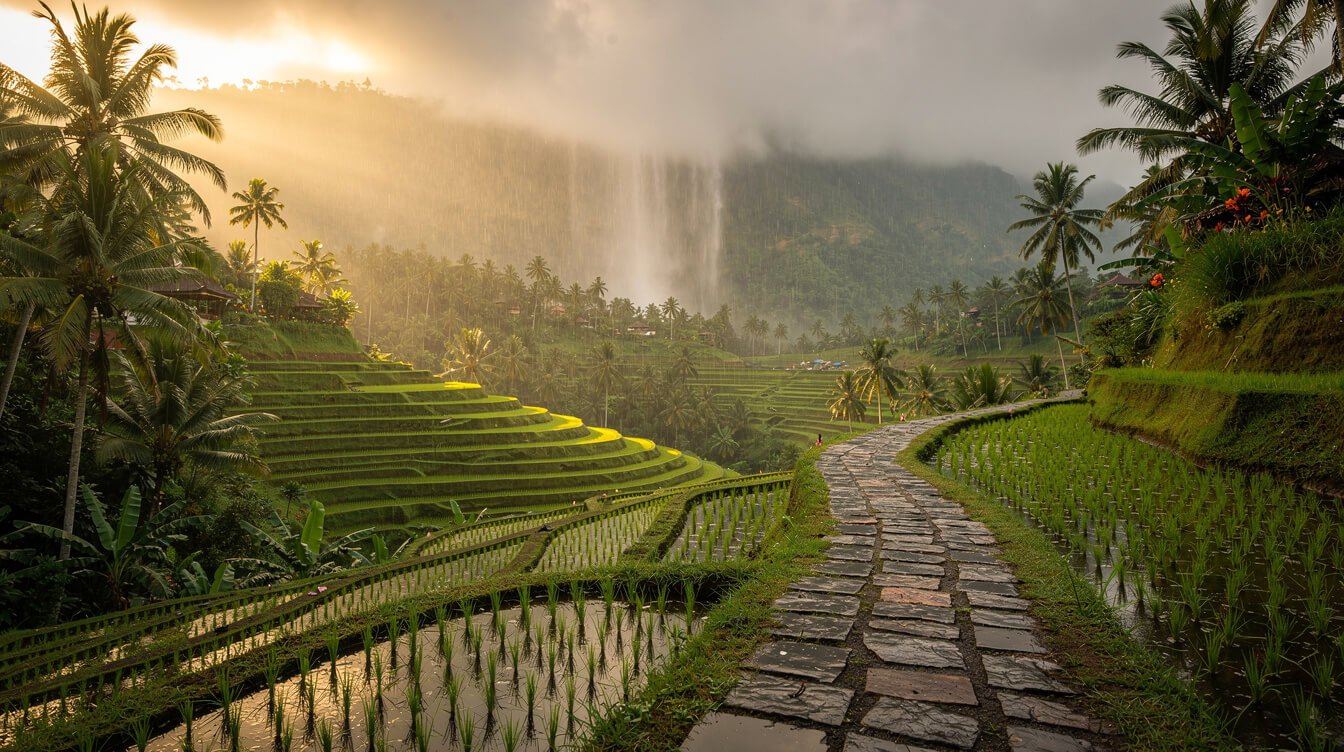
March is the tail end of Bali’s wet season, which broadly runs from November to March. The northwest monsoon that brings the heavy rain of December through February is weakening, and by April the drier southeast trade winds usually take over. March is the hinge between the two, so it carries a bit of both. One honest caveat first: weather services measure at different stations over different years, and published figures for March weather in Bali disagree wildly. We have seen travel sites quote anything from about 65 mm to well over 200 mm of rain for the month. Treat the numbers below as ranges, not promises.
- Daytime temperatures: roughly 29–31°C (84–88°F) on the coast. Ubud usually runs a degree or two cooler in the day.
- Nights: around 23–25°C (73–77°F) by the sea. Ubud nights are softer, often in the low 20s°C (around 70–73°F), and pleasant with the doors open.
- Rainfall: clearly less than January and February, but still substantial. Published averages for the south of the island range from under 100 mm to over 200 mm. Inland and upland areas, Ubud included, tend to be wetter than the beaches.
- Rainy days: sources count anywhere from about 10 to 20 days with some rain. Most are a single heavy shower, not a day-long soak.
- Humidity: high, typically 75–85%, easing a little as the month goes on.
- Daylight: just over twelve hours. Sunrise is around 6:20 AM all month. Sunset drifts from about 6:40 PM in early March to around 6:25 PM by the end.
- Sea temperature: warm, around 28–30°C. Seas start to settle as the monsoon fades, though west coast conditions can still be messy.
Ubud vs the coast in March
Ubud sits inland in the foothills that rise toward Bali’s volcanoes. That small climb in altitude squeezes more moisture out of passing clouds, so Ubud usually sees a little more rain than the southern beaches, and the showers often arrive earlier in the afternoon. In return you get cooler nights, misty mornings and a landscape at its most saturated green. Down south, the Bukit Peninsula around Uluwatu is usually the driest corner of the island, and its limestone ground drains fast after a storm. Sanur and the east coast are often the calmest places to swim.
How March rain actually behaves
The typical March day starts bright and fresh. Clouds stack up over the hills in the late morning, and a warm, heavy shower rolls through in the afternoon or early evening, often for an hour or two. Then the sky clears, the frogs start up in the paddies and the air smells of wet earth and frangipani. Early in the month the pattern still feels like February. By late March you will often get whole days without rain, and the light starts to take on the clean, high clarity of the dry season. Our guide to the Bali rainy season goes deeper on how the storms work.
Is March a Good Time to Visit Bali? An Honest Answer
If you are weighing March weather in Bali against the rest of the year, the answer for a lot of travelers is yes, and it is one of the most underrated months of the year. You get the deep green of the wet season without its heaviest weeks, quieter roads and temples than in the July and August peak, and the chance to witness Nyepi, a day that exists nowhere else on Earth. Rates across the island also tend to sit below dry-season levels, though that varies by property and by week. For a sense of how costs move through the year, see our guide to Bali travel prices.
The one big caveat for 2027 is timing within the month. Nyepi and the Eid al-Fitr holidays land in the same week, which makes March 6 to 15 a very different trip from the rest of the month. More on that below, because it matters more to your plans than the forecast does.
Who March suits
- Culture seekers who want to see the ogoh-ogoh parades and experience the Day of Silence for themselves.
- Couples and honeymooners looking for privacy, warm evenings and green views without the summer crowds. Our honeymoon villa guide for Ubud has ideas.
- Wellness travelers booking yoga, spa time or a quiet reset. Nyepi itself is an extraordinary day for reflection.
- Photographers chasing mist in the valleys, dramatic skies and the first gold in the rice fields.
- Families who can plan around a short afternoon shower and want shoulder-season space.
Who might prefer another month
March weather in Bali can’t promise unbroken blue skies. If you need them for a once-in-a-lifetime beach week, or if you’re set on surfing the west coast’s famous breaks or climbing Mount Batur with the best odds of a clear sunrise, May through September will serve you better. And if your dates are fixed around March 6 to 15, 2027, go in with your eyes open: one day of the trip will be spent entirely at your accommodation, and the days around it will be the busiest of the month. Our guide to the best time to travel to Bali compares the seasons side by side, and the month-by-month Ubud guide zooms in on Ubud.
Get a free 3-day sample itinerary
Clear mornings out, slow rainy afternoons in, and the places our team actually loves. We will send you a free 3-day Ubud itinerary shaped around the season, so March works with you instead of against you.
Nyepi, Eid and Easter: The 2027 Dates That Matter More Than the Forecast
Here is what most guides to March weather in Bali leave out. In 2027 the forecast is the least important thing about the month. Three holidays shape it, and one of them closes the entire island for a day. Indonesia’s government sets national holidays and collective leave days by joint ministerial decree, and the dates below follow the published 2027 calendar. Always double-check close to your trip.
Nyepi: Monday, March 8, 2027
Nyepi, the Balinese Day of Silence, marks the start of the Saka new year 1949. For 24 hours from 6 AM, the whole island stops. Nobody works, travels, lights fires or makes noise. The airport closes. Shops, restaurants and beaches close. Traffic disappears completely. Visitors are asked to stay within the grounds of their accommodation, and local village guards called pecalang walk the empty roads to make sure everyone does. In recent years mobile data has usually been switched off across the island for the day, so plan as if you’ll be offline. At night, with almost no light anywhere, the stars over Ubud are astonishing.
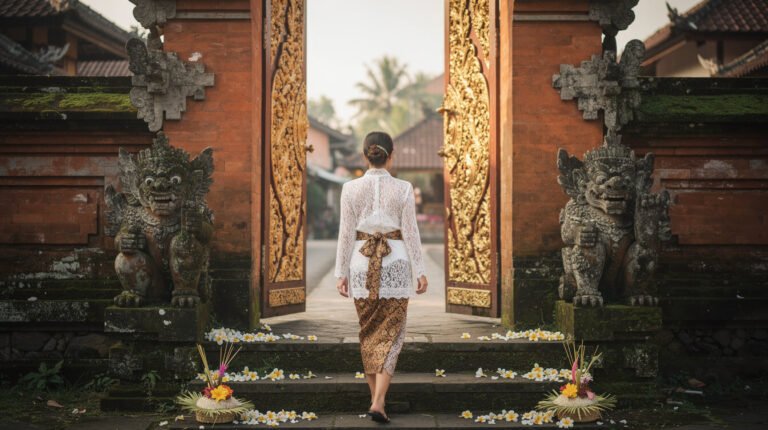
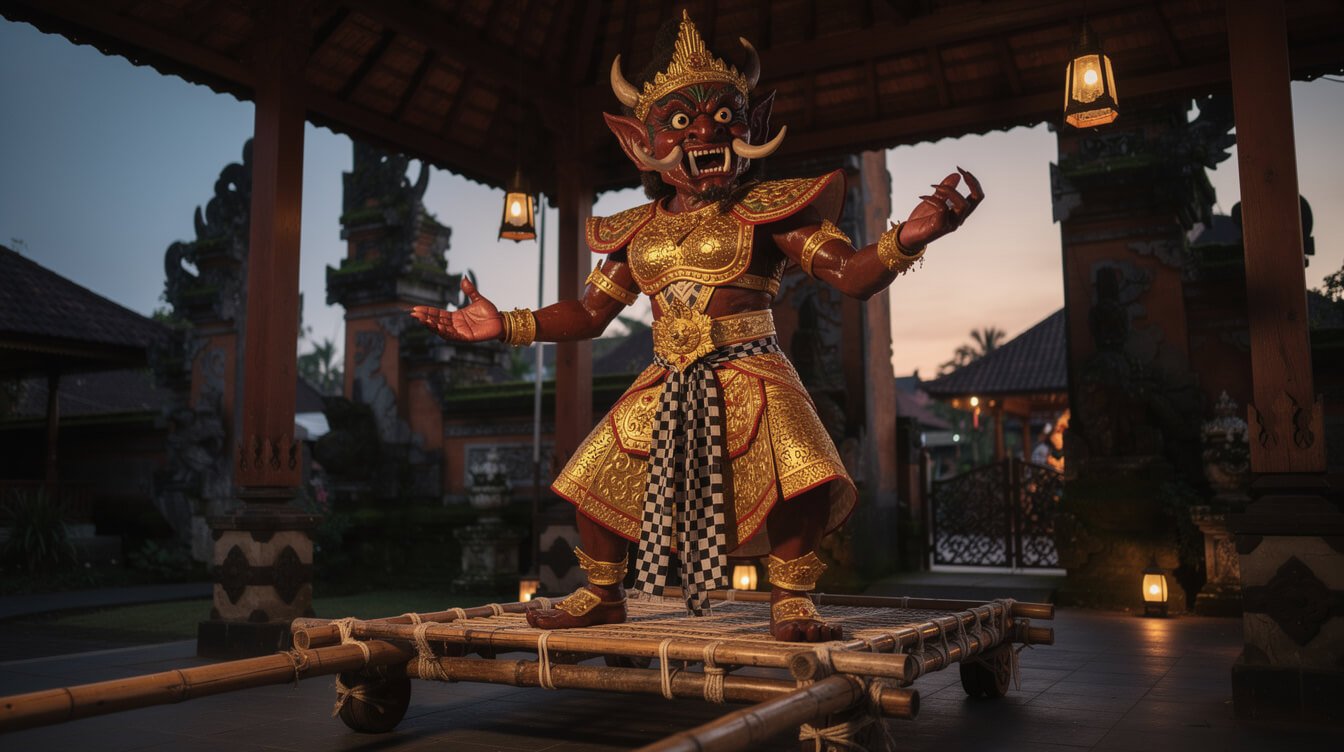
The days before Nyepi are anything but quiet. In the run-up, villages carry temple treasures in long white-clad processions to the sea or to sacred springs for Melasti, a purification ceremony. Then on the evening of Sunday, March 7, each banjar (neighborhood) parades its ogoh-ogoh, giant demon figures built over weeks, through the streets with gamelan, torches and a great deal of noise, to drive the bad spirits away before the silence. Our guide to what to expect during Nyepi and the ogoh-ogoh parade covers the evening in detail. The day after Nyepi, March 9, is Ngembak Geni, when families visit each other and life slowly restarts.
Eid al-Fitr: Wednesday and Thursday, March 10–11, 2027
Two days after Nyepi, Indonesia celebrates Eid al-Fitr, known locally as Lebaran, at the end of Ramadan. Bali is majority Hindu, but Lebaran still changes the island. Collective leave days around it (March 9, 12 and 15 in the 2027 calendar) create one of the longest breaks of the Indonesian year. Domestic visitors from Java and beyond fly and drive in, while many workers who live in Bali travel home to their families. Expect busier flights, ferries and popular sights, higher demand for drivers and rooms, and a few warungs closed while their owners are away.
Easter and the full moon
Good Friday falls on March 26, 2027, which is also a national holiday in Indonesia, and Easter Sunday is March 28. Easter often coincides with the start of school holidays in Australia, Bali’s largest source market, so the last days of March and early April can get busier. The full moon also lands around March 22. Called Purnama Kedasa, it is one of the most important full moons of the Balinese year, and it usually brings major ceremonies at the great mother temple of Besakih and at temples across the island.
How to use this when you plan
If you want to experience Nyepi, arrive by Saturday, March 6 at the latest, so you are settled before the ogoh-ogoh evening and well before the airport closes. Don’t book a flight on Monday, March 8. If you would rather skip the busiest days, the first few days of March and the stretch from about March 16 to 24 are the calmest windows of the month. Book flights and drivers for the holiday week early, and leave buffer time around the airport on March 7 and March 9.
Ubud in March: Harvest Gold and the Last of the Storms
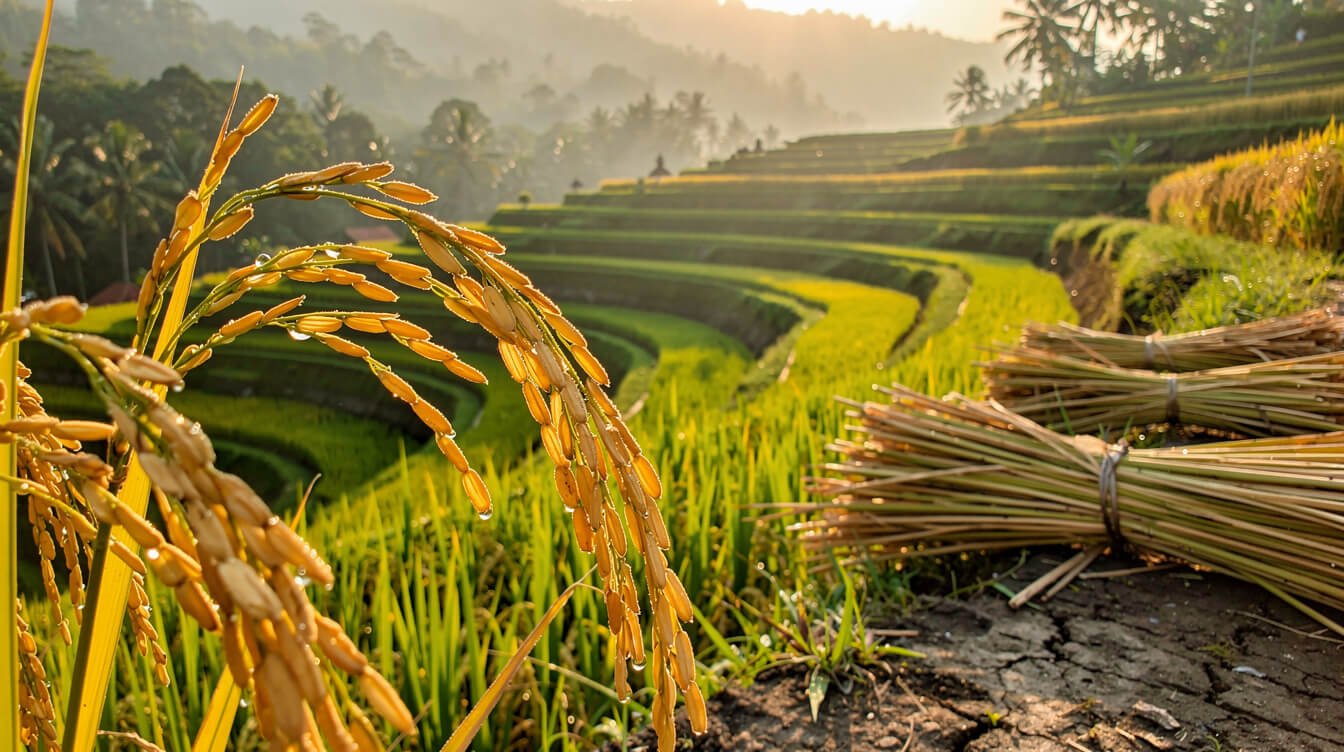
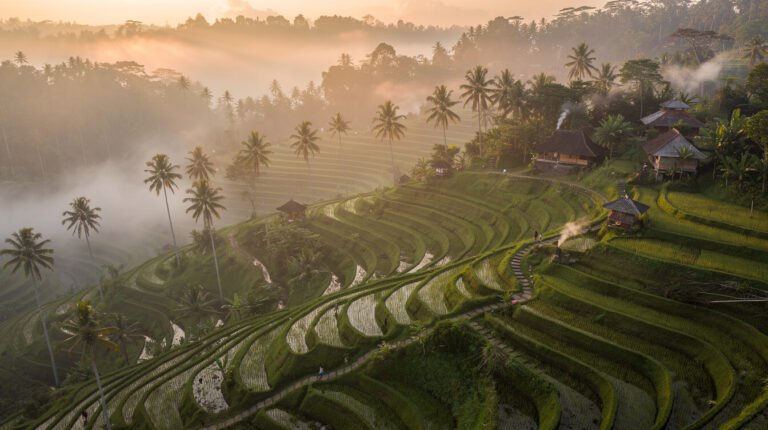
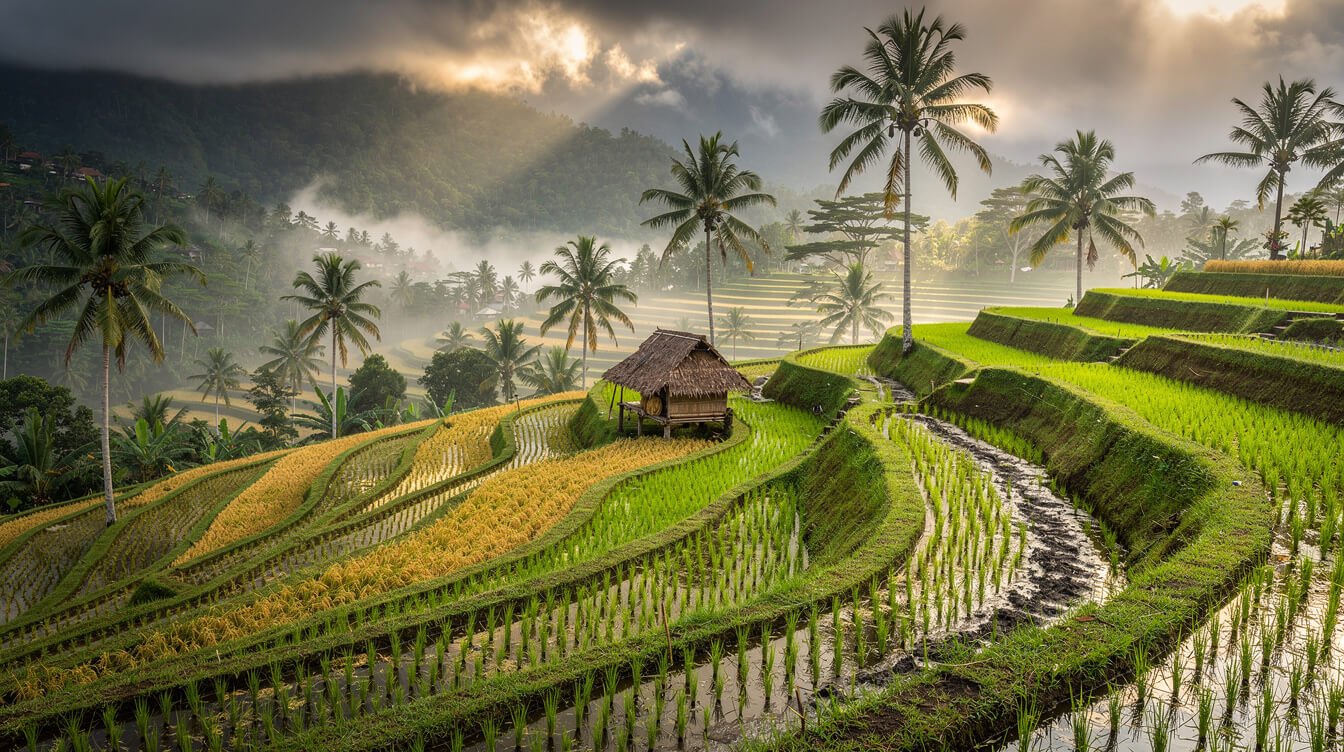
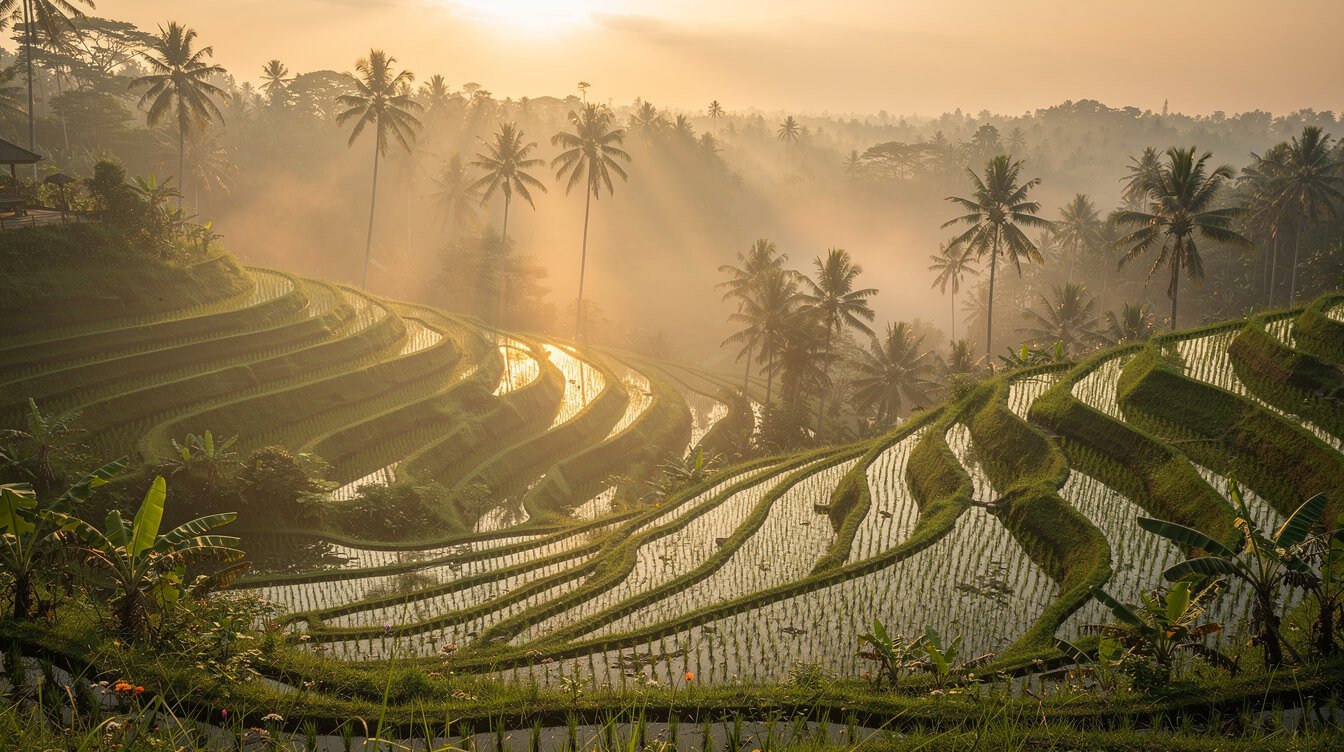
If you only know Ubud from dry-season photos, March weather in Bali will surprise you, especially up here in the hills. The valleys are still fully green, the rivers still run high, and the subak, Bali’s thousand-year-old cooperative irrigation system, keeps the terraces flooded and full. But in places the color is shifting. Fields planted in the depths of the wet season ripen as the rains ease, and in many of them you’ll see the stalks bow under heavy, golden heads of rice. Each farmer works on their own rhythm, so on a single walk you might pass a field being harvested by hand, another freshly plowed, and another just planted in neat rows of bright seedlings.
A March morning at the villa
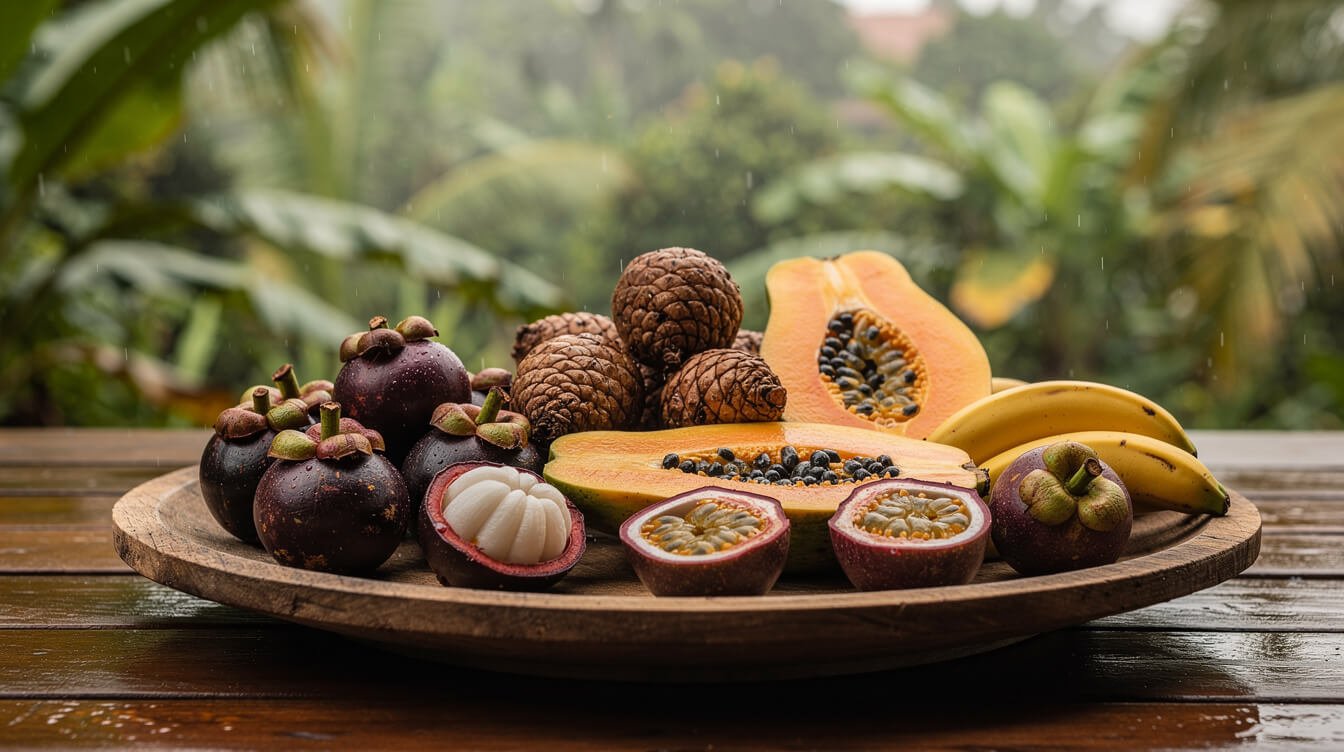
The best hours are early. The light is soft and silver, the air is cool, and mist drifts up from the river. This is the time for a rice field walk before breakfast, or the Campuhan Ridge walk before the heat builds. Back at the villa, breakfast might be black rice pudding with coconut milk, or a bowl of whatever fruit came back from the market that morning. Mangosteen season is winding down by March, but you can usually still find it, alongside snake fruit, papaya, passion fruit and tiny sweet bananas. By the time the clouds gather over the hills, you’ve had a full morning, a swim, and lunch.
Waterfalls, rivers and temples
Ubud’s waterfalls are still powerful in March, often running wide and a little cloudy after rain. They are spectacular to see, but swimming conditions change quickly, and lower pools sometimes close after heavy storms. Go in the morning, ask your driver or the villa manager about recent rain, and respect any closure. Our Ubud waterfall guide covers which falls cope best with the wet. Temples are lovely in March, with moss bright on the stone and fresh offerings everywhere in the run-up to the new year. A quiet early visit to the holy springs at Tirta Empul is especially moving in the days around Melasti. Our guide to Balinese religion explains what you are seeing.
Rainy afternoon rituals
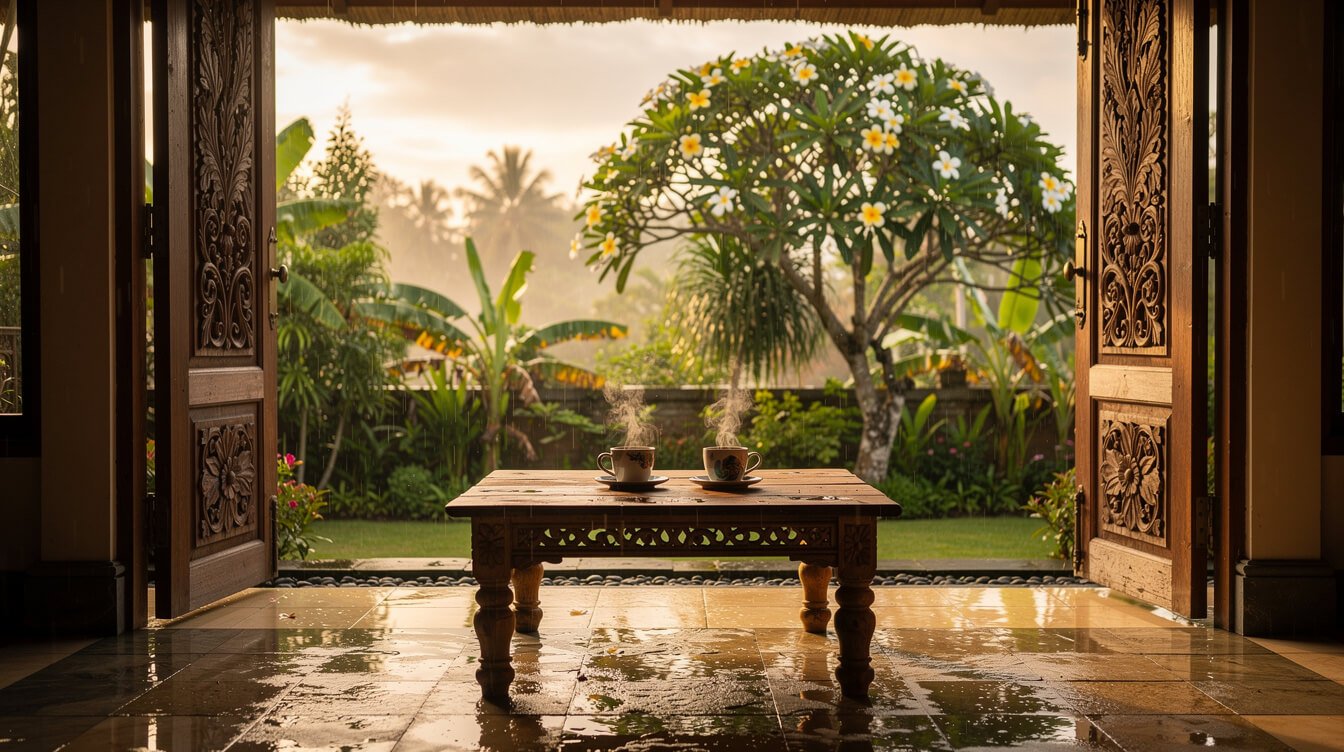
When the afternoon storm arrives, let it set the pace. Book a traditional massage or flower bath, either in the villa or at a local spa (our guide to traditional spa in Ubud has favorites). Join a Balinese cooking class under a covered kitchen roof. Swim in the warm rain, which is one of the small joys of a private pool. Or sit on the terrace with a cup of Bali coffee and watch the weather cross the valley. By evening the air is clear again, and a Kecak dance in an open-air temple courtyard makes a perfect night out.
Spending Nyepi in Ubud: What the Day of Silence Feels Like

Many first-time visitors worry that Nyepi will “waste” a day of their holiday. Almost everyone who experiences it says the opposite. It is one of the most memorable days you can spend in Bali, and the setting you choose makes all the difference.
The night before
On the evening of March 7, Ubud’s streets fill with people, music and the swaying ogoh-ogoh, carried on bamboo platforms by teams of young men who spin them at every crossroads to confuse the spirits. Arrive early for a good spot, stay toward the edge of the crowd, and expect the evening to run late. Your driver or the villa team can point you toward the best viewing area, and help you get home before the roads close.
The day itself
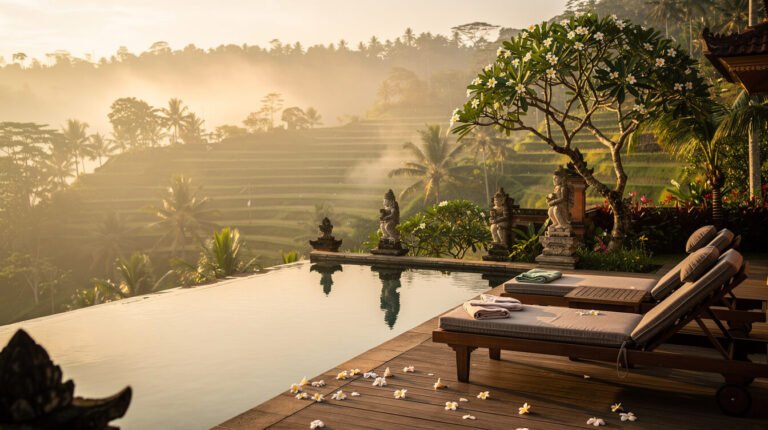
Nyepi morning is something you feel more than see. No engines. No music from the warung down the lane. Just birds, insects, water moving in the irrigation channels and the occasional rooster. Visitors are expected to stay within their accommodation, keep lights low after dark and keep noise down. In a hotel, that can mean a long day in a room or around a shared pool. In a private villa, it means your own garden, your own pool and your own terrace for 24 hours of complete quiet. It is a beautiful day to read, swim, nap, do yoga, write in a journal, or simply sit and listen.
A few practical points help the day go smoothly. Stock up on snacks, drinks and anything you need the day before, because nothing will be open. Charge your devices and download books, films and music, since mobile data is usually off. Plan to eat simply. Many households prepare food the day before, and the rules apply to the people working around you too. Ask us about how Nyepi works at the villa when you plan your stay, and we’ll walk you through it.
After dark
With almost no artificial light across the island, Nyepi night is one of the darkest you will ever see in the tropics. If the clouds part, the Milky Way spreads across the whole sky. Keep your own lights off or shielded, step out onto the terrace, and look up. It is a moment most guests never forget.

Book the Villa
Three bedrooms, a private pool and a quiet tropical garden of your own, with a team who know Ubud through every season. Spend Nyepi in your own sanctuary of silence. Check availability for your March dates.
Beaches, Surf, Diving and Day Trips in March
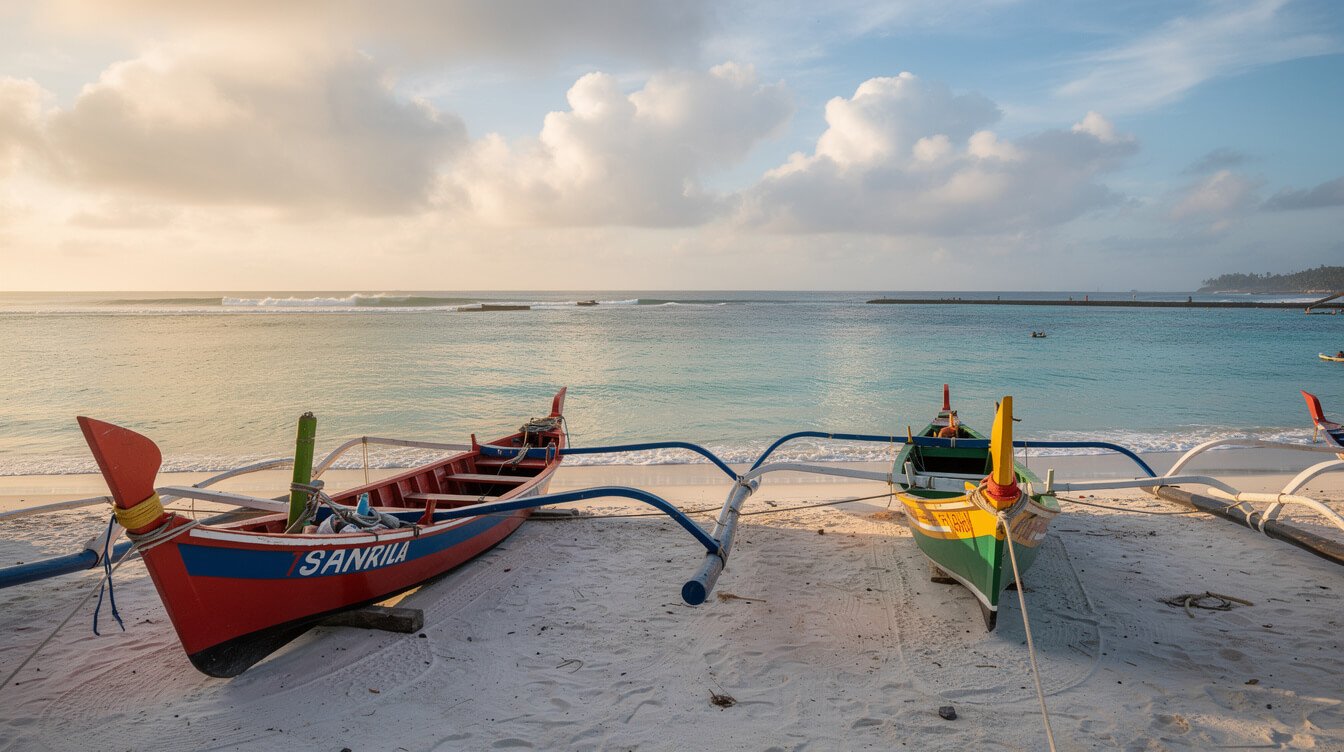
March weather in Bali is a transition at sea as well as on land. Conditions improve week by week, but they still vary by coast, so where you go matters as much as when.
Beaches
For a beach day from Ubud, Sanur is the easy choice: calm, reef-protected water, a long beachfront path and about an hour’s drive from Ubud on a good day. Our Sanur beach day trip guide has the details. The Bukit Peninsula in the south tends to be the driest part of Bali and pairs beautifully with a sunset visit to Pura Luhur Uluwatu. West coast beaches like Kuta and Seminyak can still collect washed-up debris after storms in the wet season, so they are rarely at their best in March.
Surf
In the wet season, the winds favor Bali’s east coast, and reef breaks around Sanur and Keramas are at their best. The famous west and Bukit breaks generally come into their own once the dry-season trade winds settle in from April. March can be a mixed bag, and good surf schools will steer beginners toward whichever beaches are working that week.
Diving and Nusa Penida
Seas between Bali and the Nusa islands often start to settle in March, though wet-season crossings can still be choppy, and fast boats sometimes cancel in rough weather. Manta rays are seen around Nusa Penida year-round. If you are planning a Nusa Penida day trip from Ubud, keep a backup day in your plans, and avoid the Lebaran holiday week when boats and viewpoints are busiest.
Mount Batur sunrise
The Mount Batur sunrise hike runs year-round, but your odds of a clear view are lower in the wet season than in the dry months. March is better than January or February, and the trail can be muddy and slippery after rain. If the sunrise is a priority, put it early in your stay so you have room to try again if the summit is clouded in.
Getting around
Afternoon storms can flood low roads for an hour or two and slow traffic to a crawl, so plan longer drives for the morning. Hiring a driver is the most relaxed way to explore, especially in the wet. If you are arriving in the holiday week, read our guide on getting to Ubud from the airport and book your transfer ahead.
What to Pack for Bali in March
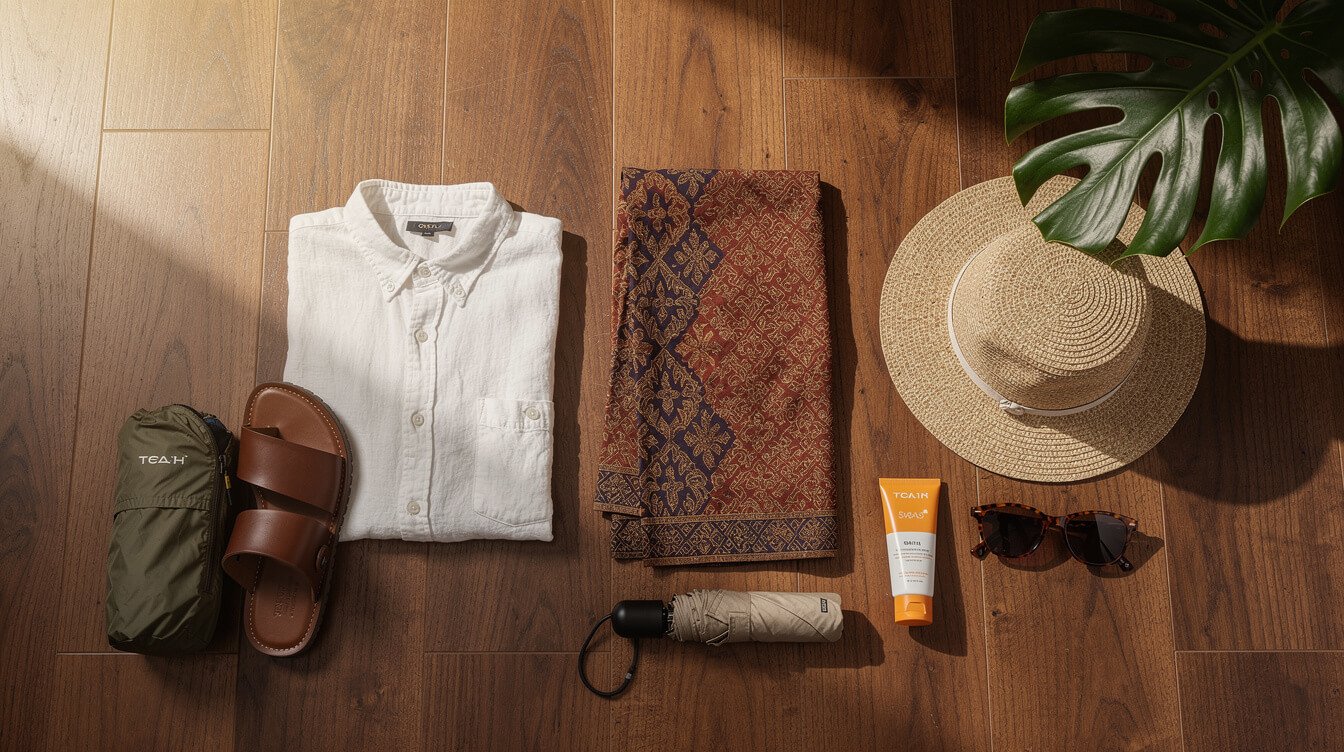
Packing for March weather in Bali is mostly about staying cool, dry enough, and respectful at temples. Our full Bali packing list goes further, but here are the essentials for this month.
- Light, breathable clothes: linen and cotton that dry quickly. Leave the heavy denim at home.
- A packable rain jacket or a small umbrella: you will use one most afternoons. A poncho is handy if you plan to ride a scooter.
- Sandals that can get wet: plus a pair of shoes with real grip for rice field paths, waterfall steps and the Batur trail.
- Temple clothes: a sarong and sash are required at most temples, and something that covers your shoulders and knees. During the Melasti and ogoh-ogoh season, you will want to be ready to pause and watch a procession respectfully.
- A light layer: for Ubud evenings, air-conditioned rooms and the cold pre-dawn start of a volcano hike.
- Sun protection: the March sun is strong between showers. Reef-safe sunscreen, a hat and sunglasses.
- Insect repellent: mosquitoes enjoy the wet season too, especially around dusk.
- Dry bags and zip-lock bags: for phones and passports on boat trips and waterfall days.
- Nyepi kit: a downloaded book or three, offline maps and music, a power bank, and a small torch with a soft red or low setting.
- A simple stomach kit: rehydration salts and your usual remedies. Our guide to avoiding Bali belly has tips.
March Weather in Bali: Frequently Asked Questions
Is March rainy season in Bali?
Yes, March is the last month of Bali’s wet season. It usually rains less than in January and February, with shorter afternoon showers and more sunshine, especially in the second half of the month.
How hot is Bali in March?
Expect daytime highs of about 29–31°C (84–88°F) on the coast and a degree or two cooler in Ubud. Nights stay warm, around 23–25°C by the sea and a little cooler in the hills. Humidity is high, so it can feel hotter.
Does it rain all day in Bali in March?
Rarely. The usual pattern is a bright morning and a heavy shower in the afternoon or evening that lasts an hour or two. You will get the odd grey, drizzly day, but full washouts are uncommon.
What is the March weather in Bali like in Ubud specifically?
Ubud is slightly cooler and wetter than the coast, with misty mornings, green valleys, full rivers and afternoon storms that tend to arrive a little earlier in the day. Mornings are usually the best time for walks and sightseeing.
When is Nyepi in 2027?
Nyepi falls on Monday, March 8, 2027, from 6 AM to 6 AM the next day. The ogoh-ogoh parades take place on the evening of Sunday, March 7. The airport is closed for the 24 hours of Nyepi.
Is Bali crowded in March?
Most of March is calm by Bali standards. The exception in 2027 is the long holiday around Nyepi and Eid al-Fitr, roughly March 6 to 15, when domestic travel spikes. Easter weekend, March 26 to 28, can also be busier.
Can you swim in the sea in Bali in March?
Yes. The water is around 28–30°C. Sanur and the east coast are usually the calmest options. Always swim at patrolled beaches, follow the flags and stay out of the water during and right after heavy storms.
Is March or April better for Bali?
April is drier and marks the start of the dry season, so it is the safer choice for beach time and surfing. March is greener, often a little quieter outside the holiday week, and offers Nyepi. If you love lush landscapes and culture, choose March. If sunshine is the priority, lean toward April.
Final Thoughts: March in Ubud Is Green, Golden and Briefly Silent
March weather in Bali is the wet season’s gentle exit. The storms are still there, but they keep shorter hours. The rice fields are full and beginning to turn gold. The rivers run high, the mornings are cool, and the light grows clearer every week. And in 2027, right in the middle of it all, the island gathers for its noisiest night of the year and then falls completely silent for a day.
Read it right and March weather in Bali works in your favor. If you plan around the holiday week, head out early and let the afternoons slow you down, March can be one of the most rewarding months of your life in Bali. For more on the months on either side, read our guides to February weather in Bali and Bali weather in January, or jump ahead to the dry season with Bali weather in July. Wherever you land on the calendar, our team in Ubud would love to help you shape the trip around the season.

Join our newsletter — fun, new, exciting Bali news
Ceremony days worth planning around, the turn of each season in Ubud, and small stories from the garden and kitchen. Delivered now and then, always worth opening.