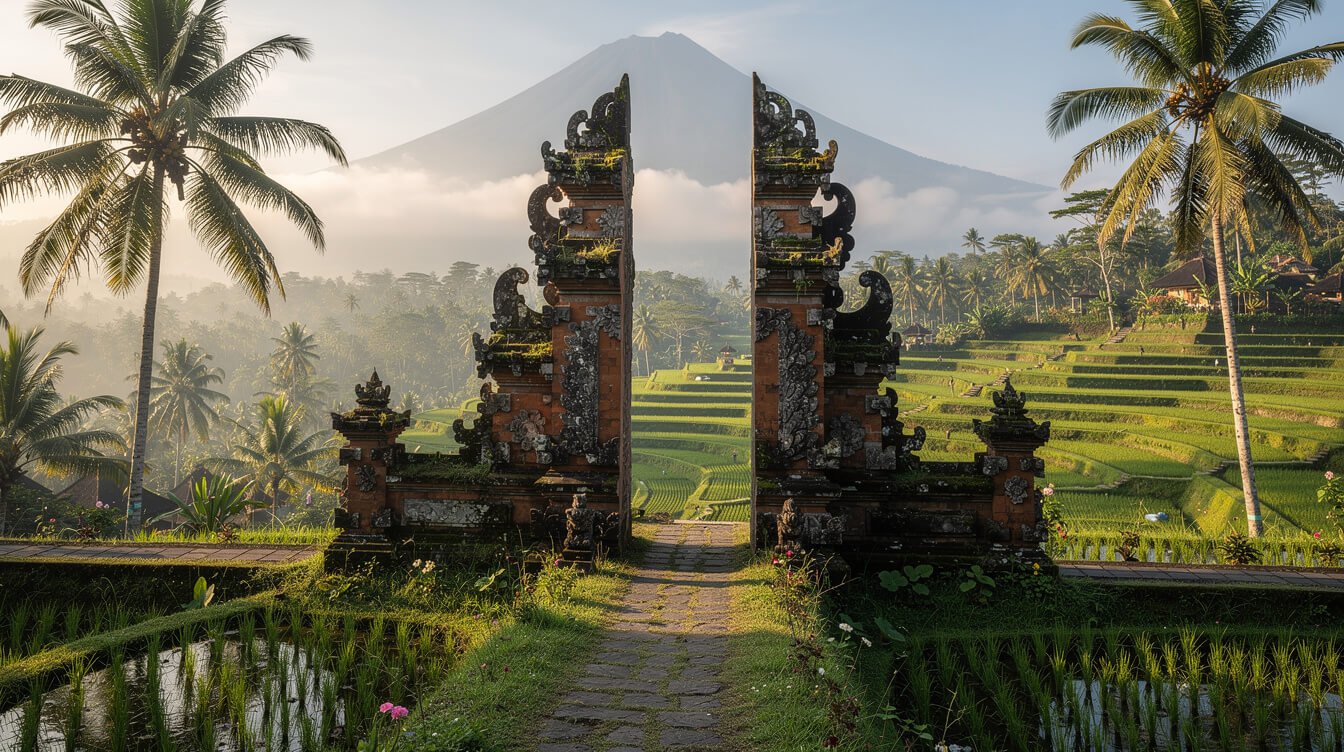
Bali vs Thailand: An Honest Comparison for Travelers Who Want Slow, Culture-Rich Days
You have a few weeks, a long-haul flight, and two names on the shortlist. Bali vs Thailand is one of the oldest debates in Southeast Asian travel, and most of what you will read online scores it like a sports match: cheapest beer, best nightlife, fastest Wi-Fi. That is useful if you are backpacking or setting up a laptop for six months. It is less useful if what you really want is slow, culture-rich days, with time to notice things, a place that feels lived in, and evenings that do not need planning.
We write this from Ubud, so you can guess where our hearts lie. But this is not a sales page. Thailand is an extraordinary country, and for some trips it is simply the better choice. What follows is the honest version: who each place suits, how the seasons flip between them, what has changed with entry rules in 2026, and how to do both in one trip if you cannot choose.
Bali vs Thailand: The Short Answer
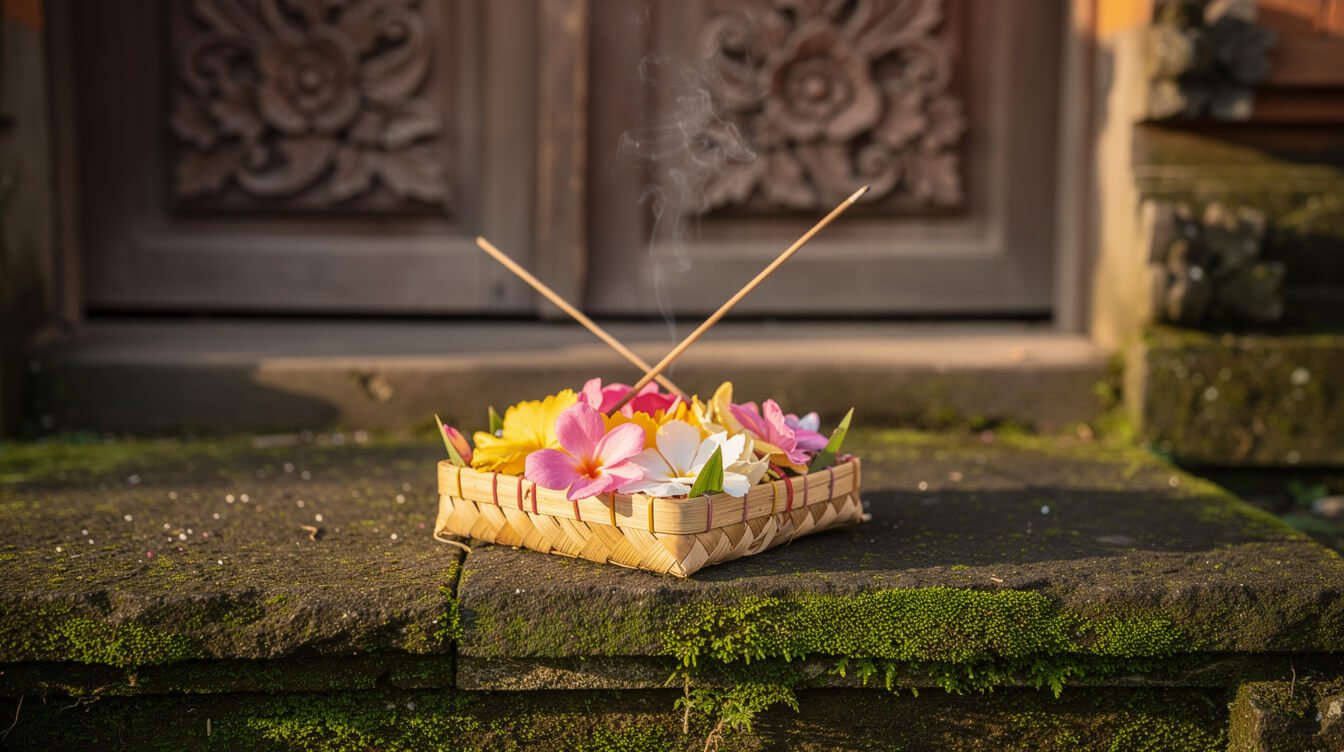
If you want one sentence: choose Bali if you want to settle into one place and let its daily rhythm hold you; choose Thailand if you want variety, movement, and many different places in one trip.
That is a simplification, of course, but it holds up surprisingly well. Bali is a single island, about the size of Delaware, with a culture so dense and so present that staying put rewards you. Thailand is a large country with distinct regions (the mountain north, the big-city energy of Bangkok, two very different coastlines and dozens of islands), and its real gift is range.
Choose Bali if…
- You are traveling as a couple, a family, or a small group and want one calm base rather than a string of hotels.
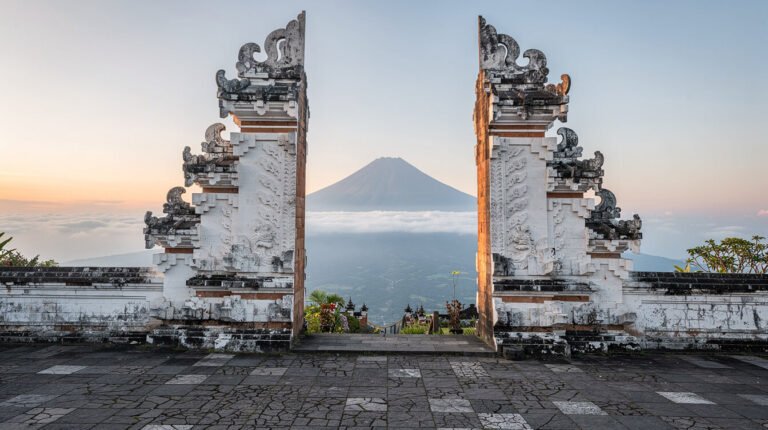
- Living culture matters more to you than monuments: offerings on doorsteps, temple ceremonies you stumble into, the sound of a gamelan rehearsal drifting across rice fields.
- You are drawn to wellness: yoga, massage, healing traditions, early nights and early mornings.
- You are traveling between roughly April and October, when Bali is in its dry season.
Choose Thailand if…
- You want to combine a city, mountains, and beaches in one trip with easy domestic connections.
- Food is your main reason to travel, and you want the widest possible range of regional cooking.
- You are traveling between roughly November and March, when much of Thailand is at its driest.
- You want island-hopping by boat, with a new beach every few days.
Neither list is a verdict. They are a starting point. The rest of this guide goes deeper into each one, because the details are where the real decision usually gets made.
Culture You Live Inside vs Culture You Visit
Both countries have deep, beautiful religious cultures, and both deserve your respect. The difference is less about depth than about texture: how the culture meets you as a visitor.
Bali: a Hindu island in a daily rhythm
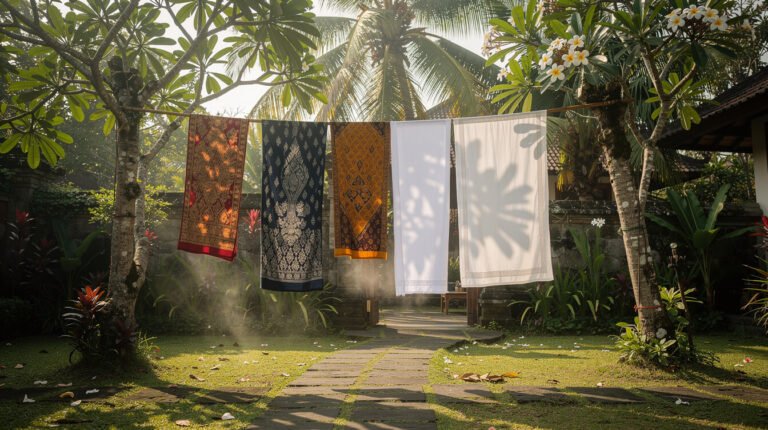
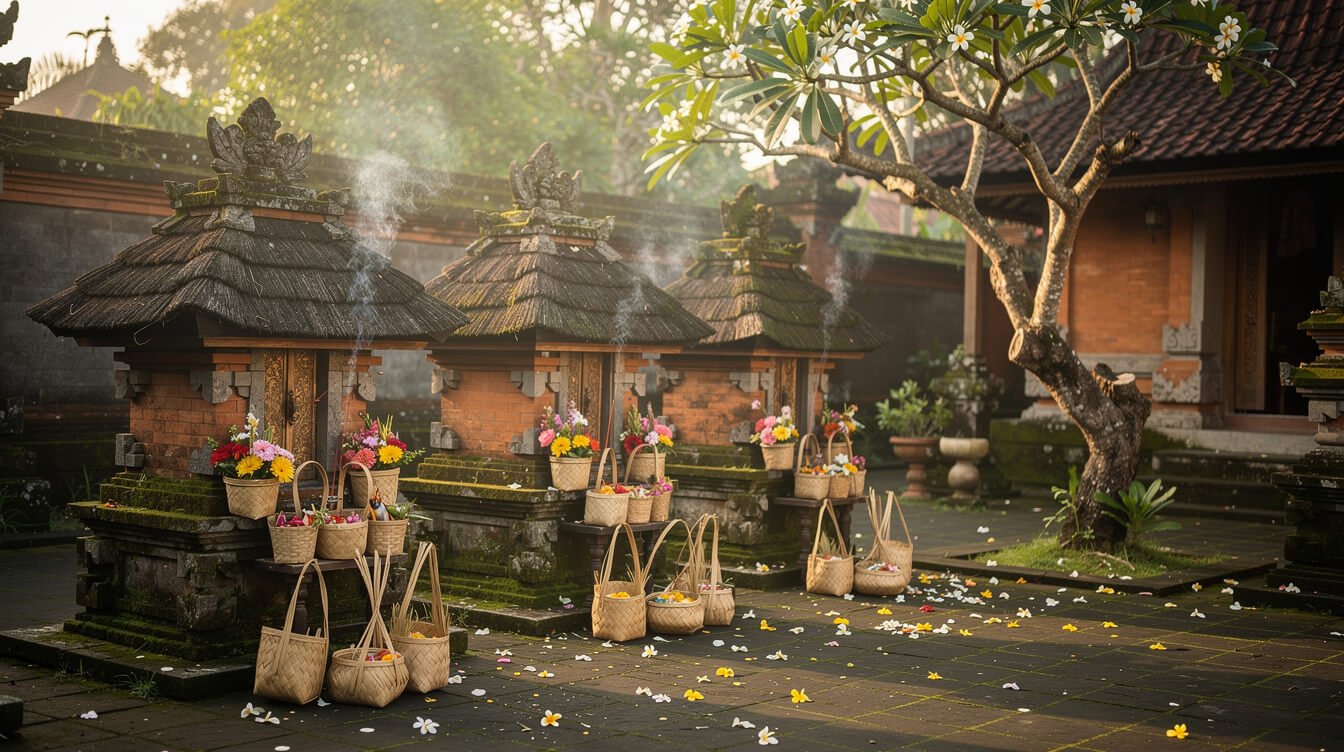
Bali is the only Hindu-majority province in Indonesia, and its faith is woven into the rhythm of ordinary life rather than set apart from it. Every morning, small palm-leaf offerings called canang sari appear on doorsteps, shrines, car dashboards and shop counters, each with flowers, a pinch of rice, and a stick of incense. Every family compound has its own house temple. Every village has at least three temples, and the village community, the banjar, organizes ceremonies, cremations, and festivals together.
What this means for you is that culture is not something you go and see. It happens around you. You might wake to the clink of a gamelan practice, find a road closed for a procession in white and gold, or watch the women of a household balance towers of fruit on their heads on the way to temple. If you want to understand what you are seeing, our guide to Bali’s religion is a gentle place to start, and our post on Galungan explains the island’s most joyful festival season.
Thailand: Buddhist temples, monastic life, and royal history
Thailand is a predominantly Theravada Buddhist country with more than 40,000 temples, from the gilded grandeur of Bangkok’s royal wats to small village temples in the north where monks walk their alms rounds at dawn. Its culture is extraordinary and very visible: spirit houses outside homes and businesses, saffron robes on morning streets, temple fairs, and a deep respect for the monarchy.
For a visitor, Thai culture often comes through grand, memorable sites (the Grand Palace, Ayutthaya’s ruins, the temples of Chiang Mai), along with quieter moments like joining a morning alms offering or spending a day at a meditation center. It is rich and rewarding. It is also spread across a much larger country, so you tend to visit it in chapters rather than live inside it.
The honest difference
If you want to see many famous cultural sites, Thailand has more of them and connects them more easily. If you want to slow down and feel a culture breathing around you, day after day, in one place, Bali is hard to match. In Ubud especially, you can stay a week and still notice something new every morning.
Bali vs Thailand by Season: When You Travel Changes Everything
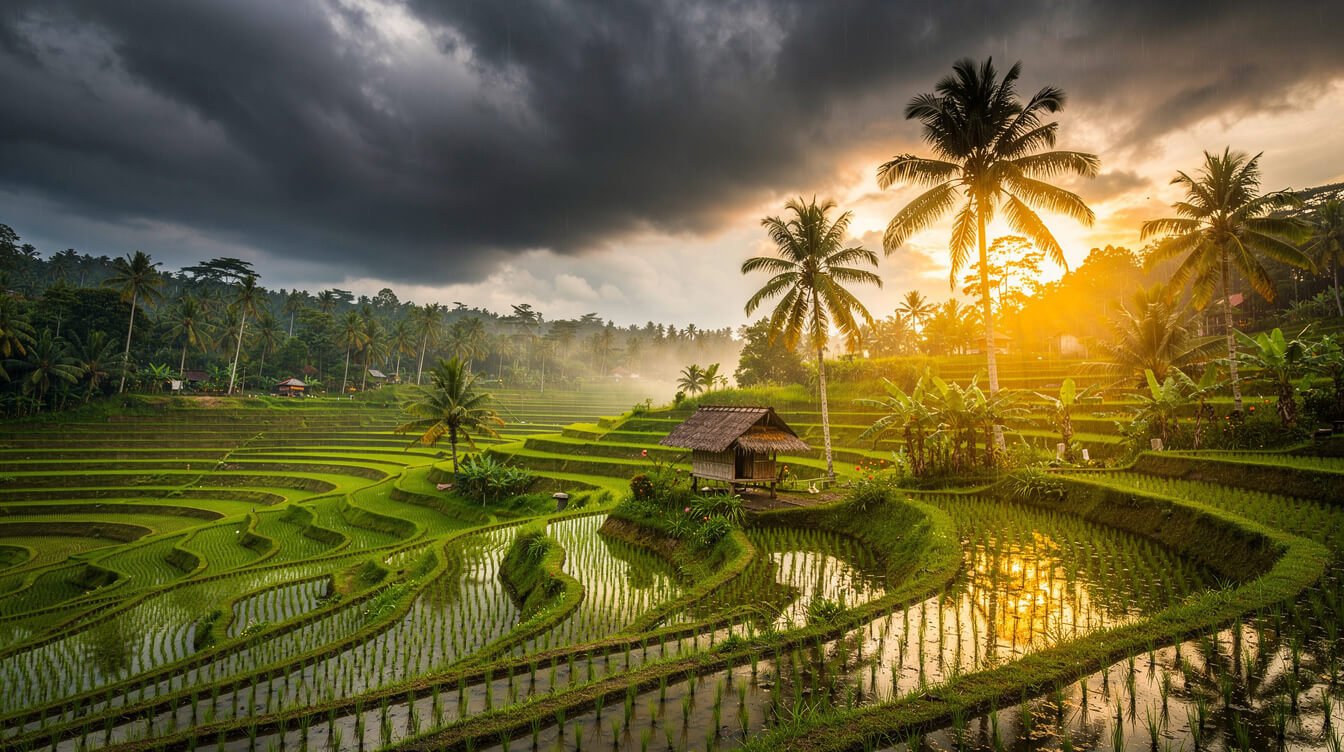
This is the part most comparisons skip, and it is often the one that settles the question. Bali and most of Thailand have opposite dry seasons. So “which is better?” very often comes down to “when are you going?”
Bali’s seasons
- Dry season, roughly April to October: sunnier days, lower humidity, cooler nights in the hills around Ubud. July and August are the busiest months. See our July weather guide for what peak season feels like.
- Wet season, roughly November to March: warm, green, and lush, with heavy afternoon or evening downpours rather than all-day rain in most cases. December and January are the wettest. Our Bali rainy season guide explains how to enjoy it rather than endure it.
Thailand’s seasons (it depends where)
- Bangkok, the north, and the Andaman coast (Phuket, Krabi, Koh Lanta): generally driest and most comfortable from roughly November to February or March. March to May gets very hot, and the southwest monsoon brings rain from about May or June to October.
- The Gulf islands (Koh Samui, Koh Phangan, Koh Tao): run on a different clock. Their rainiest months tend to be October to December, and they are often pleasant through the middle of the year, when the Andaman coast is wet.
So which is better, month by month?
As a broad rule of thumb:
- December to February: Thailand’s mainland and Andaman coast are usually at their best, while Bali is in its wettest stretch. Bali is still beautiful and green then, and calmer outside the holiday weeks, but if guaranteed sunshine matters most, Thailand has the edge.
- April to October: Bali shines. Much of Thailand is hot or rainy, with the Gulf islands as the main exception.
- March and November: shoulder months for both. These are often lovely, quieter times to travel either way.
So when is the worst time to go to Bali? If you mean weather, it is usually the peak of the wet season, around late December through February. If you mean crowds, it is late July, August, and the Christmas to New Year fortnight. And if you happen to land on Nyepi, the Day of Silence in March, the whole island shuts down for 24 hours. Some visitors find that disruptive. Many find it the most moving day of their trip.
For the full picture, our month-by-month guide to Ubud and our Bali weather guide go deeper.
Get a free 3-day sample itinerary
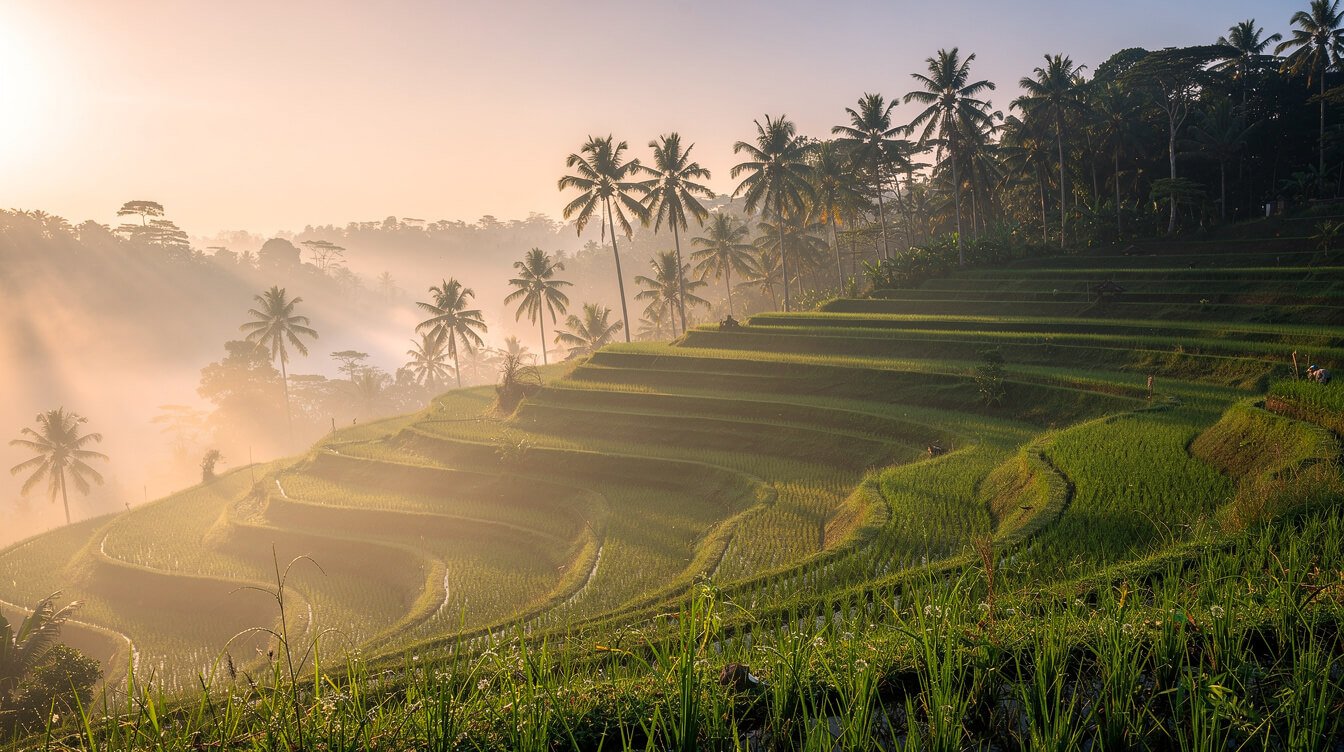
Weighing Bali against Thailand? See what three slow days from Ubud really feel like: rice field walks at first light, a temple morning, a market, and an afternoon with nothing planned. We will send you a free 3-day sample itinerary.
One Base or Many Stops? How Each Country Wants to Be Traveled

This is the second big decider, and it is about the shape of your trip as much as the destination.
Bali rewards one base
Bali is compact. From Ubud, in the island’s cultural heart, most of what people come for is within a day trip: the water temples and rice terraces of the north and east, waterfalls, volcano sunrises, the mother temple at Besakih, quiet valleys like Sidemen, and the beaches of the south. Traffic can be slow, so distances take longer than the map suggests, but you rarely need to change hotels to see the island well. Our guide to day trips from Ubud shows how much fits in.
That makes Bali especially kind to families and small groups. You unpack once. Children settle. The days find a rhythm: an early outing, a long lunch, a swim, a nap, an evening walk. If you are wondering how long to give it, our post on how many days to spend in Ubud is a helpful guide.
Thailand rewards movement
Thailand’s appeal is its variety, and its transport network makes variety easy. Domestic flights are frequent and affordable, overnight trains run north to Chiang Mai, and ferries and long-tail boats link the islands. A classic two-week route might be a few days in Bangkok, a few in Chiang Mai, then a week split between two islands.
That is wonderful if you love momentum. It is tiring if you were hoping to rest. Every move costs half a day of packing, transfers, and check-ins, and with children or older travelers that adds up.
A gentle way to decide
Ask yourself which sentence sounds more like your ideal trip: “We saw so much” or “We finally slowed down.” The first is often Thailand. The second is often Bali.
Food, Wellness and Slow Days: Where Each One Shines
Food: an honest win for Thailand on range
Let’s be fair: Thai cuisine is one of the great food cultures of the world, and the range is astonishing. Northern curries, Isan grilled meats and salads, Bangkok street food, southern seafood, and night markets in nearly every town. If eating your way through a country is your main goal, Thailand is hard to beat.
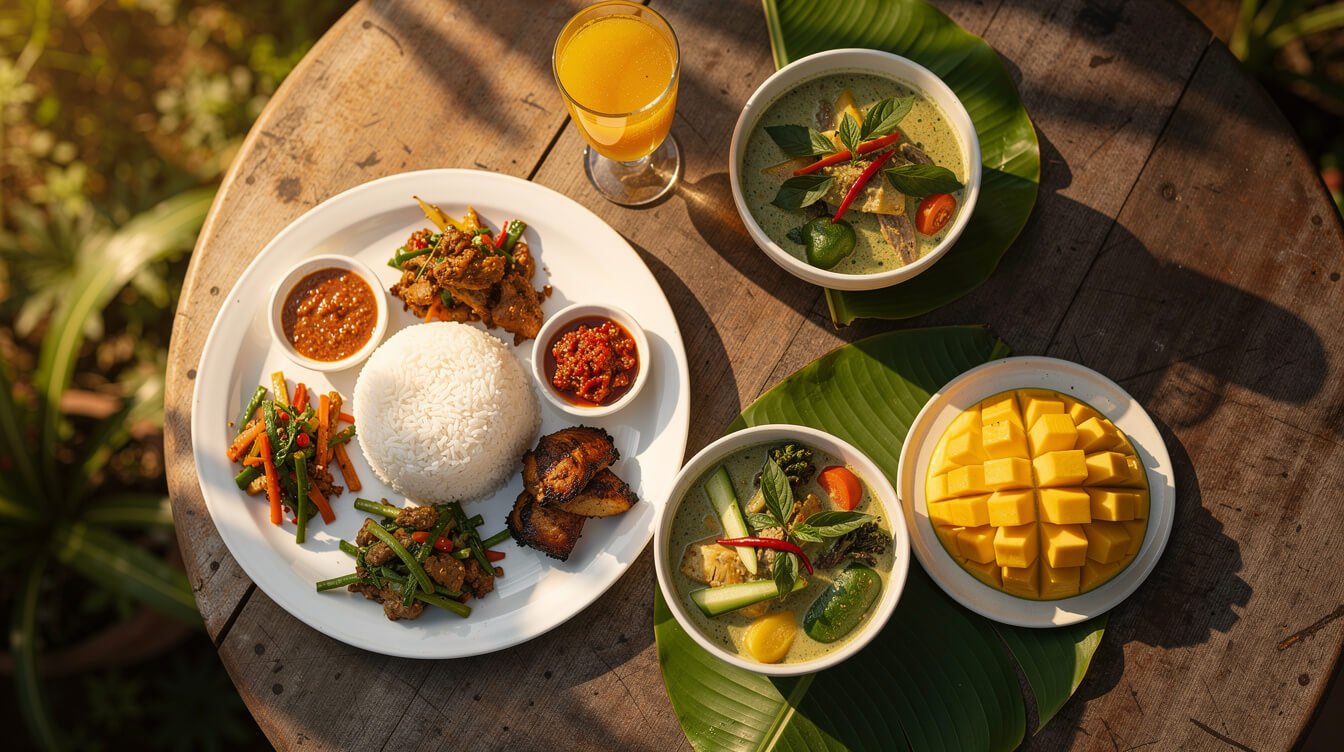
Balinese and Indonesian food is quieter but deeply rewarding: nasi campur with its small portions of many dishes, fragrant babi guling (spit-roast pork) and bebek betutu (slow-cooked spiced duck), fresh sambal made daily, and tropical fruit you may never have seen before. Ubud also has an excellent café and plant-based scene. Our guide to Bali food is a good place to begin. And because new stomachs meet new kitchens in both countries, our honest post on Bali belly covers how to avoid spending a day of your trip unwell.
Wellness: where Bali, and Ubud in particular, leads
Thailand has a long healing tradition of its own. Traditional Thai massage is a recognized cultural heritage, and the country has respected meditation centers and destination spas. But Ubud has become one of the world’s wellness capitals in a different, more everyday way. Yoga studios, sound healing, breathwork, Balinese massage and herbal traditions like jamu are part of the town’s fabric, not resort add-ons. If a retreat is part of your plan, see our Ubud yoga retreat guide.
Slow days
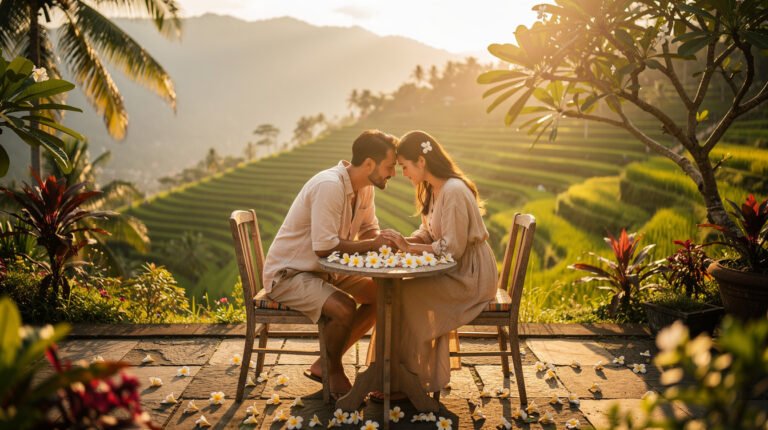
This is the quiet heart of the matter. A slow day in Thailand is often a beach day. A slow day in Ubud looks different: mist lifting off the rice fields, a walk along a ridge, a long breakfast, a swim, an afternoon of reading while the frangipani drop their flowers, and the evening frogs starting up as the light goes gold. Both are lovely. They just feel different, and it is worth knowing which one you are longing for.
Practical Comparison: Visas, Flights, Getting Around and Costs
Entry rules in both countries have changed several times in recent years, so treat this as a snapshot as of November 2026 and always check official sources before you book.
Entry and visas
- Bali (Indonesia): most Western visitors, including US, UK, Australian and EU passport holders, need a visa on arrival or e-VOA, currently IDR 500,000 for a 30-day stay that can be extended once. Every foreign visitor to Bali also pays the provincial tourist levy of IDR 150,000 per person, once per trip, ideally online before you fly via the official Love Bali site. You also complete a free All Indonesia digital arrival card before landing. Our guides to the Bali visa for US citizens and the Bali tourist visa walk you through it.
- Thailand: this changed recently. Since 15 September 2026, Thailand’s previous 60-day visa exemption has been replaced by a 30-day visa-free stay for ordinary passport holders of 60 countries and territories, including the US, UK, Canada, Australia, and most of Europe. It can usually be extended once by up to 30 days at a Thai immigration office for a fee. All foreign arrivals must also complete the free Thailand Digital Arrival Card (TDAC) online before arrival. A separate tourist entry fee has been proposed and postponed several times, so check whether it is in force when you travel.
In practice, both countries are easy for a two to four-week holiday. Bali costs a little more to enter. Thailand has more paperwork options if you want to stay longer.
Flights
From North America or Europe, both usually involve one connection, often through a Gulf, East Asian, or Southeast Asian hub. Bangkok tends to have more direct long-haul options and often slightly lower fares. Bali is very well connected from Australia, Singapore, and East Asia. The flight between the two, Bangkok to Denpasar, takes about four and a half hours nonstop, with several daily options.
Getting around
Here Thailand earns another honest win: domestic flights, trains, buses, ferries, and a large city transit system make independent travel easy. Bali has no railway and limited public transport. Most visitors use private drivers or ride-hailing apps, and the roads in the south can be congested. Once you are based in Ubud, though, a good driver for day trips is simple to arrange and surprisingly affordable. Our post on getting from Bali airport to Ubud covers the first journey.
Healthcare and safety
Thailand’s private hospitals in Bangkok, Phuket, and Chiang Mai are among the best in the region, which is a genuine plus for families and older travelers. Bali has good international clinics and hospitals in the south, but serious cases are sometimes transferred off the island. Travel insurance with medical evacuation cover makes sense for either. Both are generally safe, welcoming destinations. Our guide to whether Bali is safe to travel covers the everyday precautions.
Costs
Day-to-day costs are broadly similar, and both can be traveled on a shoestring or very comfortably. As of 2026, Thailand’s street food and transport are often slightly cheaper, while Bali’s private villas can offer remarkable value for families and groups who share space. For a fuller picture of prices on the island, see our post on the cost of living in Bali.

Book the Villa
If Bali is your answer, or the slow second half of a two-country trip, make Ubud your one base: three bedrooms, a private pool and a quiet tropical garden, with a team on hand to help you plan your days. Check availability for your dates.
Doing Both: A Two-Country Itinerary Idea

If you have three weeks or more, you don’t have to choose. With a 4.5-hour flight between Bangkok and Bali, combining them is easy, and the season flip can work in your favor.
A three-week outline
- Days 1–4: Bangkok. Temples, river life, markets, and a first taste of Thai food at its most varied.
- Days 5–9: Chiang Mai or a Thai island. Choose the mountains and temples of the north, or one island (Andaman side in the dry months, Gulf side in mid-year).
- Day 10: Fly to Bali and transfer to Ubud. Arrive, swim, sleep.
- Days 11–19: Ubud as your base. Rice field walks, temples, a cooking class, yoga, day trips east or north, and at least two days with no plans at all. Our 3-day Ubud itinerary makes a good core to build around.
- Days 20–21: Slow finish. Stay in Ubud, or spend a final night near the coast before your flight home.
Put Thailand first and Bali second. The first half is busy and full of movement. The second half is where you exhale. Ending a long trip somewhere that asks nothing of you is a gift to your future self. If you have less time, our 7-day Bali itinerary and 10-day Bali itinerary show how to shape a Bali-only trip.
Timing a combined trip
The sweet spots are the shoulder months. Late March to April and October to early November give you reasonable weather in both, with fewer crowds. In the middle of the year, pair Bali’s dry season with Thailand’s Gulf islands. Over December and January, put more days into Thailand and enjoy Bali in its green, rain-washed season.
Frequently Asked Questions
Which is better, Bali or Thailand?
Neither is better overall; they suit different trips. Bali is better for slow travel, living culture, wellness, and one-base family or couple holidays. Thailand is better for variety, food range, easy transport, and multi-stop itineraries. Your travel dates often decide it, because their dry seasons are roughly opposite.
Is Bali or Thailand better for families?
Both are very family-friendly. Bali’s advantage is that you can stay in one place with space to spread out and still see a lot on day trips. Thailand’s advantages are its transport and excellent private hospitals. For younger children who do better with routine, one base in Bali is often easier. Our family villa guide for Ubud has more.
Is Bali or Thailand better for a honeymoon?
Many couples love both. Thailand’s islands are classic beach honeymoons. Bali, and especially Ubud, suits couples who want privacy, slow mornings, and culture alongside romance. Our Bali honeymoon itinerary is a good place to start.
When is the worst time to go to Bali?
For weather, late December to February is the wettest stretch. For crowds and prices, it is late July to August and the Christmas to New Year holidays. Rain in Bali usually comes in heavy bursts rather than all day, so the wet season is still very travelable.
How long is the flight from Thailand to Bali?
A nonstop flight from Bangkok to Denpasar (Bali) takes about four hours and twenty-five minutes. Several airlines fly the route daily, and there are also connections from Phuket.
Do I need a visa for Thailand and Bali?
As of November 2026, US, UK, Australian, Canadian, and most European passport holders can enter Thailand visa-free for up to 30 days, and need a visa on arrival or e-VOA for Indonesia (Bali), plus the IDR 150,000 Bali tourist levy. Both countries also require a free online arrival card. Rules change often, so check official sources before you fly.
Final Thoughts From Ubud
When people ask us about Bali vs Thailand, we usually answer with a question: how do you want to feel at the end of your trip? If the answer is “full of stories from many places,” Thailand will give you that beautifully. If the answer is “rested, held, and changed a little by a place,” Bali tends to.
And if you are still torn, do both, and save Bali for last. Let Thailand be the adventure and Ubud be the exhale: the morning offerings, the rice fields at first light, the long, unhurried evenings. We would love to help you plan it. If you have questions about seasons, day trips, or how the villa might suit your group, ask the team. We are always happy to share what we know.

Join our newsletter — fun, new, exciting Bali news
Season tips, ceremony days, entry-rule changes and small stories from Ubud. Delivered now and then, always worth opening.